
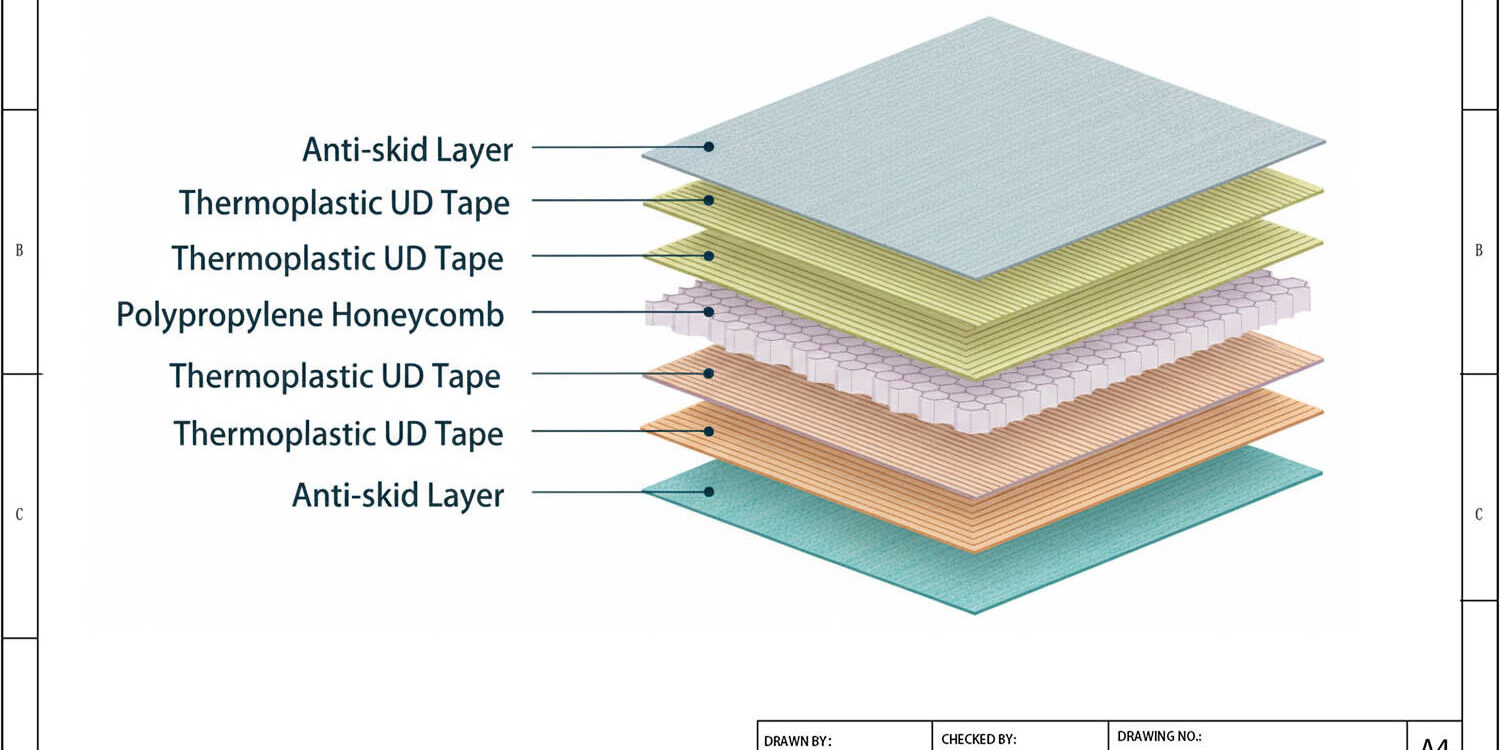
Aluminum honeycomb panel selection often fails because project managers prioritize unit price over core density and alloy grade, leading to warping under wind load or delamination in humid environments. The difference between a 5052 marine-grade skin and a standard 3003 sheet can determine whether a facade survives coastal exposure for 20 years or corrodes within five. One technical fact from field audits proves this: panels with core cell diameters smaller than 4mm show 40% higher peel strength but carry a 25% cost premium that rarely justifies use on non-structural interior partitions.
This checklist cuts through supplier spec sheets by focusing on the three variables that cause rework—alloy composition verification via Material Test Reports, dimensional tolerance locks at 0.5mm flatness maximum, and mandatory peel strength testing per ASTM D1781 before mass production. We’ve seen projects stall when vendors substituted 0.06mm core foil for the specified 0.08mm without notice, reducing fire resistance ratings below local code requirements. Skipping these checks costs more than the material itself when you account for demolition, replacement, and schedule delays.
Verify Technical Specs Before Engaging Suppliers
Aluminum Alloy Grade and Core Cell Density
The industry standard for marine-grade aluminum honeycomb panels specifies H32 temper in both 3003 and 5052 alloys, with core pore diameters optimized at 6mm to balance peel strength and delamination resistance under thermal cycling.
Confirming the alloy designation on the Material Test Report (MTR) serves as the primary verification checkpoint for sourcing. Many vendors downgrade from the required 3003/5052 mix to cheaper 1100 or 3004 aluminum without disclosure, directly compromising corrosion resistance in salt-spray environments. Our experience shows that genuine marine applications require the specific combination of 3003 core structure with 5052 face sheets for maximum fatigue tolerance under dynamic loads. The supplier should provide certified EN 10204 3.1 documentation matching the order to actual production batches rather than generic certificates.
Core cell density represents another critical parameter frequently misrepresented during procurement. Market data indicates optimal performance occurs at 6mm pore diameter—smaller cells unnecessarily increase cost while larger diameters reduce bonding surface area leading to adhesion failure. When specifying requirements, demand precise core height measurements including face sheet thickness, as many suppliers quote only internal core dimensions. We insist on ultrasonic thickness verification before finalizing orders to prevent the common pitfall where advertised 15mm total thickness actually measures 13.5mm after accounting for undersized face sheets.
Dimensional Tolerances and Surface Flatness Metrics
Dimensional consistency emerges as the most frequently disputed quality metric during post-delivery inspections. Industry benchmarks specify ±0.5mm tolerance for overall panel thickness but allow significantly more variation in flatness measurements across large-format panels exceeding 2 meters in length. For structural applications requiring precise alignment, specify maximum deflection limits no greater than 1/200th of span length under specified loading conditions. Document these tolerances explicitly in purchase orders since many manufacturers default to looser architectural specifications suitable only for non-structural cladding.
Surface flatness requires measurement using straight-edge techniques perpendicular to rolling direction, checking both longitudinal and transverse axes simultaneously. Acceptable warpage should not exceed 3mm over any 1-meter segment for panels used in visible installations. During incoming inspection protocols, employ laser level systems rather than visual estimation alone—the human eye consistently underestimates curvature exceeding 2mm deviation. For high-precision assemblies such as RV flooring or aircraft interior components, specify geometric dimensioning and tolerancing (GD&T) callouts defining datum references for all mating surfaces.
Peel Strength and Adhesive Bonding Performance
Adhesive integrity constitutes the single most vulnerable failure point in honeycomb panel construction, particularly when subjected to thermal expansion differentials between core and face materials. Minimum acceptable peel strength values vary by application severity: transportation sectors demand ≥3.5 kN/m while marine environments require ≥5.0 kN/m according to ISO 1133 procedures. Verify test methodology specifically—climbing drum peel tests simulate real-world stress better than simple lap shear measurements which don’t account for angular separation forces experienced during service life.
Prioritize adhesive selection based on environmental exposure rather than initial bonding characteristics alone. Polyurethane-based adhesives offer superior flexibility for temperature-varying applications compared to rigid epoxies that become brittle below -20°C. Confirm whether the supplier performs batch-to-batch consistency checks using controlled humidity chambers simulating tropical or arid climate zones. For critical projects requiring forensic-level traceability, mandate third-party lab verification of bonded interface microstructure via scanning electron microscopy prior to mass production commencement.
| Feature | Specification | Advantage |
|---|---|---|
| Alloy Grade & Temper | 3003/5052 Aluminum (H32 Temper) | Ensures marine-grade corrosion resistance and structural integrity under load |
| Face Sheet Thickness | Minimum 1.0mm (verified via ultrasonic gauge) | Prevents deformation and denting in large-span applications |
| Honeycomb Pore Diameter | 6mm (optimized for peel strength and bonding area) | Balances lightweight design with core stability to prevent delamination |
| Coating System | Fluorocarbon (PVDF) Coating, >20 years exterior durability | Superior weather resistance and long-term aesthetic retention |
| Quality Verification Protocol | EN 10204 3.1 MTC + XRF chemical analysis + Climbing Drum Peel Test | Eliminates supply chain risk by verifying material authenticity and bond strength |
1. How to Screen and Qualify Suppliers
Effective supplier qualification hinges on verifying vertical integration—R&D, design, and production must be in-house to guarantee consistent technical compliance.
Verify Vertical Integration and Production Scale
Buyers must prioritize manufacturers that control the entire supply chain, from raw material selection to final production, to minimize third-party risks. A fragmented supply chain often introduces unacceptable variability in composite panel quality and consistency. When vetting potential partners, demand evidence of infrastructure scale; specifically, look for facilities with a daily production area exceeding 1,700 square meters. This metric is a reliable indicator of the capacity to handle bulk orders and scale operations dynamically without incurring lead time penalties. Additionally, a verified track record of over 15 years in production serves as a strong baseline indicator of process stability and financial resilience in the market.
Assess R&D Capabilities and Material Diversity
A qualified supplier must function as an engineering partner rather than a simple fabricator. Evaluate their technical proficiency by assessing their ability to deliver customized solutions across a complex matrix of materials. The manufacturer should demonstrate expert capability in bonding multiple high-performance facings—such as GRP/FRP, CFRT, Aluminum, and Steel—with advanced core materials including XPS, PET, PU, PMI, and PP Honeycomb. This material diversity is critical; it ensures the supplier possesses the technical depth to engineer lightweight, high-strength solutions tailored to specific load-bearing requirements and environmental conditions, rather than offering only generic, off-the-shelf products.
Evaluate Global Compliance and Service Infrastructure
For B2B procurement, the supplier’s ability to maneuver international standards and provide ongoing technical support is as critical as the product itself. Confirm the existence of a dedicated professional service team capable of providing 24-hour support to mitigate transportation risks and resolve production bottlenecks in real-time. Additionally, verify that the manufacturer maintains established supply chain cooperation across multiple regions, such as Europe, North America, and Southeast Asia. A global footprint suggests adherence to diverse regulatory standards and logistical maturity, reducing the risk of customs delays or non-compliance issues during bulk importation.
2. Enforce Quality Testing and Audits
Independent verification of Material Test Reports (MTRs) combined with rigorous post-delivery mechanical and dimensional inspections is the only reliable defense against substandard composite panel batches that compromise structural integrity.
Material Test Report (MTR) Verification
For high-performance applications, accepting a generic datasheet is insufficient. Procurement teams must demand 3.1 or 3.2 certified Material Test Reports for critical inputs. When dealing with aluminum facings or honeycomb cores, verification must confirm the specific alloy composition—distinguishing between standard 3003 alloy and the higher-strength 5052 variant which offers superior fatigue resistance and formability. Auditors should cross-reference the MTR’s tensile strength and yield strength values against project specifications; deviations of even 5% in yield strength can significantly impact the load-bearing capacity of a lightweight sandwich structure in dynamic environments such as marine or transport applications.
Post-Delivery Inspection Protocols
Upon receipt of goods, a statistical sampling plan should be executed immediately to validate geometric consistency and material density. Factory defaults often include slight dimensional drifts that accumulate during installation, causing alignment failures in large-format cladding or vehicle body applications.
- Digital Vernier Caliper Measurement: Thickness must be measured at the four corners and the center of sample panels using precision digital calipers (accuracy ±0.02mm). This detects skin thickness variations that can affect thermal insulation properties and structural rigidity.
- Density Weighing: Cut a precise 100mm x 100mm sample and weigh it on a calibrated industrial scale. Calculate the density (kg/m³) and compare it against the theoretical density of the specified core material (e.g., PET foam or aluminum honeycomb). A density deficit typically indicates insufficient adhesive saturation or the use of lower-grade core materials.
Peel Strength Testing Standards
Adhesion failure between the skin and the core is a critical defect invisible to the naked eye. To detect non-standard manufacturing processes, peel strength tests must be conducted in accordance with ASTM D903 or equivalent standards. A specialized tensile testing machine peels the facing skin from the core at a 180-degree or 90-degree angle at a constant speed. For industrial-grade sandwich panels, the peel strength value typically must exceed 30 N/25mm. It is crucial to analyze the failure mode: an acceptable result exhibits “cohesive failure” where the core material tears, proving the adhesive bond is stronger than the core itself. “Adhesive failure” at the interface indicates improper surface preparation or low-quality adhesive cure, rendering the panel structurally unsound.
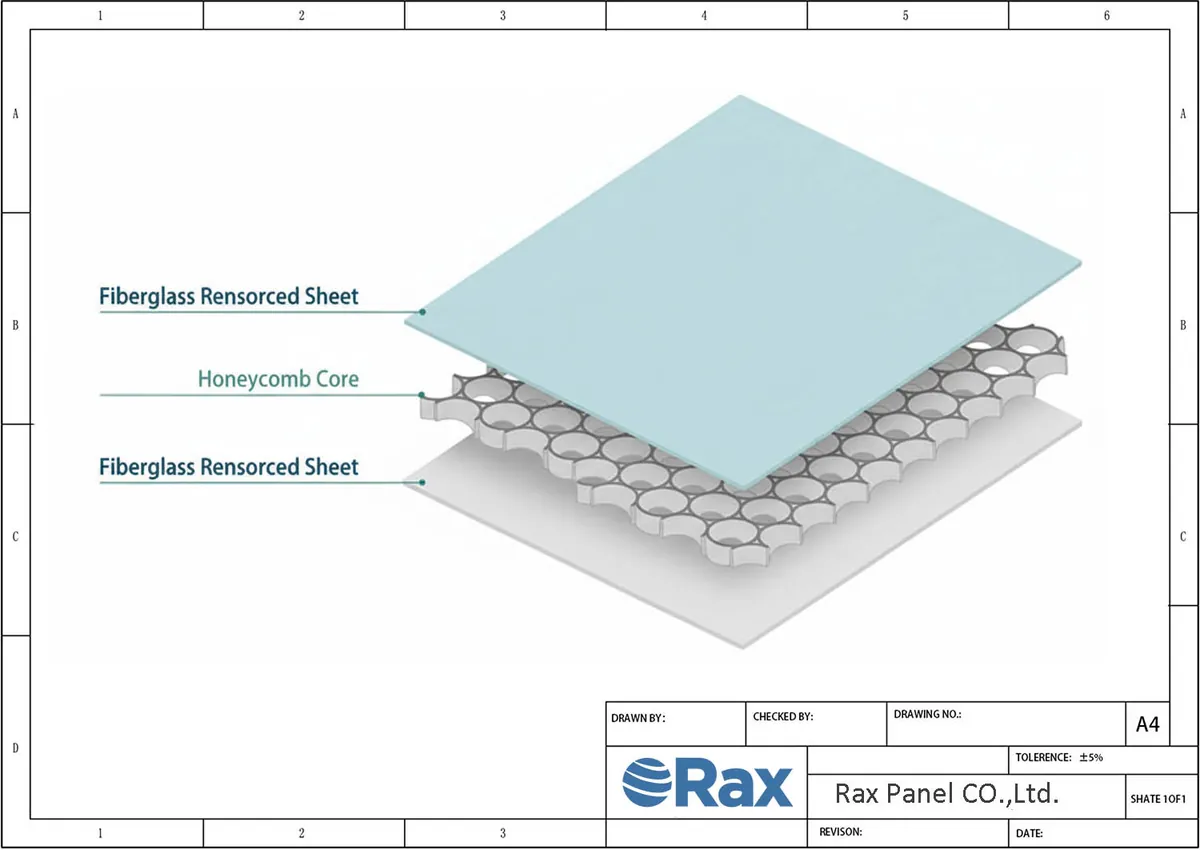
Analyze the Cost Breakdown
Deconstructing unit price reveals that raw alloy grades and custom tooling fees—not just square footage—determine the true total cost of ownership.
Core Geometry: Height and Aperture Cost Drivers
While the exterior dimensions often dictate the initial quote, the internal architecture of the honeycomb core acts as a primary multiplier for material expenditure. The relationship between core height (thickness) and cell aperture (size) is non-linear regarding raw material consumption. Selecting a smaller aperture size requires a higher density of aluminum foil expansion, significantly increasing the surface area-to-volume ratio. This necessitates a greater volume of aluminum alloy per cubic meter of panel, directly driving up the unit cost compared to larger, standard apertures.
Furthermore, core height impacts structural efficiency differently than solid materials. Increasing core height improves stiffness (Moment of Inertia) without a proportional increase in weight, but it does require specialized thicker bonding blocks during fabrication. Engineers must balance the higher material cost of dense, small-cell cores against the potential savings from using thinner face sheets. If the application allows, utilizing a standard aperture size rather than a custom micro-cell can reduce raw material waste without compromising the specified shear modulus.
Premium Factors: Alloys and Coatings
The chemical composition of the aluminum skin and the type of surface treatment applied are the most significant variable costs in the bill of materials. While the 3003 series serves as the industry standard for general architectural applications due to its excellent workability and corrosion resistance, upgrading to the 5000 series—specifically 5052 marine-grade alloy—commands a distinct premium. This cost is justified in harsh environments due to the higher magnesium content, which provides superior saltwater corrosion resistance and structural fatigue limits essential for marine and transport sectors.
- Polyester (PE) Coatings: Standard for interior applications; lower cost but susceptible to chalking and UV degradation over 5-7 years.
- Fluorocarbon (PVDF) Systems: A 70/30 resin ratio is required for high-end exterior curtain walls. The chemical stability of the PVDF resin provides a 20+ year lifecycle, justifying a higher initial unit price through reduced maintenance cycles.
- Anodized Finishes: While aesthetically distinct, the strict thickness control required for anodizing can increase scrap rates during pretreatment, impacting the overall cost structure.
Hidden Costs: Tooling, MOQs, and Customization
A strict analysis of the quotation must look beyond the “per square meter” line item to identify Non-Recurring Engineering (NRE) costs. Manufacturers often apply tooling fees for orders requiring non-standard core cell configurations. If the project demands a specific aperture size that is not part of the factory’s existing catalog, custom expansion blocks must be machined. These tooling costs are frequently amortized across the unit price for small orders, resulting in artificially inflated costs that disappear once volume thresholds are met.
Minimum Order Quantities (MOQs) serve as a critical financial constraint, particularly for advanced composite configurations. High-performance setups, such as those combining specific thickness tolerances with premium surface coatings, often carry high setup times. Switching production lines between standard 3003 alloys and marine-grade 5052 involves purging tanks and recalibrating rollers. Suppliers enforce MOQs to offset these downtime costs. Ignoring MOQ limits by forcing a small production run will invariably trigger “small batch surcharges” that can erode project margins by 15% or more.
| Feature | Specification | Advantage |
|---|---|---|
| Aluminum Alloy Grade | 3003 & 5052 (Premium Load-Bearing) | Superior corrosion resistance and structural integrity for marine/transport applications |
| Core Density Range | 40 – 80 kg/m³ | Optimized strength-to-weight ratio balancing rigidity with fuel efficiency in transit |
| Surface Coating System | Fluorocarbon (PVDF) – 20+ Year Durability | Maximum weather resistance and color retention for exterior curtain walls and RVs |
| Manufacturing Tolerance | ±0.5mm Thickness Precision | Eliminates assembly line stoppages and fastener snapping during automated routing |
<!DOCTYPE html>
4. Plan Logistics to Prevent Delivery Delays
To maintain project timelines, supply chain planning must account for the extended production cycles associated with custom honeycomb panel orders compared to standard inventory items. Lead time variability often dictates whether a project can rely on stock items or requires early procurement of specialized configurations. Additionally, rigorous packaging protocols are essential for large-format panels to prevent warping during transit, while freight cost optimization strategies should focus on load density and consolidated shipping routes for bulk aluminum honeycomb panel shipments.
Lead Time Variability: Standard Inventory vs. Custom Orders
Production lead times vary significantly based on the complexity of the order. Standard off-the-shelf panels typically ship within a few days as they are pre-manufactured in common sizes and core densities. Conversely, custom size orders require tooling setup, specific core cutting, and adhesive curing schedules, extending delivery windows substantially.
- Standard Inventory: Readily available in common dimensions (e.g., 1220x2440mm); lead time is minimal, often limited to order processing.
- Custom Sizes: Require precise cutting and lamination; add 2–3 weeks to the schedule for manufacturing before shipping can begin.
- Special Cores/Alloys: Materials such as PMI foam cores or specific aluminum alloys (e.g., 5052) may have longer procurement lead times from raw material suppliers.
Packaging Requirements for Large-Format Panels
Large-format honeycomb panels possess high strength-to-weight ratios but lack inherent rigidity across expansive surfaces. During transportation, improper handling or stacking can cause face sheet deformation or core crushing at stress points. Effective packaging focuses on distributing loads evenly and protecting edges from impact.
- Flat Lay Positioning: Panels must be transported horizontally rather than vertically to prevent bending stress beyond the elastic limit of the facing material.
- Interleaving Padding: Use flexible padding between stacked panels to distribute pressure and prevent scratching or localized denting on the surface finish.
- Edge Protection: Install rigid corner guards or wooden frames around perimeter edges to resist point loading from straps or lifting equipment.
- Strap Securing: Secure loads using wide soft straps rather than wire ropes to avoid concentrating force on small contact areas that could crush the honeycomb cell structure.
Freight Cost Optimization for Bulk Shipments
For bulk aluminum honeycomb panel shipments, logistics costs can be optimized by maximizing container utilization without compromising structural integrity. Since these panels are lightweight relative to their volume, cubic capacity often becomes the limiting factor rather than weight limits. Strategic consolidation allows for reduced per-unit shipping expenses.
- Container Loading Efficiency: Design packing sequences to fill full containers (e.g., 40ft High Cube) to secure lower volumetric freight rates compared to Less than Container Load (LCL) options.
- Pre-Cut Standardization: Order panels in standard module sizes that align with shipping container dimensions to minimize waste space and reduce the number of trips required.
- Consolidated Shipping: Combine orders for different applications (e.g., RV walls and truck bodies) into a single shipment if delivery locations are proximate to leverage economies of scale.
Final Check Before Placing an Order
Before you transfer the deposit, verify the documentation, finalize packaging protocols, and lock in the physical sample to prevent costly disputes upon arrival.
Third-Party Inspection Reports and Compliance Certifications
Verifying compliance documents is not merely administrative; it is your primary insurance against material failure. For critical applications, relying solely on the manufacturer’s self-declaration is insufficient. You must demand Third-Party Inspection (TPI) reports from reputable agencies such as SGS, BV, or Intertek, specifically validating the heat number and batch consistency of the aluminum alloys (typically 3003 or 5052 series) used in your order.
Mill Test Reports (MTR) must align precisely with Purchase Order (PO) requirements to guarantee validity. This is particularly vital for fire safety ratings, such as ASTM E84 Class A, where a discrepancy in core material density can invalidate the entire certification. In our facility, we maintain a rigorous traceability system for every batch of composite panels produced. We actively facilitate independent third-party inspections and encourage clients to designate representatives to witness our quality control testing processes, ensuring that the physical product matches the certified data before it leaves the factory floor.
- Mill Test Reports (MTR): Verify chemical composition and mechanical properties (tensile strength, yield strength) match the 3003 or 5052 alloy specifications.
- Fire Safety Compliance: Confirm valid ASTM E84 or EN 13501-1 certificates correspond to the specific core thickness and density ordered.
- Adhesive Certification: Ensure structural bonding adhesives meet required aging and thermal resistance standards (e.g., FTIR or DSC test results).
Packaging Standards for Safe International Transport
Composite panels are dimensionally stable but surface-sensitive and vulnerable to edge impact during ocean freight. Standard packaging is often insufficient for long-haul logistics involving multiple transshipments. You must explicitly confirm that the packaging protocol accounts for the specific destination’s handling environment.
For exports to Europe or North America, packaging compliance is as critical as the product itself. Wooden pallets and crates must be treated and stamped with ISPM 15 certification to prevent customs rejection due to pest contamination. Additionally, panels must be protected with interleaving films and rigid corner guards to prevent surface abrasion. Given our daily output exceeding 1,700 square meters, we have optimized our packaging for high-volume logistics. We utilize heavy-duty steel strapping and moisture-barrier films to eliminate transportation risks—a necessity given our experience shipping to over 50 countries with varying climatic and handling conditions.
Never accept “standard packaging” without a written specification. Vague terms often lead to panels being shrink-wrapped directly onto non-fumigated pallets, resulting in rejected goods at the port of entry.
Pre-Shipment Sample Approval and Tolerance Lock-in
The “Golden Sample” rule is the final gateway in procurement. You must sign off on a physical pre-production sample that serves as the absolute standard for the entire shipment. This is not just about checking color match; it is about locking in engineering tolerances that are legally defensible.
You must explicitly agree on the acceptable deviation range (tolerance) for critical dimensions and flatness. For instance, while standard industry tolerance for panel thickness might be ±0.2mm, high-precision facade applications may require ±0.1mm. If these tolerances are not “locked-in” before mass production begins, you have no grounds to reject a shipment that is technically within loose industry standards but unsuitable for your specific project. Our engineers conduct experimental testing on these pre-shipment samples to validate performance under load. By establishing this baseline, we ensure that the mass-produced panels delivered to your site are indistinguishable from the verified prototype, preventing costly retrofitting or project delays.
- Dimensional Tolerance Lock-in: Document the exact allowable deviation for length, width, thickness, and diagonal difference.
- Surface Finish Benchmark: Approve the gloss level (GU) and coating thickness (microns) on the sample, using a gloss meter and coating thickness gauge for verification.
- Visual Defect Standard: Define the acceptance criteria for minor surface blemishes or orange peel effects to avoid subjective arguments later.
Conclusion
Pre-qualification requires rigorous verification of peel strength standards and ASTM E84 fire ratings. Unit price fluctuates wildly based on core cell size and aperture configuration, so demand a transparent cost breakdown upfront. Furthermore, address flatness tolerances to protect project margins and perform density checks to prevent future quality issues.
- Always request Material Test Reports to confirm the specific alloy composition matches your contract.
- Verify that packaging standards explicitly prevent warping during international transit.
Beyond structural integrity, the lightweight nature of aluminum honeycomb panels also makes them ideal for applications where weight reduction is critical. This versatility extends to various industries, as seen in their use in RV walls, truck bodies, marine vessels, mobile homes, industrial equipment, sports goods, public transit, and building cladding, where they serve both structural and aesthetic roles effectively.
Frequently Asked Questions
What are common aluminum honeycomb applications?
Common uses include RV walls, truck bodies, marine vessels, mobile homes, industrial equipment, sports goods, public transit, and building cladding. Panels serve both structural and aesthetic roles across transportation, construction, and recreational industries.
Are aluminum alloys interchangeable in honeycomb panels?
No. Alloy choice impacts corrosion resistance, weldability, and load capacity. Marine-grade 5052 offers superior saltwater resistance compared to standard 3003. Select based on environmental exposure and structural role.
How does pore diameter affect strength?
Smaller pores increase peel strength but raise cost; larger cells reduce weight but may compromise stability. Optimal aperture size balances mechanical performance with material efficiency based on application needs.
How to prevent honeycomb panel warping?
Select appropriate core cell density and thickness based on load requirements. Avoid excessive customization without engineering validation. Ensure proper handling during transport and installation to maintain structural integrity.
Can honeycomb panels be custom machined?
Yes, Rax Panel offers precision machining tailored to project specifications. Engineers verify designs for manufacturability and performance before production to ensure compatibility with structural and environmental demands.