
Most facility planners assume an ISO 7 cleanroom protects against contamination effectively. But standard particle control does not equal sterility. Ambient outdoor air in a typical urban area contains 35,000,000 particles per cubic meter in the size range 0.5 μm and bigger, equivalent to an ISO 9 classification. At RaxPanel, we frequently see specifications fail because designers confuse particle filtration thresholds with the rigorous microbial kill-steps required for GMP Grade A environments.
We analyze the technical divergence between ISO 14644 classifications and sterility assurance levels so you can avoid audit failures. This article explains how to select modular panel facings that survive aggressive chemical disinfection and maps GMP Grade A through D limits against your specific manufacturing risks. Misclassifying these environments forces expensive retrofits, but aligning your material choices with your biological requirements from the start guarantees regulatory stability.
Standards for Particles vs. Microbes
Cleanrooms are classified by airborne particle limits, but sterility requires control of living microorganisms—two distinct parameters that are often confused. ISO 14644 defines particle cleanliness, while GMP and sterility standards govern microbial load. Understanding both systems is essential for designing facilities that meet regulatory expectations and product safety requirements.
ISO Particle Classification Thresholds Explained
The ISO 14644-1 standard classifies cleanrooms based on the concentration of airborne particles of specific sizes per cubic meter of air. Each class, from ISO 1 (the cleanest) to ISO 9, has a defined maximum particle count. For example, an ISO 5 room allows no more than 3,520 particles ≥0.5 µm per cubic meter. Think of it as counting dust specks in a defined volume—smaller particles are harder to control, so the limit tightens as particle size decreases.
These thresholds are measured using laser particle counters that sample air continuously. The classification does not account for microbial content, which is why a room can meet ISO 5 for particles but still fail sterility requirements if microbial controls are inadequate.
Sterility Assurance Levels for Microbial Control
Sterility assurance focuses on eliminating or controlling viable microorganisms—bacteria, fungi, and spores—that can compromise product safety. The industry standard is a Sterility Assurance Level (SAL) of 10⁻⁶, meaning there is no more than a one-in-a-million chance of a single non-sterile unit after processing. This level is critical in pharmaceutical manufacturing, where even low microbial loads can cause batch failures or patient harm.
Unlike particle counts, microbial limits are expressed in Colony Forming Units (CFU) per cubic meter or per settle plate exposure. Monitoring requires active air sampling or surface swabbing, and the acceptable limits are far stricter in critical zones where products are exposed.
Comparing ISO 14644 with GMP Cleanroom Grades
ISO 14644 and EU GMP grades both define cleanliness, but they serve different purposes. ISO focuses on particle counts, while GMP adds microbial limits and process controls tailored to pharmaceutical production. GMP Grade A corresponds to ISO 5 for both particles and microbes, but Grades B, C, and D allow higher particle counts while still requiring strict microbial monitoring.
Misalignment between ISO classification and GMP grade is a common audit finding. Facilities that only meet ISO particle standards may overlook microbial zoning, leading to non-compliance. A proper design integrates both frameworks: ISO for airflow and filtration, GMP for operational controls and cleaning protocols.
Particle Monitoring Versus Microbial Sampling Methods
Particle monitoring uses optical particle counters that draw air through a laser beam and count disruptions. These devices provide real-time data and are typically placed at strategic points for continuous or periodic sampling.
Microbial sampling relies on different methods: active air samplers that impinge air onto agar plates, settle plates that capture gravity-deposited microbes, and surface swabs for contact plates. Each method has its own detection limit and recovery efficiency, so results are not directly comparable. Regular calibration and adherence to validated protocols are essential for accurate trend analysis.
| Contaminant Type | Governing Standard | Key Metric | Material Engineering Spec | Contamination Consequence |
|---|---|---|---|---|
| Airborne Particulate Matter (Non-Viable) | ISO 14644-1 | Maximum concentration limits (particles/m³ ≥0.5µm) | Surface Roughness (Ra < 0.8 µm), Low off-gassing properties, Non-shedding fiber matrix | Product defects, yield reduction, compromised equipment functionality |
| Viable Microorganisms (Biocontamination) | ISO 14698-1 / GMP Annex 1 | CFU (Colony Forming Units) per m³ (active air) or settle plate | Non-porous Gel-coated GRP or Stainless Steel, Chemical resistance to sterilants | Batch failure, sterility assurance level (SAL) breach, regulatory recall |
| Critical Zone Particulate & Microbial Load | EU GMP Grade A / ISO Class 5 | <1 CFU (active); <3,520 particles (≥0.5µm) | Seamless monolithic surface, Class 3 airtightness, Integrated cam-lock joint systems | Substrate off-gassing contaminating process, fiber generation in aseptic core |
| Environmental Reservoirs (Mold/Condensation) | GMP Facility Design / Thermal Control | Dew point maintenance, Thermal bridge elimination | Continuous insulation (R-value) across joints, Waterproof core materials | Hidden mold growth in wall cavities, structural degradation, long-term contamination reservoir |
Choose Materials That Withstand Sterilization
To achieve true sterility, construction materials must resist aggressive “kill agents” like vaporized hydrogen peroxide without degrading, off-gassing, or harboring microbes in surface pores.
Selecting the right panel materials for sterile environments comes down to one question: can the surface survive repeated sterilization cycles without compromising hygiene? A panel that looks pristine on day one but begins to degrade after month six of VHP (vaporized hydrogen peroxide) exposure becomes a contamination source—not a barrier. This is where the distinction between a cleanroom and a sterile room becomes physically critical. Cleanrooms care about particles; sterile rooms care about microbial kill-and-rebuild cycles. Your wall and ceiling panels must endure both.
Selecting Surfaces Resistant to Chemical Disinfection
Modern sterile rooms undergo rigorous decontamination using aggressive chemistries—quaternary ammonium compounds, hydrogen peroxide vapor, peracetic acid, and sometimes bleach solutions. Standard construction materials simply cannot survive this level of chemical assault. The surface facing of your sandwich panels must be chemically inert to these agents while maintaining its structural integrity cycle after cycle.
Here is where material selection becomes non-negotiable. Gel-coated GRP (glass-reinforced plastic) panels provide an exceptionally smooth, non-porous surface that resists chemical attack from standard disinfectants. The gel coat forms a continuous, seamless barrier—there are no pores for microorganisms to colonize and no degradation pathways for harsh chemicals to exploit. For Grade A and B zones in pharmaceutical sterile rooms, our engineers consistently recommend gel-coated GRP or stainless steel facings as the minimum standard. We have seen facilities where uncoated fiberglass panels began delaminating after just 18 months of weekly VHP exposure, creating microscopic crevices that became persistent contamination sources.
- Gel-coated GRP panels: Chemically inert surface with Ra surface roughness below 0.8 micrometers, making it resistant to quaternary ammonium, hydrogen peroxide, and peracetic acid disinfection cycles.
- Stainless steel facings: The gold standard for Grade A sterile zones; impervious to all common disinfectants and compatible with steam sterilization protocols.
- CFRT (continuous fiberglass reinforced thermoplastic) sheets: Newer generation panels that are lighter and thinner than traditional GRP while offering superior chemical resistance and structural resilience under repeated disinfection.
- Materials to avoid: High-pressure laminate (HPL) surfaces and uncoated fiberglass can shed fibers and degrade under aggressive chemical disinfection, creating particulate and microbial harborage points.
Material Compatibility With Autoclave Sterilization Cycles
Some sterile room components—particularly transfer hatches, pass-through chambers, and removable wall panels—may need to withstand autoclave conditions. Autoclaving exposes materials to saturated steam at 121 degrees Celsius for extended periods, sometimes up to 30 minutes. This is a fundamentally different stressor than chemical disinfection: it combines high temperature, high humidity, and pressure. Not all composite panel materials can survive this environment without dimensional change, delamination, or surface degradation.
Our testing has shown that PMI (polymethacrylimide) foam core panels maintain structural stability under autoclave conditions far better than standard PU (polyurethane) or XPS (extruded polystyrene) cores. PMI foam can withstand temperatures well above 121 degrees Celsius without softening or losing compressive strength. For panels that must go into an autoclave, we recommend PMI foam core with stainless steel or CFRT facings as the only configuration that reliably survives repeated cycles without degradation.
- PMI foam core: Thermal resistance exceeds 150 degrees Celsius; recommended for any panel component entering an autoclave cycle.
- PU foam core: Maximum service temperature around 80 degrees Celsius; unsuitable for autoclaving but adequate for chemical disinfection of fixed wall and ceiling panels.
- XPS and PET foam cores: Moderate thermal resistance; acceptable for cleanroom environments that do not require autoclave-compatible components.
- Stainless steel and CFRT facings: Both maintain dimensional stability at autoclave temperatures; uncoated GRP may soften or yellow under prolonged steam exposure.
Non-Porous Panel Facings for Decontamination
The single most important physical property of a sterile room surface is porosity. A porous surface is a microbial safe house. No amount of disinfection can reliably penetrate a micro-porous material to kill bacteria and spores embedded within. For Grade A and B sterile zones, the panel facing must be non-porous—not just “smooth to the touch,” but genuinely non-porous at a microscopic level.
“The practical difference between a cleanroom and a sterile room comes down to what you are controlling: particles or viable microorganisms. In a cleanroom, you are controlling particles. In a sterile room, you are controlling viable microorganisms. A surface that traps particles may be acceptable for ISO 7 or 8; it is unacceptable for a Grade A zone where SAL (sterility assurance level) of 10 to the minus 6 is the regulatory target. Gel-coated GRP panels and stainless steel panels provide genuinely non-porous surfaces. Our engineers specify a surface roughness (Ra) below 0.8 micrometers as the baseline for any panel entering a sterile environment. Below that threshold, the surface is smooth enough that disinfectant contact is complete and uniform—no micro-crevices, no sheltered zones.”
Competitors often list ISO classes but fail to address the substrate off-gassing that contaminates sterile processes. High-pressure laminate (HPL) or uncoated fiberglass can shed fibers and off-gas volatile organic compounds under sterilization conditions. Gel-coated GRP or stainless steel is mandatory for Grade A/B zones. Never accept a panel specification based on ISO classification alone without verifying the facing material’s porosity and off-gassing characteristics.
Evaluating Core Materials for Sterilization Durability
The core material of a sandwich panel is often overlooked in sterile room design, but it plays a decisive role in long-term decontamination performance. While the facing handles direct chemical and thermal exposure, the core must resist moisture ingress, thermal expansion, and structural degradation that can occur when disinfection chemicals penetrate microscopic surface defects.
Closed-cell foam cores are essential for sterile environments. An open-cell or partially open-cell core will absorb disinfectant solutions during cleaning cycles, creating internal moisture reservoirs that support microbial growth—exactly the opposite of what a sterile room requires. PU foam, PET foam, and XPS foam all offer closed-cell structures, but they differ significantly in density and moisture resistance. Our production data shows PU foam cores at 40–42 kg per cubic meter provide the best balance of thermal insulation and moisture resistance for sterile room applications, with thermal conductivity at or below 0.022 watts per meter-kelvin.
- Closed-cell PU foam core provides excellent moisture resistance for fixed sterile room panels.
- PMI foam core: PMI foam core delivers the highest thermal and chemical resistance among panel core materials; ideal for autoclavable components and zones requiring repeated VHP decontamination.
- PET foam core: Good closed-cell structure with strong chemical resistance; suitable for environments using peracetic acid or hydrogen peroxide-based disinfection.
- PP honeycomb core: Lightweight and chemically inert; strong option where thermal insulation is less critical than weight reduction.
Thermal bridging at panel joints deserves special mention. In our experience working with pharmaceutical facilities, thermal bridging at panel joints is the number one cause of mold formation in sterile rooms. Unlike flat-sheet systems, insulated sandwich panels with integrated cam-lock joints maintain continuous insulation value across the entire joint line. This prevents condensation micro-climates where moisture accumulates and microorganisms thrive. When specifying panels for a sterile room, always verify that the joint system achieves Class 3 airtightness per EN 12114—this is the benchmark that ensures no unfiltered air bypasses the filtration system through panel gaps.
When evaluating panel suppliers for sterile room projects, ask specifically about their gel coat thickness and surface roughness (Ra value) data. A supplier who cannot provide these numbers is likely using a standard cleanroom panel rated for particle control, not a sterile-grade panel rated for microbial decontamination. The difference is not cosmetic—it is the difference between passing and failing a GMP audit.
How Do ISO 14644 and GMP Differ?
The Core Distinction: Physics vs. Biology
The most critical misunderstanding in the industry is treating ISO 14644 and GMP as interchangeable standards. They are not. ISO 14644-1 is a universal engineering standard focused on physics—it strictly measures the concentration of inert airborne particles (dust, skin cells, fibers). It answers the question: “How clean is the air?” GMP (Good Manufacturing Practice), specifically EU GMP Annex 1, is a regulatory framework focused on biology. It dictates the viable (living) microbiological limits necessary for pharmaceutical safety. It answers the question: “Is the environment sterile enough to prevent product contamination?” You can have a room that meets ISO Class 5 particle counts but still fails GMP Grade A because it harbors bacteria on surfaces or in the airflow.
Think of it this way: ISO is the broom that sweeps the dust, while GMP is the surgeon scrubbing for an operation. A floor can be dust-free (ISO compliant), but if it hasn’t been disinfected, it isn’t sterile (GMP compliant). Relying solely on ISO classification for pharmaceutical manufacturing is a fundamental design error that leads to failed audits and unsafe products.
The Trap of “At Rest” vs. “In Operation”
A major friction point between these two frameworks lies in how they define compliance states. ISO 14644 defines classification based on three occupancy states: “As-built” (empty, no equipment), “At-rest” (equipment on, no people), and “Operational” (full production). However, many facilities achieve certification based on “At-rest” data because the air is stable and still. GMP regulations are far stricter; they mandate compliance during the “In Operation” state when people are moving, machines are vibrating, and contamination risks are at their peak.
Engineering a room to pass a particle count test on a Sunday morning when no one is working (ISO) is significantly easier than maintaining those counts during a busy Tuesday shift (GMP). This discrepancy is why facility managers often face “Compliance Anxiety.” The HVAC system must be dynamic enough to handle the thermal load and particulate generation of human activity. If you design only for the ISO standard without factoring in the GMP operational dynamic load, your cleanroom will fail the moment production starts.
Classification Alignment and the Microbial Gap
While there is a numerical correlation between the two systems, they are not perfectly aligned. Industry generally maps GMP Grades A and B to ISO Class 5, Grade C to ISO Class 7, and Grade D to ISO Class 8. However, this mapping creates a false sense of security. Meeting the particle count for ISO Class 5 does not automatically satisfy GMP Grade A. GMP adds a layer of microbial complexity that ISO ignores entirely.
Material Science: Surfaces and Cleanability
The final differentiator lies in the physical requirements of the room infrastructure. ISO standards are largely agnostic regarding wall materials; they care about air changes and pressure differentials. GMP, conversely, is obsessed with surfaces because bacteria thrive in cracks, crevices, and porous materials. GMP mandates surfaces that are smooth, impervious, non-shedding, and chemically resistant.
In a GMP environment, a wall is not just a partition; it is a barrier against infection. Materials must withstand rigorous sterilization protocols (like vaporized hydrogen peroxide or strong chemical agents) without degrading, corroding, or outgassing. This often dictates the use of continuous, seamless systems with cam-locking mechanisms to eliminate joints where microbes can hide. If your panel system leaks air or has a surface roughness (Ra) greater than 0.8 micrometers, you might pass an ISO air test, but you will fail a GMP surface swab test.
| Parameter | ISO 14644 Definition | GMP Standard Definition | Engineering Requirement |
|---|---|---|---|
| Primary Objective | Universal standard for controlling airborne particulate cleanliness based strictly on particle counts per cubic meter. | Regulatory framework ensuring product safety, sterility, and consistent quality through hygiene, microbial control, and process validation. | Design must prioritize filtration efficiency (ISO) alongside integrated aseptic design, material cleanability, and microbial monitoring (GMP). |
| Classification System | Nine levels (ISO Class 1 to ISO 9), with Class 1 being the cleanest, defined solely by particle concentration limits. | Four grades (A, B, C, D) determined by risk assessment, combining particulate limits with active microbial contamination limits. | Grades A/B generally align with ISO Class 5; Grade C with ISO 7; Grade D with ISO 8. Design must satisfy the stricter GMP microbial requirements at these corresponding levels. |
| Operational States | Defines occupancy states (As-built, At-rest, Operational) for classification verification purposes. | Mandates strict compliance in both ‘At Rest’ (static condition) and ‘In Operation’ (working condition) with defined limits for both states. | HVAC systems must maintain stable pressure differentials and air change rates capable of meeting dynamic ‘In Operation’ particle and microbial counts. |
| Microbiological Control | Not a primary classification metric; focus is on the quantification of inert particles. | Critical requirement with strict viable limits on Colony Forming Units (CFU) for air and surfaces to ensure sterility. | Surfaces must be non-porous and chemically resistant to withstand frequent sterilization protocols without degradation or biofilm formation. |
| Surface & Material Specs | Focuses on airflow mechanics and filtration; surface requirements are generally secondary to air cleanliness. | Mandates smooth, impervious, non-shedding, and rigid surfaces (Ra < 0.8 µm) to facilitate rigorous disinfection and prevent contamination. | Grade A/B zones typically specify Gel-coated GRP or Stainless Steel panels with cam-lock systems to eliminate joints and prevent microbial harborage. |
Industries Using Cleanrooms vs. Sterile Rooms
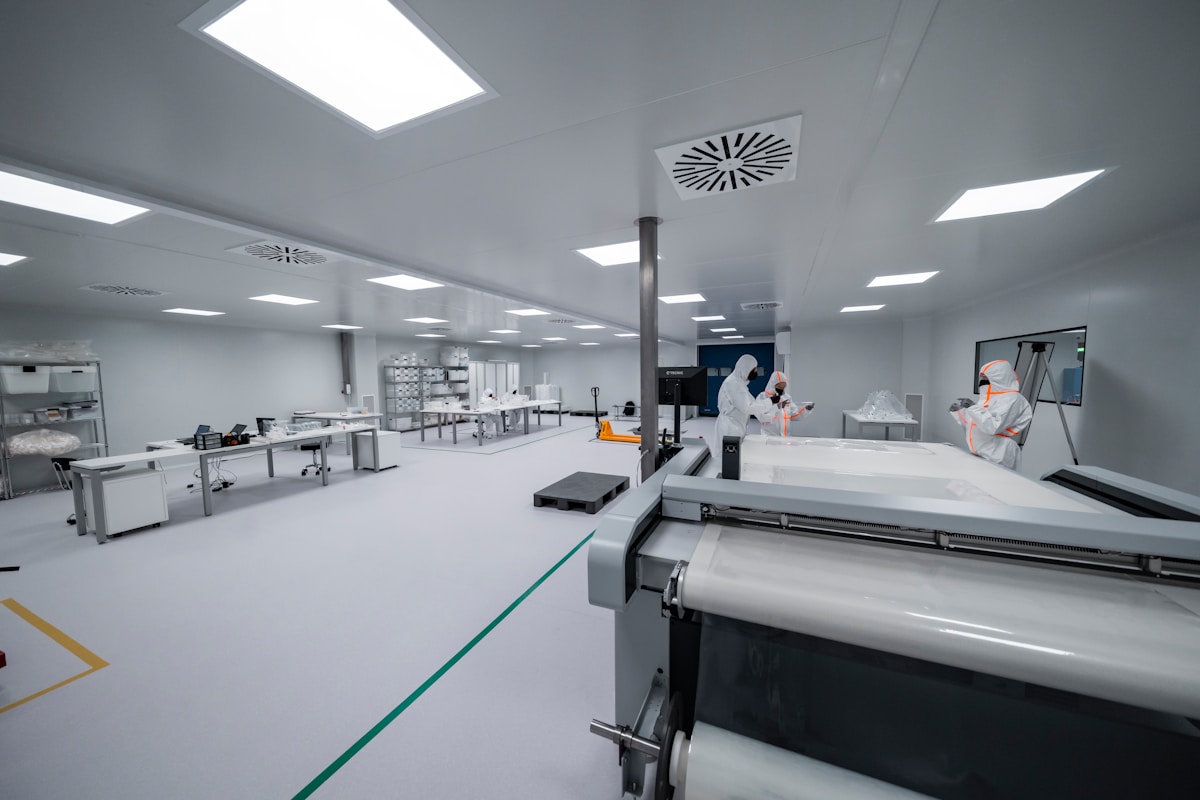
Cleanrooms control airborne particles to protect products and processes. Sterile rooms go further by eliminating viable microorganisms to ensure patient safety in pharmaceutical manufacturing.
The choice between a cleanroom and a sterile room comes down to what the product is most vulnerable to. Electronics and semiconductor fabrication require particle control because a single dust speck can destroy a microchip. Pharmaceutical manufacturing of injectable drugs requires sterility because even a non-viable particle is less dangerous than a living microbe that could cause infection in a patient.
Industries That Primarily Use Cleanrooms
Cleanrooms are the standard for industries where particulate contamination is the primary threat. These environments focus on maintaining specific airborne particle counts through HEPA filtration, positive pressure, and controlled airflow patterns. The goal is to keep the air free of dust, fibers, and other solid contaminants that could compromise product quality or manufacturing yields.
- Semiconductor and electronics manufacturing: Circuit board assembly, chip fabrication, and display panel production all require ISO Class 5 or cleaner environments. Particulate control prevents short circuits and yield loss on wafers that can cost thousands of dollars per defect.
- Medical device assembly: Syringes, catheters, and surgical instruments are assembled in cleanrooms to prevent particulate contamination. These devices do not always enter the bloodstream directly, so particle control is prioritized over microbial sterility at the assembly stage.
- Food and beverage processing: Packaging lines and ingredient handling areas use cleanrooms to control dust, mold spores, and environmental contaminants. The focus is on product shelf life and preventing spoilage rather than achieving medical-grade sterility.
- Cosmetics and personal care: Cream, lotion, and makeup manufacturing requires clean environments to prevent particulate contamination and microbial growth during production. These facilities typically operate at ISO Class 7 or 8 equivalents.
Industries That Require Sterile Rooms
Sterile rooms are essential where the end product must be free of viable microorganisms. These environments are found almost exclusively in pharmaceutical and biotechnology operations that produce injectable drugs, vaccines, and sterile ophthalmic products. A sterile room is always a cleanroom first, but it adds microbial control measures on top of particulate control.
- Injectable pharmaceutical manufacturing: Sterile fill-finish operations for IV solutions, vaccines, and biologics require Grade A zones as defined by EU GMP guidelines. These are the most stringent controlled environments in commercial manufacturing, with airborne microbial limits far stricter than any ISO particle classification alone.
- Aseptic processing: Products that cannot be terminally sterilized after packaging must be manufactured in an aseptic environment. This includes many biologic drugs, eye drops, and certain vaccine formulations where heat or radiation would destroy the active ingredient.
- Bioprocessing and cell therapy: Manufacturing of cell-based therapies and gene therapies requires both particulate and microbial control to protect both the product and the patient. These are often classified under GMP sterile manufacturing standards rather than ISO cleanroom standards alone.
Why the Distinction Matters for Facility Design
Understanding which environment your operation requires directly affects every design decision that follows. A sterile room demands more from its construction materials than a standard cleanroom. Surfaces must withstand repeated disinfection with harsh agents like hydrogen peroxide vapor and phenolic compounds without degrading. Joints and penetrations must be sealed to prevent microbial harborage points that simple particle filtration cannot address.
The overlap between these two environment types is where mistakes happen. Some companies assume that meeting ISO cleanroom standards is sufficient for pharmaceutical operations. However, ISO classifications measure particles, not microorganisms. A room can be particle-clean and still harbor dangerous levels of bacteria or fungi. Regulatory inspectors for pharmaceutical facilities specifically look for microbial control evidence that ISO alone does not provide.
For electronics manufacturers, the reverse mistake is equally common. Some facilities over-invest in sterile-grade construction when their actual risk is particulate contamination. The result is higher capital cost and more complex maintenance without meaningful quality improvement. The right environment matches the contamination risk to the product vulnerability, not to a generic standard that may not apply.
How Filtration Differs From Sanitization
Filtration removes physical particles from the air. Sanitization eliminates or deactivates microorganisms. These are two entirely different processes serving different purposes, and confusing them is a common design error.
What Filtration Actually Does
Air filtration is a physical separation process. It captures solid and liquid particles — dust, skin cells, fibers, and other airborne debris — as air moves through filter media. High-efficiency particulate air (HEPA) filters are the industry standard, rated to capture 99.97% of particles at 0.3 micrometers. Ultra-low penetration air (ULPA) filters go further, capturing 99.999% at 0.12 micrometers.
The mechanism is straightforward: air is drawn or pushed through dense fibrous layers. Particles get trapped via impaction, interception, and diffusion. The result is cleaner air with fewer visible and invisible solid matter suspended in it. That is the entire job of filtration.
What Sanitization Actually Does
Sanitization and sterilization target living microorganisms — bacteria, fungi, spores, and viruses. These processes work through chemical, thermal, or radiation-based mechanisms that destroy or deactivate biological contaminants. Common methods include vaporized hydrogen peroxide (VHP), dry heat, ethylene oxide gas, ultraviolet germicidal irradiation, and surface disinfection with validated chemical agents.
The goal here is fundamentally different. Sanitization aims to reduce microbial load to an acceptable level, while sterilization seeks to eliminate all viable microorganisms. In pharmaceutical and medical device manufacturing, this distinction matters enormously because a space can be particle-clean and still harbor dangerous biological contamination.
Why the Distinction Matters in Practice
A cleanroom equipped with HEPA filtration will meet ISO particle classifications. Airborne particulate counts will fall within specified limits. But those same HEPA filters do not kill bacteria or neutralize spores. Microorganisms can still be present in the air, on surfaces, and within the filter media itself if the system is not properly maintained.
- Particle filtration addresses physical contamination — dust, fibers, and debris that can compromise product integrity or process outcomes.
- Microbial sanitization addresses biological contamination — live organisms that can cause infection, spoil products, or violate sterility requirements.
- Neither process replaces the other. A facility designed only for particle control will fail sterility validation. A facility designed only for microbial control without adequate filtration will struggle to maintain acceptable air quality.
The Cleanroom-Sterile Room Gap
This is where the confusion creates real operational risk. Many professionals assume that achieving a high ISO classification automatically means a space is sterile. It does not. ISO standards measure particles, not microbes. A Grade A sterile environment under GMP guidelines requires both particle control and microbial control, typically achieved through combined filtration and validated sanitization protocols.
For aseptic processing areas, the design must incorporate HEPA or ULPA filtration for particulate removal AND a validated sanitization regimen that addresses surface decontamination, air sterilization, and personnel gowning procedures. The physical infrastructure — sealed panel joints, non-porous facings, cove flooring — supports both functions but does not accomplish either on its own.
How the Two Systems Work Together
In a properly designed sterile facility, filtration and sanitization operate as complementary layers of defense. HEPA-filtered supply air removes the bulk of airborne particles and some attached microorganisms. Sanitization cycles — whether through VHP fumigation, UV treatment, or chemical fogging — address the microbial load that filtration alone cannot eliminate, including spores and biofilms that survive on surfaces and within ductwork.
Regular maintenance of filtration systems is also part of this equation. Damaged or improperly seated HEPA filters become pathways for unfiltered air and potential microbial reservoirs. Filter integrity testing, such as aerosol challenge testing per ISO 14644-1, ensures the physical barrier remains intact. Without this, the entire filtration strategy is compromised.
Risks of Confusing Cleanrooms and Sterile Rooms
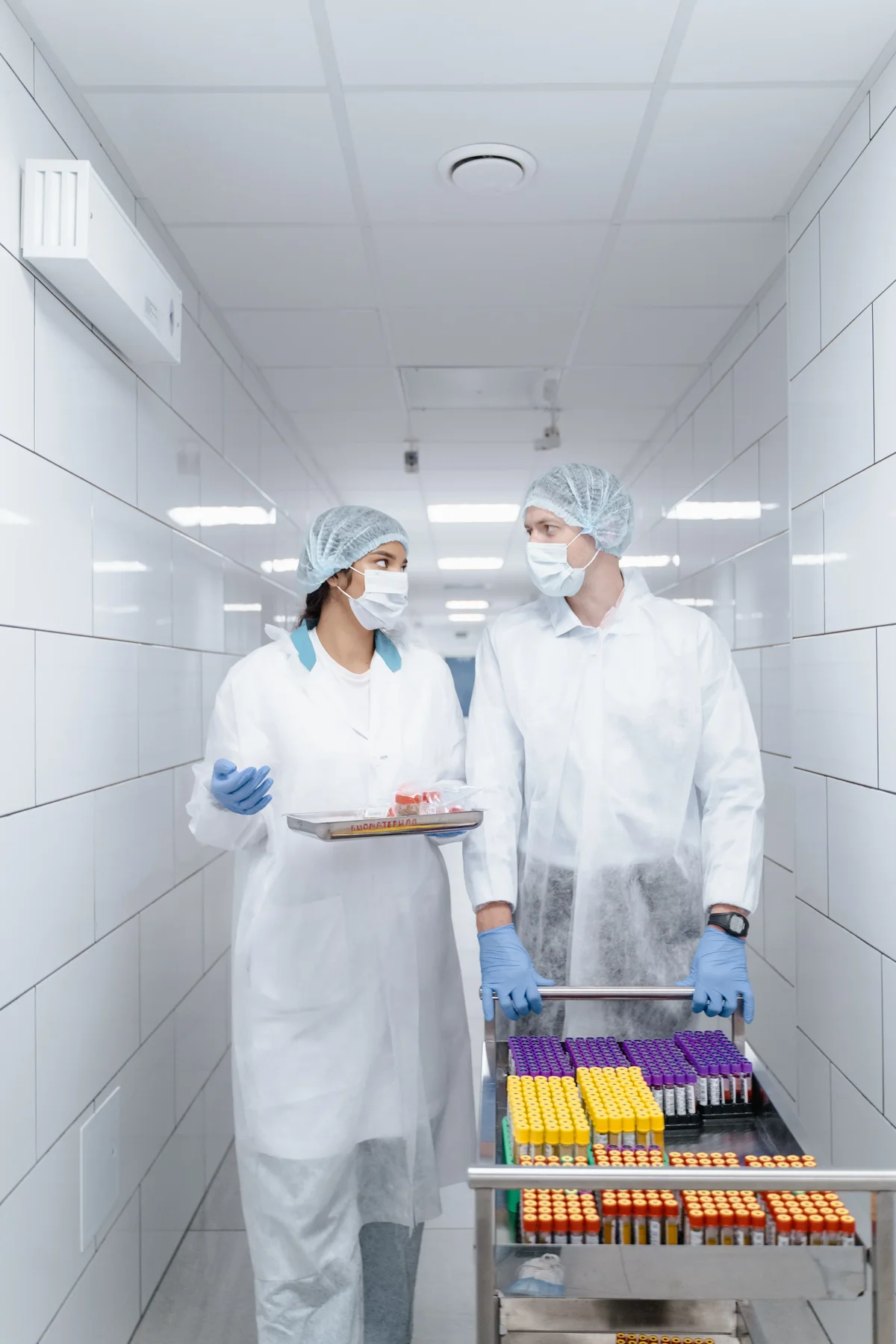
Confusing cleanroom and sterile room standards leads to regulatory failures, product contamination, expensive retrofits, and patient safety risks. These environments serve fundamentally different purposes and require distinct design approaches.
Regulatory Non-Compliance from Misclassified Environments
When organizations treat cleanroom and sterile room classifications as interchangeable, they face serious regulatory consequences. Health authorities and quality auditors evaluate these environments against different criteria. A space certified to ISO 14644 particle standards does not automatically satisfy Good Manufacturing Practice (GMP) requirements for microbial control in sterile manufacturing.
Regulatory inspections focus on whether the facility design matches the intended product sterility requirements. Misclassification appears during audits when microbial monitoring data reveals gaps between the stated classification and actual contamination control. Organizations have received warning letters, product holds, and import bans due to these discrepancies.
- Audit failures: Inspectors document non-conformances when particle control meets ISO standards but microbial barriers do not satisfy GMP sterility expectations.
- Production halts: Regulatory bodies can order immediate suspension of sterile manufacturing operations until the facility redesign meets correct classifications.
- Certificate invalidation: ISO certification alone does not demonstrate compliance with pharmaceutical sterility regulations, creating false assurance for operators.
Product Contamination from Insufficient Microbial Barriers
Cleanrooms control airborne particles, while sterile rooms control both particles and microorganisms. This distinction matters enormously for pharmaceutical products, biologics, and medical devices that require sterility assurance. A cleanroom designed to ISO 7 or ISO 8 standards may remove 99.97% of particles above 0.3 micrometers, but that does not eliminate bacteria, spores, or fungal contaminants.
Sterile manufacturing environments require additional engineering controls beyond filtration. These include positive pressure cascades, validated surface disinfection protocols, environmental monitoring programs measuring viable and non-viable particles, and personnel gowning procedures designed to minimize bioburden. When organizations build sterile production areas to cleanroom specifications alone, microbial contamination becomes an operational reality rather than a theoretical risk.
- Viable particle growth: Standard HEPA filtration removes particles but does not sterilize air. Microorganisms carried on particle surfaces can proliferate in cleanroom environments lacking proper microbial control.
- Surface contamination: Cleanroom construction materials may not withstand the aggressive disinfection cycles required for sterile areas, creating reservoirs for microbial colonization.
- Process failures: Aseptic filling, sterile compounding, and biologic manufacturing demand sterility assurance levels that particle control alone cannot achieve.
Costly Facility Retrofits from Wrong Specifications
Building a facility to incorrect standards creates substantial financial exposure. Retrofit costs typically run two to three times higher than designing correctly from the start. Organizations that construct cleanroom-rated spaces for sterile applications face structural modifications, system replacements, and validation rework that strain project budgets and timelines.
Common retrofit requirements include upgrading HVAC systems to handle microbial control demands, replacing wall and ceiling panels with surfaces compatible with sterilization agents, installing additional pressure differential controls, and redesigning airflow patterns to meet aseptic processing requirements. Each modification requires validation testing, regulatory documentation, and production downtime that compounds the total cost.
- Panel replacement: Cleanroom panels may lack the chemical resistance needed for quaternary ammonium compounds, hydrogen peroxide vapor, or other sterilization agents used in sterile environments.
- HVAC upgrades: Sterile rooms often require higher air change rates, stricter pressure cascades, and additional filtration stages that standard cleanroom systems do not provide.
- Validation rework: Re-qualification testing must demonstrate both particle and microbial control, requiring extended monitoring periods and additional documentation.
Patient Safety Risks in Pharmaceutical Operations
Patient harm represents the most serious consequence of confusing cleanroom and sterile room requirements. Sterile pharmaceutical products, injectable drugs, and biologics come into direct contact with patient tissue or bloodstream. Microbial contamination in these products can cause sepsis, infection, or death. Regulatory frameworks impose sterility requirements precisely because the end-use environment eliminates the body’s natural defenses.
Historical contamination events in pharmaceutical manufacturing have traced root causes to inadequate environmental controls. When sterile manufacturing occurs in spaces designed only for particle control, bioburden levels can exceed acceptable thresholds. Product sterility testing may pass if sampling is insufficient, creating false confidence while contaminated batches reach patients.
- Infectious risk: Sterile injectable products produced in inadequately controlled environments introduce pathogens directly into patient circulation, bypassing all natural immune barriers.
- Pyrogen contamination: Bacterial endotoxins from microbial growth in poorly controlled spaces cause febrile reactions and can be fatal in vulnerable patient populations.
- Product recalls: Sterility failures discovered post-distribution trigger mandatory recalls, regulatory action, and loss of patient trust that extends far beyond immediate financial losses.
Select the Right Room for Your Product
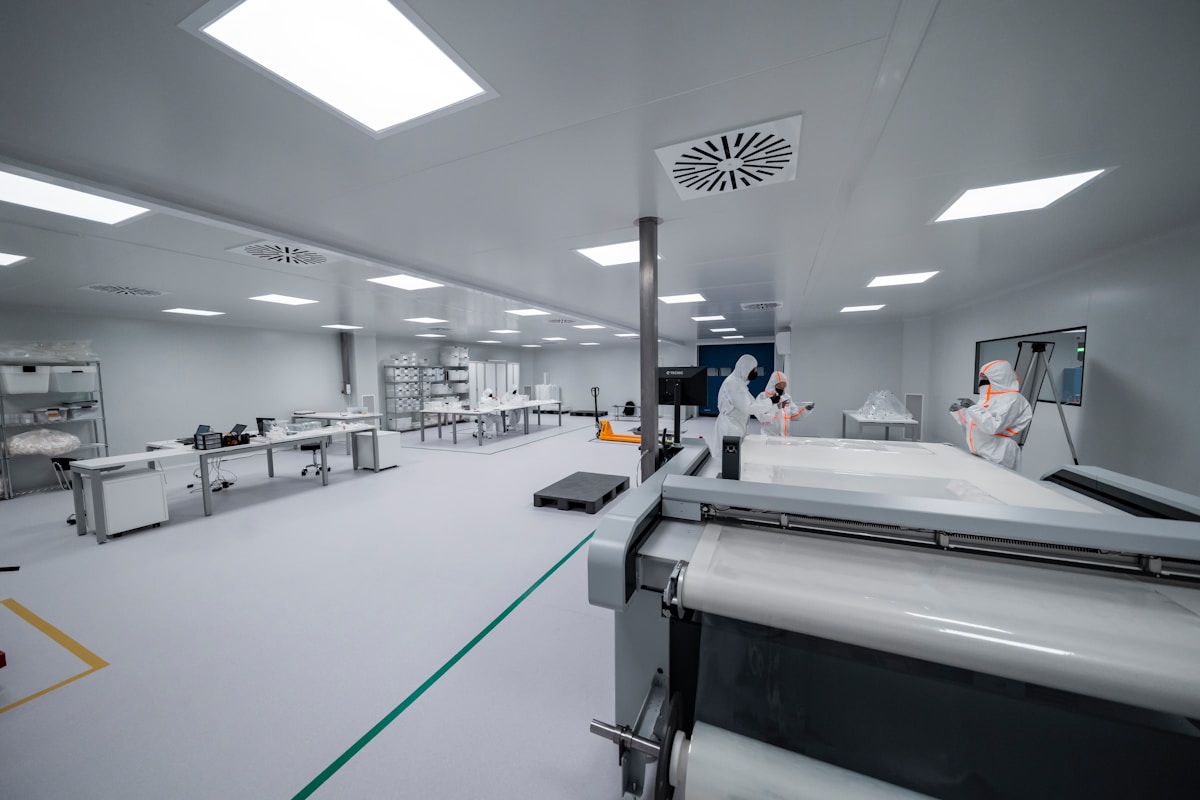
Selecting the optimal environment requires balancing contamination risk against regulatory mandates; over-specifying a cleanroom is as financially damaging as under-specifying a sterile room.
Matching Product Risks to Room Classifications
The first step in facility design is determining whether the product requires a strictly controlled cleanroom or a fully validated sterile room. This distinction is not merely semantic; it dictates the engineering complexity and operational cost. A cleanroom focuses on controlling airborne particulates to meet ISO standards, suitable for electronics or automotive components where dust interferes with function. Conversely, a sterile room must control both particulates and microorganisms to meet GMP requirements, essential for injectables or surgical implants where biological contamination poses patient safety risks.
Decision-makers must perform a rigorous risk assessment. If the product is non-sterile but sensitive to dust—such as optical lenses—a standard ISO Class 7 or 8 cleanroom is sufficient. Over-building this environment to meet sterility standards wastes capital on unnecessary HEPA filtration and gowning protocols. However, if the manufacturing process involves aseptic processing, a cleanroom environment is fundamentally inadequate because it cannot guarantee the absence of viable microorganisms, regardless of how low the particle count is.
Pharmaceutical Manufacturing vs. Device Assembly Needs
While both industries utilize controlled environments, their infrastructure requirements diverge significantly based on the consequences of contamination. Pharmaceutical manufacturing, particularly for parenteral drugs, demands aseptic processing environments. This necessitates air changes per hour (ACH) often exceeding 600, unidirectional airflow (laminar flow), and rigorous environmental monitoring for viable and non-viable particles.
In contrast, medical device assembly often has a wider tolerance profile. Non-invasive devices typically require standard cleanroom conditions (ISO Class 7 or 8) focused on particulate control to ensure mechanical functionality and packaging integrity. The infrastructure does not always require the stringent coving and sterilization protocols found in pharma unless the device is intended to be implanted or will contact sterile tissue.
| Industry Sector | Primary Contamination Risk | Typical Environmental Focus |
|---|---|---|
| Pharmaceuticals (Parenteral) | Microbial & Endotoxin | Sterile Room (GMP Grade A/B) |
| Medical Devices (Non-Invasive) | Particulate (Dust/Debris) | Cleanroom (ISO Class 7/8) |
| Electronics/Semiconductors | Particulate (Yield Killer) | Cleanroom (ISO Class 3-5) |
Assessing Regulatory Mandates for Your Application
Engineering choices must be subordinate to regulatory frameworks. The facility design is essentially a physical manifestation of the applicable laws. For pharmaceutical manufacturers operating in the US or Europe, compliance with FDA or EMA GMP guidelines is mandatory. These regulations often dictate specific environmental monitoring regimes, pressure differentials, and air change rates that go beyond basic ISO standards.
Specific applications have highly prescriptive standards. For example, hospital pharmacy compounding must strictly adhere to USP <797> and <800> standards, which govern everything from airflow patterns to surface disinfection protocols. Ignoring these specific mandates during the design phase results in facilities that fail validation, leading to costly retrofits or regulatory shutdowns. The correct room type is determined not just by the product, but by the specific “section” of the law that governs that product’s creation.
Do not assume ISO Class 5 compliance automatically meets GMP Grade A requirements. Grade A includes operational definitions (viable monitoring during activity) that ISO does not cover. A design based solely on ISO classification in a regulated pharmaceutical setting will likely fail a regulatory audit.
Engineering Consultation for Custom Cleanroom Design
Once the risk and regulatory profile is established, professional engineering consultation is required to translate these requirements into physical infrastructure. Off-the-shelf solutions rarely suffice for complex manufacturing processes. A consultant must analyze the workflow, material flow, and personnel movement to design a layout that minimizes cross-contamination.
- Pressure Cascades: Designing air pressure differentials (positive or negative) to ensure air flows from clean areas to less clean areas, containing contaminants.
- Material Durability: Selecting wall and ceiling systems that can withstand the specific cleaning agents (e.g., sporicidal agents) required for the classification without degrading or outgassing.
- HVAC Integration: Ensuring the HVAC system maintains consistent temperature, humidity, and filtration levels even during peak operational loads.
Effective consultation bridges the gap between theoretical classification and operational reality. It ensures that the room selected for the product can be maintained effectively over its lifespan, preventing the scenario where a state-of-the-art facility degrades into a non-compliant environment due to unmanageable maintenance requirements.
Conclusion
Stop confusing ISO particle counts with actual GMP sterility. A low particle count means nothing if your materials harbor bacteria. We see too many retrofits where owners prioritized airflow but ignored surface chemistry. You absolutely need non-porous facings that survive aggressive hydrogen peroxide scrubbing without degrading. For injectables, particle control is the baseline, but microbial control is the real battle. Don’t compromise on material specifications just to save a few dollars on the build.
Talk to our engineering team about your specific microbial risks before specifying materials. We fabricate modular systems specifically designed to handle repeated autoclave cycles and harsh chemical exposure without delaminating. Send us your disinfectant protocols, and we will verify the core density and facing compatibility. Let’s ensure your infrastructure actually survives the chemistry required for sterility.
Frequently Asked Questions
What is positive room pressure?
Positive pressure ensures air flows out of the controlled environment, preventing contaminants from infiltrating. It acts as a critical barrier in both cleanrooms and sterile rooms to protect the internal space. Pressure cascades are maintained between rooms of different classification grades to control airflow direction.
How does airflow affect sterility?
Sterile rooms typically require unidirectional (laminar) airflow to sweep particles away from critical zones. Standard cleanrooms often utilize turbulent airflow to dilute contaminants rather than remove them directly. Proper air velocity is essential to maintain sterility assurance levels during aseptic processing.
Is continuous environmental monitoring required?
While cleanrooms may monitor particle counts periodically, sterile rooms require continuous environmental monitoring of both viable and non-viable particles. This real-time data collection is mandatory for regulatory compliance in pharmaceutical manufacturing. It provides the necessary audit trail to prove consistent aseptic conditions.
Do gowning requirements differ?
Yes, sterile rooms demand full aseptic gowning procedures, often including sterile gloves and masks, within a gowning room cascade. Standard cleanrooms may only require basic coveralls and hairnets to control particulate shedding. The stricter protocol in sterile rooms prevents human-derived microbial ingress.
How are panel joints sealed effectively?
Effective sealing relies on non-porous, mechanical gasket systems rather than chemical sealants that can degrade. Seamless connections prevent crevices where bacteria could harbor and resist routine sterilization. Advanced composite panels utilize integrated cam-lock systems to ensure continuous, airtight joints.
What is the role of pass-throughs?
Pass-through chambers allow materials to enter a sterile room without personnel disrupting the pressure equilibrium. They often feature interlocking doors and integrated sterilization methods like UV light. These units minimize contamination risks associated with high-traffic entry points.