
Most buyers spec walk-in cooler panels based on upfront price per square foot. That decision costs more over 10 years than buying the most expensive panels on the market. Panel insulation drives more performance variance than any other single component in a cold room build. Polyurethane cores hit R-32 at 4 inches thick. Polystyrene needs 5 to 6 inches to match that number, and you surrender interior storage volume every time.
This article covers what actually determines total cost of ownership. We start with cold room insulation foam types and how each one holds up after years of thermal cycling, then move into cam-lock vs tongue-and-groove connection systems and walk-in cooler panel thickness requirements for coolers versus freezers. You’ll have a quoting framework that accounts for energy spend over the full panel lifespan, not just material cost at time of purchase.

What Are Walk-In Cooler Panels?
Walk-in cooler panels are modular, insulated sandwich structures that define the thermal envelope of any cold storage system. The foam core and facing materials you select directly dictate energy consumption, compliance, and total cost of ownership.
Core Components and Structure
A walk-in cooler panel is fundamentally a sandwich composite. It consists of a rigid insulation core sandwiched between two structural facing skins. The engineering logic is straightforward: the core provides thermal resistance, while the skins provide structural integrity, moisture protection, and a cleanable surface. How these three elements bond together determines whether your cold room holds temperature reliably for 15 years, or becomes an energy liability within three.
The insulation core is where the majority of thermal performance lives. Industry-standard cold room panels typically range from 4 to 6 inches in thickness for cooler applications, and 5 to 8 inches for freezer applications that must maintain temperatures below 0°F (-18°C). The foam type directly controls the R-value per inch:
- Polyurethane (PU) Foam: R-value of approximately 6.5 to 7.0 per inch. The most thermally efficient option available. PU foam permanently adheres to metal or composite skins during the foaming process, creating a monolithic structural bond. At Rax Panel, we use PU cores extensively in our GRP/FRP sandwich panels for refrigerated truck bodies and cold room applications because this adhesive bond eliminates delamination risk.
- Polyisocyanurate (PIR) Foam: Similar thermal performance to PU but with superior fire resistance. PIR chars rather than melts when exposed to flame, which makes it the preferred choice for facilities requiring strict fire compliance.
- Extruded Polystyrene (XPS) Foam: R-value of approximately 5.0 per inch. Lower cost and lighter weight, but requires thicker panels to match PU thermal performance. XPS offers good moisture resistance, making it suitable for high-humidity cooler environments where condensation is a constant concern.
- PET Foam: An increasingly popular eco-friendly alternative. PET cores are fully recyclable, provide stable long-term R-value without the off-gassing drift that affects some PU products, and offer excellent moisture resistance. We supply PET core options across our CFRT and GRP sandwich panel lines specifically for buyers prioritizing sustainability metrics.
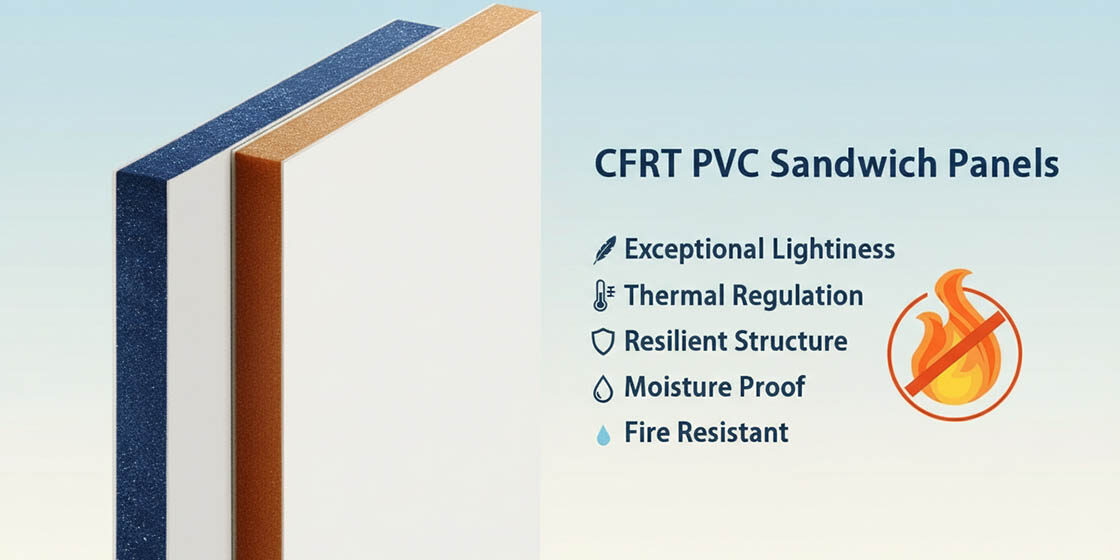
The facing skins protect the foam core and define the usable surface. Traditional cold storage panels use galvanized steel, GALVALUME®, or stainless steel skins. However, the industry is shifting toward composite facings that offer superior performance in specific environments. At Rax Panel, we manufacture walk-in panel skins using GRP/FRP (fiberglass reinforced plastic), CFRT (continuous fiberglass reinforced thermoplastic), aluminum, and stainless steel.
GRP skins with gelcoat finish provide a waterproof, flat, smooth surface that resists corrosion far better than painted metal in high-moisture environments. For truck and trailer bodies where weight is money, CFRT facings deliver equivalent structural performance at significantly lower weight.
The joining mechanism is the third critical component. Panels must connect to form a continuous, airtight thermal envelope. The two dominant systems are cam-lock and tongue-and-groove:
- Cam-Lock Systems: Embedded hook-and-receiver fasteners that physically pull adjacent panels together when turned with an Allen wrench. Cam-locks create a compressive seal that eliminates gaps, allows for rapid assembly and disassembly, and makes future relocation or expansion practical. This is the industry standard for commercial walk-in coolers.
- Tongue-and-Groove Joints: A mechanical interlock where a protruding edge fits into a recessed channel. Often paired with sealant rather than mechanical fasteners. Common in soft-nose PU panels where the entire edge is foam. Simpler and cheaper, but sealing quality depends heavily on installation precision and sealant integrity over time.
Why Panel Quality Matters
Panel quality is not an abstract concern. It shows up directly on your energy bill, your maintenance schedule, and your compliance audit results. We have seen facilities where incorrectly specified panels, typically polystyrene cores at insufficient thickness, resulted in compressors running continuously, frost buildup at panel joints, and energy costs 30 to 40 percent higher than projected.
The refrigeration unit size required for a given cold room is calculated based on assumed panel thermal performance. If the panels underperform, the refrigeration system compensates by working harder, which shortens compressor life and voids warranty expectations.
Moisture infiltration is the silent killer of cold storage panel systems. When warm, humid air penetrates panel joints or permeates through low-quality facing skins, it condenses inside the insulation core. Water-saturated foam loses its insulating properties rapidly: a wet PU core can lose 50 percent or more of its R-value.
Over time, this moisture promotes mold growth, corrodes metal skins from the inside, and creates food safety hazards that will fail health inspections. This is precisely why the facing material and joint sealing method cannot be treated as secondary decisions.
For distributors and procurement managers sourcing panels from Chinese manufacturers, quality control consistency is the real risk. Two panels from the same supplier can have vastly different foam densities, skin adhesion strength, and dimensional accuracy if the production line lacks proper process controls.
At Rax Panel, our production line runs over 1,700 square meters of composite panel output daily, and every panel goes through density verification, dimensional checks, and thermal conductivity testing before shipping. This consistency is what separates a reliable long-term supply partner from a source that generates warranty claims and damaged client relationships.
The total cost of ownership calculation for walk-in cooler panels must account for three factors: initial purchase price, energy consumption over the panel lifespan, and maintenance or replacement costs. A PU-core panel at 4-inch thickness with GRP facings and cam-lock joints will typically cost more upfront than an XPS-core panel with painted steel skins.
However, the PU panel’s superior R-value reduces daily energy consumption, the GRP skin eliminates corrosion-related replacement, and the cam-lock system allows modular expansion without demolition. Over a 15-year operational window, the higher-specification panel almost always delivers lower total cost. For buyers evaluating international suppliers, requesting independent thermal conductivity test data and panel dimensional tolerance reports before committing to volume orders is the single most effective way to avoid costly quality surprises.
Insulation Types and R-Values Explained
Choosing between Polyurethane (PU) and Polystyrene (XPS/EPS) dictates your long-term energy costs and internal storage footprint. PU offers superior thermal resistance per inch, allowing for thinner walls and maximum usable space.
Polyurethane vs. Polystyrene: The Core Decision
Insulation is the engine of any walk-in cooler, refrigerated truck body, or modular cold room. The foam core you select directly impacts long-term energy consumption, structural integrity, and overall weight. Many buyers default to the cheapest option without realizing how it limits their operational margins over a 10-to-15-year lifespan.
- Polyurethane (PU / PIR): Offers the highest thermal efficiency on the market, typically yielding an R-value of 6.5 to 7.0 per inch. When foamed in place, PU expands and chemically bonds to the metal or FRP skins, creating a solid, monolithic structure that prevents delamination. This high density allows you to use a thinner panel to hit strict energy codes, maximizing your internal storage volume.
- Extruded Polystyrene (XPS): Provides an R-value of roughly 5.0 per inch. It is lightweight, easy to handle during assembly, and offers decent moisture resistance. However, because it has a lower thermal resistance, you must increase the wall thickness to match the performance of PU, which eats into your interior square footage.
- Expanded Polystyrene (EPS): The most economical choice with an R-value around 3.8 to 4.0 per inch. While it saves money upfront, it requires significantly thicker panels to reach the insulation levels required for commercial freezers, heavily impacting your structural design limits.
For specialized vehicle manufacturing and commercial construction, PU foam is almost always the superior choice. The higher initial material cost is rapidly offset by reduced compressor loads and lower daily electricity consumption. At Rax Panel, our PU and PIR core options are engineered to maintain structural rigidity even under the constant vibration of heavy transport.
Understanding R-Value Requirements for Cold Storage
R-value measures thermal resistance: the higher the number, the better the insulation prevents heat transfer. Procurement teams and facility planners must calculate R-value requirements based on the exact internal temperature target and the external ambient climate. Under-insulating by even a fraction of an inch forces refrigeration units to run continuously, drastically shortening compressor lifespan.
- Walk-in Coolers (Medium Temp): For spaces maintaining temperatures between 35°F and 55°F (such as commercial food storage or agricultural cold rooms), a 4-inch to 5-inch PU panel is standard. This setup generally achieves an R-value of 25 to 32, meeting most international energy compliance standards.
- Walk-in Freezers (Low Temp): For sub-freezing applications (0°F down to -20°F), the thermal load is significantly higher. These environments strictly require 5-inch to 6-inch PU panels, or even thicker XPS configurations, to hit an R-value of 32 to 42. Failing to use the correct walk-in cooler panel thickness here will result in severe frost buildup at the joints.
A common industry misconception is that PU panels rapidly lose their R-value over time due to blowing agents off-gassing. In reality, once the foam is encapsulated between our rigid GRP or aluminum skins, the thermal drift stabilizes quickly. When engineering a cold room or truck body, you must look at the whole system. Combining high-grade PU foam with tight cam-lock joints ensures the stated R-value is maintained in the field, not just in a laboratory brochure.
| Insulation Type | R-Value | Key Properties | Best Application |
|---|---|---|---|
| Polyurethane (PU/PUR) | ~R-6.5–7.0 /in (R-32 at 4″–6″) | Highest thermal efficiency; permanently adheres to metal skins; allows thinner walls for maximum storage space | Walk-in coolers & freezers; refrigerated truck bodies; cold rooms |
| Polyisocyanurate (PIR) | ~R-6.0–6.5 /in | Enhanced fire resistance vs PUR; good dimensional stability; meets stringent building codes | Commercial building panels; fire-rated cold storage; exterior wall cladding |
| Extruded Polystyrene (XPS) | ~R-5.0 /in | Excellent moisture resistance; lightweight; lower cost than PUR; consistent closed-cell structure | RV walls & roofing; truck bodies; foam core sandwich panels |
| Expanded Polystyrene (EPS) | ~R-3.8–4.4 /in | Most cost-effective option; easy to handle; good water and airflow resistance; requires thicker panels to match PUR R-value | Budget walk-in coolers; mobile homes; lightweight wall panels |
| PET Foam | ~R-4.0–5.0 /in | Eco-friendly and recyclable; excellent weight-to-strength ratio; good chemical resistance; thermally stable | RV & truck sandwich panels; marine vessel interiors; sustainable construction |
| PVC Foam | ~R-4.5–5.5 /in | Closed-cell structure; waterproof; lightweight; good mechanical strength and fire self-extinguishing properties | Marine & vessel panels; mobile home walls; industrial equipment enclosures |
| PMI Foam | ~R-5.5–6.0 /in | Highest specific strength; exceptional high-temperature stability; minimal thermal drift over lifespan | Aviation; high-performance sports equipment; precision industrial applications |
| Rockwool (Mineral Wool) | ~R-3.3–4.0 /in | Superior fire resistance (A1 non-combustible); excellent acoustic insulation; dimensionally stable at extreme temps | Fire-rated building sandwich panels; industrial facilities; exterior wall cladding |
| PP Honeycomb Core | ~R-1.5–2.5 /in | Ultra-lightweight; exceptional strength-to-weight ratio; thermoplastic and recyclable; excellent shear performance | Truck dry freight bodies; structural panels; non-slip flooring; weight-sensitive applications |
Panel Construction and Connection Systems
Panel connection systems dictate thermal efficiency, assembly speed, and long-term operational costs. The wrong joint design leaks energy from day one.
Cam-Lock Mechanisms
Cam-lock systems are the industry standard for walk-in cooler and freezer panel assembly for one reason: they pull panels flush and lock them airtight without surface-visible hardware. The mechanism consists of embedded steel hooks and receivers inside the panel edges. An Allen wrench engages the cam, drawing adjacent panels together with mechanical force that hand-tightening simply cannot match.
For distributors and facility planners evaluating walk-in panel construction, cam-locks offer a practical advantage that directly impacts installation labor costs. A standard cold room can be assembled in a fraction of the time compared to bolt-together or adhesive-only systems. More importantly, cam-lock panels can be disassembled and relocated without destruction, which matters for clients running seasonal operations or planning facility upgrades.
At Rax Panel, our engineering team integrates cam-lock hardware during the composite panel layup process, ensuring the locking points are fully encapsulated within the foam core, whether that core is PU, XPS, PET, or PVC. This prevents metal-to-metal thermal bridging at the lock points, a detail that cheaper panels often overlook.
Wood Frame vs. Hard Nose vs. Soft Nose Construction
Panel edge construction falls into two primary categories: hard nose (also called hard rail) and soft nose. The distinction directly affects thermal performance, structural rigidity, and which insulation cores can be used.
- Hard Nose / Wood Frame: Panel edges contain wood rails or high-density foam rails. These provide excellent structural backing for heavy hardware mounting: door hinges, shelving brackets, and refrigeration unit supports. However, wood is a thermal conductor compared to closed-cell foam, and these rails create a thermal bridge at every panel joint. Polystyrene-core panels (EPS and XPS) are generally restricted to hard nose construction because the foam does not bond with the same structural rigidity as polyurethane during the foaming process.
- Soft Nose (Foam-Only Edge): The panel edge is entirely continuous polyurethane foam, the same material as the core. Soft nose panels use tongue-and-groove profiling to create an interlocking seal with significantly better thermal resistance at the joints. There is no wood to bridge heat, no organic material to absorb moisture, and no pathway for mold growth inside the panel envelope.
The trade-off is straightforward. If your client needs to mount heavy components directly into panel edges, hard nose with wood reinforcement provides the mechanical strength required. If the priority is maximum R-value retention and strict energy compliance, soft nose tongue-and-groove with polyurethane core is the technically superior choice.
Our engineers at Rax Panel configure both options depending on the application: hard nose for heavy-duty truck bodies and industrial freezer floors, soft nose for high-efficiency cold rooms and mobile home envelopes where every degree of temperature retention translates to lower operating costs.
Joint Sealing and Thermal Breaks
Even the highest R-value panel becomes a liability if the joints leak. Thermal bridging at panel connections accounts for a disproportionate percentage of total energy loss in cold storage systems. The joint is always the weakest point in the thermal envelope.
Effective joint sealing requires three elements working together: mechanical compression from the cam-lock system, a continuous gasket or sealant barrier, and a physical thermal break in the joint profile. Tongue-and-groove designs naturally create a longer path for heat to travel through the joint compared to flat-edge butted panels. When polyurethane foam fills the tongue-and-groove channel during manufacturing, the thermal break is built into the panel itself rather than relying solely on field-applied sealant.
For procurement teams evaluating suppliers, the critical inspection point is the joint interface. Ask for cross-section samples. Look at whether the foam core is continuous through the edge profile or interrupted by rail material. Check whether the facing material, whether GRP, aluminum, stainless steel, or CFRT, wraps into the joint to create a secondary vapor seal. These construction details determine whether a cold room maintains its rated R-value for five years or twenty-five years.
Rax Panel manufactures composite panels with continuous foam-to-edge profiles on our soft nose lines and reinforced wood-insert edges on our hard nose configurations. Our production line outputs over 1,700 square meters daily, and every panel goes through dimensional tolerance checks that ensure joint gaps stay within spec before shipment. For international distributors, this consistency is what prevents costly field modifications and warranty claims on installed projects.
Common Applications and Use Cases
Walk-in cooler panels are the backbone of temperature-controlled storage across foodservice, logistics, and pharma. The right panel specification directly dictates energy costs, compliance status, and system lifespan.
Restaurants and Foodservice
In commercial kitchens, walk-in coolers operate in a brutal environment. Staff are constantly moving product in and out, doors stay open too long, and ambient kitchen temperatures routinely exceed 90°F. The panels you select here need to handle thermal shock, frequent washdowns with harsh cleaning chemicals, and strict health department inspections.
For restaurant walk-in applications, we typically recommend panels with a PU (polyurethane) or XPS (extruded polystyrene) foam core at 4-inch thickness for standard cooler temperatures (35°F to 38°F). The higher R-value of PU foam, around R-32 for a 4-inch panel, means the refrigeration unit cycles less frequently, which translates directly to lower monthly electricity bills. Over a 10-year lifespan, that energy savings often exceeds the initial panel cost difference between PU and cheaper EPS alternatives.
Facing material matters significantly in foodservice. Stainless steel facings are the gold standard for interior surfaces because they resist corrosion from acidic food spills, handle daily impacts from carts and shelving, and clean easily during health inspections. GRP (fiberglass reinforced plastic) sheet facings with gelcoat are another strong option. They provide a smooth, non-porous, waterproof surface that inhibits bacterial growth and holds up well against repeated washdowns.
Cam-lock panel assembly is the practical choice for restaurant installations. The built-in fastening mechanism pulls panels tight, creating an airtight seal without visible hardware on the interior surface. This eliminates crevices where food debris and moisture could collect, a critical food safety detail that health inspectors specifically check.
Cold Storage Warehouses
Cold storage warehouses operate at an entirely different scale than restaurant coolers. We are talking about facilities that store thousands of pallets of frozen or chilled goods, where a single panel joint failure can compromise millions of dollars of inventory. Panel selection here is an infrastructure decision, not an equipment purchase.
Warehouse freezer applications demand 5-inch to 6-inch thick panels with PU or PIR (polyisocyanurate) foam cores. PIR offers superior fire resistance compared to standard PU, which is why many warehouse insurers and local fire codes now require it for large-scale cold storage. The thicker panel profile delivers higher R-values that keep freezer temperatures stable at -10°F to 0°F, even when outdoor ambient temperatures hit 100°F in summer.
- Panel thickness for coolers (above freezing): 4-inch minimum with R-value of R-26 to R-32
- Panel thickness for freezers (below freezing): 5-inch to 6-inch with R-value of R-36 to R-48
- Fire rating consideration: PIR core panels achieve Class 1 fire spread rating, often required for large warehouse footprints
- Vapor barrier placement: Critical on the warm side of the panel assembly to prevent condensation inside the foam core
For warehouse flooring, aluminum-faced panels are standard because they support concentrated loads exceeding 500 lbs per square foot from loaded forklifts and pallet jacks. On walls and ceilings, Aluzinc or coated steel facings provide the structural rigidity and corrosion resistance needed for decades of service.
One factor warehouse operators frequently underestimate is the total cost of ownership tied to panel joint design. Tongue-and-groove joints with cam-lock mechanisms provide measurably tighter seals than flat-edge panels relying on sealant. Over a 15 to 20-year operational life, the reduced thermal leakage from properly sealed cam-lock joints can save tens of thousands of dollars in compressor runtime and refrigerant costs.
Pharmaceutical and Floral Storage
Pharmaceutical cold storage is governed by stringent regulatory requirements. Vaccines, biologics, and certain medications must be stored within narrow temperature bands, often between 36°F and 46°F, with documented consistency. Any temperature excursion can render an entire shipment unusable. The panels used to construct these storage rooms must deliver precise, uninterrupted thermal performance.
PU foam core panels at 4-inch to 5-inch thickness are the baseline specification for pharma cold rooms. The key differentiator in this application is joint integrity. Pharmaceutical-grade cold rooms often use cam-lock panels combined with continuous vapor barriers and secondary sealing systems to eliminate any possibility of air infiltration. This is not overkill. Regulatory auditors will examine thermal mapping data across the entire room, and hot spots near poorly sealed joints will trigger compliance failures.
Interior panel surfaces in pharma storage must also meet hygiene standards similar to cleanroom environments. Stainless steel facings or GRP sheets with gelcoat are preferred because they are non-porous, do not off-gas, and can withstand regular sanitization with alcohol-based or quaternary ammonium disinfectants without degrading.
Floral storage presents a different but equally demanding set of requirements. Cut flowers and live plants require high humidity environments, often 85% to 95% relative humidity, at temperatures between 33°F and 36°F. Standard building materials cannot survive sustained exposure to that level of moisture without swelling, warping, or growing mold.
This is where waterproof foam core panels with XPS or PET cores and GRP facings excel. The closed-cell structure of XPS foam resists moisture absorption even if the facing is somehow breached, and the gelcoat surface on GRP sheets prevents water penetration entirely.
For floral cold rooms, we recommend paying close attention to the vapor barrier detailing at panel joints and corners. High internal humidity creates constant vapor drive toward any cooler surface. Without proper sealing, moisture will find its way into panel joints, freeze, and gradually force the joints apart. Over time, this destroys the thermal envelope. Cam-lock joints with integrated gaskets, properly installed, provide the most reliable long-term defense against this specific failure mode.
Moisture, Mold, and Condensation Resistance
Moisture intrusion destroys thermal efficiency and breeds mold in cold storage. Selecting closed-cell cores paired with impermeable GRP or metal skins eliminates vapor drive and ensures compliance with strict washdown protocols.
Vapor Barrier Performance in Cold Storage
When warm, humid air meets the cold surfaces of a walk-in cooler, condensation inevitably forms. If that moisture penetrates the wall assembly, it destroys the R-value of the insulation and creates an invisible breeding ground for mold. The integrity of a cold room panel relies entirely on its ability to halt this vapor drive.
At Rax Panel, we engineer our foam core sandwich panels using strictly closed-cell structural foams, specifically PU, XPS, PET, and PVC. However, the foam is only half the equation. The true vapor barrier is the impermeable skin. By bonding CFRT, GRP, Aluminum, or Stainless Steel facings to the core, we create a system where moisture simply cannot penetrate the insulation layer.
Surface Finishes for Rigorous Washdown Protocols
Industrial Facility Planners and food distribution centers require interiors that can withstand aggressive chemical washdowns without degrading. Standard painted metals chip, and low-end FRP can delaminate at the seams. We specify high-performance surface finishes designed for long-term sanitary compliance.
- GRP/FRP Sheets with Gelcoat: Provides a seamless, flat, and smooth surface that is highly resistant to harsh cleaning agents, preventing bacterial colonization.
- Stainless Steel Facings: The ultimate standard for food processing, medical, and marine applications, offering maximum corrosion resistance during high-pressure washdowns.
- Aluminum and Aluzinc Skins: Lightweight, rust-proof options that stand up well to standard commercial sanitation protocols while maintaining structural integrity.
For distributors supplying the food and medical cold chain, specifying panels with factory-applied gelcoat GRP or stainless steel ensures your clients pass health inspections and extends the total lifespan of the cold room, minimizing warranty claims and replacement costs.

Certifications and Compliance Standards
Compliance is non-negotiable in cold storage. If your panels lack the right certifications, you risk failed inspections, rejected shipments, and liability exposure.
USDA and FDA Approvals for Food-Contact Environments
When panels are used in food processing, commercial kitchens, or walk-in coolers, they must meet strict health and material safety standards. The USDA and FDA require that surface materials are non-porous, non-toxic, and do not harbor bacteria. This means the facing materials and core foams cannot degrade, off-gas, or absorb moisture in a way that contaminates food.
We manufacture our GRP/FRP and PVC facing panels to be easily washable and highly resistant to mold, ensuring they meet the stringent requirements for food-safe environments. For distributors supplying the food and beverage industry, verifying these material certifications upfront prevents massive procurement headaches and custom holds down the line.
Fire Safety Ratings
Fire compliance can make or break a commercial construction project or vehicle manufacturing contract. Different applications demand different fire resistance levels, typically tested under ASTM E84 or equivalent international standards for flame spread and smoke development. Core materials dictate this performance.
- PUR/PIR Foams: PIR offers superior fire performance, often achieving a Class 1 or Class A rating, making it suitable for building assemblies where strict fire codes apply.
- Mineral Wool/Rockwool: Non-combustible core. Used in our building sandwich panels when maximum fire resistance is mandated by local building codes.
- Thermoplastics (PP/XPS): While highly moisture-resistant, these are combustible and require proper thermal barriers or specific facing materials to meet strict fire codes.
Our engineering team specifically selects core and facing combinations to ensure the final panel assembly passes local fire safety mandates for your specific target market, whether that is an RV interior or a commercial exterior wall.
Energy Code Compliance
Energy codes, such as the International Energy Conservation Code (IECC) and regional DOE standards, dictate minimum insulation values for commercial refrigeration and building envelopes. This is where core selection directly impacts your total cost of ownership and compliance status.
Polyurethane (PU) panels typically offer an R-value of roughly 6.5 to 7.0 per inch of thickness, allowing for thinner wall profiles while hitting high thermal targets. In contrast, expanded polystyrene (EPS) usually sits around 3.6 to 4.2 per inch, requiring much thicker panels to meet the exact same energy code. If you miscalculate this, refrigeration units overwork, energy bills spike, and the facility fails to meet operational standards.
We help buyers calculate the exact panel thickness and foam density needed to meet or exceed commercial cold storage R-value requirements. By customizing the composite structure, we ensure your projects stay energy-efficient and strictly within regulatory compliance.
Installation, Retrofit, and Maintenance
Proper installation and maintenance of walk-in cooler panels directly dictate thermal efficiency, energy costs, and unit lifespan, regardless of how advanced the panel specification is on paper.
Modular vs Custom Installation
Walk-in cooler panels generally fall into two installation categories: modular prefabricated systems and custom-engineered assemblies. The choice between them depends on your facility layout, thermal requirements, and whether the cold room needs to be relocatable in the future.
Modular panels, typically connected via cam-lock systems, are designed for rapid on-site assembly. The cam-lock mechanism uses embedded cylindrical fasteners that pull adjacent panels tightly together, creating a dependable airtight seal without adhesives. This is the standard approach for commercial kitchens, retail cold storage, and operations where future expansion or relocation is likely. Our engineering team at Rax Panel provides detailed installation guides for cam-lock panel systems so that distributors and facility contractors can execute assembly with minimal field errors.
Custom installation is necessary when a project involves non-standard dimensions, irregular room shapes, or integration with existing building structures. In these cases, tongue-and-groove panel joints combined with specialized sealants are often used alongside cam-locks. Custom jobs require precise manufacturing tolerances. This is where our 15+ years of production experience and in-house engineering team become critical: we conduct experimental testing to ensure every custom panel meets the required thermal and structural data standards before it leaves the factory.
From a cost standpoint, modular systems reduce labor time and field modifications. Custom systems reduce material waste and ensure a precise fit for demanding environments like food processing facilities and specialized vehicle manufacturing, where every millimeter of space and every degree of temperature control matters.
Installing Over Existing Surfaces
Retrofitting walk-in cooler panels over existing walls, ceilings, or older insulation systems is common in facility upgrades. However, it introduces specific risks, primarily moisture trapping and thermal bridging, that must be addressed before any panel goes up.
The existing surface must be evaluated for structural integrity, flatness, and moisture content. If the substrate is warped, corroded, or harboring mold, installing new panels over it simply hides the problem and accelerates failure. In our experience working with international distributors across Europe and North America, retrofit projects that skip substrate assessment are the ones that generate warranty claims within the first two years.
When installing over existing surfaces, a continuous vapor barrier on the warm side of the assembly is non-negotiable. Without it, warm ambient air migrates through joints and penetrations, condenses inside the panel core, and degrades the insulation R-value over time. This is especially critical when using XPS or PET foam cores. While they resist moisture better than EPS, no foam is immune to long-term water intrusion through poorly sealed joints.
For interior retrofit applications where structural insulated panels are being mounted over existing framed walls, PVC or GRP facing panels offer an excellent solution. They are lightweight, non-porous, and do not require the same heavy mechanical fastening that steel-faced panels demand. Our GRP sheets with gelcoat finishes provide a waterproof, flat, and smooth surface that is well-suited for these retrofits.
Preventive Maintenance Checklist
Walk-in cooler panels are not a “install and forget” component. Preventive maintenance directly impacts energy consumption, food safety compliance, and the total cost of ownership over the panel’s lifespan. Based on field data from our projects across 50+ countries, facilities that follow a structured maintenance routine extend effective panel life by 30 to 40 percent compared to those that react only when problems appear.
The following checklist covers the critical inspection points for commercial cold storage panel systems:
- Joint and Seal Inspection: Check all cam-lock joints and tongue-and-groove connections for gaps, sealant deterioration, or frost buildup. Failed joints are the primary source of thermal leakage and moisture intrusion.
- Panel Surface Condition: Inspect facing materials for dents, corrosion, delamination, or surface damage. For GRP and FRP panels, check for gelcoat cracking. For aluminum and steel facings, look for rust or impact deformation.
- Vapor Barrier Integrity: Examine the warm-side vapor barrier for tears, punctures, or separation from the substrate. Even small breaches can lead to significant condensation inside the panel over months of operation.
- Door Frame and Hardware: Walk-in cooler doors sustain the most wear. Check hinges, gaskets, sweeps, and closing mechanisms. Worn door gaskets alone can increase energy consumption by 10 to 15 percent.
- Condensation Monitoring: Document any visible condensation on interior panel surfaces or at joint lines. Persistent condensation indicates either a vapor barrier failure or inadequate panel thickness for the operating temperature.
- Fastener Tightness: Verify that all mechanical fasteners, cam-lock mechanisms, and bracket connections remain secure. Vibration from nearby equipment and repeated door cycling can loosen hardware over time.
- Cleanliness and Sanitation: Non-porous panel surfaces like PVC and gelcoat GRP should be cleaned with manufacturer-approved agents. Avoid abrasive cleaners that can degrade protective coatings or create micro-scratches that harbor bacteria.
We recommend scheduling thorough inspections quarterly for high-traffic commercial operations and semi-annually for lower-demand cold storage. Documenting each inspection creates a baseline that helps facility managers identify trends, such as gradual joint degradation or recurring condensation in specific zones, before they become costly failures. Our international sales and technical team provides ongoing support to help clients establish these protocols, ensuring that the panels we manufacture continue to perform to specification long after installation.
Cost Factors and Buying Checklist
Final numbers depend on material grade, panel thickness, order volume, and freight distance. A line-item quotation that separates material, fabrication, and logistics makes comparison straightforward.
Conclusion
For commercial cold storage, spec polyurethane foam cores with soft-nose cam-lock construction. Polyurethane delivers an R-value of 32 at 4 inches thick, matching what polystyrene needs 6 inches to achieve, which means more usable storage and lower energy costs from day one. On a standard 10×12 walk-in, that difference translates to roughly 15% more interior volume and 20–30% less compressor runtime over the panel’s lifespan.
Before you place an order, request thermal imaging reports showing actual joint performance under temperature load. Ask for R-value test data at 35°F and -10°F, not just the lab rating at 75°F. Get physical sample panels so you can feel the cam-lock seal difference yourself; that hands-on test reveals more about long-term energy leakage than any spec sheet will.
Frequently Asked Questions
What is the best material for interior cooler walls?
Common options include coated metal, FRP, and PVC panels. PVC panels are increasingly popular because they are non-porous, easy to clean, and do not rust or absorb moisture.
Why are PVC panels used in walk-in coolers?
PVC panels are highly resistant to moisture, mold, and frequent cleaning. They provide a hygienic, long-lasting interior surface that requires minimal maintenance.
What protective finishes are used on cooler panels?
GALVALUME® and ACRYLUME® are standard protective finishes for walls and ceilings. Aluminum is commonly used for floor panels because it withstands heavy loads.
How much does walk cooler panels typically cost?
The cost of walk cooler panels varies based on material grade, thickness, panel dimensions, and order volume. Requesting a detailed quote with your project specifications is the most reliable way to get an accurate figure. Bulk orders typically reduce per-unit pricing significantly.
What factors affect the price of walk cooler panels?
The cost of walk cooler panels varies based on material grade, thickness, panel dimensions, and order volume. Requesting a detailed quote with your project specifications is the most reliable way to get an accurate figure. Bulk orders typically reduce per-unit pricing significantly.