
Specifying exterior facade cladding requires balancing structural wind resistance, thermal envelope insulation, and strict life-safety fire compliance. Traditional combustible polyethylene core panels release 43 to 46 MJ/kg of calorific heat, presenting severe vertical flame spread hazards above podium levels. In contrast, mineral-filled composite cores limit heat release below 3.0 MJ/kg, while all-metal honeycomb cores deliver flexural rigidity exceeding 1.4 kN·m²/m at an areal density under 6.5 kg/m². Meanwhile, rigid polyurethane foam panels achieve thermal conductivity ratings below 0.022 W/m·K. Selecting the wrong core material risks regulatory rejection, excessive structural dead loads, and catastrophic building envelope failures.
Navigating these distinct mechanical properties requires an understanding of core metallurgy, polymer chemistry, and international building codes. Our manufacturing facility produces continuous laminated architectural composites across multiple core technologies. This technical guide examines the primary types of aluminum sandwich panels specified in commercial construction today. We analyze cellular honeycomb cores, solid polymer cores, fire-retardant mineral matrices, rigid thermal insulating foams, and non-combustible structural rockwool systems. We also outline essential design criteria and common specification pitfalls to guide your procurement decisions.
How Structural Sandwich Panels Distribute Facade Loads
All aluminum sandwich panels operate on structural I-beam mechanics. Two thin, high-strength exterior aluminum facing skins act as the beam flanges, carrying in-plane tensile and compressive bending forces. The central core material acts as the beam web, resisting transverse shear stresses and stabilizing the facings against localized buckling. By spacing the metal skins apart with a lightweight core, the panel achieves high flexural stiffness with minimal total weight.
The overall structural performance depends upon the continuous shear transfer across the adhesive bond lines. If the core material experiences shear failure or the adhesive delaminates, the panel loses its composite action. Once delaminated, the two independent metal skins deflect easily under minor lateral wind pressures. Therefore, selecting the appropriate core chemistry determines how an aluminum sandwich panel behaves under mechanical loads, thermal expansion gradients, and fire exposures.
Face skins typically utilize structural Alloy 3003-H24 or marine-grade Alloy 5052-H32 in thicknesses ranging from 0.5 mm to 1.5 mm. High-performance fluoropolymer coil coatings, such as 70% PVDF or Lumiflon FEVE, protect the exterior surface against ultraviolet degradation. The central core material varies widely based on whether the primary engineering priority is flexural rigidity, thermal insulation, acoustic damping, or non-combustibility.
Why High Rise Towers Specify Aluminum Honeycomb
Aluminum honeycomb panels represent the pinnacle of flexural stiffness-to-weight efficiency in architectural cladding. The core comprises expanded hexagonal cells fabricated from structural aluminum foil ranging between 0.04 mm and 0.08 mm in thickness. Because the entire panel consists of metallic aluminum joined by microscopic thermoset adhesive films, the assembly achieves an all-metal non-combustible rating. Testing per EN 13501-1 standards classifies these panels as Class A2-s1,d0.
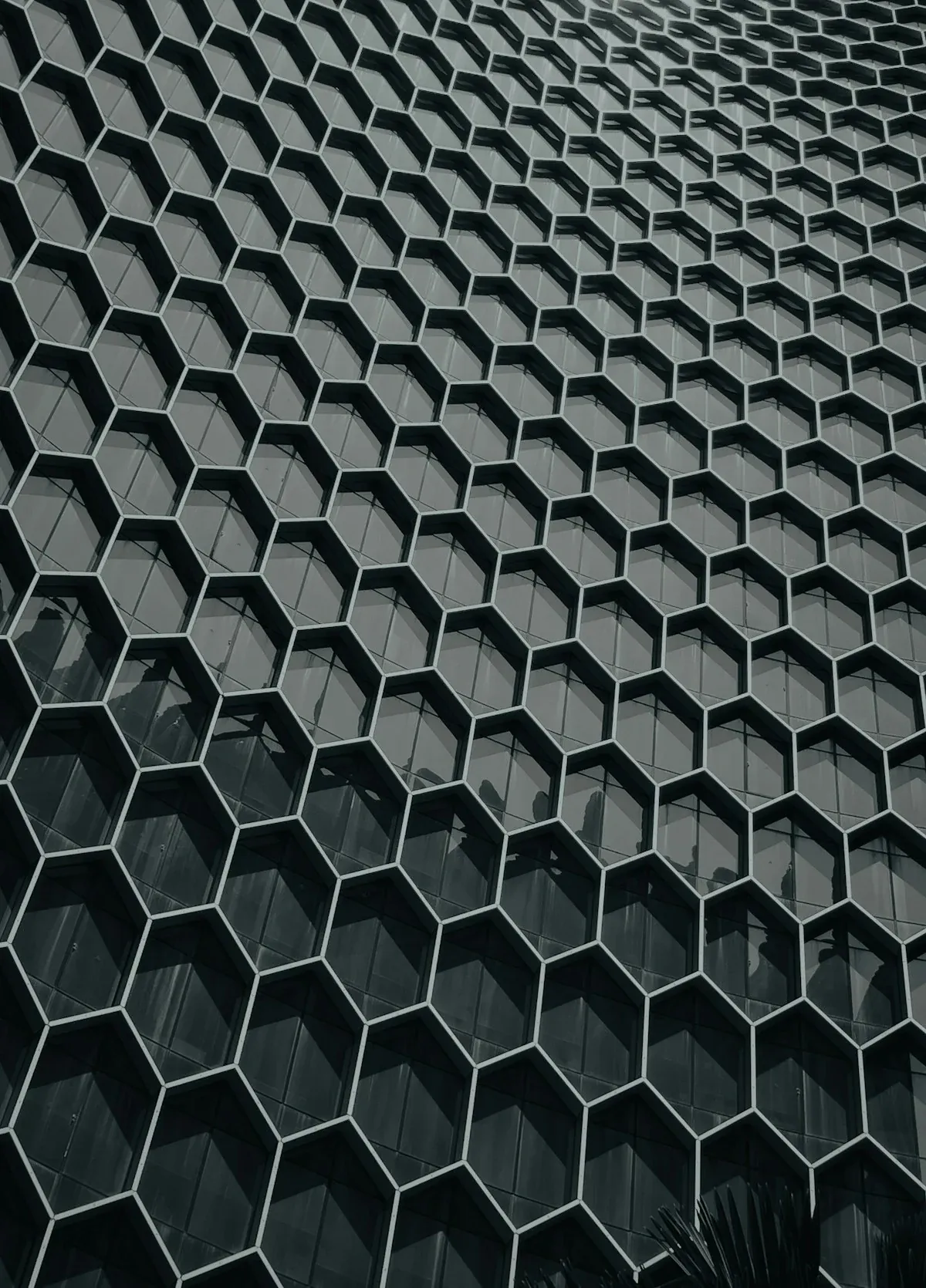
A standard 20 mm aluminum honeycomb panel weighs approximately 5.8 kg/m², yet it provides flexural rigidity comparable to a 6.0 mm solid aluminum plate weighing over 16 kg/m². This immense section modulus allows architects to design expansive facade modules reaching 1500 mm by 6000 mm without visible surface oil-canning. Honeycomb panels excel on high-rise commercial towers where extreme positive and negative wind gust loads exceed 4.5 kPa.
In addition to exterior curtain walls, honeycomb panels serve as walkable ceilings in pharmaceutical cleanrooms and interior partitions in high-speed rail passenger cars. The vertical hexagonal cell walls absorb acoustic vibrations, providing natural sound transmission loss between 25 dB and 29 dB. For projects requiring expansive planar surfaces with minimal dead load, aluminum honeycomb remains the premier engineering choice.
Polyethylene Core ACM Panels for Low Rise Signage
Polyethylene core aluminum composite material, commonly designated as standard ACM or ACP, is the most widely recognized sandwich panel variant. The core consists of low-density polyethylene (LDPE) or recycled thermoplastic polymers sandwiched between two thin 0.30 mm to 0.50 mm aluminum skins. The standard overall panel thickness is 4.0 mm, delivering an areal weight of approximately 5.5 kg/m². These panels offer easy field fabrication, allowing contractors to route and fold crisp corners using portable hand tools.
However, the thermoplastic polyethylene core presents severe combustibility limitations. Pure LDPE possesses a high calorific value between 43 and 46 MJ/kg, melting rapidly at temperatures above 115°C. Under building fire conditions, standard polyethylene cores liquefy, dripping flaming droplets and propagating rapid vertical fire spread along facade cavities. Consequently, international building codes strictly restrict standard PE-core panels from mid-rise and high-rise commercial construction.
Despite fire code restrictions on high-rise facades, standard polyethylene ACM panels remain widely utilized for low-rise commercial shopfronts, corporate identity retail canopies, and architectural signage. When installed below four stories where life-safety egress risks are low, standard ACM provides an economical, weather-resistant cladding solution that accepts vibrant decorative finishes.
Specify Mineral Filled FR Panels for Fire Compliance
To overcome the flammability hazards of standard polyethylene, chemical engineers developed fire-retardant (FR) mineral-filled composite panels. In an FR panel, the central core comprises 70% to 90% non-combustible mineral hydrates, such as aluminum trihydrate (ATH) or magnesium dihydroxide (MDH), bound with a minimal polymer carrier. When exposed to temperatures exceeding 200°C, these mineral hydrates undergo endothermic decomposition, releasing chemically bound water vapor that quenches flames and dilutes combustible gases.
Mineral-filled FR panels achieve Class B-s1,d0 or Class A2-s1,d0 fire reaction ratings under European and international testing protocols. In full-scale assemblies, these composite systems pass large-scale vertical multi-story fire propagation testing per NFPA 285 standards. This certified fire performance permits their installation on high-rise commercial structures and healthcare facilities.
Because the dense mineral core increases areal weight to between 7.5 and 8.5 kg/m² for a 4.0 mm panel, structural fasteners must be engineered accordingly. Architects specifying aluminum sandwich panels for commercial architecture frequently compare mineral-filled FR sheets against aluminum honeycomb panels to evaluate structural weight versus fabrication flexibility.
Polyurethane Foam Insulated Panels for Thermal Envelopes
While thin composite panels prioritize visual rainscreen cladding, insulated metal panels (IMPs) featuring rigid polyurethane (PUR) or polyisocyanurate (PIR) foam cores focus on thermal envelope efficiency. These sandwich panels utilize pre-painted aluminum facing skins continuously bonded to an expanding rigid cellular foam core. Standard panel thicknesses range from 50 mm to 150 mm, providing structural building enclosure and continuous thermal insulation within a single manufactured component.
Polyisocyanurate foam cores deliver exceptional thermal resistance, achieving thermal conductivity values as low as 0.020 to 0.022 W/m·K. Closed-cell contents exceeding 92% prevent moisture absorption and maintain stable thermal performance over decades. A 100 mm thick PIR sandwich panel provides an insulation value exceeding R-32, dramatically lowering heating and cooling energy consumption across commercial distribution centers and refrigerated cold storage facilities.
PIR foam panels feature factory-formed interlocking tongue-and-groove side joints with concealed fasteners. These side joints incorporate factory-applied butyl sealants to guarantee air-tightness and vapor barriers, preventing condensation within wall cavities. In industrial warehouses, food processing facilities, and modular construction, PIR aluminum sandwich panels serve as rapid-erection primary exterior wall systems.
How Rockwool Cores Deliver Four Hour Fire Barriers
For industrial applications requiring hourly structural fire resistance rather than just surface reaction-to-fire ratings, structural mineral wool sandwich panels represent the ultimate protective barrier. The core comprises high-density basalt rockwool fibers oriented perpendicular to the metal skins in a lamella arrangement. This perpendicular fiber orientation maximizes flatwise tensile strength and compressive resistance while maintaining absolute non-combustibility.
Basalt mineral fibers feature a melting point exceeding 1,000°C, enabling mineral wool panels to serve as certified fire barrier walls. When tested according to ASTM E119 or EN 13501-2, assemblies achieve 1-hour, 2-hour, or 4-hour structural fire endurance ratings. These panels contain zero blowing agents or combustible polymers, releasing no toxic fumes or smoke during catastrophic fire events.
Consult Facade Specialists on Core Selection for Your Next Project
Review structural span tables, thermal insulation metrics, and certified fire testing documentation across our complete composite panel range.
Because the open fibrous matrix absorbs acoustic energy effectively, mineral wool sandwich panels also provide superior acoustic absorption. In manufacturing plants containing noisy compressors or stamping presses, mineral wool cladding dampens reverberation while preventing exterior noise emissions into surrounding urban communities. The heavier density of rockwool (100 to 140 kg/m³) requires robust structural steel framing and dedicated hoisting equipment during field installation.
Compare Technical Performance Across Core Material Types
Selecting the optimal aluminum sandwich panel requires matching project engineering priorities with the fundamental strengths of each core technology. While honeycomb panels lead in structural rigidity and flatness, foam-filled panels dominate in thermal insulation, and mineral wool leads in passive fire resistance. Understanding the trade-offs in weight, span capability, and compliance standards prevents costly on-site change orders.
Our technical overview on what is aluminum honeycomb panel engineering demonstrates why core selection defines the panel envelope. The technical matrix below summarizes core densities, thermal conductivity, and fire safety ratings across the five primary core categories.
| Core Material Category | Core Density (kg/m³) | Thermal Conductivity (W/m·K) | EN 13501-1 Fire Reaction | Primary Architectural Role |
|---|---|---|---|---|
| Aluminum Honeycomb | 50 – 80 kg/m³ | Air-vented (Low R-value) | Class A2-s1,d0 (Non-combustible) | High-rise facade rainscreens & cleanrooms |
| Standard Polyethylene (PE) | 920 – 940 kg/m³ | 0.33 W/m·K | Class E / B2 (Combustible) | Low-rise commercial signage & canopies |
| Mineral-Filled FR (A2) | 1600 – 1800 kg/m³ | 0.45 W/m·K | Class A2-s1,d0 (Non-combustible) | Mid-to-high rise exterior rainscreens |
| Rigid PIR/PUR Foam | 38 – 45 kg/m³ | 0.020 – 0.022 W/m·K | Class B-s1,d0 (Fire-retardant) | Cold storage & energy-efficient envelopes |
| Structural Mineral Wool | 100 – 130 kg/m³ | 0.038 – 0.042 W/m·K | Class A1 (Non-combustible) | Industrial fire walls & acoustic enclosures |
As reinforced by standard test protocols, matching panel properties to the correct architectural zone ensures code compliance and long-term durability. Specifiers must also review continuous manufacturing quality parameters to ensure reliable adhesive peel strength. Our technical guide on the aluminum honeycomb panel production process details these thermal lamination controls.
Four Specification Mistakes Project Designers Must Avoid
Specifying aluminum sandwich panels requires careful consideration of structural loads, climatic exposures, and local fire regulations. Oversights during initial procurement planning frequently lead to project delays, costly regulatory retrofits, or envelope failures. Structural designers must avoid four critical specification traps.
Specifying Standard Polyethylene Cores Above Four Stories
Specifying low-cost standard polyethylene core ACM panels on multi-story commercial buildings violates modern international building codes. Following global high-rise facade fire investigations, municipal authorities strictly mandate NFPA 285 or EN 13501-1 Class A2 non-combustible cladding for occupancies exceeding 12 meters in height. Attempting to reduce procurement budgets with PE-core panels leads to mandatory building teardowns, invalidated insurance policies, and severe legal liabilities.
Overlooking Acoustic Drumming from Uninsulated Metal Skins
Thin metal composite panels installed on commercial building canopies or sloped facade surfaces generate noticeable drumming noise during heavy rainstorms. Thin polyethylene or unvented cores transfer acoustic impact directly into the interior structure without attenuation. Specifiers designing educational facilities or healthcare pavilions must mandate acoustic dampening backers, such as mineral wool infill or honeycomb cores with sound damping layers.
Ignoring Edge Sealing in High Humidity Environments
Leaving raw sandwich panel edges exposed to outdoor humidity allows moisture to penetrate the core matrix through capillary absorption. In polyurethane foam panels, water infiltration degrades thermal insulation values over time. In honeycomb panels, stagnant moisture causes galvanic pitting and accelerates bond degradation. Architectural specifications must require perimeter return folds, factory-sealed edge profiles, and neutral-cure silicone joint seals.
Mismatched Thermal Expansion Between Dissimilar Core Layers
Aluminum possesses a high thermal expansion coefficient of approximately 24 × 10−6 K−1. When dark exterior facade panels reach surface temperatures of 80°C under summer solar radiation, the outer aluminum skin expands significantly faster than rigid interior cores. If fasteners are locked tightly into non-slotted holes, this differential thermal movement forces the panel face to warp into prominent oil-canning waves. Rainscreen specifications must incorporate floating fasteners and oversized slotted holes.
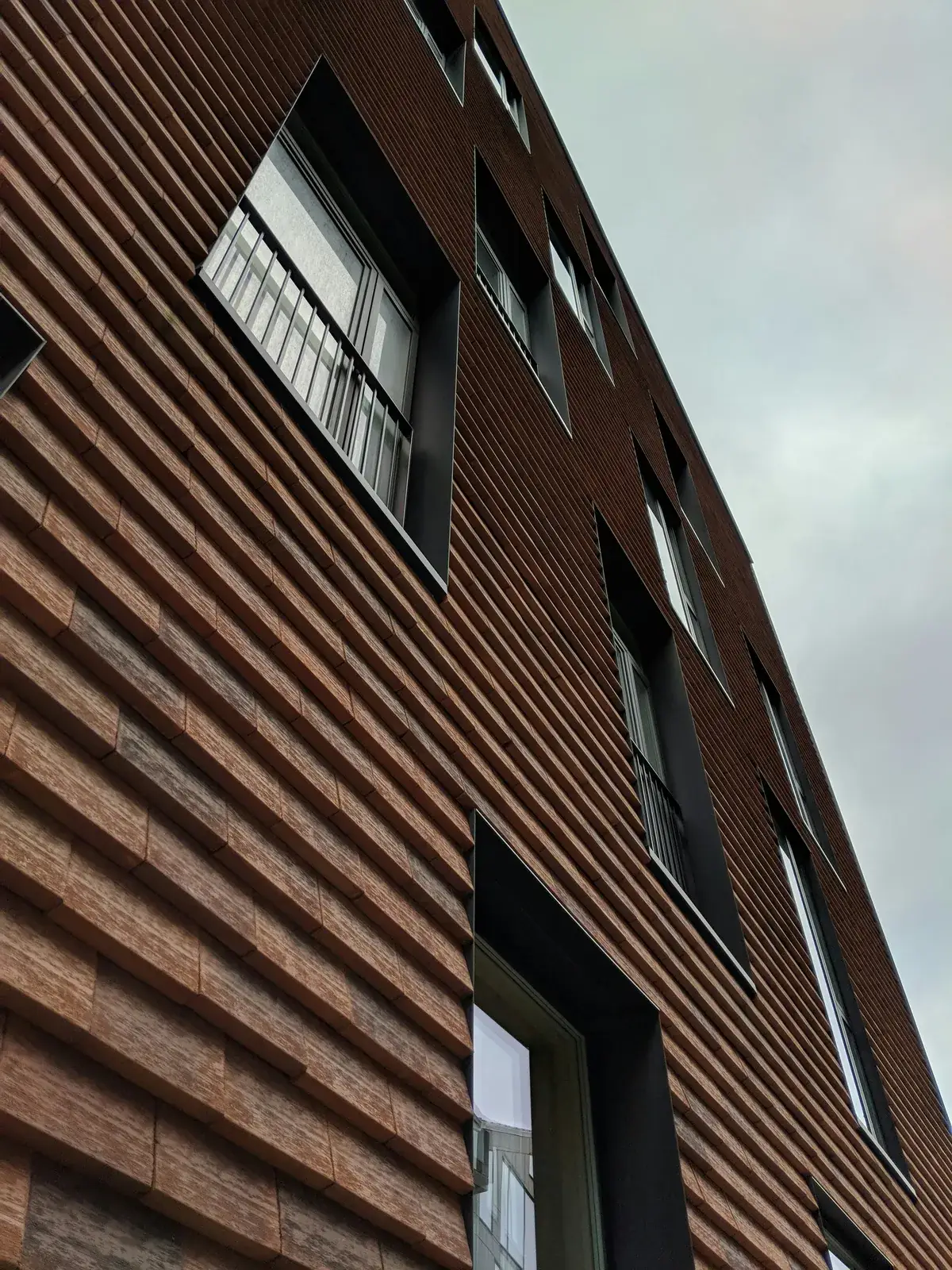
Frequently Asked Questions About Sandwich Panels
Which aluminum sandwich panel offers the highest fire resistance?
Structural mineral wool sandwich panels offer the highest fire resistance, providing 1 to 4 hours of structural fire barriers per ASTM E119. For lightweight rainscreen facades, all-aluminum honeycomb and mineral-filled FR panels achieve non-combustible Class A2-s1,d0 ratings.
What is the primary difference between ACP and IMP panels?
Aluminum composite panels (ACP) are thin (3-6 mm) rainscreen panels engineered for exterior aesthetics and structural flatness. Insulated metal panels (IMP) are thick (50-150 mm) foam-filled panels engineered to provide primary structural building enclosure and high thermal insulation.
Can standard polyethylene core panels be used on high-rise buildings?
No, international building codes strictly prohibit standard polyethylene (PE) core panels on buildings exceeding 12 meters in height. Multi-story commercial buildings must specify non-combustible mineral-filled Class A2 composite panels or all-aluminum honeycomb systems.
How do honeycomb cores compare to mineral foam cores?
Honeycomb cores provide significantly higher flexural rigidity and shear strength at lower areal weights (5.5-6.5 kg/m²). Rigid foam cores provide superior thermal insulation (R-values up to R-8 per inch), making them ideal for temperature-controlled facilities.
What surface finishes protect aluminum sandwich panels from fading?
High-performance coil-coated finishes featuring 70% Polyvinylidene Fluoride (PVDF) or Lumiflon FEVE fluoropolymer resin offer the highest exterior durability. These coatings meet AAMA 2605 specifications, resisting color chalking and UV fading for over thirty years.