
General contractors and developers in 2026 face a brutal combination of escalating labor costs, tightening energy codes, and unforgiving project timelines. The ongoing debate comparing SIPs vs ICFs often distracts from the operational math that actually dictates your bottom line. The hard numbers tell the real story.
Field data shows that builders erect structural insulated panel frames in roughly 55% of the time it takes to assemble traditional stick framing, while cutting on-site labor requirements by over half. That is not a marginal gain. That is the difference between hitting a quarterly delivery target and paying penalty fees for project delays.
But assembly speed means nothing if the building envelope fails early. We are going to look past the marketing brochures to examine the specific mechanics of SIP energy efficiency, airtightness, and structural integrity, while directly addressing the common SIP problems that trigger expensive callbacks. Understanding these performance factors is the only way to spec panels that actually protect your margin over a 20-year lifecycle.
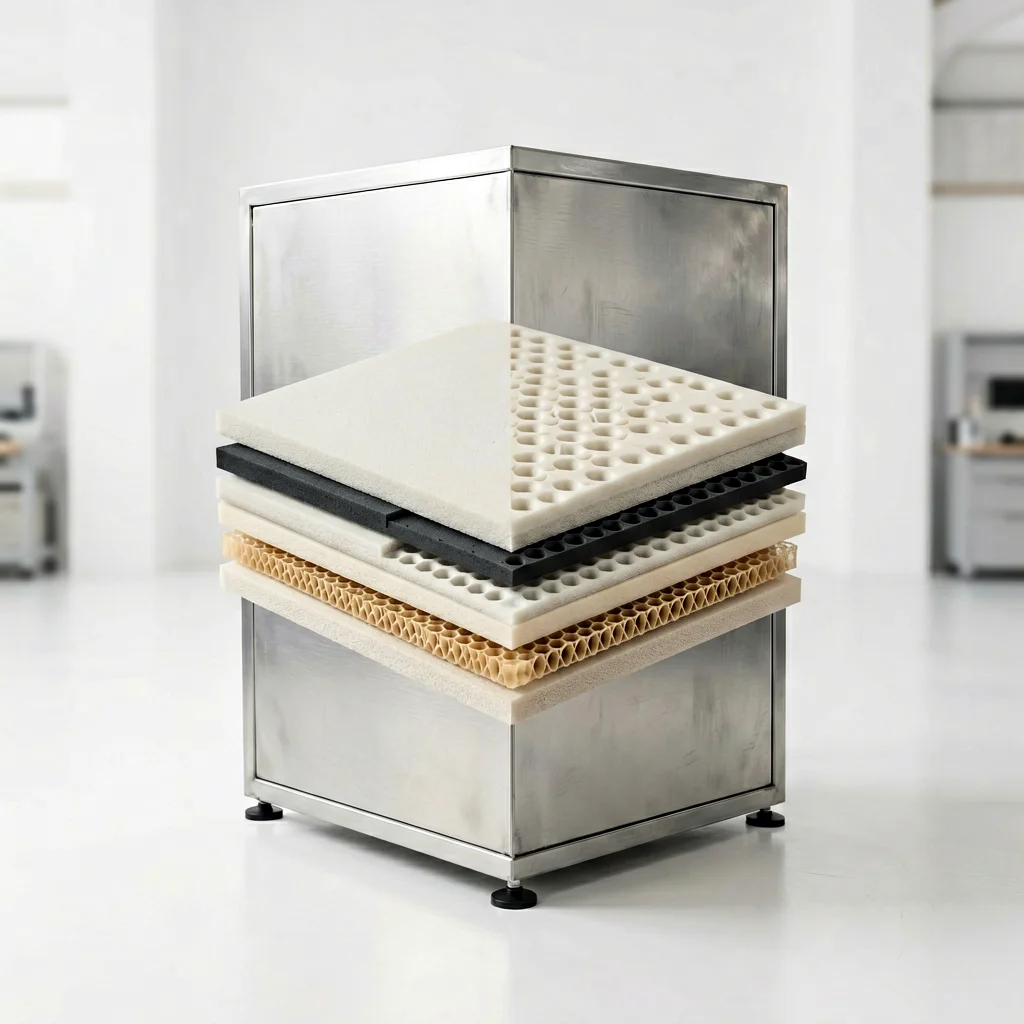
Energy Efficiency of Structural Insulated Panels
The real energy advantage of SIPs isn’t just high R-values—it’s the elimination of thermal bridging and uncontrolled air leakage that causes traditional stick-framed walls to underperform by 40% or more in real-world conditions.
Superior Thermal Insulation
One of the most persistent frustrations for builders and developers is the gap between rated R-value and actual field performance. A traditionally framed wall might look impressive on paper, but thermal bridging through studs, headers, and plates creates a network of energy leaks that dramatically degrade that rating once the building is occupied. Structural insulated panels solve this by engineering a continuous rigid foam core between two structural facings, effectively eliminating the stud cavities where energy loss concentrates.
The foam core options available today—from XPS and PET to PU, PVC, and PMI foams—each deliver distinct thermal resistance profiles suited to different climate zones and project budgets. XPS cores typically offer R-5 per inch, while higher-performance PMI foams push beyond that threshold, making them suitable for extreme cold or projects targeting net-zero certifications.
The key metric here isn’t laboratory R-value alone; it’s the “whole-wall R-value” that accounts for real installation conditions, and this is where SIPs consistently outperform framed assemblies by maintaining continuous insulation across the entire envelope.
Our engineering team has run comparative thermal testing on panels configured with different core and facing combinations, and the data consistently shows that even modest SIP configurations outperform code-minimum framed walls when measured as a complete assembly. The absence of thermal breaks means the rated insulation value you specify is the value you actually get in operation.
Airtight Building Envelopes
Air leakage at panel joints, roof ridges, and service penetrations is a silent driver of condensation, mold growth, and long-term structural degradation. In traditional construction, this leakage accounts for a significant portion of total energy loss—air infiltrating through gaps carries moisture that condenses on cooler surfaces inside the wall cavity, creating conditions ripe for decay.
SIP construction inherently addresses this vulnerability because the panels are manufactured off-site with precise tolerances, allowing them to fit together snugly during installation and form a monolithic shell.
Achieving true airtightness, however, requires more than just tight panel fabrication. The critical details happen at the junctions: properly sealed seams with compatible tape systems, correctly detailed service penetrations, and continuous air barriers at wall-to-roof and wall-to-floor transitions. When these interfaces are executed correctly, SIP buildings routinely achieve blower door test results of 1.0 ACH50 or lower—well below what conventional framing can reach without extensive additional air sealing measures.
This is where moisture management becomes inseparable from energy efficiency. An airtight envelope that fails to manage vapor drive correctly will trap moisture rather than exclude it. In our experience supporting projects across diverse climates—from humid Southeast Asian markets to cold Northern European regions—we’ve found that specifying the right facing material and core combination for the specific vapor profile of each project is just as important as the panel’s thermal rating.
A GRP-facing panel with an XPS core behaves differently in terms of vapor permeability than an aluminum-facing panel with a PET core, and those differences have real consequences for long-term building durability.
Reduced HVAC Loads
This is where energy efficiency translates directly into capital savings, and it’s also where we see the most costly design mistakes. Mechanical systems sized for traditional, leaky buildings will overperform in an ultra-tight SIP enclosure—not in a good way. Oversized air conditioning units short-cycle, failing to properly dehumidify the space. Oversized heating systems create temperature swings and waste energy. The building ends up less comfortable than it should be, and the owner pays for capacity they don’t need.
SIP construction requires specifically sized HVAC systems designed for low-load conditions. When the envelope is tight and well-insulated, heating and cooling loads drop dramatically—often by 40% to 60% compared to code-minimum framed construction. This means smaller equipment, shorter duct runs, and reduced mechanical room space. For developers building multi-unit projects or modular communities, those savings compound quickly across every unit in the development.
The reduced load profile also opens the door for integrating renewable energy systems. When paired with appropriate glazing, orientation, and ventilation, SIPs can cut operational energy and carbon to levels that make rooftop solar or heat pump systems economically viable as the primary energy source rather than a supplemental one.
For projects targeting compliance with stringent standards like California’s Title 24 or Passive House certifications, this integrated approach to envelope and mechanical design is not optional—it’s the fundamental strategy that makes compliance achievable without exorbitant cost overruns.
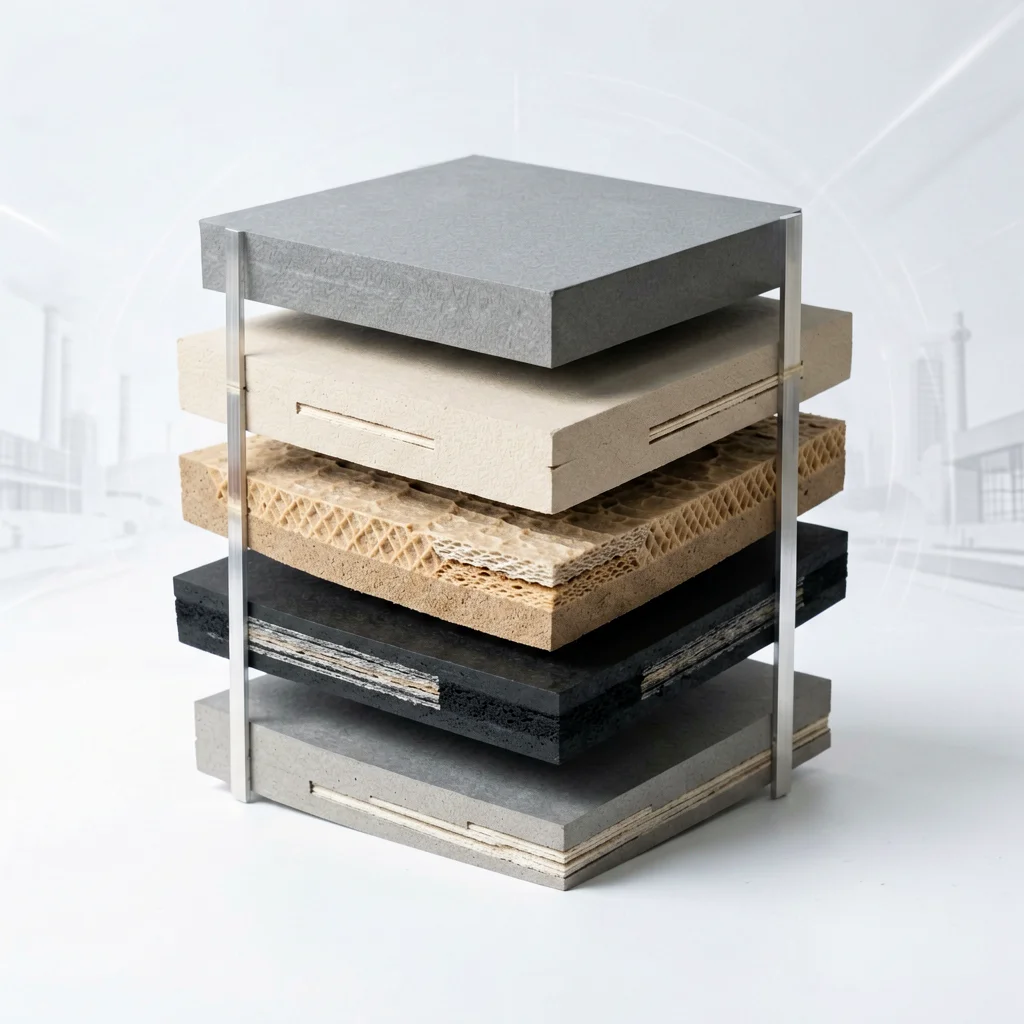
Labor Savings and Faster Construction Speed
Prefabricated composite panels consolidate framing, sheathing, and insulation into a single factory-produced unit, cutting field assembly timelines by weeks and directly offsetting skilled labor shortages on commercial job sites.
Rapid Assembly Times
Structural insulated panels arrive on site pre-cut, labeled, and engineered to project specifications. Because framing, sheathing, insulation, and vapor control are laminated into one unit during manufacturing, erection crews skip multiple sequential trade steps entirely. Documented project data shows that a four-person crew can install 2,200 square feet of panel area in a single shift. The full exterior envelope of a 1,900-square-foot building has been closed in as little as one day.
This speed advantage compounds across the entire schedule. With the building envelope dried-in faster, interior trades mobilize earlier. Electrical rough-in alone runs 20 to 30 percent faster because panels provide continuous, predictable attachment points and pre-routed chases eliminate most on-site drilling. Cabinets and trim install quicker on straight, true substrates.
Our production line maintains a daily output exceeding 1,700 square meters of finished composite panels. That throughput allows us to ship large, pre-numbered installation kits so field crews spend their time placing panels, not cutting and fabricating them from raw stock.
Combatting Labor Shortages
Skilled trade availability remains one of the most persistent constraints on construction schedules globally. Panelized construction directly reduces dependency on large framing crews. Industry field data shows approximately 20 to 30 percent savings on framing labor compared with conventional stick-built methods, since the factory has already completed the bulk of dimensional assembly.
A typical SIP installation crew operates at full efficiency with just four to five workers: two placing panels, one preparing the next unit, one applying sealant at joints, and one handling lifts and incidental cuts. Smaller crews mean lower labor costs, simpler site logistics, and fewer scheduling conflicts between overlapping trades. Tighter building envelopes also allow for smaller HVAC equipment—up to 40 percent savings on mechanical system costs—which reduces the coordination burden on project managers already stretched thin.
Contractors who adopt panelized systems report an overlooked financial advantage: reduced interest carry on construction loans. Compressing the framing and enclosure phase by weeks or months lowers financing costs, which can represent significant capital on mid-to-large commercial projects.
Reduced On-Site Waste
Conventional construction generates substantial scrap—lumber off-cuts, insulation trimmings, sheathing remnants. Panelized construction shifts the waste stream from the job site to the factory floor, where cutoffs are captured, sorted, and recycled under controlled conditions. The result is a cleaner site with fewer dumpsters, lower disposal fees, and less downtime spent managing debris.
Pre-fabricated panels ship dimensionally accurate and straight. This precision eliminates the shimming, planing, and corrective framing that drives up material consumption on traditional builds. Finish trades also benefit: hanging cladding, cabinetry, and trim proceeds faster when the substrate is flat and plumb, reducing wasted fasteners, adhesive, and filler materials.
Our engineering team optimizes panel layouts directly from customer project plans before production begins. By nesting dimensions efficiently across the production line, we minimize factory waste at the source and pass those material savings back through tighter pricing control for bulk orders.
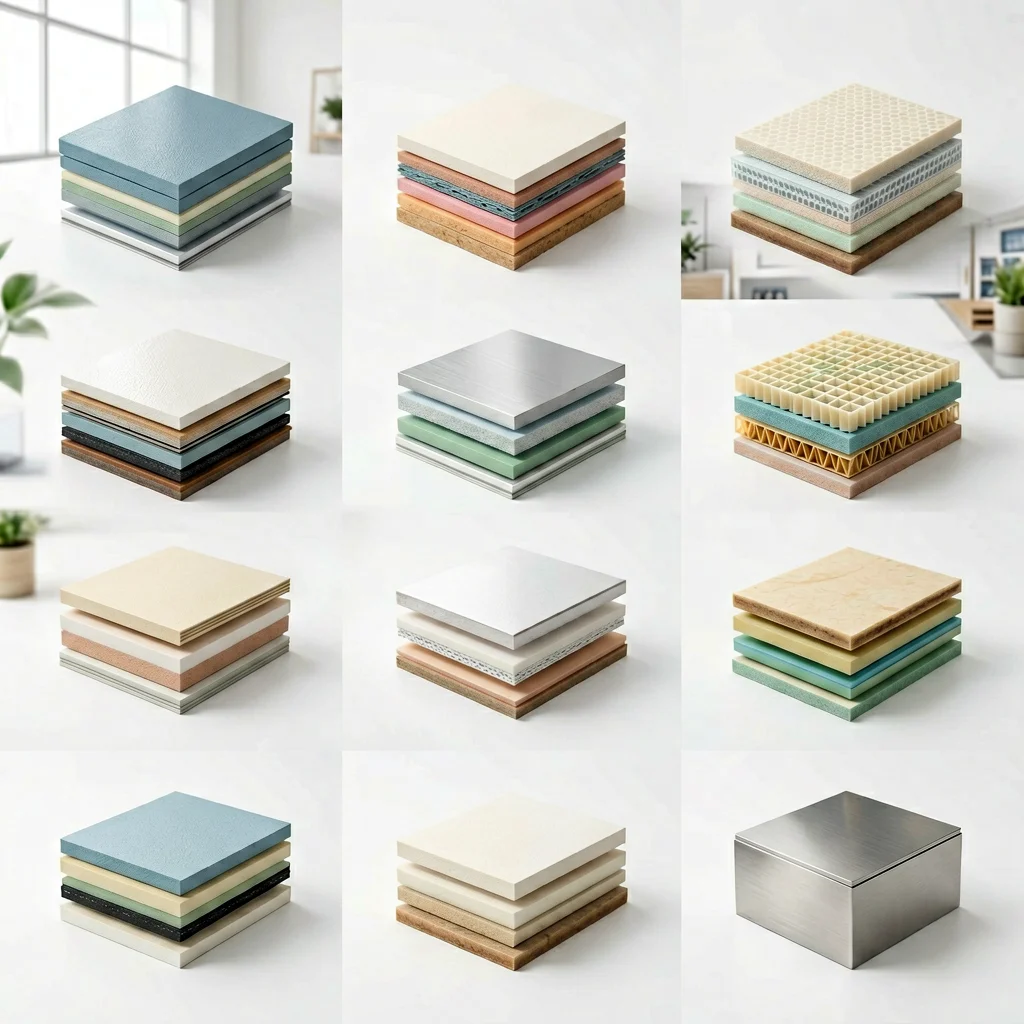
Structural Integrity and Weather Resilience
True structural reliability in composite panels goes far beyond core density. It demands precise shear transfer between facing and core materials, combined with non-absorbent matrices that prevent chronic moisture degradation over decades of use.
High Load-Bearing Capacity
A frequent engineering misstep is treating structural insulated panels (SIPs) as direct drop-in replacements for traditional stick framing. While conventional framing relies on point-loading through vertical studs—which inherently creates thermal bridges—SIPs distribute loads monolithically across the entire building envelope.
The structural capacity relies on the composite action between the rigid core and the outer facings. When a panel experiences axial or lateral loads, the high-strength skins (such as GRP, CFRT, or aluminum) handle the compressive and tensile forces, while the core material resists shear and prevents buckling.
In our testing facilities, we consistently evaluate the shear bond between skins and cores like PMI foam and PP honeycomb. Panel delamination under heavy roof snow loads or seismic activity is almost always traced back to inadequate factory adhesive processes, not the raw materials.
By specifying fiberglass-reinforced sheets with specialized gelcoats alongside high-density PET or PVC cores, Rax Panel engineers systems that span larger distances without requiring intermediate structural supports. This capability is critical for commercial modular builders and refrigerated truck manufacturers who require wide, unobstructed interior spaces.
Severe Weather Resistance
The most persistent anxiety surrounding SIP construction is moisture intrusion and the resulting substrate rot. This fear is entirely justified when using oriented strand board (OSB) skins, which act as a food source for mold if the building envelope is compromised by wind-driven rain. However, modern composite technology completely eliminates this failure mode by closing the loop on moisture vapor drive and liquid water penetration. When building for extreme coastal or marine environments, material selection dictates survival.
- Closed-Cell XPS, PU, and PVC Foams: These core materials boast near-zero water absorption rates, fundamentally blocking the capillary action that causes hidden decay within wall assemblies.
- GRP/FRP Facing Integration: Fiberglass reinforced polymer skins provide an impenetrable barrier against hurricane-force rain and salt spray, outperforming raw metal in corrosive coastal geographies.
- Stainless Steel and Aluzinc Options: For industrial or high-impact exposures, these facings resist impact damage from airborne debris during severe storm events, maintaining the structural envelope’s integrity.
We specifically design our marine-grade vessel panels and mobile home envelopes using GRP skins over waterproof foam cores. This combination ensures the panel remains dimensionally stable through freeze-thaw cycles and relentless humidity, preventing the structural warping that plagues traditional building materials.
Long-Lasting Durability
Misdiagnosed SIP failures often point a finger at the panel itself, when the actual culprit is usually poor moisture management detailing at panel joints or incompatible HVAC sizing that creates interior condensation. A SIP is a highly engineered system; its longevity depends heavily on the precision of the manufacturing process and the airtightness of the final assembly. Achieving a multi-decade lifespan requires panels that are fabricated to exact tolerances, leaving zero room for site-bound workarounds.
Achieving this level of durability requires strict manufacturing control over the lamination process. A continuous composite panel production line—capable of outputting over 1,700 square meters daily—must maintain precise temperature and pressure controls to ensure the adhesive matrix chemically bonds the core and facings permanently.
By delivering pre-fabricated, factory-squared panels directly to the job site, builders eliminate the variable of poor on-site craftsmanship. The panels arrive ready for immediate installation, allowing a small crew to erect the structure rapidly while ensuring the joint sealing process is predictable, airtight, and structurally sound for the building’s entire lifecycle.
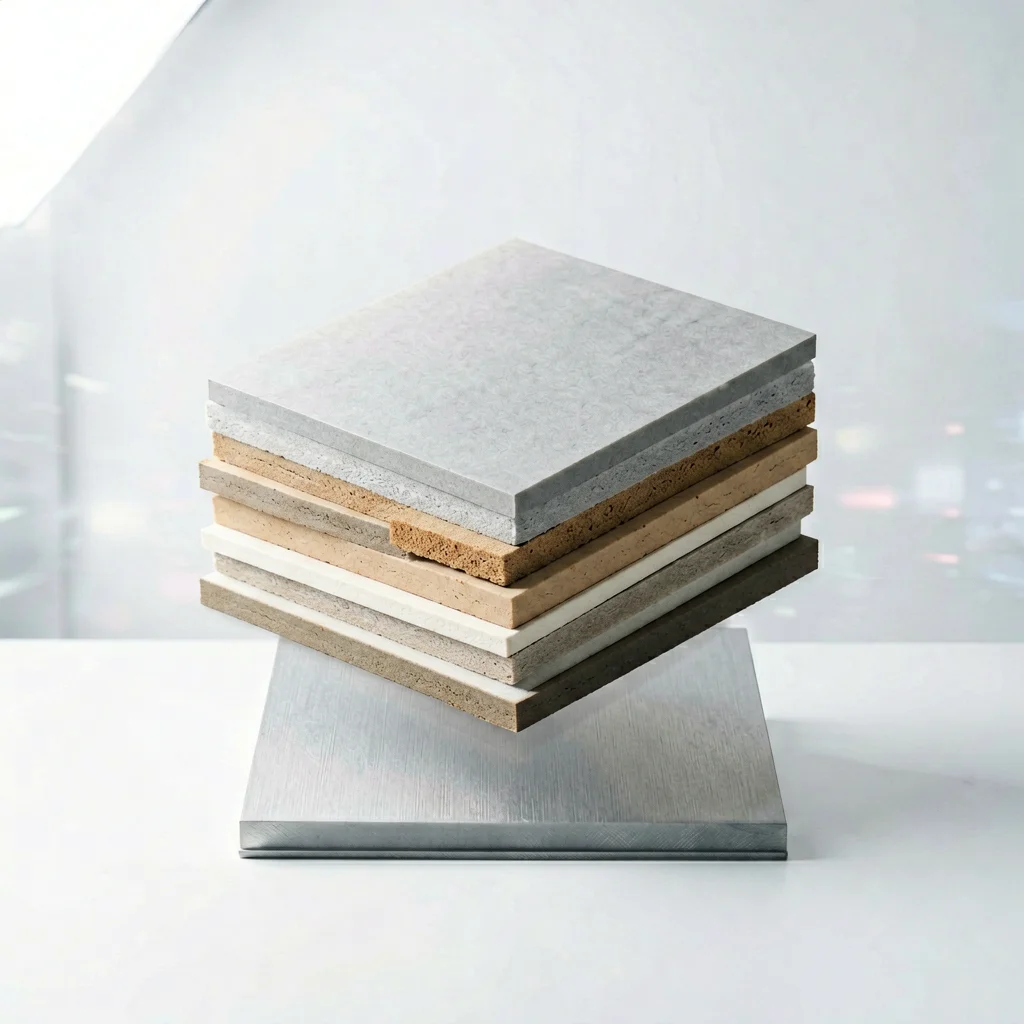
Enhancing Fire Safety and Indoor Air Quality
Fire safety and indoor air quality are non-negotiable in modern SIP construction. The combination of fire-retardant cores, moisture-impermeable skins, and zero-off-gassing materials dictates whether a building envelope performs for decades or fails within years.
Fire-Retardant Core Materials
Not all foam cores behave the same under fire exposure. This is a critical distinction that designers and procurement teams often overlook when specifying sandwich panels for commercial or residential envelopes. The choice of core material directly determines fire propagation speed, smoke generation density, and structural retention time during a thermal event.
Polyurethane (PU) and polyisocyanurate (PIR) cores offer inherently better fire resistance compared to standard expanded polystyrene (EPS). PIR, in particular, forms a charred surface layer when exposed to flame, which acts as a thermal barrier and slows further combustion.
Polyvinyl chloride (PVC) foam cores also exhibit self-extinguishing properties due to their chlorine content, making them a strong candidate for applications requiring strict fire compliance. For projects demanding the highest fire performance thresholds, polymethacrylimide (PMI) foam cores deliver exceptional thermal stability and low smoke emission, widely accepted in aviation and marine-grade applications.
Our engineering team at Rax Panel conducts experimental testing on core-fire interaction across multiple material pairings. We have observed that pairing fire-retardant cores with GRP or fiberglass reinforced facing sheets creates a composite system where the non-combustible skin delays core ignition significantly compared to exposed foam configurations. This layered defense approach is how we customize cost-effective fire solutions for clients without defaulting to the most expensive core available.
- PIR Core: Char-forming thermal barrier; ideal for building envelopes requiring strict fire ratings.
- PVC Foam Core: Self-extinguishing properties; suitable for marine and industrial applications.
- PMI Foam Core: Highest thermal stability and lowest smoke density; aviation-grade fire performance.
- PET Foam Core: Good fire resistance with excellent recyclability; balanced performance for commercial construction.
Mold and Moisture Resistance
Moisture intrusion is the single most destructive force acting against any building envelope. When water vapor penetrates panel joints and becomes trapped within the wall assembly, condensation forms on surfaces below the dew point. Over time, this sustained moisture exposure creates ideal conditions for mold colonization, which compromises both structural integrity and occupant health.
Traditional SIPs with oriented strand board (OSB) facing are particularly vulnerable because wood-based facings are hygroscopic and will absorb and retain moisture. Once OSB reaches a moisture content above approximately 20 percent, fungal growth becomes a near certainty. This is a well-documented failure mode in the industry, and it is entirely preventable through material selection.
Rax Panel addresses this vulnerability at the material level by specifying non-hygroscopic facing skins. GRP fiberglass sheets, aluminum, and stainless steel facings are functionally impermeable to water absorption. Unlike wood-based panels, these materials do not provide an organic food source for mold propagation. When combined with closed-cell foam cores such as XPS, PET, PU, or PVC, the resulting sandwich panel resists moisture ingress through its entire cross-section.
However, material selection alone does not eliminate moisture risk. Air leakage at panel joints remains a silent driver for hidden condensation. When warm, moisture-laden interior air bypasses seals and contacts cold surfaces within the wall cavity, it condenses invisibly. This is why proper joint detailing and sealant application during installation are as important as the panel materials themselves.
In ultra-tight SIP enclosures, mechanical ventilation must also be correctly sized. HVAC systems designed for traditional leaky buildings will fail to manage humidity in a tight SIP structure, leading to elevated indoor moisture levels that negate the panel’s inherent moisture resistance.
Non-Toxic Compositions
Indoor air quality in SIP construction is determined by two factors: the off-gassing characteristics of the panel materials themselves, and the airtightness of the finished envelope. Airtight construction is beneficial for energy efficiency, but it also means that any volatile organic compounds (VOCs) emitted from building materials remain concentrated inside the living space rather than dissipating through air leaks.
This makes material toxicity a legitimate concern for specifiers. Traditional SIPs using OSB facing bonded with adhesives can off-gas formaldehyde and other VOCs, particularly in the first months after installation. While emission levels typically decrease over time, the initial exposure period coincides with building occupancy, creating a real health consideration for sensitive populations.
Composite sandwich panels with GRP, CFRT, aluminum, or stainless steel facing eliminate this concern at the source. These inorganic materials produce zero VOC emissions. Our production process at Rax Panel uses controlled factory conditions where panel bonding and curing occur before the product ships.
By the time panels reach the job site, any residual emissions from manufacturing have already dissipated. Closed-cell foam cores such as PET and PMI are chemically stable and inert once cured, contributing no off-gassing to the indoor environment.
For distributors and builders serving clients with strict environmental certifications such as LEED or BREEAM, specifying non-toxic composite panels simplifies compliance documentation. The absence of formaldehyde-based binders, the stability of cured foam cores, and the inert nature of metal and fiberglass facing combine to create a building envelope that maintains clean indoor air throughout its service life.
Design Versatility in Modular Buildings
Modern modular architecture demands panels that adapt to design intent, not the other way around. The right composite facing and core combination unlocks virtually any architectural vision without sacrificing structural performance.
Custom Architectural Finishes
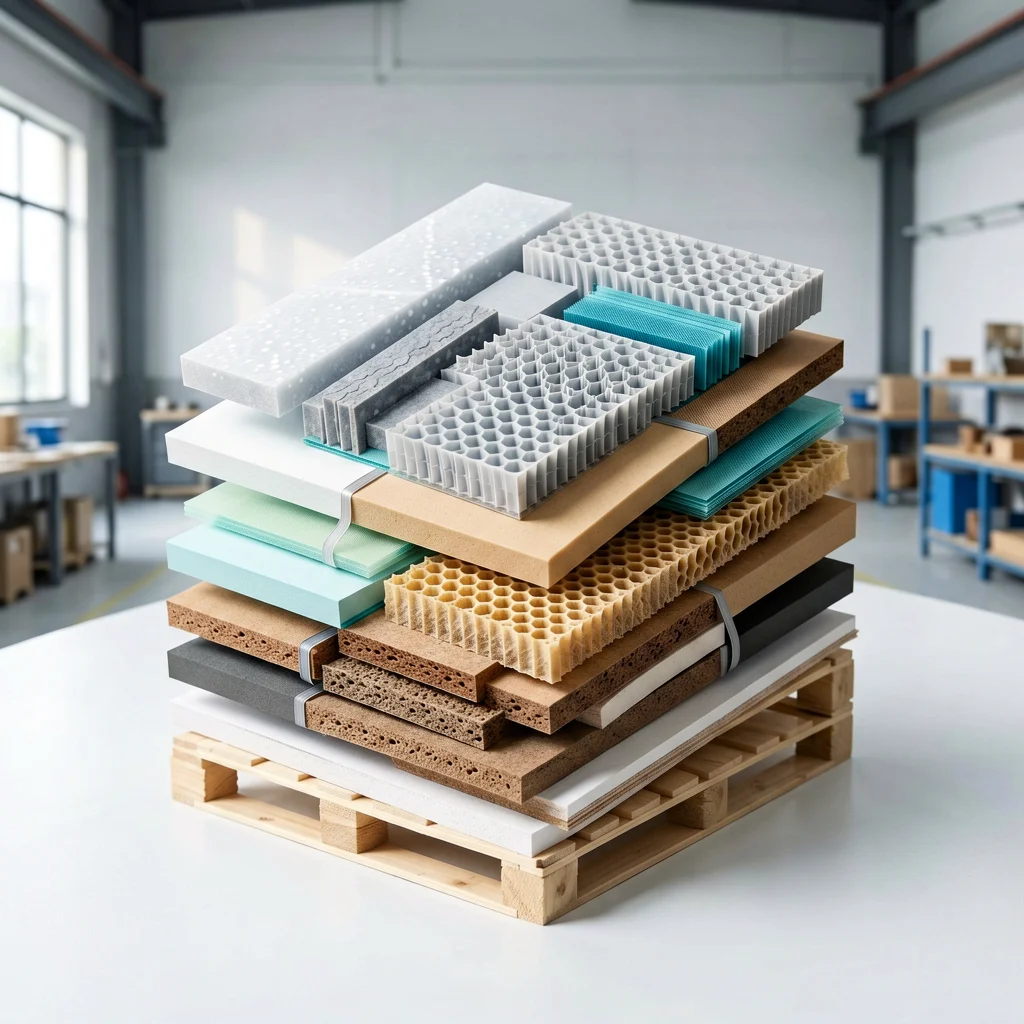
A persistent misconception about modular construction is that it produces generic, boxy structures. In reality, the range of available facing materials allows architects to specify nearly any exterior or interior aesthetic. Composite panels can be manufactured with aluminum, steel, stainless steel, Aluzinc, ACP (aluminum composite panel), PVC, plywood, or high-pressure laminate (HPL) facings. Each material carries distinct visual and performance characteristics that directly influence the final appearance of the building envelope.
For projects requiring a clean, contemporary look, flat aluminum and ACP facings deliver a smooth, uniform surface that accepts PVDF or FEVE coatings in virtually any color. Fiberglass reinforced sheets with gelcoat provide an exceptionally flat, smooth finish that resists fading and water absorption. These options are particularly relevant for commercial facades where brand consistency and visual precision are non-negotiable.
Our engineering team regularly works with project specifications that demand non-standard surface treatments. Through experimental testing and prototyping, we validate that custom finishes maintain their adhesion, UV resistance, and waterproofing performance under real-world conditions. This is not a catalog selection process; it is a collaborative specification exercise where the facing material, core density, and coating system are calibrated together to meet exact project requirements.
Seamless Modular Integration
Design versatility means little if panels cannot integrate cleanly into a modular building system. The structural advantage of sandwich panels lies in their ability to function as both the load-bearing element and the finished surface in a single component. A SIP wall assembly, for example, eliminates the need for separate framing, sheathing, insulation, and interior finish layers. This consolidation reduces joint complexity and minimizes the thermal bridges that plague conventional multi-layer construction.
Integration precision starts at the factory. Panels prefabricated to exact dimensions arrive on site ready for installation, with connection details already engineered into the panel edges.
When panels are cut to tolerances measured in millimeters rather than inches, the resulting joints are tighter, the air barrier is more continuous, and the overall building envelope performs closer to its theoretical design specifications. Our production line processes over 1,700 square meters of composite panels daily, each panel manufactured to project-specific dimensions rather than generic stock sizes.
The core material selection directly influences how panels integrate with mechanical, electrical, and plumbing systems. PET and PU foam cores allow for precise routing of channels and recesses during prefabrication. XPS and PVC cores offer higher compressive strength for flooring applications where point loads from equipment or furniture are concentrated. PMI foam cores, with their exceptional stiffness-to-weight ratio, serve specialized applications where minimal panel thickness is required without compromising structural performance.
Applications for Commercial Spaces
Commercial modular projects present a distinct set of demands: tight project timelines, strict code compliance, large-volume material consistency, and finishes that project professionalism. Composite sandwich panels address all four simultaneously. Office buildings, retail spaces, healthcare facilities, and hospitality structures all benefit from the rapid enclosure speed and design flexibility that panelized construction provides.
In commercial flooring applications, GRP plywood panels and fiberglass honeycomb panels provide high load-bearing capacity with a weight profile that reduces foundation requirements. For exterior wall systems in multi-story commercial buildings, aluminum honeycomb and ACP foam core panels deliver the flatness and dimensional stability that large glazing systems and curtain walls require. Any deviation in panel flatness becomes immediately visible when glass and metal systems attach to the substrate, making manufacturing consistency a critical specification criterion.
Interior commercial environments benefit from panels that combine structural performance with aesthetic finishes. HPL compact laminate panels, for example, provide a durable, scratch-resistant surface suitable for high-traffic areas while contributing to the structural wall assembly. CFRT (continuous fiberglass reinforced thermoplastic) sheets offer a lighter, thinner alternative to traditional FRP panels, enabling more design flexibility in interior partitioning and ceiling systems without adding unnecessary dead load to the structure.
The breadth of commercial applications is directly tied to the range of available material combinations. With over 15 years of production experience supplying projects across more than 50 countries, we have seen composite panels specified for everything from modular hospital wards requiring strict hygiene standards to retail pop-up structures demanding rapid deployment and striking visual impact.
The common thread is that design versatility is not an abstract concept; it is a direct function of how many core materials, facing options, and surface treatments a manufacturer can reliably produce and validate for a given project’s performance requirements.
Lifecycle Cost Savings of SIPs Architecture
Lifecycle cost analysis reveals that SIPs architecture delivers measurable financial returns over a building’s lifespan through reduced operational expenditure, minimized material waste, and significantly lower maintenance requirements compared to traditional construction methods.
Long-Term Operational ROI
The financial justification for SIPs extends well beyond initial construction savings. When building owners evaluate total cost of ownership over a 30-to-50-year horizon, SIPs consistently outperform conventional stick-framed or concrete shell structures. The key driver is operational stability. Unlike traditional insulation materials that settle, shift, or degrade over time, SIPs maintain their structural integrity and thermal resistance for decades, ensuring that the building performs on year twenty exactly as it did on day one.
This consistency translates directly into predictable operational budgets. Facility managers working with SIP envelopes report fewer temperature fluctuations and reduced strain on mechanical systems. The panels do not sag within wall cavities or leave gaps at framing joints, which means the rated thermal performance does not erode.
In our experience supplying GRP foam core panels and CFRT sandwich panels for commercial projects across Europe and North America, building owners typically see a return on their initial SIP investment within 5 to 8 years through reduced utility and operational costs alone.
For distributors and developers pricing large-scale projects, this longevity matters. A panel system that retains its insulation properties without retrofit or replacement eliminates a major line item from long-term capital expenditure forecasts.
Waste Reduction During Assembly
Traditional construction sites generate substantial material waste. Off-cuts of lumber, excess insulation batting, and damaged vapor barriers routinely account for 10 to 15 percent of total material volume ending up in landfill. SIPs address this problem at the manufacturing stage rather than the job site.
Because SIPs are precision-fabricated in a controlled factory environment, each panel arrives on site cut to exact dimensions with pre-routed chases for electrical and plumbing. Installation crews assemble what is essentially a large-scale kit, leaving minimal scrap. Our production line, which processes over 1,700 square meters of composite panels daily, optimizes nesting algorithms to reduce raw material waste before panels even leave the facility. This approach lowers both disposal fees and material procurement costs for the contractor.
- Reduced dumpster rentals and hauling fees: Less on-site cutting means fewer waste removal cycles.
- Lower material overage orders: Precision manufacturing allows contractors to order closer to exact quantities.
- Faster site cleanup: Cleaner assembly timelines reduce labor hours dedicated to site management.
Lower Maintenance Costs Over the Building Lifespan
Maintenance expenditure is where SIPs truly separate themselves from conventional building envelopes in lifecycle cost calculations. Traditional framed walls require periodic attention: insulation settles and needs topping up, vapor barriers degrade at seams, and thermal bridging through studs causes localized condensation that rots sheathing from the inside out.
A properly manufactured SIP eliminates these failure points by design. The continuous foam core, whether XPS, PET, PU, or PVC, has no cavities where moisture can accumulate, and the monolithic panel structure means there are no studs acting as thermal bridges.
The result is a wall assembly that essentially maintains itself. When paired with durable facings such as GRP with gelcoat, aluminum, or stainless steel, the exterior envelope resists weathering, UV degradation, and impact damage without requiring frequent recoating or panel replacement.
Our engineering team conducts rigorous experimental testing on panel assemblies before shipping to verify long-term performance under demanding conditions. This pre-delivery validation means that once a SIP structure is sealed and finished, the maintenance burden drops to exterior surface cleaning and standard mechanical system upkeep. For building owners managing portfolios of mobile home parks, commercial facilities, or modular housing developments, this reduction in recurring maintenance costs represents a significant improvement to net operating income over the asset’s useful life.
| Cost Factor | Specification | Lifecycle Benefit |
|---|---|---|
| Thermal Performance | High R-value cores (XPS, PET, PU, PMI foam) | Reduces heating/cooling energy consumption by up to 50-60% |
| Airtight Building Envelope | Engineered panel joints with precision sealing | Eliminates hidden air leakage, preventing energy loss and condensation damage |
| Thermal Bridge Elimination | Continuous foam core insulation without framing breaks | Maintains rated R-value in real-world conditions, unlike traditional stick framing |
| HVAC System Optimization | Ultra-tight SIP enclosure requiring smaller systems | Lowers upfront HVAC equipment costs and ongoing maintenance expenses |
| Moisture Damage Prevention | Waterproof facings (GRP/FRP, Aluminum, Steel, Stainless) | Avoids costly OSB rot, mold remediation, and structural repairs |
| Rapid Installation Labor | Pre-fabricated panels exceeding 1,700 sqm daily capacity | Cuts construction timeline, reducing on-site labor and financing costs |
| Transportation Efficiency | Lightweight composite panels with high strength-to-weight ratio | Lowers shipping costs and simplifies material handling on site |
| Structural Durability | CFRT and GRP/FRP sandwich panels with rigorous testing | Extends building lifespan, minimizing replacement and repair frequency |
Conclusion
SIPs deliver clear advantages when energy efficiency, speed, and airtightness drive the project. They outperform stick framing in thermal performance and cut on-site labor by 30-55%. The application determines the material. SIPs suit mobile homes and modular commercial builds best; projects demanding extreme fire ratings may need specialized cores like PET or PU foam with GRP facings.
The real financial return hits at the 15-year mark. Reduced HVAC operation and minimal maintenance compound into savings that dwarf the initial panel cost. A properly sealed SIP envelope cuts energy bills by 40-60% compared to conventional framing — that delta accelerates fast across multi-unit developments.
Our engineering team at Rax Panel has spent over 15 years testing R-value performance and moisture management across 50+ countries. Send us your project specifications for a custom feasibility review and thickness assessment. Zero obligation. Just a technical conversation about what fits your build.
Frequently Asked Questions
This factor has a direct bearing on project performance and long-term cost. Addressing it with specific data rather than general assumptions leads to better outcomes.
Do SIPs help reduce on-site construction waste?
Yes, because SIPs are precision-engineered and manufactured off-site, the building process generates minimal on-site waste and reduces construction errors.
Are structural insulated panels an eco-friendly building material?
SIPs are highly eco-friendly as they reduce operational carbon through high energy efficiency and utilize oriented strand board from fast-growing trees, reducing overall timber usage.
How much does benefits structural insulated typically cost?
The cost of benefits structural insulated varies based on material grade, thickness, panel dimensions, and order volume. Requesting a detailed quote with your project specifications is the most reliable way to get an accurate figure. Bulk orders typically reduce per-unit pricing significantly.
What factors affect the price of benefits structural insulated?
The cost of benefits structural insulated varies based on material grade, thickness, panel dimensions, and order volume. Requesting a detailed quote with your project specifications is the most reliable way to get an accurate figure. Bulk orders typically reduce per-unit pricing significantly.
How long does benefits structural insulated last under normal conditions?
With proper installation and routine maintenance, benefits structural insulated can last 20 to 30 years or more. Actual lifespan depends on environmental exposure, load conditions, and whether the protective surfaces remain intact over time.