
A distributor in Rotterdam called me last March, frantic. Three thousand square meters of composite panels had just failed incoming inspection: the bond between the GRP skins and PET foam core tested 40% below minimum spec. His customer, a refrigerated truck manufacturer, had already stopped their production line.
Six weeks of delays and $230,000 in expedited replacements later, he asked me what went wrong. The answer: his supplier didn’t understand their own sandwich panel manufacturing process. They’d changed the resin formulation two batches earlier and never recalibrated the press temperature. Nobody caught it because nobody was checking.
I wrote this breakdown because most buyers we talk to have lost money on panels that looked correct on spec sheets but failed under real conditions. I’ll walk you through how composite panels actually get built, from material selection through bonding, pressing, curing, and sandwich panel quality control testing. Not the sanitized textbook version.
The real one, pulled from our production floor, with the actual pressure readings, temperature ranges, and cure times that determine whether a panel survives a flatwise tensile test or delaminates after installation. By the end, you’ll know exactly which production checkpoints to demand from your supplier and which shortcuts should end the conversation.
What Are Sandwich Panels?
A sandwich panel is a three-layer composite structure: two high-strength facing skins bonded to a lightweight core, engineered to deliver maximum stiffness at minimum weight.
Core Structure Components
Every sandwich panel relies on a simple mechanical principle. The skins handle tensile and compressive loads, while the core absorbs shear stress and keeps the skins separated. This separation is what gives the panel its high stiffness-to-weight ratio, a critical metric for vehicle manufacturers and construction engineers who need to cut dead weight without sacrificing structural integrity.
At Rax Panel, we configure the core material based on what the end application demands. Thermal insulation, fire resistance, compressive strength, and budget all dictate the choice. Our production line runs the following core options:
- Foam Cores: XPS, PET, PU, PVC, PMI, EPP, and MPP foams, each offering distinct density and thermal conductivity profiles.
- Honeycomb Cores: PP honeycomb, fiberglass honeycomb, aramid honeycomb, and PC honeycomb for applications prioritizing shear strength and ventilation.
- Structural Cores: Plywood and balsa options for GRP panels requiring screw withdrawal resistance and impact durability.
The facing skins are equally variable. We composite cores with GRP/FRP, CFRT, aluminum, steel, stainless steel, Aluzinc, ACP, PVC, or plywood facings. A common mistake we see from less experienced suppliers is mismatching core and skin materials: bonding a heavy steel facing to a low-density XPS core, for example, which leads to delamination under thermal cycling. Our engineers test adhesive compatibility and shear load data before approving any custom configuration.
Common Panel Applications
Sandwich panels are not a one-size-fits-all product. The material combination changes depending on whether the buyer is building a refrigerated truck body, a marine vessel hull, or an exterior wall cladding system. Below are the primary sectors we supply daily from our production line, which exceeds 1,700 square meters of output per day.
- Specialized Vehicles: RV walls, roofing, flooring, and furniture panels; refrigerated truck bodies; dry freight truck bodies; and CKD truck kits shipped for local assembly.
- Marine and Vessel: Custom-designed GRP and fiberglass hull and deck panels requiring strict waterproofing and salt-spray resistance.
- Mobile and Modular Housing: Economical, thermally insulated wall and roof systems optimized for rapid deployment.
- Commercial Construction: Exterior wall cladding panels, rockwool sandwich panels for fire-rated assemblies, hollow plastic formwork, and compact laminate HPL panels.
- Industrial and New Energy: Panels for industrial equipment enclosures, public transit interiors, medical facilities, sports goods, and agricultural applications.
For distributors evaluating which product lines to stock, the margin opportunity sits in customization. Off-the-shelf aluminum composite panels are commoditized. The real margin comes from engineered solutions: configuring a specific PET foam core with a CFRT facing for a European RV manufacturer, or supplying PIR sandwich panels with documented fire ratings for a Middle Eastern construction procurement team.
We supply buyers across over 50 countries, and the consistent demand driver is always the same: buyers want a factory that can tailor the panel to the project spec, not force the project to fit a catalog SKU.
Essential Raw Materials for Manufacturing
Raw material selection accounts for over 70% of a sandwich panel’s final performance. Mismatched skin-core pairings are the leading cause of field delamination and warranty claims we see from distributors.
Metal Skin Selection: Matching Facing to Environmental Stress
Choosing the correct outer skin is a calculation of structural load, environmental corrosion, and aesthetic requirements. Many buyers default to standard steel for cost reasons, only to face premature rust in coastal or industrial environments. Our production line configures panels based on the specific chemical and physical exposures of the end application.
We manufacture panels using a strict selection of high-grade metal facings to ensure compatibility with the core lamination process:
- Aluminum: The standard for specialized vehicle and RV manufacturing. It provides a high strength-to-weight ratio and excellent formability without adding excessive load to the chassis.
- Stainless Steel: Required for food processing, medical, and heavy industrial facilities where hygiene and extreme chemical resistance are non-negotiable.
- Aluzinc (Galvalume): A cost-effective alternative to stainless steel. The aluminum-zinc coating offers superior corrosion resistance for exterior wall cladding and roofing compared to standard galvanized steel.
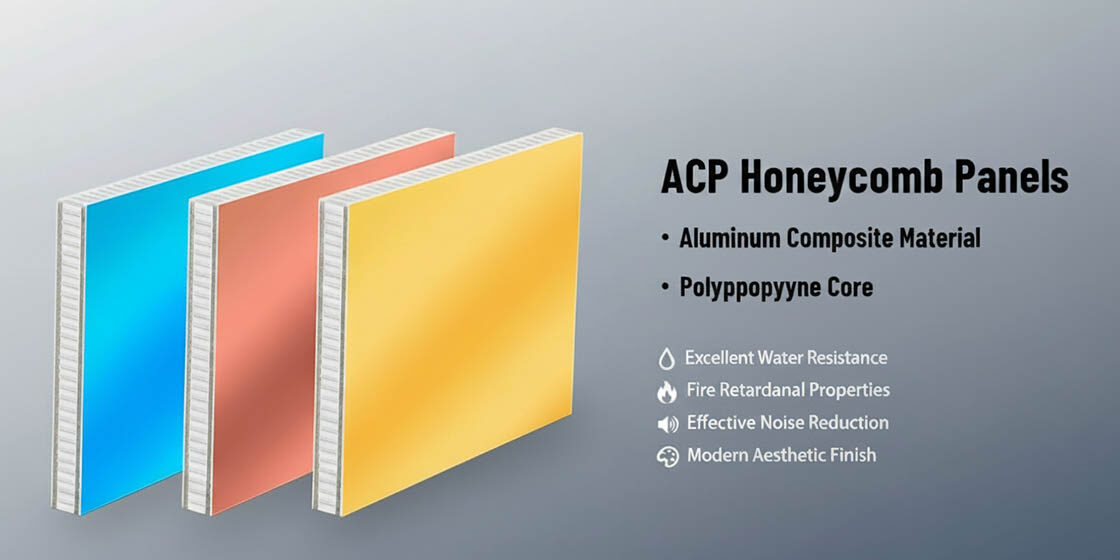
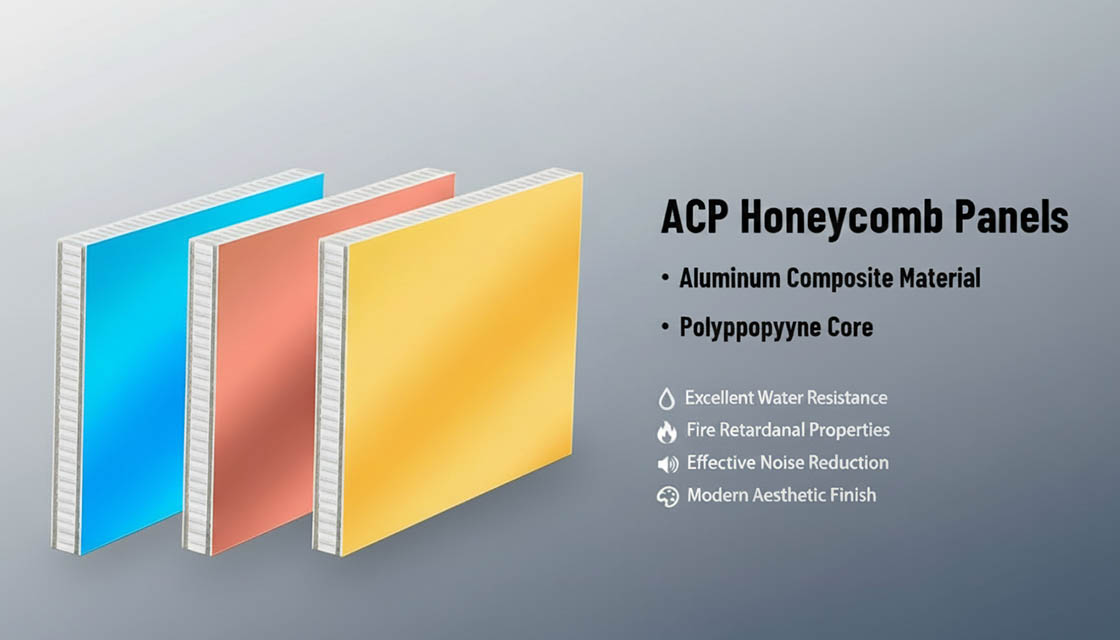
- ACP (Aluminum Composite Panel): Utilized heavily in architectural building applications for its flatness and weatherability.
Core Insulation Types: Engineering for Thermal and Structural Targets
The core material dictates the panel’s R-value, compressive strength, and fire rating. A common failure point in the supply chain is substituting a cheaper core (like standard EPS) where a structural foam (like PET) is required to handle localized loads from fasteners or heavy machinery.
Rax Panel engineers select from a verified catalog of core materials based on precise thermal conductivity and density data:
- PET Foam: Provides high dimensional stability and is fully recyclable. It is our recommended choice for RV walls and commercial truck bodies requiring high mechanical strength.
- PU (Polyurethane) Foam: Offers the lowest thermal conductivity values. It is the industry standard for refrigerated truck bodies and cold chain logistics where strict temperature retention is critical.
- PVC Foam: Highly resistant to water absorption and chemicals, making it the default core for marine vessel hulls and decks.
- PMI Foam: A high-end aerospace-grade core. We use PMI for demanding applications requiring extreme weight reduction without sacrificing sheer compressive strength.
- PP Honeycomb: Used when maximum weight reduction is the primary goal. When composited with fiberglass sheets, it creates an exceptionally rigid yet lightweight structure for cargo flooring.
We conduct experimental testing on these raw materials to verify they meet strict data standards before production begins, ensuring the final composite panel performs under stringent field conditions.
| Material Category | Material Type | Key Properties | Common Applications |
|---|---|---|---|
| Foam Core Materials | XPS / PET / PU / PVC Foam | Lightweight, waterproof, excellent thermal insulation | RV walls, refrigerated trucks, mobile homes, building cladding |
| Advanced Foam Cores | PMI / EPP / MPP Foam | High strength-to-weight, superior compressive resistance | Aviation, marine vessels, high-performance industrial panels |
| Honeycomb Core Materials | PP / Aramid / PC / Fiberglass Honeycomb | Ultra-lightweight, exceptional shear strength, rigid structure | Vehicle flooring, structural panels, anti-skip surfaces, public transit |
| Fiberglass Reinforced Skins | GRP / FRP / CFRT Sheets with Gelcoat | Waterproof, flat, smooth, impact-resistant, electrically insulating | Truck bodies, vessel hulls, exterior wall panels, sanitary facilities |
| Metal Facing Skins | Aluminum / Steel / Stainless Steel / Aluzinc | Corrosion-resistant, fire-rated, high load-bearing capacity | Industrial facilities, commercial construction, rockwool panels |
| Thermoplastic & Specialty Sheets | CFRT / UD Tapes / LWRT / FR4 / HDPE | Lighter, thinner, resilient, recyclable | New energy applications, sports equipment, medical, agricultural |
| Wood-Based & Mineral Cores | Plywood / Balsa / Rockwool | Natural damping, fire resistance, acoustic insulation | Marine interiors, fire-rated building panels, acoustic enclosures |
| Specialty Composite Panels | HPL / PIR / PUR / Hollow Plastic Formwork | Hygiene-compliant, temperature-retaining, chemical-resistant | Clean rooms, cold storage, exterior cladding, formwork systems |
Step-by-Step Sandwich Panel Manufacturing Process
Panel integrity comes down to four controlled stages: skin preparation, core conditioning, high-pressure lamination, and calibrated curing. Miss tolerances at any stage, and you get delamination in the field.
Surface Treatment and Profiling
Before any bonding happens, the facing skins, whether GRP sheets with gelcoat, CFRT thermoplastic sheets, aluminum, or stainless steel, must be prepped to accept adhesive. Contamination is the number one cause of delamination failures we see in returned panels from competing suppliers. Even microscopic oil residues from the rolling mill will kill your bond strength.
At our facility, every facing sheet runs through a multi-stage surface treatment line. For FRP and GRP sheets, this means controlled corona treatment or mechanical abrasion to raise the surface energy. For metal facings like Aluzinc or stainless steel, we apply chemical conversion coatings. The target surface energy threshold sits above 38 dynes/cm. Anything below that and the adhesive simply will not wet out properly.
Profiling happens simultaneously. The sheets are cut to project-specific dimensions and, where required, roll-formed into structural profiles. This is where custom orders diverge from catalog stock. An RV manufacturer ordering GRP foam core panels for curved roofing needs different profiling tolerances than a refrigerated truck builder specifying flat PU core panels with 0.8mm FRP skins.
Core Material Expansion
Foam cores such as XPS, PET, PU, PVC, PMI, EPP, and MPP arrive at the factory in either unexpanded bead form or pre-cured blocks depending on the material type. For thermoplastic foams like XPS and PET, the expansion process involves controlled heating in specialized chambers where the blowing agent activates and the cell structure forms.
Density consistency is the critical metric here. If you specify 60 kg/m³ PET foam for a marine vessel panel and the actual density drifts to 45 kg/m³ in sections, your compressive strength drops off a cliff. Our production line monitors foam density at three checkpoints before lamination begins. Honeycomb cores, whether PP, aramid, or PC, follow a different path. They arrive pre-formed and are trimmed to exact thickness tolerances of ±0.3mm, then checked for cell uniformity.
For buyers comparing suppliers: ask what tolerance they hold on core density across a full production run. If they cannot give you a straight answer with a specific range, that is a warning sign.
High-Pressure Lamination
This is where the sandwich panel actually becomes a structural unit. The prepared skins and conditioned core enter the lamination press together with a measured adhesive layer, typically polyurethane or epoxy-based, selected based on the facing and core chemistry. Incompatible adhesive selection is the second most common failure mode we encounter in competitor product audits.
Our continuous composite panel production line applies consistent pressure across the entire panel surface. For discontinuous production, which is used for thick specialty panels like 100mm+ PUR panels for cold storage, hydraulic presses hold the assembly under calibrated pressure while the adhesive cures. Press temperature, pressure, and dwell time are the three variables that dictate final bond quality.
- Press pressure range: 0.3 to 0.8 MPa depending on core compressive strength
- Dwell time: 8 to 25 minutes for thermoset adhesives at controlled temperature
- Adhesive spread rate: 180 to 350 g/m², calibrated to core porosity
- Daily throughput: Exceeding 1,700 m² of finished panel area
We pull test samples every 500 m² of production for flatwise tensile testing per ASTM C297 to verify that the skin-to-core bond exceeds minimum strength thresholds. If a batch fails, the entire run is flagged before it ships.
Curing, Cooling, and Cutting
Post-lamination, panels move through a controlled cooling zone. Rapid or uneven cooling introduces internal stresses that cause warping, especially problematic for large-format aluminum and ACP sandwich panels used in exterior wall cladding. Gradual cooling over 2 to 4 hours in temperature-stabilized zones prevents this issue entirely.
Once cured and stabilized, panels proceed to CNC cutting stations. This is where project-specific dimensions, edge profiles, and pre-drilled mounting holes are machined. Precision matters because field modifications on composite panels are costly and often compromise the sealed edges. For international distributors ordering CKD kits for refrigerated trucks, every panel must mate perfectly at the assembly site. There is no room for re-cutting on location.
Final inspection covers dimensional accuracy (±1.0mm on length and width), squareness, surface defects on gelcoat or metal finishes, and edge seal integrity. Panels are then wrapped in protective film, stacked on pallets, and loaded for container shipping. For buyers managing large-scale projects: insist that your supplier provides mill test certificates and lamination records for each production batch. This documentation is your only real protection if a defect surfaces months after installation.
Continuous vs Discontinuous Panel Production
Continuous lines dominate high-volume orders for consistent profiles like RV walls and truck bodies, while discontinuous batch pressing wins when you need varying core densities, custom skin combinations, or short-run specialty panels.
Continuous Line Advantages
A continuous composite panel production line feeds core material and facing skins through a moving lamination process without stopping. The adhesive is applied, layers are combined, and curing happens inline under controlled heat and pressure. The result is a single, uninterrupted panel that gets cut to length at the end of the line. This method is what allows manufacturers like Rax Panel to achieve a daily production area exceeding 1,700 square meters from a single advanced production line.
For buyers managing large-scale projects, continuous production delivers three concrete benefits that directly affect your procurement costs and project timelines:
- Consistent bonding quality: With no start-stop cycles, adhesive distribution remains uniform across the entire panel surface, which drastically reduces delamination risk and voids that plague batch-pressed panels.
- Lower per-unit cost at scale: Once the line is running, material waste drops and labor efficiency climbs. For orders above roughly 500 square meters of a single panel specification, continuous lines typically deliver 15–25% better unit economics compared to batch pressing.
- Predictable lead times: Continuous lines produce at a fixed meter-per-hour rate. Your logistics team can plan shipping windows with far greater accuracy, which matters when you are coordinating deliveries across multiple job sites or exporting to distributors in over 50 countries.
Continuous lines are the optimal choice for standardized panel configurations: GRP foam core panels for refrigerated truck bodies, CFRT sandwich panels for RV roofing, or aluminum composite panels for building cladding. If your project calls for repeated panels with the same facing material, core type, and thickness, continuous manufacturing is almost always the superior production route.
Batch Production Use Cases
Discontinuous, or batch, production involves pressing individual panel layups in a stationary platen press or vacuum bagging system. Each panel is assembled layer by layer, with the core material sandwiched between skins using adhesive, and then cured under pressure as a discrete unit. The cycle resets for every panel or small batch group.
This method is not inherently inferior. In fact, for certain applications, batch production is the only technically viable approach:
- Highly customized core and skin combinations: When a project requires non-standard pairings, for example carbon fiber facings over PMI foam core, or stainless steel skins with aramid honeycomb, setting up a continuous line for a short run is economically impractical. Batch pressing accommodates these one-off configurations without retooling an entire production line.
- Thick or asymmetric panels: Panels exceeding standard thickness ranges, or panels with different skin materials on each face (such as GRP on the exterior and plywood on the interior for vessel bulkheads), often require the flexibility of a press where pressure and curing time can be adjusted per cycle.
- Prototype and experimental testing: When our engineers develop custom solutions for specialized vehicle manufacturers or industrial clients, they produce test panels in small batches to validate mechanical properties, thermal conductivity, and bonding strength before committing to full-scale continuous production.
- Low-volume specialty orders: Distributors ordering specialty panels like HDPE sandwich panels or non-slip anti-skid honeycomb panels for niche markets often need quantities that do not justify a continuous line changeover. Batch production keeps these orders feasible without minimum order quantities that would kill the deal.
The trade-off is straightforward. Batch-pressed panels carry higher labor costs per unit and longer cumulative production times for large orders. However, they provide unmatched flexibility for material combinations, thickness variations, and short production runs. The decision between continuous and discontinuous production should be driven by your order volume, panel specification consistency, and project timeline, not by a generic assumption that one method is universally better.
The Critical Role of Bonding Agents
The bonding agent is the single point of failure in any sandwich panel. Get it wrong, and you get delamination under thermal cycling, regardless of how good your core or facing material is.
Adhesion Between Dissimilar Materials
In composite sandwich panel manufacturing, you are constantly bonding materials that fundamentally do not want to stick together. A GRP fiberglass skin and a PET foam core have completely different surface energies. An aluminum facing bonded to a PP honeycomb core presents the same challenge. The bonding agent, whether a polyurethane adhesive, epoxy resin, or a structural film adhesive, is the chemical bridge that makes this union structurally sound.
We see delamination failures in the field when suppliers treat adhesive selection as an afterthought. At Rax Panel, our engineers run experimental testing on each skin-to-core combination before mass production. A CFRT sheet laminated to XPS foam requires a different adhesive formulation than the same CFRT sheet bonded to a PVC foam core. Surface preparation matters just as much: corona treatment, priming, or mechanical abrasion of the facing material can increase peel strength by 40% or more.
For distributors supplying both the RV and truck body markets, this is a critical quality checkpoint. A refrigerated truck panel using GRP skins over PU foam must maintain bond integrity through years of freeze-thaw cycling. If the adhesive lacks the correct flexibility and shear modulus, the panel will delaminate at the edges first, compromising both structural load capacity and waterproofing.
Minimizing Thermal Bridging
Thermal bridging occurs when heat transfers across a localized path that bypasses the insulating core. In a poorly manufactured sandwich panel, the bonding agent layer itself can become that path. If the adhesive is applied unevenly, leaves voids, or is spread too thickly in certain areas, you create localized zones of higher thermal conductivity. For procurement teams evaluating insulation values and R-value compliance, this is a hidden defect that standard visual inspection will not catch.
The solution is controlled adhesive application. On our continuous composite panel production line, adhesive spread rate is monitored to maintain a consistent, thin film, typically between 0.1mm and 0.3mm depending on the adhesive system. Too thin, and you risk incomplete wetting and weak bond strength. Too thick, and you add unnecessary weight and create a thermal short circuit through the panel cross-section.
For construction applications where fire ratings and energy code compliance are non-negotiable, this precision directly impacts the panel’s measured thermal conductivity (W/m·K). A panel with properly controlled adhesive application will consistently hit its rated R-value. One with inconsistent bonding will show cold spots under thermal imaging, often right at the joints and perimeter edges where adhesive bead placement is hardest to control.
Our recommendation to buyers evaluating suppliers: request peel test data (ASTM D1781 or equivalent) alongside thermal conductivity test results from the same production batch. If a manufacturer cannot provide both, the correlation between their bonding process and actual insulation performance has not been verified. That is a risk not worth taking on a large-scale building or specialized vehicle project.

Quality Control and Industry Standards
Fire ratings and thermal conductivity data are the two metrics that make or break a composite panel specification. If your supplier cannot produce third-party test reports for both, you are absorbing unquantified liability.
Fire Safety Testing: Standards That Actually Matter
Fire compliance is non-negotiable in commercial construction, specialized vehicle manufacturing, and marine applications. Yet we consistently see buyers accept generic “fire retardant” claims from suppliers without demanding certified test data. That is a critical mistake. The difference between a panel that achieves a B-s1,d0 classification versus a C-s2,d1 under EN 13501-1 can determine whether an entire building project passes inspection or gets rejected at the envelope stage.
For the North American market, ASTM E84 (Surface Burning Characteristics) and ASTM E119 (Fire Resistance of Building Constructions) are the baseline standards procurement teams should reference. ASTM E84 measures flame spread index and smoke development index, two numbers that directly impact occupancy permits. A panel with a flame spread index below 25 and a smoke development index below 450 achieves a Class A rating, which is the threshold most commercial projects require.
In Europe, EN 13501-1 is the governing classification standard. It evaluates three parameters simultaneously: reaction to fire (A1 through F), smoke production (s1 through s3), and flaming droplets (d0 through d2). At Rax Panel, our GRP/FRP panels with specific core configurations undergo rigorous evaluation against these parameters because we serve both markets. We test at independent laboratories, not just in-house, because distributors and OEMs need documentation that local inspectors accept without challenge.
The core material you select heavily dictates fire performance. Rockwool-cored panels inherently achieve the highest fire ratings due to the mineral wool’s non-combustible nature. PET and XPS foam cores require careful engineering: additives, barrier layers, and facing material selection all factor into the final fire classification. This is exactly why our engineers conduct experimental testing during the customization phase: to verify that a specific skin-core combination delivers the fire data your project demands before you commit to a bulk order.
Thermal Performance Assessment: Beyond R-Value Claims
Thermal insulation is the primary functional reason buyers choose sandwich panels over solid construction materials. But evaluating thermal performance requires more than scanning a manufacturer’s R-value claim on a product page. The metric that actually matters is thermal conductivity, measured in W/(m·K), and it must be tested under standardized conditions to mean anything.
The two international test methods that carry authority are ASTM C518 (Steady-State Thermal Transmission Properties by Means of the Heat Flow Meter Apparatus) and ISO 8301 (Determination of Steady-State Thermal Transmission Properties). Both measure how effectively a panel resists heat transfer through its cross-section.
Lower thermal conductivity values translate directly to energy savings over the lifespan of the building or vehicle. For refrigerated truck bodies and cold chain applications, this single number determines whether your compressors run continuously or cycle efficiently.
Core material selection drives thermal performance more than any other variable. Here is how the common core options compare in terms of thermal conductivity ranges, based on our production and testing experience with panels configured for diverse global markets:
- PET Foam: Approximately 0.030–0.035 W/(m·K). Strong balance of thermal resistance, mechanical strength, and recyclability.
- XPS Foam: Approximately 0.028–0.034 W/(m·K). Excellent moisture resistance makes it suitable for high-humidity environments.
- PU (Polyurethane) Foam: Approximately 0.022–0.028 W/(m·K). Among the best thermal insulators available, widely used in refrigerated transport.
- PVC Foam: Approximately 0.030–0.040 W/(m·K). Preferred in marine applications where fire, smoke, and toxicity performance are critical.
- PMI Foam: Approximately 0.020–0.025 W/(m·K). Premium performance for aerospace and high-end applications where weight savings justify the cost.
Thickness is the second lever buyers can pull to increase thermal resistance. R-value scales linearly with panel thickness for a given core material. Our production line handles custom thickness specifications, which allows procurement teams to engineer the exact thermal performance their project requires without paying for unnecessary material.
For a refrigerated truck body operating in Middle Eastern climates, for example, we might recommend an 80mm PU core panel. For an RV wall in a temperate European climate, a 30mm XPS or PET core may be sufficient. The calculation is project-specific, and our engineers work through these parameters with buyers before production begins.
One metric buyers frequently overlook is thermal bridging at panel joints. Even if the core material delivers an impressive R-value at the center of the panel, poorly designed joint systems create heat leakage paths that degrade overall envelope performance by 15–30%. This is particularly critical in cold storage and controlled-environment facilities.
We address this during the design phase by engineering joint profiles that minimize thermal bridges, rather than treating it as an installation problem to solve on-site. If your current supplier only hands you panels without discussing joint thermal performance, you are likely losing energy efficiency they never accounted for.
Emerging Innovations in Panel Manufacturing
Thermoplastic composites and automated inspection are eliminating the two biggest headaches in panel manufacturing: recyclability limits and inconsistent bonding quality.
Thermoplastic Composite Methods
Traditional thermoset FRP panels have served the industry well for decades, but they carry a stubborn limitation. Once cured, the resin matrix cannot be remelted, reformed, or effectively recycled. For international distributors and OEMs facing tightening environmental regulations in Europe and North America, that is a growing liability. Thermoplastic composite methods solve this at the structural level.
Rax Panel’s CFRT (Continuous Fiberglass Reinforced Thermoplastic) sheets represent this shift. Instead of thermosetting resins, these sheets use a thermoplastic matrix reinforced with continuous fiberglass strands. The result is a facing material that is lighter, thinner, and more resilient than conventional GRP sheets while remaining fully recyclable at end-of-life. For truck body manufacturers and RV builders watching total vehicle weight, the weight savings per square meter compounds quickly across an entire build.
The manufacturing approach itself differs from traditional hand lay-up or batch curing. Thermoplastic UD (unidirectional) tapes allow for continuous, automated tape-laying processes where fiber orientation and resin content are precisely controlled by machine rather than operator technique. This reduces the variability that causes delamination anxiety in large orders.
Thermoplastic honeycomb cores follow the same logic. PP (polypropylene) honeycomb structures, when composited with fiberglass sheet facing, produce panels with exceptional strength-to-weight ratios that can be thermoformed and recycled. Rax Panel produces these in thermoplastic honeycomb panel configurations that serve applications from vehicle flooring to marine interiors, where moisture resistance and repeated impact tolerance are non-negotiable.
For procurement teams calculating total cost of ownership, the thermoplastic route offers three concrete advantages. Faster cycle times during production mean shorter lead times on large orders. Lower scrap rates from automated processes reduce per-unit cost. And recyclability addresses end-of-life compliance requirements that are increasingly written into government procurement contracts and EU construction regulations.
Automated Quality Inspection
The weakest point in any sandwich panel is the bond between the core material and the facing skin. A panel can use aerospace-grade PET foam and flawless aluminum facings, but if the lamination process leaves voids or uneven adhesive distribution, the panel will fail under load. Period. Manual visual inspection catches surface defects. It does not catch what matters most.
Modern automated quality inspection systems in composite panel production use non-destructive testing (NDT) methods to verify internal bond integrity without cutting samples. Ultrasonic scanning detects delamination zones and voids by measuring sound wave transmission through the panel cross-section. When a gap exists between the core and the skin, the acoustic impedance changes, and the system flags that specific zone. This is critical for foam core lamination processes where adhesive spread uniformity directly determines compressive strength and thermal performance.
Rax Panel’s production line, running over 1,700 square meters of panel output daily, requires inspection speeds that match the manufacturing pace. Automated optical inspection stations check facing surface quality, dimensional tolerance, and color consistency in real time as panels move through the line. For distributors supplying commercial construction projects where aesthetic uniformity across hundreds of installed panels is a contractual requirement, this consistency matters as much as structural data.
The data layer is where automated inspection separates a reliable supplier from a liability. Every scanned panel generates a digital record: thickness readings, bond quality maps, density verification points, and thermal conductivity spot checks.
For specialized vehicle manufacturers who need to prove compliance with ASTM C297 (flatwise tensile strength of sandwich constructions) or ASTM C273 (shear properties of core materials), batch-specific test reports derived from inline inspection data replace the old model of destructive testing a few random samples and hoping the rest match.
Our engineering team has found that integrating automated inspection at two critical points, immediately post-lamination and post-trimming, catches over 99% of structural defects before panels reach the packaging stage. For buyers managing logistics across oceans to job sites in Southeast Asia or the Middle East, discovering a lamination defect after installation is not a quality issue. It is a project finance crisis. Automated inspection shifts the risk curve in the buyer’s favor.
Choosing the Right Sandwich Panel Supplier
Most sandwich panel supply failures trace back to one mistake: buyers evaluated suppliers on unit price alone, ignoring lamination consistency, customization depth, and whether the factory actually controls its own production line.
The Real Risk: Lamination Defects and Batch Inconsistency
The structural integrity of any composite panel, whether it is a GRP foam core panel for a refrigerated truck or an aluminum honeycomb panel for a vessel, depends entirely on the bond between the skin and the core. Delamination, voids, and poor adhesion are not visible on a spec sheet.
They show up six months after installation, when panels start absorbing moisture or losing load-bearing capacity. This is the single most expensive failure mode in composite panel sourcing, and it is almost always a manufacturing process problem, not a raw material problem.
We have seen buyers switch suppliers to save 8-12% on panel cost, only to face warranty claims and project delays that erased three years of margin. The right supplier is not the cheapest. It is the one that can demonstrate consistent foam core lamination processes, internal testing protocols, and the production capacity to deliver uniform panels across large orders without batch-to-batch variation.
What to Evaluate Beyond the Product Catalog
Many suppliers list extensive product ranges on their websites. The critical question is whether they actually manufacture those panels in-house or act as trading companies sourcing from multiple unknown factories. This distinction directly affects quality consistency, lead times, and your ability to get custom specs. Here is what actually matters when evaluating a sandwich panel supplier for a long-term B2B relationship:
- Owned Production Capacity: Does the supplier operate its own factory with verifiable output? Rax Panel runs an advanced composite panel production line with a daily output exceeding 1,700 square meters. This matters because it means your 5,000 sqm order does not sit in a queue behind someone else’s 50,000 sqm order at a subcontractor.
- Material Range Depth: Can they offer genuine customization across core materials (XPS, PET, PU, PVC, PMI, EPP, MPP foams, PP honeycomb, aramid honeycomb) and facing materials (GRP/FRP, CFRT, aluminum, steel, stainless steel, Aluzinc, plywood)? A supplier limited to two or three core options will force you to compromise on weight, insulation, or cost rather than engineering the optimal panel for your application.
- Engineering Support: Does the supplier have in-house engineers who can analyze your project requirements and run experimental testing, or do they only sell from a standard catalog? Rax Panel’s engineering team conducts physical testing to validate that custom panels meet specific data standards before mass production.
- Production Experience: Over 15 years of manufacturing history provides institutional knowledge about what works and what fails in real-world conditions. This is not something a new trading company can replicate.
- Global Supply Chain Reliability: Long-term cooperation with buyers in over 50 countries, spanning Europe, North America, South America, Southeast Asia, Central Asia, Japan, South Korea, and the Middle East, indicates the supplier has already solved the logistics, documentation, and communication problems that delay international shipments.
The Total Cost of Ownership Calculation Most Buyers Skip
When we talk to specialized vehicle manufacturers and international distributors, the initial panel price is only 60-70% of the total cost of ownership. The remaining 30-40% comes from factors most procurement teams underestimate: installation difficulty due to inconsistent panel dimensions, warranty replacement costs from delamination, freight optimization (can the supplier pack to your container specs?), and the cost of finding a replacement supplier mid-project if quality drops.
A supplier like Rax Panel that provides 24-hour one-to-one service in English, French, Russian, Japanese, and Korean eliminates a significant hidden cost: communication delays. When a production issue arises on a 40-foot container of FRP plywood panels destined for an RV factory, a three-day email lag waiting for a trading company to contact their factory and reply costs real money in production downtime.
Red Flags That Should Disqualify a Supplier Immediately
After 15 years in this industry, certain patterns predict supplier failure reliably. Watch for these warning signs during your evaluation process:
- No factory audit access: If a supplier refuses a video factory tour or on-site visit, they almost certainly do not own their production line. This is the fastest screening tool available.
- Unrealistic lead times: If a supplier promises complex custom panels (e.g., carbon fiber honeycomb with specific density requirements) in 7-10 days, they are either lying about manufacturing in-house or cutting corners on curing and testing.
- No test data package: A legitimate manufacturer can provide density, compressive strength, thermal conductivity, and adhesion test results for your specific panel configuration. If they only offer generic certificates, the panels are likely generic too.
- Limited application expertise: If the supplier cannot discuss the engineering trade-offs between a PP honeycomb core and a PET foam core for your specific application (RV flooring vs. refrigerated truck walls vs. marine bulkheads), they are selling commodities, not solutions.
The bottom line: your sandwich panel supplier is a structural partner in your product. Choose based on manufacturing control, engineering capability, and verifiable production capacity. The price difference between a good supplier and a bad one is measured in single-digit percentages. The cost difference between a successful project and a failed one is measured in multiples.
Conclusion
Skip any supplier who cannot hand you recent peel-test data from their foam core lamination process. I have watched distributors absorb five-figure warranty claims because the bonding agent failed on a refrigerated truck job after 18 months. A manufacturer pushing 1,700 square meters of daily output on continuous production lines has their temperature and pressure controls dialed in. Delamination defects at that volume would destroy their margin.
Request physical samples of your exact core-skin combination, whether that is PET foam with FRP faces or PP honeycomb with aluminum, and send them to an independent lab for ASTM C297 flatwise tensile testing before you sign anything. That test runs about $500. It tells you whether the panel holds together for 15 years or fails after the first thermal cycle.
Frequently Asked Questions
How are metal sheets prepared for sandwich panels?
Metal sheets are precision-cut using laser or CNC machining, then treated with galvanization or powder coating to enhance their corrosion resistance and aesthetic appeal.
Why is curing important in sandwich panel production?
Adequate curing solidifies the adhesive to ensure optimal bond strength and prevent structural failures, while subsequent cooling stabilizes the panel’s overall structure.
How do bonding agents improve insulation efficiency?
They limit thermal bridging by creating a seamless bond that reduces heat transfer through the panel, significantly improving the building’s energy efficiency.
What types of adhesives are used in manufacturing?
Epoxy adhesives provide high-strength and durable connections for load-bearing applications, while polyurethane adhesives offer greater flexibility and weather resistance.
How do bonding agents enhance panel durability?
Quality bonding agents create a robust seal that prevents moisture ingress, protecting the core material from degradation and extending the panel’s lifespan in harsh environments.