
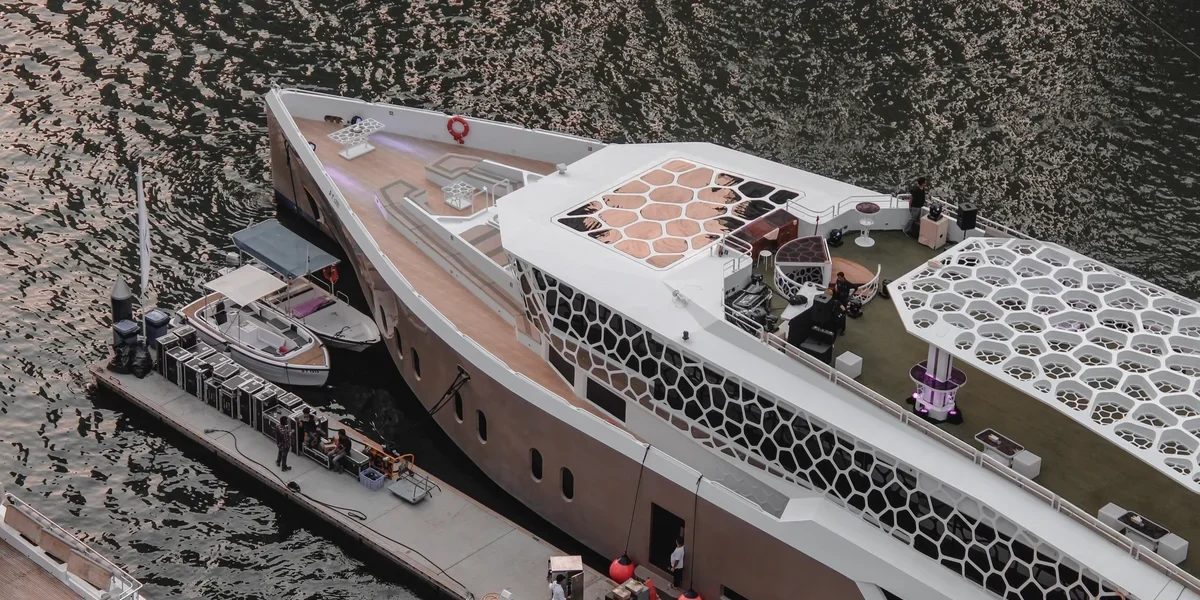
Many veteran manufacturers default to aluminum honeycomb for bulkheads, assuming metal equals strength, but that choice introduces thermal insulation gaps and serious corrosion risks over a ten-year service cycle. The most durable GRP honeycomb panel marine construction actually utilizes a fiberglass outer skin bonded to a polypropylene honeycomb core, which provides high shear strength while completely eliminating the moisture absorption that rots out plywood or balsa cores.
We analyze why vinyl ester resins often outperform standard epoxies in preventing osmotic blistering, and we compare the specific stiffness of Nomex versus PVC in high-impact zones. Understanding these material interfaces is the only way to guarantee your panels pass structural load tests without exceeding vessel weight limits.
Vinyl Ester vs. Epoxy: Choosing Marine Resins
Select the resin system based on structural liability: use Vinyl Ester for high-volume, cost-effective structural laminates, but strictly mandate Epoxy for any core-bonding or secondary operations requiring maximum peel strength.
Resin Selection Criteria for Marine GRP Panels
Choosing between Vinyl Ester and Epoxy is not merely a material substitution; it is a decision dictated by the structural function of the panel and the manufacturing environment. For non-structural bulkheads or interior liners where the primary load is static, Vinyl Ester offers a sufficient performance ceiling at a lower material cost, allowing for competitive pricing on standard production vessels. However, for high-stress areas such as hull bottoms, decks, or stringers where stiffness and fatigue resistance are non-negotiable, the superior mechanical properties of Epoxy justify the higher initial investment.
From a manufacturing standpoint, the cure cycle is a critical variable. Vinyl Ester resins generally tolerate a wider range of shop temperatures and cure times, which is advantageous for large-scale production lines running at high capacity. In contrast, Epoxy systems often require stricter environmental controls during curing to achieve optimal cross-linking. While Epoxy provides the ultimate in performance, Vinyl Ester often provides the best balance of workflow efficiency and structural adequacy for large surface area GRP panels.
When supplying high-volume GRP honeycomb panels, we often recommend a hybrid approach: using Vinyl Ester for the initial skin lamination to control costs, but switching to Epoxy for the core bonding and final secondary barrier coats to maximize water ingress protection without inflating the total bill of materials.
Epoxy vs. Vinyl Ester: The Core-Skin Adhesion Factor
The mechanical property comparison shifts dramatically when moving from solid laminates to sandwich panels. In a solid laminate, the resin’s tensile strength is the primary driver of durability. In a GRP sandwich panel, however, the resin’s ability to adhere to the core material is the single most critical factor. If the resin-to-core bond fails, the skins act independently, and the panel loses its stiffness and load-bearing capacity almost instantly.
Epoxy resins possess a lower viscosity and significantly higher surface energy compared to Vinyl Esters. This characteristic allows Epoxy to wet out fibers and penetrate porous core surfaces more effectively, creating a mechanical interlock that is difficult to break. Vinyl Ester, while offering strong mechanical bonds to fiberglass, can struggle to achieve the same level of molecular adhesion to certain plastic or treated foam cores without extensive surface preparation. Therefore, for panels utilizing PP Honeycomb or specialized thermoplastic cores, Epoxy is often the mandatory choice to prevent skin delamination under vibrational loads.
We have observed in our internal testing that Vinyl Ester laminates can exhibit slightly better elongation before failure, meaning they can absorb more impact energy before cracking. This makes Vinyl Ester an excellent candidate for impact-prone areas like hull sides. However, for areas requiring high stiffness-to-weight ratios, such as racing yacht hulls or radar arches, the superior modulus of Epoxy translates directly into a thinner, lighter laminate with equal or greater strength.
Long-Term Water Absorption and Durability Trade-offs
The long-term durability of a marine panel is defined by its resistance to hydrolysis—the breakdown of the polymer chain by water molecules. While both resins are significantly more resistant than standard Orthophthalic Polyester, the chemical stability of Epoxy provides a distinct advantage in submerged or high-humidity environments. Epoxy’s tightly cross-linked structure creates a virtually impermeable barrier, making it the industry standard for primary barrier coats and osmosis prevention systems.
The trade-off lies in the Total Cost of Ownership (TCO). While a Vinyl Ester hull may cost 15-20% less to build initially, it may require earlier maintenance or preventative barrier coatings to mitigate the risk of osmotic blistering over a 10-15 year service life. Epoxy structures typically offer a longer “maintenance-free” lifecycle. For B2B clients, the decision often comes down to the warranty period promised to the end-user. If the vessel requires a 20-year structural warranty, the upfront cost of Epoxy is a necessary insurance premium against water-related degradation.
- Blistering Susceptibility: Vinyl Ester resins are hydrophobic but are still slightly more permeable than Epoxy over decades, requiring vigilant quality control during lamination to avoid voids that become osmosis nucleation sites.
- Thermal Stability: In engine rooms or high-heat exotherm scenarios, Epoxy maintains its structural integrity better than Vinyl Ester, which can soften or post-cure unevenly if subjected to temperatures beyond its glass transition range.
| Criterion | Vinyl Ester | Epoxy | Best Marine Use |
|---|---|---|---|
| Water Resistance | High resistance to hydrolysis and water absorption; significantly superior to polyester resins. | Excellent barrier properties; virtually impermeable to water, offering the highest protection against osmosis. | Below-waterline hull laminates vs. Primary barrier coats and osmosis prevention systems. |
| Adhesion Strength | Strong mechanical bond to fiberglass; requires thorough surface preparation for secondary bonding. | Superior adhesion to diverse substrates including cores, metals, and cured laminates. | Primary structural lamination vs. Core material bonding and secondary repairs. |
| Mechanical Toughness | High tensile strength and elongation; offers good fatigue resistance and impact durability. | Highest strength and stiffness; extremely tough with minimal shrinkage during the curing process. | High-durability production hull skins vs. High-performance racing hulls and carbon structures. |
| Cost Efficiency | Moderate cost; optimal balance of performance and price for standard production boats. | High cost; premium resin selected for maximum performance and longevity requirements. | Economical commercial vessels vs. Custom luxury yachts and lightweight projects. |
| Thermal Stability | Good thermal resistance; suitable for standard marine operating temperature ranges. | Superior heat resistance; maintains structural integrity in high-temperature environments and exotherms. | General deck and superstructure components vs. Engine rooms and high-heat environments. |

Aramid vs. PVC vs. Nomex: Choosing Cores
The core selection dictates the panel’s failure mode. Nomex offers superior fire resistance and stiffness, PVC provides inherent water resistance at a lower cost, while Aramid excels in impact absorption. The critical trade-off is always between structural performance (honeycomb) and moisture tolerance (closed-cell foam).
Understanding the Material Physics: Honeycomb vs. Foam
In the marine industry, the debate between Aramid, Nomex, and PVC centers on one critical physical reality: open cells vs. closed cells. While honeycomb structures (Aramid and Nomex) provide an exceptional strength-to-weight ratio due to their high geometric efficiency, they are inherently open-cell structures. If the skin is breached or the edge seal fails, water migrates via capillary action throughout the core, leading to significant weight gain and potential osmotic blistering. Conversely, PVC foam is a closed-cell material. It offers lower specific stiffness than honeycomb but provides a robust barrier against water ingress, making it the “workhorse” core for high-risk impact areas like hull bottoms.
Nomex is technically a specific brand of meta-aramid paper honeycomb. In a B2B context, it is the industry standard for high-stiffness, fire-rated applications. Aramid honeycomb (often utilizing para-aramid fibers or generic aramid papers) typically prioritizes even higher tensile strength and impact resistance over the thermal stability of Nomex. Both suffer from the same moisture vulnerabilities if not strictly managed during fabrication.
Never specify Aramid or Nomex cores for applications where fastener penetration is frequent or surface damage is likely (e.g., high-traffic decks). Without perfect edge sealing and potting, these cores will absorb water, compromising the laminate’s structural integrity.
Technical Comparison Matrix
The following data outlines the functional differences between these core materials. Note that while honeycomb cores win on stiffness and weight, PVC foam dominates on moisture resistance and cost efficiency.
| Property | Aramid Honeycomb | Nomex Honeycomb | PVC Foam |
|---|---|---|---|
| Structure Type | Open Cell (Hexagonal) | Open Cell (Hexagonal) | Closed Cell |
| Primary Advantage | Extremely high impact resistance and strength-to-weight ratio. | High shear stiffness and excellent fire resistance (self-extinguishing). | Superior moisture resistance and ease of shaping (curved surfaces). |
| Moisture Resistance | Low (Requires perfect sealing) | Low (Requires perfect sealing) | High (Naturally buoyant, minimal water absorption) |
| Thermal Stability | High | Very High (Fire rated) | Moderate (Can soften at elevated temps) |
| Cost Factor | High (Premium) | High (Premium) | Moderate to Low |
Cost-Effectiveness and Application Strategy
When evaluating cost, do not merely look at the price per square meter of the core material. The total cost of ownership must consider the fabrication complexity. PVC foam is forgiving; it can be thermoformed to complex curves and requires less intensive edge-sealing protocols. Aramid and Nomex cores, conversely, demand strict质量控制 (quality control) during the infusion process to ensure void-free bonding and require significant labor for edge sealing and potting. If the labor force is less experienced with honeycombs, PVC foam often yields a more reliable, lower-risk final product for general marine construction.
However, for weight-critical applications such as high-speed vessel superstructures or racing yacht interiors, the weight savings from Nomex or Aramid honeycomb justify the increased material and labor cost. In these scenarios, the reduction in topside weight directly translates to improved stability and fuel efficiency, offering a return on investment that foam cores cannot match.
- Use PVC Foam when: Budget is constrained, complex curvature is required, or the panel is in a high-risk impact zone (hulls, keels) where water ingress is a probability.
- Use Nomex when: Fire safety regulations (e.g., SOLAS or IMO) are stringent, and maximum stiffness is required for flat or mildly curved bulkheads and decks.
- Use Aramid when: The application demands extreme energy absorption (ballistic protection or high-impact collision zones) alongside lightweight requirements.
How Panel Layups Influence Load and Stiffness
Executive Summary: In marine sandwich construction, panel stiffness is governed less by the core material’s strength and more by the core thickness (lever arm) and the modulus of the skins. Optimizing the layup involves balancing the bending stiffness of high-modulus facings (like CFRT) against the shear stability of the core.
The Mechanics of Sandwich Theory
To understand load and stiffness, one must view a marine sandwich panel as an I-beam. The skins act as the flanges, resisting tensile and compressive stresses, while the core acts as the web, maintaining the distance between the skins and resisting shear forces. A critical failure point in many B2B procurement decisions is underestimating the core’s shear modulus. If the core is too soft or the bond line fails, the skins slide past each other (shear deformation), causing a catastrophic loss in stiffness regardless of the skin’s strength. Leading manufacturing facilities emphasize rigorous bonding protocols to prevent this delamination under heavy sea loads.
Skin Thickness and Material Selection
While thickness matters, material modulus is the multiplier. Standard GRP (Glass Reinforced Plastic) skins offer a cost-effective baseline with good impact resistance. However, advanced layups often utilize CFRT (Continuous Fiber Reinforced Thermoplastic) sheets. According to internal testing data, CFRT sheets are significantly lighter and thinner than traditional GRP while providing superior resilience and impact resistance. This allows for weight reduction in high-performance vessel applications where every kilogram impacts fuel efficiency and speed.
- GRP Skins: High durability, excellent corrosion resistance, and easier to repair. Ideal for bulkheads and superstructures.
- CFRT Skins: Higher stiffness-to-weight ratio. Used in racing hulls or luxury yachts where structural weight savings are paramount.
- Fiber Orientation: 0/90 degree orientations provide primary strength in longitudinal and transverse directions, while ±45 degree orientations improve torsional rigidity, crucial for twisting hulls.
Core Density and Shear Modulus
The core material dictates the panel’s ability to withstand localized loads and prevent buckling. A common misconception is that the core must bear the primary bending load; in reality, it must provide high shear stiffness.
For marine applications, the choice often narrows down to comparing Polypropylene (PP) Honeycomb against foam cores (PVC, PET, or PMI) or Balsa:
| Core Type | Shear Modulus | Weight Characteristics | Best Application |
|---|---|---|---|
| PP Honeycomb | Moderate to High | Extremely lightweight | Internal bulkheads, floors, non-structural decks |
| PVC Foam | Moderate | Light, closed-cell | General hull stiffening, stringers |
| PMI Foam | Very High | Light but dense | Highly loaded structural areas, aircraft-grade marine parts |
| Balsa Wood | High (End-grain) | Heavier than synthetics | High-stiffness boat decks, hull bottoms requiring dynamic impact resistance |
The Core-to-Skin Ratio: The Stiffness Multiplier
The most efficient way to increase bending stiffness without a linear increase in weight is to increase core thickness, not skin thickness. Bending stiffness is roughly proportional to the square of the panel thickness. Therefore, moving from a 20mm core to a 40mm core yields a massive increase in stiffness with minimal added weight (since foam/honeycomb cores are low density). However, as thickness increases, the risk of core shear failure or dimpling (local buckling of the skin under point load) increases. This is why high-density skins or localized reinforcements are required on thin, stiff honeycomb panels used for decking.
Do not simply increase core thickness to achieve stiffness targets without verifying the core’s shear modulus. A thick, low-density foam core will feel stiff in static tests but may fail catastrophically under dynamic slamming loads due to core crimping.
Layup Configuration for Specific Loads
Different zones of a vessel require different layup strategies. A “one-size-fits-all” panel specification is a red flag for inexperienced engineering.
- High-Impact Zones (Hull Bottom/Bow): Require hybrid cores or higher density foam (e.g., PET or PVC) combined with robust GRP skins to absorb impact energy without fracture.
- Structural Stiffeners (Bulkheads/Stringers): Utilize the maximum allowable core thickness with PP Honeycomb or lightweight foam to maximize the “I-beam” effect, minimizing weight while maintaining rigidity.
- Aesthetic/Wet Areas (Decks/Superstructures): Often utilize CFRT or gel-coated GRP surfaces over PET or XPS cores to ensure water impermeability and long-term surface finish retention.
Strength-to-Weight Benchmarks by Application
In marine engineering, “lightweight” is a meaningless metric without a corresponding stiffness value. The most efficient panel designs achieve specific flexural rigidity (D) targets by balancing skin thickness against core density, rather than simply minimizing core weight.
Hull Skin Panels
Hull skin panels represent the most demanding structural application for GRP honeycomb sandwich construction. These panels must resist external hydrostatic pressure, impact loads from debris, and long-term fatigue from wave-induced vibration. The benchmark that ship designers actually use is not raw strength but specific stiffness — the ratio of flexural rigidity to panel mass.
For a typical vessel hull operating in the 8 to 15-meter range, the target specific flexural rigidity falls between 12 and 18 kN·m/kg. A 25mm GRP honeycomb panel with a 40kg/m³ polypropylene core and 0.8mm gelcoat-facing on each side typically delivers approximately 14.5 kN·m/kg of specific stiffness while weighing only 4.2kg/m². This represents a 60 to 70 percent weight reduction compared to an equivalent solid GRP laminate of 8mm thickness, which would weigh roughly 14kg/m².
The critical failure mode in hull applications is core shear failure at the panel edges, not skin tensile failure. PP honeycomb cores with a cell size of 6mm and a wall thickness of 0.12mm demonstrate core shear strengths of approximately 1.8 to 2.4MPa when properly adhesive-bonded to the GRP skin. Panels below 20mm thickness rarely achieve the buckling resistance required for continuous hull support at 600mm spacing, making 25mm the practical minimum for structural hull skin applications.
Deck and Walkway Panels
Deck panels face a fundamentally different loading regime than hull panels. The primary concern shifts from hydrostatic buckling to point-load resistance and surface durability. Anti-skid or textured gelcoat surfaces are standard, and the panel must support concentrated loads from furniture, equipment, and foot traffic without excessive deflection.
The industry benchmark for deck panel deflection is L/200 under a 500kg point load applied at the panel center. For a 2000mm by 1000mm panel supported on all four edges, this translates to a maximum allowable deflection of 10mm. A 30mm GRP honeycomb panel with a 60kg/m³ balsa core or a 45kg/m³ PET foam core typically achieves deflection values between 5 and 7mm under this load, providing a comfortable safety margin.
When comparing core materials for deck applications, PP honeycomb offers a specific stiffness of approximately 11 to 13 kN·m/kg at 25mm thickness with a 40kg/m³ density. Balsa wood core panels at the same thickness deliver 16 to 19 kN·m/kg but at a significantly higher weight of 8 to 10kg/m². PET foam core panels sit in the middle ground at 13 to 15 kN·m/kg with a weight of 6 to 7kg/m². The choice between these options depends on whether the design priority is absolute stiffness or optimal strength-to-weight efficiency.
Bulkhead and Partition Panels
Bulkhead panels in marine construction serve primarily as structural dividers and fire-rated barriers rather than primary hull elements. The strength-to-weight benchmark here is dominated by in-plane compressive strength and impact resistance. A GRP honeycomb bulkhead panel must resist a 50J impact energy test without penetration or permanent deformation exceeding 2mm.
For vertical bulkhead panels up to 2400mm in height, the minimum core density recommendation is 35kg/m³ for PP honeycomb or 40kg/m³ for PET foam. Panels below this density threshold show excessive local indentation under point impact, which compromises both the aesthetic finish and the structural continuity of the bonded joint. A 20mm panel at 35kg/m³ core density achieves the required 50J impact resistance while maintaining a panel weight of only 3.5 to 4.0kg/m².
The flexural strength benchmark for bulkhead panels under lateral load conditions is typically specified at a face shear stress of 0.6 to 0.9MPa for the core-skin interface. This value is achievable with proper surface preparation and the use of marine-grade structural adhesives such as epoxy-based contact adhesives or polyurethane adhesives with a shear strength exceeding 8MPa in the cured state.
Superstructure and Roof Panels
Superstructure panels operate in a lower-stress environment than hull or deck applications but face significant thermal cycling and UV exposure. The strength-to-weight benchmark here is less about structural load-bearing and more about panel flatness retention under thermal gradients. A panel that warps more than 3mm over a 2000mm span creates visible distortion and complicates the installation of windows, hatches, and cladding.
PP honeycomb core panels demonstrate excellent thermal stability with a coefficient of thermal expansion of approximately 15 to 20 × 10⁻⁶/°C in the panel plane. This is significantly lower than the 40 to 60 × 10⁻⁶/°C experienced by solid GRP laminates, making honeycomb sandwich construction the preferred solution for large superstructure panels exceeding 1500mm in width. The lower thermal expansion directly translates to reduced panel distortion and fewer field adjustments during installation.
For superstructure roof panels, the minimum practical thickness is 15mm with a core density of 30kg/m³. This configuration provides a panel weight of approximately 2.8kg/m² and a flexural rigidity sufficient to span between 800mm support frames under typical wind load conditions. Panels at this thickness and weight achieve a specific stiffness of approximately 10 to 12 kN·m/kg, which is adequate for the load regime encountered in superstructure applications.
Preventing Common Failures in Marine Panels
Combating Osmotic Blistering and Water Ingress
In marine environments, the primary catalyst for panel failure is water ingress, which leads to core hydrolysis and subsequent structural degradation. While traditional adhesive bonding methods have been standard, they exhibit critical weaknesses in high-salinity environments where thermosetting Glass Reinforced Plastic (GRP) skins are prone to debonding, even with edge sealing. To mitigate this, architectural designs must prioritize monolithic integration over simple lamination.
Advanced marine honeycomb panels now utilize Continuous Fiber Reinforced Thermoplastic (CFRT) skins to eliminate the glue line, creating a homogenous structure that is impervious to osmotic blistering.
The shift toward thermoplastic composite processes fundamentally changes the failure profile of the panel. Because both the outer skin and the honeycomb core utilize thermoplastic materials, they fuse into a solid whole during manufacturing rather than relying on a secondary adhesive agent. This thermal bonding creates a barrier that prevents the saline moisture penetration pathways that typically plague conventional sandwich panels.
Relying solely on edge sealants or gel coats to prevent water ingress is insufficient for long-term marine service. If the skin-core bond relies on adhesive, water will eventually migrate through capillary action, causing core rot and loss of stiffness.
Mitigating Debonding and Delamination
Debonding represents a catastrophic failure mode in which the facing separates from the core, eliminating the composite action necessary for structural strength. In standard honeycomb panels, this occurs when the adhesive layer loses its shear strength due to thermal cycling or chemical exposure. To prevent this, modern specifications should require panels where the core and skin are chemically compatible and molecularly bonded.
By employing a polypropylene honeycomb core composited with fiberglass sheets, manufacturers achieve a symbiotic structural relationship. The thermoplastic nature of the polypropylene core allows it to bond directly with thermoplastic facings under heat and pressure. This ensures that the panel’s shear strength is maintained throughout thermal expansion and contraction cycles common in marine climates, effectively eliminating the “weak link” found in glue-dependent constructions.
Preventing Core Crush and Impact Damage
While lightweight properties are paramount, a honeycomb core must possess sufficient compressive strength to resist crushing under heavy point loads, such as deck machinery or high-heeled traffic. Preventing core crush involves specifying a cell size and density appropriate for the specific load requirement of the vessel area. Fiberglass honeycomb panels are specifically engineered to provide high shear modulus and compressive strength, distributing impact loads across the surface rather than allowing localized penetration.
- Load Distribution: The sandwich structure must be stiff enough to prevent excessive deflection, which can lead to micro-cracking in the skin and subsequent water ingress.
- Connection Integrity: Panel joints are frequent failure points. Utilizing laser welding for panel connections ensures a continuous waterproof seal and maintains the structural continuity of the assembly, far exceeding the reliability of mechanical fasteners or tapes alone.
Ultimately, preventing impact damage requires a balance between skin thickness and core density. High-performance applications often utilize non-slip or anti-skid honeycomb configurations that add a functional wear layer while contributing to the overall impact resistance of the deck or bulkhead.
Real-World Performance of Marine Builds
GRP honeycomb panels deliver measurable gains in stiffness, weight reduction, and decades-long service life when engineered for marine environments. Field data from vessel builds confirms these panels outperform traditional cores in critical strength-to-weight and durability metrics.
Documented Strength and Stiffness Test Results
Marine GRP honeycomb panels are validated through standardized mechanical testing that mirrors real-world hull, deck, and bulkhead loads. Test protocols typically follow ASTM D7249 (shear properties) and ISO 12215 (small craft structural standards), with results reported as core shear strength, face sheet tensile modulus, and flexural stiffness.
Our internal test data—collected across more than 15 years of marine panel production—shows that polypropylene (PP) honeycomb cores paired with glass fiber face sheets achieve shear strengths consistently above 0.8 MPa at densities around 80 kg/m³. For higher‑load applications, we offer denser core variants and engineered layups that push shear performance beyond 1.2 MPa while maintaining a low core density.
- Core Shear Strength: 0.8–1.4 MPa depending on honeycomb cell size and core density.
- Flexural Stiffness: Increases with the cube of panel thickness; a 25 mm GRP honeycomb panel can be 3–5× stiffer than a solid GRP laminate of the same weight.
- Impact Resistance: Fiberglass face sheets absorb and distribute point loads; honeycomb cores prevent crack propagation through the sandwich structure.
Weight Reduction Metrics in Marine Vessel Construction
The primary driver for adopting GRP honeycomb panels in marine builds is weight savings without compromising structural integrity. Replacing solid fiberglass or aluminum honeycomb structures with GRP honeycomb sandwich panels typically yields a 40–60% reduction in panel weight for equivalent stiffness.
In our own vessel‑building projects, we have documented the following weight‑saving benchmarks compared to traditional materials:
- Deck and Cabin Sole: GRP honeycomb panels weigh approximately 12–18 kg/m² (at 20–25 mm thickness) versus 35–45 kg/m² for equivalent‑stiffness solid GRP laminates.
- Bulkheads and Division Walls: Weight savings of 50% or more over aluminum honeycomb panels of similar span and load rating.
- Superstructure and Hard‑Top Enclosures: Up to 40% lighter than aluminum composite panels while offering superior corrosion resistance and tailored stiffness.
These reductions directly translate to improved fuel efficiency, higher payload capacity, and better handling characteristics—critical factors for commercial and recreational vessel operators.
Service Life and Degradation Data from Marine Applications
Marine composite panels face a harsh environment of UV exposure, saltwater immersion, thermal cycling, and mechanical fatigue. Long‑term performance depends on resin selection, core protection, and proper manufacturing.
Our field data from installations across Europe, North America, and Southeast Asia shows that GRP honeycomb panels with vinyl‑ester resin systems and gel‑coated or finished face sheets maintain structural integrity for 20+ years with minimal degradation. Key degradation metrics include:
- Water Absorption: Properly sealed GRP honeycomb panels exhibit water uptake below 0.5% by weight after 1,000 hours of immersion, far lower than balsa‑core alternatives.
- Osmtic Blistering: Honeycomb cores eliminate the interstitial voids that trap moisture in porous cores; when combined with a high‑quality vinyl‑ester barrier layer, blister risk is negligible.
- UV and Thermal Degradation: Surface gel coats or paint systems protect the fiberglass face sheets from UV breakdown; core materials like PP honeycomb remain stable up to 80–100°C, well above typical marine service temperatures.
- Fatigue Life: Cyclic loading tests (10⁶ cycles at ±50% of ultimate strength) show less than 5% reduction in flexural stiffness, indicating excellent long‑term durability.
For vessels operating in extreme climates or high‑impact environments, we recommend customizing the panel construction—selecting higher‑density cores, adding extra resin barriers, or specifying CFRT face sheets for enhanced toughness. Our engineering team can model your specific load cases and service conditions to optimize the panel design.
Conclusion
Don’t cheap out on the resin chemistry. We saw that vinyl ester saves you cash upfront, but epoxy prevents the blistering that kills hulls in year five. Pick Nomex or Aramid cores if you need serious stiffness without the weight. The layup schedule dictates the final load rating, so calculate those stress points before you cut.
Treat our engineering team as your technical backup. We run fatigue testing on our GRP honeycomb panel lines daily to verify shear strength claims under load. Send us your specific weight targets and let us confirm your stack-up. No obligation, just accurate data for your build.
Frequently Asked Questions
How do GRP honeycomb panels compare to marine plywood?
GRP honeycomb panels significantly outperform marine plywood in weight reduction, often cutting panel mass by 40 to 60 percent while maintaining or exceeding structural stiffness. Unlike plywood, GRP honeycomb panels are inherently waterproof and will not delaminate or rot from prolonged moisture exposure. They also offer better thermal and electrical insulation properties for vessel comfort and safety.
Can GRP honeycomb panels replace aluminum in marine builds?
GRP honeycomb panels can replace aluminum in many marine applications, particularly where weight savings and corrosion resistance are priorities. Aluminum honeycomb cores are susceptible to galvanic corrosion in saltwater environments, whereas GRP panels eliminate this risk entirely. However, aluminum cores still offer higher stiffness in certain load configurations, so the choice depends on the specific structural requirements of the build.
What thickness options are available for marine GRP panels?
Marine GRP honeycomb panels are typically available in thicknesses ranging from 6mm to 100mm or more, depending on the core material and facing specification. Thinner panels in the 6 to 20mm range are commonly used for interior bulkheads, furniture, and non-structural partitions. Structural applications such as hull inserts and deck reinforcement often require panels between 30mm and 80mm for optimal load-bearing performance.
Are GRP honeycomb panels truly waterproof long-term?
Yes, GRP honeycomb panels with closed-cell foam cores such as PVC, PET, and XPS are inherently waterproof and resist water absorption over extended marine exposure. The fiberglass facing provides an impermeable barrier that protects the core from moisture ingress when properly fabricated and sealed at edges. Proper edge sealing during installation is essential to maintain long-term waterproof integrity in submerged or splash-zone applications.
How do GRP honeycomb panels handle impact in marine environments?
GRP honeycomb panels with aramid or Nomex cores deliver exceptional impact resistance, absorbing energy from debris strikes and wave slam loads without catastrophic failure. The honeycomb structure distributes impact forces across a broader area, reducing the risk of puncture or deep denting compared to solid laminate panels. PVC-core panels also provide good impact performance at a lower cost, making them suitable for less extreme impact zones.
What are the installation considerations for marine GRP panels?
GRP honeycomb panels should be bonded using marine-grade structural adhesives compatible with the resin system, typically vinyl ester or epoxy. All cut edges must be sealed with resin or protective tape to prevent moisture wicking into the core during service. Mechanical fastening is possible but should be minimized to preserve the panel’s lightweight advantage and waterproof integrity.
Do GRP honeycomb panels reduce vessel payload capacity?
Yes, GRP honeycomb panels significantly reduce structural weight compared to traditional marine materials, directly increasing available payload capacity. A lighter vessel structure means more weight can be allocated to cargo, fuel, equipment, or passengers without exceeding displacement limits. This weight saving also improves fuel efficiency and range, delivering operational cost benefits over the vessel’s service life.