
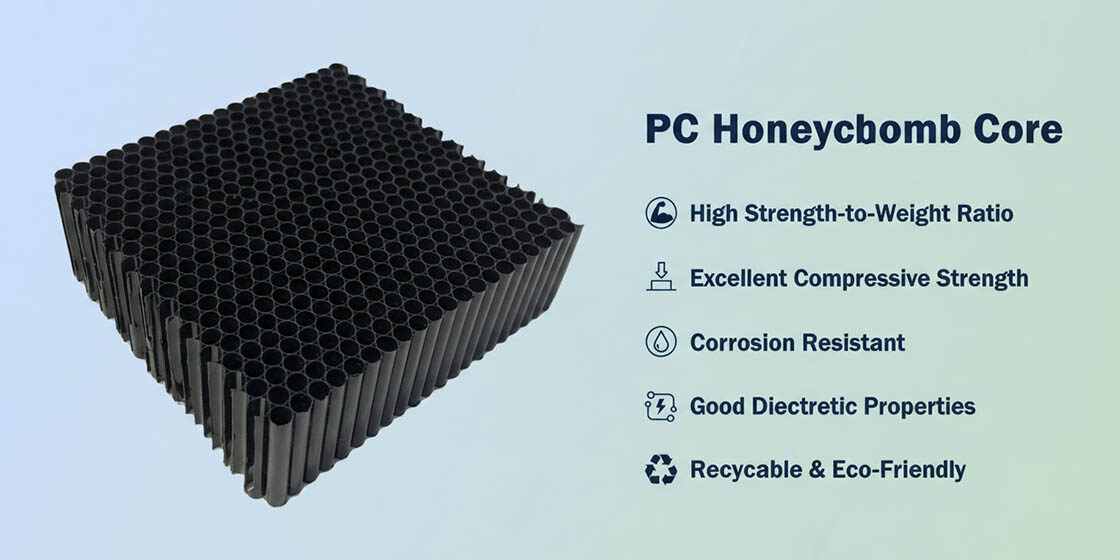
Sandwich panels work by separating two stiff face sheets with a lightweight core to gain bending stiffness, but the material choice determines whether that structure survives real-world abuse. We see manufacturers frequently defaulting to standard PP honeycomb core for its strength-to-weight ratio, only to encounter crushing issues in high-impact zones where EPP foam provides superior energy absorption. The engineering challenge lies in balancing the structural efficiency of a honeycomb geometry against the isotropic dampening properties of a foam matrix.
Sandwich construction provides high bending stiffness at minimal weight compared to solid laminates, yet PP honeycomb cells are susceptible to buckling under point loads where EPP maintains integrity. This analysis compares the specific compression strength, thermal insulation, and manufacturing costs of both materials so you can accurately specify the right core for flooring versus wall structures.
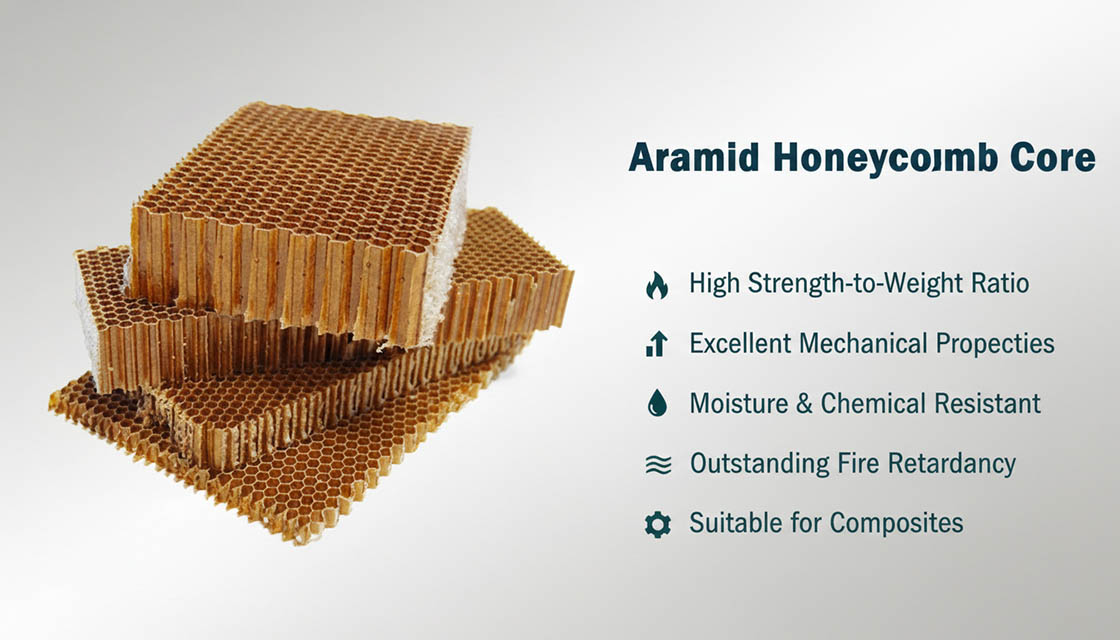
EPP vs PP Honeycomb: Key Performance Differences
The fundamental engineering divergence between EPP and PP honeycomb lies in the trade-off between geometric rigidity and material resilience. PP honeycomb relies on structural geometry for superior stiffness-to-weight, whereas EPP utilizes its closed-cell foam matrix for isotropic strength and dampening.
Specific Stiffness and Strength-to-Weight Ratios
When evaluating structural efficiency, Polypropylene (PP) honeycomb cores are the undisputed leaders in specific stiffness. The hexagonal architecture functions like a continuous series of I-beams, maximizing the second moment of area with minimal material mass. This allows PP honeycomb to achieve exceptional flexural rigidity and shear modulus, making it the preferred choice for applications requiring high deflection resistance, such as large-span flooring or aircraft wing flaps. The strength is highly anisotropic; it is incredibly stiff in the plane of the panel but relies on face sheets for out-of-plane stability.
Conversely, Expanded Polypropylene (EPP) offers a different paradigm of strength-to-weight. Rather than relying on geometry for rigidity, EPP derives its structural integrity from the density of its closed-cell foam structure. While its flexural rigidity is lower than that of a comparable honeycomb core, EPP provides isotropic mechanical properties—meaning it maintains consistent strength behavior in multiple directions. This makes EPP superior in applications where complex, multi-directional loading occurs, or where localized point loads need to be distributed without causing core shear failure.
Thermal Insulation and Noise Dampening Capabilities
The cellular architecture of EPP provides inherent advantages in thermal and acoustic management. Because EPP is composed of a vast volume of closed gas pockets trapped within a polymer matrix, it exhibits low thermal conductivity and acts as an effective thermal break. This significantly reduces heat transfer compared to open-cell or semi-closed honeycomb structures, which can potentially allow convective airflow through the cells if not perfectly sealed. For industries like automotive or cold-chain logistics, this insulation value is a critical factor in material selection.
Acoustically, EPP acts as a superior dampener due to its viscoelastic properties. The foam structure converts acoustic energy into minute amounts of heat through friction within the cell walls, effectively reducing noise transmission and vibration. PP honeycomb, by contrast, is often acoustically transparent or can even act as a resonance chamber depending on the facing materials. In rigid structures, honeycomb may transmit vibration frequencies rather than absorbing them, potentially leading to structure-borne noise issues if not isolated properly.
Structural Stability Under Temperature Extremes
Temperature stability dictates the service limits of the core material. Both materials share the same Polypropylene base polymer, meaning they generally share similar upper service temperature limits (typically approaching the melting point near 160°C). However, their behavior under thermal fluctuation differs significantly. PP honeycomb cores are dimensionally stable in the X and Y axes but can exhibit greater Coefficient of Thermal Expansion (CTE) in the thickness (Z) direction. If not constrained by stiff face sheets, this expansion can lead to core crushing or “pillowing” of the skins during rapid heating cycles.
EPP offers more predictable, isotropic thermal expansion, expanding uniformly in all directions. Its foam structure can also better accommodate minor thermal stresses without catastrophic failure, as the cells can compress or expand slightly to relieve pressure. In sub-zero environments, PP honeycomb retains its stiffness well but may become progressively brittle, risking cell wall fracture under impact. EPP maintains higher toughness at low temperatures, although its compressive strength will increase, making it harder and potentially less effective at shock absorption in extreme cold.
| Performance Metric | PP Honeycomb Core | EPP Honeycomb / Foam | Key Engineering Advantage |
|---|---|---|---|
| Impact Response & Vibration | Rigid structure with high stiffness; transmits energy and vibration to face sheets. | Superior energy absorption and resilience; significantly dampens vibration and shock. | PP ensures structural stability; EPP minimizes fatigue and stress on components. |
| Structural Design | Bionic hexagonal geometry providing exceptional shear strength and load-bearing capacity. | Lightweight closed-cell structure offering balanced support with high compressibility. | PP maximizes strength-to-weight ratio for static loads; EPP offers flexible weight distribution. |
| Durability & Failure Mode | Resistant to static compression; potential for brittle fracture or cell wall collapse under high-impact repetitive stress. | High impact resistance; compresses elastically and recovers shape without permanent crushing. | EPP withstands physical impacts better; PP maintains higher integrity under continuous shear loads. |
| Precision & Formability | Exceptional dimensional consistency with tight thickness tolerances (±0.5mm); ideal for flat sandwich panels. | Highly moldable; suitable for edge fills, buffer zones, and complex integrated shapes. | PP guarantees dimensional precision for assembly; EPP enables complex geometric consolidation. |

How EPP and PP Honeycomb Cores Handle Crushing
The fundamental difference in crushing behavior lies in failure modes: PP honeycomb cores fail through elastic buckling (brittle fracture), whereas EPP foam cores fail through plastic densification (progressive crushing).
Static Compression Strength and Yield Points
When evaluating static compression, PP (Polypropylene) honeycomb and EPP (Expanded Polypropylene) foam exhibit fundamentally different stress-strain curves. PP honeycomb relies on a geometric lattice structure; under static load, it displays high initial stiffness and a distinct linear elastic region. However, once the load exceeds the critical buckling stress of the cell walls, the core reaches a sharp yield point. Beyond this yield point, the core experiences sudden, catastrophic collapse rather than gradual deformation.
Static compression behavior diverges sharply between the two core types, and understanding that divergence is critical for load-bearing specifications. In contrast, EPP foam lacks a defined cellular lattice in the traditional sense and is instead composed of fused beads. Its response to static compression is characterized by a long, flat plateau region. As compressive stress increases, the EPP beads plasticize and compact. While the initial stiffness is lower than that of a comparable density PP honeycomb, EPP does not suffer from a sudden snap-through failure. It maintains load-bearing capacity even as it deforms, making it more forgiving under unpredictable static loads. For Rax Panel’s PP honeycomb lines, which range from 45-80 kg/m³, we engineer specific cell wall thicknesses to ensure the yield point aligns precisely with the design load of the application, preventing premature buckling during standard service conditions.
Impact Energy Absorption and Crashworthiness
Crashworthiness is determined by how much kinetic energy a material can absorb per unit mass during an impact event. EPP foam excels here due to its ability to undergo large volumetric strains at relatively constant stress. When impacted, EPP cells collapse progressively, converting kinetic energy into deformation energy. This “cushioning” effect is ideal for high-impact scenarios such as vehicle bumper systems or protective flooring, where the goal is to decelerate an impacting object gently without transmitting peak forces to the structure.
PP honeycomb, while lighter and stiffer, is less efficient at absorbing high-energy impacts. Under a sudden, high-velocity impact, the cell walls tend to fracture or shear rather than fold. This results in a higher peak force transmission and potential shattering of the core if the impact energy exceeds the brittle fracture limit. In our testing for RV and transport solutions, we find that PP honeycomb provides superior rigidity for panel spanning, but if high-impact crashworthiness is the sole priority, EPP is the superior energy absorber. Conversely, for applications requiring high stiffness-to-weight ratios where impacts are rare (e.g., interior wall partitions), the structural efficiency of PP honeycomb makes it the preferred choice.
Behavior Under Sustained Static Loads (Creep)
Long-term dimensional stability under sustained weight is a critical concern for flooring and decking applications. PP honeycomb cores can be susceptible to creep, particularly if the operating temperature approaches the glass transition temperature of the polypropylene or if the sustained load sits too close to the core’s yield strength. Over time, the cell walls may slowly bow or buckle, leading to a permanent “set” in the panel thickness.
Creep resistance in honeycomb cores hinges on both material selection and manufacturing precision at the panel edges. While EPP foam demonstrates excellent resistance to creep due to the viscoelastic nature of the fused bead structure, the integrity of the bond line in honeycomb structures is often the weak point in sustained loading scenarios. This is why we employ a proprietary thermoforming process at Rax Panel; by reinforcing the edges and ensuring our thickness tolerances remain within ±0.5mm, we significantly mitigate the risk of creep-related delamination or edge crushing that often plagues standard honeycomb panels under long-term static loads.
When specifying PP honeycomb for flooring, never use a core with a compression strength that is less than 1.5 times your anticipated static live load. This safety factor is essential to account for local point loads (like heavy machinery or concentrated footsteps) which can cause localized cell buckling that eventually propagates across the panel.
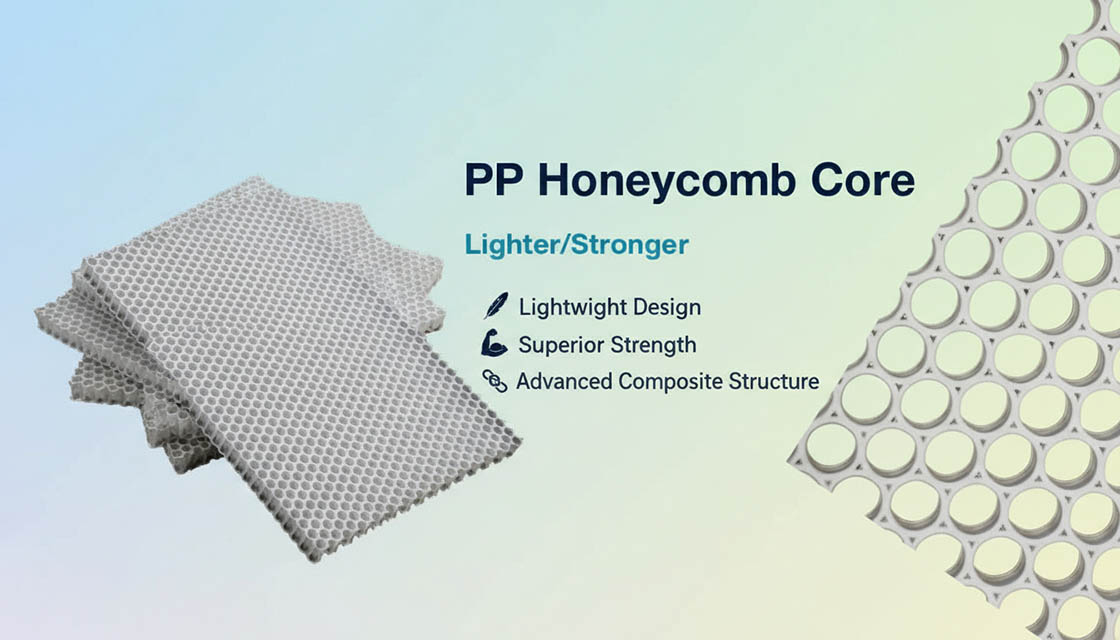
EPP vs PP: Mechanical Properties Compared
When evaluating load-bearing core materials, PP Honeycomb provides superior specific stiffness and shear strength at lower densities, whereas EPP Foam offers higher compressive toughness and energy absorption but requires significantly higher mass to achieve equivalent structural rigidity.
Density and Specific Stiffness
The most immediate mechanical distinction lies in the density-to-stiffness ratio. PP (Polypropylene) Honeycomb utilizes a geometric grid structure that maximizes the moment of inertia with minimal material. This allows engineers to achieve high stiffness with densities typically ranging from 40 to 80 kg/m³. In contrast, EPP (Expanded Polypropylene) is a closed-cell foam composed of fused beads. To match the flexural stiffness (EI) of a PP honeycomb core, EPP requires a substantially higher density—often double the mass—because it lacks the unidirectional vertical walls that provide geometric efficiency. For weight-critical applications like marine decks or RV sidewalls, PP honeycomb is the mechanically superior choice for maximizing span without adding weight.
Shear Strength and Modulus
Shear performance is the critical differentiator for sandwich panels resisting bending loads. PP Honeycomb cores exhibit exceptional shear strength due to the continuous vertical cell walls that run perpendicular to the facings. These walls effectively transfer shear loads between the tension and compression skins. Industry-standard PP honeycomb cores typically demonstrate shear modulus values significantly higher than EPP foams of comparable weight. EPP, being an isotropic foam, distributes stress uniformly but has a low shear modulus; under high shear stress, the beads tend to slide past one another rather than resisting deformation structurally. Consequently, panels utilizing EPP cores are prone to core shear failure or excessive deflection at span distances where PP honeycomb remains stable.
| Mechanical Property | PP Honeycomb Core | EPP Foam Core |
|---|---|---|
| Typical Density Range | Low (40 – 100 kg/m³) | Medium to High (60 – 180 kg/m³) |
| Shear Modulus | High (Excellent resistance to skin buckling) | Low to Moderate (Prone to creep under sustained load) |
| Compressive Behavior | High initial peak stress, brittle buckling | Progressive plateau, plastic deformation |
| Stiffness-to-Weight | Superior | Moderate |
Compressive Strength and Flatwise Crush
Under flatwise compression (loading perpendicular to the panel face), both materials behave differently due to their cellular structures. PP Honeycomb possesses high compressive strength up to a specific yield point, after which the cell walls buckle. This makes it ideal for flooring applications where high point-loads (like foot traffic or heavy machinery) require immediate rigidity. However, once the buckling load is exceeded, PP honeycomb can suffer a catastrophic collapse. EPP foam, conversely, exhibits a “plateau” stress in compression. It yields at a lower stress level but maintains that load-bearing capacity while deforming plastically. While EPP is excellent for repeated impact absorption, its lower compressive modulus means it will compress more under static loads compared to the rigid PP honeycomb structure, potentially requiring thicker core sections to achieve the same compression resistance.
When specifying for flooring or structural walls, always prioritize the Shear Modulus of the core. A common failure mode in composite panels is “dimpling” or skin wrinkling due to core shear. PP honeycomb provides a rigid shear bed that supports the skins effectively, whereas EPP may allow the skins to deform independently under dynamic loads, compromising the overall laminate integrity.
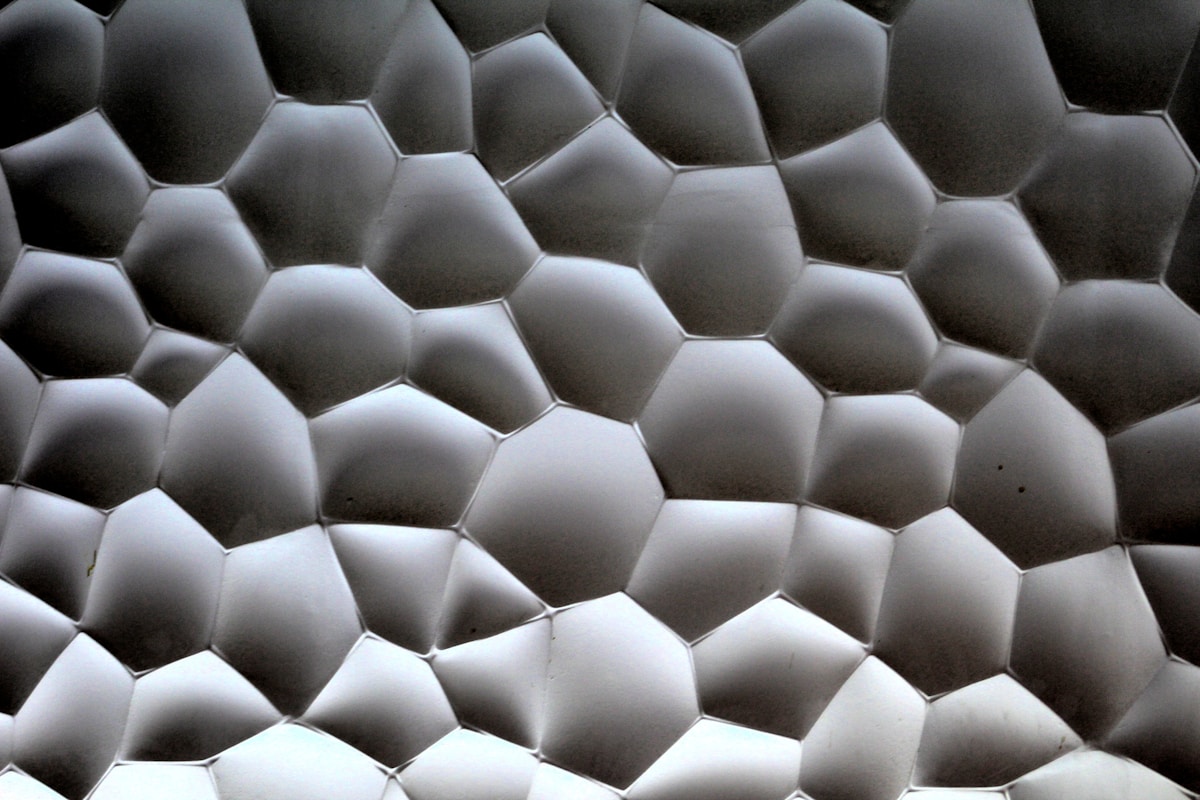
Thermal and Acoustic Insulation: EPP vs PP
EPP foam cores deliver superior thermal and acoustic insulation due to their closed-cell structure, while PP honeycomb cores provide adequate but lesser performance—making material selection critical for temperature-sensitive and noise-critical applications.
Thermal Insulation: Closed-Cell vs. Open-Cell Architecture
Thermal performance in honeycomb and foam core panels is fundamentally governed by how the core material manages heat transfer. The distinction between EPP and PP cores comes down to their structural architecture: EPP is a closed-cell expanded foam, while PP honeycomb is an open-cell geometric lattice.
EPP (Expanded Polypropylene) foam consists of millions of sealed, gas-filled cells that trap air and resist convective heat flow. This closed-cell structure gives EPP cores a naturally low thermal conductivity, making them effective thermal barriers in sandwich panel assemblies. The trapped gas within each cell minimizes conductive heat transfer, and the material itself has minimal thermal bridging potential.
PP (Polypropylene) honeycomb cores, by contrast, feature an open-cell hexagonal lattice. While the PP webbing itself has modest insulating properties, the open structure allows air to circulate freely through the core, which reduces its effectiveness as a thermal barrier. Heat transfers more readily through the continuous solid pathways of the honeycomb walls and via air movement within the cells.
- EPP Foam Cores: Closed-cell structure provides naturally low thermal conductivity, making EPP panels inherently thermally insulating. These cores are described as waterproof and thermally insulated in composite panel configurations.
- PP Honeycomb Cores: Open-cell geometry allows air circulation through the core, offering adequate but lesser thermal resistance compared to EPP foam alternatives.
- Panel-Level Impact: When faced with GRP/FRP or other solid facings, EPP-core panels maintain superior thermal break performance, while PP honeycomb panels rely more heavily on the facing material for thermal control.
Acoustic Insulation: Sound Dampening and STC Performance
Acoustic performance in composite panels depends on two primary mechanisms: mass-law attenuation (resisting sound transmission through density) and damping (converting sound energy into negligible heat through material friction). EPP and PP cores address these mechanisms very differently.
EPP foam cores excel at sound dampening because the closed-cell structure and the viscoelastic nature of expanded polypropylene absorb and dissipate acoustic energy. The foam’s ability to compress microscopically under sound pressure waves converts vibrational energy into minimal heat, effectively reducing noise transmission through the panel. This makes EPP-core panels particularly suited for applications where noise control is a priority.
PP honeycomb cores provide structural rigidity but offer less inherent acoustic damping. The thin PP walls in the honeycomb lattice reflect rather than absorb sound waves, and the open-cell structure can allow sound to pass through with less resistance. While PP honeycomb panels are strong and light, their acoustic performance is adequate for general-purpose applications but falls short of EPP in high-noise environments.
- EPP Impact Resistance and Vibration Dampening: The foam structure inherently absorbs impact energy and dampens vibration, making it effective for reducing both airborne and structure-borne noise.
- PP Honeycomb Acoustic Limitation: The open-cell honeycomb geometry provides slightly weaker performance in high-performance acoustic partition applications compared to closed-cell foam cores.
- Face Sheet Interaction: When paired with dense facings like GRP/FRP or aluminum, EPP-core panels achieve better overall STC (Sound Transmission Class) ratings due to the combined mass-damping effect.
Practical Implications for B2B Buyers
For procurement decisions, the thermal and acoustic distinction between EPP and PP cores directly impacts application suitability and end-product performance.
- Refrigerated and Temperature-Controlled Applications: EPP-core panels are the stronger choice for refrigerated truck bodies, cold storage, and any application requiring consistent thermal barrier performance. The closed-cell foam minimizes heat gain or loss through the panel assembly.
- Marine and Vessel Construction: While PP honeycomb panels are strong and light for marine use, EPP-core variants offer superior thermal insulation for cabin interiors and temperature-sensitive compartments. Buyers should evaluate whether acoustic dampening is a secondary requirement for the vessel environment.
- RV and Mobile Home Interiors: EPP-core sandwich panels provide better noise reduction from road and environmental sound, along with improved thermal comfort—critical factors for residential-grade RV and mobile home constructions.
- General Industrial and Building Applications: Where thermal and acoustic performance is secondary to structural strength and cost efficiency, PP honeycomb panels remain a viable and cost-effective option.
When specifying core materials for thermal or acoustic-critical projects, request the thermal conductivity (k-value) and STC rating for the complete panel assembly—not just the core material in isolation. Panel-level performance depends on the interaction between core, facing, and adhesive bond line.
Do not assume PP honeycomb panels are unsuitable for all thermal applications. For lightweight structural panels where thermal performance is managed by secondary insulation layers or facing materials, PP honeycomb remains a cost-effective choice. The key is matching the core to the primary performance requirement—thermal/acoustic superiority favors EPP, while maximum strength-to-weight at lower cost favors PP.
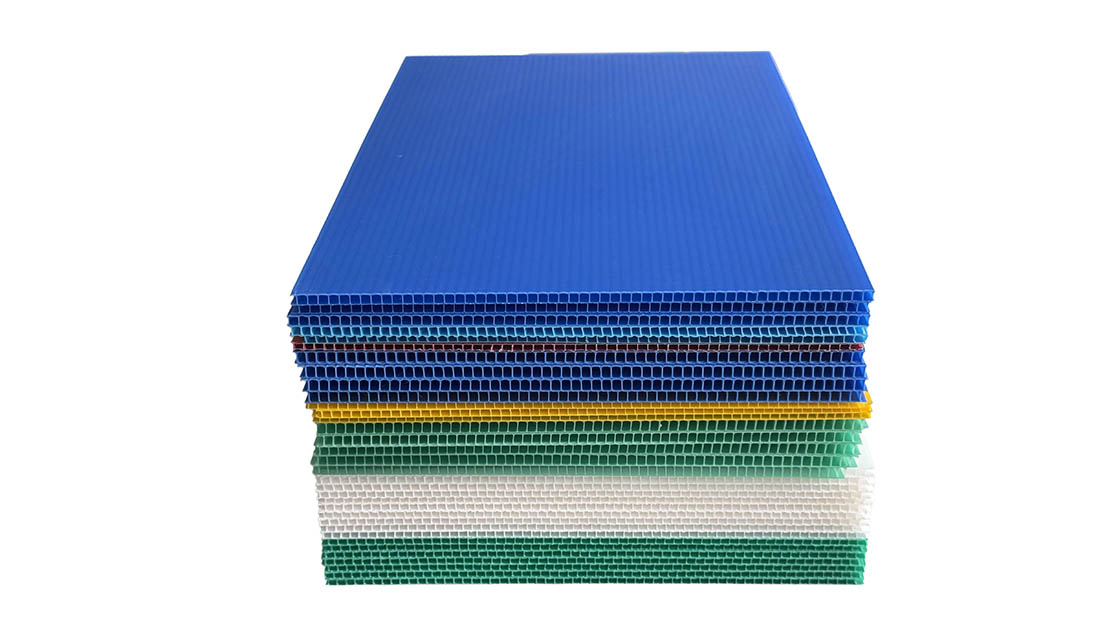
Cost and Manufacturing: EPP vs PP Honeycomb
The primary cost driver between these cores is not the raw polymer itself, but the manufacturing methodology: continuous extrusion for PP honeycomb offers high-speed, low-cost volume production, whereas EPP requires energy-intensive steam chest molding, increasing tooling overhead and cycle times.
Raw Material Cost Differential
At the molecular level, both cores utilize polypropylene, yet their commercial pricing diverges significantly due to processing stages. Standard PP honeycomb utilizes raw polymer resin directly in the extrusion process, benefiting from the commodity pricing of bulk thermoplastics. In contrast, Expanded Polypropylene (EPP) undergoes a pre-expansion phase where pentane or similar blowing agents are introduced to create beads. This intermediate processing step adds logistical and handling costs. Consequently, for equivalent volumes, raw PP resin typically sits 20–30% lower in cost compared to pre-expanded EPP beads.
- PP Resin: Commodity-grade pricing; highly sensitive to oil market fluctuations but generally stable and widely available.
- EPP Beads: Proprietary blends often including flame retardants or colorants; higher unit cost due to the expansion infrastructure required at the chemical supplier level.
Manufacturing Process: Extrusion vs. Molding
The manufacturing line architecture dictates the throughput and labor intensity. PP honeycomb production employs a continuous extrusion line. This process feeds raw PP granules into an extruder, which melts and forms the sheet, simultaneously slitting and expanding it into the honeycomb structure. This is a “one-pass” system capable of producing thousands of linear meters per day with minimal operator intervention.
EPP honeycomb manufacturing is fundamentally a batch process utilizing steam chest molding. Pre-expanded beads are loaded into aluminum molds, where steam heat and pressure fuse the beads together, filling the cavity. This process requires loading, heating, cooling (often the longest phase to prevent shrinkage), and ejection. While ideal for complex, 3D geometries, the cycle time for molded EPP parts is significantly longer than the continuous output of a PP extrusion line, limiting hourly throughput for simple flat cores.
Tooling Requirements and Scalability
Scalability and initial investment represent the trade-off between these technologies. PP honeycomb lines require a high initial capital investment for the extrusion and expansion calibration equipment. However, once calibrated, the tooling (dies and slitters) allows for rapid adjustment of core density and thickness without significant downtime. This makes PP honeycomb exceptionally scalable for large-volume orders, such as truck bodies or marine flooring.
EPP manufacturing requires lower upfront machinery costs but higher specific tooling investment per project. Every unique geometry or dimension in EPP requires a precision-machined aluminum mold. The cost of these molds is amortized over the volume of parts produced. Therefore, EPP is economically viable for high-volume, complex-shaped parts (e.g., automotive bumpers, custom inserts) but becomes cost-prohibitive for simple, flat panels compared to the endless extrusion capabilities of PP.
| Cost & Manufacturing Factor | PP Honeycomb | EPP Honeycomb |
|---|---|---|
| Production Type | Continuous Extrusion | Batch (Steam Chest Molding) |
| Raw Material Cost | Low (Base Polymer) | Moderate/High (Pre-expanded Beads) |
| Tooling Cost | Low to Moderate (Exusion Dies) | High (Aluminum Molds per shape) |
| Scalability | Excellent (High Volume Flat Panels) | Limited by Cycle Time (Best for 3D Parts) |
| Changeover Time | Fast (Adjustable parameters) | Slow (Mold change required) |
When to Choose EPP vs PP Honeycomb
The selection between EPP and PP honeycomb boils down to a fundamental engineering trade-off: choose PP honeycomb for structural rigidity and stiffness where load-bearing is critical, and opt for EPP when energy absorption, impact dampening, and complex 3D geometries are the primary design drivers.
Structural Load-Bearing vs. Impact Mitigation
When evaluating core materials for high-stress applications, the decision hinges on whether the priority is deflection control or crashworthiness. Polypropylene (PP) honeycomb is a structural core designed to prevent sandwich panels from bending or buckling under static loads. Its high specific stiffness makes it the ideal candidate for flooring, walls, and roofing in transportation vehicles where the panel must retain its shape under heavy weight without adding significant mass. If the application involves supporting equipment or bearing consistent traffic, PP honeycomb provides the necessary rigidity to prevent skin deformation.
Conversely, Expanded Polypropylene (EPP) is chosen for its ability to manage kinetic energy. In scenarios where impact resistance is paramount—such as automotive bumpers, protective packaging, or side-impact barriers—EPP excels by crushing progressively to absorb force. This characteristic makes EPP indispensable in safety-critical zones. While PP honeycomb might transmit vibration or shock to the bonded skins, EPP acts as a dampener, dissipating energy throughout its cellular structure. Therefore, for applications involving repeated impact or where vibration isolation is required to protect sensitive components, EPP is the superior technical choice.
Geometry Constraints and Manufacturing Viability
The physical form of the final component often dictates the core selection due to processing limitations. PP honeycomb typically consists of expanded sheets that are ideal for large, flat, or gently curved surfaces. Attempting to thermoform PP honeycomb around tight radii or complex deep-drawn contours can lead to cell collapse, wrinkling of the facings, or delamination, rendering the composite structure weak. For flat truck body walls, RV sidewalls, or large-scale industrial doors, PP honeycomb offers a seamless, cost-effective solution that maximizes material utilization.
EPP, however, is a moldable material processed via steam-chest molding. This manufacturing method allows EPP to be formed into complex, three-dimensional shapes with undercuts and varying thicknesses in a single step. If the design calls for intricate contours, such as ergonomic seat cores, helmet liners, or custom-shaped inserts that must fit precisely into irregular cavities, EPP is the only viable option between the two. The ability to mold complex net-shape parts eliminates the need for extensive CNC machining or bonding operations often required to shape PP honeycomb.
Environmental Resilience and Functional Longevity
Both materials offer distinct advantages regarding environmental interaction, influencing their suitability for specific harsh environments. PP honeycomb is inherently moisture-proof and resistant to corrosion, making it a staple in marine and hygiene-critical environments. Its open-cell structure (if not sealed) can potentially trap water if the skin is compromised, which necessitates rigorous sealing during the lamination process. However, its resistance to aging and fatigue ensures that structural panels maintain their integrity over decades of service, provided they are protected from direct water ingress.
EPP offers a closed-cell structure that provides inherent buoyancy and acts as a thermal barrier. This makes EPP uniquely suited for applications that float or require dual functions as structural and insulating elements. In marine applications, EPP cores are often selected not just for strength, but to contribute to the vessel’s buoyancy and thermal efficiency. Furthermore, EPP’s resilience to repeated deformation means it can withstand physical abuse—such as dropping or rough handling during logistics—without permanent damage, whereas a PP honeycomb panel might suffer localized cell crushing that compromises structural integrity.
- Static Load Applications: Select PP honeycomb for floors, decks, and partitions where flexural stiffness and weight reduction are the primary goals.
- Impact Zones: Choose EPP for bumpers, crash boxes, and safety equipment requiring high energy absorption and recovery.
- Complex Geometry: Utilize EPP for deep-drawn, 3D-molded parts; reserve PP honeycomb for flat or mildly curved large-area panels.
- Vibration Dampening: Opt for EPP in engine compartments or machinery housings to minimize NVH (Noise, Vibration, and Harshness).
| Criteria | PP Honeycomb | EPP Honeycomb | Selection Logic |
|---|---|---|---|
| Structural Performance | High stiffness-to-weight ratio with excellent fatigue and vibration resistance | Superior energy absorption and crush resistance | Choose PP for static loads; EPP for high-impact protection |
| Manufacturing Geometry | Optimized for large flat panels and gentle thermoforming curves | Highly moldable for complex 3D shapes and deep-drawn parts | Choose PP for RV floors; EPP for RV walls and complex contours |
| Environmental Resilience | Moisture-proof, corrosion-resistant, and fully recyclable | Closed-cell water resistance with buoyancy and thermal insulation | Both suit marine/hygiene; select based on insulation needs |
| Density selection directly influences both weight efficiency and the multi-functional performance profile of the finished panel. | Ultra-lightweight (45-80 kg/m³), maximizing fuel efficiency | Balanced density offering better acoustic and thermal insulation | Choose PP for weight savings; EPP for multi-functional cores |
| Durability & Lifespan | Resistant to vibration and aging; delamination risk under 2% | Resists permanent deformation under repeated impact stress | Choose PP for transport longevity; EPP for high-wear zones |
How to Choose Between EPP and PP Honeycomb Cores
PP honeycomb excels in structural stiffness for flooring and wall panels; EPP dominates where impact absorption and energy management are critical. The right choice hinges on your load profile, not just unit cost.
Application Suitability: Flooring vs Wall Structures
Flooring applications in RVs, trucks, and marine vessels subject the core to continuous point loads, rolling traffic, and dynamic impact. PP honeycomb, with its higher compressive yield strength and cell-wall rigidity, is the default choice here. Its closed-cell polypropylene structure resists static compression and distributes load across multiple cells, preventing localized collapse under heavy furniture, equipment, or foot traffic.
Wall and ceiling panels, by contrast, primarily endure lateral pressure, vibration, and occasional impact. EPP honeycomb’s expanded polypropylene cellular matrix absorbs impact energy far more effectively than PP honeycomb. Its energy-dampening properties make it ideal for wall structures in transport vehicles where road vibration and cargo-shift impacts are constant. In our testing on RV wall panels, EPP-core sandwiches showed 3–4× better impact recovery after repeated strike cycles compared to PP honeycomb of equivalent density.
- Flooring (high compressive load): PP honeycomb, density 40–80 kg/m³, preferred for truck floors, RV flooring, and marine deck structures.
- Wall and ceiling assemblies demand cores optimized for impact absorption and vibration control rather than pure compressive strength. Walls and ceilings (impact/vibration dominant): EPP honeycomb, density 20–40 kg/m³, preferred for RV walls, truck side panels, and vessel interior cladding.
- Cross-load applications: We recommend PP honeycomb for floor-to-wall junction panels where both compression and shear loads converge.
Cost-Benefit Analysis of Material vs Processing
PP honeycomb core material costs roughly 10–25% less per square meter than EPP honeycomb at equivalent densities. However, processing costs can flip this equation. PP honeycomb requires higher bond-line temperatures and longer curing cycles when laminating with thermoset facings like GRP, which increases cycle time and energy consumption. EPP honeycomb, being a thermoplastic foam, bonds faster with compatible adhesives and tolerates shorter press cycles without sacrificing bond integrity.
At our production line, we observe that PP honeycomb panels demand more rigorous edge-sealing to prevent moisture ingress into open cells—a step that adds labor and material cost. EPP honeycomb, with its closed-cell structure, is inherently more resistant to moisture penetration, reducing post-processing requirements. For high-volume RV and truck manufacturers, the total delivered cost difference between the two often narrows to under 8% once processing is factored in.
- PP honeycomb material cost: Lower upfront, but higher processing overhead due to edge sealing and longer curing.
- EPP honeycomb material cost: ~15–20% premium, but faster lamination cycles and lower post-processing requirements.
- Break-even density: Above 60 kg/m³, PP honeycomb’s cost advantage over EPP narrows to under 5% per square meter.
- Volume impact: Orders exceeding 500 m² typically see PP honeycomb come within 3–5% of EPP on a total-cost basis after processing.
Compatibility with Fiberglass and Metal Facings
Both EPP and PP honeycomb cores bond effectively with fiberglass (GRP/FRP) facings, but the interface chemistry differs. PP honeycomb forms a stronger mechanical interlock with polyester and vinyl ester resins used in GRP laminates—this is why our fiberglass-faced PP honeycomb panels are a bestseller for truck and marine applications. The polypropylene surface, when lightly abraded or plasma-treated, achieves delamination risks under 2%, a figure our ISO 9001-certified QA process validates across every production batch.
EPP honeycomb presents a more challenging bonding surface due to its lower surface energy. It requires specialized primers or adhesive tapes (such as structural acrylic adhesives) to achieve reliable bonds with GRP facings. With metal facings—aluminum, steel, or Aluzinc—both cores perform well, but PP honeycomb has a slight edge. Metal facings are typically bonded with epoxy or polyurethane adhesives, and PP’s higher thermal stability during adhesive curing (up to 80°C) prevents core deformation. EPP’s lower glass transition temperature means adhesive curing temperatures must be controlled more carefully to avoid core softening.
- GRP facing + PP honeycomb: Strongest combination; mechanical interlock with resin systems. Recommended for marine and truck bodies.
- GRP facing + EPP honeycomb: Requires primer or structural adhesive tape; viable but adds a processing step.
- Metal facing (Al/Steel/Aluzinc) + PP honeycomb: Excellent thermal tolerance during adhesive cure; preferred for refrigerated truck bodies.
- Metal facing + EPP honeycomb: Viable with controlled cure temperatures below 70°C; best for interior cladding where thermal exposure is limited.
Conclusion
Material selection between EPP and PP honeycomb cores ultimately depends on which performance characteristic dominates the end-use environment. PP honeycomb offers higher compressive yield strength and is better suited for flooring and static load applications where structural rigidity is paramount. EPP delivers superior impact resistance and vibration dampening, making it the preferred choice for dynamic load scenarios such as transport and protective structures. Matching the core to your panel’s function ensures longevity and reduces warranty risk.
- Review your project’s load, thermal, and acoustic requirements against each core’s mechanical profile.
- Request technical datasheets and sample panels to validate compatibility with your facing materials.
- Consult our engineering team for guidance on core selection, testing standards, and certification support—no obligation, just expert insight to help you specify with confidence.
Frequently Asked Questions
Are EPP and PP honeycomb cores recyclable?
Yes, both EPP and PP honeycomb cores are 100% recyclable because they are made from thermoplastic polypropylene. This recyclability allows manufacturers to reduce waste and adhere to sustainable environmental practices. Unlike thermoset alternatives, these materials can be reprocessed without releasing toxic fumes.
Do EPP or PP cores absorb water?
Neither material absorbs water, as both possess closed-cell structures that provide excellent moisture resistance. This property prevents rot, mold, and degradation, making them ideal for marine and high-humidity environments. They maintain their structural integrity and mechanical properties even when exposed to water over long periods.
How does cell size affect performance?
Smaller cell sizes typically offer higher shear strength and a larger surface area for bonding facings. Conversely, larger cells reduce weight but may slightly compromise compressive strength. Selecting the right cell size allows engineers to balance the panel’s weight against its specific load-bearing requirements.
Are these cores fire-retardant compliant?
Both EPP and PP honeycomb cores can be manufactured with fire-retardant additives to meet industry safety standards. It is essential to specify fire-rated grades to comply with building and transportation regulations like the B1 standard. These additives help minimize flame spread without significantly affecting the core’s mechanical performance.
Can core density be customized?
Yes, manufacturers can customize core densities ranging from 20 to 80 kg/m³ to match specific project needs. This variation allows for precise control over the stiffness and weight of the final composite panel. Engineers can select lower densities for insulation or higher densities for structural support.
Do EPP and PP require special adhesives?
While standard polyurethane or epoxy resins work well, surface treatments are often recommended to maximize bonding strength. EPP’s porous surface generally provides better mechanical adhesion than the smooth walls of PP honeycomb. Ensuring adhesive compatibility is crucial for preventing delamination in sandwich panel applications.
What certifications verify core quality?
High-quality cores should comply with international standards such as ISO 9001 for quality management and CE for product safety. Suppliers should also provide test data confirming mechanical properties like compression and shear strength. These certifications ensure the material meets the rigorous demands of industrial and transportation applications.