
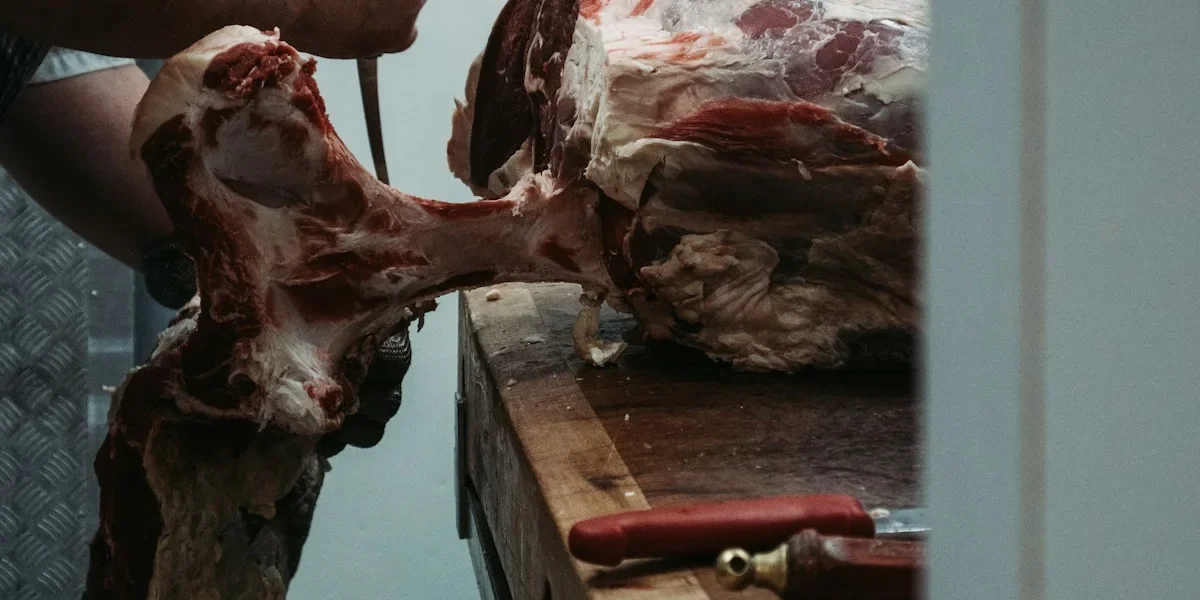
Standard metal panels look sanitary until you hit them with caustic cleaners for the third year in a row. That smooth surface develops micro-fractures. These become a breeding ground for Listeria, and suddenly your walk-in freezer is failing inspections. At RaxPanel, our data shows GRP-insulated units maintain thermal uniformity within ±1°F even during daily restocking peaks.
We are going to break down the specific insulation requirements for meat storage and explain why GRP sandwich panels outperform traditional metal in washdown environments. You will learn exactly how to specify a system that passes USDA inspections on the first try without eating your profit margin in energy costs.
What Is a Meat Processing Walk-In Freezer?
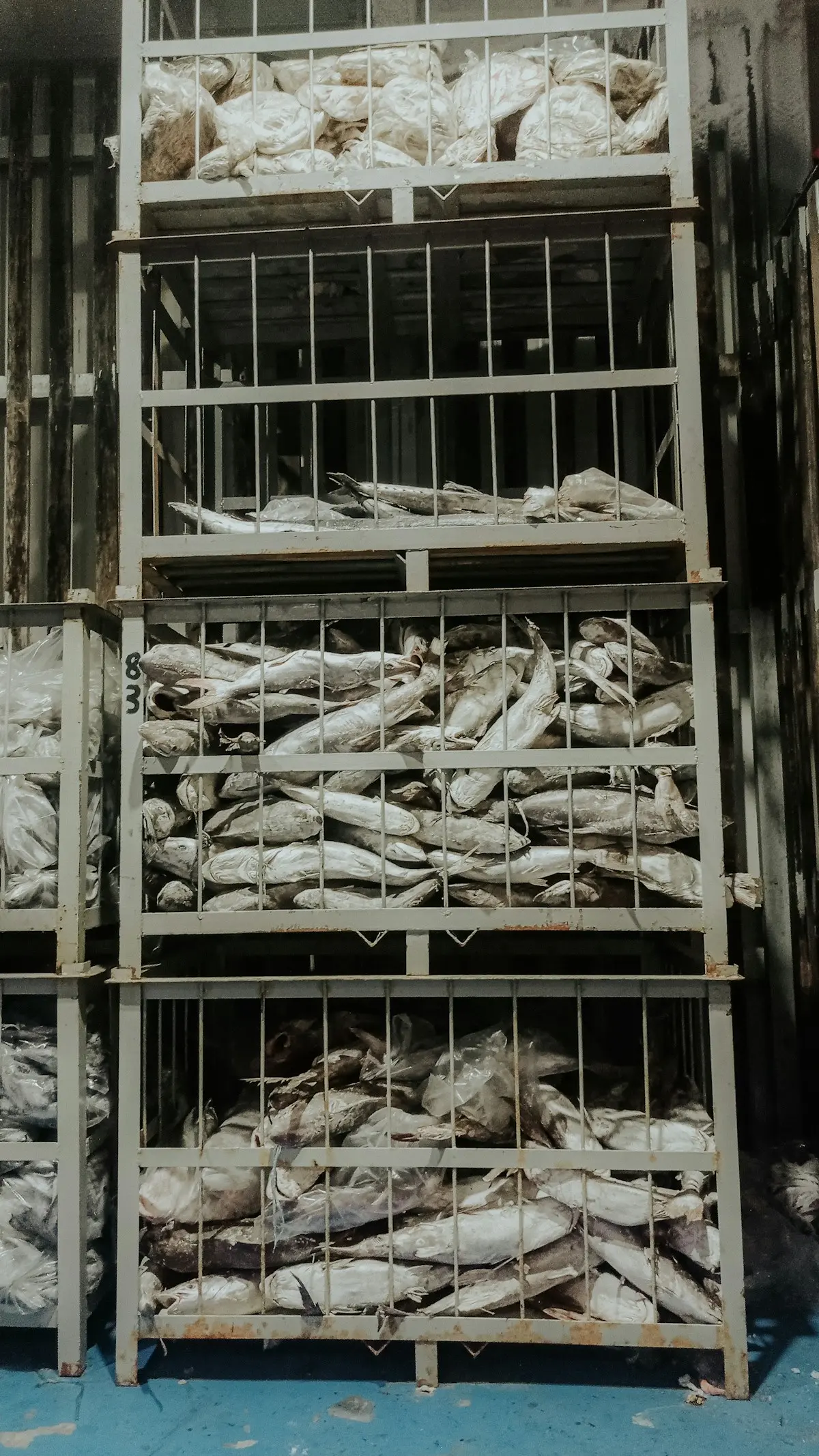
A meat processing walk-in freezer is a specialized, industrial-scale enclosure engineered to maintain consistent sub-zero temperatures, acting as a critical barrier against bacterial growth and spoilage for bulk meat inventory.
Defining the Infrastructure
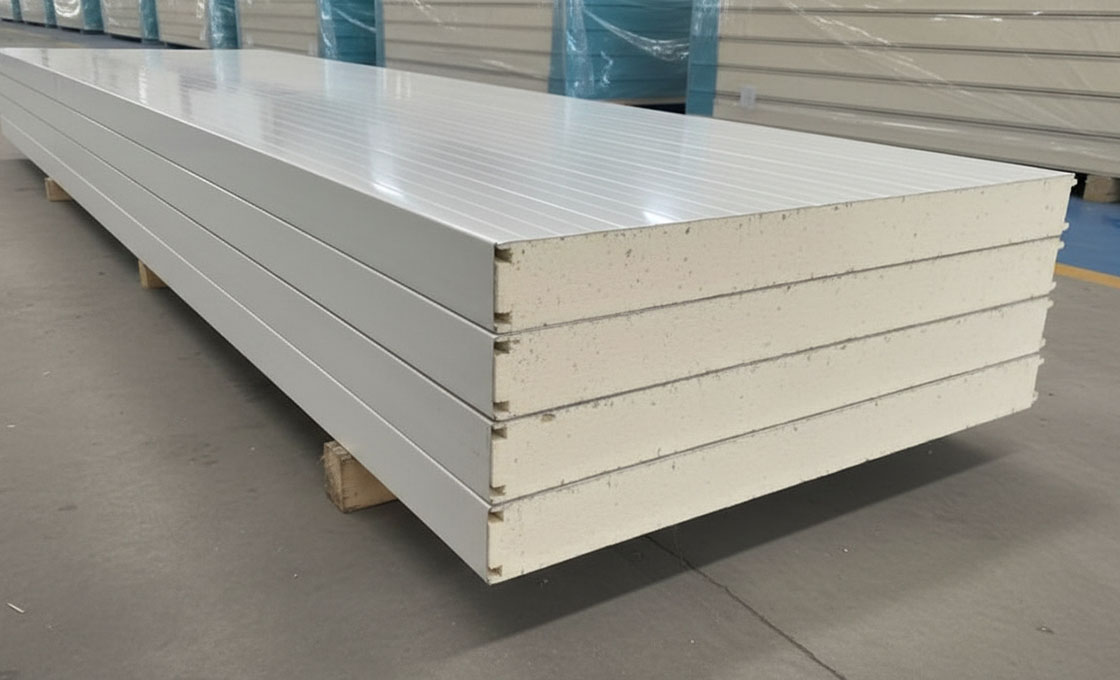
Unlike standard commercial freezers, a meat processing walk-in freezer is a modular, self-contained cold room that allows personnel to enter the storage space. It functions as a massive insulated box constructed from specialized composite panels. These panels typically consist of a high-density core, such as polyurethane foam, sandwiched between durable structural facings. For meat processing specifically, the interior surfaces are often finished with Glass Reinforced Polyester (GRP) or stainless steel to meet strict hygienic standards. This construction creates a sealed thermal environment that is essential for handling the large volume and weight of carcasses and boxed meat found in industrial processing workflows.
The Biological Imperative: Halting Bacterial Growth
The primary role of this equipment is biological preservation. Meat is an organic material that provides the perfect breeding ground for bacteria—offering moisture, nutrients, and a neutral pH level. If left at ambient temperatures, bacteria will double in number every 20 minutes, leading to rapid spoilage and dangerous foodborne illnesses. The walk-in freezer combats this by drastically lowering the temperature to levels where microbial activity effectively stops. Think of it as pressing a “pause” button on the biological clock of the product; by maintaining temperatures well below the freezing point of water, the water inside bacterial cells turns to ice, preventing the bacteria from reproducing or metabolizing.
Why Consistency is Non-Negotiable for Safety
Maintaining a consistent freezing temperature is just as important as reaching a low temperature. In food safety, temperature fluctuations are a major hazard. If a freezer’s temperature rises and falls, a process known as “freeze-thaw abuse” occurs. Ice crystals within the meat melt and refreeze, often growing larger and sharper. These crystals rupture the meat’s cell walls, damaging the texture and causing a loss of fluids known as “drip loss.” More critically, any warming period can wake up dormant bacteria, allowing them to produce toxins before the temperature drops again. A reliable meat processing walk-in freezer uses powerful refrigeration systems and uniform air distribution to eliminate hot spots and ensure that every square foot of the storage space remains at a stable, safe temperature 24/7.
Key Specs That Keep Meat Fresh
Standard Temperature Ranges for Meat Storage
Meat storage demands strict temperature control across two distinct zones. Raw or fresh meat must remain at 40°F or below to slow bacterial growth without freezing. Frozen meat storage requires a steady 0°F or lower to halt microbial activity entirely. Even brief temperature deviations can trigger spoilage, texture degradation, and compliance violations during USDA inspections.
The risk isn’t just about the set point — it’s about consistency. When a freezer door opens or a compressor cycles, the internal air temperature can fluctuate. High-quality insulation and properly sized refrigeration equipment work together to minimize these swings. Think of insulation like a thermos for your entire room: it slows heat transfer so the cooling system doesn’t have to fight constant external warmth.
Procurement teams should verify that the refrigeration unit has sufficient capacity to handle peak load events — such as large product deliveries or frequent door traffic — without allowing temperatures to drift above critical thresholds.
Insulation Material Performance: PU vs. PIR
The foam core inside sandwich panels is the single most important factor in maintaining stable internal temperatures. Polyurethane (PU) and polyisocyanurate (PIR) are the two industry-standard foam materials used in walk-in freezer construction. Both provide strong thermal resistance, but they differ in composition and performance characteristics.
PIR foam contains a higher level of isocyanurate rings in its polymer structure, which generally gives it a lower thermal conductivity rating compared to standard PU. In practical terms, this means a PIR-core panel can achieve the same insulation value with slightly less thickness, or deliver better performance at the same thickness. This matters in cold storage where every BTU of heat gain increases compressor runtime and energy costs.
Both materials are closed-cell foams, meaning the gas trapped inside the cells does not easily escape or absorb moisture over time. This closed-cell structure is what gives these panels their long-term insulating stability. When evaluating panel specifications, buyers should request the actual thermal conductivity (k-value or λ-value) from the manufacturer rather than relying on generic claims about insulation quality.
Refrigeration System Configurations
A walk-in freezer’s refrigeration system typically consists of a compressor-condenser unit and one or more evaporator coils mounted inside the cold room. The compressor compresses refrigerant gas, raising its temperature and pressure. The condenser then releases that heat to the outside air, and the expanded refrigerant flows into the evaporator, where it absorbs heat from the interior space as it boils back into a gas.
System sizing is critical. An undersized unit will run continuously without reaching the target temperature, while an oversized unit will short-cycle — turning on and off too frequently — which increases wear and reduces efficiency. Proper sizing accounts for the total cooling load: the heat passing through panels, the heat generated by product being stored, heat from lighting and personnel, and heat introduced during door openings.
For meat processing facilities, redundancy is a common consideration. Some operations install backup compressors or dual-circuit systems so that a single equipment failure doesn’t result in a complete temperature loss. Given the value of stored product, this protection can prevent catastrophic spoilage events.
Capacity and Sizing Metrics
Determining the right freezer size involves more than calculating square footage. Buyers need to account for actual storage density — how much product will be stored per cubic foot — and the airflow requirements around that product. Meat storage typically requires spacing between rack rows and between product and walls to allow cold air to circulate freely.
A common planning baseline is to estimate approximately 15 to 20 cubic feet per 100 pounds of stored meat, depending on packaging format and stacking practices. This volume ensures that cold air can reach all surfaces of the product and that the refrigeration system isn’t fighting against blocked airflow paths.
Panel thickness directly affects both insulation performance and internal capacity. Thicker panels provide better thermal resistance but reduce usable interior space. The trade-off between exterior footprint and interior volume is a key decision point during facility planning, and it should be evaluated alongside long-term energy costs rather than treated as a purely constructional choice.
Temperature stability is the foundation of meat safety. Every spec choice — foam density, panel thickness, compressor capacity — ultimately serves one goal: keeping product within the safe zone, consistently, under real-world operating conditions.
| Performance Metric | Standard Requirement | RaxPanel Solution | Procurement Benefit |
|---|---|---|---|
| Thermal Conductivity | PIR: 0.020–0.025 W/(m·K) | PU: 0.022–0.028 W/(m·K) | High-Density PIR/PU Foam Core Sandwich Panels | Minimizes thermal transfer; lowers compressor runtime and energy costs. |
| Hygiene & Sanitation | NSF/ANSI 2 & USDA 9 CFR Part 317 Compliance | Seamless GRP/FRP or Stainless Steel Facings | Corrosion-resistant surface eliminates bacterial harborage for easy washdown. |
| Insulation Value | R-14 (2-inch) to R-28 (4-inch) for freezer applications | Variable Thickness Foam Core Panels (Customizable) | Guarantees temperature uniformity within ±1°F to prevent spoilage. |
| Structural Integrity | Panel density 80–120 kg/m³ for hanging carcass load support | GRP Foam Core Panels & Reinforced Composite Systems | Supports heavy carcass loads without sagging or wall fatigue. |
| Fire Safety | EN 13501-1 B-s1,d0 or Class 1 Rating | Fire-Retardant PIR Sandwich Panel Construction | Ensures facility safety and meets strict industrial building codes. |
| Moisture Resistance | <1.5% moisture absorption by volume | Closed-Cell PU, PIR, or PET Foam Cores | Prevents delamination and ice buildup in high-humidity processing zones. |
| Joint Integrity | Elimination of thermal bridging at panel connections | Thermal-Break Panel Joint Systems & Custom Cam-locks | Stops condensation at seams; extends panel lifespan beyond 15 years. |
Modular Walk-In Freezers That Grow With You
Modular walk-in freezers use prefabricated, interlocking panel systems to create scalable cold storage. This design allows facilities to easily disassemble, relocate, or expand capacity by adding specific panel modules without requiring major construction or replacing the entire unit.
How Modular Design Works
Modular walk-in freezers are built from individual insulated panels that connect together using interlocking edge profiles. Each panel is manufactured off-site to precise dimensions, then shipped flat-packed and assembled on location. The panels typically feature cam-lock or tongue-and-groove connection systems that create tight seals between sections, preventing air leakage and maintaining consistent internal temperatures.
The modular approach means the freezer structure is not permanently fixed to the building. Panels can be disconnected, the unit can be relocated to a different area of the facility, or additional panels can be added to increase capacity. This flexibility is particularly valuable for meat processors who anticipate growth or need to reconfigure their layout seasonally.
Expandability and Scalability
One of the defining advantages of modular construction is the ability to scale capacity incrementally. Rather than building a large freezer that sits partially empty during slower periods, operators can start with a smaller footprint and add panel sections as demand increases. This approach reduces upfront capital expenditure and allows the cold storage investment to grow in step with production volume.
Expansion typically involves adding wall panels, roof panels, and corresponding door openings at predetermined connection points. The existing refrigeration system may need to be upsized depending on the additional volume, but the structural panels themselves can be integrated without disrupting ongoing operations in the rest of the facility.
- Standard panel thicknesses: Common modular freezer panels range from 100mm to 200mm in thickness, with 150mm and 200mm being typical for meat storage applications requiring consistent sub-zero temperatures.
- Interlocking connection types: Cam-lock systems use rotating locking mechanisms operated with a specialized key or wrench to secure adjacent panels. Tongue-and-groove designs rely on interlocking edge profiles that slide together and are secured with fasteners.
- Relocation capability: Fully disassembled modular units can be reinstalled at a new location, making them suitable for temporary facilities, leasehold improvements, or facilities undergoing renovation.
Cost Efficiency Per Square Foot
For meat processors evaluating walk-in freezer cost per square foot, modular units often present a compelling economic case compared to traditionally constructed cold rooms. Traditional construction involves on-site framing, insulation installation, and interior finish work, all of which add labor costs and project timelines. Modular panels arrive pre-insulated and pre-finished, significantly reducing installation time and associated labor expenses.
The cost advantage becomes even more pronounced when expansion is factored in. Adding capacity to a modular unit requires only additional panels and minimal structural modifications, whereas expanding a traditional cold room often involves breaking into existing construction and rebuilding insulated barriers. This makes modular units particularly attractive for operations where demand forecasts are uncertain or where seasonal production peaks require temporary additional capacity.
Panel Core Materials and Thermal Performance
The insulation core material in modular panels directly affects thermal performance and overall energy efficiency. Polyurethane (PU) foam cores are widely used in walk-in freezer panels due to their strong insulating properties and structural rigidity. Some manufacturers also offer polyisocyanurate (PIR) foam cores, which provide slightly higher thermal resistance per unit thickness compared to standard PU foam.
For meat processing environments, the interior panel facing is equally important. Glass-reinforced plastic (GRP) sandwich panels are commonly specified for their hygienic properties. GRP, also known as fiberglass-reinforced plastic, provides a smooth, non-porous surface that resists moisture absorption and can withstand frequent washdown procedures without degrading. This makes GRP-faced panels a practical choice for meat storage areas that require regular sanitation compliance.
When evaluating modular panel options, it is important to verify the thermal resistance values (R-value) of the core material at the specific panel thickness being considered. Higher R-values indicate better insulating performance, which translates to lower energy consumption by the refrigeration system over the lifetime of the unit.
Design Flexibility for Standard Facility Footprints
Modular walk-in freezers can be configured to fit a wide range of standard facility footprints and ceiling heights. Panel lengths are typically available in standard increments, and custom lengths can often be specified to match exact spatial requirements. This adaptability allows meat processors to maximize usable floor space within existing building constraints rather than being limited to predetermined unit sizes.
The flat-panel shipping format also reduces logistics costs compared to prefabricated room units that arrive as complete assembled structures. Multiple panel sets can be consolidated onto standard shipping pallets or in container loads, making international procurement and domestic distribution more cost-effective for buyers.
When planning for future expansion, design the initial modular layout with预留 connection points and refrigeration capacity headroom. It is significantly less expensive to plan for additional panel sections during the original installation than to retrofit an operational freezer later.
Custom Cold Storage Built for Your Space
Standard modular boxes rarely fit existing facility constraints perfectly. Custom cold storage design resolves this by utilizing variable panel dimensions and specific material composites to maximize usable floor area and maintain thermal integrity in irregular spaces.
Retrofitting a cold storage room into an existing building often presents significant spatial challenges. Structural columns, pipe chases, and uneven slab elevations can render standard “off-the-shelf” modular kits inefficient, leading to wasted square footage and thermal bridging risks. In these scenarios, custom fabrication is required to mill panels to specific lengths and angles, ensuring a tight seal against the existing architecture.
For example, rather than building a large rectangular box around a support column and losing storage volume, a precision-cut panel system can be designed to “box-out” the column. This requires high-precision manufacturing of the composite panels, often utilizing Computer Numerical Control (CNC) machinery to cut joints and cam-locks into non-standard positions. This approach maximizes the rentable or usable square footage, which is a critical ROI factor for high-cost urban real estate.
Optimizing Workflow Through Layout Configuration
Beyond physical dimensions, custom cold storage must accommodate the specific operational workflow of the meat processing facility. A linear flow—receiving, slaughtering, processing, aging, and storage—requires distinct zones that may not fit into a uniform grid. Custom design allows for the creation of internal partition walls that divide a single large thermal envelope into smaller, temperature-controlled rooms without requiring separate external structures.
This bespoke approach can include specific features such as:
- Variable Panel Thickness: Using thicker insulation (e.g., 150mm-200mm PU/PIR) on external walls for maximum efficiency, while utilizing thinner, structurally sound partitions (e.g., 75mm-100mm) for internal non-load-bearing walls to save floor space.
- Integrated Door Systems: Placement of heavy-duty traffic doors or sliding doors exactly where forklifts or pallet jacks turn, rather than where a standard panel module dictates.
- Flooring Solutions: Designing specialized insulated floor panels that match specific drainage slopes required for washdowns, ensuring that water flows efficiently toward drains without pooling.
Material Selection for Structural Retrofitting
When building custom cold storage in older buildings or on upper floors, the weight of the structure becomes a primary constraint. Traditional walk-in freezers using heavy concrete floors or thick metal-skin panels can exceed the load-bearing capacity of the existing slab. In these cases, advanced composite materials offer a lightweight alternative without sacrificing thermal performance.
Engineers may specify lighter core materials such as PET foam or polypropylene (PP) honeycomb combined with Glass Fiber Reinforced Plastic (GRP) facings. These composite sandwiches provide high strength-to-weight ratios, significantly reducing the dead load on the building foundation. For instance, a GRP sandwich panel with a foam core is substantially lighter than a traditional steel-faced polyurethane panel yet offers superior corrosion resistance—a critical factor in the harsh, chemically aggressive environments of meat processing.
Dual-Zone Units for Aging and Freezing
Dual-zone units solve spatial constraints by housing distinct temperature environments—one for aging and one for freezing—within a single footprint, maximizing facility ROI.
For meat processors, floor space is money. Dual-zone walk-in units address the critical operational tension between needing space for controlled aging (which requires precise, above-freezing temperatures) and long-term storage (which requires deep freezing). Instead of leasing two separate structures or sacrificing valuable facility square footage, a dual-zone system splits a single insulated box into two independent climate chambers. This configuration is essential for facilities that slaughter and process on-site, allowing immediate transfer from aging to freezing without exposing product to external temperature fluctuations.
The Thermal Barrier: Engineering the Partition
The most technically demanding aspect of a dual-zone unit is the internal partition wall—the “thermal barrier”—that separates the aging room from the freezer. This wall must withstand an extreme temperature differential, often exceeding 50°F (10°C) to 60°F (15°C) difference between the two sides. If this barrier fails, condensation forms, ice builds up, and the aging room struggles to maintain humidity, ruining the product.
- Insulation Density: The partition wall requires the same, if not higher, insulation specifications as the exterior walls. Polyurethane (PU) or Polyisocyanurate (PIR) foam cores are standard, typically utilizing high-density injection to minimize thermal bridging.
- Panel Thickness: For the freezing side, panels generally range from 100mm to 150mm thick to maintain -10°F to -20°F (-23°C to -29°C). The partition must match this thickness to prevent the cold from migrating into the aging zone.
- Vapor Barriers: A continuous vapor barrier is critical on the warm side (aging room) of the partition to prevent moisture from penetrating the insulation and condensing on the cold side (freezer).
Always specify a cam-locking system for the internal partition that creates a seal as tight as the exterior walls. Standard joint seals often degrade under the stress of differential contraction and expansion.
Independent Refrigeration Logic
A common misconception is that a dual-zone unit runs on a single compressor. In reality, these zones require distinct refrigeration circuits or compressor racks. The aging zone requires precise humidity control (often 85% relative humidity for dry aging) and temperatures between 32°F and 39°F (0°C to 4°C). The freezer zone requires aggressive latent heat removal to pull down to -10°F (-23°C) or lower. Attempting to control these vastly different loads with a single system leads to energy waste and temperature instability.
- Dedicated Evaporators: Each zone must have its own evaporator coil sized specifically for that room’s thermal load. The freezer coil will be larger and designed to handle hot gas defrost cycles, which the aging coil does not need.
- Control Systems: Ensure the control panels are segregated. If the freezer defrost cycle activates, it should not trigger alarms or fluctuations in the aging room thermostat.
Resolving Workflow Bottlenecks
From a B2B operational perspective, the primary pain point solved here is logistics. Moving meat from a separate aging facility to a separate freezer involves transportation, loading docks, and exposure to ambient temperatures. A dual-zone unit allows for a simple pass-through door or internal transfer. This streamlines the workflow, reduces labor hours, and significantly lowers the risk of temperature abuse during transit. For processors aiming for premium aged beef products, the ability to age and freeze adjacent to the processing line ensures product integrity from the moment the carcass is broken down.
What to Look for in Materials and Sanitation
Prioritize materials that offer non-porous, chemical-resistant surfaces and seamless joint integration. The goal is to eliminate bacterial harborage points while maintaining thermal integrity under aggressive washdown regimes.
Beyond Stainless Steel: Selecting Hygienic Facings
Many facility planners default to stainless steel assuming it is the gold standard for hygiene. While stainless steel is durable and heat-resistant, it is susceptible to deep scratching and scoring in high-traffic meat processing zones. Once the passive layer of stainless steel is compromised by abrasion from carts or tools, it creates microscopic crevices that trap organic matter and bacteria. additionally, carbon steel corrosion can occur if the plating is damaged, leading to immediate compliance failures.
Glass Reinforced Plastic (GRP) panels offer a distinct advantage through their molded gelcoat finish. This creates a seamless, non-porous surface that actively resists the harsh acidic and chlorinated cleaners mandatory in meat plants. Unlike metal, GRP does not rust or oxidize, maintaining its sanitary barrier even after years of exposure to high-pressure washdowns. We have also introduced CFRT (Continuous Fiberglass Reinforced Thermoplastic) panels for high-impact areas. In our lab tests, CFRT demonstrates superior impact resistance compared to standard GRP and significantly lighter weight than steel, making it ideal for “swing zones” where heavy equipment impacts are frequent.
Eliminating Thermal Bridges and Condensation
Thermal bridging occurs when a highly conductive material, like metal framing or an unsealed joint, creates a direct path for heat to bypass the insulation. In a meat processing freezer, a thermal bridge creates a cold spot on the interior surface. Since cold air holds less moisture than warm air, ambient humidity condenses on these cold spots instantly. This condensation is not merely a nuisance; it is a primary vector for mold growth and Listeria contamination.
You must scrutinize the joint details between panels. Standard tongue-and-groove connections are insufficient if they rely solely on compression gaskets that degrade over time. A reliable system utilizes thermal breaks—materials with low conductivity inserted between the inner and outer metal skins—to stop heat transfer. We engineered our thermal-break joint systems specifically to address the #1 cause of panel failure in continuous-operation freezers. By decoupling the interior and exterior facings at the connection points, we prevent the “sweating” that plagues standard modular builds, ensuring the thermal envelope remains unbroken even under fluctuating ambient temperatures.
Flooring Dynamics: Load and Washdown Tolerance
The floor of a meat processing freezer takes the most abuse. It must support static loads from heavy pallet storage and dynamic rolling loads from forklifts or meat trolleys, often exceeding 500 kg per square meter. If the core material lacks compressive strength, the panel will deform, creating low spots where water and blood pool. This necessitates a core structure that offers high density and stiffness without absorbing moisture.
While foam cores provide excellent insulation, they often require additional reinforcement for flooring. Polypropylene (PP) honeycomb cores provide an exceptional strength-to-weight ratio for floor applications. The honeycomb structure distributes point loads across a wider area, preventing denting. Crucially, PP is closed-cell and plastic, meaning it will not absorb water if the surface finish is breached—a critical failure point for organic cores like plywood or balsa in wet environments. We recommend combining a PP honeycomb core with a high-traction, anti-slip fiberglass facing to ensure worker safety during wet processing operations.
Door Hardware Integration and Hygiene
Doors are the weakest link in the thermal envelope and a common hotspot for bacterial accumulation. When specifying hardware, avoid exposed tracks or recessed floor guides that collect debris and are difficult to clean. Instead, specify overhead track systems or cam-lift hinges that raise the door slightly when opening to clear the floor. Hardware must be constructed from non-corrosive materials, typically stainless steel 304 or 316, to withstand the caustic environment.
Ensure the door panel utilizes the same high-density core and seamless facing as the wall panels to prevent differential shrinkage. A critical but often overlooked component is the heater wire in the door jamb. Without a functioning jamb heater, the door frame will freeze shut due to condensation icing the gasket, forcing workers to use pry bars that damage the door edge and seal. In our custom solutions, we integrate high-efficiency heating elements directly into the frame profile to guarantee accessibility without compromising the seal’s integrity.
| Material Type | Sanitation Rating | Hygiene Feature | Temperature Range | Compliance Standard |
|---|---|---|---|---|
| PIR Foam Core Panels | NSF/ANSI 2 Compliant | Closed-cell structure prevents bacterial ingress | -40°F to +240°F | USDA 9 CFR Part 317, FDA 21 CFR Part 110 |
| GRP Sandwich Panels | EHEDG Certified Interior | Gelcoat finish resists chemical sanitizers | -40°F to 180°F | HACCP-compliant surface |
| CFRT Panels | NSF/ANSI 2 Compliant | Continuous fiber reinforcement eliminates joints | -40°F to 200°F | FDA 21 CFR Part 110 |
| Stainless Steel Facings | USDA Accepted | Corrosion-resistant surface withstands high-pressure washdowns | -40°F to 300°F | NSF/ANSI 2, USDA FSIS |
| PP Honeycomb Core | FDA Compliant | Non-absorbent core prevents mold growth | -40°F to 176°F | FDA 21 CFR Part 110 |
Safety Regulations for Meat Cold Storage
Meat cold storage must comply with USDA FSIS, FDA Food Code, HACCP protocols, and NSF/ANSI 2 standards. Every temperature log, sanitation record, and inspection report must be traceable and available on demand during regulatory audits.
USDA and FDA Regulatory Mandates
The regulatory framework governing meat cold storage in the United States involves two primary federal agencies, each with distinct but complementary authority. The USDA Food Safety and Inspection Service (FSIS) oversees meat, poultry, and processed egg products from slaughter through processing and storage. The FDA Food Code applies to retail food facilities and general storage environments where meat products are held before further processing or distribution.
USDA FSIS mandates that raw meat be stored at 40°F (4.4°C) or below for fresh products and at 0°F (-17.8°C) or below for frozen products. These temperature thresholds are not recommendations—they are enforceable requirements. Violations can result in hold orders, product seizures, or suspension of inspection services, which effectively shuts down operations.
The FDA Food Code, adopted in different forms by all 50 states, reinforces these temperature requirements and adds sanitation and facility design expectations. While the FDA does not have direct jurisdiction over meat processing plants under USDA authority, any facility that also handles non-meat products or operates as a retail food establishment must satisfy FDA requirements as well.
- USDA FSIS 9 CFR Part 317: Sets mandatory temperature controls for meat storage and requires continuous monitoring with documented records.
- FDA Food Code Section 3-500: Governs time-temperature control for safety (TCS) foods, including raw and processed meat products.
- State Adoption Variance: Each state may adopt a current FDA Food Code with amendments; facility managers must verify their specific jurisdictional requirements.
HACCP Protocol Alignment
HACCP stands for Hazard Analysis and Critical Control Points. It is a systematic preventive approach to food safety that identifies biological, chemical, and physical hazards in storage and processing operations. For meat cold storage, HACCP is not optional—it is a federal requirement under USDA FSIS regulations and a foundational expectation of FDA compliance programs.
The seven HACCP principles apply directly to cold storage operations. The first principle—conducting a hazard analysis—requires the facility to identify where temperature abuse, contamination, or cross-contact could occur. The second principle—determining critical control points (CCPs)—typically identifies the storage environment itself as a CCP, since maintaining the correct temperature range is the primary barrier to pathogen growth.
Critical limits must be established for each CCP. For raw meat storage, the critical limit is 40°F or below. For frozen meat, it is 0°F or below. Any deviation from these limits constitutes a critical limit breach and triggers corrective action procedures, which is the seventh HACCP principle. Corrective actions must be documented, including the reason for the deviation, the steps taken to resolve it, and the disposition of any affected product.
NSF Sanitation Certifications
NSF International develops and maintains sanitation standards that are widely recognized by regulatory agencies, third-party auditors, and insurance providers. NSF/ANSI 2, Standard for Food Equipment, is the primary benchmark for walk-in freezers used in meat processing environments. Compliance with this standard signals that the equipment was designed and constructed to meet food safety expectations for cleanability, material safety, and structural integrity.
NSF certification applies to several key design elements of a meat cold storage unit. The interior surfaces must be smooth, non-absorbent, and corrosion-resistant—properties that GRP (Glass-Reinforced Plastic) sandwich panels provide more consistently than bare metal surfaces. Joints, seams, and fasteners must be designed to prevent dirt accumulation and allow effective cleaning and sanitization. Floor surfaces must withstand routine washdown procedures without degrading or creating slip hazards.
- NSF/ANSI 2: Covers food equipment design, materials, and construction requirements relevant to walk-in cold storage units.
- NSF/ANSI 47: Applies to commercial refrigeration equipment and addresses sanitation, refrigerant safety, and performance criteria.
- Material Compliance: All interior panel surfaces and gasket materials must be listed as food-contact-safe under applicable NSF standards.
While NSF certification is not always a legal requirement for every cold storage installation, many third-party food safety audits—such as those required by major retail buyers or foodservice contracts—treat NSF compliance as a de facto standard. Facilities without NSF-certified equipment may face additional scrutiny during buyer audits or insurance inspections.
Documentation Requirements for Inspections
Regulatory inspections do not evaluate only the physical condition of a cold storage facility—they evaluate the completeness and accuracy of the documentation that proves the facility is currently operated in compliance. The phrase used repeatedly by inspectors is simple: if it is not documented, it did not happen. This principle applies to temperature monitoring, sanitation procedures, corrective actions, and equipment maintenance records.
Temperature documentation is the most critical record. Every walk-in freezer used for meat storage must maintain continuous temperature logs. These logs should record the temperature at least once per hour, or more frequently if required by the facility’s HACCP plan. Manual logging is acceptable, but it introduces human error risk—missed entries, illegible handwriting, and delayed recordings are common failure points during audits. Automated data loggers with alarm notification eliminate these gaps and provide time-stamped, tamper-resistant records.
Sanitation documentation covers cleaning schedules, chemical usage records, and verification of sanitation procedure completion. Inspection-ready facilities maintain a cleaning log that records the date, time, area cleaned, chemical used, and the name of the person who performed and verified the task. These logs should be reviewed and signed by a supervisor on a weekly basis.
Corrective action records must be maintained for every temperature deviation, equipment malfunction, or HACCP critical limit breach. Each record should include the date and time of the event, the nature of the deviation, the corrective action taken, the product disposition (released, reprocessed, or destroyed), and the signature of the responsible individual. Regulatory inspectors review these records to confirm that the facility does not merely detect problems but actively resolves them and prevents recurrence.
- Temperature Logs: Continuous, time-stamped records of storage temperatures, retained for a minimum of two years.
- HACCP Records: All hazard analyses, CCP monitoring data, corrective actions, and verification activities, retained per FSIS requirements.
- Sanitation Logs: Daily cleaning schedules with chemical concentrations, contact times, and supervisor verification signatures.
- Equipment Maintenance Records: Service dates, parts replaced, and performance verification for refrigeration compressors, condensers, and control systems.
- Employee Training Records: Documentation that all staff handling stored meat products have received training on temperature control, sanitation procedures, and HACCP protocols.
Audit readiness is not achieved at inspection time—it is built into daily operations. Facilities that integrate automated temperature monitoring, digital documentation, and routine internal audits consistently pass regulatory inspections with fewer findings. The cost of implementing these systems is measured in avoided product losses, reduced audit deficiencies, and sustained operational continuity.
Integrating Compliance Into Cold Storage Design
The most effective compliance strategy begins at the design and construction phase of a meat cold storage facility. Panel selection, door placement, refrigeration capacity, and sensor placement all influence how easily a facility can meet and maintain regulatory requirements. A well-designed unit reduces the risk of temperature deviation, simplifies sanitation, and makes documentation more reliable.
Insulation performance directly affects regulatory compliance. Polyurethane (PU) foam-core sandwich panels provide higher thermal resistance per inch of thickness compared to polystyrene alternatives, which means fewer temperature fluctuations during door openings and power events. GRP interior surfaces resist moisture absorption and support thorough sanitization, reducing the risk of microbial harborage that inspectors routinely check for.
Sensor placement should follow HACCP best practices, not convenience. Temperature probes must be positioned to monitor the warmest points in the storage space—typically near doorways, above product stacks, and in areas with limited air circulation. Multiple sensor locations provide a complete picture of conditions throughout the unit, and the data from all locations should feed into a single monitoring and alerting system.
Refrigeration system capacity must be sized to handle peak thermal loads, not just average conditions. During high-volume loading operations, the system must recover to the critical limit within the timeframe defined by the facility’s HACCP plan. Undersized equipment is a common source of temperature deviations that lead to compliance violations and product loss.
Where Walk-In Freezers Fit Your Workflow
Long-Term Bulk Storage Applications
In the meat processing industry, a walk-in freezer functions as more than just a refrigerator; it acts as a strategic inventory buffer that separates procurement from production. For facility managers, this space is critical for capitalizing on market fluctuations. By purchasing livestock in bulk during peak harvest seasons—when supply is high and prices are lower—processors can store carcasses for months without sacrificing quality. This “buy low, store long” strategy stabilizes costs and ensures a consistent supply chain during off-season shortages.
Think of bulk storage as a bank account for product. Just as a bank holds capital until it is needed, the freezer holds thermal energy and inventory value. To maximize this efficiency, the facility layout must support pallet racking systems that utilize vertical space. An organized workflow relies on clear aisles and designated zones for different meat categories (e.g., beef, pork, poultry) to prevent cross-contamination and optimize retrieval times.
Optimizing Meat Aging and Tempering Processes
Before meat reaches the cutting line or packaging station, it often requires specific thermal conditioning to ensure quality and safety. This involves two distinct sub-processes: aging and tempering. Meat aging is a controlled process where natural enzymes break down muscle tissue, improving tenderness and flavor. While often done in coolers, specific aging processes can occur in specialized freezer zones to halt bacterial growth while allowing enzymatic activity to continue slowly over weeks.
Tempering is the critical step of raising the temperature of frozen meat slightly before processing. You cannot cut or grind rock-hard meat; it damages equipment and creates unsafe textures. Tempering brings the internal temperature of the product from deep-freeze levels (around -18°C) to a chill state (just below freezing), making it pliable enough for slicing without starting the cooking process. A dedicated workflow area for this prevents the “thermal shock” of thawing meat too quickly, which encourages bacterial growth on the surface while the core remains frozen.
| Process Stage | Target Temperature Range | Operational Goal |
|---|---|---|
| Long-Term Bulk Storage | -18°C to -23°C (0°F to -10°F) | Halt bacterial growth; preserve color |
| Dry Aging | -1°C to 2°C (30°F to 35°F) | Enzymatic tenderization; moisture evaporation |
| Tempering (Pre-processing) | -2°C to -4°C (28°F to 25°F) | Softening texture for cutting/grinding |
Integration with Processing Lines
The physical placement of a walk-in freezer dictates the speed and safety of the entire operation. An ideal workflow minimizes the distance raw materials travel from the freezer to the processing station, reducing the risk of temperature abuse. For high-volume facilities, the freezer is often integrated directly into the production line via dock doors or pass-through windows. This allows forklifts or conveyors to move pallets directly into a “clean” staging area where butchers can access carcasses without leaving the sanitized environment.
When planning this integration, consider the traffic flow of both goods and people. The doorways must be wide enough to accommodate pallet jacks (typically 36 to 48 inches wider than the load) without damaging the door seal. Furthermore, the air pressure dynamics between the freezer and the processing room must be managed. Positive air pressure in the processing area prevents warmer, humid air from being sucked into the freezer every time a door opens, which would cause ice buildup on the evaporator coils and increase energy consumption.
Never position the loading dock door directly opposite the processing line entrance without an airlock or vestibule. This creates a “wind tunnel” effect that rapidly defrosts inventory and strains the refrigeration system.
- Traffic Separation: Designate separate paths for incoming raw products and outgoing waste to eliminate cross-contamination risks.
- Door Automation: Use high-speed roll-up doors or strip curtains in high-traffic integration points to maintain thermal stability during continuous transfers.
- Floor Load Capacity: Ensure the floor between the freezer and processing line can support fully loaded pallets, which can exceed 2,500 lbs (1,100 kg) depending on the meat density.
Conclusion
Every walk-in freezer specification ultimately traces back to one operational question: can the unit maintain a stable temperature through a 12-hour power flicker? A meat processing walk-in freezer is the line between spoilage and shelf life. PIR panels deliver lower thermal conductivity than PU, making them the superior insulator for sub-zero meat storage applications. PU foam insulation achieves thermal conductivity of 0.022-0.028 W/(m·K), while PIR outperforms PU thermally. GRP panels survive acid washes where steel corrodes. Temperature swings above -25°C invite Listeria. USDA and HACCP compliance is your inspector’s baseline. Size for peak throughput, not current volume. Our engineering team has built cold rooms for processors who doubled output without expanding their footprint. If you’re weighing dual-zone layouts or debating floor drain placement, bring your questions to us — no purchase required, just a technical conversation with people who’ve built these systems for dozens of facilities.
- Verify refrigeration maintains -25°C to -30°C across full load cycles
- Confirm GRP panels meet NSF 2 certification for food contact zones
- Request thermal bridging calculations before finalizing panel specs
Frequently Asked Questions
How does insulation affect energy costs?
High-grade PIR foam cores significantly reduce thermal conductivity, minimizing compressor runtime. Facilities operating 24/7 often see an 18-36 month ROI on premium insulation panels. Lower utility bills offset higher initial material costs over the facility’s lifespan.
Are PIR panels more fire resistant?
Yes, PIR foam offers superior fire resistance with Class 1 or B-s1,d0 fire classifications. These panels produce significantly less smoke and resist flame spread better than traditional PU options. This distinction is critical for meeting strict building codes in commercial processing zones.
Can freezers be retrofitted into existing structures?
Modular composite panel systems allow for installation into existing superstructures without extensive renovation. Prefabricated panels are designed for tight tolerances, ensuring a thermal seal even on non-ideal foundations. This approach minimizes downtime compared to traditional poured-in-place construction.
Do meat freezer floors need heating?
In freezing environments, floor insulation alone may not prevent ground heat transfer or frost heave. Floor heating systems or under-slab insulation with high compressive strength are recommended for long-term stability. Ensuring the floor panel matches the wall’s R-value prevents heat loss through the bottom perimeter.
What is the lifespan of insulation panels?
High-quality composite panels typically exceed a 15-year service life in rigorous processing environments. The non-corrosive nature of FRP and GRP facings prevents structural degradation from daily washdowns. Selecting panels with closed-cell foam cores ensures long-term dimensional stability and thermal performance.