
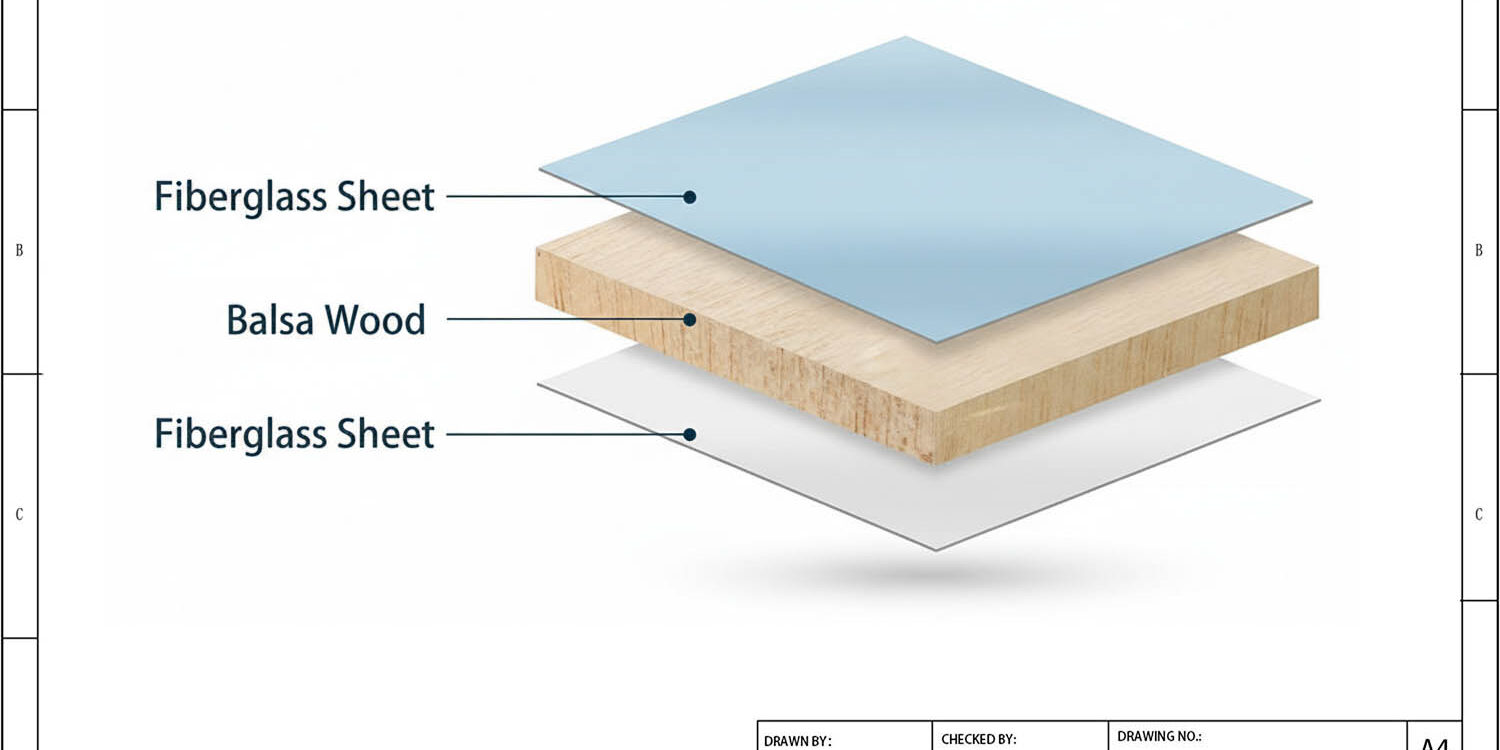
Three months ago, an RV manufacturer in Indiana halted their assembly line for 11 days straight. The culprit was a shipment of grp sandwich panel stock with 2.3mm thickness variance across a single batch. Their automated equipment couldn’t compensate. Panels wouldn’t seat in the frame joints, and every unit coming off the line had visible gaps. That stoppage cost $380,000 in delayed deliveries and expedited freight charges. If you’ve ever opened a container to find panels that don’t match your spec by more than a millimeter, you know exactly what that phone call to the supplier sounds like — and you know they’re about to ghost you.
We’ve been manufacturing composite panels at RaxPanel for 15 years, and thickness inconsistency remains the top complaint we hear from vehicle and marine builders switching suppliers. So we pulled our own factory test data — core density records, skin thickness measurements, tolerance reports from our CNC systems — and organized it into a direct thickness-to-application reference. Below, you’ll see specific panel configurations mapped to real jobs: bulkheads, decking, wall systems, and structural flooring. We also separate GRP skin thickness (0.7mm to 5.0mm) from core thickness as independent variables, because that’s how you actually tune for impact resistance versus insulation versus weight. No guesswork required.
GRP Sandwich Panel Thickness Range Overview
We manufacture GRP sandwich panels from 5mm to 120mm thick, with GRP skins ranging from 0.7mm to 5.0mm. You can tune skin and core independently to balance impact resistance, insulation, and weight for your specific application.
Standard vs Custom Thickness Options
Not all GRP sandwich panels are created equal, and thickness is the single biggest variable that determines whether a panel works for a marine bulkhead or a truck body sidewall. We produce standard thicknesses from 5mm up to 120mm, covering the vast majority of specialized vehicle and marine applications. But the real engineering decision is not total panel thickness alone. It is the combination of GRP skin thickness and core thickness as two separate variables.
Our GRP skin thickness spans 0.7mm to 5.0mm, available in both gelcoat and non-gelcoat surface finishes. A 0.7mm skin with a 30mm PET foam core gives you a lightweight wall panel at roughly 3.8 kg/m². Step up to a 2.5mm skin with the same core, and you gain impact resistance for high-traffic areas like truck flooring or marine decking, but you add weight. The point is: you do not have to accept a one-size-fits-all spec. Skin and core are independent levers, and experienced OEM engineers know how to pull each one.
For buyers evaluating GRP foam core sandwich panel weight per m², here is a practical benchmark. Our GRP foam sandwich panels reduce panel weight by approximately 50% compared to traditional plywood or steel equivalents at comparable thickness. That directly translates to fuel efficiency gains in vehicle applications where every kilogram of dead weight matters.
Off-the-Shelf Sizes and CNC-Custom Cuts
Production efficiency depends on minimizing waste and reducing joint count in your final assembly. We manufacture panels up to 2.8m wide by 12m long in a single continuous piece. For RV manufacturers building a full sidewall or roof structure, this means fewer seams, fewer seal failure points, and faster assembly cycle times on your production line.
Our standard off-the-shelf thickness increments cover the most common requests from specialized vehicle and marine builders. We maintain tooling and production parameters for these standard profiles so you get consistent lead times and predictable pricing on repeat orders.
- 5mm–10mm: Interior linings, ceiling panels, lightweight partitions
- 12mm–25mm: RV sidewalls, truck body panels, marine cabinetry
- 30mm–60mm: Structural bulkheads, insulated wall systems, refrigerated truck bodies
- 70mm–120mm: Deep insulated panels for cold chain logistics, marine fire-rated bulkheads, industrial enclosure walls
When your design calls for non-standard dimensions, our CNC cutting systems handle custom profiles with precision. We cut panels to your exact CAD specifications, whether that means complex shapes for curved RV front caps or precise cutouts for window and door openings. CNC-custom GRP sandwich panel cutting for RV manufacturing eliminates the need for secondary machining at your facility, reducing your assembly cycle time and material waste.
Core material selection interacts directly with the thickness you choose. We offer five core types, each with distinct density ranges that affect both weight and mechanical performance.
- XPS (Extruded Polystyrene): 35–50 kg/m³ density, cost-effective for standard insulation applications
- PET Foam: 60–300 kg/m³ density range, excellent for structural applications requiring higher core shear strength
- PVC Foam: 60–100 kg/m³ density, widely used in marine grade fiberglass sandwich panels for balanced strength and weight
- PU (Polyurethane): Strong thermal conductivity performance for refrigerated and temperature-controlled builds
- Honeycomb: 60–100 kg/m³ density, maximum stiffness-to-weight ratio for non-insulated structural panels
When comparing GRP PET foam sandwich panel vs PVC core specs, the decision comes down to application. PET cores at higher densities offer superior compressive strength for flooring and decking. PVC cores provide better toughness and fatigue resistance for hull structures subjected to repeated dynamic loads. We supply both, and we will not push you toward one simply because it is what we have in stock.
Dimensional Tolerances
This is the spec that most suppliers avoid discussing publicly. Veteran buyers consistently cite panel thickness inconsistency as a top pain point causing assembly line problems. If panels arrive with thickness variation beyond acceptable limits, your jigs do not fit, your sealant gaps are wrong, and your production line stops. We know this because our engineering team has been on the receiving end of those complaints from OEMs who switched to us after bad experiences elsewhere.
Our manufacturing tolerance target is ±0.5mm on panel thickness. This is not an aspirational number. We achieve it through controlled resin dispensing, calibrated press platens, and in-process thickness measurement at multiple points along the panel length. For CNC-cut panels, dimensional accuracy on length, width, and cutout placement holds to ±1.0mm.
All panels are tested against recognized industry standards. Our test certificates cover ASTM C297 for flatwise tensile strength, ASTM C273 for shear properties, ASTM C393 for flexural strength, and ASTM D1781 for climbing drum peel testing of the skin-to-core bond. These certificates ship with every batch, because we understand that your quality department cannot approve incoming goods without documented compliance data.
For marine applications requiring GRP sandwich panel fire rating certification, we provide panels tested to applicable marine standards. Fire-rated configurations are available across multiple thickness ranges, so you do not have to compromise on your insulation or structural requirements to meet compliance. Specify your fire rating requirement at the inquiry stage, and we will map it to the correct core material and skin combination for your thickness target.
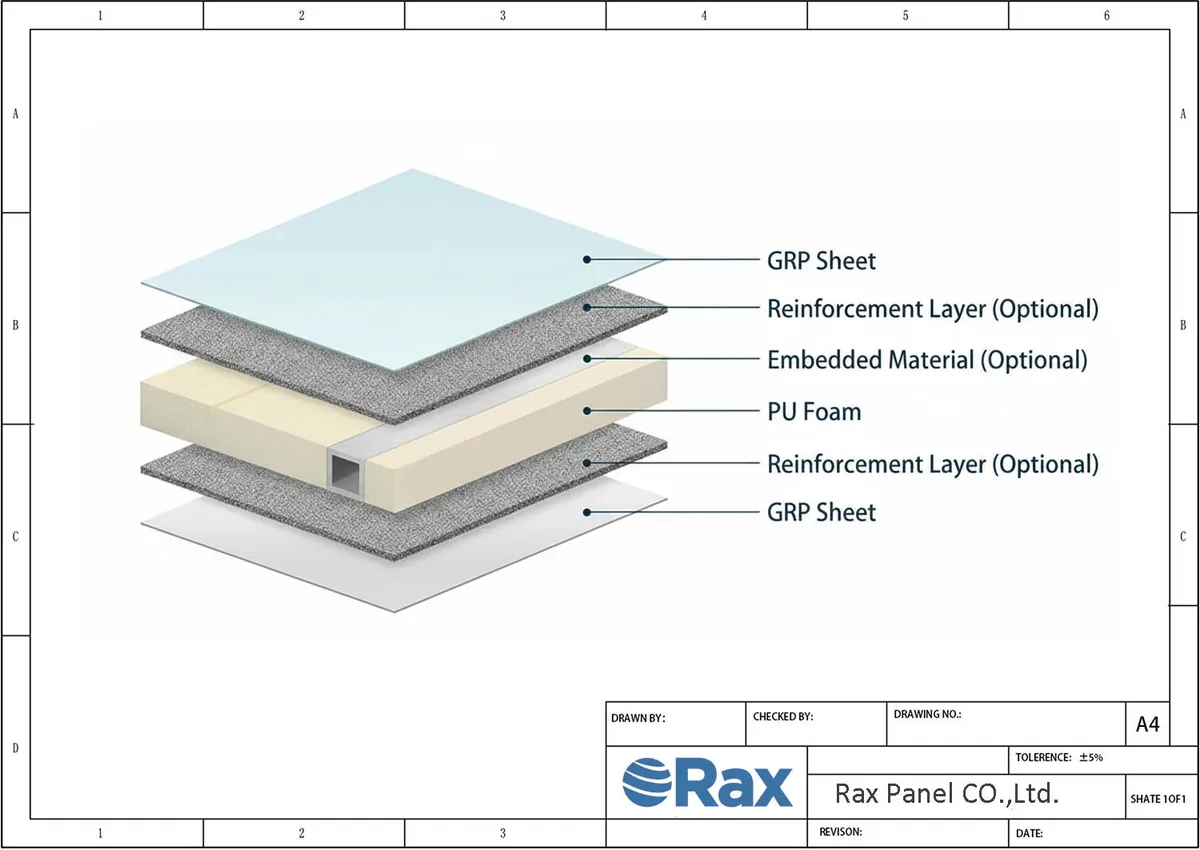
Thickness-to-Application Mapping Chart
We manufacture GRP sandwich panels from 5mm to 120mm, but thickness alone doesn’t dictate performance. The interaction between GRP skin thickness (0.7–5.0mm) and core density (35–300 kg/m³) is what actually determines whether a panel works for a cabinetry liner or a freezer room wall.
Thin Panels (5mm–15mm): Interior Liners, Ceilings, and Non-Structural Applications
At the 5mm to 15mm range, you are looking at panels designed for interior surfaces where weight savings matter more than structural load-bearing. These panels typically pair a thinner GRP skin (0.7mm–1.2mm) with lower-density core materials like XPS at 35–50 kg/m³. Our CNC systems cut these to ±0.5mm tolerance, which matters when you are fitting ceiling panels into an RV interior where a 1mm gap across a 2.8m width creates visible unevenness at every joint.
Common applications in this thickness band include RV interior wall liners, marine cabin headliners, truck body interior cladding, and lightweight partition panels. The weight advantage is immediate: a 10mm GRP XPS foam core sandwich panel weighs roughly 50% less than a plywood equivalent at the same thickness. For a mid-size RV manufacturer running 200 units per month, that weight reduction translates directly into measurable fuel efficiency gains across your fleet.
- Typical GRP skin: 0.7mm–1.2mm per face
- Recommended core: XPS (35–50 kg/m³) or PET (60–100 kg/m³)
- Primary uses: RV ceiling panels, cabinetry backers, marine cabin liners, lightweight partitions
- Thermal conductivity: XPS core panels in this range typically achieve 0.028–0.034 W/(m·K)
Medium Panels (16mm–30mm): RV Sidewalls, Marine Bulkheads, and Structural Partitions
The 16mm to 30mm range is where most of our OEM customers operate for primary vehicle and vessel structures. This is the workhorse thickness for RV sidewalls, truck body panels, and marine bulkheads where panels must handle wind loads, road vibration, and point impacts without delaminating. Here, you need to start tuning skin thickness and core material independently. A 22mm panel with 1.5mm GRP skins and PET core at 120 kg/m³ serves a completely different purpose than a 22mm panel with 2.5mm skins and PVC foam at 80 kg/m³ — same total thickness, vastly different impact resistance and flexural strength.
We regularly produce panels in this range up to the maximum 2.8m × 12m dimension. For RV manufacturers, this means fewer longitudinal joints along a vehicle sidewall, which directly reduces seal failure points and assembly time. Our manufacturing tolerance of ±0.5mm across this width ensures that your automated edge-banding and bonding equipment runs without the batch inconsistency that halts production lines.
- Typical GRP skin: 1.2mm–2.5mm per face (gelcoat or non-gelcoat)
- Recommended core: PET (100–200 kg/m³), PVC foam (60–100 kg/m³), or Honeycomb (60–100 kg/m³)
- Primary uses: RV sidewalls, truck body walls, marine bulkheads, structural partitions
- Test standards met: ASTM C297 (flatwise tensile), C273 (shear), C393 (flexural), D1781 (climbing drum peel)
Thick Panels (31mm–120mm): Heavy-Duty Decking, Freezer Rooms, and High-Insulation Applications
Above 30mm, you enter specialized territory where insulation value, structural rigidity, or both become the driving specification. Freezer room panels for commercial refrigerated truck bodies commonly specify 50mm–80mm thickness with PU or XPS cores to achieve the thermal conductivity thresholds required for temperature-controlled logistics. At these thicknesses, the core does the heavy lifting for insulation, while the GRP skins (typically 2.0mm–5.0mm) provide impact resistance from forklift traffic, cargo shifting, and repeated thermal cycling.
Heavy-duty decking panels for marine and industrial platforms sit in the 40mm–120mm range, often using honeycomb or high-density PET cores (200–300 kg/m³) to handle concentrated point loads. These panels must pass rigorous fire rating certification for marine compliance. We provide full test documentation with every batch — no scrambling for certificates when your customer’s compliance auditor arrives. The trade-off is honest: thicker panels with denser cores provide superior structural and thermal performance, but they increase vehicle dead weight. Your engineering team needs to calculate whether the insulation or strength gain justifies the kilogram-per-square-meter cost for your specific build.
- Typical GRP skin: 2.0mm–5.0mm per face
- Recommended core: PU foam for insulation, PET (200–300 kg/m³) or Honeycomb for structural loads
- Primary uses: Freezer room walls, refrigerated truck bodies, heavy-duty marine decking, industrial flooring, walk-in cold storage
- Fire certification: Available for marine and RV regulatory compliance with full documentation per batch
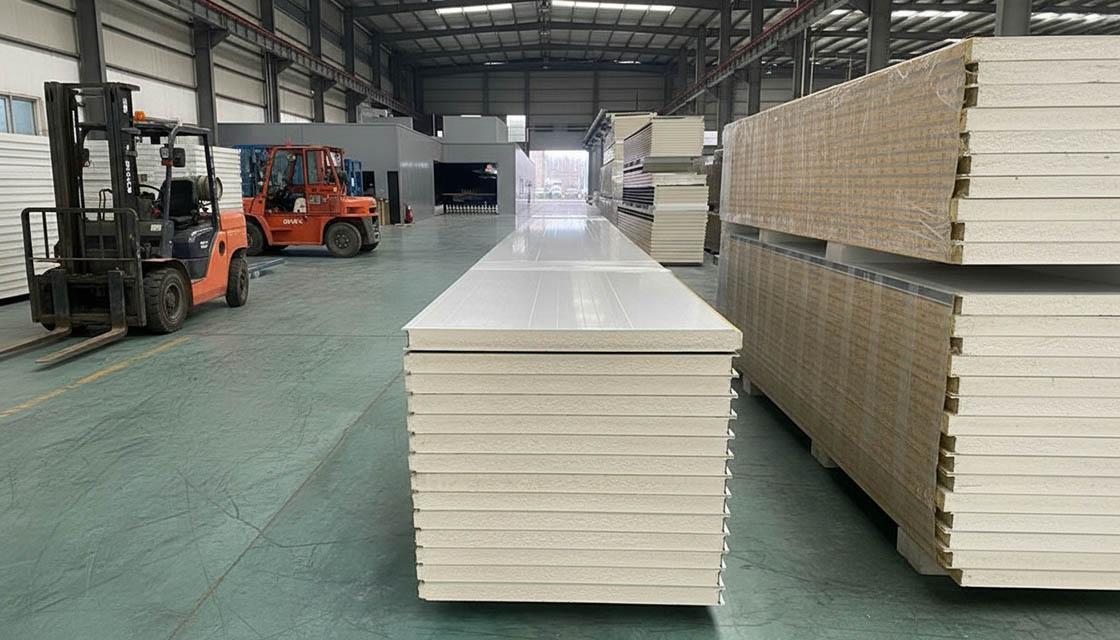
Core Material Impact on Panel Thickness
Core density dictates both thickness limits and structural performance. We select PET, XPS, or Honeycomb cores based on the exact flexural strength and thermal conductivity targets your specific vehicle build demands.
PET Foam Core Thickness Performance
PET foam cores occupy the mid-to-high density range in our GRP sandwich panel lineup, spanning 60 to 300 kg/m³. This density range makes PET the go-to core when your application demands high core shear strength alongside dimensional stability. We manufacture PET core panels across the full 5mm to 120mm thickness spectrum, with CNC cutting precision held to ±0.5mm tolerances.
At 60 to 100 kg/m³ density, PET cores suit non-structural wall and ceiling panels in RV and truck body builds where insulation matters more than load-bearing. When you push into the 150 to 300 kg/m³ range, PET foam handles significant compressive loads, making it viable for marine bulkheads and decking substrates. The independent tunability of GRP skin thickness (0.7mm to 5.0mm) against PET core thickness means you can dial in impact resistance through the skins while using core thickness purely for insulation and stiffness targets.
- Standard density range: 60 to 300 kg/m³, selectable in increments based on load requirements.
- Typical wall panel thickness: 15mm to 30mm with PET core at 80 to 120 kg/m³ for RV sidewalls.
- Structural bulkhead thickness: 30mm to 60mm with PET core at 150 to 200 kg/m³ for marine grade fiberglass sandwich panel applications.
- Test compliance: Flatwise tensile tested per ASTM C297, core shear validated under ASTM C273.
XPS Foam Core Thickness Performance
Extruded polystyrene (XPS) cores fill the lightweight end of our foam core lineup at 35 to 50 kg/m³ density. The primary engineering advantage of XPS is its closed-cell structure, which delivers low thermal conductivity values that keep heating and cooling loads manageable in refrigerated truck bodies and insulated RV compartments. XPS cores work best in applications where insulation performance takes priority over structural load-bearing.
We typically configure XPS core panels between 20mm and 80mm total thickness. Going below 20mm leaves insufficient core depth for meaningful thermal resistance, while exceeding 80mm with XPS density this low introduces flexural stability concerns under dynamic loads. For panels thicker than 80mm where insulation is the driver, we generally recommend stepping up to PET foam at 80 to 100 kg/m³ to maintain panel flatness across the full 2.8m width.
- Core density range: 35 to 50 kg/m³, the lightest foam core option we offer.
- Recommended thickness window: 20mm to 80mm for optimal balance of insulation and panel stiffness.
- Primary applications: Refrigerated truck bodies, RV sidewalls, insulated container panels where thermal conductivity is the driving specification.
- GRP XPS sandwich panel thermal conductivity: Significantly lower than PET at equivalent thickness due to the trapped gas cell structure of XPS.
Honeycomb Core Thickness Performance
Aluminum and thermoplastic honeycomb cores deliver the highest stiffness-to-weight ratio in our GRP sandwich panel range. With core densities between 60 and 100 kg/m³, honeycomb structures achieve flatwise compressive strengths that rival much denser foam cores. The open cell geometry, however, means honeycomb cores provide negligible thermal insulation compared to any foam option.
We manufacture honeycomb core GRP panels from 5mm up to 120mm thickness. The thinnest configurations, 5mm to 15mm, appear in interior partitions, ceiling liners, and lightweight enclosures where you need panel rigidity without the bulk. Mid-range thicknesses from 20mm to 50mm suit structural floors and bulkheads in marine vessels and specialized vehicles. Beyond 50mm, honeycomb panels deliver exceptional bending stiffness for large-span applications like cargo container walls and flatbed trailer decking.
The critical specification detail most suppliers omit: honeycomb core performance depends heavily on cell size and foil gauge, not just core density alone. When we quote a 60 kg/m³ honeycomb core, we specify the exact cell diameter and wall thickness so your engineers can validate the core shear modulus against ASTM C393 bending test requirements before committing to a production run.
- Core density range: 60 to 100 kg/m³ with stiffness performance exceeding equivalent-density foam cores.
- Thin-panel capability: 5mm minimum thickness for interior liner applications where foam cores cannot achieve reliable flatness.
- Large-span structural use: 50mm to 120mm thickness for cargo walls and trailer decking with minimal deflection.
- GRP honeycomb panel tensile strength data: Validated per ASTM C297 with climbing drum peel testing under ASTM D1781 to ensure skin-to-core bond integrity.
| Core Material | Density Range | Optimal Thickness Range | Core Shear & Thermal Properties | Weight & Application Benefit |
|---|---|---|---|---|
| XPS Foam | 35 – 50 kg/m³ | 15mm – 100mm | Moderate flexural strength with high thermal resistance | 50% weight reduction vs steel; ideal for RV sidewalls and roofs |
| PET Foam | 60 – 300 kg/m³ | 10mm – 120mm | High core shear strength and excellent impact resistance | Maximum strength-to-weight; ideal for marine bulkheads and structural decking |
| PVC Foam | 60 – 100 kg/m³ | 10mm – 100mm | Balanced thermal conductivity, rigidity, and fire ratings | Strict compliance for fire-rated RV partitions and marine hulls |
| Honeycomb (PP/Aluminum) | 60 – 100 kg/m³ | 5mm – 50mm | Exceptional compressive strength with minimal thermal mass | Extreme lightweighting; ideal for vehicle floors and aerodynamic fairings |
| PU Foam | 40 – 60 kg/m³ | 20mm – 120mm | Low density coupled with superior temperature retention | Highest R-value per mm; ideal for refrigerated truck bodies and cold storage |
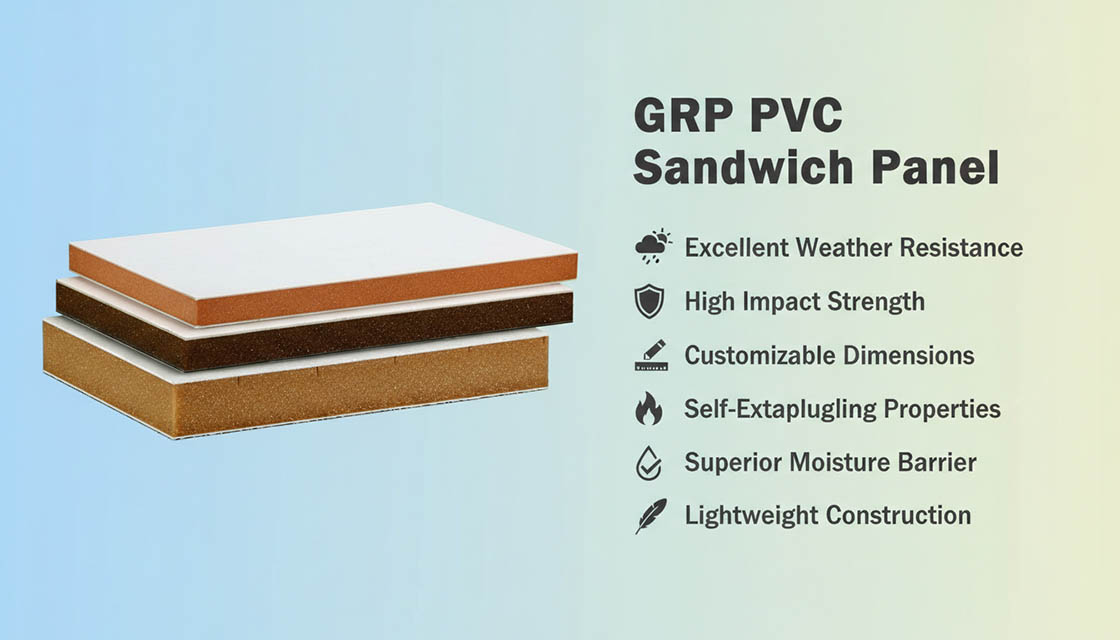
GRP Skin Thickness and Its Role
GRP skin thickness and core thickness are independent variables. You tune them separately — skin for impact resistance and surface durability, core for insulation and weight targets.
GRP Skin Thickness Ranges: 0.7mm to 5.0mm
We manufacture GRP sandwich panels with skin thickness ranging from 0.7mm up to 5.0mm. This is not an arbitrary span. Each increment within this range serves a distinct mechanical purpose, and selecting the wrong skin thickness for your application either wastes money on over-specification or invites field failures that halt production lines.
Many competitors list a single “standard” skin thickness and force you to accept it. Our approach differs because veteran OEM engineers we supply — particularly in RV and marine vessel manufacturing — need precise calibrations. A 0.7mm skin works for interior partitions where weight reduction is critical and impact loads are minimal. A 5.0mm skin belongs on marine bulkheads or truck body flooring where point impacts from cargo or equipment are routine. The delta between these two extremes affects panel weight by approximately 2.4 to 3.2 kg/m², which directly impacts your vehicle’s fuel efficiency targets.
- 0.7mm – 1.0mm: Interior RV walls, ceiling panels, non-structural partitions. Lowest weight per unit area.
- 1.2mm – 2.0mm: Exterior RV sidewalls, marine cabinetry, truck body sidewalls. Balanced impact resistance and weight.
- 2.5mm – 3.5mm: Marine bulkheads, decking substrates, industrial flooring. High impact and abrasion resistance.
- 4.0mm – 5.0mm: Heavy-duty truck flooring, marine hull sections, blast-resistant enclosures. Maximum mechanical durability.
Impact Resistance and Surface Finish: Gelcoat vs Non-Gelcoat
Skin thickness determines structural impact resistance. Surface finish determines cosmetic durability and weatherability. These are separate decisions, and conflating them is a common specification error we see from procurement teams new to composite panels.
We offer two surface finish options: gelcoat and non-gelcoat. A gelcoat finish adds a pre-cured resin layer approximately 0.3mm to 0.5mm thick on the exterior skin. This layer provides UV resistance, color consistency across batches, and a smooth aesthetic surface that requires no secondary painting. For RV manufacturers producing consumer-facing vehicles, gelcoat eliminates an entire post-assembly finishing step, reducing your assembly cycle time measurably. For truck body builders where the panel gets wrapped or painted anyway, non-gelcoat saves material cost without sacrificing structural performance.
Impact resistance, however, comes from the GRP skin thickness itself — not the gelcoat. Our testing to ASTM D1781 standards confirms that a 2.0mm GRP skin with gelcoat and a 2.0mm GRP skin without gelcoat deliver nearly identical flexural strength values. The gelcoat is a surface system. If you need higher impact resistance, you increase the GRP laminate thickness, not the gelcoat layer. We have seen buyers specify heavy gelcoat in hopes of avoiding a skin thickness upgrade. That approach fails under load and wastes budget.
Panel Stiffness Independent of Core Thickness
This is the specification insight most supplier pages avoid discussing: GRP skin thickness affects panel stiffness as a separate variable from core thickness. You can hold core thickness constant and increase skin thickness to achieve higher flexural rigidity. Conversely, you can maintain a thin skin and increase core thickness — switching from XPS at 35 to 50 kg/m³ to PET foam at 60 to 300 kg/m³ — to improve thermal insulation without altering the bending stiffness envelope.
For you as an OEM engineer, this means you decouple three design targets. Insulation performance is driven by core material and core thickness. Flexural stiffness is driven primarily by skin thickness and the distance between the two skins (the core acts as a spacer). Impact resistance at the surface is driven by skin thickness alone. When a procurement team tells us their current panels are “too flexible,” our first question is whether they need a stiffer core or a thicker skin. In most RV sidewall applications we supply, the answer is thicker skins — moving from 1.2mm to 1.8mm — while keeping the XPS core at the same 30mm to 40mm thickness to maintain the R-value their engineers specified.
Batch consistency is where this matters most. If skin thickness varies across a production run — even by 0.3mm — panel stiffness varies with it. That is the root cause of assembly-line defects veteran buyers cite as their top supplier complaint. Our CNC-controlled resin application systems maintain skin thickness to ±0.5mm tolerance across the entire panel surface, validated through ASTM C297 flatwise tensile testing and ASTM C273 core shear testing on every production lot. If you are evaluating suppliers, ask for test certificates from recent batches. The data either confirms consistency or it does not. No amount of marketing language compensates for missing tolerance documentation.
Weight-to-Strength Analysis by Thickness
Reducing panel dead weight by 50% directly translates to measurable fuel efficiency gains for your fleet, provided you do not compromise on flexural strength. Here is how we calculate the balance.
Mapping Thickness, Weight, and Flexural Strength
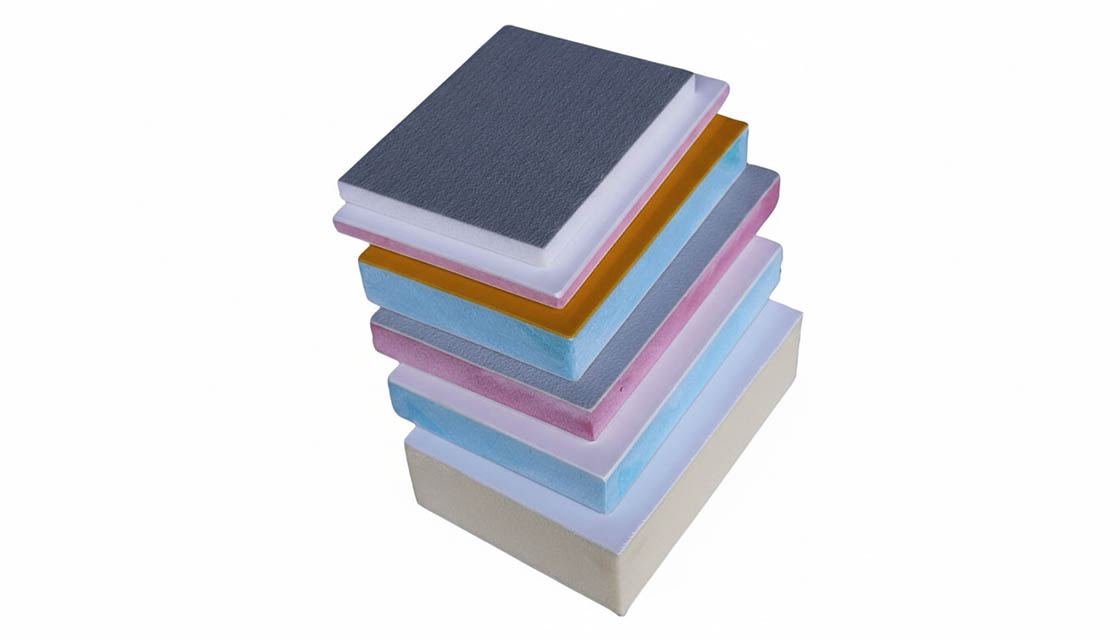
In GRP sandwich panel engineering, total thickness is not a single variable; it is the sum of your core thickness and your GRP skin thickness. Because we manufacture panels ranging from 5mm to 120mm, you can tune these elements independently. You select the core density for structural and thermal requirements, and the skin thickness (0.7mm to 5.0mm) for impact resistance.
- 5mm to 15mm Range: Ideal for lightweight RV interior cabinetry and linings. Using an XPS core (35–50 kg/m³) with 0.7mm GRP skins, weight stays roughly around 2.5 to 3.5 kg/m² while maintaining adequate core shear for standard loads.
- 20mm to 50mm Range: The standard profile for marine bulkheads and truck body walls. A PET foam core (60–300 kg/m³) paired with 1.5mm to 2.0mm skins yields roughly 5.5 to 8.0 kg/m², offering high flexural strength without the structural bulk of traditional plywood.
- 50mm to 120mm Range: Reserved for heavy-duty flooring and refrigerated transport. PVC foam or honeycomb cores (60–100 kg/m³) provide maximum thermal insulation and rigidity, capable of supporting concentrated point loads without localized deflection.
By shifting from plywood or traditional steel to our GRP foam sandwich panels, you achieve an approximate 50% weight reduction at comparable thicknesses. We validate these strength metrics through ASTM C393 flexural testing and ASTM C297 flatwise tensile testing, ensuring that the lighter weight does not translate to structural failure on the road.
Critical Calculations for Vehicle Fuel Efficiency
For specialized vehicle manufacturers, calculating the return on composite materials comes down to lifecycle fuel savings. Overweight panels eat directly into your payload capacity and drastically increase operational costs over the lifespan of a truck or RV.
Consider a standard 12-meter truck trailer or RV. If you clad it in traditional materials, you might carry 1,200 kg of dead weight in the walls, roof, and flooring. By utilizing our maximum 2.8m x 12m GRP panels to minimize joints, and specifying a PET or XPS core, you can drop that structural wall weight to roughly 600 kg. That 600 kg reduction immediately increases your legal payload capacity per trip.
From a fuel efficiency standpoint, industry data shows that reducing a commercial vehicle’s weight by 100 kg improves fuel economy by roughly 0.6% to 1.0%. Dropping 600 kg of panel weight yields a 3.6% to 6.0% improvement in fuel efficiency. When you scale that across a fleet over a 5-year operational lifecycle, the fuel savings alone pay for the initial upgrade to composite panels. Our engineering team provides precise weight-per-unit-area calculations during the specification phase so you can model these exact ROI projections before committing to a production run.
Manufacturing Tolerances and Quality Control
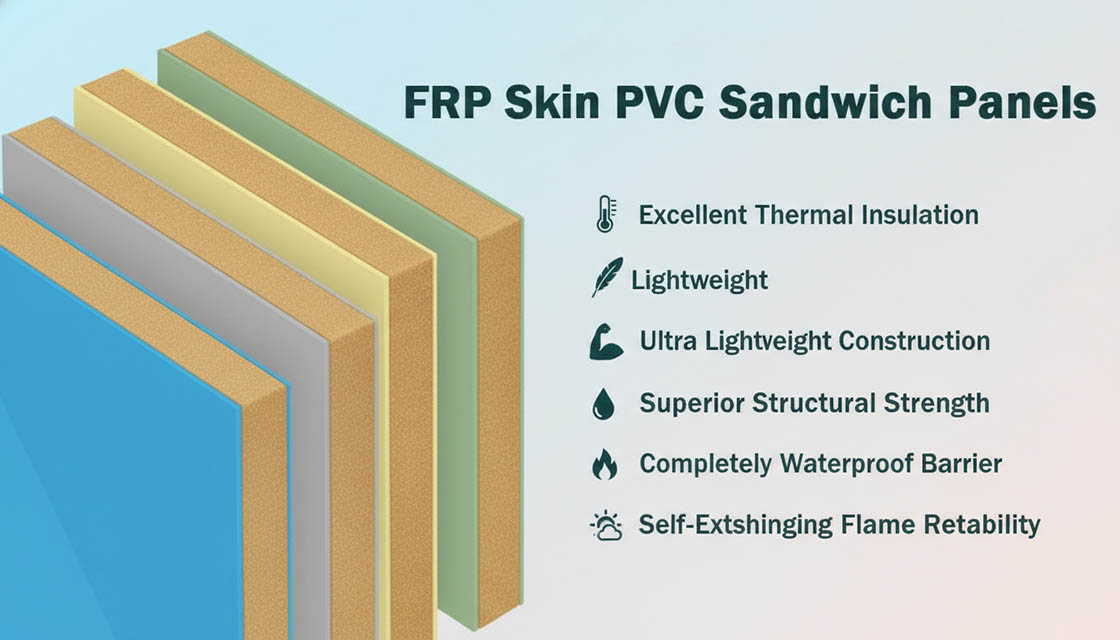
We manufacture our GRP sandwich panels to a strict ±0.5mm thickness tolerance because veteran OEM buyers consistently rank panel inconsistency as the single largest cause of assembly line shutdowns and costly field rework.
Panel Thickness Consistency and OEM Assembly Line Impact
When procurement engineers and frustrated end-users ask why there is no quality in the RV industry, the root cause almost always traces back to suppliers who cannot maintain consistent panel thickness across production batches. A variance of even 1.5mm between panels in the same order is enough to misalign fastener holes, create uneven joints, and force line workers to trim or shim each piece by hand. That manual intervention destroys your assembly cycle time targets.
We have spoken with RV manufacturers who discovered mid-build that incoming panels varied so wildly, they were going to replace the whole front cap section of a vehicle rather than attempt to fit mismatched parts. The rework cost in that scenario exceeded the original panel purchase price. Our GRP sandwich panels span 5mm to 120mm in total thickness, with GRP skins ranging from 0.7mm to 5.0mm, and we control skin and core thickness as independent variables. This means you can tune impact resistance, insulation value, and weight independently without sacrificing dimensional consistency across the batch.
Marine grade fiberglass sandwich panel tolerances matter just as much in boat building as they do in truck body and RV manufacturing. A bulkhead panel that is 0.8mm thicker than specified can interfere with adjacent cabinetry and wiring channels. Our production process measures thickness at a minimum of five points across each sheet, and any panel deviating beyond the ±0.5mm threshold is quarantined before it ships. This is the discipline that separates a reliable GRP sandwich panel supplier from the source of your next production headache.
CNC Precision Cutting Capabilities
Our CNC cutting systems handle panels up to 2.8m wide by 12m long while holding ±0.5mm dimensional tolerance across the full surface area. For engineers specifying CNC cut GRP sandwich panels for RV manufacturing, this precision eliminates the single largest source of assembly delay: panels that do not fit the jig on the first attempt. When your line workers can drop each panel into position without manual trimming, your per-unit assembly time drops and your defect rate per batch approaches zero.
Working with full-length panels up to 12m also reduces joint count in large vehicle assemblies. Fewer joints mean fewer sealant failure points, better thermal continuity, and improved structural integrity at the vehicle envelope. Whether your application calls for GRP XPS sandwich panels with thermal conductivity optimized for insulated truck bodies, or GRP PET foam sandwich panels at 60 to 300 kg/m³ core density for marine bulkheads, our CNC systems cut each piece to your exact job file specifications.
We validate every cut dimension against the original CAD file before panels leave our facility. This pre-shipment verification step catches any deviation before the freight costs are incurred, protecting your procurement budget and your production schedule simultaneously.
±0.5mm Tolerance Standards and Quality Inspection Protocols
Our quality inspection protocols are built around four core ASTM test standards that verify both structural performance and dimensional compliance for every production run:
- ASTM C297: Flatwise tensile strength testing to confirm skin-to-core bond integrity under direct pull loads.
- ASTM C273: Core shear properties testing to verify that the foam or honeycomb core material meets published shear strength values.
- ASTM C393: Flexural strength testing to validate that the complete sandwich panel assembly performs within expected bending load parameters.
- ASTM D1781: Climbing drum peel testing to measure the skin-to-core adhesive bond strength, ensuring delamination will not occur under thermal cycling or vibration stress.
These test certificates ship with every order, giving your compliance team immediate documentation for marine, RV, and commercial vehicle certification requirements. For international building materials distributors evaluating new supply partners, our insistence on ±0.5mm tolerance and full ASTM traceability is a direct reflection of factory-level process control. We do not view quality inspection as a final-stage checkpoint; we embed dimensional verification at three stages during production: after core layup, after skin bonding, and after CNC cutting.
This three-stage inspection discipline is our answer to the broader industry quality problem. When veteran buyers express frustration about inconsistent panel supplies, the underlying issue is almost always a factory that inspects only at final packaging. By that point, the variance is baked into the product. Our approach catches deviations when they are still correctable, ensuring that the panels arriving at your facility are dimensionally uniform, structurally certified, and ready for immediate installation on your assembly line.
Certifications and Testing Standards
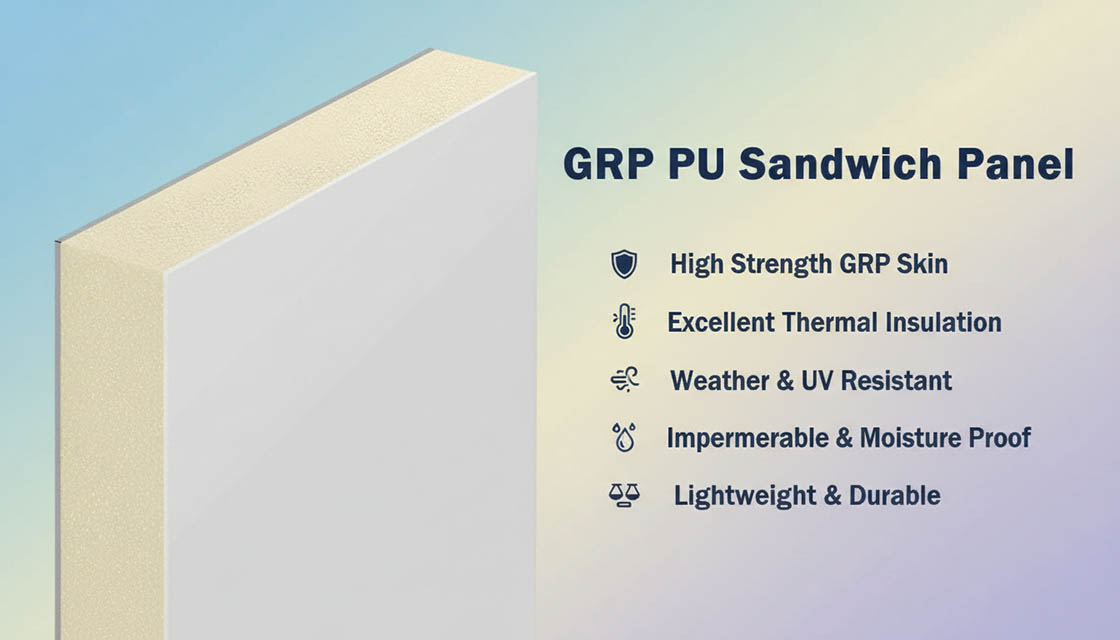
If a supplier cannot immediately provide ASTM and ISO test documentation for a GRP sandwich panel, do not risk your production line. We test every batch to strict mechanical and fire standards because delamination failures in the field destroy OEM reputations.
ASTM Testing Standards for Structural Validation
Veteran specialized vehicle OEMs and marine engineers evaluate suppliers based on their ability to prove internal bond strength and structural limits. When you design a marine bulkhead or an RV sidewall, you need exact data on how the GRP skin interacts with the XPS, PET, or PVC foam core under load. We strictly validate our panels using four primary ASTM testing methods to ensure you receive documentation that holds up to your engineering scrutiny.
- ASTM C297 (Flatwise Tensile Strength): We use this to measure the bond strength between the 0.7mm to 5.0mm GRP skins and the core. This test proves that the adhesive layer will not delaminate when the panel experiences pulling forces perpendicular to its face.
- ASTM C273 (Core Shear Properties): This evaluates the shear strength and modulus of the core material itself. Whether you specify a lightweight honeycomb core at 60 kg/m³ or a dense PET core at 300 kg/m³, this data confirms the panel will resist horizontal sliding forces without failing.
- ASTM C393 (Flexural Properties): We run this test to determine the facing stress and core shear stress of the assembled sandwich construction. It gives you the exact flexural strength numbers needed to calculate if a 5mm to 120mm panel can handle the dynamic loads of a truck body or RV roof.
- ASTM D1781 (Climbing Drum Peel): This specifically measures the resistance of the skin-to-core adhesive bond against peeling forces. It is a critical metric for ensuring that impacts or environmental stress will not cause the fiberglass layers to strip away from the foam substrate.
Marine Fire Safety Compliance and ISO Fire Standards
Marine vessel manufacturing requires a completely different level of compliance compared to standard commercial trucks. A GRP foam core sandwich panel used in a ship superstructure or engine room must meet strict fire safety regulations to prevent catastrophic loss. We ensure our marine-grade fiberglass sandwich panels meet the rigorous demands of the International Maritime Organization (IMO) FTP Code and associated ISO standards.
We provide panels engineered to pass the ISO 12237-1 fire resistance tests and non-combustibility evaluations required for high-risk marine environments. When your procurement team specifies fire-rated GRP panels, we supply the exact test certificates verifying that the core material—whether PVC or fire-retardant PET—self-extinguishes and does not produce toxic smoke levels beyond regulated thresholds. You receive the documentation required to pass Coast Guard and class society inspections without delays.
Shipping and Handling Thick Panels
A single GRP foam core sandwich panel at 80mm thickness and maximum 2.8m x 12m dimensions can exceed 120 kg. One cracked edge in transit means a scrapped panel and a gap in your production schedule.
Crating and Container Loading Considerations
Shipping thick composite panels is fundamentally different from loading standard construction sheets. When you specify custom GRP sandwich panel thickness from 50mm up to 120mm, the stack height builds rapidly. A batch of thirty 80mm panels creates a 2.4m tall stack before you account for dunnage. Most 20-foot and 40-foot standard containers offer an internal height of roughly 2.35m to 2.7m, which means your crating design must be calculated to the centimeter before production even begins.
We plan container loading at the engineering stage, not the dispatch stage. Our logistics team maps each crate to the container’s internal constraint profile, accounting for panel length up to 12m. Flat-rack containers are required for any panel exceeding the standard container door width. This is not optional. Attempting to angle-load long panels damages the GRP skin immediately upon contact with the container door frame.
- Panel orientation: Load panels vertically on their long edge, never flat-stacked without full-length support runners at 600mm intervals.
- Stack limits: Maximum 25 panels per crate for thicknesses between 5mm and 30mm. Maximum 12 panels per crate for thicknesses above 60mm.
- Lashing points: Minimum four transverse straps per crate, tensioned to 1,500 N each, with corner protectors to prevent strap bite into the GRP gelcoat surface.
Edge Damage Prevention During Ocean Freight
Edge damage is the single most common freight claim we see from international building materials distributors, and it is almost always preventable. The junction where the GRP skin meets the exposed foam or honeycomb core is the weakest structural point on any sandwich panel. A 0.7mm gelcoat skin will chip under a point impact that a 5.0mm skin might survive, but both edges are vulnerable when a crate shifts during two weeks at sea.
We apply closed-cell polyethylene edge guards to all four sides of every panel before it enters the crate. This adds roughly 3mm to each edge profile but absorbs the lateral compression forces that occur when crates settle against container walls. For marine grade fiberglass sandwich panel orders destined for saltwater vessel fit-outs, we also wrap each panel in a VCI (vapor corrosion inhibitor) film to prevent moisture ingress into the core during the 30-to-45-day transit window typical of Asia-to-Europe or Asia-to-South America routes.
Humidity inside a sealed ocean container can cycle between 40% and 95% during a single voyage as the ship crosses climate zones. XPS core panels at 35 to 50 kg/m³ density absorb less moisture than PET at 60 to 300 kg/m³, but neither should be exposed to condensation. Every crate we ship includes silica gel desiccant packs rated for the crate volume and transit duration.
Reinforced Wooden Crate Requirements
Standard export pallets will not survive the weight of a full crate of thick GRP sandwich panels. A crate holding twelve 100mm-thick panels at 2.8m x 12m can weigh over 1,800 kg. The crate base must be engineered as a structural element, not an afterthought.
Our standard crating specification uses heat-treated spruce or pine timber compliant with ISPM-15 phytosanitary requirements. The base frame consists of four longitudinal runners with a minimum cross-section of 100mm x 100mm, joined by transverse bearers at 400mm centers. This spacing prevents panel deflection under static load during handling. The top frame mirrors the base, and all four vertical corners receive diagonal bracing to resist racking forces during crane or forklift operations.
- Timber grade: Minimum 800 kg/m³ density hardwood for corner posts; softwood acceptable for internal dunnage only.
- Fasteners: Galvanized nails minimum 100mm for frame assembly; no adhesive-only joints permitted on load-bearing members.
- Forklift access: Minimum 200mm clearance under base runners on all four sides to accommodate both counterbalance and reach trucks at destination warehouses.
- Static load rating: Every crate must be rated for 2,500 kg static load, tested by stacking two identical crates and holding for 24 hours before dispatch.
If your facility has specific forklift dimensions or warehouse height constraints, communicate those to our logistics team at the order confirmation stage. We adjust crate footprints accordingly. Retrofitting crate dimensions after production adds five to seven days to your lead time and increases the risk of rushed, non-standard packing that fails in transit.
Conclusion
For marine bulkheads and RV walls, spec an 18–25mm PET foam core with 1.5mm GRP skins on both faces. That gives you roughly 5.8 kg/m² — half the dead weight of plywood. Your assembly crew also stops fighting panel fit issues, because ±0.5mm tolerance across a 2.8m span eliminates the dimensional drift that halts production lines.
Before you commit to a production run, request three things: a 300mm × 300mm sample cut to your exact spec, the ASTM C393 flexural test report for that core configuration, and a first-article tolerance measurement sheet. Those three documents tell you more about a supplier’s actual capability than any catalog page. Get the sample this week.
Frequently Asked Questions
This factor has a direct bearing on project performance and long-term cost. Addressing it with specific data rather than general assumptions leads to better outcomes.
What is the thickness of sandwich panels?
Sandwich panels in our product range typically vary in thickness from 5mm to 120mm, depending on the specific application and performance requirements. GRP/FRP Honeycomb Panels generally range from 10mm to 50mm for standard marine applications, while CFRT Sandwich Panels can be engineered from 8mm to 80mm for structural uses. Foam Core Panels offer the broadest thickness spectrum, spanning 5mm to 120mm, allowing designers to select the optimal balance of weight savings, thermal insulation, and mechanical strength for each project.
What is the ASTM standard for sandwich panels?
Sandwich panels are governed by several ASTM standards depending on the testing parameter and material composition. ASTM C393 is the primary standard for flexural testing of sandwich core materials, while ASTM C297 covers flatwise tensile strength, and ASTM D7249 addresses facing core shear properties. For marine-specific GRP/FRP panels, additional standards such as ASTM D7264 for flexural properties of polymer matrix composite materials and ASTM E84 for surface burning characteristics are commonly referenced to ensure compliance with international maritime safety and structural integrity regulations.
What are the different types of sandwich panels?
Our diverse product range includes four primary sandwich panel categories, each engineered for distinct structural and operational demands. CFRT Sandwich Panels utilize continuous fiber reinforced thermoplastic technology for high-impact resistance and recyclability, while GRP/FRP Honeycomb Panels feature a lightweight honeycomb core encased in fiberglass reinforced polymer skins for exceptional strength-to-weight ratios. Foam Core Panels incorporate closed-cell foam between composite or metallic facings for superior thermal and acoustic insulation, and our specialized Aluminum Sandwich Panels deliver maximum rigidity and fire resistance for demanding industrial and marine environments.
What is the normal thickness of a sandwich panel?
The normal thickness of a sandwich panel varies by type and intended application, but most standard marine and industrial panels fall within the 15mm to 60mm range. For marine bulkheads and partitions, GRP/FRP Honeycomb Panels typically measure 20mm to 40mm, providing an optimal balance of structural integrity and weight efficiency. CFRT and Foam Core Panels used in general marine applications normally range from 15mm to 50mm, while heavier-duty Aluminum Sandwich Panels for structural flooring or firewall applications commonly measure 30mm to 60mm to meet rigorous load-bearing and safety certifications.
Which GRP panel thickness reduces vehicle weight most effectively?
The thinnest viable GRP panel option for a given structural requirement will always deliver the greatest weight reduction, and our GRP/FRP Honeycomb Panels in the 10mm to 20mm thickness range are typically the most effective choice for vehicle lightweighting initiatives. These panels leverage a honeycomb core geometry that maximizes stiffness at minimal mass, often achieving weight savings of 40 to 60 percent compared to traditional solid laminate or metal alternatives of equivalent thickness. However, the optimal thickness must be determined through careful analysis of load conditions, safety margins, and regulatory requirements to ensure that weight savings do not compromise structural performance or occupant safety.