

Trend pieces about construction products usually age badly, because they extrapolate from press releases instead of pressure. Clean room panels are different: the pressures reshaping them are named, dated and enforceable. Fire codes tightened after Grenfell, energy prices made every air change visible on a meter, and monitoring expectations turned walls into data sources. Those are not predictions – they are forces already acting on quotations.
This piece reads the future of clean room panels through those forces. Five shifts, each grounded in a mechanism rather than a marketing cycle, and each already visible in what buyers ask for. RaxPanel laminates honeycomb and ACP-family products on its own lines and supplies cleanroom panels for ISO 5-8 programs. These are the shifts we see arriving in live quotations, not in slideware.
The Trends That Matter Are Written in Fire Codes
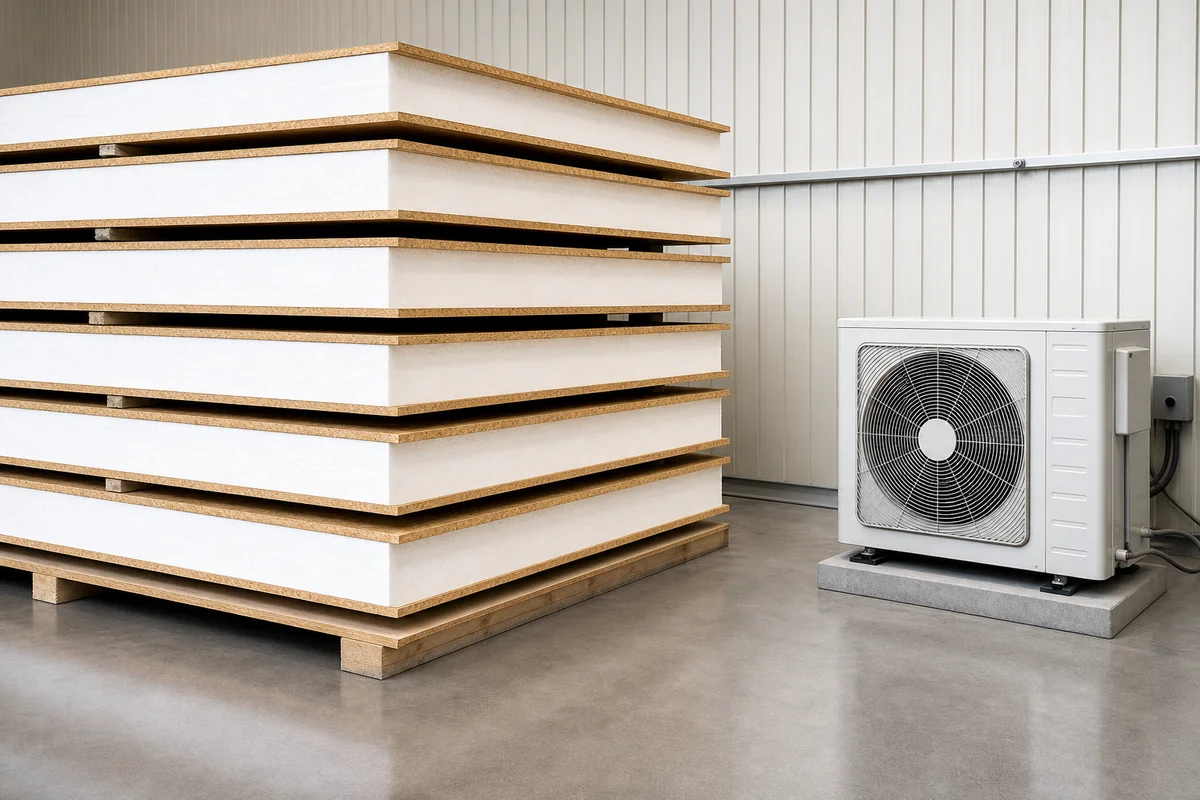
The strongest force acting on panel design is regulatory, and it has a date: 2017, when PE-core cladding was implicated in the Grenfell fire that killed 72 people. The response across construction markets was a tightening ladder for combustible cores. PE-cored cladding is capped near 10 metres in many guidance regimes, FR cores with limited PE content are accepted higher, and mineral or A2-class cores sit above that. Whatever the exact local numbers, the direction is global and one-way.
For clean room panels the consequence is specific: core chemistry is becoming a purchasing decision with a compliance tail. The cheapest core on the datasheet is no longer the cheapest specification once height limits, insurer requirements and local code reviews attach to it. Buyers who ask “what is this core, and what does my building height allow?” are ahead of the code; buyers who ask after delivery are behind it.
The insurance channel accelerates everything the codes start. Underwriters price combustibility into premiums and exclusions, so a core decision made for a cleanroom build now echoes through the policy for the life of the asset. Facilities teams report the same pattern: the fire question arrives earlier in the meeting, and it arrives with the insurer’s own evidence requirements attached – test reports, not datasheet adjectives.
Core Chemistry Is Migrating Up the Safety Ladder
The migration is visible in the product mix itself. Mineral-core and other non-combustible formats, once specified only where code forced them, are becoming the default ask for multi-storey pharma and any project with an insurer in the room. Honeycomb and aluminum-core formats keep their place where their specific strengths are the binding requirement: flatness and stiffness at low weight. Fire performance there is handled by the facing system and the project’s overall strategy.
The buyer’s move is to treat core selection as risk allocation, not as a line item. Match the core to the building’s height and occupancy, and ask for the fire test evidence behind the claimed class. Then read the connection details with the same care: a panel assembly is only as non-combustible as its joints and attachments. None of this is exotic; it is the same submittal discipline our guide to panels and building structure applies to loads, pointed at a different failure mode.
Modular Speed Is Becoming the Default Buying Question
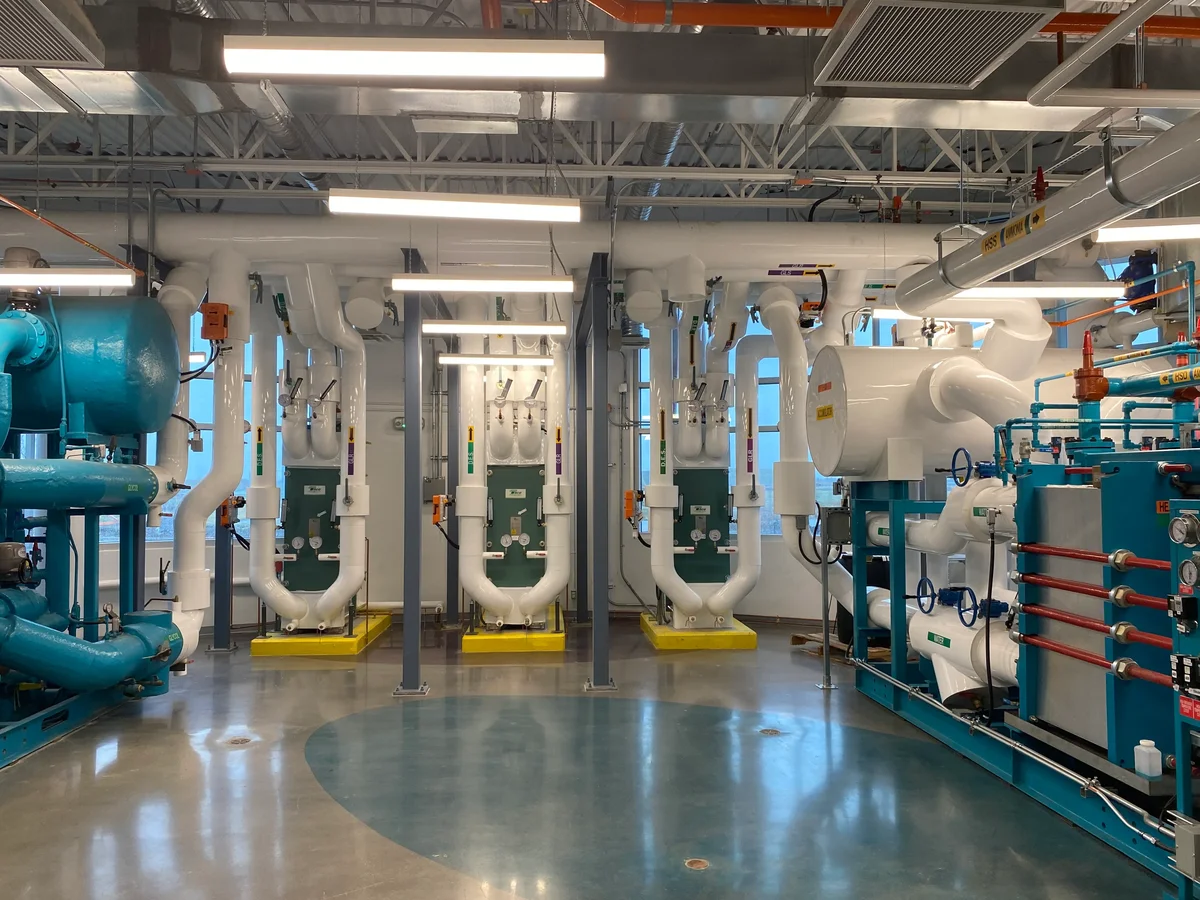
The second shift is logistical. Market analyses of the modular cleanroom segment point at the same driver from every direction: advances in manufacturing processes keep making factory-built rooms faster to deploy and easier to scale. Behind the reports sits a simple buyer behaviour. Project timelines have compressed, and a panel system that arrives cut, seamed and cam-ready converts a construction schedule into an installation schedule.
What changes for panels specifically is the tolerance question. Speed on site comes from precision in the factory. Cam-lock joints close within range, returns line up without shims, and penetrations arrive pre-cut where the equipment layout said they would be. The plants that win the next wave of orders will be the ones whose factory tolerance makes site labour routine. Buyers should ask for the tolerance stack evidence, not the assembly video.
Factory precision has a paper trail, and buyers are learning to read it. The tolerance stack evidence that matters is boring and specific: joint-closure ranges across a production batch, cut-out dimensional accuracy, flatness measurements at delivery. A supplier who can produce those numbers can promise an installation schedule; one who produces a timelapse video is hoping the site crew compensates for the factory.
RaxPanel laminates cleanroom panel systems on its own lines – core chemistry matched to your height and fire strategy, joints engineered for airtightness. Send your project parameters; an engineer returns the specification within 24 hours, one to one.
Energy Pressure Is Reaching the Panel Layer
The third force is the power bill. Cleanrooms run their fans continuously, and the mechanical baseline is brutal: trade-typical 20 to 60 air changes per hour at ISO 7-8, delivered through HEPA filtration. The whole volume is held against a 10 to 15 pascal cascade. Every watt that leaks through the envelope is paid for around the clock. Thermal performance and airtightness, historically afterthoughts in interior fit-out, are climbing the panel specification.
The visible consequences are already in quotations. Joint systems are now judged as much for air leakage as for particle sealing. Core conductivity appears in buyer checklists next to flatness. And layouts are drawn to shrink the conditioned volume itself: classify the smallest room that protects the product, then let the envelope keep it tight. Energy pressure does not change what a panel is; it changes which panels survive the five-year comparison.
| Specification line | Old question | Question buyers now ask |
|---|---|---|
| Core | Price, flatness | Fire class at my building height, conductivity |
| Joints | Particle sealing | Sealing plus air leakage at cascade duty |
| Layout | Room area | Smallest classified volume that protects product |
| Wall function | Static surface | Instrument-ready: ports, routing, sealed penetrations |
Panels Are Becoming Instrumented Surfaces
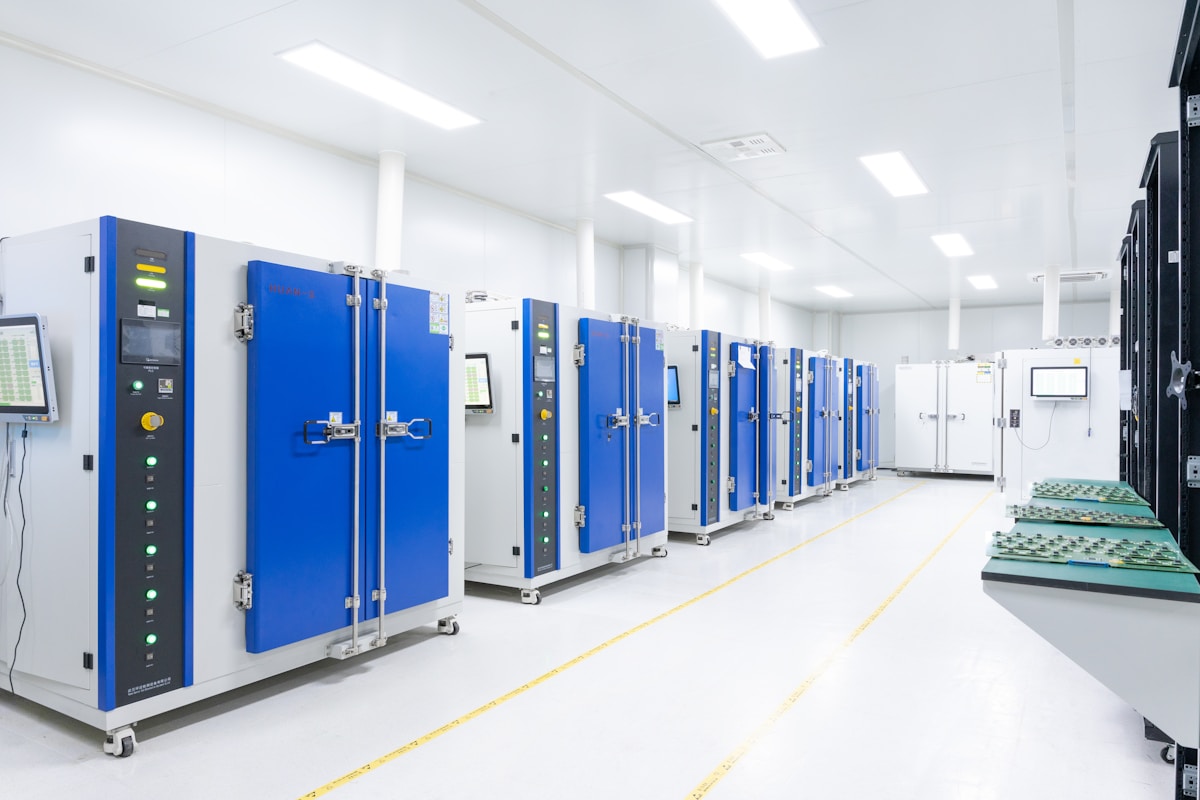
The fourth shift is architectural in the literal sense: monitoring is moving into the building fabric. Continuous particle counters, pressure sensors and temperature probes need homes. The cheapest, cleanest home is usually the panel itself: cored ports, sealed penetrations and cable routing designed into the wall, not patched through it after commissioning.
Requalification discipline drives the same direction. Trade-typical practice requalifies ISO 5-7 rooms every six months, and the monitoring design is expected to serve that schedule from day one. A panel system with a standard, tested port detail turns every added sensor into a routine installation; a system without one turns each sensor into a bespoke hole. Buyers evaluating panel packages should ask for the instrumented-wall detail the same way they ask for the joint detail.

An example makes the instrumented wall concrete. A pressure-sensor port is a small cored insert with a gasketed gland, placed at the zone boundary the cascade diagram defines. Installed during panel assembly, it seals like any cam-lock joint and tests with the room. The same port retrofitted through a finished wall is a cut panel, a patched face and a fresh integrity test. None of those costs appear on the sensor’s own price tag.
What Does Not Change: The Envelope Contract
Amid the shifts, the core contract of the envelope holds. Clean room panels must not shed, must wipe clean, and must hold sealed joints against a pressure cascade. They must carry their services without becoming the weak line in the contamination strategy. Every trend on this page is a refinement of that contract under new pressure – never a replacement of it. Rooms fail the same way they always did: a joint that leaks, a surface that sheds, a penetration nobody owns.
So the practical reading of the future is a checklist update, not a leap of faith. Ask what the core chemistry allows at your height, and what the factory tolerances do to your schedule. Ask what the joints do to your energy line, and what the wall does for your monitoring plan. RaxPanel answers those four questions on live ISO 5-8 programs every week – send yours, and get the specification within 24 hours, one to one, in 30+ countries. The handover tests that prove the answers live in our cleanroom requirements guide.
One more shift is worth watching without betting on it: recycling and end-of-life questions are starting to appear in tenders, mostly from multinational owners with their own sustainability targets. The panel industry has no standard answer yet, and honest suppliers say so. Buyers who need an answer today should ask about demountability and reuse, where modular systems genuinely score. Do not accept a brochure claim about recyclability that no one can test at handover.
Frequently Asked Questions About Clean Room Panel Trends
What is driving change in clean room panels?
Three enforceable forces: fire codes tightened after the 2017 Grenfell fire, energy prices exposing the cost of continuous air changes, and monitoring expectations turning walls into instrumented surfaces. Modular manufacturing advances accelerate all three.
Are mineral-core clean room panels replacing other cores?
They are becoming the default ask where building height, insurers or code reviews attach to combustibility. Honeycomb and aluminum-core formats retain their place where flatness and stiffness at low weight are the binding requirements.
How does energy pressure affect panel specification?
Rooms run fans continuously at trade-typical 20-60 ACH. Joint airtightness and core conductivity now appear in buyer checklists beside flatness, and layouts shrink the classified volume to what the product needs.
What should I ask a panel supplier about future-proofing?
Four things: fire evidence for the core at your height, factory tolerance evidence for the schedule, airtight joint details for the energy line, and a tested instrument-port detail for monitoring. Each belongs in the quotation, not after it.