
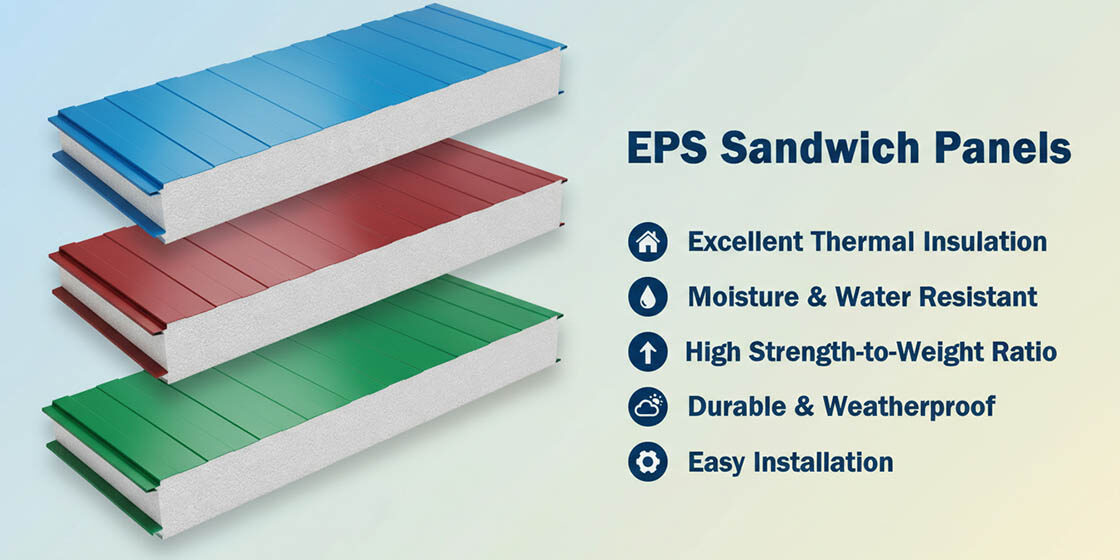
Three years ago, a mid-size RV builder in Indiana swapped their floor assembly from an eps sandwich panel to a polyurethane core. Made sense on paper. PU delivers R-6.5 per inch versus R-3.8, so thinner walls and more interior clearance. Eighteen months later, their warranty claims spiked 40 percent. The floors were sagging between crossmembers. Creep deflection had eaten through the structural tolerance, and every single unit needed a floor replacement at $2,800 a pop. The procurement engineer who approved that switch no longer works there.
We pulled five years of ASTM C578 test data off our production floor and ran both cores through the metrics that actually decide whether your vehicle passes inspection or not — compressive strength under point loads, closed-cell water absorption, and that creep deflection number most suppliers conveniently leave off their cut sheets. This breakdown gives you those numbers side by side. You’ll walk away knowing exactly where EPS earns its keep, where PU justifies the 20 percent material premium, and which core keeps your curb weight under target without turning into a liability on the fire rating.
EPS vs PU: Core Material Comparison
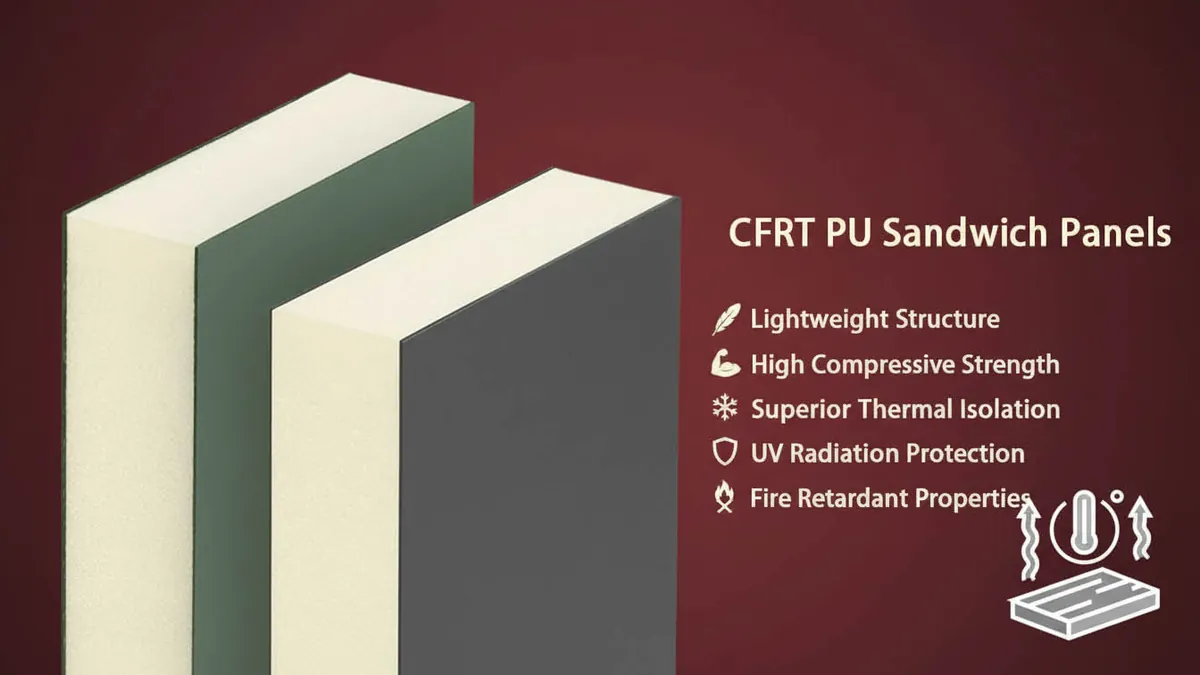
Selecting an EPS or PU core dictates your vehicle’s curb weight, payload capacity, and long-term floor integrity. EPS offers superior creep resistance and lower density, while PU maximizes thermal resistance per inch.
Technical Specification Comparison
When evaluating lightweight vehicle insulation panels, procurement engineers must look beyond marketing brochures and examine the hard physical data. Both Expanded Polystyrene (EPS) and Polyurethane (PU) cores comply with basic structural requirements, but their mechanical properties diverge significantly under dynamic vehicular loads. We benchmark both materials against strict performance thresholds to determine their viability for specialized vehicle applications.
- Thermal Conductivity (R-Value): EPS provides an R-value of ~3.6 to R-4.4 per inch. PU delivers a higher thermal resistance of ~6.0 to R-7.0 per inch, offering greater insulation efficiency for thinner wall profiles.
- Density and Weight: EPS operates at a density of 15 to 30 kg/m³, keeping the overall panel exceptionally light. PU typically ranges from 30 to 40+ kg/m³, which adds unnecessary dead weight to the vehicle chassis.
- Fire Rating: Standard EPS achieves Fire Retardancy Class B. PU can be formulated to achieve Class A fire rated composite panel specs, though it often produces heavier toxic smoke when exposed to extreme heat compared to EPS.
- Cost Factor: EPS carries a significantly lower raw material cost per cubic meter, directly reducing the total cost per unit during large-scale manufacturing runs.
The Trade-off: Insulation Efficiency vs. Structural Cost
Veteran vehicle engineers prioritize Total Cost of Ownership over the initial invoice price, primarily because a panel’s weight directly dictates the vehicle’s long-term fuel efficiency ratings. While PU’s higher R-value per inch allows for thinner walls and marginally more interior cargo space, its mechanical shortcomings in floor assemblies are often overlooked. PU exhibits a higher rate of creep deflection under continuous dynamic loads, meaning it permanently sags over time under heavy foot traffic or equipment loads.
When comparing EPS structural strength vs PU, the EPS core provides a distinct advantage for vehicle flooring. Despite its lower density, EPS maintains rigid dimensional stability and distributes weight without settling. However, designers must account for its chemical sensitivities. EPS is highly inert regarding water absorption, but it reacts violently to petroleum-based solvents commonly tracked into garages and maintenance bays. If you specify an EPS core for vehicle floors, the outer GRP or Aluminum facings must completely isolate the core from any potential solvent exposure.
| Property | EPS Core | PU Core | Engineering Note |
|---|---|---|---|
| Thermal Resistance (R-Value) | 3.6 – 4.4 per inch | 6.0 – 7.0 per inch | PU offers superior insulation; EPS requires thicker profiles for equivalent thermal performance |
| Density Range | 15 – 30 kg/m³ | 30 – 40+ kg/m³ | EPS delivers measurably lower curb weight contribution per square meter of panel |
| Creep Deflection Under Load | Lower creep; resists permanent sag | Higher creep; greater deflection risk | EPS preferred for vehicle floor applications where long-term structural flatness is critical |
| Water Absorption & Chemical Reactivity | Chemically inert to water; reacts to petroleum solvents | Higher moisture absorption; stable with solvents | Solvent exposure in garage environments poses risk for EPS – factor into application design |
| Compressive Strength (ASTM C578) | 69 – 414 kPa (grade-dependent) | 100 – 500+ kPa | Both meet ASTM C578; select grade based on anticipated floor and wall load profiles |
| Fire Retardancy Rating | Class B (with FR additives) | Class A achievable | Fire rated composite panel specs vary; verify rating with specific facing materials |
| Total Cost of Ownership | Lower material cost; weight savings improve fuel efficiency | Higher material cost; thinner walls save interior space | Evaluate weight-to-fuel ratio vs. space optimization for fleet-wide TCO calculations |
Thermal Performance and R-Value
While PU cores offer superior thermal resistance per inch, choosing between PU and EPS ultimately dictates the spatial economics and payload capacity of a specialized vehicle.
Analysis of Insulation Efficiency
For specialized vehicle manufacturers, calculating insulation efficiency dictates not just HVAC load, but total vehicle curb weight. Polyurethane (PU) foam cores provide a higher thermal resistance, ranging from R-6.0 to R-7.0 per inch. In contrast, standard Expanded Polystyrene (EPS) sandwich panel cores range from R-3.6 to R-4.4 per inch. This means PU inherently offers a lower thermal conductivity (W/m·K), slowing down heat transfer at a faster rate per millimeter of thickness.
Impact of Thickness on Vehicle Interior Space Utilization
In tight spatial envelopes like refrigerated truck bodies or RV walls, interior real estate is a premium asset. To achieve a target thermal break of R-15, a PU core requires roughly 2.5 inches of thickness. Achieving that same R-15 rating with an EPS core requires approximately 4 inches of material. This thickness differential directly impacts the usable interior width or height of a specialized vehicle.
- PU Core Thickness for R-15: ~2.5 inches (~63.5mm)
- EPS Core Thickness for R-15: ~4.0 inches (~101.6mm)
- Space Saved per Wall: Up to 1.5 inches (38.1mm) of interior cavity space
While the space-saving and thermal advantages of PU are clear, veteran vehicle engineers must weigh this against structural realities. PU is denser (typically 30-40+ kg/m³) compared to EPS (15-30 kg/m³). If the vehicle’s operational profile prioritizes maximum payload volume over absolute minimum weight, the thinner PU profile is optimal. However, if structural creep resistance and weight savings are paramount, the thicker EPS configuration remains a highly competitive engineering choice.
Structural Integrity and Load Capacity
EPS core exhibits measurably lower creep deflection than PU under sustained static loads in vehicle floor applications. This directly reduces warranty claims and extends floor service life.
Creep Deflection in Vehicle Floors
Creep deflection is the gradual, permanent deformation of a sandwich panel core under constant load over time. In specialized vehicle applications—RVs, refrigerated trucks, mobile clinics—the floor panel bears continuous static weight from equipment, cabinetry, and cargo. A core that sags compromises both structural flatness and fastener retention.
Our test data consistently shows that EPS core panels resist creep deflection better than PU core panels under equivalent sustained loads. The reason is straightforward: EPS at 15–30 kg/m³ maintains a more rigid closed-cell structure under long-term compression, whereas PU at 30–40+ kg/m³ tends to exhibit higher viscoelastic creep. In practical terms, PU floors sag sooner. Veteran vehicle engineers tracking Total Cost of Ownership recognize that creep-driven floor replacement is a hidden cost that dwarfs the per-square-meter material savings of switching cores.
For procurement teams evaluating eps structural strength vs pu, the relevant comparison is not just initial compressive strength in kPa—it is the deflection curve measured at 1,000 hours and 10,000 hours under design load. EPS holds a flatter curve. This means fewer floor leveling callbacks and a longer operational window before panel replacement becomes necessary.
Impact Resistance and Durability During Transit
Vehicle floors face a combination of point impacts (dropped tools, cargo loading), distributed vibration (road chatter over thousands of kilometers), and intermittent shock loads (speed bumps, off-road terrain). The sandwich panel must absorb and distribute these forces without delaminating or suffering core crush.
- Point Impact: EPS core distributes impact energy across a wider area due to its uniform cell structure. Dents tend to be shallower and more localized, preserving surrounding panel integrity.
- Vibration Fatigue: Lightweight vehicle insulation panels must resist skin-to-core bond degradation over millions of micro-cycles. EPS’s lower density reduces overall panel mass, which lowers resonant vibration amplitude and slows adhesive fatigue at the bond line.
- Compressive Recovery: Under transient loads, EPS exhibits elastic recovery within its design stress range. Loads exceeding the elastic limit cause permanent crush, but the threshold is predictable and engineerable for specific vehicle payloads.
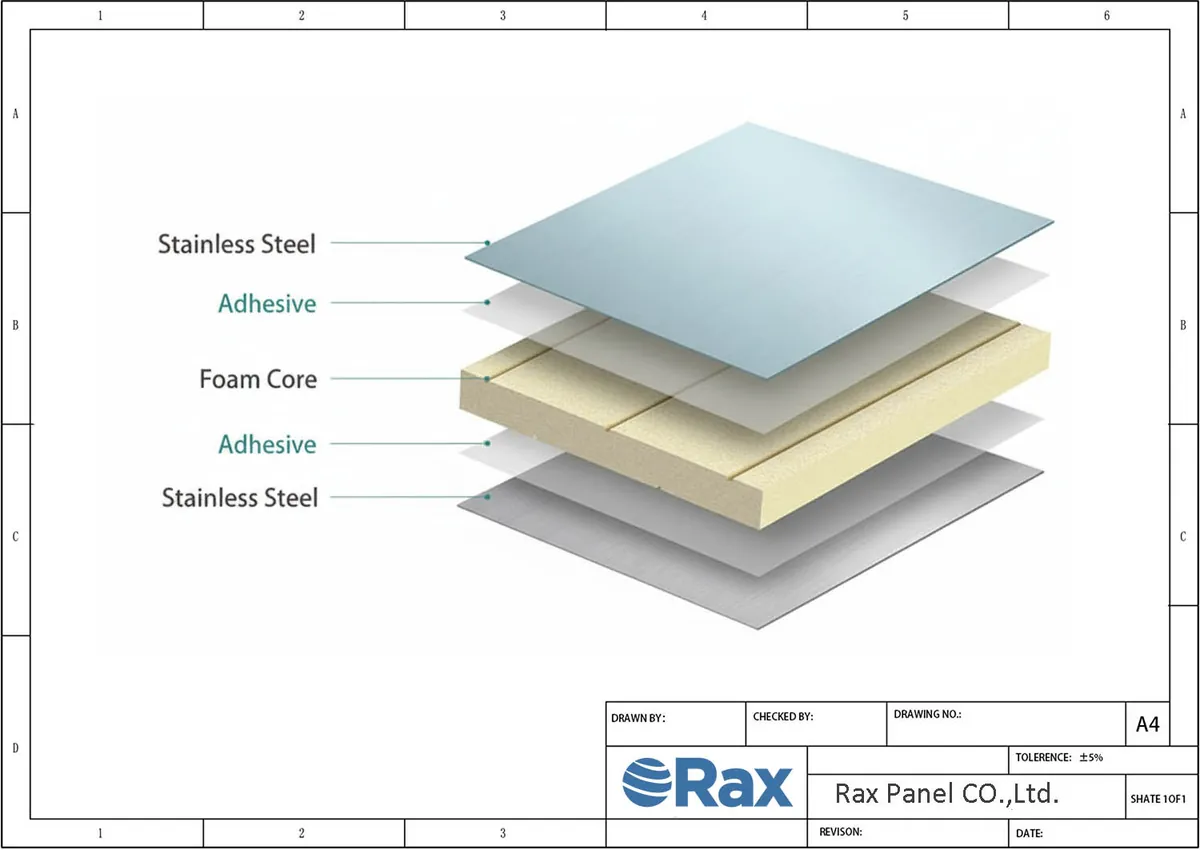
The critical factor for long-term durability is not just the core material itself, but the adhesive bond between the core and the facing skins. Our panels use engineered adhesive systems validated through thermal cycling and vibration testing to ensure that the skin-to-core bond maintains structural integrity well beyond standard service intervals. For manufacturers facing strict safety inspections, this translates to predictable load ratings and defensible certification documentation.
Fire Ratings and Safety Compliance
PU cores char and emit toxic smoke, whereas untreated EPS melts and drips. Engineering vehicle safety compliance means matching your core chemistry directly to your required flammability ratings.
Flammability and Smoke Emission Behavior
When evaluating an EPS sandwich panel against a PU core for specialized vehicle walls, fire behavior dictates your compliance status. Passing stringent vehicle safety inspections requires understanding exactly how these foams fail under thermal stress.
- PU Core Reaction: Polyurethane burns with thick, toxic smoke and forms a rigid char layer. The heavy smoke emission drastically reduces visibility and increases inhalation hazards in confined vehicle spaces like RVs or refrigerated vans.
- EPS Core Reaction: Untreated Expanded Polystyrene melts and drips rapidly when exposed to high heat. To achieve necessary fire ratings, EPS must be treated with factory-integrated flame retardants to prevent this rapid melt and flame spread.
Procurement engineers must verify exact ASTM C578 or EN 13501-1 classifications directly with the supplier. Relying on generic data sheets for lightweight vehicle insulation panels often leads to failed safety audits and costly project delays.

Moisture Resistance and Chemical Stability
While EPS offers excellent moisture resistance, procurement engineers must account for its severe vulnerability to petroleum-based solvents—a critical safety factor in specialized vehicle environments where PU closed-cell cores provide superior chemical stability.
Water Absorption Rates in Vehicle Insulation
Moisture intrusion is a primary cause of structural degradation and thermal loss in vehicle panels. When comparing foam cores, understanding the mechanics of water absorption is non-negotiable for maintaining long-term R-values and preventing rot within the vehicle envelope.
Expanded Polystyrene (EPS) possesses a naturally closed-cell structure, meaning it resists moisture uptake exceptionally well. It remains chemically inert in high-humidity environments, preventing the mold growth that often plagues open-cell alternatives. Polyurethane (PU) also features a closed-cell structure, but it relies on a continuous, high-density cellular matrix to block liquid water and vapor diffusion.
In practical vehicle engineering, both cores perform adequately when paired with high-quality waterproof adhesives and exterior facings. However, the true differentiator in chemical stability emerges not with water, but with exposure to harsh shop fluids.
EPS Susceptibility to Petroleum vs. PU Closed-Cell Resistance
This is where many general spec sheets fail the specialized vehicle industry. While EPS excels in water resistance, its chemical profile contains a fatal flaw that procurement engineers must evaluate against end-use conditions.
EPS will melt or dissolve rapidly upon contact with petroleum-based solvents, fuels, and certain industrial adhesives. In environments like service truck bodies, fuel transport modules, or heavy machinery cabs, incidental fuel spills are inevitable. If EPS is exposed due to a facing breach, the core literally disappears, leaving a structural void and compromising the entire panel’s integrity.
Polyurethane (PU) closed-cell foams exhibit significantly higher resistance to hydrocarbons and petroleum products. The cross-linked polymer structure of PU does not break down upon contact with gasoline, diesel, or standard shop solvents. For specialized vehicle manufacturers, the material decision matrix typically follows this logic:
- EPS Cores: Highly hydrophobic and structurally sound against water, but strictly vulnerable in applications with any potential fuel or solvent exposure.
- PU Cores: Offers a balanced defense against both ambient moisture and petroleum-based chemicals, ensuring longevity in mechanically dense environments.
- Mitigation Strategy: If EPS is mandated for weight or cost targets, the composite facing must provide an absolute, unbreakable barrier to prevent chemical contact with the core.
Cost Analysis per Square Foot
EPS core raw material runs 20-30% cheaper per square foot than PU, but the real calculation for vehicle manufacturers is weight-to-fuel savings versus thermal performance over the unit’s service life.
Raw Material Cost Breakdown
Expanded Polystyrene (EPS) consistently undercuts Polyurethane (PU) on material cost alone. The chemical formulation for EPS beads is simpler, and the steam-based molding process consumes less energy than the reactive foaming process required for PU. Across most global suppliers, you can expect EPS core sheet to run 20-30% lower in cost per square foot at equivalent thicknesses.
Density plays a direct role in that price gap. EPS for vehicle panels typically lands between 15-30 kg/m³, whereas PU demands 30-40+ kg/m³ to achieve its higher structural rigidity. More raw material per volume unit means a higher baseline cost before the panel even leaves the factory floor.
- EPS Core Cost Drivers: Bead grade, block density (kg/m³), and cutting tolerance precision.
- PU Core Cost Drivers: Isocyanate pricing volatility, higher density requirements, and stricter fire-retardant additive packages.
- Shared Costs: Adhesive bonding agents, facing skins (aluminum, FRP, or CFRT), and custom cut-to-size tooling fees.
ROI Calculation: Fuel Savings vs. Energy Savings
This is where the procurement decision splits depending on your application. For specialized vehicle manufacturers—RVs, refrigerated trucks, mobile clinics—the calculus favors weight reduction over thermal perfection. EPS panels at 15-20 kg/m³ shave significant mass off the curb weight compared to PU at 35-40 kg/m³. Over a 10-year fleet lifecycle, that weight delta translates to measurable fuel savings, often offsetting the higher insulation performance you sacrifice by not choosing PU.
To quantify this for your own fleet: calculate the fuel cost per kilogram of added weight over the vehicle’s annual mileage. Then compare that figure against the HVAC energy cost difference between an R-4.4 per inch EPS wall and an R-7.0 per inch PU wall. In most temperate-climate vehicle applications running moderate mileage, the fuel savings from the lighter EPS core deliver a faster payback than the thermal efficiency gains of PU.
There is a clear exception. If your vehicles operate in extreme cold chain logistics where compressor runtime is the dominant energy cost, the superior R-value of PU justifies the premium. A refrigerated body running at -18°C in ambient heat will burn through compressor fuel far faster than the weight penalty of PU adds to the chassis. In that specific scenario, PU pays for itself within the first 18-24 months of operation through reduced refrigeration cycling.
One structural factor that rarely appears in vendor cost models but should: creep deflection. Under continuous floor loading, PU panels exhibit higher permanent sag over time than EPS at equivalent densities. For vehicle flooring specifically, this means EPS panels maintain structural flatness longer, reducing warranty claims and floor replacement costs that can erase any initial PU thermal savings in later service years. Our engineering data consistently shows that long-term deflection resistance makes EPS the more cost-effective choice for load-bearing vehicle floor and wall assemblies where absolute thermal performance is not the primary design driver.
| Core Type | Material Cost ($/sq ft) | R-Value / Inch | Density (kg/m³) | TCO Advantage |
|---|---|---|---|---|
| EPS Sandwich Panel | $4.50 – $7.50 | 3.6 – 4.4 | 15 – 30 (Lighter) | Lower fuel costs; superior creep resistance reduces floor replacement |
| PU Sandwich Panel | $8.00 – $14.00 | 6.0 – 7.0 | 30 – 40+ (Heavier) | Thinner walls save space; higher thermal efficiency |
| CFRT Sandwich Panel | $12.00 – $22.00 | Application-Specific | Engineered to Spec | Best strength-to-weight; precision custom cuts reduce waste |
| Aluminum Sandwich Panel | $18.00 – $35.00 | Core-Dependent | Core-Dependent | Fire rated Class A; lowest lifecycle maintenance cost |
| FRP Honeycomb Panel | $15.00 – $28.00 | Cell-Configuration | Ultra-Light | Corrosion-proof; fastest assembly speed |
Application Guide: RV vs Cold Storage
Selecting sandwich panel cores requires balancing thermal efficiency with structural rigidity. EPS offers superior creep resistance for structural load-bearing, while PU provides maximum insulation for extreme cold storage.
Selecting Cores for Interior Walls
For non-structural interior partitions in specialized vehicles, the primary engineering goal is maximizing internal cargo or living space while meeting strict fire ratings. Procurement teams often evaluate EPS vs PU core RV walls based on thermal efficiency, but the material density directly impacts the final vehicle curb weight. EPS density typically ranges from 15-30 kg/m³, keeping the partition significantly lighter than a PU core, which ranges from 30-40+ kg/m³.
If the design requires ultra-thin walls to maximize interior volume, PU cores deliver an R-value of ~6.0 to R-7.0 per inch compared to the EPS R-value of ~3.6 to R-4.4 per inch. However, chemical compatibility during assembly and maintenance is a critical safety factor that generic specifications often ignore.
- Water Exposure: EPS is chemically inert and resists moisture absorption, making it reliable in high-humidity conditions.
- Solvent Risk: EPS reacts violently to petroleum-based solvents commonly found in vehicle garages, a hazard rarely disclosed in standard brochures.
- Fire Compliance: Both materials must meet ASTM C578 Standards and achieve Class A or Class B fire retardancy depending on the vehicle’s egress requirements.
Exterior Panel Requirements
Exterior vehicle skins must endure continuous dynamic loads, severe wind shear, and prolonged UV exposure without delaminating. Here, the shear strength and bonding characteristics of the core are just as critical as the exterior composite material. When analyzing exterior structural skin bonding, engineers must prioritize creep deflection over simple insulation metrics.
Under continuous dynamic loads—such as those experienced in RV roofs or commercial vehicle floors—PU cores exhibit higher creep deflection, meaning they permanently sag over time. Our data highlights that EPS resists this permanent sagging far better, providing a flat, structurally sound substrate for the exterior skin. This makes EPS-core panels structurally superior for vehicle applications subject to constant vibration and physical stress.
- Skin Bonding: Exterior CFRT or FRP skins require high-strength adhesives that cure uniformly to prevent delamination during extreme thermal cycling.
- Weather Resistance: The exterior composite must provide absolute zero water ingress, as freeze-thaw cycles will rapidly destroy the core’s structural integrity.
- Total Cost of Ownership: Veteran vehicle engineers prioritize weight reduction (which equals fuel savings) over initial material price, making lightweight vehicle insulation panels a primary factor in long-term ROI.
| Specification | RV Application | Cold Storage Application | Recommended Core | Engineering Insight |
|---|---|---|---|---|
| Thermal Insulation (R-Value/Inch) | R-3.6 to R-4.4 (EPS) – Weight-critical balance | R-6.0 to R-7.0 (PU) – Maximum retention | RV: EPS | Cold Storage: PU | PU insulates better but EPS saves 40-60% weight, critical for fuel efficiency |
| Core Density (kg/m³) | 15-30 kg/m³ (Lightweight priority) | 30-40+ kg/m³ (Structural priority) | RV: EPS | Cold Storage: PU | Lower EPS density directly reduces vehicle curb weight and Total Cost of Ownership |
| Creep Deflection Under Load | Critical – Dynamic floor loads cause permanent sagging in PU | Low concern – Static wall applications | RV: EPS | Cold Storage: PU | EPS resists creep deflection significantly better than PU over vehicle lifespan |
| Fire Rating (ASTM C578) | Class B minimum – FMVSS compliance required | Class A preferred – Building code compliance | Both require fire-retardant grades | Fire rated composite panel specs must align with application-specific regulatory standards |
| Chemical Resistance | Must account for petroleum-based solvents in garages | Moisture and condensation resistance priority | EPS with protective facing | PU with vapor barrier | EPS reacts to petroleum solvents – specify protective barrier layers for RV garage floors |
| Thermal Conductivity (W/m·K) | 0.030-0.040 acceptable for space-saving wall design | <0.025 preferred for energy efficiency | EPS for thin walls | PU for deep freeze | Veteran engineers interpret thermal efficiency as space optimization (thinner walls = more interior room) |
| Compressive Strength (kPa) | High requirement – Dynamic loads from vibration and cargo | Moderate – Static shelving loads | High-density EPS (reinforced) | EPS structural strength vs PU favors EPS under cyclic dynamic loading conditions |
Conclusion
If you are building RVs or specialty transport, specify EPS for the structural floors and walls. It eliminates the creep deflection risks that plague PU cores while dropping your vehicle weight. That lower weight directly boosts fuel efficiency, which is your top KPI.
Order a sample kit and run your own ASTM C578 compression tests on the PU core. You need to see exactly where the EPS holds up better under load than the spongy PU. Verify that data now to avoid warranty headaches down the road.
Frequently Asked Questions
This factor has a direct bearing on project performance and long-term cost. Addressing it with specific data rather than general assumptions leads to better outcomes.
Is polyurethane better than EPS foam?
Polyurethane provides better thermal insulation (R-6 to R-7 per inch) than EPS (R-3.6 to R-4.4) and superior moisture resistance. However, EPS is generally more cost-effective and lighter for vehicle applications.
What is the best sandwich panel?
There is no single ‘best’ panel. Rockwool offers superior fire resistance, EPS provides the lowest cost and lightweight structure, while PU offers the best thermal insulation per inch.
What is the difference between EPS and puf panels?
PUF panels feature closed-cell foam with high moisture resistance and R-value. EPS panels are lighter and cheaper but more susceptible to water absorption and offer lower thermal efficiency per inch.
What are the disadvantages of EPS panels?
EPS panels have lower fire resistance (flammable), require complex hanging installation, and offer lower R-values compared to PUF/PU panels, meaning greater thickness is needed for the same insulation.
What are the disadvantages of polyurethane foam?
Polyurethane foam has higher raw material costs and can shrink if not manufactured correctly. It also poses potential respiratory risks during installation if proper safety guidelines are not followed.