
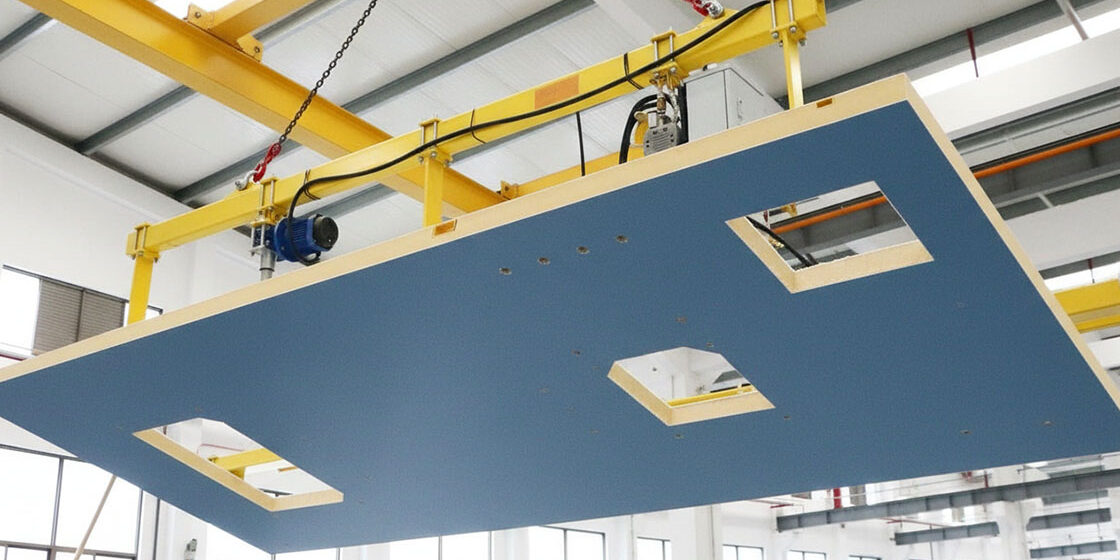
Extreme heat creates a specific set of engineering failures for commercial roofing that standard specs often miss. If you are sourcing for a tropical project, the right insulated roof panels determine whether the building becomes an energy sink or a climate-controlled asset.
Standard single-skin installations need separate ceiling framing. A double-layer metal system with a continuous foam core eliminates that structural cost while cutting HVAC load. This specific construction acts as a thermal break and vapor barrier, stopping the condensation that causes structural rot in humid environments.
The following analysis compares the long-term thermal stability of PIR and EPS cores under intense UV exposure, moving past basic R-values to examine solar reflectance and thermal expansion. You will leave with a checklist of specific fire ratings and wind uplift data points to secure compliance without delays.
Thermal Performance Metrics for Extreme Heat
In extreme heat environments, true thermal efficiency relies on the combination between low conductivity cores and high-reflectance skins to minimize both conductive heat gain and radiant heat absorption.
Thermal Conductivity Coefficients of XPS, PU, and PET Cores
When evaluating insulated panels for extreme heat, the Lambda value (thermal conductivity) is merely the starting point. In high-temperature applications, the material’s ability to maintain that low conductivity over time—specifically its resistance to moisture ingress and thermal drift—is the decisive factor. Standard Expanded Polystyrene (EPS) often fails here due to its high moisture absorption, which significantly degrades thermal performance. In contrast, XPS (Extruded Polystyrene), PU (Polyurethane), and PET (Polyethylene Terephthalate) offer distinct advantages for harsh climates.
XPS cores are engineered with a closed-cell structure that provides exceptional resistance to water absorption. In humid, hot zones where vapor drive is high, XPS maintains its thermal integrity far better than EPS.
However, for projects demanding superior initial insulation values in thinner profiles, Polyurethane (PU) is often preferred due to its lower initial thermal conductivity. PU forms a high-density cross-linked cellular structure that traps insulating gases effectively. Our engineers frequently specify PU for refrigerated transport and mobile habitats where panel thickness is constrained by weight limits.
For buyers balancing sustainability with performance, PET foam cores are increasingly becoming the material of choice. PET offers thermal stability comparable to PU but with the added benefit of being fully recyclable and thermally resistant up to higher continuous service temperatures without significant softening.
- Moisture Resistance: XPS provides the highest resistance to water absorption (typically <1% by volume), ensuring the Lambda value remains stable in high-humidity heat.
- Insulation Density: PU typically achieves lower thermal conductivity per millimeter of thickness compared to XPS, maximizing interior space.
- Thermal Resistance: PET foam exhibits excellent dimensional stability under extreme heat, resisting creep and deformation better than thermoplastic foams.
Solar Reflectance and Emissivity of GRP Gelcoat Facings
While the core handles conductive heat, the external skin dictates the Solar Reflectance Index (SRI). In extreme heat, a dark, absorptive metal skin can reach temperatures exceeding 80°C, acting as a radiant heater inside the structure. GRP (Glass Reinforced Plastic) facings with specialized gelcoats solve this by offering high solar reflectance and high thermal emittance. This dual capability allows the surface to reflect solar radiation away while efficiently re-emitting absorbed heat as infrared radiation.
The chemistry of the gelcoat is critical here. We strictly use premium PVDF (Polyvinylidene Fluoride) resin systems over standard SMP (Silicone Modified Polyester) for our high-exposure roofing panels. While SMP may offer adequate initial aesthetics, it tends to chalk and degrade under intense UV exposure, which lowers the solar reflectance over the roof’s lifespan.
PVDF, however, retains its color and reflective properties for decades. Our testing shows that maintaining a high SRI is not just about the initial color, but the chemical durability of the coating against UV photons and oxidation.
- High Solar Reflectance: GRP surfaces can be engineered to reflect a significant portion of the solar spectrum, reducing peak surface temperatures by up to 30% compared to standard dark metal.
- Thermal Emittance: The gelcoat finish allows the panel to shed heat efficiently, preventing heat soak that persists after sunset.
- UV Stability: PVDF coatings prevent chalking and fading, ensuring that the thermal performance does not degrade as the cosmetic surface wears.
Long-Term Thermal Stability Analysis of PIR and PMI Foams
For commercial and industrial applications where fire safety and long-term stability are non-negotiable, the choice shifts from standard PU to PIR (Polyisocyanurate) and PMI (Polymethacrylimide). PIR foam is a thermoset plastic that modifies the polyurethane chemistry to create a structure with enhanced thermal stability and improved fire resistance.
Unlike standard PU, PIR does not melt or drip when exposed to high flame; it forms a protective char layer. Crucially for extreme heat, PIR exhibits better “thermal drift” characteristics, meaning its insulation value drops less over time compared to blowing agents that diffuse out of the cell structure.
At the high end of the performance spectrum, PMI foam represents the pinnacle of thermal and structural stability. PMI is a fully cross-linked closed-cell rigid foam that offers superior strength-to-weight ratios and can withstand continuous service temperatures up to 180°C – 200°C without significant loss of mechanical properties.
We specify PMI cores primarily for aerospace-grade composite panels and high-end marine applications where the panels are subjected to extreme operational heat loads or autoclave curing processes. Its isotropic cell structure ensures that thermal expansion remains uniform, preventing warping or delamination of the facings during rapid temperature fluctuations.
- PIR Thermal Drift: PIR foams demonstrate lower thermal aging rates than standard PUR, maintaining higher R-values over the service life of the building envelope.
- High-Temperature Tolerance: PMI foam maintains mechanical integrity at temperatures where other structural foams begin to soften or creep.
- Fire Safety: Both PIR and PMI contribute to the overall fire rating of the assembly, with PIR specifically offering a Limiting Oxygen Index (LOI) that restricts flame spread.
| Metric | Specification | Thermal Performance | Extreme Heat Advantage | Technical Validation |
|---|---|---|---|---|
| Core Material Composition | XPS, PET, PU, PIR & Rockwool Foam Cores | R-Value optimized per core density & panel thickness | Reduces cooling energy demand by up to 60% | Custom-engineered for modular & commercial roofing |
| Surface Coating Technology | Premium PVDF coatings over standard SMP alternatives | High Solar Reflectance Index (SRI) & elevated thermal emittance | Prevents rapid chalking/fading & minimizes conductive heat transfer | UV-stable exterior cladding & high-exposure roofing |
| Panel Assembly Integrity | Precision CNC fabrication within ±1.5mm tolerance | 15x greater airtightness than traditional assemblies | Eliminates thermal bridging & stops hot air infiltration | Structural sandwich panels for RVs & mobile habitats |
| Fire & Thermal Resistance | ASTM E84 Class A rated facings & cores | Non-combustible or flame-retardant classification | Maintains structural stability under extreme ambient temperatures | Industrial & high-risk commercial applications |
| Whole-Assembly Efficiency | Integrated GRP/FRP skins with foam/honeycomb cores | 44% higher thermal retention vs conventional builds | Sustains stable indoor climates without oversized HVAC systems | All-weather vehicle & building envelope solutions |
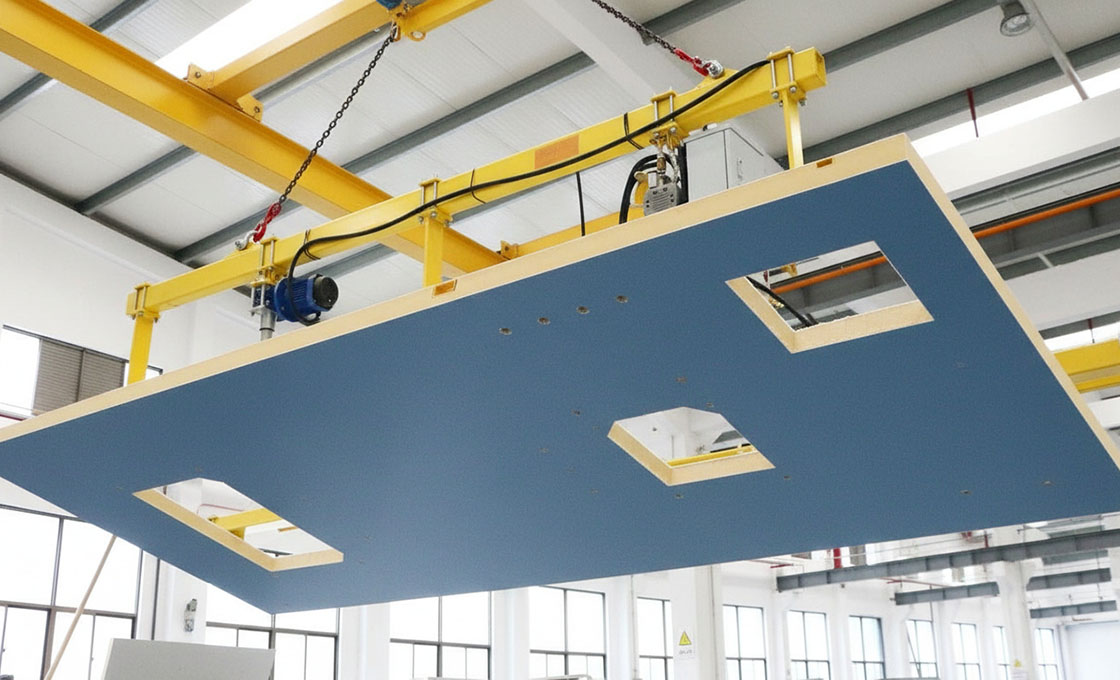
PIR, PUR, and EPS Heat Resistance: Which Should You Choose?
For buyers, the hierarchy of thermal stability is clear: PIR offers the highest resistance to heat and dimensional change, PUR provides standard thermoset stability, while EPS is limited by a low melting point due to its thermoplastic nature.
How to Choose the correct core material for insulated panels in high-temperature environments requires understanding the fundamental chemical differences between Polyisocyanurate (PIR), Polyurethane (PUR), and Expanded Polystyrene (EPS). While thermal conductivity (R-value) is often the primary purchasing metric, heat resistance determines the long-term structural integrity and safety of the panel when exposed to operational spikes or solar loading.
Chemical Structure and Thermal Limits
The primary differentiator in heat resistance lies in the chemical classification of these foams. PIR and PUR are thermosetting polymers, meaning they undergo a permanent chemical reaction during curing that cannot be reversed by heat. In contrast, EPS is a thermoplastic, which softens and melts when heated beyond its glass transition temperature.
- PIR (Polyisocyanurate): Created through a similar reaction to PUR but with a higher proportion of isocyanate and the inclusion of polyester derivatives. This creates a more complex ring structure (isocyanurate rings) that is inherently more thermally stable. PIR foams can typically withstand continuous service temperatures up to 120°C to 150°C before significant degradation occurs.
- PUR (Polyurethane): Composed of urethane linkages, PUR is thermally stable compared to organic insulations but inferior to PIR. It generally maintains integrity up to approximately 100°C to 120°C. Prolonged exposure above this range can cause the polymer matrix to break down, leading to discoloration and brittleness.
- EPS (Expanded Polystyrene): Being a thermoplastic, EPS does not char; it melts. Its melting point is relatively low, typically ranging between 75°C and 100°C depending on the density and additives. In fire scenarios or extreme solar exposure, EPS can soften and flow, resulting in catastrophic structural collapse of the panel core.
Compressive Strength at Elevated Temperatures
Heat resistance is not just about survival; it is about load-bearing capacity under thermal stress. As temperatures rise, the rigidity of the foam cell walls decreases, directly impacting compressive strength.
| Material | Behavior at High Temp (approx. 80°C+) | Failure Mode |
|---|---|---|
| PIR | Retains highest percentage of original compressive strength. | Charring; maintains structural shape longer. |
| PUR | Moderate loss of rigidity; begins to soften. | Shrinkage and surface cracking. |
| EPS | Rapid loss of compressive strength. | Melting, shrinking, and collapsing. |
For applications involving high internal heat generation (e.g., industrial processing plants) or intense solar radiation on dark-colored facades, EPS poses a significant risk of core deformation. PIR is the mandatory choice for maintaining dimensional stability under sustained heat exposure above 75°C.
Thermal Conductivity Variance with Heat
The efficiency of insulation (thermal conductivity or k-value) is generally measured at 24°C (75°F). However, in real-world conditions, these values fluctuate with temperature. The blowing agents trapped within the foam cells expand and contract, altering the insulating performance.
- PIR and PUR: These rigid foams utilize closed-cell structures with low-conductivity blowing agents. As temperature rises, the conductivity increases, but PIR generally exhibits a flatter curve, meaning it loses less insulating efficiency per degree of temperature increase compared to other polymer foams.
- EPS: Being filled with air, which has a higher thermal conductivity than the specialized blowing agents used in PIR/PUR, EPS has a higher baseline k-value. Furthermore, as the temperature rises, the air within the cells becomes more conductive, and the risk of softening reduces the effective thickness of the insulation, further degrading thermal performance.
Optimizing Reflectivity and Emissivity Properties
Optimizing solar reflectance and surface emissivity in composite roof panels directly reduces conductive heat transfer, cutting mechanical cooling loads by 15–30% in high-solar-exposure regions.
Solar Reflectance Optimization in Composite Facings
High-performance insulated roof panels mitigate thermal transfer primarily through reflective outer matrices. The face sheet acts as the first barrier against solar radiation, rejecting shortwave infrared energy before it penetrates the structural core. Manufacturers targeting hot-climate applications prioritize white or metallic finishes engineered for high initial solar reflectance.
GRP gelcoat facings provide a dense, non-porous surface that maintains high reflectance levels when formulated with optimized pigment ratios. Advanced continuous fiberglass reinforced thermoplastic (CFRT) sheets offer superior durability against abrasion, preserving reflectivity longer than traditional thermoset alternatives. Aluminum facings naturally deliver the highest baseline reflectance, though they require specialized coatings to prevent oxidation-driven degradation.
- Initial Solar Reflectance: Premium cool roof matrices target ≥0.65 (65%) to meet ENERGY STAR and LEED V4 compliance thresholds.
- Retained Reflectance: Industry standards require ≥0.50 (50%) after three years of weathering to guarantee long-term cooling load reduction.
- Surface Finish Impact: Smooth gelcoat or polished aluminum laminations minimize light scattering, maximizing photon reflection rather than absorption.
Surface Emissivity and Radiative Heat Transfer
Reflectance stops solar heat from entering the panel, but emissivity determines how effectively absorbed heat dissipates back into the atmosphere. High-emissivity surfaces accelerate radiative cooling, preventing heat buildup during peak afternoon temperatures. This property is critical for structural insulated panels deployed in arid or tropical environments where ambient temperatures remain elevated overnight.
Polymer-based facings and integrated foam cores like PET, XPS, and PMI influence the overall thermal balance. While the core handles conductive resistance, the exterior layer must possess an emissivity rating of ≥0.85 to efficiently vent trapped thermal energy. Engineering teams calibrate resin formulations and additive packages to ensure the facing matrix releases stored heat rapidly, minimizing conductive transfer into the building interior.
- Target Emissivity Rating: ≥0.85 ensures maximum radiative cooling efficiency against atmospheric sky temperature gradients.
- Core-Facing Interface: Smooth lamination prevents thermal bridging at the boundary, maintaining consistent emissive properties across the entire panel surface.
- Thermal Cycling Resilience: Stable emissivity performance requires facing materials that resist micro-cracking during repeated expansion and contraction cycles.
Procurement Specifications for High-Impact Zones
buyers and general contractors specify reflectivity and emissivity parameters based on regional solar irradiance data and HVAC sizing constraints. Custom-sized insulated panels must be manufactured with optical performance tested under standardized solar simulation protocols. Wholesale procurement agreements typically mandate third-party certification verifying both initial and aged reflectance values.
Engineers evaluate material combinations completeally. A lightweight PP honeycomb or glass fiber core paired with a high-gelcoat CFRT facing delivers optimal weight-to-thermal-rejection ratios for RV walls, truck bodies, and mobile facilities. For permanent structures, aluminum-faced panels with enhanced emissivity coatings reduce foundation cooling requirements, directly lowering operational expenditures over the asset lifecycle.
Durability Against UV Radiation and Thermal Expansion
Composite panel longevity depends on stabilized resin matrices, minimum 400-micron UV protective layers, and calculated expansion gaps that accommodate CTE differentials up to 23 × 10⁻⁶/K.
Buyers evaluating insulated roof and wall systems face two primary durability failures: surface degradation from ultraviolet exposure and structural fatigue from unmitigated thermal cycling. Long-term performance relies on balancing matrix chemistry with mechanical joint design rather than relying solely on core insulation metrics.
UV Degradation Pathways & Protective Coating Standards
Continuous solar irradiation breaks down polymer chains in both thermoset and thermoplastic facings. Orthophthalic resin matrices typically exhibit premature chalking and loss of gloss within five to seven years when exposed to direct sunlight. Isophthalic and vinyl ester resins extend baseline resistance, but require dedicated topcoats for exterior architectural or transport applications.
Gel coat application on glass fiber reinforced panels remains the industry baseline for exterior protection. A minimum cured thickness of 400 microns prevents moisture ingress and stops substrate degradation. Fluoropolymer and polyurethane topcoats extend service lifespans to fifteen to twenty years by absorbing UV wavelengths before they reach the structural laminate.
Continuous fiber reinforced thermoplastics (CFRT) and thermoplastic UD tapes demonstrate inherently superior photo-oxidative stability compared to traditional hand layup systems. The saturated polymer chains resist chain scission, allowing thin-walled panels to maintain mechanical integrity without heavy protective paint systems. Core materials such as PET foam and PMI foam also retain dimensional stability under prolonged UV exposure, provided the facing system remains intact.
- Standard Gel Coat Baseline: 400-micron cured thickness applied over GRP/FRP skins.
- Premium Topcoat Systems: PVDF or aliphatic polyurethane layers extending UV lifespan beyond 15 years.
- Inherent UV Stability: CFRT and LWRT sheets requiring minimal surface treatment for moderate climates.
Coefficient of Thermal Expansion & Joint Engineering Requirements
Sandwich structures experience internal stress whenever temperature fluctuations trigger differential expansion between the facing material and the core. Aluminum facings expand at approximately 23 × 10⁻⁶/K, while cross-linked polyolefin foams (XPS, EPP) and PVC foam cores expand between 60 and 100 × 10⁻⁶/K. This mismatch generates shear stress across the adhesive bond line during daily thermal cycles.
Unmanaged expansion forces cause visible panel warping, fastener pull-out, and progressive delamination. Structural joints must incorporate slip planes or calibrated expansion gaps to absorb cumulative movement. Industry protocols typically mandate 3 to 5 millimeters of clearance per three linear meters of panel run, depending on the local climate zone and peak temperature delta.
Honeycomb cores composed of PP, aramid, or fiberglass distribute thermal loads more evenly than bulk foam alternatives. The open cell geometry allows controlled air exchange and reduces absolute expansion volume. When pairing steel or stainless steel facings with PMI or PET foam cores, engineers must verify bond line tolerances against the specific thermal gradient of the installation environment.
- Metal Facing Expansion Rate: ~23 × 10⁻⁶/K for aluminum and aluminum composite materials.
- Polymer Core Expansion Rate: 60–100 × 10⁻⁶/K for XPS, PET, and PVC foams.
- Required Expansion Gaps: 3–5 mm per 3 meters of continuous panel assembly.
Rigidly fixing large-format composite panels without thermal relief gaps guarantees rapid joint failure. Installations spanning over 12 meters require deliberate slip joints or articulation anchors to prevent catastrophic buckling during summer peak temperatures.

Cost-Per-Performance Analysis of Insulated Panels
Cost-per-performance analysis evaluates total economic value by weighing upfront material costs against long-term operational savings, structural efficiency, and maintenance requirements. buyers must prioritize lifecycle value over raw price-per-square-meter.
The primary procurement pain point is selecting insulated panels based solely on initial purchase price, which consistently drives up operational expenses, structural support costs, and replacement cycles. Accurate cost-per-performance modeling requires evaluating thermal retention, weight-to-strength ratios, and installation efficiency across the entire project lifespan.
Core Material Selection: Balancing Thermal Efficiency and Budget
Insulating cores dictate the most significant variable in long-term energy expenditure. Selecting the correct foam matrix requires matching thermal conductivity to the building’s climatic demands and budget constraints. Buyers routinely face a trade-off between baseline affordability and sustained performance efficiency.
- EPS (Expanded Polystyrene): Offers the lowest initial procurement cost. Suitable for mild climates but requires increased thickness to achieve target R-values, raising shipping volume and framing expenses.
- PU (Polyurethane) & PUR: Delivers superior thermal resistance per inch. Higher upfront cost is offset by reduced HVAC load and the ability to use thinner panel profiles, lowering structural material requirements.
- XPS & PET Foams: XPS provides exceptional moisture resistance and stable conductivity in wet environments. PET foam offers durable thermal performance across temperature cycles while maintaining favorable acoustic dampening properties.
- PVC, PMI, EPP & MPP: Specialized foams engineered for extreme load-bearing, high-temperature, or niche industrial applications. Premium pricing is justified only when specific environmental or mechanical thresholds are mandatory.
Structural Weight Reduction and Logistics Economics
Panel weight directly impacts total installed cost through freight charges, handling equipment rental, and foundation engineering. Composite facings such as GRP/FRP, CFRT, and aluminum honeycomb structures dramatically reduce dead load compared to traditional steel or heavy concrete alternatives.
Lighter panel systems allow for smaller structural steel frameworks, reduced foundation footprints, and faster crane-assisted assembly. For large-scale commercial builds or prefabricated modular units, logistics savings frequently offset the initial premium paid for advanced composite materials. Freight cost calculations should factor in cubic volume efficiency alongside tonnage.
Facing Material Tiers and Maintenance Overhead
The outer skin determines corrosion resistance, impact tolerance, and surface longevity. Material choice dictates maintenance frequency and recoating schedules over a 15-to-30-year operational timeline.
- Aluminum & Aluzinc: Provide excellent weather resistance and natural reflectivity. Minimal coating maintenance required for standard commercial roofing and cladding.
- Steel & Stainless Steel: Deliver maximum impact and abrasion resistance for heavy industrial zones. Higher mass increases structural support costs but extends service life in high-wear environments.
- ACP & PVC Facings: Cost-effective solutions for decorative exterior walls. Require careful thermal expansion planning and may need periodic surface restoration in high-UV regions.
- Plywood & Compact Laminate (HPL): Ideal for interior partitioning, furniture panels, and dry freight applications. Lightweight and easily machined, but require protective sealants when exposed to moisture.
Failing to verify core density consistency during procurement often results in uneven thermal bridging and accelerated condensation. Always mandate third-party batch testing reports and warranty coverage that explicitly address long-term moisture ingress and structural sagging before finalizing bulk orders.
Customization Scale and Manufacturing Tolerances
Off-the-shelf panels force buyers to pay for excess material thickness or unnecessary facing grades. Custom-engineered specifications align exact performance thresholds with precise procurement budgets. Advanced continuous lamination lines guarantee tight dimensional tolerances, which minimizes on-site cutting waste and installation labor hours.
When evaluating wholesale contracts, factor in yield rates and defect allowances. Reputable manufacturers maintain rigorous quality control protocols that keep production waste below industry averages. Predictable panel dimensions and consistent bond strength prevent costly project delays and rework penalties on the job site.
Procurement Specifications and Compliance Verification
Rigorous compliance verification is not just about passing an initial inspection; it is a risk management strategy that ensures structural integrity and fire safety over the building’s lifecycle. Specifying panels with verifiable third-party certifications for fire reaction, wind uplift, and thermal cycling is the only way to guarantee liability protection and long-term performance in extreme climates.
For commercial and high-rise modular construction, distinguishing between surface burning characteristics and core material combustibility is critical. While many suppliers broadly claim “fire resistance,” procurement teams must demand specific classification reports that separate the flame spread of the skin (often ASTM E84 Class A) from the combustibility of the core material (Class A1 or B1).
To meet stringent Class A1 non-combustible requirements, the core material itself must not contribute to the fire load. In our manufacturing protocols, this necessitates the use of mineral wool or Rockwool cores for specific high-risk zones.
For applications where Class B1 (limited combustibility) is acceptable, Polyisocyanurate (PIR) cores offer a superior balance of thermal performance and fire safety compared to standard Polyurethane (PUR). PIR formulations typically exhibit higher limiting oxygen indices (LOI) and form a protective char layer when exposed to flame, significantly slowing fire propagation.
- Surface Burning vs. Core Combustibility: Require separate test reports: ASTM E84 for surface burning (Flame Spread Index < 25) and EN 13501-1 or GB 8624 for core material classification (A1/A2/B1).
- PIR vs. PUR Differentiation: Verify that the foam core is specifically PIR, not PUR, to ensure the self-extinguishing properties required for Class B1 compliance.
- Smoke Development: Prioritize panels with low smoke developed indices. We enforce strict limits on smoke density in our formulation to ensure safe evacuation routes.
Wind Uplift and Structural Load Verification Data
In regions prone to typhoons or high-velocity winds, the wind uplift rating of a sandwich panel system is determined by the bond strength between the facings and the core, as well as the pull-through strength of the fixings. A panel with high compressive strength is useless if the skins delaminate under negative pressure. Therefore, verification data must prioritize whole-assembly testing rather than just individual core material properties.
We validate structural capacity through rigorous static load protocols that simulate real-world pressure differentials. This data confirms that the adhesive bond line maintains integrity even under significant deflection. For procurement, this translates to reduced steel structure costs—high-efficiency panels allow for wider support spacing without compromising safety margins. Always request the specific test standard used for verification, such as ISO 12217 for static load validation or regional specific standards like FM 4471 for hurricane zones.
- Adhesive Bond Integrity: Review peel strength data (N/mm) to ensure the lamination adhesive will not fail under cyclic wind loading.
- Fixing Compatibility: Ensure the structural load data accounts for the specific fastener types and spacings used in your project design.
- CNC Precision Impact: Dimensional inconsistencies create installation gaps that compromise structural load paths. Our CNC cutting tolerances ensure a tight fit that eliminates installation friction and maintains the design load capacity.
Protocols for Third-Party Thermal Cycling Tests
Thermal cycling tests are the ultimate stress test for panel durability, specifically designed to expose the risk of delamination caused by differential expansion between the skins and the core. In hot climates, where surface temperatures on metal facings can exceed 80°C while the interior remains cooled, the expansion mismatch can shear bonds apart if the materials are not compatible.
Standard procurement should require verification of accelerated aging tests, typically involving rapid transitions between extreme temperatures (e.g., -20°C to +80°C) for a set number of cycles (often 50 to 100 cycles). We subject our assemblies to this protocol to verify that the laminate maintains 100% adhesion.
This testing is distinct from thermal conductivity testing; it is a measure of mechanical longevity rather than insulation efficiency. A failure in thermal cycling indicates a high probability of warranty claims due to warping or core separation within the first few years of service.
- Accelerated Aging Parameters: Demand data showing the number of temperature swing cycles completed without loss of mechanical strength.
- Post-Cycle Inspection: Verification should include visual inspection and post-test peel strength measurements to confirm no degradation of the bond line.
- Core Stability: Verify that the core material (XPS, PET, or PU) demonstrates minimal thermal expansion coefficient to match the facings.
| Category | Specification | Compliance Verification | Engineering Benefit |
|---|---|---|---|
| Dimensional Precision | CNC Cutting Tolerance: ±1.5mm | ISO 9001 Dimensional Inspection Protocol | Guaranteed Fit & Minimized Installation Friction |
| Thermal Performance | Optimized Core R-Values (XPS/PET/PU/PIR) | ASTM C518 Thermal Conductivity Testing | Up to 60% Reduction in HVAC Energy Demand |
| Fire Safety Rating | Fire Reaction Classification: Class A | ASTM E84 Surface Burning Characteristics | Meets Strict Commercial & Residential Building Codes |
| System Airtightness | Joint Airtightness Ratio: 15x Industry Baseline | Custom Airflow & Pressure Decay Testing | Superior Climate Control & Moisture Barrier Integrity |
| Whole-Assembly Efficiency | Structural Load-to-Weight Efficiency: +44% vs Conventional | ISO 12217 / Static Load Validation Protocol | Maximized Structural Load Capacity with Minimal Weight |
Key Takeaways
Don’t rely on EPS cores when you’re building in extreme heat zones. PIR provides the necessary fire resistance and thermal stability that standard foams lack as temperatures climb. You pay a premium now, but that cost prevents expensive structural failures down the line. You must also prioritize high solar reflectance values to reduce cooling loads effectively. Verify those wind uplift ratings rigorously. If the spec sheet doesn’t show third-party thermal cycling data, reject it.
Our engineering team designs custom sized panels that strictly adhere to Class A1 and B1 fire standards. We run specific load simulations to guarantee structural integrity under extreme weather conditions. Let’s review your building code requirements together before you finalize the procurement order.
Frequently Asked Questions
This factor has a direct bearing on project performance and long-term cost. Addressing it with specific data rather than general assumptions leads to better outcomes.
What is insulated panel structure?
Insulated sandwich panels consist of two rigid outer facings bonded to a lightweight internal core material. This three-layer configuration creates a continuous thermal barrier while maintaining structural rigidity without adding excessive weight. The facing materials typically include fiberglass reinforced polymers, aluminum, or thermoplastics, depending on environmental exposure requirements. Proper lamination ensures uniform load distribution across the entire assembly.
Do panels prevent roof condensation?
High-quality insulated panels significantly reduce condensation by eliminating thermal bridging and maintaining consistent surface temperatures. When paired with appropriate vapor barriers and sealed joints, moisture migration through the building envelope is effectively blocked. Continuous insulation prevents warm, humid indoor air from contacting cold roof surfaces during temperature fluctuations. Correct detailing at penetrations and edges remains essential for long-term moisture management.
Do panels reduce construction time?
Prefabricated insulated panels accelerate project timelines by combining structural, insulating, and finishing functions into single components. Large panel sizes minimize on-site assembly steps and reduce the number of required fasteners or sealants. This streamlined approach decreases labor hours and allows weather-sensitive operations to proceed faster. Modular integration also simplifies coordination between trades during the erection phase.
Are insulated panels eco-friendly?
Modern composite roofing systems support sustainability goals through extended service life and reduced operational energy consumption. Many cores utilize recyclable thermoplastics or closed-cell foams that maintain performance without degrading over decades. Lower heating and cooling demands directly decrease carbon emissions throughout the building lifecycle. Responsible manufacturing processes increasingly incorporate low-VOC adhesives and renewable raw materials.
How are panels installed on slopes?
Steep applications require specialized interlocking profiles and mechanical fastening systems to resist gravitational pull. Overlapping seams and waterproof underlayments create continuous drainage paths that prevent water infiltration. Installers follow manufacturer guidelines for minimum slope thresholds and edge securement methods. Proper alignment and torque specifications maintain long-term weather tightness and structural integrity.