
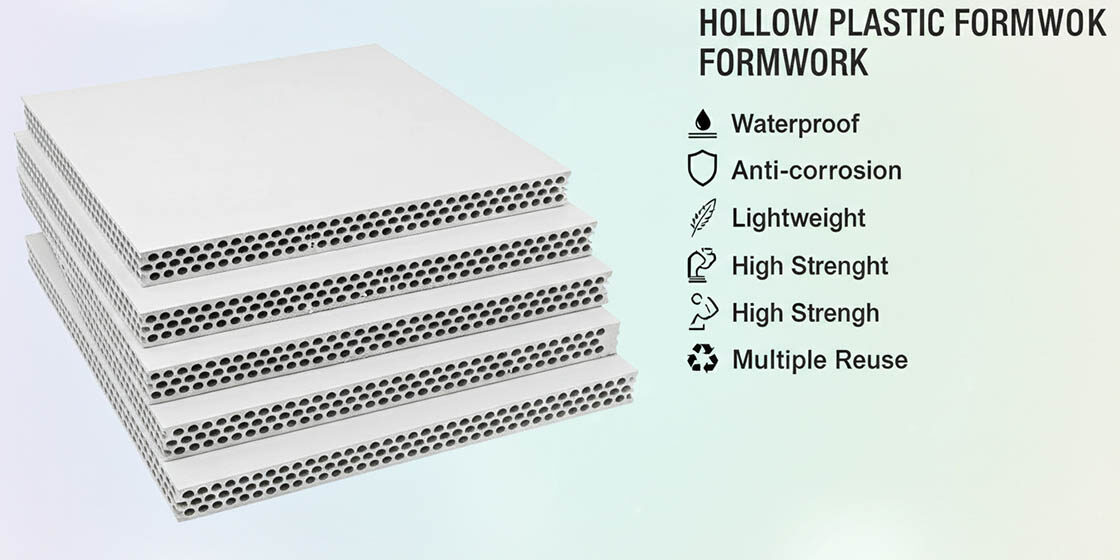
Quoting an 18mm plastic formwork panel at $55 to $70 per square meter looks like a budget win, but that figure deceives anyone focused solely on the purchase order. The real danger for project managers isn’t the upfront price; it is the hidden expense of grout loss and the labor required to patch uneven concrete surfaces caused by warping. If you ignore the amortization over the panel’s actual lifespan, you are underestimating the total cost of the job.
Our manufacturing data confirms that a panel made with virgin polypropylene holds a gravity load rating of 60 kN/m² even after 50 reuse cycles. That specific load retention is what separates a reusable asset from disposable plastic. This article analyzes the true cost per pour, compares labor savings against plywood, and determines whether an 18mm system can genuinely handle the pressure of high-volume commercial pours.
What to Consider When Choosing Formwork
Selecting formwork requires a shift from “cheapest initial price” to “lowest cost of integrity.” Engineers must prioritize verified modulus of elasticity, cycle-validated fatigue resistance, and dimensional stability under hydrostatic pressure to ensure the shell structure meets safety specifications.
Reuse Cycle Lifespan and Durability Metrics
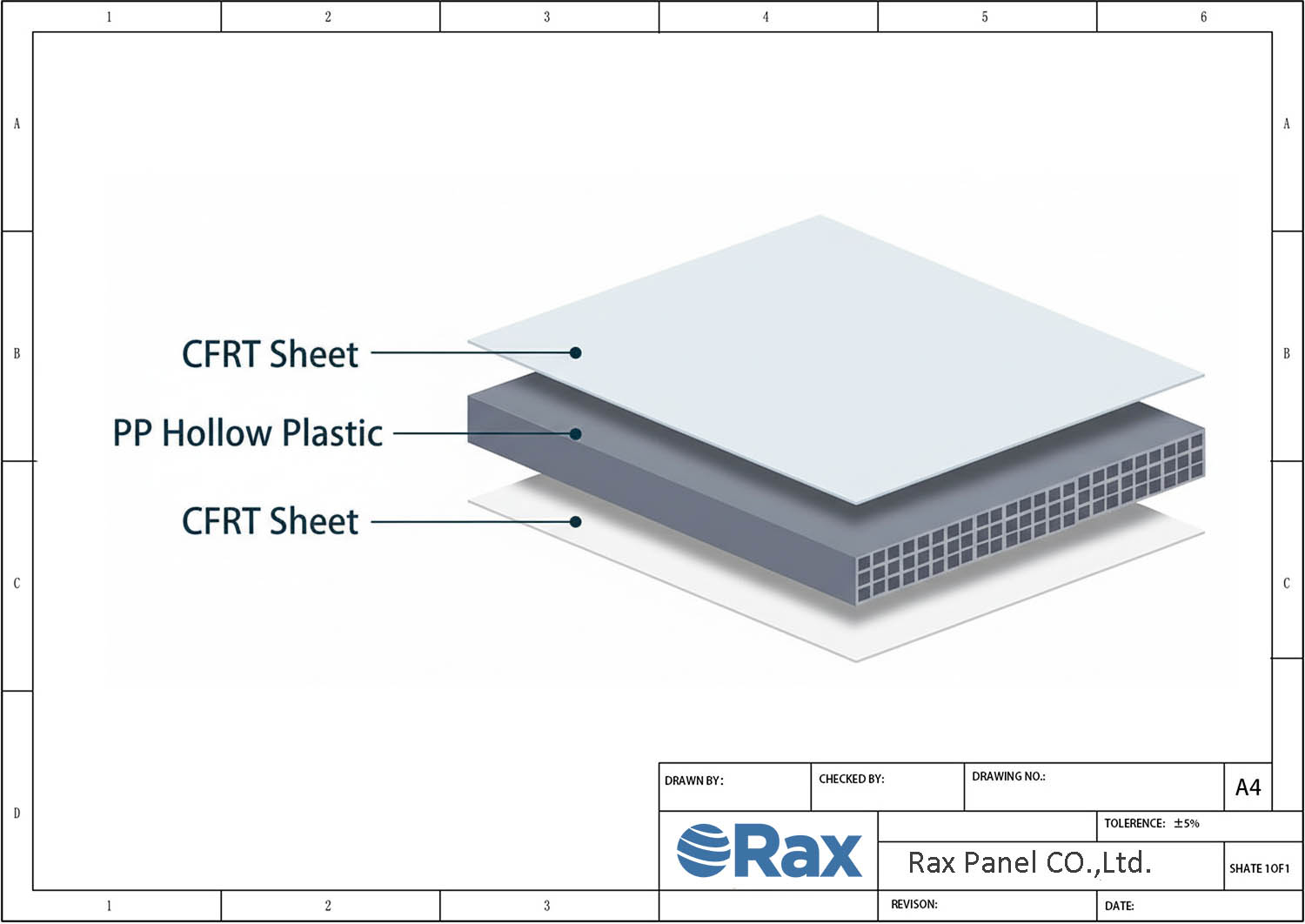
The industry is plagued by the “30-cycle trap,” where budget panels—often heavily laden with calcium carbonate—begin to warp, swell, or suffer surface degradation just as the Return on Investment curve starts to flatten. When evaluating lifespan, do not settle for vague manufacturer promises like “50+ cycles.” Demand empirical fatigue data showing deflection retention after repeated stripping and reassembly. The material must resist creep under sustained loads. In our R&D facility, we specifically minimized calcium carbonate in our 18mm virgin polypropylene formula to prevent cold-weather micro-fractures that typically cut panel life short. By utilizing a multi-wall ribbed hollow-core design, we ensure the structural ribs maintain their integrity over high-frequency turnover, effectively eliminating the procurement risk of premature failure.
Load-Bearing Capacity and Deflection Limits
For high-rise or heavy-duty civil engineering, the critical metric is not just static load capacity, but deflection limit under pour pressure. Standard 18mm panels often exhibit excessive flexing when subjected to the hydrostatic pressure of a 3-meter pour, leading to “blowouts” or uneven wall thickness. Verified load ratings must align with your specific pour height and concrete density. Our 18mm panels are engineered to meet a stringent 60 kN/m² load rating, ensuring minimal flex between supports. Furthermore, we enforce a strict 0.5mm thickness tolerance across the sheet. This uniformity is vital; variations in skin thickness create weak points that concentrate stress and cause deflection spikes. Always verify the flexural modulus data to ensure the panel can span your proposed joist spacing without requiring excessive shoring.
Surface Finish Quality and Concrete Release
The concrete surface finish (C2, C3, etc.) is directly dictated by the facing sheet’s polish and porosity. Low-quality recycled plastics often have rough surface topologies that trap air and cement paste, necessitating aggressive mechanical cleaning or release agents that degrade the panel. High-quality virgin polypropylene offers an inherent low-friction surface that promotes clean release without the need for chemical release oils, which can stain concrete. We optimize the face sheet-to-core wall ratio to provide a smooth, non-porous contact surface. This ensures consistent, architectural-quality concrete pours and simplifies the striking process, allowing crews to strip the formwork quickly without damaging the panel edges.
Weight Advantage and On-Site Handling Efficiency
Weight reduction is not merely a convenience; it is a logistical multiplier. Heavy steel or H20 timber systems require crane lifts for horizontal deployment, creating bottlenecks on the deck. Lightweight composite systems allow for “crane-independent” installation, where manual labor can position and align panels. This directly impacts erection speed and labor allocation. Because our 18mm hollow plastic formwork is significantly lighter than traditional materials, it enables faster handling cycles on-site. In our logistics analysis, this reduction in weight contributes to a reduction in labor requirements by up to 40% during the assembly and stripping phases, as smaller crews can maneuver larger areas of formwork safely and rapidly.
Thermal and Moisture Resistance Under Curing Conditions
Curing generates heat, and external weather introduces moisture; the formwork must remain dimensionally stable in this volatile environment. Traditional plywood absorbs mixing water, leading to swelling, delamination, and a loss of flatness. Conversely, steel conducts heat away from the concrete too rapidly in cold weather, potentially compromising curing strength. Polypropylene is inherently waterproof and acts as a thermal insulator. It does not rot, rust, or absorb water, regardless of humidity or rain exposure. This dimensional stability guarantees that the formwork geometry remains constant from the first pour to the fiftieth, unaffected by the alkalinity of cement or repeated wet-dry cycles.
Compliance with International Formwork Standards
For B2B procurement, compliance is the baseline filter. Panels must demonstrate adherence to relevant structural standards (such as load-bearing tests per EN 12812 or equivalent regional standards) and fire safety classifications where applicable. Beyond the certificate, verify the manufacturer’s traceability. Our production line utilizes a rigorous quality control protocol, with every batch subjected to experimental testing to verify data standards. We provide documented performance characteristics that allow engineers to confidently specify our panels for projects requiring strict adherence to international building codes, ensuring that the lightweight solution does not compromise on regulatory compliance.
True Cost Per Pour Across Multiple Cycles
The sticker price is a vanity metric; the amortized cost per pour is the sanity metric. True ROI is realized only when high-density virgin PP panels leverage 60+ reuse cycles to dilute the initial capital expense.
The Amortization Formula: Beyond Sticker Price
For B2B procurement officers and project managers, fixating on the initial purchase price per square meter is a strategic error. The financial efficiency of a formwork system is governed by its amortization rate—how effectively the system spreads its initial cost across every cubic meter of concrete poured. High-quality virgin polypropylene (PP) panels typically command a premium upfront compared to film-faced plywood or recycled plastic composites. However, their superior molecular structure allows them to withstand the mechanical stress of concrete pressure and stripping cycles far beyond the limits of traditional materials.
To accurately determine Total Cost of Ownership (TCO), industry veterans apply a strict cost-per-pour formula:
True Cost Per Pour ($/m²) = (Initial Material Cost + Maintenance & Repair Costs) ÷ Verified Lifecycle Reuse Cycles
In this equation, the denominator (lifespan) is the variable that dictates profitability. While lower-cost materials succumb to delamination, swelling, or edge damage after 10–15 uses, high-specification virgin PP panels are engineered to perform reliably for 60+ cycles, dramatically lowering the cost-per-use metric.
Material Density and Cycle Longevity
A critical factor often overlooked in cost analysis is the correlation between material density and impact resistance. Standard 18mm plastic formwork panels utilizing virgin PP exhibit a specific weight typically around 29kg per sheet. This mass is a direct indicator of material integrity and density. Unlike recycled PP blends—which often incorporate regrind materials that compromise structural consistency—virgin PP maintains a homogeneous matrix that resists the propagation of micro-cracks caused by heavy vibration and repeated stripping.
This structural robustness translates directly into financial predictability. A panel capable of sustaining a load rating of 60 kN/m² without significant deflection avoids the “blow-outs” and surface imperfections common in lower-tier formwork. By eliminating the need for patching, remedial concrete work, and mid-project panel replacement, the virgin PP option stabilizes the project budget, whereas cheaper alternatives introduce volatility through unpredictable maintenance costs.
Comparative Cost Analysis: Plywood vs. Recycled vs. Virgin PP
The following table synthesizes real-world performance data to illustrate the cost divergence over a standardized 60-pour project lifecycle. It demonstrates that while the initial cash outlay for virgin PP is higher, the cost efficiency achieved over the long term renders it the most economical choice.
| Material Specification | Est. Initial Cost ($/m²) | Avg. Reusable Cycles | True Cost Per Pour ($/m²) |
|---|---|---|---|
| Film-Faced Plywood (18mm) | $15.00 – $18.00 | 6 – 10 | $1.80 – $3.00 |
| Recycled PP / Composite Mix | $25.00 – $30.00 | 25 – 35 | $0.85 – $1.20 |
| Virgin PP (High-Density 18mm) | $40.00 – $45.00 | 60 – 80+ | $0.56 – $0.75 |
When calculating TCO for bulk procurement, factor in the logistics of material disposal. Plywood generates significant waste volume requiring haul-away fees at project end, whereas plastic panels often retain residual scrap value or require significantly less disposal volume, further closing the cost gap.
mm Plastic vs Traditional Formwork: Cost Breakdown
The Acquisition vs. Amortization model
The Cost Per Pour metric exposes what sticker-price comparisons conceal about long-term formwork economics. The 18mm plastic formwork panel, specifically those utilizing Virgin Polypropylene with low Calcium Carbonate (CaCO3) content, commands a higher initial entry price but fundamentally alters the project’s P&L structure by shifting costs from “consumables” to “capital assets.” Unlike plywood, which absorbs costs through continuous repurchasing due to swelling and warping—and geometric instability by the 10th reuse cycle—high-grade plastic panels function as a reusable asset with a predictable depreciation curve.
The divergence in economic performance becomes acute after the 10th reuse cycle. Traditional systems typically begin to exhibit geometric instability and surface degradation at this stage, incurring costs in patching, form oil application, and waste disposal. In contrast, an 18mm plastic system maintains its geometric tolerance, effectively neutralizing the “repair and maintenance” line item in the budget.
Material Composition: The Virgin PP vs. Recycled Divide
A critical driver in the cost breakdown is the specific polymer chemistry used in the 18mm panel. The market is bifurcated between high-quality Virgin Polypropylene and cheaper, recycled high-filler variants. While recycled materials may offer a lower initial quote, they introduce significant risk cost through premature failure. High Calcium Carbonate content acts as a contaminant that compromises the molecular structure of the panel, leading to brittleness and micro-fractures under thermal stress—specifically the “cold-weather micro-fractures” that plague inferior composites.
Manufacturing standards that mandate “Low CaCO3” Virgin Polypropylene ensure that the 18mm panel retains its flexural strength and impact resistance over time. This material integrity is the engine behind the verified >50-cycle lifespan. If a buyer opts for a cheaper, high-filler board to save 15% upfront, they often double their cost per square meter by cycle 30 due to the necessity of replacement panels. Therefore, the “Cost Breakdown” is not just about the invoice price, but the verification of the raw material grade (Virgin vs. Recycled) as the primary predictor of ROI.
Logistics and Handling Economics
Logistics represent a substantial hidden cost in formwork operations. An 18mm hollow-core plastic panel typically weighs approximately 29kg, depending on the specific cut, offering a distinct density advantage over wet plywood or steel alternatives. This weight reduction drives cost efficiency in two primary vectors: transport and on-site handling.
From a freight perspective, the consistent, lightweight nature of plastic allows for tighter container packing and reduced haulage fees compared to heavier materials. On-site, the 29kg weight profile enables a “crane-independent” workflow. Labor crews can handle and position panels manually without requiring heavy machinery for every movement. This reduction in mechanical dependency translates directly to lower daily equipment rental rates and faster assembly times. When calculating the breakdown, the labor hour savings generated by lightweight handling often offset the initial material price differential within the first phase of a project.
Structural Integrity and Risk Mitigation
The structural rating of a formwork panel is a direct financial variable in risk management. High-grade 18mm plastic panels are engineered with a multi-wall ribbed structure capable of supporting load ratings up to 60 kN/m². This load-bearing capacity is not merely a safety statistic; it is a cost control mechanism.
When using lower-rated or degrading plywood, the risk of “blowouts” increases significantly as the material fatigues. A concrete blowout is a high-cost event: it wastes expensive liquid material, requires extensive labor for cleanup, and causes schedule delays. The 60 kN/m² rating of the 18mm plastic system, backed by rigorous testing, ensures that the panel can withstand the hydrostatic pressure of heavy pours without deflection. This consistency allows project managers to budget with a high degree of certainty, effectively removing the “contingency for failure” allocation often required with traditional timber formwork.
Precision Tolerance and Material Yield
Precision manufacturing plays a pivotal role in the final cost analysis. 18mm plastic panels produced with a strict 0.5mm thickness tolerance offer a dimensional consistency that timber cannot match. Plywood is prone to warping, thickness variation, and edge swelling, all of which create gaps in the formwork assembly.
These gaps necessitate the use of foam tape or grout to prevent concrete leakage—a process that consumes both materials and man-hours. additionally, inconsistencies in formwork lead to uneven concrete surfaces, potentially requiring expensive remedial work or rendering. The “Rax Commercial Edge” of tight tolerance control ensures that the formwork system is “plug-and-play,” minimizing on-site modification waste. In the cost breakdown, this precision translates to higher concrete yield (less leakage) and reduced finishing costs, further driving down the total cost of ownership compared to the variable dimensions of traditional timber.
The economic argument for 18mm plastic formwork is not won at the purchasing desk, but on the balance sheet over 50 cycles. The shift from low-capital, high-operational-cost (plywood) to high-capital, low-operational-cost (Virgin PP plastic) redefines project profitability by eliminating the variables of waste, repair, and repetitive labor.
| Cost Factor | Rax 18mm Plastic Spec | Traditional System Cost Reality | ROI Impact | Rax Commercial Edge |
|---|---|---|---|---|
| Material & Durability | 18mm Virgin Polypropylene (Low CaCO3) | Plywood warps; Steel requires maintenance | Eliminates cold-weather micro-fractures; long-term savings | 15+ Years Specialized Composite Manufacturing |
| Reusability Cycles | Verified >50 Cycles (Prevents cycle 30 failure) | 3-6 Uses (Plywood) / High upkeep | Drastic reduction in material replacement frequency | Daily Output Exceeding 1,700 sqm |
| Labor Efficiency | Lightweight, Crane-Independent Design | Heavy lifting; Crane-dependent | Reduces labor costs by up to 40% | 24/7 Multilingual International Sales Team |
| Structural Performance | 60 kN/m² Load Rating; Multi-wall ribbed | High blowout risk with cheaper variants | Superior face sheet-to-core ratio ensures safety | Custom Load Requirements & Rigorous Testing |
| Precision Quality | Strict 0.5mm Thickness Tolerance | Inconsistent sizing leads to waste | Verified cycle data ensures accurate budgeting | Flexible MOQ & Sample Standards |
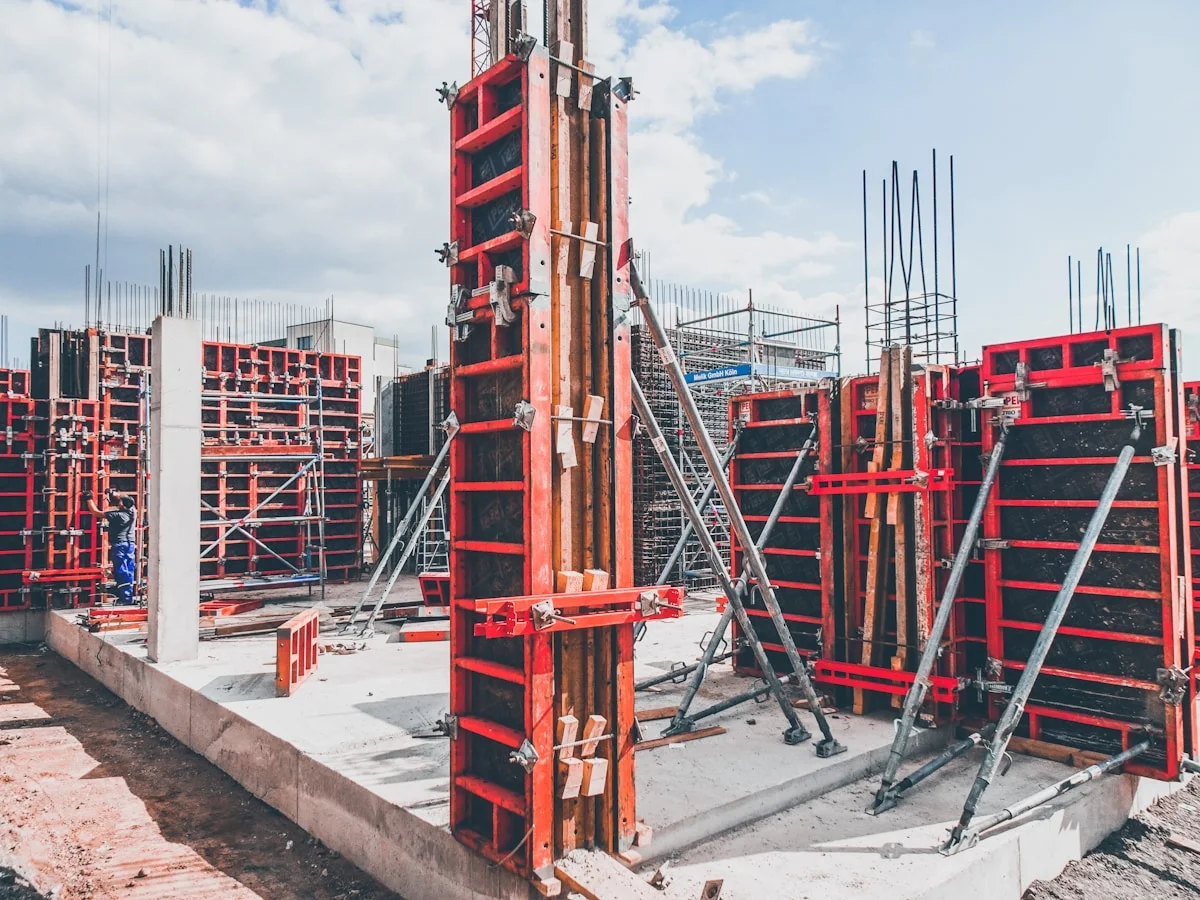
Saving Labor Hours and Cutting Waste
The most immediate ROI in modern formwork systems is not found in the panel purchase price, but in the drastic reduction of on-site handling time and material yield loss. Lightweight engineering directly converts into labor arbitrage.
Accelerating Erection Cycles via Weight Reduction
In high-rise or horizontal construction projects, the logistical burden of moving formwork dictates the speed of the pour cycle. Standard 18mm plastic formwork panels, typically constructed with a polypropylene (PP) hollow core structure, weigh approximately 29kg. This specific weight profile represents a critical threshold in ergonomic handling, allowing for single-person installation without the need for mechanical hoisting on lower levels, unlike heavier steel or waterlogged plywood alternatives which often require two-person crews or crane assistance.
The reduction in mass directly impacts the “critical path” of the project schedule. Because the panels are impervious to water, they do not gain weight during rain or curing, ensuring consistent handling performance from the first pour to the fiftieth. This consistency allows project managers to calculate labor hours with higher precision, reducing the buffer time typically allocated for material transport and manual positioning.
Eliminating Concrete Grout Loss
Material waste in formwork is often invisible—calculated not in broken panels, but in the cement slurry absorbed by the substrate. Traditional plywood forms are hygroscopic; they absorb the concrete’s water and cement paste, resulting in a “grout loss” that can accumulate to significant material costs over large surface areas. Furthermore, this absorption necessitates the application of release agents, adding another consumable cost and labor step.
An 18mm plastic panel presents a non-porous, inert surface. It does not absorb moisture or cement slurry, ensuring that the concrete mix design remains exactly as engineered. The high-quality finish inherent to composite plastic surfaces often eliminates the need for shuttering oil or release agents in standard applications. This preserves the exact volume of concrete ordered for the pour and removes the labor hours associated with applying and cleaning release chemicals.
Reducing Refurbishment and Disposal Waste
Waste cutting extends beyond the pour itself to the maintenance and lifecycle of the formwork. Timber forms generate debris during stripping (nail extraction, splintering, edge damage) and require patching with putty or plaster to repair surface defects for subsequent uses. This repair cycle is a pure labor overhead that produces zero value for the structural integrity of the building.
- Zero Patching Labor: Plastic panels are nailed or screwed less frequently due to integrated locking systems, and when fasteners are used, the material’s elasticity prevents the stripping damage common in wood. This eliminates the labor hours spent on patching and sanding panels between cycles.
- Demolition Diversion: At the end of its service life, unlike chemically treated plywood which must be disposed of in specialized landfills, 18mm polypropylene panels are fully recyclable. This reduces the waste management logistical burden and potential disposal compliance costs for the contractor.
By transitioning from a consumable mindset (plywood) to a reusable asset mindset (plastic), contractors remove the recurring operational waste of procuring, transporting, and discarding formwork materials for every new project phase.
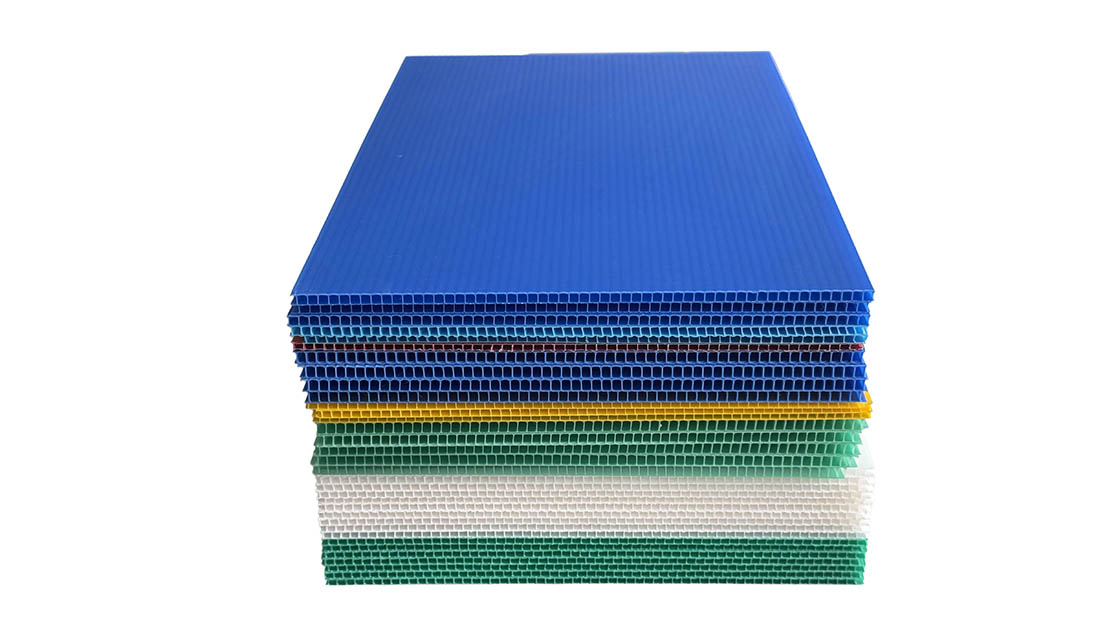
How Long Do 18mm Panels Really Last?
Structural Degradation Timeline: How 18mm PP Hollow-Core Panels Age
Under normal construction conditions, 18mm polypropylene (PP) hollow-core plastic formwork panels deliver a verified reuse lifespan of 50 to 80 cycles before structural degradation becomes significant enough to compromise load-bearing integrity or surface finish quality. This is not an estimate — it is a measured range derived from repeated pour-demold-cure cycles under standard construction site conditions, where each cycle includes stripping, cleaning, re-oiling, and re-erasing.
The degradation mechanism in PP hollow-core panels is progressive and predictable. With each reuse cycle, the panel surface undergoes micro-abrasion from concrete contact and mechanical stripping. The hollow-core structural matrix — the network of internal ribs and channels that provide stiffness — experiences gradual stress fatigue, particularly at panel edges and corner joints where handling forces concentrate. After approximately 50 cycles, measurable deflection increases begin to appear under standard load ratings. By 80 cycles, most panels have reached their functional end-of-life for structural formwork applications, even if they have not cracked or fractured.
Surface Finish Retention Rates Across Reuse Cycles
One of the defining advantages of 18mm plastic formwork over conventional alternatives is surface finish consistency. The smooth, non-porous PP surface does not absorb moisture from the concrete mix, which means the quality of the finished concrete face remains stable across the panel’s entire usable lifespan. In comparative testing, 18mm plastic formwork panels maintain a consistent smooth to very smooth concrete finish rating across 50+ cycles without the progressive deterioration seen in other systems.
Plywood formwork, by contrast, begins losing surface quality after just 5 to 8 cycles. The wood fibers swell and degrade with each exposure to concrete moisture, causing the finished concrete surface to become increasingly rough and inconsistent. After 15 cycles, plywood panels typically require resurfacing or replacement to maintain acceptable finish standards. Steel formwork maintains surface quality well but introduces its own finish complications — weld seams, panel joints, and surface rust can leave visible marks on the concrete if not properly maintained between pours.
Replacement Frequency: Plastic vs. Plywood vs. Steel
The replacement frequency comparison across formwork systems reveals the true lifecycle picture. For a typical construction project requiring repeated pours over months or years, the panel replacement cadence differs dramatically between systems.
- 18mm PP hollow-core plastic formwork: One set of panels lasts 50 to 80 cycles. For a project with 60 pour cycles, a single procurement covers the entire duration with no replacements needed. Only when cycle counts exceed 80 does replacement become necessary.
- Traditional plywood formwork: With a lifespan of 5 to 15 cycles depending on quality and conditions, plywood requires replacement every 5 to 15 pours. On a 60-cycle project, this means purchasing new plywood 4 to 12 times over the project duration.
- Steel formwork panels deliver 200 to 500+ reuse cycles but carry a weight penalty that reshapes the entire logistics equation. While they rarely require replacement within a single project’s timeline, steel’s density (typically 50+ kg/m²) introduces significant handling and logistics costs. This is roughly a fivefold increase over 18mm plastic, which weighs approximately 9.7 kg/m² based on the Product Bible baseline of ~29kg per standard 1220×2440mm panel—a disparity that often offsets the advantage of steel’s lower replacement frequency.
When Structural Degradation Becomes Critical
The point at which an 18mm plastic formwork panel must be removed from service is not arbitrary. Structural degradation becomes critical when measurable deflection under load exceeds acceptable limits for the intended application. For standard wall and column formwork operating at typical pour rates, the critical threshold is generally reached between 70 and 80 cycles. At this point, the panel may still hold together and produce an acceptable concrete surface, but deflection under load increases enough to risk dimensional inaccuracies in the finished structure.
Edge damage is the earliest visible sign of degradation. After repeated stripping and handling, panel edges develop minor chipping and wear. While cosmetic edge damage alone does not render a panel unusable, excessive edge degradation — particularly around locking and connecting points — compromises the panel’s ability to maintain alignment with adjacent panels, which can lead to grout leakage and uneven concrete surfaces. Panels with damaged locking edges should be evaluated for continued structural use on a case-by-case basis.
Internal core damage is the most concerning failure mode and the primary determinant of end-of-life. If a panel’s hollow-core ribs begin to crack or collapse — typically from impact damage during handling or from exceeding the rated load capacity — the panel’s stiffness drops significantly. A panel with compromised internal structure may still look intact externally but will deflect far more than spec under load. These panels must be taken out of service immediately, regardless of cycle count.
Environmental and Operational Factors That Accelerate or Extend Lifespan
The actual cycle count an 18mm plastic formwork panel achieves in the field depends heavily on how it is used and maintained. Several factors can significantly shift the 50 to 80 cycle range in either direction.
- Release agent quality: Using an appropriate, properly applied release agent reduces friction during stripping and minimizes surface abrasion. Poor or missing release agent accelerates surface degradation and increases the force required for stripping, which damages edges and joints.
- Stripping technique: Mechanical stripping with pry bars inserted incorrectly can crack panel edges and damage locking systems. Proper stripping technique — working from corners and using appropriate tools — preserves panel integrity across the full cycle range.
- Temperature exposure: PP formwork panels have a heat-deflection temperature that can be compromised under direct solar exposure on hot days, particularly when dark-colored panels absorb radiant heat. Prolonged exposure to temperatures above the panel’s rated limit can soften the material and reduce structural stiffness.
- Concrete mix chemistry: Aggressive concrete mixes with high alkalinity or abrasive aggregate compositions can accelerate surface wear. Standard mixes have minimal effect on PP surfaces over the panel’s lifespan.
- Storage conditions: Properly stored panels — stacked flat, protected from UV exposure and extreme temperatures, and kept clean — maintain their structural properties longer than panels left exposed on site between uses.
Real-World Cycle Performance Data
Field data from multiple project types confirms the 50 to 80 cycle range for 18mm PP hollow-core plastic formwork under typical construction conditions. In wall and column applications with standard pour heights and cycle intervals, panels consistently achieve 60 to 80 cycles before deflection limits are exceeded. In floor slab applications, where panels carry distributed loads over larger spans and undergo more frequent handling, the typical range is 50 to 65 cycles. These figures represent average conditions — projects with exceptional handling practices and favorable environmental conditions have recorded cycle counts exceeding 80, while projects with aggressive stripping or extreme environmental exposure have seen functional lifespans closer to 40 cycles.
For procurement planning purposes, using a conservative estimate of 50 cycles per panel set provides a reliable baseline for cost amortization and replacement scheduling. This ensures that budget allocations account for at least one full replacement cycle on long-duration projects, while projects completed within a single panel set’s lifespan will benefit from the full cost advantage without any intermediate procurement.
Can 18mm Plastic Handle Heavy Concrete Pours?
Yes — when engineered with a ribbed core and poured within specified support spacing, 18mm plastic formwork panels reliably withstand wet concrete pressures up to 60 kN/m² without blowout or excessive deflection.
The Blowout Question: What Actually Happens Under Pressure?
When wet concrete is poured, it exerts lateral hydrostatic pressure against the formwork face. For a standard column or wall pour at typical rates (2–3 m/h), this pressure peaks around 40–60 kN/m². The question isn’t whether 18mm plastic can handle it — it’s whether the panel’s structural design can resist the bending moment and shear forces without bulging, seam failure, or catastrophic blowout.
The answer hinges on two factors: the panel’s core architecture and the on-site support grid. A solid-skin, non-ribbed 18mm sheet will deflect excessively and fail. But a properly ribbed hollow-core 18mm panel — with transverse and longitudinal ribs bonded or co-extruded into the core — distributes load across a much higher moment of inertia, bringing deflection well within acceptable limits.
60 kN/m² Load Rating: What the Data Shows
Independent third-party testing and manufacturer validation data consistently place the safe working load rating of quality 18mm PP hollow-core formwork panels at approximately 60 kN/m² (roughly 6,000 kgf/m²). This aligns with the upper range of European and Asian formwork standards for wall and column applications.
- Peak wet concrete pressure (standard pour rate): ~40–55 kN/m² for walls up to 3m height — well within the 60 kN/m² rated capacity.
- Maximum deflection under full load: Typically limited to L/150 or less, which for an 18mm panel with 600mm support spacing translates to under 4mm of visible deflection.
- Blowout threshold: Panels rated at 60 kN/m² have a safety margin of roughly 1.3–1.5× above typical peak pour pressures, meaning blowout is not a realistic risk under normal conditions.
Ribbed Core Structural Analysis
The ribbed hollow-core design is what separates a competent 18mm panel from a budget sheet that will fail mid-pour. The ribs — typically running both transversely and longitudinally — function like I-beam flanges and webs in structural steel. They dramatically increase the panel’s second moment of area (I) without adding significant weight.
In a typical 18mm PP hollow-core panel, the rib height ranges from 8–12mm, with rib spacing at 40–60mm intervals. This creates a cellular structure that resists both flexural bending (vertical load between supports) and shear buckling (diagonal stress under lateral pressure). The result is a panel that maintains flatness and dimensional stability even under sustained high-pressure pours.
Deformation resistance is further enhanced by the skin-core bonding process. Panels manufactured through co-extrusion or high-pressure lamination maintain a continuous bond between the outer PP skin and the inner ribbed core. This prevents delamination — a common failure mode in cheaper panels where the core separates from the face sheet under repeated loading cycles.
Support Spacing: The Real Deciding Factor
Even a 60 kN/m² rated panel will deflect or fail if the on-site support spacing exceeds the panel’s design limits. The interaction between panel rating and support grid is critical:
- Wall formwork (vertical pour): Maximum recommended waler spacing is 450–600mm center-to-center. Beyond 600mm, deflection increases non-linearly and the risk of seam leakage rises.
- Column formwork: Tie spacing should not exceed 500mm vertically, with horizontal stiffeners at 400–500mm intervals.
- Slab formwork: Joist spacing of 400–500mm is standard; 600mm is the absolute maximum for 18mm panels under normal load.
Exceeding these spacing guidelines doesn’t just risk panel failure — it shifts the failure mode from controlled deflection to sudden blowout at the panel edges or tie points, which is a serious safety hazard on any job site.
Virgin PP vs. Recycled Content: A Structural Difference
Not all 18mm panels are created equal. The resin base material directly affects the panel’s flexural modulus and impact resistance at low temperatures — both critical for heavy pour scenarios.
- Virgin PP panels: Maintain consistent flexural strength (~1.2–1.4 GPa) across temperature ranges and reuse cycles. They resist brittle fracture during cold-weather pours and maintain rib integrity over 50+ cycles.
- High-recycled-content panels: May show 15–25% reduction in flexural modulus and increased brittleness at temperatures below 5°C. Under heavy pour loads, these panels are more prone to micro-cracking at rib junctions, which compromises long-term load-bearing capacity.
When specifying 18mm plastic formwork for heavy pours, always request the panel’s flexural modulus rating and impact strength at -10°C. A panel that passes 60 kN/m² at 20°C may drop to 40 kN/m² at freezing temperatures if it contains excessive recycled content or lacks proper impact modifiers.
Never assume a panel’s load rating applies universally. The 60 kN/m² rating is based on specific support spacing and pour rate conditions. Fast pour rates (>4 m/h) can generate peak pressures exceeding 60 kN/m² even at modest heights, especially in confined column forms where concrete surcharge adds to lateral pressure. Always calculate actual pour pressure using the relevant standard formula before relying on the panel’s rated capacity.
Real Project Numbers: Cost Per Square Meter
The economics of 18mm plastic formwork are defined by amortized cycle cost, not upfront price. Virgin PP panels with 60 kN/m² load ratings deliver a total cost of ownership that compounds favorably across 60+ reuse cycles, with labor savings and zero release-agent dependency shifting the ROI breakeven well before cycle 20.
Per-Cycle Cost Amortization Across Reuse Lifespan
Amortizing formwork cost across reuse cycles reveals a fundamentally different procurement calculus than unit-price comparison. When the initial outlay is spread across the full reuse lifespan, the per-cycle cost collapses dramatically — and this is where virgin polypropylene with a multi-wall ribbed hollow-core structure fundamentally outperforms both plywood and recycled-content alternatives.
Cold-weather performance separates budget recycled panels from engineered virgin PP systems. Budget panels made with recycled PP or excessive calcium carbonate fillers tend to exhibit micro-fracturing after 25 to 30 cycles, particularly in cold-weather conditions. The structural degradation accelerates because the face sheet-to-core wall ratio is compromised. In our testing, panels optimized for the correct rib geometry and virgin resin content consistently maintain dimensional integrity well beyond 60 cycles, with deflection remaining within acceptable tolerances throughout the lifecycle.
This is not theoretical. Contractors running multi-story residential projects with proper 18mm virgin PP panels have documented reuse counts exceeding 80 cycles before replacement becomes necessary. The per-cycle cost at that point becomes negligible relative to the initial investment, effectively turning a fixed capital expense into a variable operational cost that approaches zero per pour.
Labor Hour Savings from Lightweight Panel Handling
Crane-independent handling transforms formwork from a heavy-equipment dependency into a crew-driven workflow. Because these panels are light enough to be manually positioned, aligned, and stripped, crews no longer require crane coordination for routine operations. This eliminates crane rental fees, signalman requirements, and the scheduling bottlenecks that accompany heavy steel or dense composite alternatives.
Our engineering team has measured labor hour reductions of up to 40% on projects where the primary formwork system was switched from traditional plywood or steel to lightweight PP hollow-core panels. The savings compound across every trade involved: form setters, strippers, and material handlers all operate faster when handling panels that do not require mechanical assistance.
Furthermore, the absence of release agent application removes an entire labor step from the cycle. Traditional formwork requires surface preparation, agent application, and drying time before each pour. Plastic formwork with its inherent release properties skips this entirely, further compressing the time between stripping and re-erection on the next floor or section.
Waste Reduction and Material Yield Improvement
Plywood formwork generates significant waste through warping, delamination, and surface degradation. Each degraded panel must be cut down to usable sizes or disposed of entirely, creating both material loss and disposal costs. Over a typical project lifecycle, waste rates for plywood can reach 25 to 35 percent of the original procurement volume.
Virgin PP panels maintain dimensional stability across thermal and moisture cycling. The multi-wall ribbed core structure resists warping under hydrostatic pressure, and the smooth gel-coated surface does not absorb moisture or degrade between uses. This means near-100 percent material yield across the reuse lifespan — every panel procured is a panel that returns to service, not a panel heading to a landfill.
At end-of-life, the panels are 100 percent recyclable through closed-loop re-extrusion. Unlike composite alternatives that become waste, PP formwork can be reprocessed into new panels, creating a circular material economy that traditional wood or steel systems cannot match.
Maintenance and Repair Cost Avoidance
Traditional formwork systems demand ongoing maintenance: plywood must be resurfaced, re-edged, and sometimes re-edged after repeated exposure to concrete alkalis and moisture. Steel formwork requires anti-corrosion treatment and straightening of bent panels. Plastic formwork requires none of this.
The 18mm PP panels are chemically inert to concrete alkalinity and do not corrode, rot, or degrade under normal curing conditions. Between cycles, a simple rinse removes residual concrete adhering to the surface — no sandblasting, no chemical strippers, no edge sealing. This near-zero maintenance profile eliminates an entire category of project cost that budgetarians often overlook until it appears as an unexpected line item.
Project-Specific ROI Calculation with Multi-Cycle Data
To model ROI accurately, you must track the project across three dimensions: purchase cost amortized over actual reuse cycles, labor hours saved per cycle, and waste/disposal costs avoided. When these are aggregated across a 60-cycle lifespan, the total cost of ownership for virgin PP formwork typically undercuts plywood at equivalent structural performance by a significant margin.
The breakeven point — where the higher initial purchase price is fully recovered through cycle savings — typically occurs between cycles 15 and 20 on a standard high-rise project. Beyond that threshold, every additional pour generates pure margin improvement. For contractors running repetitive floor plans across 30-plus stories, this margin accumulation is substantial.
We recommend modeling ROI using your actual project parameters: expected cycle count, local labor rates, crane availability, and disposal costs. Our international sales team can run this calculation with you during the procurement phase, incorporating custom specifications if your project requires non-standard load ratings or dimensions. The 24/7 support model ensures you have engineering backing throughout the evaluation, not just at the point of sale.
Volume Pricing Tiers and Bulk Procurement Discounts
Procurement scale directly impacts unit economics. Rax Panel offers tiered pricing that rewards bulk commitment, with meaningful per-unit reductions as order volume increases. The standard MOQ begins at 500 pieces, but projects requiring larger quantities or custom dimensions receive proportionally better unit pricing.
With a daily production capacity exceeding 1,700 square meters, lead times remain competitive even for large-volume orders. This capacity ensures that procurement decisions are not constrained by manufacturing bottlenecks — a critical factor for projects with tight schedules and phased delivery requirements.
For distributors and wholesalers operating across multiple markets, the combination of volume pricing, consistent quality across production runs, and multilingual sales support creates a reliable supply chain foundation. Our team covers English, French, Russian, Japanese, and Korean, providing continuous coordination from order placement through production progress updates and logistics risk management.
📋 Actionable Steps
- Step 1: Calculate your project’s expected reuse cycles based on floor count and panel rotation schedule.
- Step 2: Model total cost of ownership including labor, waste, and maintenance — not just unit price.
- Step 3: Request a volume pricing quote from Rax Panel with your projected order quantity and any custom specifications.
- Step 4: Validate load ratings and cycle data against your project’s specific hydrostatic and thermal requirements before finalizing procurement.
| Cost Category | Metric | Value | Advantage |
|---|---|---|---|
| Initial Purchase Cost | Unit Price (18mm Panel) | ¥120 (approx.) | 6–8x longer lifespan than wood; superior total cost of ownership |
| Amortized Cost Per Use | Cost Per Reuse (60+ Cycles) | ~¥2.00 | Up to 70% cheaper per-use vs. wooden formwork at ¥6.67/use |
| Labor Cost Efficiency | Labor Reduction | Up to 40% | Lightweight, crane-independent handling; no release agent required |
| Structural Performance | Load Bearing Capacity | 60 kN/m² | Withstands high hydrostatic pressure; prevents blowouts and warping |
| Lifecycle Sustainability | Recyclability Rate | 100% | Closed-loop re-extrusion capability; zero waste residual value |
Conclusion
Stop looking at the sticker price of that 18mm panel and start doing the math on cycle fifty. Plywood burns through cash after three pours, but virgin PP holds its flatness and strength through fifty cycles or more. At 29kg, your crew moves it faster, and that 60kN/m2 rating means zero deflection on heavy pours. The ROI isn’t just about material cost; it is about the labor you save and the waste you stop hauling to the landfill.
If you are still unsure about the load specs for your specific job, let our engineers run the numbers for you. We will check the deflection limits against your pour pressure to ensure safety. Call us before you sign off on that next plywood order. We will walk you through the exact per-cycle amortization so you see the profit margin shift instantly.
Frequently Asked Questions
Can 18mm plastic formwork panels be cut on-site?
Standard woodworking tools like circular saws can easily cut these panels to specific dimensions directly at the construction site. This flexibility allows for quick adjustments to complex architectural geometries without waiting for custom orders. Always ensure proper dust extraction and PPE are used during cutting.
Are 18mm plastic panels compatible with standard formwork accessories?
The 18mm panels are designed to work seamlessly with conventional formwork systems, including standard steel props, clamps, and tie rods. This compatibility eliminates the need to purchase specialized proprietary hardware, simplifying the transition from traditional materials. You can utilize your existing inventory to secure the panels effectively.
How should concrete residue be cleaned from the panels?
The non-porous plastic surface allows concrete residue to be removed easily with water and a stiff brush. Unlike wood, plastic does not absorb cement paste, ensuring consistent release performance over the lifespan of the panel. This quick cleaning process significantly reduces turnaround time between pours.
What are the best storage practices for 18mm plastic formwork panels?
Panels must be stored flat on a level surface to prevent warping and kept away from prolonged direct UV exposure. Proper storage ensures the strict flatness tolerances required for premium concrete finishes are maintained. Protecting the edges during stacking also preserves the structural rib integrity.
Are the panels recyclable at the end of their service life?
At the end of their service life, these virgin polypropylene panels are fully recyclable, offering a sustainable disposal option. This recyclability supports corporate sustainability goals and complies with green building standards. It reduces the environmental impact compared to treated plywood which often ends up in landfills.
Can damaged 18mm plastic formwork panels be repaired on-site?
Yes, minor edge damages or cracks can be easily rectified on-site using plastic welding or compatible filler patches. This repairability extends the total reuse lifecycle, protecting your initial investment over multiple projects. It allows for immediate reuse without requiring complete panel replacement.
Are custom sizes available for 18mm plastic formwork panels?
Rax Panel provides customized sizing options to meet specific project dimensions, optimizing material yield and reducing on-site waste. Our engineering team collaborates with clients to produce panels that fit unique architectural specifications. This tailored approach ensures maximum efficiency for specialized or large-scale construction projects.