
Sourcing Aluminum Foam Sandwich Panels often comes down to a single, risky calculation: how much structural integrity can you sacrifice for weight reduction? Spec sheets claim high strength, but the critical failure point usually lies in the core density consistency. Standard closed-cell foam cores typically operate within a density range of 40 to 100 kg/m³. That specific window determines if you get a rigid industrial panel or a flexible partition.
This analysis moves beyond marketing claims to examine panel architecture, the specific fire resistance ratings for PUR versus PIR cores, and the delamination risks inherent in different bonding techniques. You will gain the technical criteria needed to verify material traceability and surface treatment durability. This protects your supply chain from warranty claims caused by structural fatigue.
Summary: Specifying core density and bonding methods prevents delamination and fire compliance failures in high-stress applications.

Panel Architecture and Bonding Methods
Panel longevity is determined by precise face-to-core geometric relationships and certified adhesive chemistry, not just raw material density.
Face Sheet Thickness and Flexural Rigidity
In aluminum and metal-faced sandwich panels, increasing the total thickness—driven primarily by the rigid face sheets rather than the core—is the most effective way to significantly increase the Moment of Inertia ($I$). This relationship directly dictates the panel’s flexural rigidity (stiffness).
Thick aluminum skins function as the primary tension and compression members in structural applications, bearing the majority of bending loads. Rax Panel enables the customization of face sheet materials—including Aluminum and GRP—and thicknesses to optimize the stiffness-to-weight ratio for specific vehicle or building spans. For a current engineering read on vehicle programs, the aluminum foam sandwich in car bodies guide sorts the wins from the waits.
Ex-Situ Bonding for Delamination Prevention
To eliminate the primary risk of structural failure—face-core delamination—the industry standard relies on ex-situ bonding. This involves applying a high-performance structural adhesive film between the pre-fabricated skin and the core before the panel undergoes its final lamination.
Ex-situ bonding employs high-performance structural adhesive films to prevent delamination, avoiding the voids and shrinkage associated with liquid injection methods. This industry-standard process, supported by Rax Panel’s advanced composite panel production line and installation guides, ensures films melt and flow uniformly under pressure, creating a chemically inert, gap-free molecular bond across the entire panel surface.
Always specify structural adhesive films rated for thermal cycling. In mobile environments (RVs and trucks), the adhesive must withstand repeated expansion and contraction cycles without losing its shear strength.
Impact of Core Porosity on Stability
Core porosity acts as a fundamental control variable for both compressive stability and shear transfer. An open-cell or inconsistent porous core allows the skins to buckle inward under load, destroying the panel’s integrity.
We enforce strict manufacturing tolerances on the foam expansion and honeycomb cell geometry. By maintaining a highly closed, uniform pore structure, the core provides 100% continuous vertical support, preventing localized skin collapse and ensuring the adhesive layer bears zero mechanical shear.
Core Structure, Density, and Thickness Criteria
Structural efficiency is not achieved by maximizing material mass, but by precisely calibrating core density and thickness to resist shear while maximizing the distance between face sheets.
Core Structure Mechanics
How to Choose the correct core structure is fundamental to preventing panel failure modes such as shear crimping or face sheet wrinkling. Unlike honeycomb cores which offer high stiffness in specific directions, aluminum foam provides isotropic properties, meaning it delivers consistent energy absorption and impact resistance regardless of load direction. This structural uniformity makes it ideal for complex loading scenarios found in industrial flooring and vehicle armor, where stress points are unpredictable and multidirectional.
Density Criteria and Shear Modulus
Core density is the primary driver of a panel’s shear modulus. While low-density foams reduce overall weight, they often lack the shear strength required to support stiff face sheets under high bending loads, leading to premature core failure. Conversely, excessively high density negates the weight-saving advantages of the sandwich structure. The engineering challenge lies in identifying a density window where the core provides sufficient shear rigidity without adding unnecessary mass.
In our experience, generic suppliers often push standard density grades to simplify inventory, but this compromises performance in critical applications. Our R&D team conducts specific experimental testing for every project to tailor the density of our PMI, XPS, and PET cores. By adjusting the cell structure and density to your exact load requirements, we ensure the panel maintains its structural integrity without the dead weight of over-engineered materials.
Thickness and Stiffness Efficiency
Increasing the core thickness is the most efficient method to significantly boost the panel’s flexural rigidity without a linear increase in weight. By separating the face sheets further apart, the moment of inertia increases significantly, allowing the panel to withstand higher loads. However, simply adding thickness introduces risks of buckling if the core lacks the compressive strength. Therefore, thickness specifications must be calculated in tandem with core density to ensure stability.
Rax Panel leverages of manufacturing experience and an advanced production line covering more than 1,700 square meters to deliver precise thickness tolerances. We do not rely on standard templates; our engineers customize the core thickness to optimize the stiffness-to-weight ratio for your specific application. Whether it is for lightweight RV walls or heavy-duty industrial flooring, we design the core geometry to meet your rigorous data standards.
| Material Type | Density Range | Thickness | Key Advantage |
|---|---|---|---|
| Aluminum Foam Core | Variable (Lightweight) | Customizable | High Strength-to-Weight Ratio |
| Honeycomb Core (PP/Fiberglass) | Low to Medium | Standard/Custom | Exceptional Rigidity |
| Foam Core (XPS/PET/PU/PVC/PMI) | Variable | Wide Spectrum | Thermal Insulation & Waterproofing |
| Sandwich Panel Composite | Optimized for Load | Tailored to Application | Structural Integrity & Durability |
| Specialized Cores (Rockwool/PIR) | High Density Options | Fire-Rated Standards | Fire Safety Compliance |
Balancing Weight, Strength, and Insulation
High-density closed-cell aluminum foam cores provide the optimal balance of compressive strength, thermal insulation, and significant weight reduction.
The Closed-Cell Aluminum Foam Advantage
Achieving a high strength-to-weight ratio without compromising structural integrity is the primary engineering challenge in vehicle and marine manufacturing. At Rax Panel, we utilize closed-cell aluminum alloy foams to solve this dilemma. Unlike open-cell alternatives that allow moisture penetration and degrade thermal performance, our closed-cell architecture traps inert gas within rigid aluminum struts. This creates a material that delivers exceptional stiffness-to-mass ratios and high energy absorption capacity under compression.
For buyers managing cold chain logistics or high-speed vessel manufacturing, the trade-off between weight savings and insulation efficiency is critical. Our aluminum foam sandwich panels effectively mitigate this conflict. By integrating these high-performance cores with durable aluminum face sheets, we create panels that act as both a structural load-bearer and an advanced thermal barrier. This dual functionality significantly reduces the overall weight of refrigerated trailers and RV walls, directly improving fuel economy and cargo payload capabilities.
When calculating structural loads, remember that closed-cell foam cores excel in compressive strength rather than shear strength. For roof panels subjected to heavy dynamic loads, pair our standard density foam cores with thicker 0.5mm aluminum face sheets to maximize flexural rigidity.
Optimizing the Insulation-to-Weight Trade-off
Engineers frequently question whether lightweighting sacrifices thermal resistance. In reality, aluminum foam offers a sophisticated equilibrium. We customize core densities to match specific thermal conductivity (k-value) requirements for your target market. Whether you are designing mobile home walls or specialized aircraft interiors, our closed-cell foam provides superior resistance to heat transfer compared to traditional solid metals, while weighing a fraction of steel equivalents.
By leveraging production lines, our team conducts experimental testing to dial in the exact balance of porosity and aluminum matrix strength. This ensures that every panel shipped meets the stringent demands of European and North American transport standards, eliminating the need for excessive insulation layers that would add unwanted weight to your fleet.
Thermal Performance and Fire Resistance
Achieving optimal thermal efficiency without compromising fire compliance requires selecting cores based on chemical stability and material structure, not just insulative thickness.
A critical pain point in procurement is the misconception that all polymer foam cores offer equivalent fire safety. In reality, the chemical distinction between standard Polyurethane (PUR) and Polyisocyanurate (PIR) is the deciding factor for regulatory approval.
While PUR provides excellent initial thermal insulation, it can soften and melt at lower temperatures. Conversely, PIR is engineered with a modified chemical structure that forms a protective char layer when exposed to high heat, significantly delaying flame propagation and meeting stricter building codes.
Treat PIR cores as your insurance policy against code failures. While the upfront material cost may be slightly higher than standard PUR, the superior fire resistance drastically reduces the risk of project rejection during safety audits. In our of production, we have seen that specifying PIR upfront saves significant costs on retrofits and penalties.
Aluminum Foam vs. Polymer Foams: The High-Heat Threshold
When evaluating the trade-off between insulation efficiency and fire resistance, buyers must weigh the properties of polymer foams against metallic options like aluminum foam. Polymers excel at minimizing heat transfer due to their extremely low thermal conductivity, making them ideal for refrigeration.
However, aluminum foam offers a distinct advantage in extreme fire scenarios: it is non-combustible. With a melting point reaching approximately 660°C, aluminum foam cores do not release toxic fumes or add fuel to a fire, making them essential for high-risk industrial zones or engine compartments.
Do not focus solely on flame spread ratings. In confined spaces like RVs or vessels, smoke density is the primary lethal factor. Ensure your selected core carries a low smoke generation rating (s1) rather than the standard (s2) to maintain visibility and allow safe egress during an emergency.
At Rax Panel, we integrate this safety philosophy directly into our R&D and manufacturing. Our engineers conduct experimental testing to verify that our PIR and specialized foam cores maintain structural integrity while limiting smoke output. By offering a diverse range of core materials—from XPS to aluminum foam—on our advanced production lines, we allow you to engineer panels that specifically balance the U-value requirements of the project against the rigors of fire safety compliance.
| Feature | Specification | Advantage |
|---|---|---|
| Fire Resistance Ratings | PIR Core: Class B-s1,d0 / Class A2; PUR Core: Class B-s2,d0 | Meets stringent international building codes and safety regulations |
| Thermal Conductivity (Lambda) | 0.022 W/m·K (PU/PUR); 0.024 W/m·K (XPS) | Minimal heat transfer ensures consistent interior temperatures |
| Thermal Insulation (U-Value) | 0.18 W/m²K to 0.25 W/m²K (depending on core thickness) | Superior energy efficiency for HVAC load reduction |
| Flame Spread Index | < 25 (ASTM E84 Standard) | Slows fire propagation, providing critical evacuation time |
| Smoke Density Rating | s1 (Low smoke generation) | Maintains visibility during emergencies for safer egress |
Application Requirements: Architectural vs Industrial
Architectural projects prioritize long-term weather resistance and visual uniformity, while industrial applications demand high strength-to-weight ratios and energy absorption capabilities.
Architectural Application Demands
In architectural settings, such as exterior wall cladding or interior partitioning, the primary requirements center on environmental durability and aesthetics. These panels are static structural elements that must withstand UV exposure, thermal cycling, and moisture without degrading. Here, surface finish is critical; minor cosmetic imperfections that are acceptable in a truck body are unacceptable on a building facade.
We often recommend GRP sheets with gelcoat finishes for these projects because they provide the necessary waterproof, flat, and smooth surface properties that architects specify. Our of production experience has taught us that color consistency across large batches is a non-negotiable requirement for this sector to avoid visual discontinuity.
Industrial Application Demands
Industrial sectors such as RVs, refrigerated trucks, and vessels require dynamic stress resistance, prioritizing mechanical performance and payload efficiency. For these applications, we typically engineer CFRT Sandwich Panels or Aluminum Honeycomb Panels to maximize structural reliability against continuous vibration, impact from road debris, and harsh marine environments. To meet the high-volume demands of industrial fleets, our advanced composite panel production line ensures consistent quality, supported by our professional international sales service team.
Never substitute industrial-grade panels lacking UV-stabilized coatings for exterior architectural applications. While the core structural strength may be sufficient, the outer skins will degrade rapidly under sunlight, leading to premature failure and voiding warranties.
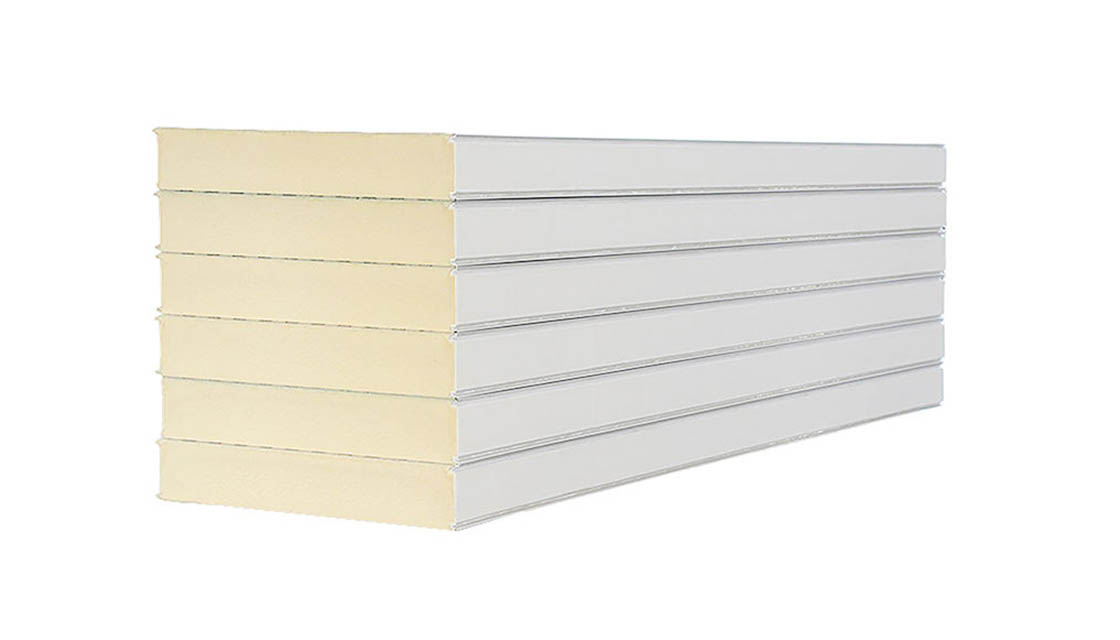
Cost-Benefit Analysis Factors
Price per square meter is a vanity metric; total cost of ownership—including installation speed, lifecycle durability, and fuel efficiency—is the sanity metric for industrial procurement.
Material Selection: Balancing Upfront Cost vs. Performance
For buyers, the primary tension often lies between selecting high-cost honeycomb cores and more economical foam cores. While honeycomb structures offer superior strength-to-weight ratios, they are frequently over-specified for applications where thermal insulation and panel flatness are the priority. In sectors like RV manufacturing and dry freight truck bodies, foam cores such as XPS, PET, or PU can provide a structural stiffness sufficient for regulatory compliance at a significantly lower material price point than aluminum or PP honeycomb alternatives.
We frequently encounter clients spending 20-30% more than necessary by over-specifying core density. Our engineers conduct experimental testing to determine the absolute minimum density required for your specific load case. For instance, in our RV solutions, we often utilize high-performance PET foam cores instead of heavier options, reducing material costs without compromising wall integrity.
Economies of Scale and Manufacturing Consistency
Manufacturer scale and production consistency directly influence unit price stability and lead time reliability for bulk orders. Rax Panel’s advanced composite panel production line and extensive factory footprint support rigorous quality control and full traceability, allowing the company to amortize setup costs over larger volumes to ensure consistent pricing.
This infrastructure stands in sharp contrast to smaller workshops, where batch variability often leads to increased waste and rework costs on the assembly line. Buyers should evaluate whether a supplier can maintain uniform thickness and bonding quality across large orders, as inconsistencies here are a hidden liability that inflates operational costs.
Lifecycle and Operational Cost Savings
The analysis extends beyond the purchase order to the product’s end-use efficiency. Lightweight materials like CFRT (Continuous Fiber Reinforced Thermoplastic) or aluminum foam panels contribute to immediate fuel savings in transportation applications. For mobile homes and industrial shelters, superior thermal insulation properties of cores like PIR or high-density PU reduce long-term energy expenditures. While the initial investment in these advanced composites may be higher, the Return on Investment (ROI) is typically realized within 18-24 months through operational savings.
Be wary of quotes that drastically undercut market averages for panels like GRP or FRP. Low-cost options often compromise on the resin quality or gel coat finish. Our experience shows that skimping on surface treatment leads to rapid UV degradation and water ingress in marine or exterior applications, resulting in expensive replacement cycles that negate any initial savings.
Quality Indicators and Certification Checks
Validating composite panel integrity requires correlating standardized shear and compression testing with precise visual inspection of the core-cell structure, ensuring the material meets the structural demands of the specific application.
Essential ASTM and ISO Testing Standards for Structural Integrity
When evaluating sandwich panels for structural applications, relying on manufacturer claims is insufficient. Buyers must demand verified data against established international standards to confirm the panel’s ability to withstand shear forces and compressive loads without delaminating.
For foam-core sandwich panels, ASTM C393 is the governing standard for determining the flexural properties of sandwich constructions. This test measures how the panel bends under load, providing critical data on face-sheet yielding versus core shear failure. For applications requiring high impact resistance, such as marine vessels or heavy-duty truck flooring, ASTM D7250 is essential for measuring the short-beam shear strength of the core material itself.
Compression strength is equally vital for wall cladding and structural decking. ASTM C273 defines the standard test method for parallel compressive properties of sandwich cores. A strong foam core, such as those manufactured with PMI, PVC, or PET, must exhibit predictable yield behavior under axial loads to prevent localized crushing in high-traffic areas.
While some suppliers offer generic strength charts, authoritative data must reference these specific ASTM standards. We utilize both ASTM and ISO equivalents—such as ISO 8391 for compression properties—to ensure our composite materials consistently meet the rigorous expectations of European and North American markets.
Identifying Visual Quality Markers for Uniform Cell Structure
Visual inspection is a powerful, immediate indicator of a supplier’s manufacturing control. Even before pulling datasheets, experienced engineers can identify quality issues by examining the exposed edges of the core material or cut samples.
The primary visual marker is the uniformity of the cellular structure. High-density PVC or PET foams must display a consistent, fine-grain pore distribution. If the cells appear unevenly sized, or if large voids are visible, the material lacks the density required for reliable structural performance. Such inconsistencies often lead to weak points where the face sheet may detach under thermal cycling.
Surface finish is another critical factor. For composite panels featuring glass fiber (GRP) or aluminum facings, the surface must be flat and free of air bubbles, resin-rich spots, or fiber bridging. A flawless interface indicates that the bonding process was executed correctly, minimizing the risk of premature delamination during transport or installation.
We strictly monitor our production lines to ensure that the transition between the core foam and the facing sheet is smooth. Any visible gaps or uneven adhesion lines on the panel edge are considered immediate reject criteria in our quality assurance protocol.
Verifying Supplier Compliance and Material Traceability
Supply chain security depends entirely on the ability to trace materials back to their source. A legitimate manufacturer does not just sell a commodity; they provide a verifiable history of the product’s lifecycle from raw resin and polymer pellets to the finished panel.
First, request a Material Test Report (MTR) or a Mill Test Certificate for every batch purchased. This document should list the specific batch numbers, the raw material grades used (e.g., the exact density grade of the PVC or XPS core), and the corresponding test results performed by the supplier’s internal lab.
Second, verify the supplier’s adherence to international quality management systems. While certifications like ISO 9001 are standard, specialized compliance varies by region. For instance, if exporting to Europe, ensure the materials comply with REACH regulations to avoid chemical bans on hazardous substances.
Finally, check for documentation regarding fire ratings if your project involves construction or transport. A compliant supplier will provide independent lab reports confirming that their sandwich panels meet specific fire performance classifications (such as UL94 or EN 45545 for rail applications), rather than relying solely on verbal assurances.
Custom Surface Treatment Options
Surface treatment is the critical interface between the composite structure and the environment. For buyers, selecting the right finish is a calculated balance between operational durability—such as corrosion and UV resistance—and architectural requirements like texture and color consistency.
Corrosion Resistance Capabilities
In aggressive environments—whether marine, industrial, or high-humidity climates—the surface facing acts as the primary barrier against degradation. The choice of material dictates the appropriate coating technology. For GRP/FRP panels, we use a marine-grade gelcoat finish.
This is not merely a paint layer but a chemically bonded resin surface that provides superior waterproofing and insulation. It creates a non-porous seal that protects the fiberglass laminate from osmosis and chemical attack, which is essential for vessel and RV solutions where moisture exposure is constant.
For metal facings, particularly aluminum and steel used in our sandwich panels, corrosion resistance is achieved through advanced chemical pretreatment and high-performance coatings. While standard PE (Polyester) coatings offer basic protection, we recommend PVDF (Polyvinylidene Fluoride) or FEVE coatings for projects requiring high chemical resistance. These resin systems form a dense molecular barrier that significantly outperforms standard paints in salt spray tests, preventing rust creep and electrolysis in coastal or industrial applications.
Aesthetic Finishing Techniques
Architectural visibility demands more than just color; it requires texture and light interaction to meet design specifications. Beyond standard flat color coating, we provide a range of mechanical surface treatments that alter the tactile and visual profile of the panel without compromising structural integrity.
- Mechanical Brushing & Polishing: This creates linear grain or mirror-like finishes on aluminum and stainless steel skins. These treatments are often specified for high-end architectural cladding or cleanroom environments where reflectivity and sterility are prioritized.
- Embossing: We apply textured patterns—such as stucco, wood grain, or diamond plate—during the lamination process. Beyond aesthetics, embossing increases the surface area, can improve stiffness slightly, and effectively hides minor surface abrasions that occur during handling and installation.
- Continuous Gelcoat Finishes: For FRP panels, our factory produces smooth, flat finishes that can be color-matched. This eliminates the need for post-installation painting in many truck body and mobile home applications, reducing labor costs.
Environmental Durability and Maintenance Requirements
The lifecycle cost of a composite panel is heavily influenced by its maintenance regime. Selecting the correct surface treatment directly impacts the frequency of cleaning and the need for refinishing. PVDF-coated aluminum panels, for instance, are renowned for their chalk resistance and color retention, often maintaining >70% of their gloss retention after decades of UV exposure. This “self-cleaning” attribute reduces maintenance burdens for high-rise building exteriors.
Conversely, surfaces with heavy embossing or textured non-slip finishes—common in flooring and honeycomb panels—may require more rigorous cleaning protocols to prevent debris accumulation in crevices. However, they offer superior slip resistance and durability in high-traffic industrial zones. In our experience supplying to over 50 countries, panels with high-performance fluoropolymer coatings or UV-stabilized gelcoats demonstrate the lowest total cost of ownership, as they resist the fading and peeling that necessitate premature replacement in harsh solar environments.
Key Takeaways
Aluminum foam sandwich panels offer superior impact absorption and thermal insulation compared to honeycomb cores, making them ideal for structural applications requiring high strength-to-weight ratios. While honeycomb cores excel in flat compression scenarios, the foam core’s cellular structure distributes loads more effectively across uneven surfaces.
This distinction dictates material selection based on specific project demands rather than general preference. Fire ratings and core density significantly influence performance, so verifying ASTM standards is essential before procurement. Delamination risks are mitigated through proper ex-situ bonding techniques, ensuring long-term durability under stress.
Rax Panel’s engineering team specializes in customizing core densities and face sheet configurations to meet precise structural and insulation requirements. With over 15 years of production experience and an advanced composite panel production line, we ensure consistent quality and traceability for every batch.
Share your project specifications or dimensional drawings with our international sales team for a free technical feasibility review. Leveraging our Customization and Solutions expertise, we will analyze your unique load-bearing and insulation needs to recommend the optimal panel configuration. This approach eliminates guesswork and ensures your investment delivers maximum performance and safety.
Frequently Asked Questions
This factor has a direct bearing on project performance and long-term cost. Addressing it with specific data rather than general assumptions leads to better outcomes.
What defines aluminum foam sandwich panels?
Aluminum foam sandwich panels consist of two thin aluminum skins bonded to a lightweight aluminum foam core. This structure provides an exceptional strength-to-weight ratio while offering superior thermal insulation and fire resistance compared to traditional solid metals. The material is widely recognized for its ability to absorb impact energy and maintain structural integrity under stress.
How does foam density affect performance?
Foam density directly influences the panel’s mechanical strength, stiffness, and acoustic damping properties. Higher density cores generally offer greater load-bearing capacity and impact resistance, making them suitable for heavy-duty structural applications. Conversely, lower density foams provide better thermal insulation and weight savings, which are critical for transportation and energy efficiency sectors.
How do they compare to honeycomb panels?
Unlike honeycomb panels which offer high stiffness with minimal weight, foam panels provide better impact absorption and uniform strength in all directions. Honeycomb structures are generally stiffer but can be more susceptible to localized damage, whereas foam cores distribute stress more evenly. The choice depends on whether the priority is maximum stiffness or enhanced energy absorption and insulation.
What fire safety standards apply?
Aluminum and its foams are non-combustible, meeting strict fire safety standards such as A2-s1,d0 in European classifications. The material does not emit toxic fumes when exposed to high temperatures, enhancing safety in enclosed spaces like trains or aircraft. Compliance with specific regional regulations ensures suitability for transport and construction projects requiring high fire resistance.
Are they cost-effective for large projects?
While initial material costs may be higher than some composites, the long-term savings from reduced fuel consumption and maintenance often justify the investment. Their lightweight nature lowers transportation and handling costs, particularly in the automotive and aerospace industries. Additionally, the durability and low lifecycle costs contribute to overall economic efficiency for large-scale infrastructure projects.