
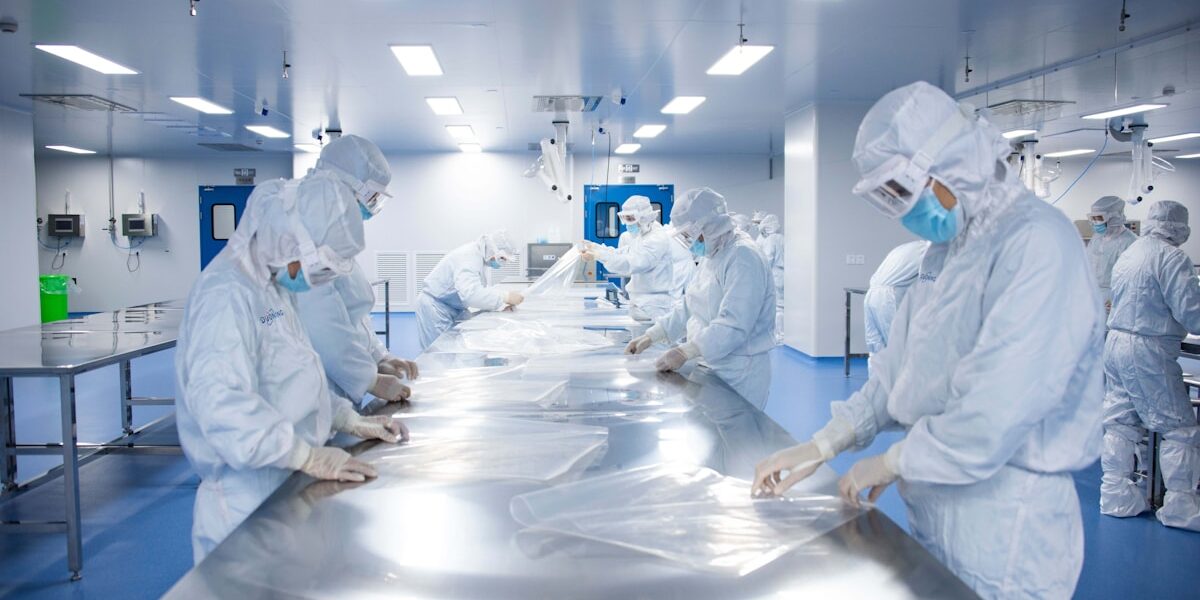
Most project owners fixate on the initial square footage cost of a cleanroom panel, yet the real expense often appears when a low-cost insulation choice fails a critical facility validation. Selecting a core material purely for its thermal conductivity frequently leads to failed fire audits or moisture retention issues that compromise the sterile environment.
Rock wool cores provide a Class A1 fire rating with up to 3-hour fire resistance, a safety specification that high-efficiency PIR or polyurethane foams typically fail to meet despite their attractive price point.
We dissect the structural differences between honeycomb, mineral wool, and foam cores, compare the chemical resistance of various steel facings, and map these configurations directly to ISO standards for pharmaceutical and semiconductor manufacturing. You will finish this article with a clear framework for balancing fire safety against thermal performance to ensure your next installation passes inspection on the first try.
What Goes Inside Cleanroom Panel Cores?
A short quarterly inspection catches most problems early. Check sealant joints, fastener tightness, and surface condition—small fixes now prevent panel replacement later.
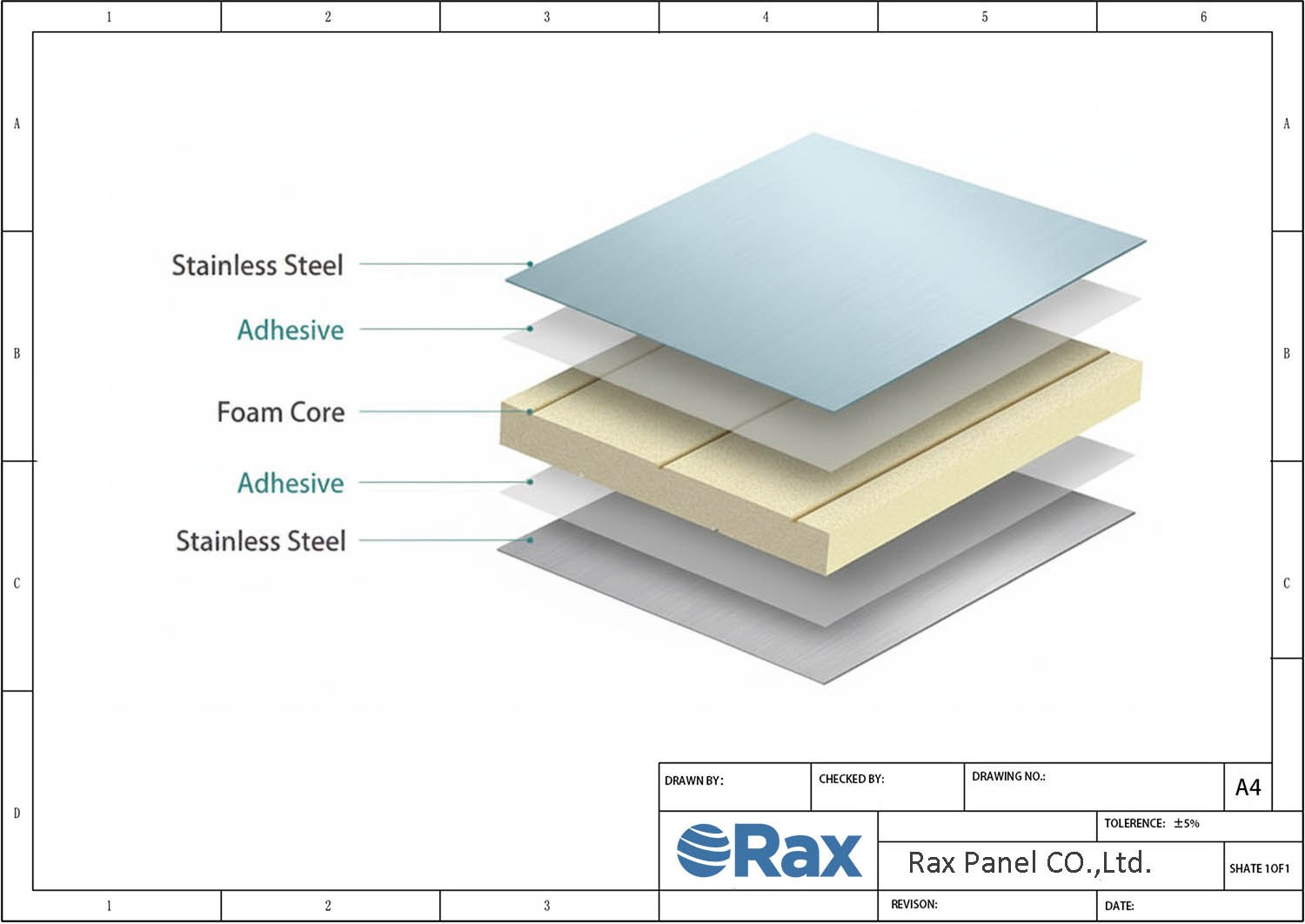
The Mechanics of Sandwich Panel Construction
To understand cleanroom panels, you first need to visualize a sandwich. In structural engineering, a “sandwich panel” consists of two stiff, strong outer layers called facings or skins, bonded to a lightweight core material in the center. Think of this structure like an I-beam used in steel construction: the two outer skins handle the tension and compression loads (bending), while the core material in the middle resists shear forces and keeps the skins separated.
This separation is the secret to the panel’s strength. By increasing the distance between the two skins without adding significant weight, the panel becomes extremely rigid and capable of spanning large distances without sagging. In our manufacturing experience, the integrity of the bond between the skin and the core is just as critical as the materials themselves. If the adhesive fails, the skins delaminate, and the panel loses its structural rigidity immediately.
Common Foam Core Materials Explained
Foam cores are the most widely used insulation material in cleanroom wall and ceiling systems because they offer an excellent balance of thermal performance and cost-efficiency. However, not all foams are created equal, and the choice usually comes down to a trade-off between fire safety and insulation value.
- Mineral Wool (Rockwool): Despite the name, this is technically a mineral fiber, not a foam. It is produced by spinning molten rock into fibers. It is the industry benchmark for fire safety because it is non-combustible—it does not burn and contributes zero fuel to a fire. While it is heavier than plastic foams, it provides excellent sound insulation and is often mandated in high-risk pharmaceutical or chemical environments.
- PIR (Polyisocyanurate) & PU (Polyurethane): These are thermoset plastic foams created by a chemical reaction that creates gas bubbles trapped inside a solid matrix. They function like a high-performance thermos, offering superior thermal resistance (R-value) compared to mineral wool. This makes them ideal for temperature-controlled cleanrooms. However, being organic plastics, they are combustible. We strictly utilize P formulations that are self-extinguishing to mitigate risk, but they generally cannot match the non-combustible nature of mineral wool.
- EPS (Expanded Polystyrene): This is the familiar white foam often used in packaging. It is the most cost-effective core option and offers decent insulation for general applications. However, it has a relatively low melting point and can release significant smoke if exposed to high heat. It is typically reserved for ISO Class 8 or lower-standard cleanrooms where fire codes are less stringent.
Honeycomb Structure Benefits for Panels
For applications where weight is a critical concern, such as mobile cleanrooms or high-tech ceilings, honeycomb cores offer a distinct advantage over foam. Imagine a beehive: this geometric hexagonal structure is one of nature’s most efficient ways to maximize strength while minimizing material usage. In panel construction, this means you get a panel that is incredibly rigid and flat but significantly lighter than a solid foam or mineral wool core.
Honeycomb cores can be made from various materials, including aluminum, paper, and polypropylene (PP). In high-spec cleanrooms, we frequently use stainless steel honeycomb cores. Unlike foams, which are essentially “closed bubbles” of gas, honeycomb structures are open cells.
This allows for excellent air circulation if required and eliminates the risk of “outgassing”—the release of volatile chemicals from the material—which is crucial for maintaining ultra-pure air quality in semiconductor or electronics manufacturing. The honeycomb structure ensures dimensional stability, meaning the panel will not warp or expand over time due to humidity changes.
| Core Material | Fire Rating | Thermal Conductivity | Cleanroom Suitability | Key Advantage |
|---|---|---|---|---|
| Rockwool | Euroclass A1 Non-combustible | 0.035-0.040 W/m·K | ISO 5-8 / High Safety | Zero Toxic Smoke & Fire Resistance |
| PIR (Polyisocyanurate) | Class B/s1-d0 (Self-extinguishing) | < 0.022 W/m·K | ISO 7-8 / Energy Efficient | High Thermal Efficiency |
| Stainless Steel Honeycomb | Non-combustible | Structural/Conductive | ISO 14644 Zero Particulate | ASTM A240 Standard / Hygienic |
| EPS (Expanded Polystyrene) | Combustible (Avoid >75°C) | Standard Insulation | ISO 7-8+ / Cost-Sensitive | Lowest Cost Option |
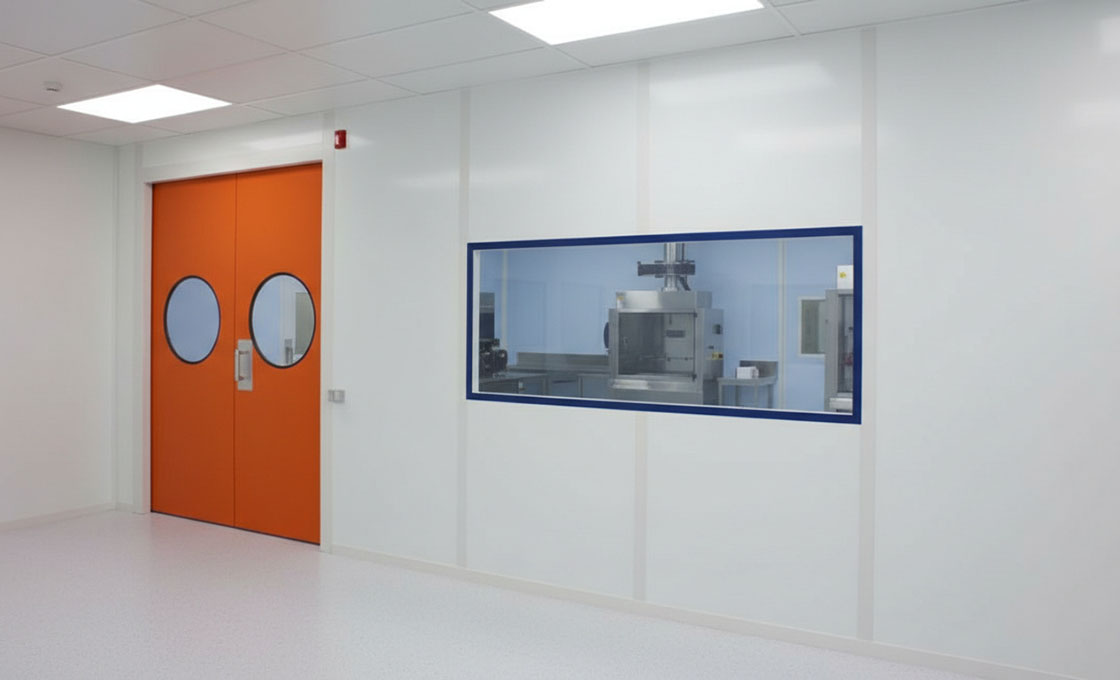
Why Panels Must Be Clean and Durable
The practical payoff shows up in operating costs over time. Lower energy consumption, minimal maintenance, and a service life measured in decades typically recover the initial investment within a few years.
Surface Smoothness and Particle Retention
A panel’s surface acts as the primary barrier against contamination in a cleanroom environment. Microscopic surface irregularities can trap airborne particulates, creating reservoirs for microbial growth that standard cleaning cannot reach. Therefore, the physical smoothness of the outer skin is the most critical determinant of a panel’s ability to maintain ISO 14644 compliance over time.
Stainless Steel panels offer the highest tier of non-porous integrity, ensuring zero particulate generation from the panel material itself. In contrast, Glass Reinforced Plastic (GRP) panels rely on a specialized gelcoat finish to achieve a similarly smooth, impervious surface. We have found that without this specific high-grade gelcoat, standard fiberglass surfaces remain too porous for demanding pharmaceutical environments.
- Fiberglass Reinforced Plastic (GRP): Utilizes a thick, cured gelcoat layer to provide a flat and smooth finish that resists chemical exposure and maintains hygiene.
- Stainless Steel (ASTM A240): Delivers an inherently non-porous metallic surface that guarantees absolute control over particulate shedding, making it the preferred choice for the most stringent ISO classifications.
Chemical Resistance and Cleaning Compatibility
Cleanrooms require the daily application of aggressive industrial disinfectants and solvents to sterilize the space. If a panel’s skin degrades upon contact with these chemicals, the resulting erosion will instantly compromise the facility’s sterile status. The core task of the panel is to remain chemically inert throughout the operational lifespan of the facility.
While many competitors use materials that show surface dulling or micro-cracking after months of chemical exposure, Rax Panel strictly adheres to high-grade resin formulations that withstand harsh solvent cleaning protocols. Our engineering team tests these panels against rigorous industrial chemical schedules to ensure the surface remains structurally sound and visually intact. This durability prevents the formation of new contaminants caused by the degradation of the wall panels themselves.
Structural Integrity and Impact Durability
Beyond chemistry, the panel must act as a rigid structural component capable of withstanding the physical impacts of mobile equipment, material handling, and maintenance activities. A common pitfall in panel selection is underestimating the frequency of collisions in a busy manufacturing floor, which leads to dents, delamination, and compromised joints. A panel that cracks or shatters under minor impact creates a severe sanitation hazard.
Rax Panel’s composite construction integrates heavy-duty facings with strong core materials—such as Rockwool, PMI Foam, or PVC Honeycomb—to deliver exceptional load-bearing capabilities and impact resistance. By matching the facing thickness and core density to the specific environmental risks, our products provide a 50-year design life for GRP variants while maintaining the extreme rigidity required for heavy-duty truck bodies and industrial cleanrooms. This ensures the physical barrier between controlled and uncontrolled environments never fails due to simple mechanical wear and tear.
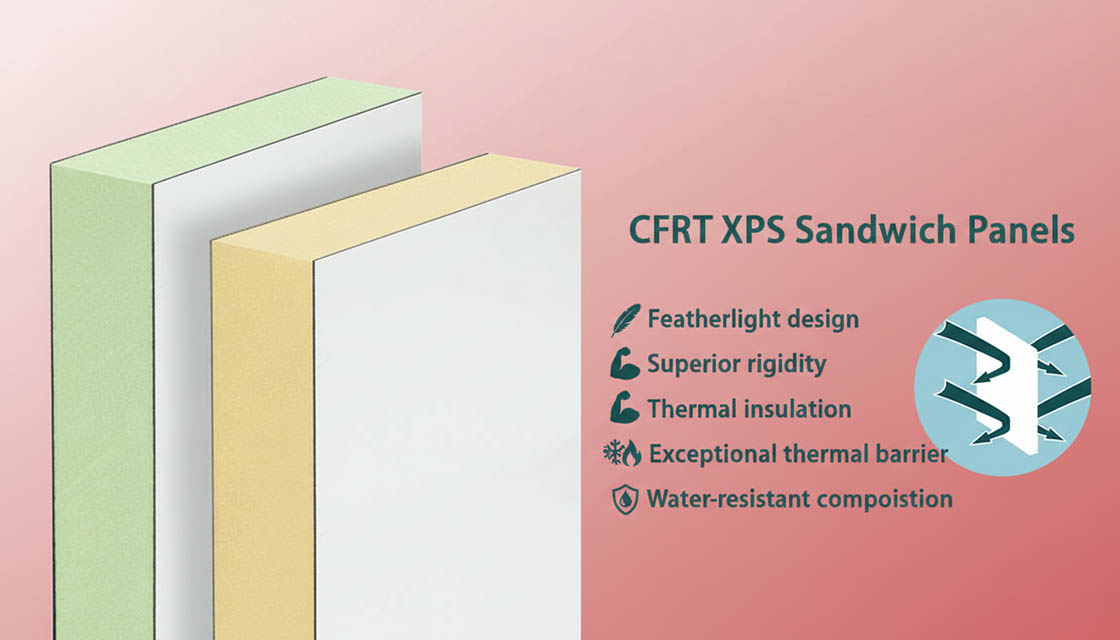
Why Steel Panels Are Strong and Affordable
Steel panels provide the optimal balance of structural integrity and lifecycle cost, offering superior impact resistance and fire safety at a fraction of the price of exotic alloys or solid composite materials.
The Structural Durability of Steel Facings
Steel is the benchmark for structural strength in industrial environments. Unlike softer metals or polymer-based panels, steel facings possess a high yield strength, meaning they can withstand significant physical impact without permanent deformation. In high-traffic areas like factories or warehouses, panels are frequently bumped by machinery or carts.
A steel facing resists denting and puncturing far better than aluminum or fiberglass equivalents, ensuring the wall system remains airtight and structurally sound for decades. This rigidity also simplifies the mounting of heavy equipment, as screws and fasteners hold more securely in steel than in softer materials.
Economic Advantages in Manufacturing
The affordability of steel panels stems from the maturity of the global steel supply chain and the efficiency of roll-forming manufacturing processes. Raw steel is abundant and, compared to continuous fiber reinforcement or specialized alloys, relatively inexpensive. Furthermore, steel sandwich panels can be mass-produced with high precision, reducing labor costs during installation.
Because steel panels are modular and prefabricated, they reduce on-site construction time significantly—a direct financial saving for any project. The combination of low material cost and rapid installation makes steel the most cost-effective solution for general industrial cleanrooms and partition walls.
Key Steel Types for Industrial Applications
This economic efficiency enables the application of specialized coatings that enhance durability without significantly increasing costs. As a result, several specific steel types are available to meet diverse industrial requirements.
- Galvanized Steel: This is the industry standard for cost-effectiveness. The steel is coated with a layer of zinc to prevent rust. It provides a durable, paintable surface at the lowest possible price point, making it ideal for non-corrosive environments.
- Powder-Coated Steel: For facilities requiring color coding or enhanced aesthetics, powder-coated steel is the most common choice. This electrostatically applied baked finish exceeds standard ASTM and ISO paint tests for chipping and scratching resistance. It is durable enough for ISO Class 5 to 8 cleanrooms and can be formulated with antimicrobial properties for hygiene-sensitive areas.
- Stainless Steel (Grade 304): Used where chemical resistance is critical, 304 stainless steel is the baseline standard for many cleanrooms. It offers excellent general chemical resistance and is easy to sterilize. However, it is more expensive than galvanized steel and is less resistant to pitting in highly aggressive chloride environments.
Inherent Fire Resistance
Safety regulations often drive material selection, and steel excels here. As a non-combustible material, steel does not burn or contribute to fire load. When combined with fire-rated core materials like mineral wool or PIR foam, steel facings help achieve high fire-resistance ratings (such as Class A).
Unlike some thermoplastic cores or organic facings that might melt or release toxic fumes in a fire, steel maintains its structural integrity longer, providing crucial time for evacuation and emergency response. This inherent fire safety eliminates the need for expensive additional fire retardants, further contributing to the material’s overall value proposition.
How Composite Panels Manage Heat and Fire
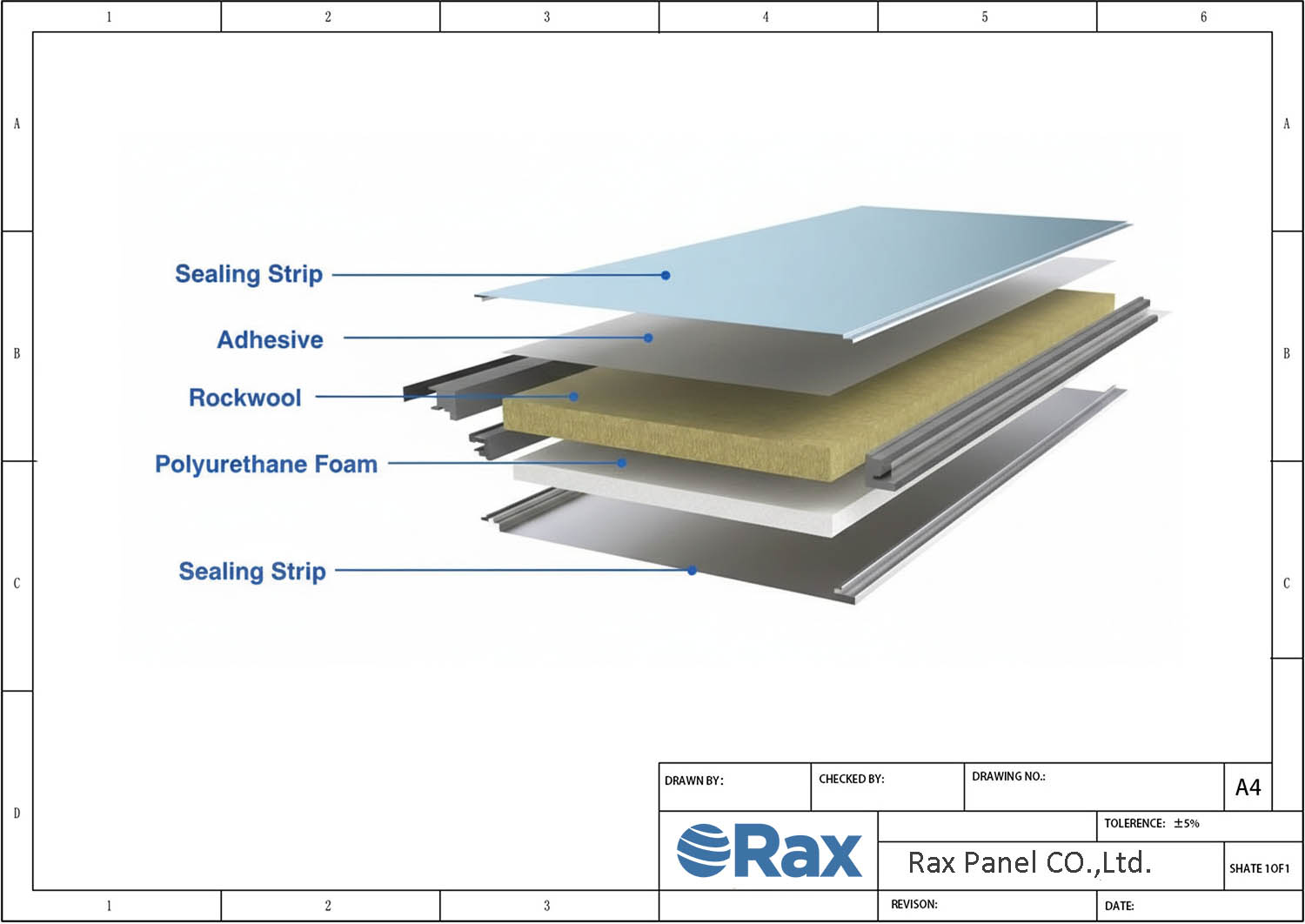
Composite panels balance thermal efficiency and fire safety by leveraging specific core materials. Rockwool provides superior fire resistance, while PIR offers high thermal insulation with moderate flame spread ratings.
Managing heat and fire in composite panels is not just a regulatory checkbox—it is a critical engineering constraint. Buyers select specific core materials based on whether they prioritize extreme fire safety (like in cleanrooms) or maximum thermal insulation (like in cold storage). Understanding the trade-offs between foam cores and mineral wools is essential for maintaining compliance and operational safety.
Thermal Efficiency vs. Fire Safety: The Core Trade-Off
Most standard sandwich panels use foam cores—such as Polyurethane (PU), Polyisocyanurate (PIR), or expanded polystyrene (EPS)—because these materials excel at trapping air to prevent heat transfer. However, organic foams are inherently combustible unless heavily treated with flame retardants. This creates a fundamental compromise: highly insulating foams often require rigorous chemical additives to achieve basic fire ratings.
For applications where fire safety is the absolute priority, such as ISO Class cleanrooms or high-density manufacturing facilities, engineers turn to mineral-based cores like Roxul (Stone Wool). Unlike foams, stone wool does not burn and can withstand temperatures exceeding 1,000°C (1,832°F). While it provides excellent fire containment, its thermal conductivity is generally higher than that of PIR foam, meaning a thicker panel might be required to achieve the same insulation value.
- PIR (Polyisocyanurate): Offers the highest thermal efficiency among foams and has better flame resistance than standard PU. It typically achieves a Class B-s1-d0 rating under EN 13501-1 standards.
- Rockwool / Stone Wool: Non-combustible (Class A1). It acts as a firebreak, preventing flames from penetrating the panel core, making it the gold standard for cleanroom wall and ceiling panels where zero flame spread is mandatory.
Structural Integrity Under Thermal Stress
When composite panels are exposed to extreme heat, the bond between the outer facings (like steel, aluminum, or GRP) and the inner core is the most vulnerable point. If the core material melts or degrades rapidly, the panel loses its structural integrity and collapses, allowing fire to bypass the barrier completely.
To manage this, manufacturers utilize advanced core materials such as PMI (Polymethacryl Imide) foam or specialized CFRT (Continuous Fiber Reinforced Thermoplastic) layers. PMI foam is an advanced structural foam known for maintaining its strength at very high temperatures compared to standard PVC or XPS foams. Furthermore, integrating a gel coat on FRP (Fiberglass Reinforced Plastic) sheets adds a waterproof and insulating surface layer that resists blistering and peeling during initial fire exposure.
Cleanroom Compliance and Fire Ratings
In industries like pharmaceuticals and semiconductors, cleanroom panels must meet strict hygiene and fire codes simultaneously. Panels used in these environments often feature stainless steel or aluminum facings paired with either PIR or rockwool cores.
The choice here dictates the building’s fire zone design. Rockwool panels are frequently specified because they do not release toxic smoke when heated—a crucial factor for occupied cleanrooms. Meanwhile, PIR panels are widely adopted for their balance of cost, lightweight construction, and adequate flame spread performance, provided they are tested against standards like ASTM E84.
Advanced Fire Management Solutions
ile, alternative materials offer distinct economic and thermal advantages that require careful fire safety management.
- Polyurethane (PU): A cost-effective option with decent thermal properties, but it generally requires fire-retardant additives to prevent rapid flame propagation.
- Polyvinyl Chloride (PVC) Foam: Naturally self-extinguishing and widely used in marine and offshore vessel applications where weight savings and fire safety are equally critical.
- Carbon Fiber Honeycomb: Used in aerospace and high-performance transit; while expensive, carbon fiber composites offer excellent structural stability and do not contribute fuel to a fire.
Matching Panel Materials to Industry Needs
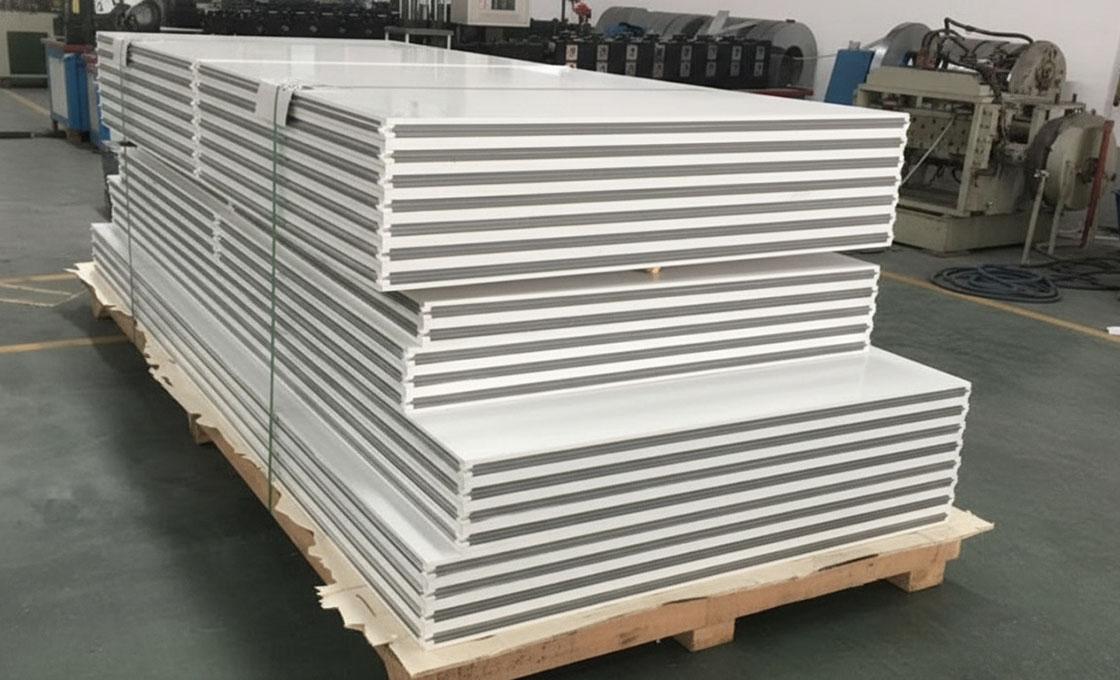
Matching panel materials to industry needs is not a one-size-fits-all equation; it is an exercise in engineering trade-offs between weight, durability, thermal efficiency, and chemical resistance. The right combination of facing and core prevents costly failures in harsh environments. For example, pharmaceutical facilities require stainless steel facings for sterile integrity, while cold chain logistics demand polyisocyanurate (PIR) cores to maintain temperature control under extreme heat.
Pharmaceutical and Healthcare Cleanrooms
In regulated environments like ISO 7 or ISO 8 cleanrooms, the primary requirement is non-porous, cleanable surfaces that can withstand aggressive sterilization. Standard painted metals quickly degrade when exposed to frequent vaporized hydrogen peroxide (VHP) cleaning cycles. Therefore, stainless steel panels are the mandatory choice for Grade A/B manufacturing suites and sterile areas.
While galvanized steel is common in general construction, it cannot survive the chemical rigor of pharmaceutical validation. A smooth gel coat on FRP sheets provides excellent waterproof and insulating properties, but stainless steel remains the gold standard for absolute hygiene compliance.
- Facing Material: Stainless steel or high-grade aluminum composite panels (ACP).
- Core Requirement: Calcium sulfate or specialized fire-rated cores like PIR for rapid thermal cut-off.
Cold Storage and Logistics Warehouses
Cold storage facilities operate at extreme thermal gradients. The biggest risk here is thermal bridging—where heat bypasses the insulation through the panel edges or weak spots.
Polyurethane (PU) foam cores have long been the industry baseline for their balance of cost and insulation, but polyisocyanurate (PIR) foams are rapidly replacing them in high-specification warehouses due to superior fire ratings and higher thermal resistance at lower densities. For facilities requiring high structural strength without excessive weight, honeycomb structures like PP or fiberglass honeycomb offer exceptional rigidity.
- Best Core for Thermal Efficiency: Polyisocyanurate (PIR) foam.
- Alternative for Heavy Impact Zones: Expanded polypropylene (EPP) or PVC rigid foams.
Industrial Manufacturing and Warehousing
General industrial buildings prioritize structural strength and impact resistance over aesthetic finish or ultra-high thermal ratings. Aluminum foam core panels and standard aluminum composite panels (ACP) provide strong, lightweight cladding for exterior walls and roofing. In these environments, the panels must resist accidental impacts from forklifts and heavy machinery. Aluminum offers high corrosion resistance and requires minimal maintenance, making it ideal for heavy-duty manufacturing floors where galvanized steel might eventually rust at cut edges.
- Best Facings: Aluminum composite panels (ACP), Aluzinc sheets, or continuous fiberglass reinforced thermoplastics (CFRT).
- Structural Advantage: High strength-to-weight ratio prevents structural strain on the building frame.
Marine and Offshore Structures
Marine applications face constant exposure to saltwater, humidity, and extreme wind loads. Materials must be inherently waterproof and highly resilient. GRP (Glass Reinforced Plastic) sandwich panels with fiberglass honeycomb cores are exceptionally strong and light, offering excellent corrosion resistance compared to metals. New continuous fiberglass reinforced thermoplastic (FRP/CFRT) sheets are particularly suited for vessels because they are lighter, thinner, and more resilient than traditional fiberglass, ensuring long-term durability in harsh maritime climates.
- Optimal Material: FRP/GRP panels with PMI, PET, or PVC foam cores.
- Key Benefit: Complete immunity to saltwater corrosion and high mechanical resilience.
How Beginners Can Choose the Right Panels
The fundamental rule of procurement: Never compromise on fire safety for hygiene, or hygiene for fire safety. Match the core material to the strictest regulatory requirement of your specific industry.
Matching Cores to Cleanroom Class Requirements
Beginners often make the mistake of selecting a panel based on a single attribute, such as price or insulation value, while ignoring the specific regulatory dictates of their intended cleanroom class. In reality, the choice of core material is dictated primarily by the risk profile of the facility: fire safety versus thermal efficiency.
For pharmaceutical facilities or high-occupancy industrial zones where the accumulation of personnel and volatile chemicals creates a high fire load, the industry standard shifts strictly toward non-combustible solutions. In these scenarios, mineral cores are not just an option; they are a mandate because they actively remove fuel from the fire equation, unlike polymer-based foams which can contribute to rapid fire spread.
Conversely, in applications like electronics manufacturing or food processing where temperature control is critical for product integrity, thermal insulation becomes the primary driver. Here, thermoset foam cores are preferred for their superior ability to maintain stable internal environments with minimal energy loss. However, this comes with a trade-off: combustibility. We always advise clients that if they choose foam cores for their insulation properties, they must compensate with a strong fire suppression system.
For the most sterile environments, such as operating rooms or injection molding lines, the selection must prioritize surface integrity. Stainless steel facings combined with an appropriate core are essential to meet ISO 14644 compliance because they prevent particle generation—a critical failure point in high-class cleanrooms that cheaper materials simply cannot guarantee.
Evaluating Cost Versus Performance Trade-offs
In procurement, the lowest unit price often hides the highest total cost of ownership. A classic example is the comparison between painted steel and composite fiberglass panels. While steel offers a lower upfront cost, it is susceptible to corrosion in high-humidity or wash-down environments, leading to premature degradation and expensive retrofits within just a few years.
Advanced composite materials, such as those with a Gelcoat finish, command a higher initial investment but offer a design life that can span decades. Over a 20-year cycle, the maintenance and replacement costs of cheaper materials can easily triple the initial expenditure.
Another critical trade-off lies in structural density versus weight. Heavier panels often imply durability but can increase structural steel requirements for the building and drive up labor costs during installation. Lightweight solutions reduce dead load and simplify logistics, but they must be engineered to maintain rigidity; otherwise, you risk panel deflection under HVAC pressure, which breaks the cleanroom seal.
Our engineers consistently find that optimizing the skin-to-core ratio—matching a high-tensile facing with a lightweight structural core—delivers the best ROI. It provides the necessary strength and impact resistance without over-engineering the weight, keeping your structural and installation costs in check.
Key Specifications for Initial Panel Selection
Once the balance between structural integrity and weight is established, attention must shift to the specific physical characteristics of the panel surface. These details are essential for meeting operational requirements in specialized environments.
- Surface Roughness: For hygiene-critical zones, specify a surface smoothness rating (often measured in Ra values) that prevents microbial adhesion and allows for rapid sanitization.
- Load-Bearing Capacity: Verify the compressive strength of the core material, especially if the panels will bear suspended loads like lighting tracks or heavy HVAC filters.
- Air Permeability: Request data on the panel’s resistance to air passage to ensure it supports the required pressure differentials without strain on the HVAC system.
| Panel Category | Material Composition | Technical Standards & Specs | Primary Advantage | Ideal Application |
|---|---|---|---|---|
| Fire-Resistant Panels | Rockwool Core with Metal Facings | Class A1 Non-combustible (EN 13501-1 / GB 8624) | Absolute fire barrier with low smoke toxicity; eliminates fuel source | Pharmaceutical Cleanrooms, High-Occupancy Industrial Zones |
| Thermal Insulation Panels | PIR (Polyisocyanurate) or PU Foam Core | R-value > 2.5; Thermal Conductivity ~0.022 W/m·K | Superior energy efficiency and lightweight structure | Refrigerated Truck Bodies, Cold Storage, Temperature-Controlled Facilities |
| Durable Composite Panels | Glass Fiber Reinforced Polymer (GRP/FRP) with Gelcoat | 50-Year Design Life; Waterproof & Corrosion Resistant | High impact durability, flat/smooth finish, resilient against elements | Marine Vessels, RV Solutions, Exterior Wall Cladding |
| Hygienic Cleanroom Panels | Stainless Steel Facings with Insulation Core | Zero Particulate Generation; ISO 14644 Compliant; ASTM A240 Standard | Sterile, easy-to-clean surface suitable for strict hygiene standards | Medical Facilities, Food Processing, Electronics Manufacturing |
| Lightweight Structural Panels | Aluminum, PP, or Fiberglass Honeycomb Cores | High Strength-to-Weight Ratio; Lightweight Structural Core | Maximizes load-bearing capacity while minimizing overall weight | Vehicle Manufacturing, Aviation, Dry Freight Truck Bodies |
Key Takeaways
Cleanroom panels are the structural foundation of your facility’s classification success. Matching the core insulation to your ISO requirements eliminates thermal bridging and ensures particle retention meets strict standards. We manufacture high-density rockwool and PIR cores specifically for these demanding environments, prioritizing airtight joint integrity over generic construction methods. Our engineering team validates every panel against fire ratings and chemical resistance protocols before leaving the facility.
- Verify that your selected sandwich panel specifications align with the exact air purity class you need for your operation.
- Contact our engineering department to discuss technical uncertainties regarding panel joints or surface finishes during your design phase.
Frequently Asked Questions
This factor has a direct bearing on project performance and long-term cost. Addressing it with specific data rather than general assumptions leads to better outcomes.
What are the best cleanroom panel materials?
The most common materials include stainless steel, aluminum, and fiber-reinforced plastic (FRP). Stainless steel offers superior durability and hygiene for high-traffic areas. Aluminum is lightweight and cost-effective for general use. FRP provides excellent chemical resistance and is easy to install.
How do joints affect cleanroom air leakage?
Proper joint sealing is critical to prevent air leakage and particle infiltration. Specialized gaskets and sealants create an airtight barrier between panels. Loose joints compromise the pressure differential required for cleanroom classification. Engineers must specify compatible joint systems for each panel material.
Are aluminum panels suitable for ISO cleanrooms?
Aluminum panels are widely used due to their lightweight nature and smooth finish. They facilitate easy cleaning and maintain sterility when properly sealed. However, they may require protective coatings to prevent corrosion in humid environments. Selection depends on the specific ISO class and operational conditions.
What is the lifespan of FRP cleanroom panels?
FRP panels typically have a long design life, often exceeding 20 to 50 years. Their durability stems from the fiberglass reinforcement embedded in thermoset resins. They resist moisture, bacteria, and physical impact better than many metals. Regular maintenance can further extend their functional lifespan significantly.
Can cleanroom panels be customized for size?
Yes, most manufacturers offer custom sizing to fit specific facility layouts. Standard dimensions help reduce waste, but bespoke sizes ensure optimal coverage. Customization requires precise engineering to maintain structural integrity and seal quality. Early consultation with suppliers is recommended for complex geometries.