
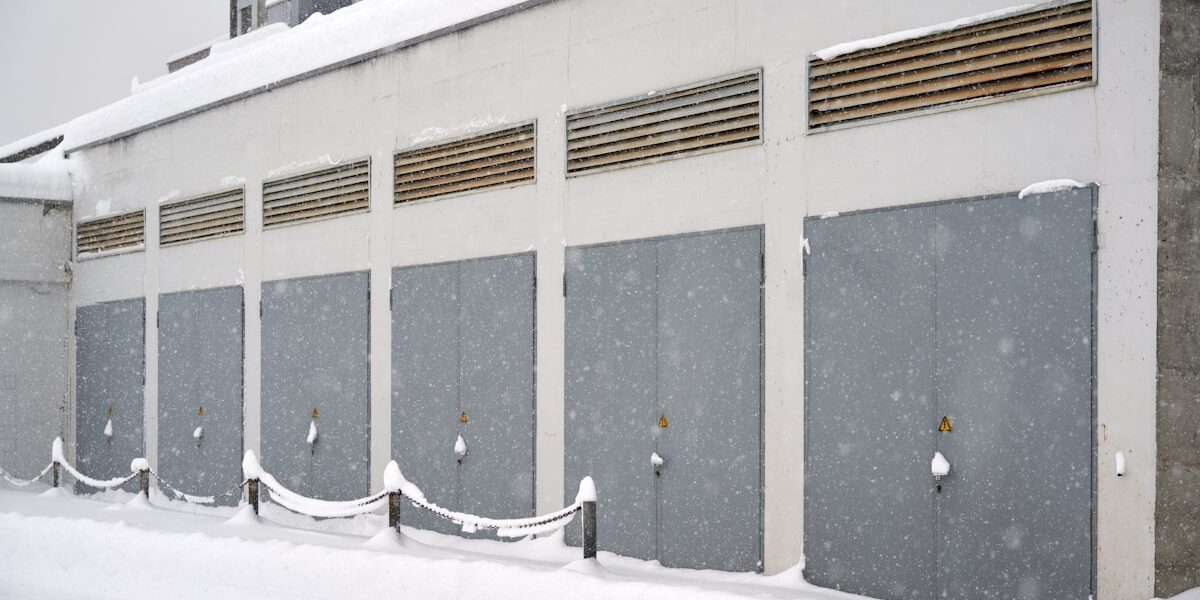
Facility planners watch their energy budgets bleed through a single weak point. A standard cold room door carries the heaviest thermal load in the entire enclosure. Air exchange during normal opening cycles spikes energy consumption by up to fifty percent when seals degrade or hinges misalign.
We see this failure pattern across every major distribution hub. Ignoring thermal bridging guarantees higher utility bills and unplanned compressor overtime. This guide cuts through the spec sheet noise so you can lock in predictable lifecycle costs and steady operational uptime.
You must match core density to your exact temperature zone before locking in a frame specification. PIR cores outperform EPS for sub-zero freezer applications because they maintain structural rigidity and block vapor transmission where expanded polystyrene begins to degrade. We walk through climate matching protocols, hinge load calculations for heavy forklift traffic, and a procurement checklist that aligns factory production schedules with your project deadlines. Pick the correct envelope early. You eliminate the hidden costs of retrofitting frozen infrastructure mid-build.
Climate and Environment Matching Guide
Specifying a cold storage door is not a “one-size-fits-all” procurement task. The correct assembly must be engineered specifically for the local climate zone to prevent catastrophic energy loss and structural failure.
Matching Core Density to Target Temperature Zones
A common misconception in facility planning is equating panel thickness with thermal performance. In reality, the insulated cold storage door specifications must prioritize the cellular stability of the core material at the target temperature. In deep-freeze environments below -20°C, standard EPS (Expanded Polystyrene) cores are susceptible to thermal contraction and moisture absorption, which drastically reduces R-value over time. Conversely, high-density Polyurethane (PU), Polyisocyanurate (PIR), or PET foam cores maintain their cellular structure under cryogenic stress, ensuring consistent thermal conductivity without the risk of internal ice formation.
Our engineers have observed that while EPS is sufficient for chillers (+2°C to +10°C), it poses a significant risk in freezer applications. When selecting cores for sub-zero zones, we recommend using materials with closed-cell structures that resist vapor drive. For facilities experiencing extreme freeze-thaw cycling, structural foams like PMI or Aramid Honeycomb provide the necessary shear modulus to prevent warping, ensuring the door leaf remains flat and the seal remains intact regardless of the internal temperature variance.
How to Choose Exterior Facings for Humid or Coastal Sites
In humid or coastal environments, the battle against corrosion is as critical as the battle for thermal insulation. Standard steel or aluminum facings, while initially cost-effective, often suffer from oxidation and delamination when exposed to salt spray and high humidity. This compromises the cold storage door condensation control standards required for hygiene and safety. For these aggressive climates, facings must act as a vapor barrier and a structural shield simultaneously.
We have found that GRP (Glass Reinforced Plastic) or FRP facings with a high-performance gelcoat finish offer superior resistance to hydrolysis and chloride ion penetration compared to painted metals. Unlike metal skins that can act as thermal bridges, causing exterior surface condensation, fiberglass-reinforced composites provide a thermal break at the surface level.
For marine applications or wash-down zones, Stainless Steel or Aluzinc facings are acceptable, but GRP/FRP is often preferred for its high strength-to-weight ratio and immunity to rust, ensuring the door does not swell or delaminate due to perpetual moisture exposure.
Evaluating Door Gasket Durability Against External Weather
The gasket is the weakest link in any cold storage envelope, yet it is frequently treated as an afterthought. A heavy duty refrigerated warehouse door seal must maintain elasticity across a wide temperature range. In low-temperature applications, standard PVC or EPDM profiles can become brittle and crack, leading to immediate frost buildup and air infiltration. Furthermore, external UV exposure can degrade the chemical integrity of the seal if the door is exposed to sunlight.
Specifiers should look for gaskets specifically rated for the operating temperature extremes of the facility, ensuring they possess a low compression set to retain their shape after thousands of open/close cycles. We emphasize testing for IP65 weatherproof ratings on gasket interfaces to guarantee that the seal remains impermeable not just to air, but to driven rain and wind pressure. The correct gasket material eliminates the perimeter frost line, which is a primary indicator of thermal bridging and seal failure.
Assessing Thermal Break Needs for Climate Transitions
Cold room door thermal bridging prevention is the most critical factor in transition zones—areas where the door connects a -25°C freezer to a +25°C ambient loading dock. Without proper thermal breaks, the door frame and hardware act as a “heat sink,” conducting thermal energy directly through the structure. This results in energy inefficiency and dangerous ice accumulation on the hardware and floor.
To mitigate this, the assembly must incorporate non-conductive materials between the interior and exterior structural elements. While metal hinges and latches are necessary for durability, they should be thermally isolated using polyamide insulators or structural foam inserts.
Our testing confirms that continuous polyurethane gaskets and insulated profile systems are essential to stop point-source heat loss. By interrupting the thermal path, you prevent the frame from freezing over, which reduces maintenance costs and protects the integrity of the cold storage door condensation control standards mandated in modern building codes.
| Climate_Zone | Core_Material | Facing_Material | Performance_Standard | Environmental_Response |
|---|---|---|---|---|
| Sub-Zero Refrigeration (-30°C to -40°C) | PIR or PET Foam | GRP/FRP with Gelcoat | R-value > 6.0 per inch | ASTM C518 thermal conductivity tested | Zero moisture absorption prevents internal ice formation; maintains dimensional stability during deep freeze cycles |
| High-Humidity Cold Storage (0°C to +5°C) | XPS or Closed-Cell PVC Foam | Stainless Steel or Aluzinc | Vapor transmission rate < 0.1 perms | IP65 weatherproof gasket rated | Hydrophobic core blocks vapor drive; corrosion-resistant facings prevent structural delamination from perpetual moisture |
| Variable Coastal/Marine (-10°C to +35°C) | PMI or EPP Structural Foam | CFRT or Thermoplastic UD Tape | Thermal conductivity < 0.022 W/m·K | UL 10C Class B1/B2 fire rating | Engineered for rapid thermal cycling; UV and salt-spray resistant surfaces eliminate thermal bridging at hinges |
| Dry Cold Chain Logistics (+5°C to +15°C) | PU or MPP Polyolefin Foam | Aluminum Composite or ACP | Load-bearing capacity > 400 kg/m² | Heavy-duty gasket interface rated | Optimized weight-to-strength ratio reduces mechanical stress on seals; stable thermal resistance prevents perimeter frost buildup |
| Extreme Freeze-Thaw Cycling (-40°C to +60°C) | Aramid or PP Honeycomb | FR4 Fiberglass or Heavy-Duty GRP | Shear modulus > 150 MPa | Continuous polyurethane gasket compression tested | Non-conductive cellular structure eliminates point-source heat loss; high rigidity prevents warping under repeated thermal shock |
Core Selection Criteria: Insulation, Sealing, Cycle Rating
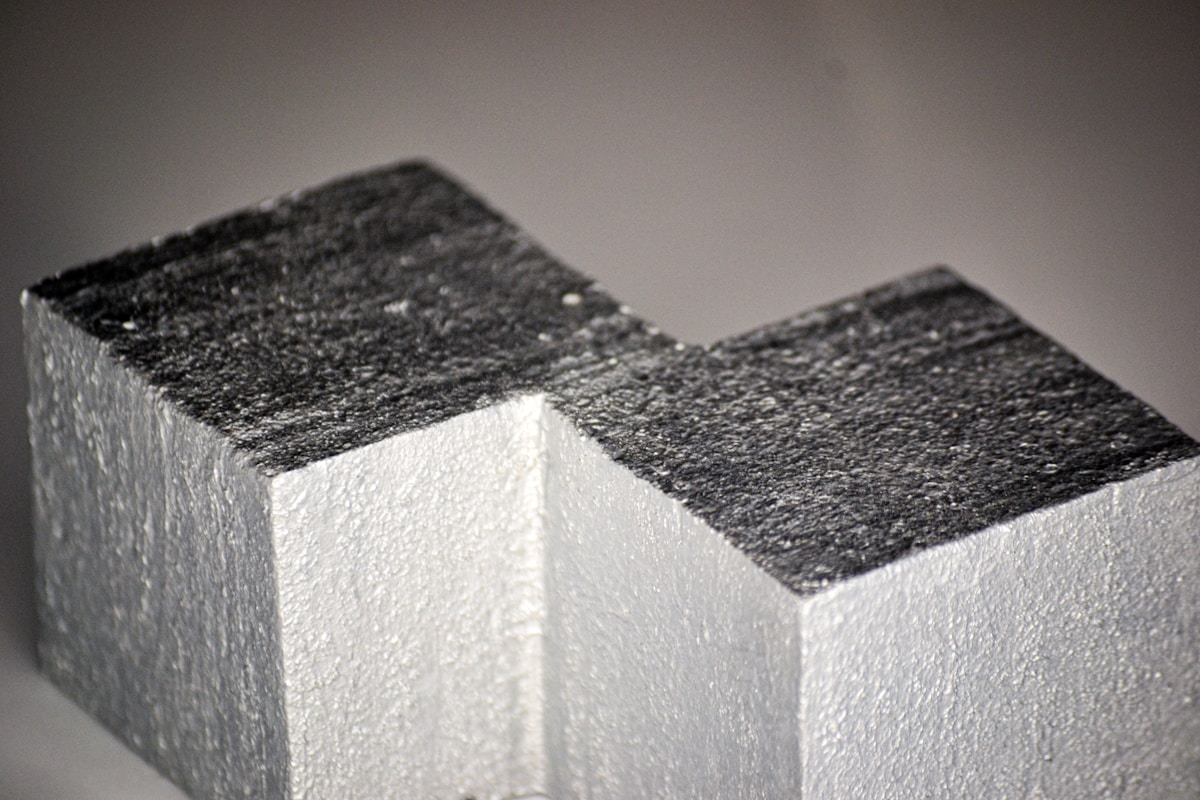
Cold storage door performance hinges on three measurable engineering metrics: core thermal resistance, gasket compression tolerance, and mechanical cycle durability. Selecting mismatched components creates continuous refrigeration load, condensation failure, and premature structural fatigue. The optimal configuration pairs closed-cell foam density (typically 38–45 kg/m³ for polyurethane or polyisocyanurate cores) to the target temperature zone, specifies standardized compression gaskets, and verifies hardware ratings against daily traffic volume.
Door envelope integrity depends on matching foam core density to temperature zones, specifying compression-rated gaskets, and verifying hardware cycle ratings before procurement.
Thermal Performance & Core Selection
The core material dictates how effectively the door resists heat transfer across varying temperature differentials. Closed-cell polyurethane (PU) and polyisocyanurate (PIR) foams remain industry standards for cold storage due to their low thermal conductivity, typically ranging between 0.022 and 0.026 W/m·K. Think of thermal conductivity as the speed limit for heat; lower numbers mean the insulation acts as a stricter barrier against outside warmth.
Panel thickness directly correlates with operational temperature requirements. Moderate chilling environments (0°C to +5°C) generally require 50 mm to 80 mm cores, while deep-freeze applications (-25°C to -40°C) demand 100 mm to 150 mm thicknesses. Higher-density foam variants minimize conductive loss without adding unnecessary dead weight to the lifting mechanism.
- PU Foam: Best balanced cost-to-performance ratio; standard for 0°C to -20°C operations.
- PIR Foam: Superior fire resistance and slightly lower thermal conductivity; ideal for regulated food-grade facilities.
- XPS / PVC Foam: Used where moisture resistance or specialized structural reinforcement is required over maximum R-value.
Gasket Integrity & Sealing Standards
A compromised door seal immediately negates core insulation performance by allowing warm, humid air infiltration. This causes rapid frost buildup, compressor strain, and surface condensation that accelerates metal corrosion. The gasket acts as the primary defense line, so material resilience and compression geometry matter more than cosmetic appearance.
Heavy-duty refrigerated doors utilize triple-seal configurations combining internal magnetic strips, external neoprene or EPDM rubber blades, and central draft excluders. The gasket must compress at a standardized rate (typically 25%–30%) when the latch engages, ensuring uniform contact pressure around the entire perimeter.
- Material Resilience: EPDM and silicone compounds retain flexibility down to -40°C, preventing hardening and cracking during winter operations.
- Compression Fit: Proper gasket thickness (usually 20–30 mm) must align with door frame tolerances to eliminate micro-gaps where thermal bridging occurs.
- Condensation Control: Continuous perimeter sealing maintains internal dew points below ambient thresholds, protecting adjacent racking and flooring.
Mechanical Cycle Rating & Hardware Durability
Cold storage doors operate as high-frequency industrial assets. Facilities handling palletized goods or frequent forklift traffic require hardware explicitly rated for sustained mechanical cycling rather than residential-grade components. Cycle rating measures how many open-close operations a door can endure before bearings wear, latches misalign, or hinges develop structural play.
Standard commercial hinges and rotary latches are tested against international fatigue thresholds. A reliable cold store door should exceed 100,000 open/close cycles without degradation. The facing material—such as gel-coated fiberglass reinforced plastic (GRP) or continuous fiberglass reinforced thermoplastic (CFRT)—must resist impact deformation from repeated accidental collisions to maintain seal alignment.
- Latch Mechanism: Cam-action latches distribute closing force evenly across gaskets, reducing wear on rubber seals and frame channels.
- Hinge Load Rating: Heavy-duty stainless steel or galvanized hinges must support dynamic loads exceeding 200 kg to prevent sagging over multi-year service life.
- Impact Resistance: Fiberglass and composite skins absorb kinetic energy better than thin aluminum, maintaining panel flatness and seal alignment after repeated forklift impacts.
Material and Construction Fundamentals
Long-term door reliability hinges on three engineered components: weather-resistant exterior facings, structurally rigid core assemblies, and continuous thermal isolation to stop condensation.
When procuring insulated composite panels for heavy-duty applications, the primary failure point is almost always environmental degradation rather than core loss. Buyers consistently report that unsealed facings absorb moisture, leading to delamination and frame warping. To prevent this, manufacturers layer specific polymer sheets over rigid substrates, creating a continuous barrier against humidity, salt spray, and chemical cleaning agents.
Exterior Facings and Corrosion Resistance
Think of the exterior facing like the shell of a bicycle helmet. It takes the direct physical and environmental impact while keeping the internal structure completely isolated. In industrial cold storage and transport environments, standard metals often corrode at weld points or where protective coatings chip. Composite panels solve this by using non-metallic or coated surfaces that do not rust or oxidize.
- GRP (Glass Reinforced Plastic): Often paired with a gelcoat finish, this composite skin provides a completely waterproof, smooth surface that resists cracking and chemical erosion.
- CFRT (Continuous Fiber Reinforced Thermoplastic): A newer, lighter alternative to traditional laminates. These thermoplastic sheets are significantly more resilient to impact and flex without losing their structural bond.
- Metal-Alloy Facings: When metal is required for abrasion resistance, manufacturers apply specialized coatings like Aluzinc or use Stainless Steel variants to halt oxidation in high-moisture zones.
Frame Rigidity and Structural Weight Distribution
A heavy door that lacks internal support will sag, misalign its seals, and fail mechanically within months. Rigidity depends entirely on the core matrix bonding smoothly to the outer skins. Without a continuous adhesive bond or structural foam injection, the panel acts like an empty tube—light but highly vulnerable to bending forces.
- Honeycomb Cores: Materials like PP (Polypropylene) honeycomb or fiberglass honeycomb distribute impact loads evenly across the entire panel surface, preventing localized dents.
- Closed-Cell Foams: Premium cores such as PET (Polyethylene Terephthalate), XPS (Extruded Polystyrene), and PMI (Polymethacrylimide) foam provide uniform compressive strength, ensuring the frame maintains its exact dimensions under daily traffic.
- Plywood & Balsa Alternatives: For extreme heavy-load scenarios, traditional wood-based cores are sometimes still specified, though modern synthetic foams now offer superior moisture immunity.
Thermal Bridging and Condensation Prevention
Condensation forms when warm, humid air contacts a cold surface faster than the insulation can buffer the temperature drop. This is called a thermal bridge, and it typically occurs when metal fasteners or unbroken frame edges pierce the insulating layer. Once ice builds up behind a gasket, the seal degrades permanently.
Proper construction eliminates these bridges by wrapping the entire perimeter with a continuous insulation tape and using thermally broken framing profiles. This ensures the interior surface temperature stays safely above the dew point, regardless of how harsh the external climate becomes.
- Dew Point Engineering: High-density PIR (Polyisocyanurate) and PUR (Polyurethane) cores deliver superior thermal resistance per millimeter, allowing thinner walls to achieve the same temperature buffering as thicker, less efficient materials.
- Gasket Material Compatibility: Seals must remain flexible at sub-zero temperatures. EPDM (Ethylene Propylene Diene Monomer) rubber is standard because it does not harden or crack during rapid thermal cycling.
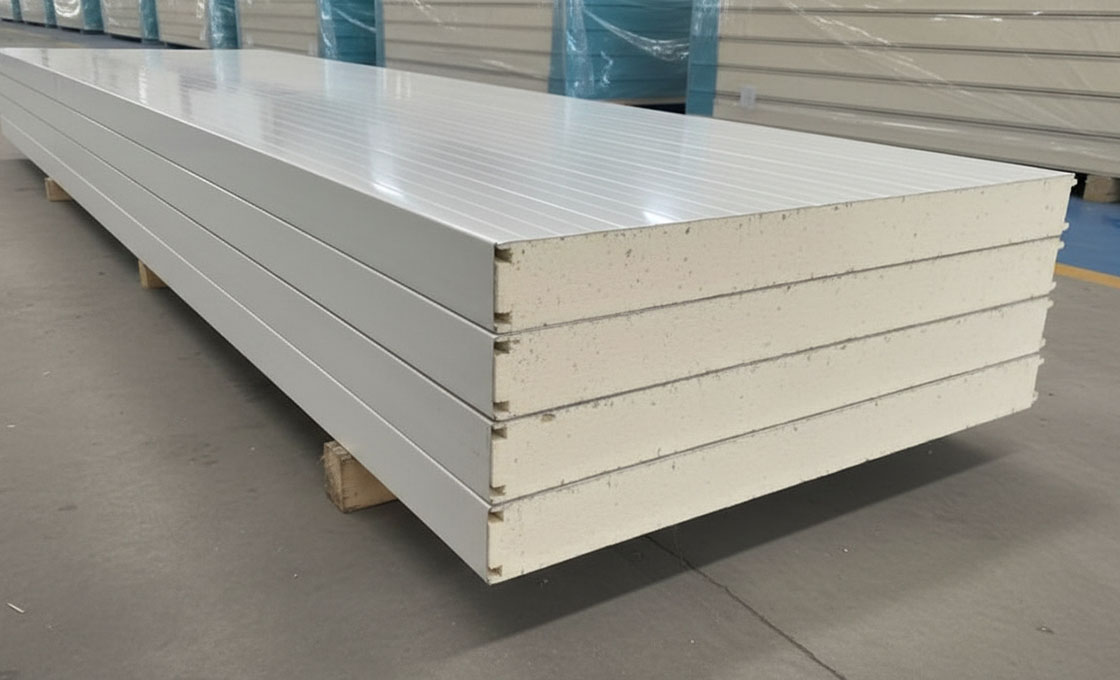
Industry Compliance and Safety Standards Overview
Compliance functions as the primary liability shield for composite panel systems. Prioritizing verified fire resistance classifications, recognized hygiene certifications, and validated structural load ratings ensures audit readiness and long-term operational safety.
Fire Resistance and Combustibility Classifications
Composite panel assemblies must meet rigorous combustion testing protocols to prevent rapid flame propagation in enclosed logistics spaces. Regulatory frameworks typically evaluate surface spread of flame, heat release rate, and smoke density. For example, European standards classify materials into Euroclasses ranging from A1 (non-combustible) to F (unclassified), while North American markets frequently reference ASTM E84 testing for surface burning characteristics.
When selecting facings such as Glass Reinforced Plastic (GRP) or Aluminum Composite Panels (ACP), the underlying core material dictates the baseline rating. Cores like Polyisocyanurate (PIR) or Phenolic Foam generally achieve higher flame retardancy ratings compared to Expanded Polystyrene (EPS) due to their self-extinguishing chemical structure. Operators should request independent laboratory reports verifying that the complete sandwich assembly, including adhesives and joint sealants, maintains its rated performance under sustained exposure.
Hygiene and Sanitation Certifications
Environments requiring strict contamination control, such as pharmaceutical logistics or high-grade food distribution, mandate surfaces that resist microbial colonization and withstand aggressive cleaning protocols. Compliance in this sector relies on non-porous facing materials and smooth core bonding to eliminate moisture traps. Materials certified against FDA (U.S. Food and Drug Administration) guidelines or HACCP (Hazard Analysis and Critical Control Points) principles typically use gel-coated GRP sheets or stainless steel facings.
These surfaces create a smooth, impermeable barrier that prevents bacteria from penetrating the panel matrix. Furthermore, the internal core must remain hydrophobic to avoid degradation during frequent washdowns. Manufacturers must verify that adhesive bonds used in the lamination process do not off-gas volatile organic compounds (VOCs) when exposed to sterilization chemicals.
Structural Load and Impact Integrity
Cold storage doors and transport panel envelopes face dynamic mechanical stress from forklift traffic, thermal cycling, and atmospheric pressure differentials. Compliance requires validating both static load capacity and dynamic impact resistance. Engineering standards typically specify deflection limits under uniform distributed loads to ensure the panel does not buckle under its own weight or external wind pressure.
For high-traffic freezer doors, structural reinforcement often involves switching to higher-density PVC foam or PMI (Polymethacrylimide) cores, which provide superior compressive strength compared to standard PU (Polyurethane) foams. Additionally, impact ratings must account for thermal shock; materials that become brittle below -40°C (-40°F) fail inspection. Independent shear and bending tests confirm that the facing-to-core bond remains intact during repeated stress cycles, preventing delamination that could compromise overall envelope integrity.
Thermal Performance and Condensation Control Standards
While insulation efficiency falls under environmental matching, condensation control directly intersects with safety and material longevity.
Failure to meet dew point thresholds allows internal moisture migration, leading to core saturation, reduced thermal resistance, and potential mold growth within the wall cavity. Technical compliance requires calculating the critical humidity ratio based on interior setpoints and exterior climate data. Advanced panel designs incorporate thermal break mechanisms at hinge and latch mounting points to prevent conductive heat loss, which is the primary driver of localized condensation.
Think of thermal bridging like a metal straw running through a thermos; even if the straw is thin, heat escapes rapidly along its path, compromising the entire insulation system. Facings equipped with integrated gel coats or specialized polymer coatings serve as vapor barriers, blocking moisture ingress. Operators should demand U-factor (thermal transmittance) and air permeability test results from accredited facilities, ensuring the final assembly meets or exceeds regional building codes and transport refrigeration regulations.
Initial Procurement Decision Checklist
Validate dimensional tolerances, load capacities, and third-party material certifications before committing funds to secure optimal facility performance.
Confirming Rough Opening Dimensions for Precise Fitment
When structural engineers reference a rough opening, they mean the exact rectangular void prepared in the building frame before any door components arrive on site. Tolerances in concrete pouring or steel framing frequently deviate by several millimeters from the original blueprints. If a composite panel is forced into an irregular gap, the perimeter sealing gaskets cannot compress uniformly.
This uneven pressure creates micro-leaks that bypass the insulation layer entirely, causing condensation buildup and forcing refrigeration units to work overtime. Always conduct multi-point structural measurements on-site and allow a standardized expansion gap around the panel edges to accommodate thermal expansion and contraction cycles.
Specifying Hinge Load Ratings for Daily Traffic
Heavy-duty refrigerated doors endure constant mechanical stress that far exceeds static weight calculations. Picture standard door hinges like the suspension system on a commercial freight truck; installing light-duty hardware on a heavy insulated assembly will inevitably cause metal fatigue and alignment drift.
To prevent catastrophic failure, calculate the total mass of the core material, external facings, locking mechanisms, and weather stripping. Multiply that combined weight by a standard commercial safety factor, typically between 1.5 and 2.0, to determine the minimum hinge rating required. Verify that suppliers explicitly state the hinge meets continuous heavy-cycling standards rather than generic architectural benchmarks.
Aligning Factory Production Schedules with Project Deadlines
Custom composite manufacturing relies on precise laminating processes that require controlled curing times to achieve proper adhesion between structural cores and exterior skins. Attempting to accelerate these chemical bonding phases inevitably compromises long-term durability and creates weak points along the panel edges.
Procurement teams must initiate material ordering immediately after preliminary design approval reaches final review status. Locking all technical specifications before foundation work commends prevents expensive on-site modifications. Build a mandatory two to four week logistical buffer into your project timeline to absorb potential port congestion, customs inspections, or last-minute engineering revisions.
Requesting Performance Certifications for Chosen Core Materials
The thermal efficiency and fire safety of any insulated door depend entirely on the internal foam or honeycomb core, but marketing brochures rarely reveal actual laboratory results. Genuine performance verification requires independent third-party testing documentation that aligns with recognized international standards.
Buyers must explicitly request current certification reports detailing thermal conductivity values, fire reaction classifications, and long-term moisture absorption rates. Cross-checking these documents against local building codes ensures the selected material will withstand the specific environmental demands of your facility. Never approve a core material without verified evidence that it maintains structural integrity across your target temperature range.
| Checklist Item | Technical Requirement | Testing Standard | Procurement Verification Action | Performance Impact |
|---|---|---|---|---|
| Thermal Bridge Elimination | Thermally broken frame design or continuous insulated core without conductive metal penetration | ASTM C518 thermal conductivity mapping | Request cross-section schematics and third-party thermal imaging reports | Prevents external ice buildup and reduces passive heat infiltration |
| Insulation Core Specification | PIR or PET/XPS foam core maintaining stable R-value below -20°C without moisture absorption | UL 10C surface burning characteristics | Class B1/B2 fire resistance certification | Validate material datasheets against volumetric efficiency trade-offs | Maximizes usable cubic storage volume while ensuring long-term energy retention |
| Perimeter Gasket Integrity | Heavy-duty continuous polyurethane or EPDM gaskets rated for extreme sub-zero flexibility | IP65 weatherproof certification | -40°C to +80°C thermal cycling test | Conduct pull-test sampling and request accelerated aging laboratory results | Eliminates point-source air leakage and prevents frost accumulation at door seams |
| Condensation Control Protocol | Moisture-resistant facings like GRP/FRP or stainless steel with integrated vapor barrier | ASTM E2178 water vapor transmission | Cold storage door condensation control standards | Verify gelcoat application thickness and core-face bonding adhesion strength | Stops structural delamination and maintains hygienic interior surface conditions |
| Facings & Load Bearing Capacity | High-strength composite skins bonded to rigid foam or honeycomb core for heavy-duty cycling | ISO 9001 manufacturing quality audits | Dynamic impact and fatigue load testing | Review load calculation certifications and dynamic fatigue testing data | Ensures operational uptime and resists warping during repeated sub-zero thermal cycles |
| Custom Fabrication & Compliance Alignment | Precision-cut dimensions matching architectural tolerances with full documentation traceability | Project-specific experimental validation | Architectural tolerance compliance standards | Verify dimensional tolerance adherence and prototype thermal performance validation | Guarantees smooth installation and eliminates costly on-site modifications |
Key Takeaways
Matching your door specs to the actual site climate stops thermal bridging before the steel frame ever hits the job. PIR cores beat EPS in subzero zones, but the real failure point sits at the threshold seal.
Heavy traffic warehouses demand reinforced hinges paired with heavy-duty gaskets rated for fifty thousand cycles. Our engineering team verifies rough opening tolerances against site surveys to eliminate condensation traps during temperature swings. Pick the facing material that survives your local humidity, not the brochure.
- Confirm hinge load ratings match your daily forklift traffic volume.
- Request performance certificates for the specific core density you selected.
- Treat our engineering desk as a free technical backup for early design questions.
Frequently Asked Questions
This factor has a direct bearing on project performance and long-term cost. Addressing it with specific data rather than general assumptions leads to better outcomes.
What industries commonly use these doors?
Industrial facility planners deploy these systems across food processing, pharmaceutical logistics, and chemical storage environments. Specialized vehicle manufacturers integrate them into refrigerated truck bodies and mobile cold chain units. Commercial construction procurement teams specify them for large-scale distribution centers and aerospace component storage. The versatility of composite sandwich panels allows adaptation to stringent hygiene, corrosion resistance, and weight-to-strength requirements.
Are cold room doors easy to maintain?
Routine maintenance focuses on inspecting gasket compression, hinge lubrication, and surface integrity after extended operational cycles. Non-porous facings like CFRT or coated aluminum simplify cleaning protocols while resisting chemical exposure from sanitation procedures. Technicians recommend periodic torque checks on fasteners to prevent frame misalignment caused by thermal expansion. Proactive upkeep significantly reduces unplanned downtime and extends the functional lifespan of the assembly.
How much does cold room door typically cost?
The cost of cold room door varies based on material grade, thickness, panel dimensions, and order volume. Requesting a detailed quote with your project specifications is the most reliable way to get an accurate figure. Bulk orders typically reduce per-unit pricing significantly.
What factors affect the price of cold room door?
The cost of cold room door varies based on material grade, thickness, panel dimensions, and order volume. Requesting a detailed quote with your project specifications is the most reliable way to get an accurate figure. Bulk orders typically reduce per-unit pricing significantly.
How long does cold room door last under normal conditions?
With proper installation and routine maintenance, cold room door can last 20 to 30 years or more. Actual lifespan depends on environmental exposure, load conditions, and whether the protective surfaces remain intact over time.