

PP honeycomb core weighs roughly 1/32 of aluminum per unit volume. In an industry where every kilogram shaved off a truck body translates directly to payload capacity, that ratio matters. But most buyers evaluating lightweight truck and trailer panels stop at the weight spec and skip the harder question. How does this material hold up over a decade of real use versus plywood? The answer depends on the application and the skin you bond to the core.
This article breaks down the specific PP honeycomb panel applications that make financial and engineering sense: automotive, marine, and commercial building. It also directly addresses the foam core vs honeycomb core comparison that catches most builders off guard. You will walk away knowing exactly which use cases justify the material switch and which ones demand a different core entirely.
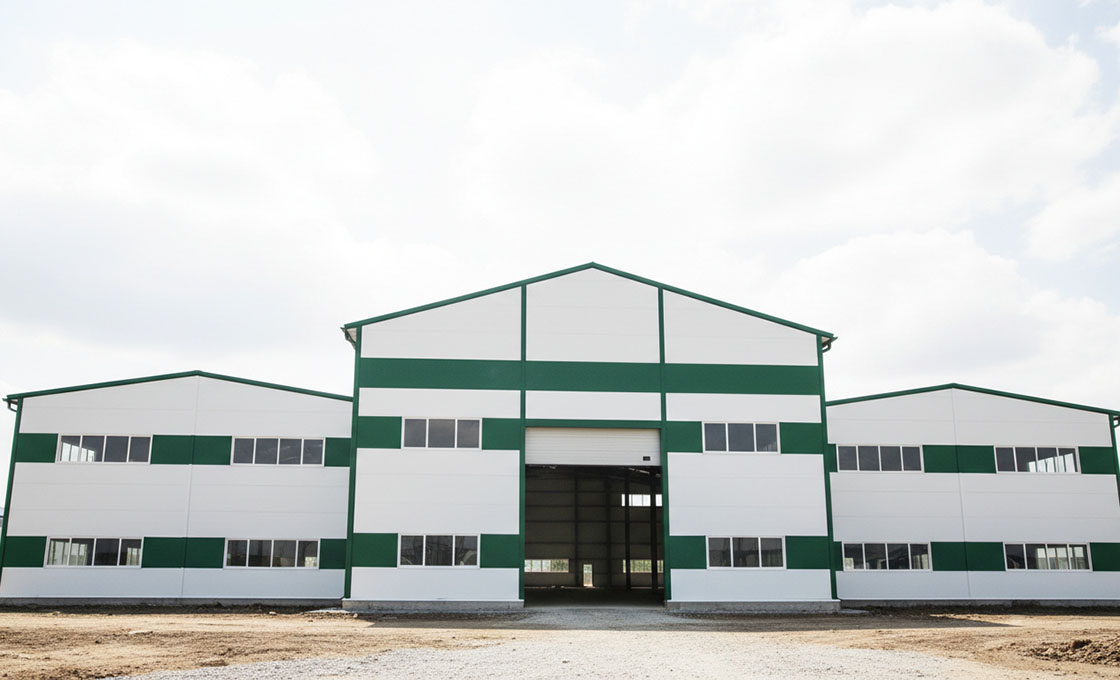
Core Properties Defining PP Honeycomb Panel Uses
PP honeycomb cores derive their structural value from a hexagonal cell geometry that distributes load across the panel plane while displacing up to 90% of solid material volume. The three properties that dictate whether this core works for your application are strength-to-weight performance, moisture immunity, and thermal behavior.
High Strength-to-Weight Ratio
The engineering appeal of a PP honeycomb panel starts with its cellular architecture. When polypropylene sheets are extruded, cut into strips, bonded at intermittent node lines, and mechanically expanded, the resulting hexagonal cell structure carries compressive and shear loads far beyond what the raw polymer weight would suggest. The geometry does the heavy lifting, not the material mass.
This matters in real-world B2B procurement. Our engineering team at Rax Panel regularly tests PP honeycomb cores composited with fiberglass sheet facings to create FRP skin PP honeycomb panels, and the bending stiffness achieved per unit weight consistently outperforms solid alternatives like plywood or rigid foam at equivalent thicknesses. The key mechanism is sandwich theory: two thin, stiff skins separated by a lightweight core resist flexural loads with dramatically higher efficiency than a single thick sheet of any material.
However, honesty is required here. PP honeycomb shear strength is lower than denser core options like 80 kg/m³ structural foam or balsa wood. For highly localized point loads or fastener pull-out scenarios, foam cores such as PET or PVC may perform better. The advantage of PP honeycomb lies in distributed load applications such as truck sidewalls, trailer flooring, and large-area partitions, where the panel spans a wide surface and the load is spread across many cells simultaneously.
- Core density range: Typical PP honeycomb cores run between 60–120 kg/m³ depending on cell size and wall thickness, placing them between lightweight foams and heavier structural cores.
- Compressive strength: Sufficient for most vehicular flooring and wall panel applications when properly skinned with GRP or CFRT facings.
- Impact energy absorption: The cellular structure deforms progressively under impact, dissipating energy across multiple cell walls rather than fracturing catastrophically.
Moisture and Rot Resistance
Polypropylene is inherently hydrophobic. It does not absorb water, does not swell, and does not provide a food source for mold, fungi, or rot organisms. This is a fundamental material property, not a coating or additive, meaning it cannot degrade over time through surface wear or UV breakdown of a protective layer.
This property directly addresses the lifecycle cost problem that buyers face when comparing PP honeycomb to marine plywood or treated timber in structural applications. Plywood, even marine-graded, absorbs moisture at cut edges, fastener holes, and surface scratches. Over a 5-to-10-year service life in humid or wet environments, this moisture ingress causes delamination, swelling, and fungal decay. PP honeycomb panels eliminate that failure mode entirely.
There is a practical caveat worth noting from real-world marine engineering discussions. PP honeycomb is an open-cell structure. If the outer skin is breached and water enters the honeycomb cells, the water can become trapped. This is why skin selection and edge sealing are critical in moisture-exposed applications.
A PP honeycomb core with GRP skins and properly sealed edges creates a fully waterproof sandwich panel. But the core itself does not solve water ingress. It only ensures the core will not degrade if water does penetrate.
For B2B buyers evaluating total cost of ownership, the rot resistance of PP honeycomb translates to longer replacement cycles, fewer warranty claims, and reduced maintenance labor compared to organic core materials. The polymer is also fully recyclable at end of life, which addresses the increasing sustainability and regulatory pressures manufacturers face across global supply chains.
Thermal Insulation Properties
The thermal behavior of PP honeycomb panels is a function of two factors: the low thermal conductivity of polypropylene itself (approximately 0.15–0.22 W/m·K), and the trapped air within the honeycomb cells. Air is a poor thermal conductor, and when segmented into small hexagonal pockets, convective heat transfer within the cells is minimized. The combined effect creates a panel with meaningful insulating capability, though not at the level of dedicated insulation materials like XPS or PU foam.
In practice, PP honeycomb panels are not selected primarily for their R-value. If thermal insulation is the overriding requirement for a project, foam core sandwich panels using PET, PU, or XPS cores will outperform honeycomb configurations. Our engineering team at Rax Panel frequently advises clients on this distinction: choose PP honeycomb when structural stiffness, weight reduction, and moisture resistance are the primary drivers, and treat any thermal insulation as a secondary benefit.
That said, the thermal stability of the polypropylene core matters more than its insulation value in many applications. PP honeycomb maintains its mechanical properties across a functional temperature range that covers most transportation and construction environments.
However, it does have limitations at extreme temperatures: the material softens at elevated heat and becomes brittle in deep freezing conditions. For applications involving sustained thermal cycling between these extremes, our team conducts specific experimental testing to validate long-term performance before recommending a PP honeycomb solution.
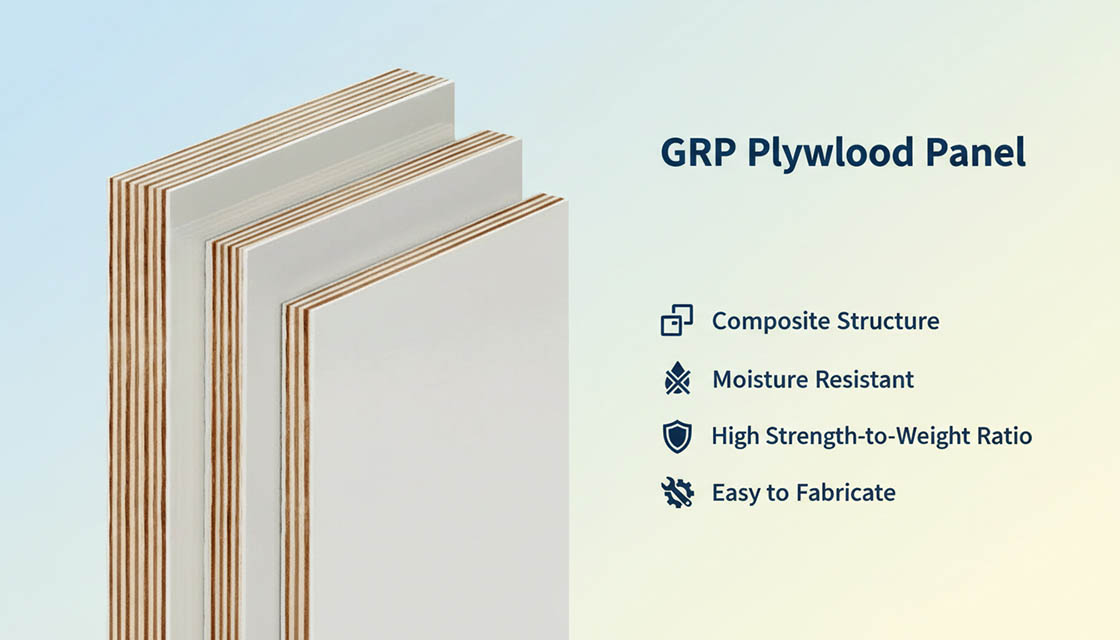
Automotive Solutions for PP Honeycomb Panel Uses
Automotive OEMs are shifting from traditional plywood and metal substrates to PP honeycomb panels to cut vehicle weight without sacrificing crash safety or payload limits.
Automotive Interior Panels
Interior panel weight is a silent drain on fuel economy and EV range. A conventional MDF or plywood door panel might weigh 30–40% more than a thermoplastic honeycomb alternative of the same thickness. PP honeycomb cores, when composited with CFRT or GRP skins, deliver comparable flexural rigidity while stripping out that excess mass.
The key advantage here is structural consistency. Unlike plywood, which varies in density and grain orientation from batch to batch, extruded polypropylene honeycomb cores maintain uniform cell geometry and wall thickness across the entire production run. Our advanced production line outputs over 1,700 square meters daily, ensuring volume orders for automotive tier-1 suppliers ship without batch-to-batch variance.
Thermal bonding is critical for automotive interiors. PP honeycomb cores with a non-woven polyester veil allow adhesive systems to bond reliably with decorative laminates, fabrics, and vinyl wraps. This eliminates the delamination failures common in low-grade plywood substrates exposed to cabin temperature cycling, which can swing from sub-zero to over 70°C inside a locked vehicle in summer. Polypropylene’s inherent moisture resistance also prevents the warping, swelling, and fungal growth that plagues organic materials in humid climates.
Trunk Floor Assemblies
Trunk floors demand a specific combination of localised load-bearing capacity and impact absorption. A spare tire well cover, for instance, must support a concentrated load of over 100 kg without permanent deflection, while also surviving repeated slamming and cargo drops. FRP skin PP honeycomb panels excel in this application because the sandwich structure distributes point loads across a wide area of the cellular core, preventing the concentrated stress cracks that propagate in solid plastic or wooden boards.
For trunk floor assemblies, we typically recommend GRP sheets with gelcoat as the facing material. The gelcoat provides a hard, smooth surface that resists scuffing from luggage and cargo, while also offering waterproof protection against spills or trunk leaks.
This is a clear lifecycle advantage over plywood trunk floors, which absorb moisture over time, leading to rot, added weight, and eventual structural failure. In B2B procurement terms, the higher initial unit cost of a PP honeycomb trunk floor is offset by eliminating warranty claims related to water damage and material degradation within the vehicle’s service life.
EV Lightweighting Components
Electric vehicles face a compounding weight problem. Battery packs alone can add 300–600 kg to a chassis, forcing engineers to claw back mass everywhere else to preserve range targets. Every kilogram saved in body panels, internal structures, and cargo platforms directly translates to additional driving distance.
PP honeycomb panels are uniquely positioned here because they offer one of the highest strength-to-weight ratios available in thermoplastic composites. The core itself is fully recyclable, aligning with the sustainability mandates that most EV manufacturers enforce throughout their supply chains.
Our engineering team works directly with vehicle manufacturers to customize cost-effective composite layups for EV applications. This means selecting the optimal core density, skin material, and panel thickness to meet specific crash test standards and load requirements without over-engineering the part.
For example, using continuous fiberglass reinforced thermoplastic (CFRT) sheets as skins instead of traditional GRP yields a thinner, lighter, and more resilient panel, which is critical when every millimeter of package space and every gram of mass counts in an EV architecture. We conduct experimental testing to validate that each custom configuration meets the required mechanical data standards before mass production begins.
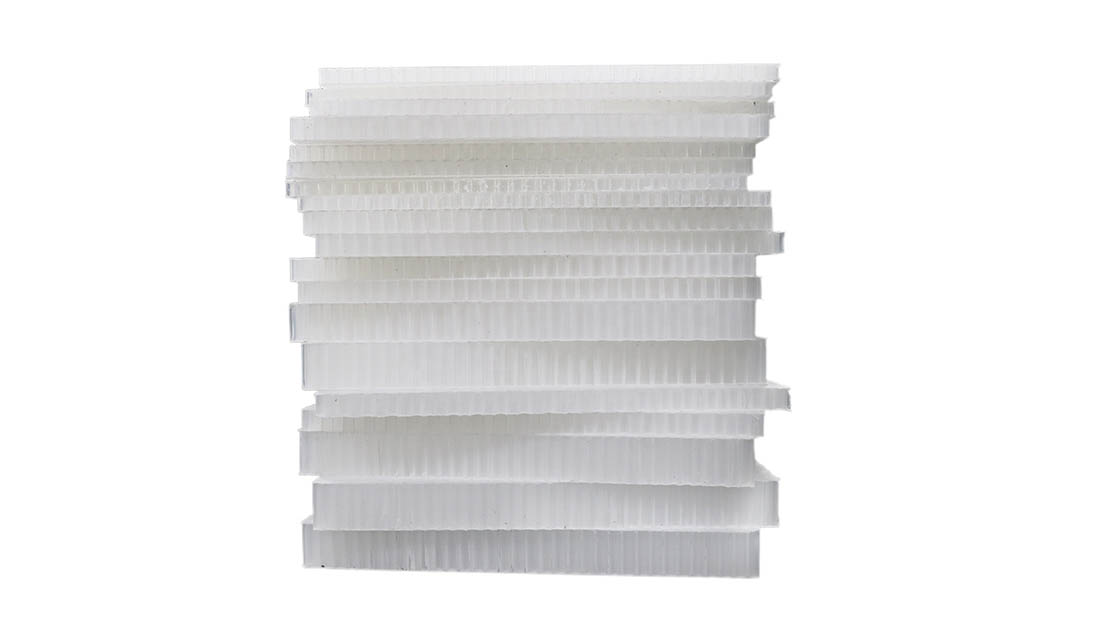
Marine Applications for PP Honeycomb Panel Uses
PP honeycomb panels with FRP skins are rapidly displacing marine plywood in deck and interior structural applications, offering a rot-proof, thermally bonded alternative that eliminates delamination risk in constant moisture exposure.
Fiberglass Boat Hulls
Using PP honeycomb cores in fiberglass boat hull construction is a legitimate engineering path, but it requires precise lamination strategy. The core challenge is bonding. Polypropylene is notoriously resistant to adhesives, and most marine-grade sealants explicitly exclude PP on their instruction sheets.
At Rax Panel, we address this by thermally bonding a polyester veil directly to the PP honeycomb core during production. This veil gives resin and adhesive a mechanically interlocking surface, allowing GRP skins to be laminated reliably in a single infusion process.
That said, hull applications demand honest engineering caveats. PP honeycomb has lower shear strength compared to equivalent-density PVC foam or balsa cores. For high-impact, load-bearing hull sections on larger vessels, foam core sandwich panels utilizing PVC or PET cores with GRP/FRP facings may be the structurally safer choice. Our engineers evaluate project-specific load data before recommending one core over another. We do not force PP honeycomb into applications where it underperforms.
Where PP honeycomb excels in hull construction is smaller craft such as kayaks, tenders, and workboats under 8 meters, where impact absorption, weight savings, and zero water absorption outweigh the need for maximum shear rigidity. The closed-cell thermoplastic structure will not rot, swell, or delaminate even if the outer skin is breached and water enters the core cavity.
Marine Deck Construction
Marine decking is where PP honeycomb panels see their most widespread and proven adoption in the vessel space. Decks demand stiffness under foot traffic, resistance to standing water, and minimal weight aloft to preserve vessel stability. FRP skin PP honeycomb panels meet all three requirements without the organic vulnerability of plywood or the cost premium of carbon fiber laminates.
In our production facility, marine deck panels are typically configured with GRP sheet facings, available with or without gelcoat surfaces. The gelcoat option provides a pre-finished, waterproof, UV-resistant walking surface that requires no additional treatment after installation. This eliminates a finishing step for boat builders and reduces labor cost per square meter.
The non-slip and anti-skid honeycomb panel variants we manufacture are particularly relevant here. For commercial workboats, fishing vessels, and passenger ferries, deck surfaces must meet coefficient-of-friction requirements under wet conditions. We integrate textured surface finishes during the lamination phase rather than applying aftermarket coatings that wear off.
Plywood Replacement Alternatives
The lifecycle cost argument between PP honeycomb panels and marine-grade plywood is the calculation that tips the decision for most B2B buyers. Marine plywood has a lower upfront material cost per sheet. That is undeniable. But the total cost of ownership over a 10-to-15-year service life tells a different story.
- Moisture degradation: Even marine-grade plywood absorbs moisture at joints, fastener holes, and surface scratches over time. This triggers rot, delamination, and structural softening. PP honeycomb is hydrophobic: zero moisture absorption means zero biological degradation.
- Maintenance cycles: Plywood decks and bulkheads in saltwater environments typically require resealing or replacement every 5 to 7 years. Thermoplastic honeycomb panels require no protective coating renewal, cutting recurring labor and material costs entirely.
- Weight penalty: Plywood densities range from 500 to 700 kg/m³ depending on grade. A PP honeycomb panel with FRP skins achieving equivalent bending stiffness typically lands between 30 to 50% lighter, directly increasing payload capacity or reducing fuel consumption for commercial vessels.
- End-of-life recyclability: PP honeycomb cores are thermoplastic and can be reprocessed. Plywood, once saturated with resin or sealant, is landfill waste. This is increasingly relevant as marine vessel regulations tighten around recyclability and environmental compliance in European and North American markets.
For distributors supplying boat builders and marine refit yards, positioning PP honeycomb as a plywood alternative is straightforward when the conversation shifts from price-per-sheet to cost-per-decade. Our international sales team provides comparative weight and stiffness calculations specific to each customer’s current plywood specification, making the substitution case with engineering data rather than marketing claims.
We supply PP honeycomb core panels in large-format sheets to minimize joint lines in marine installations. For interior bulkheads, cabinetry, and furniture panels where structural loads are lower, standard PP honeycomb with non-woven fabric facings provides an economical, rot-proof direct swap for plywood at comparable thicknesses.
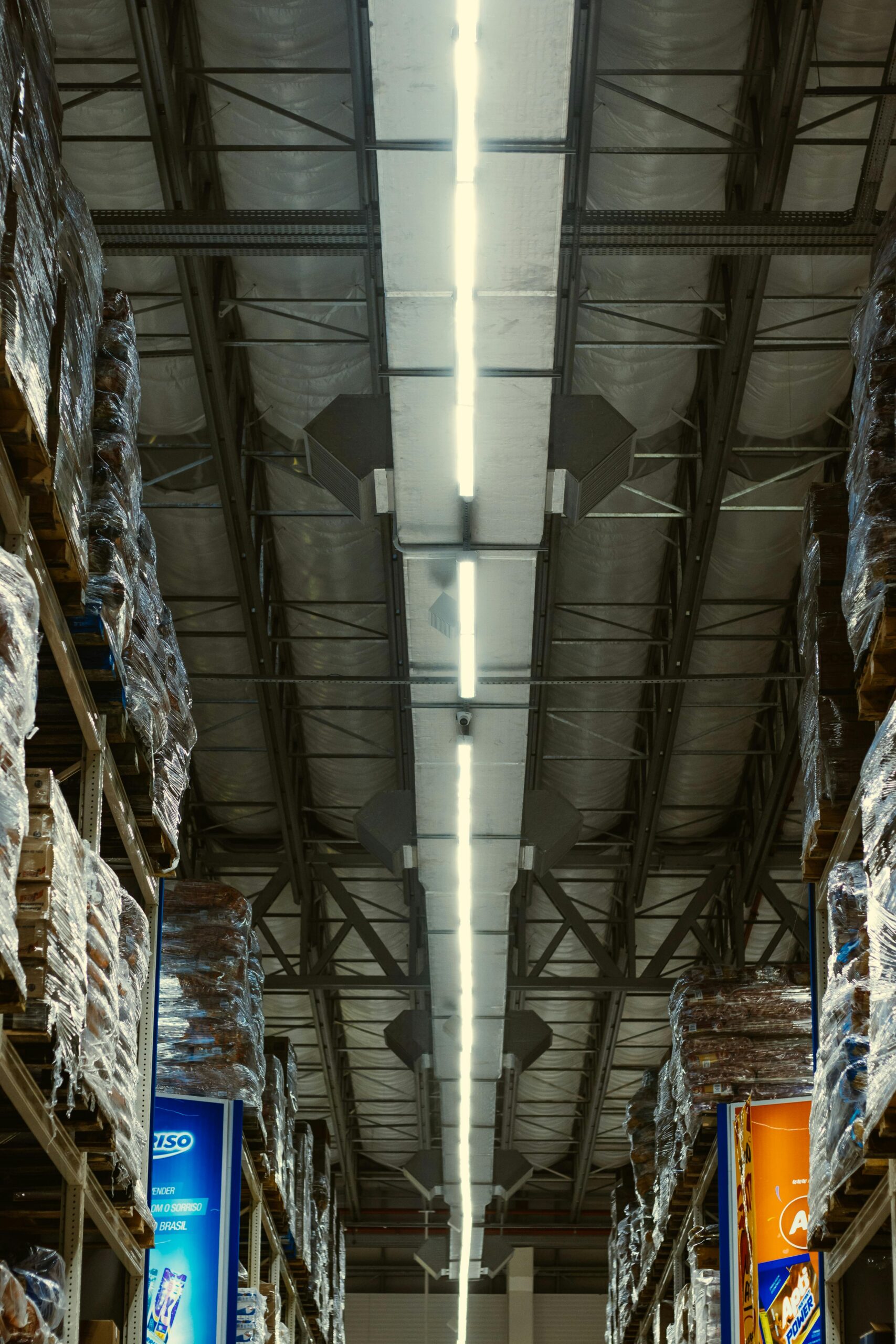
Commercial Building PP Honeycomb Panel Uses
In commercial construction, PP honeycomb panels slash lifecycle costs by outlasting plywood in humid environments: no rot, no delamination, and full recyclability at end-of-life.
RV and Caravan Walls as Mobile Commercial Structures
Mobile homes and commercial caravans occupy a gray zone between vehicle manufacturing and permanent architecture. For OEMs producing park homes, holiday cabins, and portable site offices, wall systems must withstand years of occupancy, repeated transport, and climate cycling. PP honeycomb core composited with FRP skins delivers a wall panel that handles all three demands without the weight penalty of traditional timber framing.
The critical advantage over plywood in these mobile structures is dimensional stability. Plywood absorbs atmospheric moisture during storage and transport, causing swelling that warps wall flatness. Polypropylene is inherently hydrophobic, so the core simply does not take on water.
When our production line laminates FRP facing sheets onto the PP honeycomb core, the resulting sandwich panel maintains consistent thickness and flatness regardless of humidity exposure. For caravan manufacturers assembling walls on jigs, this consistency directly translates to faster production cycles and fewer rejected panels.
Road vibration presents a different challenge. Mobile structures experience constant low-frequency vibration that gradually loosens mechanical fasteners and fatigues bonded joints. The honeycomb core’s cellular geometry distributes vibration energy across thousands of individual cell walls, dampening resonance far better than a solid plywood sheet of equivalent weight. Our engineering team has validated this through experimental testing with RV manufacturers, confirming that FRP-skinned PP honeycomb walls show measurably lower fastener backout rates over simulated 100,000-kilometer road tests compared to plywood-backed assemblies.
Modular Building Partitions
Modular construction depends on one principle: maximize factory-assembled volume while minimizing crane weight on site. PP honeycomb partition panels address both constraints. A standard interior partition panel using a PP honeycomb core with gelcoat FRP skins weighs a fraction of an equivalent gypsum-and-stud wall assembly, yet provides comparable bending stiffness. This weight reduction cascades through the entire project: lighter panels mean lighter steel framing, smaller cranes, and reduced foundation loads.
The lifecycle cost comparison against plywood in modular partitions is where PP honeycomb delivers its strongest commercial argument. Plywood partitions in humid or coastal climates typically show edge swelling and fungal staining within three to five years, requiring patch-and-paint maintenance or outright panel replacement. PP honeycomb panels are immune to biological degradation.
The polypropylene core does not support mold growth, and the FRP skin with gelcoat provides a smooth, non-porous surface that cleans with standard commercial detergents. Over a fifteen-year building service life, the total cost of ownership, factoring in initial purchase, maintenance labor, and replacement material, favors PP honeycomb by a significant margin in any environment where humidity exceeds 60% for extended periods.
End-of-life disposal further tilts the economics. Treated plywood contains adhesives and preservatives that complicate recycling and, in many jurisdictions, classify the waste as hazardous. Polypropylene honeycomb panels are fully recyclable. The PP core and FRP skins can be separated and processed through standard thermoplastic recycling streams, an increasingly important factor as commercial developers face stricter sustainability reporting requirements and waste diversion mandates across European and North American markets.
Cleanroom Structural Panels
Cleanroom environments, whether for pharmaceutical production, semiconductor fabrication, or food processing, impose material requirements that eliminate most conventional building products. Wall panels must not shed particles, must not outgas volatile organic compounds, and must withstand repeated cleaning with aggressive chemical agents including isopropyl alcohol, hydrogen peroxide, and quaternary ammonium compounds. PP honeycomb panels with gelcoat FRP facing sheets meet all three criteria.
The honeycomb core itself is an open-cell structure by design: individual cells connect to one another, which is fundamental to how honeycomb geometry functions. This is not a defect; it is the physical reality of the material. In cleanroom applications, the core is never left exposed.
Both faces receive continuous laminated skins, and all panel edges receive proper sealing during installation. The encapsulated panel system then behaves as a sealed unit with no pathway for particulate release or contaminant ingress into the wall cavity.
Chemical resistance is where polypropylene genuinely outperforms alternative core materials. PVC foam cores can plasticize and soften under prolonged exposure to certain solvents. Balsa wood cores, even when sealed, remain vulnerable to moisture intrusion at fastener points and joint edges. Polypropylene is chemically inert to virtually all cleaning agents used in controlled environments.
Our engineers have conducted immersion testing on PP honeycomb core samples exposed to standard cleanroom disinfectants over extended cycles, confirming zero measurable weight change or surface degradation. For cleanroom contractors specifying wall systems rated to ISO 14644 standards, this chemical stability eliminates a common failure mode that forces costly panel replacements mid-operational cycle.
Installation efficiency also matters in cleanroom construction, where projects often operate under tight validation timelines. PP honeycomb panels arrive from our factory pre-cut to project dimensions with facing sheets already laminated. Installation crews fasten the panels directly to aluminum or steel framing grids using mechanical clips and sealed joint systems.
No on-site cutting, sanding, or wet finishing is required. Such processes would generate airborne particles and compromise the cleanroom environment during construction. Our production line’s daily output exceeding 1,700 square meters ensures that even large-scale cleanroom projects receive consistent panel batches manufactured under controlled conditions, maintaining material uniformity across the entire installation.
How Lamination Affects PP Honeycomb Panel Uses
The skin material bonded to a PP honeycomb core dictates 80% of the panel’s final performance. Choose the wrong lamination method, and you compromise the entire structure.
FRP Versus Thermoplastic Skins
Not all skins are created equal. At Rax Panel, we engineer two primary families of facing materials for PP honeycomb cores, and selecting between them depends entirely on your performance requirements and budget. Traditional GRP sheets with gelcoat deliver a hard, waterproof, and chemically resistant surface that performs exceptionally well in refrigerated truck bodies and marine interiors. The gelcoat layer provides a flat, smooth finish that resists UV degradation and simplifies cleaning.
However, thermoplastic skins, specifically CFRT (Continuous Fiberglass Reinforced Thermoplastic) sheets, represent the newer engineering approach. CFRT skins are lighter, thinner, and more resilient than traditional FRP. They flex rather than crack under impact, which matters tremendously in commercial trucking and transit applications where panels absorb repeated mechanical stress. For distributors servicing the transportation sector, CFRT-skinned PP honeycomb panels offer a compelling margin advantage because they reduce both material weight and freight costs.
- GRP Sheets (with gelcoat): Maximum surface hardness, superior chemical resistance, ideal for wet environments like refrigerated trucks and vessel interiors.
- CFRT Sheets: Lighter weight, higher impact resilience, thinner profile, optimized for weight-sensitive applications in trucking and new energy vehicles.
- Thermoplastic UD Tapes: Used for localized reinforcement where specific load paths require additional stiffness without adding full-skin weight.
Surface Energy and Bonding Challenges
Here is where many manufacturers cut corners, and where buyers get burned. Polypropylene is notoriously difficult to bond. Its surface energy is extremely low, meaning standard adhesives and resins simply cannot achieve a reliable mechanical or chemical bond to the raw PP core. If you have ever read the back of a glue or sealant tube, PP is almost universally listed as a material that the adhesive will not stick to.
This is precisely why the lamination process matters as much as the materials themselves. At Rax Panel, we address this challenge by offering PP honeycomb cores with non-woven fabric thermally bonded to the cell surfaces.
This fabric layer acts as a bonding bridge: it raises the effective surface energy of the core, allowing GRP resins, adhesives, and other facing materials to achieve the shear strength required for structural applications. Without this intermediary layer, skins can delaminate under thermal cycling or sustained vibration, which is a catastrophic failure mode in truck bodies and marine structures.
Our engineers conduct experimental testing on every custom specification to verify that the bond between skin and core meets the required data standards for shear, peel, and tensile loading. This is not a step where generic manufacturing works. Each combination of core density, skin material, and bonding method must be validated for the specific operating conditions of the end application.
Customized Dimensional Tolerances
Off-the-shelf panel dimensions rarely integrate cleanly into engineered assemblies. Truck body builders, RV manufacturers, and industrial equipment designers all require panels cut to precise specifications with tight tolerances on thickness, flatness, and edge quality. A panel that is even slightly out of spec creates assembly headaches on the production floor, increases labor costs, and compromises the structural seal of the finished product.
With our advanced composite panel production line capable of exceeding 1,700 square meters of daily output, Rax Panel accommodates custom dimensional requirements without sacrificing consistency. Our engineers work directly with your project team to define tolerance bands that match your assembly process, whether you need tight thickness control for flush-fit modular partitions or oversized panels to minimize joints in trailer body construction. The key is defining these tolerances during the design phase, not discovering mismatches during installation.
Conclusion
PP honeycomb panels earn their keep anywhere excess weight destroys your profit margin: truck bodies, refrigerated trailers, boat interiors. The structure sheds 40-60% of plywood’s weight while refusing to rot, warp, or drink moisture. Fleet operators who switch don’t switch back.
- Stop treating foam and honeycomb cores as interchangeable. Honeycomb wins on flat structural panels with higher shear and compression strength; foam conforms better to curved geometries. Spec the wrong core and your client’s panels fail inside 18 months.
- Never skip the skin selection conversation with your buyer. FRP skins deliver maximum rigidity for truck sidewalls and flooring; CFRT skins flex without cracking on curved marine components. The actual load requirements dictate the skin, not the catalog price.
- Avoid comparing only the day-one purchase price. Plywood truck floors delaminate in 3-5 years under real freight conditions. A polypropylene sandwich structure runs 10+ years with zero moisture damage, and that gap flips the total cost of ownership completely.
Send your load requirements and operating conditions to our engineering team before you commit to any large order. We test core-skin combinations on our production line every day, so the numbers we quote match what actually shows up at your loading dock.
Frequently Asked Questions
What industries use PP honeycomb panels?
They are used in transportation, construction, cold-chain logistics, marine interiors, cleanrooms, and industrial equipment sectors.
What types of PP resin are used in honeycomb panels?
Homopolymer PP for stiffness and heat resistance, copolymer PP for impact resistance and flexibility, and recycled PP blends for select applications.
How do PP honeycomb panels compare to foam panels?
PP honeycomb panels outperform foam in impact resistance testing, though they may be heavier than foam while being lighter than plywood alternatives.
What skin materials can be bonded to PP honeycomb?
Composite skins, glass-fiber reinforcements, non-woven polyester fabrics, and resin-infused fabrics can be thermally bonded to PP honeycomb cores.
Are PP honeycomb panels recyclable?
Yes, recyclability is one of the key advantages of PP honeycomb panels, as polypropylene is a thermoplastic that can be reprocessed.