

Every transportation manufacturer I talk to in 2026 has the same mandate: cut weight without sacrificing structural integrity. Polypropylene honeycomb core delivers on both counts. It weighs roughly 1/12 the mass of water and 1/32 that of aluminum per equivalent volume — yet maintains compressive and shear strength that holds up under actual load conditions. That math explains why PP honeycomb panel applications have expanded well beyond niche aerospace projects into truck bodies, RV flooring, cold-chain logistics, and marine interiors.
This article maps out the specific industries adopting these panels. It compares their performance and total cost against plywood, foam core, and aluminum substrates. It also covers the surface customization options that open up specialized orders. If you are evaluating whether to stock this material or spec it into your next build, what follows gives you the data to make that call without guessing.
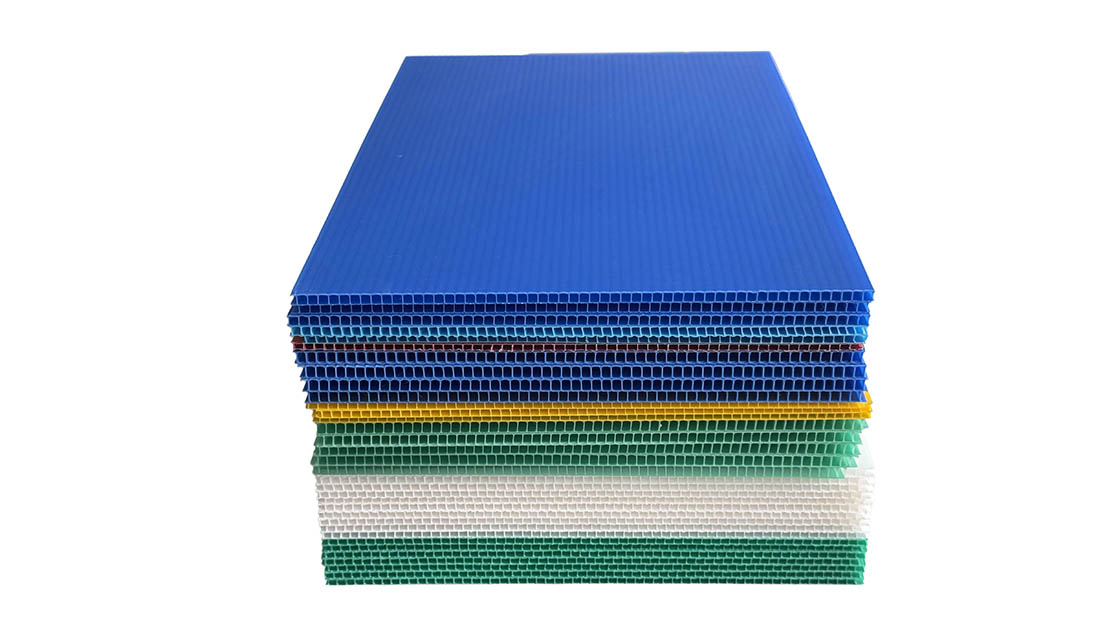
Primary PP Honeycomb Panel Applications
PP honeycomb panels have shifted from niche aerospace components to mainstream industrial workhorses, driven by the demand for lightweight structures that cut fuel costs without sacrificing load-bearing capacity.
Automotive and Transportation Uses
Vehicle manufacturers face a constant math problem: every kilogram saved directly improves fuel efficiency or extends EV battery range. PP honeycomb core, when composited with fiberglass sheet, delivers a high strength-to-weight ratio that outperforms traditional plywood and metal sheeting in structural panels. This is why the material has become a default choice for RV walls, roofing, flooring, and internal furniture panels where weight budgets are strict.
In commercial trucking, the stakes are even higher. Refrigerated truck bodies and dry freight truck bodies built with PP honeycomb sandwich panels reduce tare weight, allowing operators to legally carry more cargo per trip.
The polypropylene core itself is inherently resistant to moisture absorption, meaning it will not swell, rot, or harbor mold—a critical advantage over hygroscopic materials in cold-chain logistics where condensation is constant. Rax Panel supplies CKD (completely knocked down) truck kits configured to these exact specifications, enabling overseas assemblers to build locally while maintaining consistent panel quality.
Beyond trucks and RVs, the material is used in public transit interiors, marine vessel bulkheads, and even sports equipment. The common thread is the same: manufacturers need a core that handles vibration, impact, and environmental exposure without degrading over a 10- to 15-year service life.
Building and Construction Solutions
In construction, PP honeycomb panels serve as interior wall partitions, ceiling systems, and lightweight structural cladding. For commercial builders, the calculation is straightforward: lighter panels mean smaller crews, faster installation timelines, and reduced crane or lifting equipment costs on site. A panel that weighs a fraction of an equivalent concrete or masonry wall assembly can be handled by two workers instead of a full rigging team.
Moisture resistance is a major selling point for building applications. Unlike traditional gypsum or wood-based panels that degrade when exposed to humidity or water ingress, polypropylene is hydrophobic. This makes PP honeycomb panels viable for exterior wall cladding, mobile home envelopes, and temporary modular structures in humid or coastal climates. For procurement managers evaluating total cost of ownership, the elimination of water-related replacement and repair cycles is a measurable line-item saving.
Chemical resistance further extends the use case into industrial facilities, cleanrooms, and agricultural buildings where exposure to cleaning agents, fertilizers, or corrosive atmospheres would compromise metal or wood-based alternatives.
Industrial Packaging Benefits
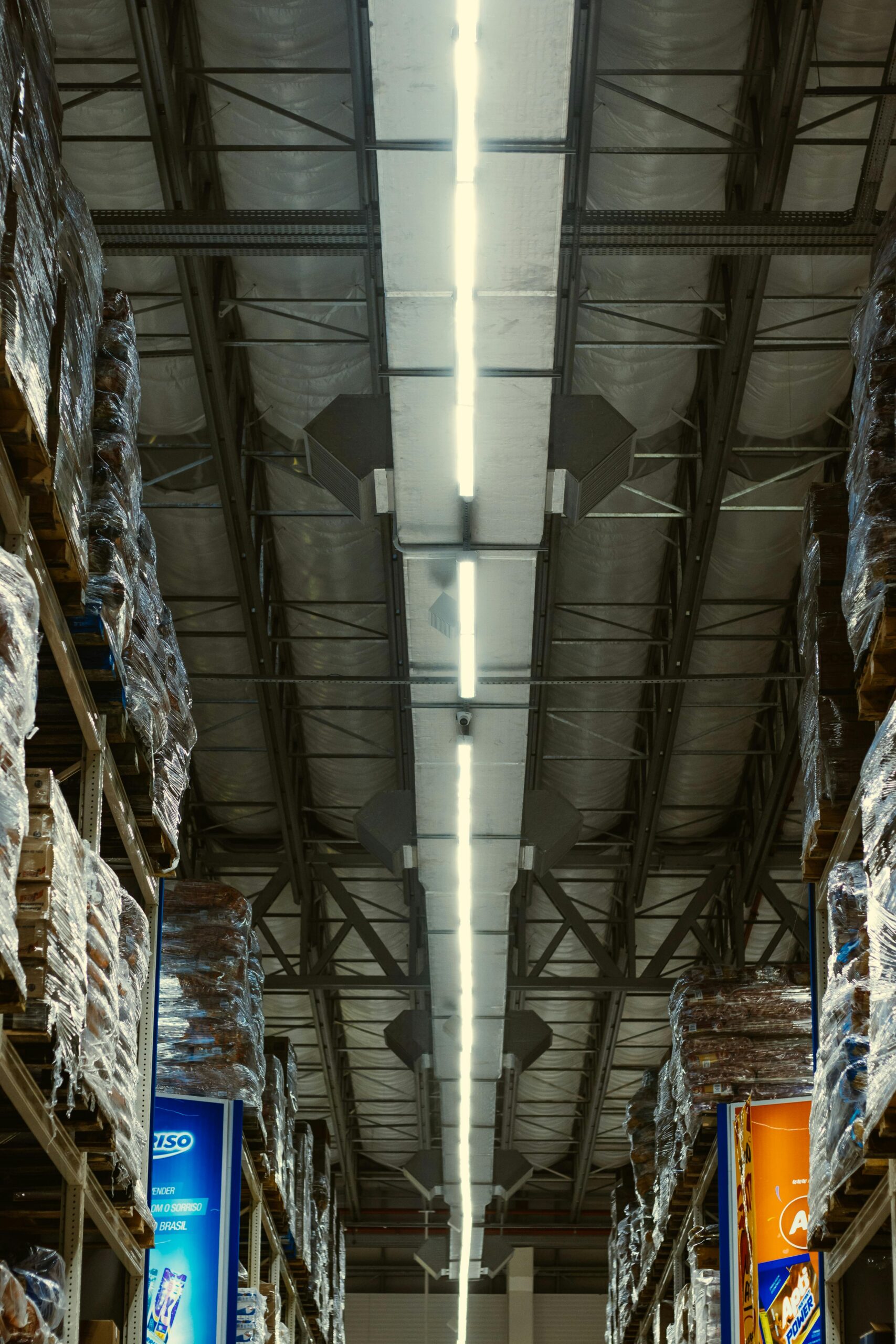
PP honeycomb panels are increasingly specified for heavy-duty industrial packaging, including custom crates, pallets, and protective transport containers. The cellular honeycomb structure absorbs and distributes impact forces across a wide surface area, protecting sensitive or high-value equipment during transit and handling.
For logistics planners managing returnable packaging loops, the material offers two practical advantages that directly affect margins. First, the lightweight core reduces dead freight costs when packaging is shipped empty or loaded. Second, polypropylene is fully recyclable, allowing companies to close the sustainability loop and comply with packaging waste regulations without switching materials.
Unlike wooden crates that require heat treatment or fumigation for international shipping (ISPM 15 compliance), PP honeycomb packaging is exempt from these requirements, removing a regulatory hurdle and associated costs from cross-border supply chains.
From a B2B sourcing perspective, the cost-efficiency of PP honeycomb in packaging scales with volume. Rax Panel’s daily production capacity exceeding 1,700 square meters means bulk orders for standard packaging panel sizes can be filled on predictable lead times, giving distributors and manufacturers the supply chain reliability needed to plan seasonal or contract-based inventory.
Features Defining PP Honeycomb Panel Uses
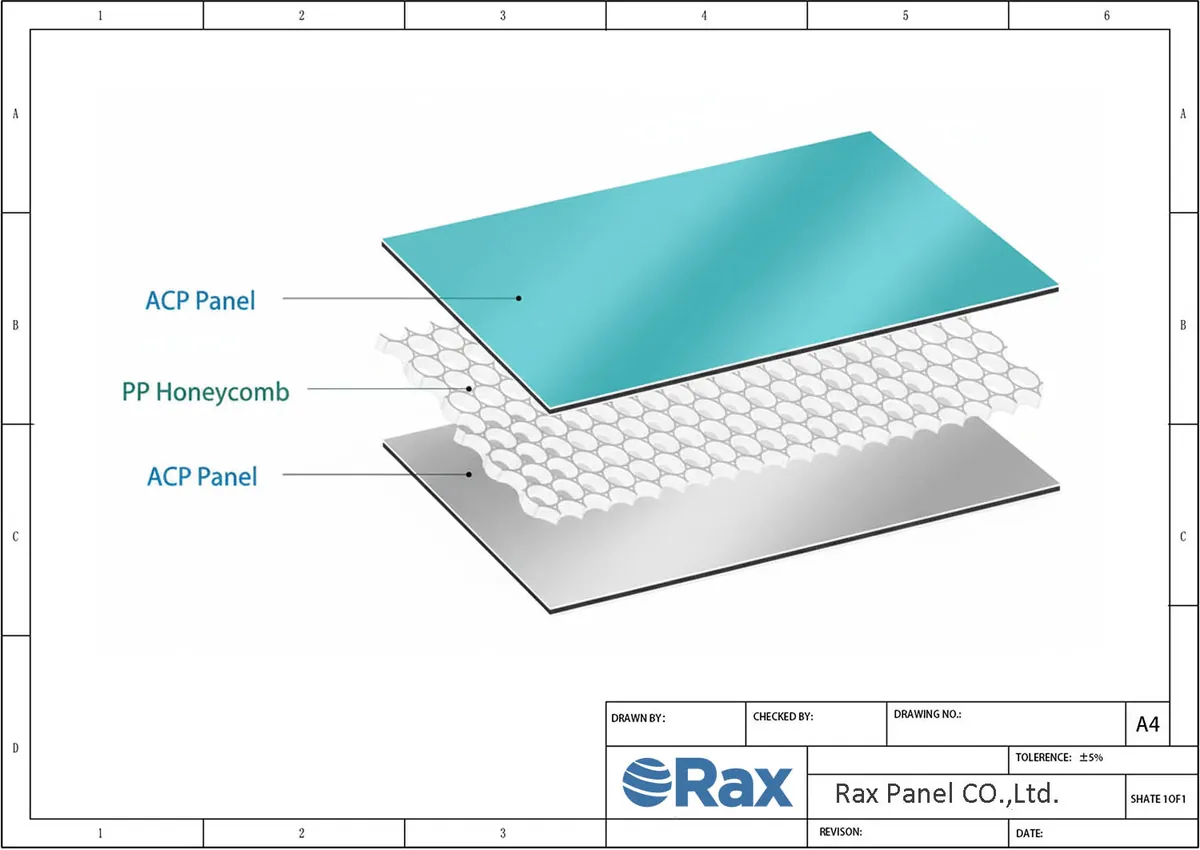
Two properties drive PP honeycomb adoption in demanding B2B applications: a strength-to-weight ratio that outperforms solid materials at a fraction of the mass, and inherent resistance to moisture and chemical degradation that eliminates rot and corrosion failures.
High Strength-to-Weight Ratio
The hexagonal cell geometry of a PP honeycomb core is the engineering equivalent of an I-beam—material is concentrated where structural loads travel, and removed where it adds only dead weight. When Rax Panel composites a PP honeycomb core with fiberglass sheet facings, the resulting sandwich panel delivers high flexural stiffness and impact resistance while remaining significantly lighter than solid plywood, metal sheet, or monolithic plastic alternatives.
For specialized vehicle manufacturers—particularly those building RV walls, refrigerated truck bodies, and dry freight trucks—this strength-to-weight advantage translates directly into payload gains and fuel savings. Every kilogram reduced in the wall or flooring structure is a kilogram available for cargo or removed from lifetime fuel consumption. Our engineers work with buyers to tune core density, cell size, and facing thickness so the panel meets exact mechanical targets without over-engineering the laminate and adding unnecessary cost.
A common misconception among engineers evaluating lightweight cores is that low mass equals fragility. In practice, the PP honeycomb structure absorbs and distributes impact energy across thousands of interconnected cells. This gives the panel strong fatigue durability under repeated dynamic loading—exactly the condition encountered in vehicle flooring, transit interiors, and industrial equipment housings.
Moisture and Chemical Resistance
Polypropylene is a closed-cell, non-hydroscopic thermoplastic. It does not absorb water, swell, or provide a substrate for mold growth. This makes PP honeycomb panels fundamentally different from plywood, balsa wood, and open-cell foam cores that degrade when exposed to humidity or direct moisture over time. In marine interiors, RV flooring near slide-outs, and refrigerated truck bodies where condensation is constant, moisture resistance is not a cosmetic feature—it determines service life.
Beyond water, polypropylene exhibits strong chemical stability against a broad range of acids, alkalis, and solvents encountered in industrial environments. For industrial facility planners and construction procurement teams, this means PP honeycomb panels can be specified in chemically aggressive settings—food processing plants, agricultural chemical storage, and cleanroom partitions—without requiring additional protective coatings or corrosion allowances that metal panels demand.
From a supply chain and maintenance perspective, this resistance simplifies both installation and long-term ownership costs. Panels do not need climate-controlled storage before installation, and end-users do not face premature replacement cycles due to hidden moisture ingress or chemical attack on the core. For international distributors managing inventory across diverse climates—from humid Southeast Asia to dry Central Asia—this dimensional and chemical stability reduces warranty claims and improves customer retention.
| Feature | Specification | Key Benefit | Primary Applications |
|---|---|---|---|
| Lightweight Honeycomb Structure | Hexagonal PP cell core with 70-85% weight reduction vs solid materials | Improved fuel efficiency and easier handling | RV walls/flooring, truck bodies, aerospace interiors, automotive panels |
| Exceptional Strength-to-Weight Ratio | High compressive and shear strength when composited with fiberglass skins | Structural integrity without added bulk | Vehicle manufacturing, marine hulls/decks, construction partitions, cargo containers |
| Moisture and Water Resistance | Near-zero water absorption; no rot, mold, or swelling | Long-term durability in wet and humid environments | Marine interiors, refrigerated trucks, outdoor structures, cleanrooms |
| Corrosion and Chemical Resistance | Inert polypropylene resin resistant to acids, alkalis, and solvents | Extended service life in harsh industrial conditions | Industrial equipment, chemical transport, vessel construction, agricultural products |
| Thermal and Acoustic Insulation | Closed-cell honeycomb geometry traps air pockets for insulation | Temperature retention and noise reduction | Refrigerated truck bodies, cold-chain logistics, mobile homes, building wall cladding |
| Impact Energy Absorption | Cellular structure distributes and dissipates impact forces evenly | Superior protection for fragile and high-value goods | Protective packaging, sports goods, transit flooring, crash-resistant panels |
| 100% Recyclability and Eco-Friendly Profile | Fully recyclable polypropylene; options for recycled PP blends | Meets sustainability mandates and reduces environmental footprint | Green building projects, new energy applications, eco-conscious vehicle manufacturing |
| Customizable Facing and Core Configurations | Compatible with GRP, CFRT, aluminum, steel, plywood, and other skins | Tailored solutions for precise project requirements | Custom RV furniture, specialized vessel designs, architectural facades, public transit interiors |
| Cost-Effective Large-Scale Production | Continuous extrusion process enabling efficient high-volume output | Lower total cost of ownership compared to wood and metal alternatives | Large fleet truck bodies, commercial construction, modular housing, industrial-scale packaging |
| Ease of Installation and Onsite Handling | Lightweight panels allow standard tools and reduced labor requirements | Faster project completion and reduced installation costs | Building wall partitions, ceiling systems, mobile home assembly, RV retrofitting |
Comparing PP Honeycomb to Conventional Materials
PP honeycomb cores deliver up to 80% weight reduction over solid plastics while maintaining comparable compressive strength, making them the clear engineering choice for large-scale transportation and construction projects.
Fiberglass vs Thermoplastic Cores: Where PP Honeycomb Fits
When engineers evaluate sandwich panel cores, the conversation usually narrows to two families: fiberglass-based cores (such as fiberglass honeycomb or fiberglass foam) and thermoplastic cores like polypropylene honeycomb. The distinction matters because your choice directly dictates weight, moisture performance, recyclability, and long-term cost of ownership.
Fiberglass cores excel in applications requiring extreme thermal stability and high shear modulus. They hold their structural properties at elevated temperatures where thermoplastics may begin to soften. However, fiberglass cores come with trade-offs that procurement teams cannot ignore: they are heavier, more brittle during handling, and susceptible to moisture ingress if the resin matrix is compromised. In marine and refrigerated truck applications, that moisture absorption becomes a liability over a 10- to 15-year service life.
PP honeycomb cores, on the other hand, are inherently closed-cell and hydrophobic. Water does not penetrate the polypropylene structure. This is why we consistently recommend PP honeycomb laminated with fiberglass facing sheets for RV flooring, truck bodies, and vessel interiors. The combination gives you the rigidity of fiberglass skins with a core that will never rot, swell, or harbor mold.
- Weight: PP honeycomb cores are significantly lighter than fiberglass honeycomb of equivalent thickness, reducing total panel mass in vehicle applications.
- Moisture resistance: Zero water absorption compared to fiberglass cores that can wick moisture through micro-cracks in the resin.
- Impact behavior: PP honeycomb deforms elastically under impact and recovers; fiberglass cores tend to crack and permanently lose structural capacity.
- Recyclability: Thermoplastic PP cores can be reground and reprocessed; fiberglass cores are thermoset and cannot be recycled through conventional means.
The cost equation also shifts in favor of PP honeycomb at production scale. Our daily production capacity exceeds 1,700 square meters on the advanced composite panel line, and thermoplastic core processing is fundamentally faster than layup and curing cycles required for fiberglass cores. For distributors quoting large-volume projects, that speed translates directly to shorter lead times and better margin control.
Advantages Over Solid Plastics
Solid plastic sheets—whether HDPE, solid PP, or PVC—have been the default choice for decades in applications like truck liners, wall partitions, and packaging containers. They are simple to source and easy to fabricate. But from an engineering efficiency standpoint, solid plastics are a deeply wasteful use of material.
The honeycomb geometry works on a principle that solid sheets completely ignore: placing material only where it carries load. A PP honeycomb panel at 30mm thickness can match or exceed the bending stiffness of a 10mm solid PP sheet while using a fraction of the raw polymer. For specialized vehicle manufacturers tracking every kilogram, that mass saving compounds across an entire fleet.
- Material efficiency: PP honeycomb uses 60-80% less polymer by volume than solid plastic sheets of equivalent stiffness, reducing raw material costs.
- Thermal insulation: The trapped air within honeycomb cells provides natural insulation; solid plastic offers no thermal resistance beyond the R-value of the polymer itself.
- Deadening and acoustics: The cellular structure dampens vibration and sound transmission, a critical factor in RV and mobile home construction where occupant comfort drives repeat sales.
- Sustainability profile: Less polymer consumed per panel means a lower carbon footprint in production, and the homogeneous PP composition simplifies end-of-life recycling compared to multi-layer solid sheet systems.
There are scenarios where solid plastics still make sense: chemical containment liners, cutting boards, or high-abrasion wear surfaces. But for structural panel applications where stiffness-to-weight ratio drives the spec, PP honeycomb is the materially honest choice. Our engineers regularly run comparative testing for clients transitioning from solid HDPE or PVC panels to PP honeycomb sandwich configurations, and the data consistently shows that a properly designed honeycomb panel outperforms solid sheet on both cost per square meter and functional longevity.
For B2B buyers managing international supply chains across markets in Europe, Southeast Asia, and North America, the practical takeaway is straightforward. PP honeycomb panels ship lighter, install faster due to easier onsite handling, and eliminate the moisture-related failure modes that generate warranty claims. When your distributors are quoting against competitors still specifying solid plastics or heavy fiberglass cores, that performance gap is your margin advantage.
| Property | PP Honeycomb | Conventional Material | Key Advantage |
|---|---|---|---|
| Weight | Up to 70% lighter than solid materials | Solid wood, metal sheets, plywood | Significant fuel savings and easier handling |
| Strength-to-Weight Ratio | Exceptional high ratio due to cellular structure | Moderate; weight increases proportionally | Structural integrity without added bulk |
| Moisture Resistance | Virtually zero water absorption | Wood rots; foam absorbs moisture over time | No mold, rot, or degradation in wet environments |
| Recyclability | Fully recyclable thermoplastic polypropylene | Mixed materials difficult to separate and recycle | Meets sustainability and environmental compliance |
| Corrosion Resistance | Inherently resistant to chemicals and corrosion | Metals corrode; wood degrades | Extended service life in harsh environments |
| Cost Efficiency | Lower total cost of ownership | Higher maintenance and replacement costs | Long-term savings for large-scale B2B projects |
| Installation | Lightweight panels enable faster onsite handling | Heavy materials require more labor and equipment | Reduced labor costs and shorter project timelines |
| Thermal Insulation | Honeycomb cells trap air for natural insulation | Metal conducts heat; wood provides moderate insulation | Improved energy efficiency in truck bodies and RVs |
| Customization | Easy to cut, shape, and laminate with various skins | Limited flexibility; metal requires heavy fabrication | Tailored solutions for complex project requirements |
| Lifespan | 20+ years with minimal degradation | Prone to warping, rust, or decay over time | Reliable long-term structural performance |
Customizing Surfaces for Specialized PP Honeycomb Uses
The PP honeycomb core alone is not a finished product. Its performance in real-world assemblies depends entirely on what you bond to the surface—and how that bond is engineered.
Non-Woven Polyester Veils
A common specification error we see from buyers is treating non-woven polyester veils as merely cosmetic layers. In practice, these veils serve as a critical bonding interface between the polypropylene honeycomb core and secondary materials like resins, adhesives, or additional laminates. Without this intermediary layer, the inherently low surface energy of PP makes direct adhesive bonding unreliable and inconsistent across large panel areas.
Non-woven veils are thermally bonded to one or both faces of the honeycomb core during production. The lamination temperature must precisely match PP’s softening point to create a strong mechanical bond without collapsing or deforming the cell geometry. When done correctly, the veil adds negligible weight while dramatically increasing the surface area available for secondary adhesive systems.
For buyers specifying panels for truck bodies, cleanroom partitions, or marine interiors, the non-woven variant eliminates a critical production bottleneck: surface preparation. Instead of requiring your team to manually treat or prime raw honeycomb edges before bonding, the veil provides a ready-to-bond surface straight from our production line. This is particularly relevant for large-scale B2B projects where labor time per panel directly cuts into your margin.
- Core function: Acts as a resin-absorbent bonding interface, not a structural skin
- Application fit: Ideal when panels will undergo secondary lamination with GRP, FRP, or adhesive-bonded facings on-site
- Weight impact: Adds less than 100 g/m² per side while eliminating manual surface prep
Fiberglass Reinforced Skins
When the application demands a panel that is both structural and self-supporting, fiberglass reinforced skins are the correct specification. At Rax Panel, we composite PP honeycomb core with fiberglass sheet to produce panels that deliver a high strength-to-weight ratio suitable for demanding conditions in RV walls, truck body panels, and mobile home flooring. The fiberglass skin transforms the honeycomb from a standalone core material into a finished structural sandwich panel.
There is an important distinction buyers must understand here. Fiberglass skins can be produced using two different matrix systems, and the choice affects both performance and downstream processing:
- Thermoset FRP skins: Use a cured resin matrix, often with a gelcoat surface. These offer excellent rigidity, waterproof performance, and a smooth, flat finish. The gelcoat provides additional insulation and moisture resistance.
- Thermoplastic CFRT skins: Use continuous fiberglass reinforced thermoplastic. These are lighter, thinner, and more resilient under repeated impact. They are also fully recyclable within thermoplastic waste streams.
The decision between these two skin types should be driven by your end-application requirements, not simply by unit price. A refrigerated truck body where thermal insulation and water tightness are paramount will benefit from gelcoat FRP skins. An RV furniture panel where weight savings and impact recovery matter more will perform better with CFRT thermoplastic skins.
Our engineering team conducts experimental testing on each custom configuration to verify that the skin-to-core bond meets the required data standards for your project. This is not a generic catalog selection. We adjust core density, skin thickness, and bonding parameters based on the actual load, temperature, and exposure conditions your panels will face in the field.
Rax Panel: Your PP Honeycomb Partner
Finding a supplier that actually delivers custom composite panels within tight dimensional tolerances at scale is rare. We built our production line specifically to solve this for global OEMs.
Custom B2B Manufacturing Capabilities
Sourcing generic PP honeycomb panels off the shelf is easy. Finding a manufacturing partner capable of tweaking core density, panel thickness, and composite layups for specialized vehicle or industrial projects is where most buyers hit a wall. Standard materials rarely align perfectly with the structural demands of your projects, forcing engineers to compromise on weight or strength.
At Rax Panel, we bypass those compromises by keeping the entire engineering and production process in-house. Our team doesn’t just take your dimensions and hope for the best; our engineers analyze your project requirements and run rigorous experimental testing to validate the composite structure against specific data standards before mass production begins. We tailor the manufacturing process to fit your exact specifications:
- Engineered Material Combinations: Access to a rich variety of core materials and composite facings to hit the exact weight-to-strength ratio your application demands.
- Validated Testing Protocols: We physically test the custom composite materials under stringent conditions to ensure they meet your structural and safety baselines.
- High-Volume Output: An advanced production line capable of outputting over 1,700 square meters of composite panels daily to keep your global supply chain moving.
Strict Quality and Dimensional Control
Inconsistent panel dimensions bleed money during final assembly. If a PP honeycomb core varies in thickness or features crushed cells, it throws off the bonding process, ruins the flatness of the final sandwich panel, and slows down installation crews on-site. We base our manufacturing protocols on eliminating these dimensional variances entirely.
With over 15 years of production experience, we know that high-quality PP honeycomb starts at the chemical level. We enforce strict controls over our polypropylene resin selection and compounding process. This ensures uniform melt flow and consistent cell wall thickness during extrusion, which directly dictates the mechanical strength and flatness of the final panel.
We maintain rigorous inspection protocols for flatness, thickness tolerance, and squareness before any shipment leaves the factory. By closely monitoring lamination temperature and pressure, we guarantee a reliable, void-free bond between the PP honeycomb core and its facings, such as fiberglass sheets. This exact consistency is what international distributors and specialized vehicle manufacturers rely on to keep their own defect rates near zero.
Conclusion
PP honeycomb panels solve one problem across every industry: dropping weight without sacrificing structural integrity. Truck body builders cut 40% off their wall weight. RV manufacturers swap rot-prone plywood for moisture-proof flooring that survives 15 years of road vibration.
- Don’t chase the cheapest core density. A 60 kg/m³ core saves $2 per square meter upfront but buckles under dynamic loads in truck bodies and RV floors within 18 months. Specify 80 kg/m³ minimum for transportation applications — the warranty savings alone justify the price gap.
- Don’t skip the skin-to-core bond specification. Adhesive-only lamination delaminates when temperatures swing between -30°C and +70°C in refrigerated truck bodies. Demand continuous thermal bonding and request peel-test data before committing to a full container.
- Don’t treat all PP resin grades as interchangeable. Homopolymer PP delivers stiffness for wall partitions and ceiling panels. Copolymer PP absorbs impact — the right choice for flooring, truck liners, and any surface that takes a beating. Specifying the wrong grade turns into warranty claims within a year.
Run your project requirements against our PP honeycomb specifications before your next sourcing cycle. Matching the correct core density, resin grade, and lamination method to your application eliminates the field failures that erode your margins.
Bottom line: The right PP honeycomb panel configuration cuts your weight by 40% and your field failures by 90%. Get the specs wrong, and you pay for it twice — once at purchase, again at warranty.
Frequently Asked Questions
This factor has a direct bearing on project performance and long-term cost. Addressing it with specific data rather than general assumptions leads to better outcomes.
What types of PP honeycomb panels are available?
Common variants include PP honeycomb with non-woven fabric (laminated on one or both sides) and open-cell PP honeycomb core, each suited to different applications.
Can PP honeycomb panels be made in custom sizes?
Yes, expanded honeycomb cores can be sliced into specific thicknesses and trimmed into standard or custom sizes for different applications.
How are PP honeycomb cores produced?
Extruded PP sheets are cut into strips, stacked with intermittent bonding lines, cooled, and then mechanically expanded to form the hexagonal honeycomb cell structure.
How much does honeycomb panel used typically cost?
The cost of honeycomb panel used varies based on material grade, thickness, panel dimensions, and order volume. Requesting a detailed quote with your project specifications is the most reliable way to get an accurate figure. Bulk orders typically reduce per-unit pricing significantly.
What factors affect the price of honeycomb panel used?
The cost of honeycomb panel used varies based on material grade, thickness, panel dimensions, and order volume. Requesting a detailed quote with your project specifications is the most reliable way to get an accurate figure. Bulk orders typically reduce per-unit pricing significantly.