
Most buyers fixate on upfront cold room prices and ignore the 25% energy waste bleeding through their building envelope. Over a 10-year operational lifecycle, thermal leakage at panel joints costs more than the entire structural build. We regularly see facilities struggling to hold the strict -40°C to 15°C range because their suppliers provided generic boards with sloppy cam-lock joints. That temperature drift ruins inventory. It happens fast.
Specifying sandwich panels for cold storage demands a hard look past the initial supplier quotation. You need specific core materials, like PIR over standard PUR for better fire resistance in deep-freeze environments, and verified thermal conductivity data that reflects actual field conditions, not ideal lab results. Below, we break down the exact specifications, joint systems, and insulation values required to lock out moisture, pass strict fire audits, and keep cold storage energy costs predictable.
Understanding Cold Storage Sandwich Panels
Cold storage demands panel cores that maintain structural integrity at -40°C while resisting moisture ingress. The wrong core specification accounts for up to 25% of thermal leakage in cold room envelopes.
Core Material Options for Cold Storage Environments
Not all foam cores behave the same under deep-freeze conditions. The insulating core determines thermal conductivity, fire resistance, moisture absorption, and long-term dimensional stability. Selecting the wrong material directly inflates cold storage energy costs over the facility’s operational lifespan.
At Rax Panel, we manufacture cold storage sandwich panels using a targeted range of core materials, each engineered for specific thermal and structural requirements:
- PU (Polyurethane) Foam: The industry standard for cold rooms. Offers excellent thermal insulation with lambda values typically between 0.022–0.028 W/(m·K). Performs reliably in temperature ranges from +15°C down to -40°C. Best suited for standard refrigerated storage and truck bodies.
- PIR (Polyisocyanurate) Foam: A modified polyurethane chemistry with superior fire resistance. PIR cores achieve higher char formation during fire exposure, making them the required choice where fire rated sandwich panels are specified by code. Slightly higher thermal conductivity than PU, but significantly better thermal stability under fire conditions.
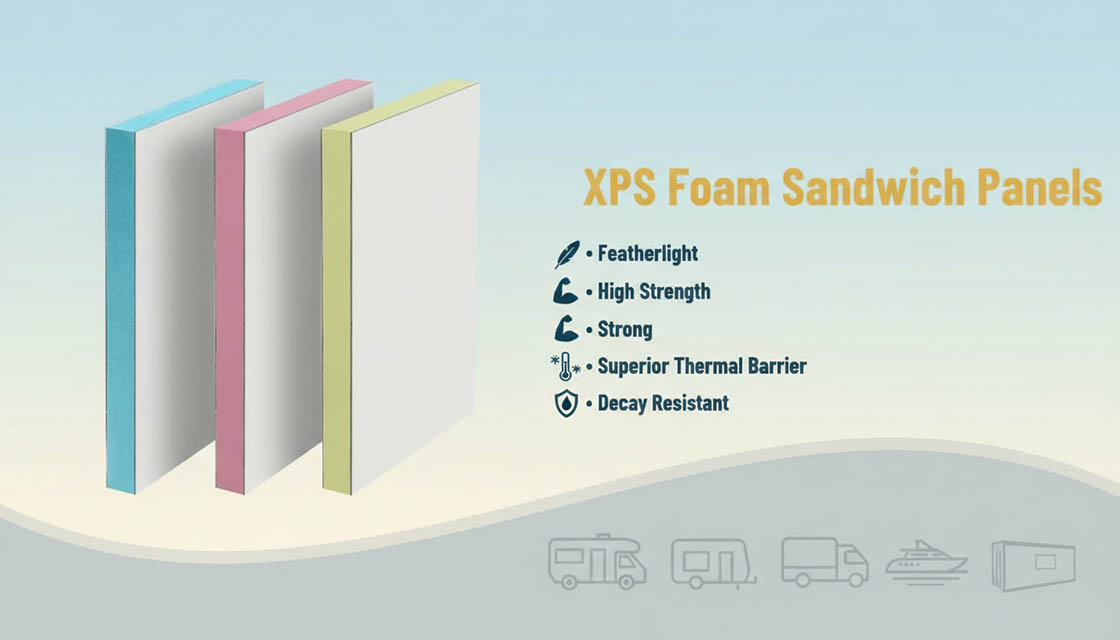
- XPS (Extruded Polystyrene) Foam: Closed-cell structure provides minimal water absorption, making it viable for high-humidity cold storage environments. However, thermal performance does not match PU or PIR at equivalent thicknesses.
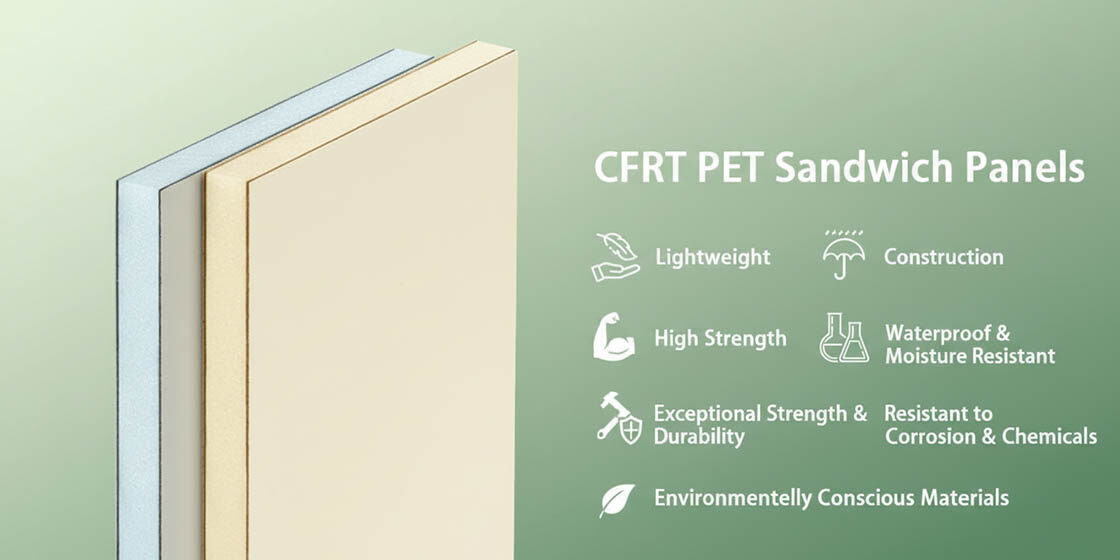
- PET Foam: Recyclable thermoplastic core with good mechanical strength-to-weight ratio. Increasingly specified for projects requiring sustainable material certifications alongside thermal performance.
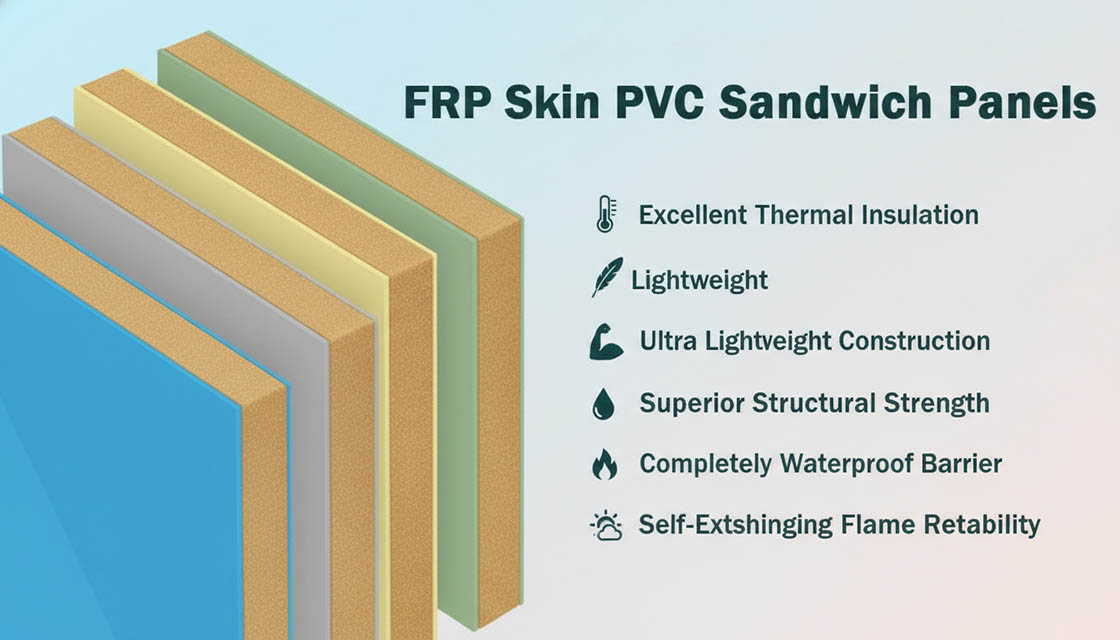
- PVC Foam: Closed-cell structure offering combined thermal insulation and acoustic dampening. Used in specialized cold storage applications where vibration or noise is a factor.
- Rockwool (Mineral Wool): Non-combustible core for maximum fire protection. Specified where insurance requirements or local regulations mandate A-rated fire performance. Higher thermal conductivity than foam cores, requiring thicker panels to achieve equivalent R-values.
For deep-freeze environments operating below -20°C, we consistently recommend PIR or PU cores. Our engineers test core formulations against project-specific temperature profiles to verify that thermal conductivity claims match actual operating conditions, not just laboratory baselines. This prevents the mismatch between quoted performance and real-world energy consumption that plagues many cold storage builds.
Standard Sandwich Panels vs. Cold Storage Sandwich Panels
Confusing standard building panels with cold storage panels is a procurement error that compounds over time. The two categories differ in joint design, core density, facing material thickness, and manufacturing tolerances. Here is where the distinctions matter operationally.
Joint sealing is the most critical difference. Standard wall or roof panels often use simple overlap or tongue-and-groove joints designed for weather resistance. Cold storage panels require cam-lock joint systems with tongue-and-groove interlocking technology that creates an airtight, thermally broken seal. Without this, thermal leakage at panel joints becomes a persistent energy drain that refrigeration systems cannot compensate for efficiently.
- Core Density: Cold storage panels use higher-density foam cores (typically 40–45 kg/m³ for PU/PIR) compared to standard panels (30–35 kg/m³). Higher density reduces gas diffusion through cell walls, slowing the gradual increase in thermal conductivity that occurs over years of service.
- Panel Thickness: Standard panels commonly range from 50–100mm. Cold storage panels for medium-temperature rooms typically require 100–150mm, while deep-freeze applications demand 150–200mm to maintain the required R-value and prevent surface condensation.
- Facing Materials: Cold storage facilities requiring food safety compliance demand smooth, non-porous facing surfaces that resist bacterial growth and allow washdown cleaning. Stainless steel, PVC-coated galvanized steel, or stucco-embossed aluminum are standard choices. Standard construction panels may use pre-painted steel without the hygiene-grade surface requirements.
- Fire Rating Certification: Cold storage panels must carry fire test certificates specific to the exact panel configuration being supplied: core type, core density, facing thickness, and joint system. Certificates referencing a different product structure will fail compliance audits during project handover.
Our production line manufactures cold storage panels with cam-lock joints molded directly into the insulating foam during production. This ensures the locking mechanism maintains full thermal integrity at the joint. We also produce CKD (Completely Knocked Down) refrigerated truck kits using the same joint technology, allowing assembly in the field without compromising the thermal envelope. For distributors quoting cold room prices to end users, specifying the correct panel grade at the quotation stage eliminates costly change orders during installation.

Superior Thermal Insulation Properties
Up to 25% of cold storage energy waste stems from thermal leakage through the building envelope. The core material you specify directly dictates whether your facility runs efficiently or bleeds margin for decades.
Maintaining Temperature Control in Demanding Environments
Temperature integrity is non-negotiable in cold storage, refrigerated transport, and pharmaceutical facilities. Even a 2°C drift can trigger product loss, compliance failures, or rejected shipments. The insulation core inside your sandwich panels is the single most critical factor in preventing that drift. Not the exterior skin, not the joint system: the core.
At Rax Panel, we manufacture foam core sandwich panels using a range of core materials engineered for specific thermal performance targets. The choice of core determines thermal conductivity (λ-value), moisture resistance, and long-term dimensional stability under sustained low temperatures.
- PU (Polyurethane) Foam: Excellent thermal conductivity values (typically 0.022–0.024 W/m·K), making it the standard choice for deep-freeze environments operating at -40°C.
- PIR (Polyisocyanurate) Foam: Offers superior fire resistance compared to PU while maintaining comparable insulation performance, ideal for facilities requiring both thermal efficiency and stricter fire ratings.
- PET Foam: Closed-cell structure provides strong thermal insulation with better environmental recyclability, suited for applications where sustainability certifications matter.
- XPS (Extruded Polystyrene) Foam: High compressive strength and low moisture absorption, effective for flooring panels in cold rooms where heavy racking loads are present.
- PVC Foam: Balanced thermal and mechanical properties, widely used in marine and RV applications where weight savings and moisture resistance are priorities.
Here is the issue many buyers overlook: thermal conductivity figures reported on datasheets are often measured under ideal laboratory conditions (23°C, 50% RH). Real-world performance in a -30°C blast freezer or a humid coastal distribution center will differ. Our engineering team conducts experimental testing aligned with actual project climate data, so the panels we ship perform to spec in your specific operating environment, not just in a test chamber.
For refrigerated truck bodies and mobile cold chain applications, panel thickness and core density must be calibrated to handle constant vibration, thermal cycling, and road conditions without developing micro-gaps at joints. Our GRP/FRP foam core panels, available with PU, PET, XPS, and PVC cores, are engineered specifically for these dynamic loads. The fiberglass reinforced skins provide the structural rigidity needed to prevent joint separation that causes thermal leakage over time.
Reducing Energy Costs Through Smarter Insulation Decisions
Cold storage operators typically spend 60–70% of their total electricity consumption on refrigeration. A significant portion of that energy expenditure is wasted compensating for heat gain through poorly insulated walls, roofs, and joints. This is not a marginal leak. It is a structural financial drain that compounds over the 20–30 year lifespan of the facility.
The total cost of ownership for a cold storage envelope includes three elements: initial panel cost, installation labor, and lifetime energy consumption. Most procurement decisions optimize only the first two. The third dwarfs them both. A panel system with marginally lower upfront cost but higher thermal conductivity will cost significantly more in energy bills within the first 3–5 years of operation.
Reducing energy costs requires attention to three structural factors:
- Core Material Selection: PIR and PU cores deliver the lowest λ-values among commercially available foam options. For deep-freeze applications, PU remains the benchmark. For projects where fire rated sandwich panels are required by code, PIR provides the thermal performance of PU with significantly improved fire reaction properties.
- Panel Thickness Optimization: Thicker panels reduce thermal conductivity but increase material cost and reduce internal usable space. We model the optimal thickness-to-cost ratio based on your target internal temperature, external climate data, and local energy rates.
- Joint and Seal Integrity: Thermal leakage at panel joints accounts for a disproportionate share of total heat gain. Our panels utilize precision-engineered joint profiles designed to minimize thermal bridging at connection points.
For distributors quoting cold room prices to end-users, the ability to offer a verifiable energy performance estimate is a genuine competitive advantage. We support our B2B partners with thermal performance data tied to specific panel configurations, enabling their customers to make procurement decisions based on projected operating costs rather than unit price alone. That is how you shift the conversation from commodity pricing to engineered value.
Our production line processes over 1,700 square meters of composite panels daily, with consistent foam density and skin adhesion across every batch. For large-scale cold storage projects or fleet orders of refrigerated truck panels, this production consistency ensures that the thermal performance of panel number one matches panel number five hundred.
Variability in insulation quality between batches is a hidden cost driver that surfaces years later as uneven cooling and hot spots, problems that are expensive to diagnose and impossible to fix without panel replacement.

Rapid Construction and Installation
Pre-fabricated composite panels cut cold storage build times by up to 50% compared to conventional methods, letting facilities go operational faster and protecting your revenue window.
Minimizing Operational Downtime
In cold chain logistics, every day a facility sits unfinished is revenue lost. Traditional construction can drag on for weeks because on-site framing, insulation, and cladding are installed in separate phases. Sandwich panels flip that equation. They arrive pre-manufactured, pre-cut to your project specs, and ready to mount immediately. Your crew isn’t waiting on multiple material deliveries or coordinating overlapping trade schedules.
For facility planners managing retrofits or expansions, this is where panel selection directly impacts the bottom line. Rax Panel’s production line outputs over 1,700 square meters of composite panels daily. That capacity means your order ships in days, not months. When you’re adding a new cold room to an existing distribution hub, the shortened install window translates directly into reduced disruption to adjacent operations. Your existing freezers keep running while the expansion goes up beside them.
The downtime question also applies to long-term maintenance. Panels with GRP or FRP facing and closed-cell foam cores, whether PU, PIR, or XPS, resist moisture ingress and thermal degradation. That means fewer shutdowns for panel replacement or seal repairs years down the line. A well-specified panel from day one prevents the cycle of patch-and-repair that drains operational budgets.
Streamlined Assembly Process
Speed of assembly comes down to joint design and dimensional consistency. Rax Panel engineers customize panel dimensions to match your facility’s architectural drawings before anything leaves the factory. Panels arrive on-site with pre-formed edges designed for interlocking tongue-and-groove or cam-lock connections. The result is a system that assembles like a precision kit, not a construction project.
This matters especially for cold storage, where thermal continuity is everything. A poorly sealed joint becomes a thermal bridge, leaking energy and driving up operating costs for the life of the building. Factory-engineered interlocking systems create continuous insulation envelopes with minimal field sealing required. Installation crews spend less time on ladders applying sealant and more time locking panels into position.
- Pre-cut dimensions: Panels manufactured to exact project specifications, eliminating on-site cutting waste and measurement errors.
- Interlocking joint systems: Cam-lock and tongue-and-groove connections ensure airtight seals without specialized tools or extensive field welding.
- Lightweight cores: PET, PU, and XPS foam cores reduce panel weight, enabling smaller installation crews and lighter lifting equipment.
- Integrated installation guides: Rax Panel provides technical documentation and engineering support, reducing guesswork during assembly.
For international distributors managing projects across multiple regions, consistency is the real value driver. When panels from the same production line fit together the same way on every job site in Europe, Southeast Asia, or the Middle East, you standardize your installation training and reduce the variability that causes delays. Rax Panel’s multilingual support team covers sales coordination, design review, and production tracking across time zones, so your project timeline doesn’t stall waiting for clarification on a panel spec or delivery window.
Exceptional Durability and Structural Strength
In cold storage and hygiene-critical environments, moisture intrusion accounts for a significant portion of long-term panel failure. The right core and facing combination eliminates this risk entirely.
Moisture and Mold Resistance
Moisture infiltration is the silent driver of structural degradation in temperature-controlled facilities. When water vapor penetrates a panel joint and condenses within the core, it compromises thermal conductivity and creates conditions for mold growth. This is why core selection is not a cost decision. It is a risk management decision.
Closed-cell foam cores provide an inherent moisture barrier. Rax Panel manufactures panels using XPS, PET, PU, PVC, PMI, EPP, and MPP foam cores, all of which feature closed-cell structures that resist water absorption even under prolonged exposure to high-humidity environments. Unlike open-cell alternatives, these materials maintain their insulation values when exposed to ambient moisture during installation or through minor envelope breaches over decades of service.
The facing material further determines long-term water resistance. Rax Panel offers GRP/FRP sheets with gelcoat finishes that deliver a waterproof, flat, and smooth surface. This gelcoat layer acts as a non-porous exterior shell, preventing water from wicking into the structural laminate. For applications demanding even greater corrosion resistance, Stainless Steel and Aluzinc facings provide a metal barrier suited to aggressive industrial or marine environments.
From a procurement standpoint, verifying a panel’s water absorption rate is critical. Generic product descriptions claiming “waterproof” are insufficient. B2B buyers should request specific water absorption test data, typically measured as a percentage by volume after 24-hour immersion, tied to the exact core density and facing configuration being supplied.
Hygienic Surfaces for Safety
In food processing, pharmaceutical cold chains, and medical device storage, panel surfaces must meet stringent hygiene requirements. The surface must be non-porous, easy to clean, and resistant to chemical sanitizers used in daily washdown protocols. Any surface texture that traps organic material becomes a contamination vector.
GRP sheets with gelcoat produce a smooth, non-porous finish that meets these demands. The surface does not support bacterial colonization and withstands repeated exposure to industrial cleaning agents without degrading. For facilities requiring metal surfaces for compliance reasons, Stainless Steel sandwich panels provide an inert, food-safe facing that resists both corrosion and microbial adhesion.
Core material selection also factors into hygiene compliance. The polyurethane insulating foam used in Rax Panel’s cold storage panels is non-toxic, does not deteriorate over time, and does not absorb odors. In the event of facing damage, the core itself does not harbor mold or fungi, preventing a localized breach from becoming a facility-wide contamination issue.
For international distributors supplying the food and pharmaceutical sectors, panel compliance with hygiene standards is a non-negotiable specification. Rax Panel’s engineering team conducts experimental testing to ensure composite products meet relevant data standards for specific project requirements, providing documented test results rather than unsubstantiated claims.

Customizable Designs for Facility Needs
Custom fabrication is not an add-on service. It is the core workflow. Rax Panel engineers select from over nine core materials and ten facing options to hit the exact weight, insulation, and fire-rating targets your project demands.
Walls, Roofs, and Floors: Tuning Each Envelope Layer
A cold storage wall, roof, and floor operate under vastly different mechanical and thermal stresses. Treating them as interchangeable components is a fast track to thermal leakage and long-term energy waste. Rax Panel addresses this by tailoring the composite stack of core density, facing material, and joint system to the specific function of each surface.
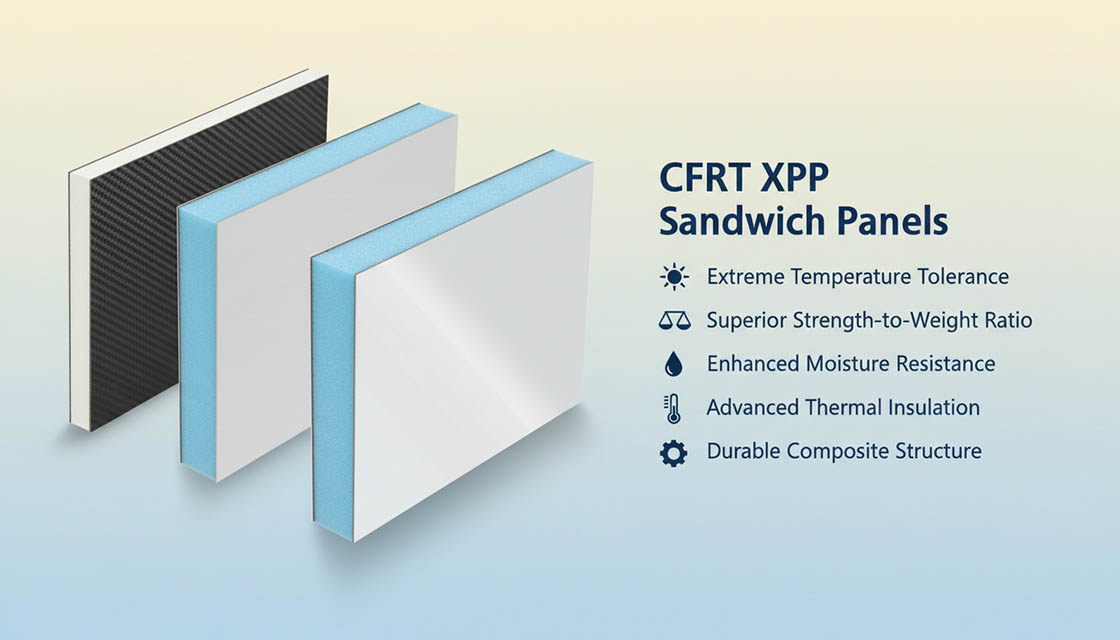
For walls, the priority is structural rigidity combined with consistent thermal breaks. Our GRP/FRP foam core panels and CFRT sandwich panels (available with XPS, PET, PU, or PVC cores) are engineered to minimize thermal bridging at joint interfaces. This directly targets the roughly 25% of cold storage energy waste attributed to envelope leakage: poorly sealed wall panels force refrigeration systems to overcompensate, inflating operational costs for the lifespan of the facility.
Roof panels must resist weather exposure, structural loads, and UV degradation while maintaining the same thermal integrity as the walls. Rax Panel manufactures aluminum sandwich panels and ACP foam core panels configured for flat or profiled roof installations. For deep-freeze environments where fire safety is a parallel concern, PIR sandwich panels provide superior thermal stability compared to standard PUR cores, offering higher char yield and lower smoke generation during fire exposure.
Floor systems carry the highest mechanical loads and face constant moisture exposure. Rax Panel supplies plywood-facing foam sandwich panels and GRP plywood panels that deliver the compressive strength required for heavy forklift traffic, paired with the waterproofing necessary to meet hygiene standards in food and pharmaceutical storage. Anti-skid surface treatments are available for high-traffic industrial applications.
- Wall configurations: GRP/FRP foam core, CFRT with XPS/PET/PU/PVC cores, aluminum composite, stainless steel sandwich panels for corrosion-resistant environments.
- Roof configurations: Aluminum sandwich panels, ACP foam core panels, PIR sandwich panels for fire-rated requirements.
- Floor configurations: Plywood-facing foam sandwich panels, GRP plywood panels, non-slip/anti-skid honeycomb panels.
- Core options by application: XPS and PET for standard insulation; PU and PVC for lightweight structural needs; PMI foam for high-performance aerospace-grade thermal performance; rockwool for maximum fire resistance.
Modular Expansion Capabilities
Facility requirements shift. Cold storage operators routinely face capacity shortages that demand rapid expansion without shutting down existing operations. Rax Panel’s composite panels are designed for modular assembly from the outset, allowing facility planners to scale envelope footprints incrementally rather than committing to oversized initial builds that tie up capital.
The key to successful modular expansion is joint consistency. Our cam-lock and tongue-and-groove interlocking systems ensure that panels added during a later construction phase achieve the same thermal seal and structural continuity as the original installation. This eliminates the common failure point where expansion joints become thermal leaks, undermining the energy model of the entire facility. Each expansion batch is manufactured to match the exact specifications of the original order: same core density, same facing thickness, same dimensional tolerances.
Rax Panel’s daily production capacity exceeding 1,700 square meters means expansion orders move through manufacturing quickly, minimizing lead time between design approval and on-site delivery. Our engineering team conducts experimental testing on custom configurations to verify that new panels meet the required data standards for thermal conductivity, fire rating, and mechanical load before production begins. This pre-production validation is critical for international building materials distributors and procurement teams who cannot afford compliance failures during project handover.
For distributors managing inventory across multiple markets, the breadth of our product catalog, which spans PP honeycomb panels, hollow plastic formwork, compact laminate HPL panels, and exterior wall cladding panels, allows you to source a complete modular building system from a single supplier. This consolidates logistics, reduces vendor management overhead, and protects margin across your supply chain.
Long-Term Cost Efficiency and ROI
Selecting composite panels based solely on upfront cold room prices often masks a long-term financial drain. True ROI in cold storage is dictated by thermal retention and structural durability over a 20-year lifespan.
Low Maintenance Requirements
B2B buyers often fixate on the initial invoice price of sandwich panels for cold storage while entirely ignoring post-installation overhead. Traditional building materials degrade under the constant stress of sub-zero temperatures and high humidity, forcing facility managers into relentless, costly repair cycles.
High-performance GRP and FRP sandwich panels fundamentally change this maintenance math. Because fiberglass reinforced polymer sheets feature a continuous, seamless surface, often enhanced with a specialized gel coat, they naturally resist moisture ingress, bacterial growth, and the physical wear that plagues standard metal cladding in deep-freeze environments.
- Corrosion Resistance: Unlike standard steel cladding that eventually rusts in high-moisture environments, GRP and aluminum facing options require zero structural treatments over their operational life.
- Structural Integrity: Utilizing high-density foam cores (such as PU, PIR, or PET) prevents the internal delamination and panel warping that typically forces expensive unscheduled maintenance.
- Hygiene Compliance: The flat, smooth surfaces of gel-coated FRP panels allow for rapid cleaning and sanitation, drastically reducing the labor hours required to meet strict international food safety standards.
Lifecycle Cost Savings
The most critical metric for industrial facility planners isn’t the purchase price; it’s the 5-year total cost of ownership. Industry data shows that up to 25% of cold storage energy waste stems directly from thermal leakage through poorly insulated joints and low-grade panel cores. If a supplier’s thermal conductivity claims are inaccurate, the facility’s refrigeration systems will overcompensate for decades, inflating operational budgets.
When our engineers configure a custom composite solution, matching exact facing materials like CFRT or Aluminum with optimized XPS or PVC foam cores, we prioritize the reduction of that thermal leakage. A precisely manufactured sandwich panel with a tightly interlocking cam-lock joint system ensures an airtight seal from day one. This precision immediately translates to lower daily energy consumption.
For specialized vehicle manufacturers and construction procurers, calculating this lifecycle efficiency is mandatory. By investing in verified, high-tolerance panels upfront, you dramatically extend the lifespan of the facility’s HVAC and refrigeration equipment. The margin saved on monthly utility bills and avoided equipment replacement rapidly outpaces any initial savings gained from cheaper, non-compliant panels.
| Cost Factor | Specification | Long-Term Benefit |
|---|---|---|
| Thermal Insulation Efficiency | PU/PIR/XPS foam cores with λ values as low as 0.022 W/mK | Reduces cold storage energy costs by minimizing thermal leakage through building envelope |
| Fire Safety Compliance | PIR core panels with certified fire ratings | Avoids costly compliance failures, project delays, and insurance premium increases |
| Structural Longevity | GRP/FRP, Aluminum, Stainless Steel facing options | Corrosion-resistant surfaces extend panel lifespan, reducing replacement frequency |
| Installation Labor Savings | Pre-fabricated panels with cam-lock and slip joint systems | Fast on-site assembly cuts labor costs and accelerates facility operational startup |
| Refrigeration Equipment Load | Superior airtight joints minimizing thermal bridging | Smaller refrigeration units required, lowering capital equipment and maintenance expenses |
| Customization Waste Reduction | Tailored sizes, thicknesses, and core materials per project | Eliminates over-specification and material waste, optimizing total cost of ownership |
| Hygiene and Maintenance | Smooth gelcoat surfaces resistant to fungi, mildew, and moisture | Lower cleaning and maintenance costs while meeting food safety and pharmaceutical standards |
| Energy Consumption Stability | Verified thermal conductivity under real-world climate conditions | Predictable 5-year operational costs enabling accurate ROI forecasting and budgeting |
| Modular Expandability | Dis-mountable cam-lock panel connections | Facility reconfiguration without full reconstruction, preserving capital investment |
| Transportation Payload Optimization | Lightweight sandwich panels up to 60% lighter than traditional materials | Reduced shipping costs and lower fuel consumption for mobile cold chain solutions |
Conclusion
If your cold storage facility operates below -20°C, spec PIR-core sandwich panels with verified fire certificates. Period. PIR delivers roughly 15-20% better thermal stability than PUR in deep-freeze conditions: on a 5,000 sqm facility, that gap alone accounts for about $40,000 per year in energy savings. Skimp here and you’re paying for it every single month on the utility bill.
Before you commit to an insulated panel supplier, demand two documents: fire test certificates matched to your exact panel specification (core type, density, thickness), and third-party thermal conductivity data tested at your facility’s actual operating temperature. Any manufacturer worth your time hands these over within 24 hours. If they send generic reports or stall, find another supplier. That hesitation tells you everything about what happens when something goes wrong on site.
PIR cores beat PUR in deep-freeze applications: verify fire certs and thermal data upfront.
Frequently Asked Questions
How do sandwich panels benefit cold storage?
They provide exceptional thermal insulation to maintain stable internal temperatures, which prevents product spoilage, reduces the need for excessive refrigeration, and lowers energy costs.
Are sandwich panels easy to maintain and clean?
Yes, the exterior materials are highly durable and resistant to weather and physical wear. Additionally, their smooth surfaces are very easy to clean, helping facilities maintain strict hygiene standards.
What industries commonly use sandwich panel cold storage?
These panels are widely used in food distribution centers, restaurants, catering services, and pharmaceutical storage, as they efficiently preserve perishable and temperature-sensitive goods.
How much does benefits sandwich panels typically cost?
The cost of benefits sandwich panels varies based on material grade, thickness, panel dimensions, and order volume. Requesting a detailed quote with your project specifications is the most reliable way to get an accurate figure. Bulk orders typically reduce per-unit pricing significantly.
What factors affect the price of benefits sandwich panels?
The cost of benefits sandwich panels varies based on material grade, thickness, panel dimensions, and order volume. Requesting a detailed quote with your project specifications is the most reliable way to get an accurate figure. Bulk orders typically reduce per-unit pricing significantly.