
When a procurement engineer opens a supplier’s cold storage roof panel datasheet and finds no R-value data, you know the supplier cut corners on documentation. That exact error cost one of my contacts six weeks on a frozen food facility build in Doha last year.
The panels showed up with compliance certificates listing nothing but thickness. No fire rating data, no thermal conductivity coefficient, no deflection limits under snow load. The distributor ate $120,000 in delay penalties while waiting for the manufacturer to dig up actual lab reports.
The comparison below covers PU and PIR foam core panels with GRP versus aluminum facings and standard versus custom joint profiles, and sets field-measured thermal retention against what most spec sheets advertise.
The suggestions that follow are not theoretical. You will find the exact specifications that determine whether a cold storage roof holds temperature after three years of thermal cycling: core density thresholds, verified lambda values, fire reaction classifications, and joint seal integrity data. These are the numbers you quote against.
Insulated Core Material Options
Rax Panel’s insulated core lineup spans eight distinct foam and honeycomb materials, each engineered to solve a specific thermal, structural, or weight constraint in commercial and industrial applications.
Why Core Selection Dictates Project Success
The single most common sourcing mistake we see from buyers is treating the core material as an afterthought. In a sandwich panel, the core controls roughly 80% of the thermal performance and a significant portion of the flexural rigidity, even though it often represents less than 40% of the total material cost.
Selecting the wrong insulated core doesn’t just hurt performance; it compounds downstream in the form of heavier assemblies, failed compliance checks, and wasted margin on over-specified materials. With over 15 years of production experience and a daily output exceeding 1,700 square meters, our engineering team has refined the core selection process into a data-driven decision, not a guessing game.
Foam Core Options: Matching Density to Demand
Foam cores are the workhorse of insulated panels, but they are far from interchangeable. Rax Panel produces panels using XPS, PET, PU, PVC, PMI, EPP, and MPP foams. Each serves a distinct mechanical and thermal profile. The key differentiator is usually the balance between compressive strength, thermal conductivity (k-value), and operating temperature range.
- XPS (Extruded Polystyrene): High moisture resistance, cost-effective. Commonly specified for building wall cladding and refrigerated truck bodies where baseline thermal insulation is sufficient.
- PET Foam: Recyclable thermoplastic core with consistent cell structure. Frequently used in RV wall panels and marine applications where weight savings and environmental compliance are purchasing priorities.
- PU (Polyurethane) Foam: Superior k-values for thermal insulation. The standard choice for cold chain logistics and refrigerated transport panels.
- PVC Foam: Closed-cell structure offering high strength-to-weight ratio. Widely adopted in marine and vessel construction due to its resistance to water absorption and chemical degradation.
- PMI Foam: High-performance polymethacrylimide core with exceptional heat resistance and shear strength. Reserved for aerospace, aviation, and high-end industrial applications where tolerances are non-negotiable.
- EPP and MPP Foams: Expanded and molded polypropylene variants offering high energy absorption. Used in specialized applications requiring impact resistance and repeatable crash performance.
For distributors managing broad inventories, the practical approach is to standardize on two or three core types that cover the widest application range. PET and PU cores paired with GRP/FRP or Aluminum facings typically address 70-80% of incoming orders for vehicle manufacturing and commercial construction projects.
Honeycomb Core Options for Structural Priority
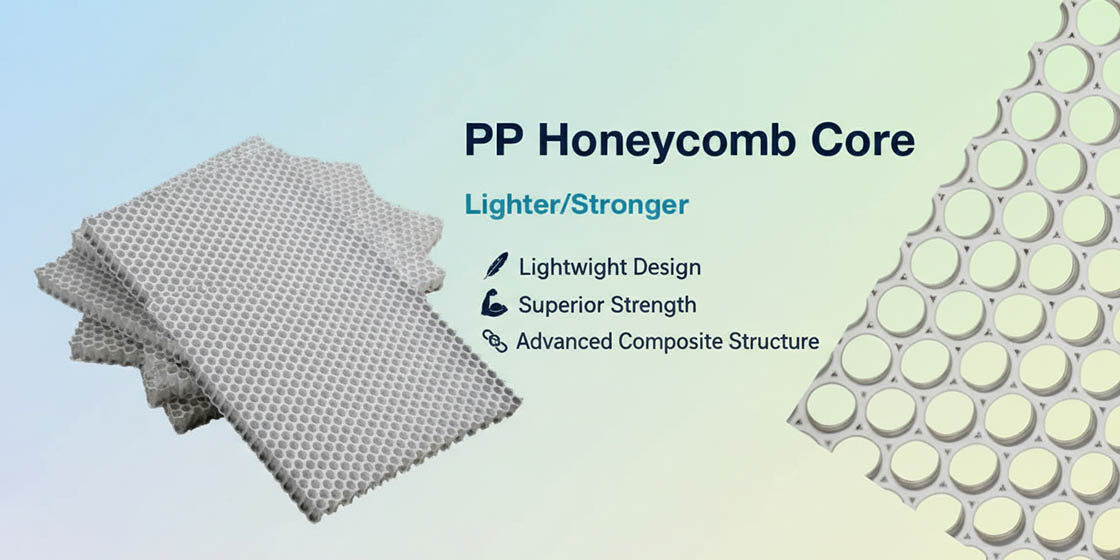
When a project demands maximum stiffness at minimum weight, honeycomb cores outperform foam. Rax Panel manufactures PP honeycomb, fiberglass honeycomb, aramid honeycomb, and PC honeycomb cores. The PP honeycomb core, when composited with fiberglass sheet facings, delivers a notably high strength-to-weight ratio suited for truck body flooring, RV flooring, and portable shelter panels. Aramid honeycomb is reserved for defense, aerospace, and high-impact industrial equipment where fire resistance and structural integrity under extreme stress are mandatory.
Facing and Core Combinations
The insulated core is only half the equation. Rax Panel’s foam core sandwich panels are compatible with a range of facing materials including GRP/FRP, CFRT, Aluminum, Steel, ACP, PVC, Plywood, Stainless Steel, and Aluzinc. The pairing matters. A PU foam core paired with GRP sheets with gelcoat provides a waterproof, smooth, and thermally insulated panel ideal for refrigerated truck bodies.
That same PU core paired with stainless steel facings shifts the application toward hygiene-sensitive industrial facilities requiring both temperature retention and corrosion resistance. Our engineers conduct experimental testing on these combinations to ensure they meet project-specific data standards before mass production begins.
Addressing Specific Buyer Constraints
For specialized vehicle manufacturers, the priority is weight-to-strength ratio. CFRT sandwich panels with PET or PVC cores offer the lightest assemblies without sacrificing structural integrity for walls, roofing, and flooring. Commercial construction procurement teams typically require documented compliance on fire ratings and insulation R-values. For these buyers, PIR, PUR, and Rockwool sandwich panels provide the certified thermal and fire performance needed for exterior wall cladding and building envelope projects.
International distributors benefit from our broad catalog: we produce CFRT, GRP/FRP, Aluminum, Honeycomb, and specialized panels like HDPE and Hollow Plastic Formwork under one roof, enabling consolidated shipments that protect margin. Industrial facility planners focused on hygiene and temperature retention gravitate toward Stainless Steel or GRP-faced panels with PU or PVC foam cores, as these combinations deliver washable surfaces, thermal stability, and resistance to chemical cleaning agents.
| Core Material | Category | Key Properties | Compatible Facings |
|---|---|---|---|
| XPS Foam | Foam Core | Waterproof, thermally insulated, lightweight | GRP/FRP, CFRT, Aluminum, Steel, ACP, Plywood |
| PET Foam | Foam Core | Eco-friendly, thermally insulated, high strength-to-weight | GRP/FRP, CFRT, Aluminum, Steel, ACP, Plywood |
| PU Foam | Foam Core | Waterproof, thermally insulated, lightweight | GRP/FRP, CFRT, Aluminum, Steel, ACP, Plywood |
| PVC Foam | Foam Core | Waterproof, thermally insulated, lightweight | GRP/FRP, CFRT, Aluminum, Steel, ACP, Plywood |
| PMI Foam | High-Performance Foam | Exceptional thermal insulation, performs well under demanding conditions | GRP/FRP, CFRT, Carbon Fiber, Aluminum |
| EPP / MPP Foam | Polypropylene Foam | Waterproof, thermally insulated, lightweight | GRP/FRP, CFRT, Aluminum, Steel, PVC |
| PIR / PUR Foam | Rigid Foam | High thermal retention, fire-resistant (PIR) | Steel, Aluminum, GRP/FRP, Plywood |
| Rockwool | Mineral Wool Core | Superior fire rating, acoustic and thermal insulation | Steel, Aluminum, ACP, Stainless Steel |
Panel Thickness And Dimensions
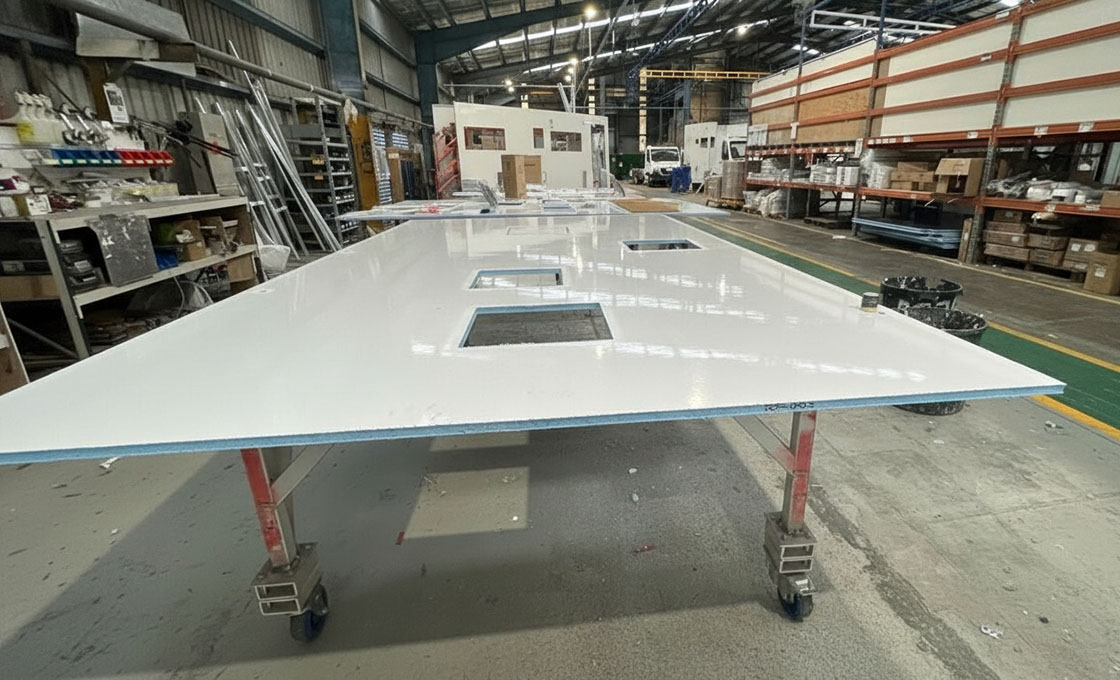
Composite panel thickness directly dictates structural load capacity and thermal resistance. At Rax Panel, we engineer custom dimensions to your exact specifications, ensuring zero material waste.
Why Thickness Tolerances Make or Break Your Project
For specialized vehicle manufacturers and commercial construction procurement managers, panel thickness is never just a number; it dictates weight-to-strength ratios, insulation values (R-value), and ultimately, your freight costs. Ordering a panel that is even 2mm too thick can drastically reduce profit margins through increased material weight and shipping volume. Conversely, under-specifying thickness compromises structural integrity under load.
Off-the-shelf dimensions rarely align perfectly with OEM requirements. That is why our engineering team conducts rigorous experimental testing on every custom dimension. We verify that the exact thickness meets your stringent load and environmental standards before mass production begins, eliminating costly on-site modifications.
Core and Facing Configurations That Define Dimensions
Total panel thickness is a precise calculation of the core material combined with the chosen facing skins. We customize these layers based on your specific application, whether you need lightweight PP honeycomb for dry freight truck bodies or high-insulation PET foam for refrigerated transport.
- Available Core Materials: XPS Foam, PET Foam, PU Foam, PVC Foam, PMI Foam, EPP, MPP, PP Honeycomb, Aramid Honeycomb, and PC Honeycomb.
- Available Facing Skins: GRP/FRP, CFRT, Aluminum, Steel, ACP, PVC, Plywood, Stainless Steel, and Aluzinc.
By engineering specific combinations, such as a CFRT facing with an XPS core or an FRP sheet with a PP honeycomb core, we ensure you achieve the exact dimensions required without paying for unnecessary material mass.
Manufacturing Scale for Precise Custom Cuts
Maintaining strict thickness tolerances across a bulk B2B order requires advanced production capabilities. With over 15 years of manufacturing experience, our facility utilizes an advanced composite panel production line capable of outputting over 1,700 square meters daily. This capacity ensures dimensional consistency across your entire batch, whether you are sourcing panels for RV walls, marine vessels, or mobile home roofing.
International distributors and industrial facility planners cannot afford dimensional deviations during installation. Our engineering team monitors production progress closely, ensuring your custom thickness specifications are executed flawlessly from raw material selection to final dispatch.
| Product Series | Core Material | Dimension & Thickness Capability | Facing / Skin Material | Target Application |
|---|---|---|---|---|
| CFRT Sandwich Panels | XPS, PET, PU, PVC foams | Fully customized thickness; precise project cutting | CFRT, GRP/FRP Sheets | RV Solutions, Vessel Interiors |
| GRP/FRP Sandwich Panels | XPS, PET, PU, PVC, Plywood, Balsa | Engineered to specific structural data standards | Fiberglass (Gelcoat / Non-gelcoat) | Refrigerated Trucks, Marine Vessels |
| Foam Core Sandwich Panels | XPS, PET, PU, PVC, PMI, EPP, MPP | High volume capacity (exceeding 1700 sqm/day) | Aluminum, Steel, ACP, Plywood, Aluzinc | Industrial Equipment, Public Transit |
| Honeycomb Panels | PP, Fiberglass, Thermoplastic, Carbon Fiber | Optimized ultra-lightweight dimensional profiles | Fiberglass sheets, Anti-skid surfaces | Sports Goods, Aviation, New Energy |
| Aluminum Sandwich Panels | Aluminum Honeycomb, Various Foams | Guaranteed aesthetic flatness; custom architectural cuts | Aluminum, ACP, Aluzinc | Exterior Wall Cladding, General Building |
| Specialized Building Panels | Rockwool, PIR, PUR, Hollow Plastic | Compliance-driven thermal and fire-rated dimensions | Stainless Steel, HDPE, Compact Laminate HPL | Mobile Homes, Medical Facilities |
| Fiberglass Reinforced Sheets | Solid Sheet / LWRT / UD Tapes | Thinner, lighter, and highly resilient continuous profiles | Smooth Gelcoat (Flat, Waterproof, Insulating) | Dry Freight Trucks, Furniture Panels |

Thermal Insulation Performance Standards
Thermal insulation in composite panels is dictated entirely by core density and joint integrity. Specifying exact thermal conductivity values prevents energy loss in demanding applications like refrigerated truck bodies and mobile homes.
The Buyer’s Pain Point: Precision in Thermal Retention
Procurement teams often struggle with generic thermal ratings that fail under continuous operational stress. In specialized vehicle manufacturing and commercial construction, even minor thermal bridging drastically increases HVAC loads and operational costs. Relying on standard R-values without verifying the core material’s specific thermal conductivity (Lambda value) leads to compliance failures and energy penalties. We solve this by engineering panels with exact core formulations tailored to your operational environment.
Core Material Specifications and Thermal Conductivity
Rax Panel engineers select and composite specific core materials based on strict thermal benchmarks. By matching the precise foam or honeycomb to the project’s environmental demands, we eliminate the guesswork from your supply chain. Our manufacturing capabilities allow us to pair these cores with GRP/FRP, Aluminum, or Steel facings to maximize thermal efficiency.
- Polyurethane (PU) Foam: Delivers superior thermal insulation with lambda values typically between 0.022 and 0.028 W/(m·K), making it the definitive choice for refrigerated truck bodies and cold chain logistics.
- Extruded Polystyrene (XPS) Foam: Offers excellent moisture resistance and steady thermal performance around 0.030 W/(m·K), heavily utilized in mobile home flooring and wall panels.
- Polyethylene Terephthalate (PET) Foam: Provides stable thermal insulation alongside high fire resistance, preferred in industrial facilities and commercial building applications requiring strict compliance.
- Polyvinyl Chloride (PVC) and PMI Foam: Delivers an exceptional strength-to-weight ratio combined with low thermal conductivity, critical for advanced vessel solutions and aviation interiors.
Engineering and Validation Standards
Meeting international thermal standards requires rigorous validation, not just theoretical data sheets. Our engineering team conducts direct experimental testing to ensure every custom composite panel meets the required data standards before leaving our facility. We validate thermal transmission properties under stringent conditions to guarantee performance for your specific project, whether it involves CKD refrigerated trucks or exterior wall cladding.
By operating our own advanced composite panel production line with a daily output exceeding 1,700 square meters, we maintain strict control over the cell structure of the foam cores. This consistency is what guarantees the R-value remains stable over the lifespan of the building or vehicle, protecting your margin against costly warranty claims and retrofitting expenses.
Fire Resistance Safety Ratings
Fire compliance makes or breaks commercial builds and specialized vehicle certifications. We engineer composite solutions using PIR and Rockwool cores to strictly meet global fire safety standards without sacrificing structural integrity.
The Real Cost of Fire Rating Non-Compliance
Procurement teams and vehicle manufacturers come to us with one persistent headache: they need lightweight composite panels, but their projects demand certified fire resistance. The stakes are absolute. A refrigerated truck body operating in the EU must meet ECE R118 standards. A commercial cladding project in the Middle East faces stringent local civil defense codes. If the panel fails the burn test, the entire shipment gets rejected, and the distributor eats the loss.
Generic “fire-resistant” labels on spec sheets are not enough. You need documented, test-backed ratings tied to specific core and facing combinations. This is exactly where our engineering team intervenes. We do not guess. We prototype your exact panel configuration and run the necessary experimental testing to ensure it meets the required data standards before mass production begins on our 1,700-square-meter daily capacity line.
Core Materials Dictate Fire Performance
The core is the deciding factor in how a sandwich panel reacts to flame. We offer a deliberately broad range of core options specifically so you can dial in the exact fire rating your project requires, without overpaying for performance you do not need.
- Rockwool: The undisputed choice for maximum fire protection. A stone wool core delivers A1 or A2 fire classifications, making it the go-to for exterior wall cladding panels and industrial facilities where firewalls are mandatory.
- PIR (Polyisocyanurate): The standard for refrigerated truck bodies and cold chain logistics. PIR offers an optimal balance of thermal insulation and inherent fire resistance, charring rather than melting when exposed to flame.
- PUR (Polyurethane): Suitable for applications where moderate fire performance is acceptable, but superior structural rigidity and insulation are prioritized.
- PET Foam: A thermoplastic option that is easier to process and recycle, often paired with Aluminum or Stainless Steel facings for building sandwich panels requiring balanced performance.
- PVC and PMI Foams: High-end cores used in aviation, vessel, and sports applications where strict weight limits coincide with demanding fire safety standards.
Facing Materials and System-Level Performance
A fire-rated core alone does not guarantee a fire-rated panel. The facing material acts as the first line of defense. Our GRP sheets with gelcoat provide a naturally insulating, non-conductive surface that will not propagate flame spread. For buyers supplying the construction sector, our Aluminum Composite Panels and Stainless Steel Sandwich Panels paired with Rockwool create a complete firewall system. We strongly advise distributors to specify the full panel makeup (core, facing, and adhesive) when requesting fire compliance documentation from our team.
Matching Fire Ratings to Your End Market
Fire standards are not universal. A panel that passes North American ASTM E84 requirements may fail European EN 13501-01 criteria. With over 15 years of production experience and active supply chains in over 50 countries, we have seen these compliance gaps firsthand.
Our engineers work directly with your team to identify the exact standard your market demands, whether it is a mobile home build in Southeast Asia, a dry freight truck in Central Asia, or a medical facility in Europe, and adjusts the composite layup to guarantee a pass on test day.
Do not leave certification to chance. Leverage our factory’s in-house testing capabilities and our multilingual support team to get the documentation right the first time. This is how you protect your margins and your reputation as a distributor.
Structural Load Bearing Capacity
Specifiers constantly battle the trade-off between reducing vehicle tare weight and maintaining structural load limits. We engineer composite sandwich panels to hit your exact structural thresholds without adding unnecessary dead weight.
The Weight-to-Strength Compromise in Commercial Applications
Specialized vehicle manufacturers and industrial facility planners face a strict mandate: lower the weight of the structure to increase payload capacity or improve energy efficiency, but maintain the structural load bearing capacity required for heavy operational loads. Traditional solid materials like plywood or heavy gauge steel require excessive thickness to achieve necessary rigidity, which directly hurts your bottom line through higher freight costs and reduced cargo capacity. Sandwich panel architecture effectively eliminates this outdated compromise.
Engineering Specific Load Capacities
Achieving a precise load bearing capacity is not guesswork; it requires strict calibration of the core-to-facing ratio. Our engineering team reviews your project requirements and selects the exact combination of skins and cores to meet stringent data standards. We rely on rigorous experimental testing to validate shear strength, flexural modulus, and point-load resistance before mass production begins.
- High-Shear Cores: PP honeycomb and fiberglass honeycomb cores provide exceptional compressive strength for RV flooring and truck body platforms.
- Rigid Facings: We utilize GRP/FRP, CFRT, and Aluminum sheets to handle high tensile and compressive loads.
- Custom Calibrations: We adjust foam densities (PET, PVC, PMI) and facing thicknesses to match localized load requirements, preventing material over-engineering.
Factory Consistency Across Bulk Orders
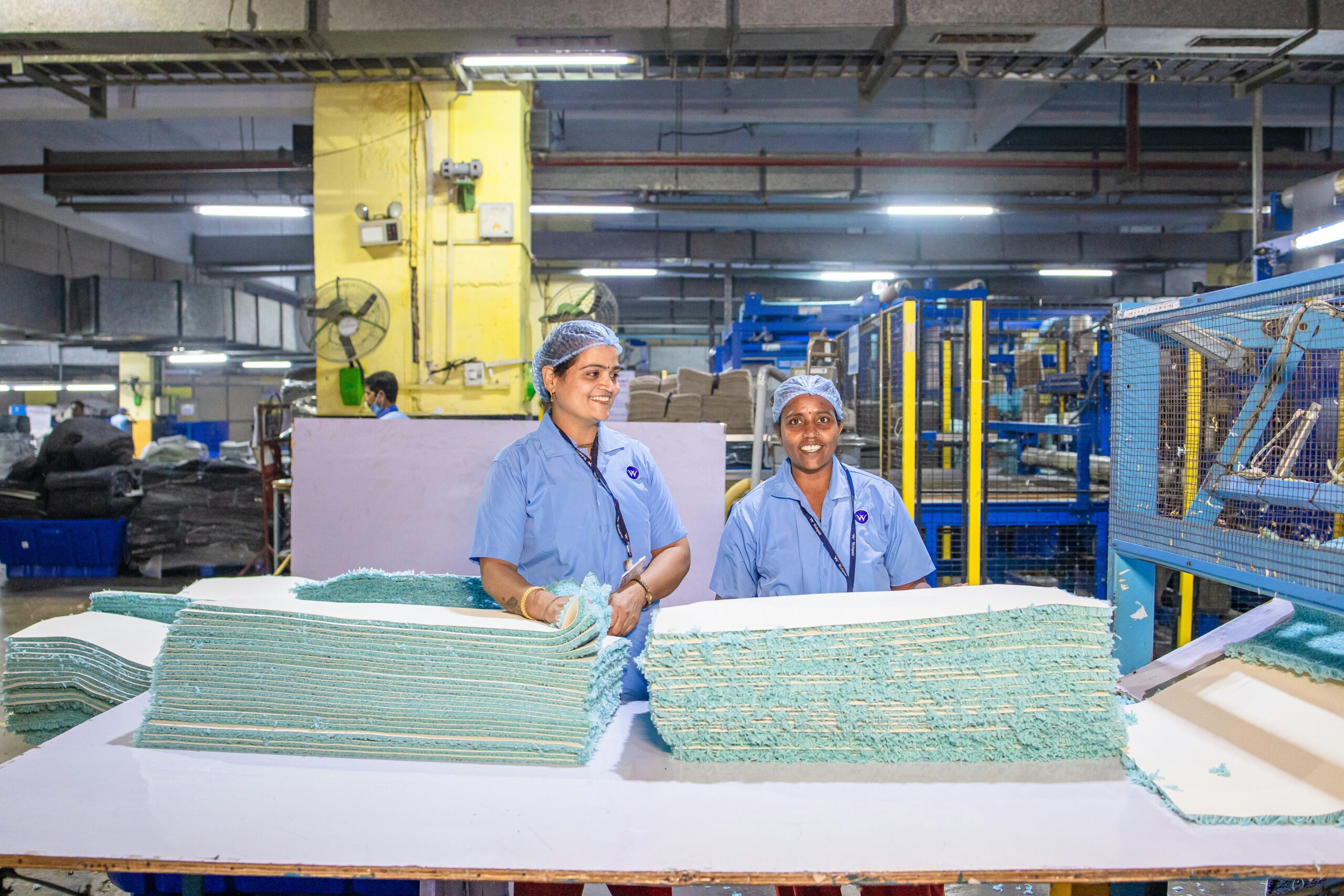
A validated structural specification is useless if the factory cannot replicate it consistently across a 10,000-square-meter order. Variations in resin distribution or core bonding during manufacturing can create sudden weak points that fail under dynamic road loads.
With over 15 years of production experience, our facility uses an advanced composite panel production line to eliminate these variances. Operating at a daily output exceeding 1,700 square meters, we ensure that every panel shipped to your facility matches the exact structural data established during the prototyping phase.
Surface Metal Coating Types
Metal surface coatings on composite panels dictate corrosion resistance, UV stability, and project lifespan. Selecting the wrong coating spec is the fastest way to lose margin on warranty claims.
Why Surface Coating Selection Makes or Breaks Your Project
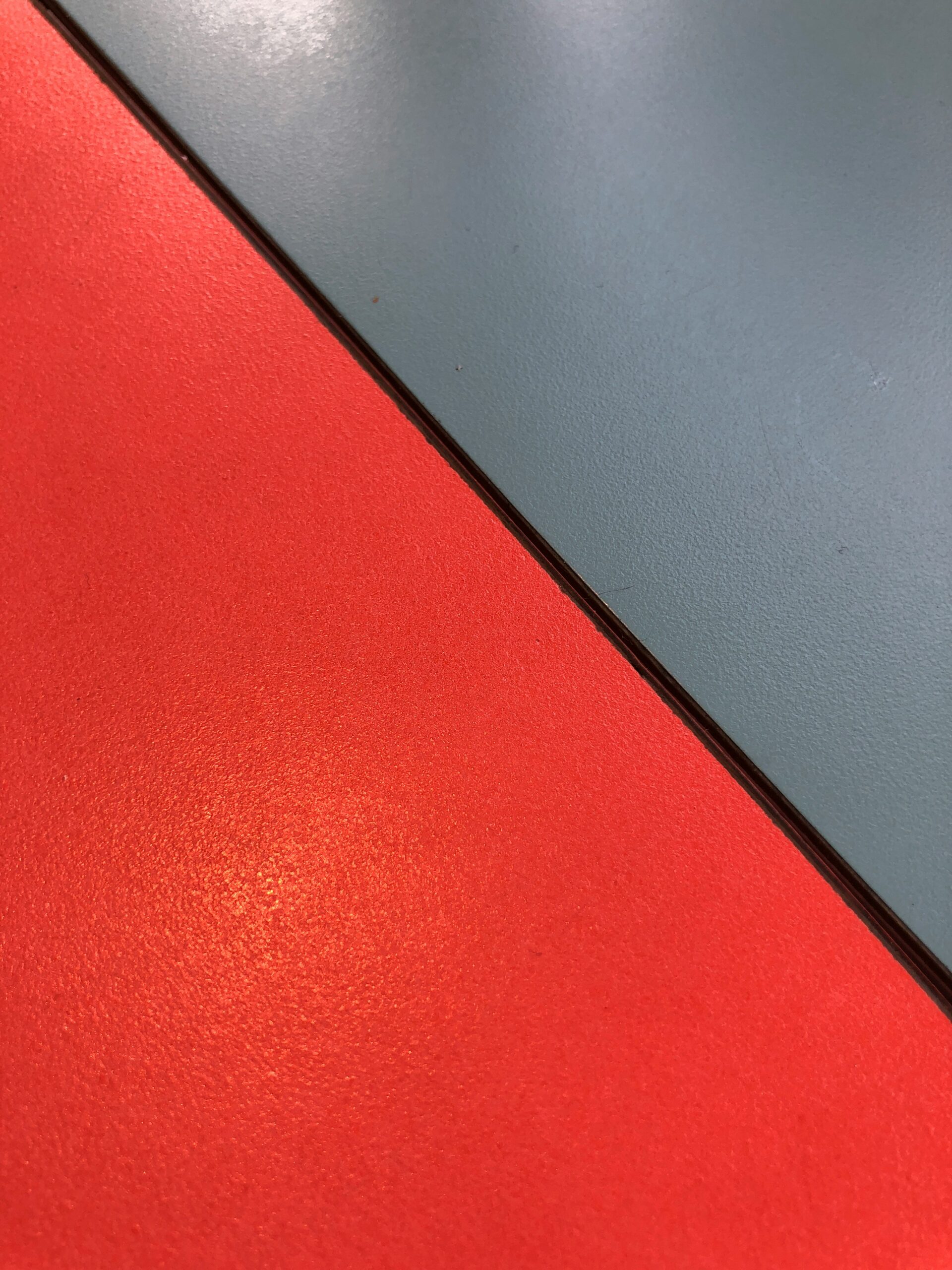
The metal facing on a sandwich panel is only as good as its surface treatment. We see international distributors and specialized vehicle manufacturers consistently struggle with one issue: specifying a coating that balances initial procurement cost against long-term field performance. A refrigerated truck body operating in coastal climates faces completely different corrosive stresses than an interior wall panel in a climate-controlled facility. Matching the coating to the actual operating environment is non-negotiable.
At Rax Panel, our engineers evaluate coating specifications alongside core material selection during the customization phase. With over 15 years of production experience and a daily production capacity exceeding 1,700 square meters, we have accumulated direct field feedback from over 50 countries. That data informs exactly which coating systems perform in which conditions.
Core Surface Metal Coating Options Available
We apply several distinct surface treatments to our metal-faced composite panels. Each serves a specific performance requirement. Below are the primary coating and surface categories we configure for B2B buyers:
- PVDF (Polyvinylidene Fluoride) Coating: The standard for exterior architectural and vehicle applications requiring high UV resistance and color retention. Typically specified for aluminum sandwich panels and ACP foam core panels used in exterior wall cladding. PVDF maintains structural aesthetics for 15-20 years in harsh sun exposure.
- PE (Polyester) Coating: A cost-effective solution for interior applications or controlled environments. Common on aluminum composite panels destined for indoor partitions, RV furniture panels, and mobile home interior walls. Lower cost, but not recommended for prolonged outdoor UV exposure.
- SMP (Silicone Modified Polyester): A mid-tier option offering better heat resistance than standard PE. Often selected for building sandwich panels in industrial facilities where temperature retention and moderate weather resistance are required.
- Aluzinc Coating (Galvalume): A metallic coating combining aluminum and zinc applied to steel facings. Provides sacrificial corrosion protection. We recommend Aluzinc-facing foam core panels for agricultural buildings and industrial equipment housings where cost must stay low but rust prevention is critical.
- Stainless Steel Finish (304 Grade): Used in hygiene-critical environments. Our stainless steel sandwich panels are specified in food processing, medical facilities, and vessel interiors where chemical cleaning agents would degrade coated surfaces.
- Gelcoat on FRP/GRP Sheets: While technically a resin-based surface rather than a metal coating, gelcoat is applied to our fiberglass reinforced sheets to provide a waterproof, flat, and smooth finish. This is the preferred surface solution for marine vessel applications and refrigerated truck bodies requiring a seamless, easy-to-clean exterior.
Matching Coatings to Application: Real-World Breakdown
Procurement teams often over-specify coatings, paying for PVDF on panels that will never see direct sunlight. Conversely, under-specifying on exterior vessel panels leads to rapid degradation. Here is how we guide specification based on our production data and global project history:
- Refrigerated Truck Bodies: Gelcoat-finished GRP sheets over XPS or PU foam cores. The gelcoat provides necessary waterproofing and chemical resistance from road salts, while keeping the facing weight low.
- Exterior Wall Cladding: PVDF-coated aluminum facings over PET or rockwool cores. Fire rating compliance and UV stability are the driving factors.
- Marine Vessels: Gelcoat FRP or stainless steel facings paired with PVC or PET foam cores. Salt spray resistance is the absolute priority.
- Industrial Facilities: Aluzinc-coated steel or SMP-coated steel over rockwool or PIR cores. Focus goes to temperature retention, fire compliance, and corrosion resistance from industrial fumes.
Cost vs. Performance: Where Distributors Actually Make Margin
For international building materials distributors managing a broad catalog, the key to profitability is avoiding unnecessary coating upgrades. PE-coated aluminum composite panels perform perfectly well for interior mobile home partitions. Specifying PVDF there wastes margin. Our engineering team conducts experimental testing to validate the minimum effective coating specification for each project’s actual environmental load, rather than defaulting to the most expensive option.
We customize cost-effective composite materials by combining the right surface treatment with the right core. A PP honeycomb core with a fiberglass sheet facing and gelcoat finish delivers exceptional strength-to-weight for dry freight truck bodies without the premium cost of aluminum honeycomb with PVDF. That configuration difference can shift your landed cost per square meter significantly while still meeting all structural requirements.
Our professional international sales service team provides 24-hour one-to-one consultation precisely for these specification decisions. With multilingual support in English, French, Russian, Japanese, and Korean, we ensure that coating specifications are communicated without ambiguity across our supply chain partnerships in over 50 countries. Miscommunication on coating specs is one of the most expensive errors in composite panel procurement. We engineer that risk out of the process from the initial design phase.
| Surface Metal Type | Compatible Core Materials | Performance Traits | Target Buyer Persona |
|---|---|---|---|
| Aluminum | XPS, PET, PU, PVC Foams, Honeycomb | Lightweight, high strength-to-weight ratio, waterproof | Specialized Vehicle Manufacturer |
| Stainless Steel | XPS, PET, PU, PVC Foams | Hygiene, temperature retention, corrosion resistance | Industrial Facility Planner |
| Aluzinc | XPS, PET, PU, PVC Foams | Weather resistance, thermal insulation, durability | Commercial Construction Procurement |
| ACP (Aluminum Composite Panel) | Honeycomb, Foam Core | Flat/smooth surface, aesthetic finish, eco-friendly | International Building Materials Distributor |
| Steel | XPS, PET, PU, PVC Foams | Heavy-duty durability, high impact resistance | Industrial Facility Planner |
Cold Room Joint Systems
Cold storage fails at the seams, not the core. Engineering a reliable cold room joint system requires eliminating thermal bridges and preventing vapor drive through precise composite panel profiling.
The Cold Room Joint Vulnerability
When industrial facility planners and procurement teams audit cold room failures, the culprit is almost always the joint system. Standard mechanical fasteners or poorly sealed overlaps create localized thermal bridges. In a -20°C industrial freezer or a refrigerated truck body, these microscopic gaps invite condensation, ice buildup, and eventual structural rot. The compressor works overtime to compensate for the thermal leak, driving up operational costs and compromising the internal temperature threshold required for compliance.
We approach this pain point by controlling the entire manufacturing process. Because we operate our own advanced composite panel production lines with a daily output exceeding 1,700 square meters, we do not rely on generic, off-the-shelf joint profiles. Our engineers custom-engineer the panel edges to match the specific core and facing materials, ensuring a tight, interlocking fit that minimizes the need for excessive aftermarket sealants.
Engineering Airtight Seams with GRP and Foam Cores
The choice of skin and core material directly dictates the integrity of the joint. For high-performance cold storage, we use GRP/FRP (Fiberglass Reinforced Plastic) sandwich panels paired with PU (Polyurethane) or PIR cores. Unlike standard metals that conduct heat and sweat at the seams, GRP is a natural thermal break.
We apply a continuous gel coat to our FRP sheets during production. This yields a completely flat, smooth surface that ensures a flawless mating surface at the joint, preventing the microscopic air pockets that plague lower-grade panels.
For specialized vehicle manufacturers, weight-to-strength ratio is just as critical as thermal retention. In these scenarios, our team utilizes experimental testing to match the exact foam core density, whether PET, PU, or PVC, to the required structural load. We then mill precise tongue-and-groove or cam-lock profiles directly into the composite structure. This ensures that when the panels connect, the foam core compresses uniformly, creating an airtight seal without sacrificing the structural shear strength of the wall.
Critical Specifications for Cold Room Assemblies
To guarantee performance across global supply chains, we adhere to strict material standards for our cold room and refrigerated truck solutions:
- Core Densities: PU and PIR foams strictly controlled to prevent gas escape and thermal conductivity loss over a 15-year lifespan.
- Vapor Barrier Facings: Gel-coated GRP/FRP sheets providing zero water absorption and an inherently non-conductive joint interface.
- Joint Profiles: Custom-milled tongue-and-groove and integrated cam-locks designed to prevent shifting during thermal expansion cycles.
Conclusion
For cold storage roofing, spec PIR-core panels with GRP facings at minimum 150mm thickness. Closed-cell PIR holds its R-value longer than PU. PU panels lose thermal efficiency over years in constant deep-freeze service as the blowing agent diffuses out, and that energy bleed eats your margin.
Order two physical samples before committing volume: one PIR-GRP, one Rockwool-steel. Freeze both to -30°C for 48 hours, then thermal-scan the joint seams as they thaw. That single test reveals more about real-world performance than any certification document.
Frequently Asked Questions
What facing materials are used?
The most common facings for cold storage roof panels are pre-painted galvanized steel, stainless steel, or aluminum, typically ranging from 0.5mm to 0.8mm in thickness. These robust outer skins provide critical resistance against harsh weather, heavy loads, and daily operational wear, while also acting as a vital vapor barrier against moisture ingress. leverages advanced continuous composite panel production lines to bond these metal facings with high-performance foam cores, ensuring an exceptionally flat, strong, and airtight building envelope.
Do you ship cold panels globally?
is a global supplier of advanced composite materials, maintaining long-term supply chain partnerships with over 50 countries and regions across Europe, North America, Asia, and the Middle East. The company operates a dedicated international sales service team fluent in English, French, Russian, Japanese, and Korean to ensure seamless communication throughout the entire order process. From their state-of-the-art manufacturing facility in China, they offer 24-hour one-to-one service to manage production, cost reduction, and international transportation risks.
How much does cold storage roof typically cost?
The cost of cold storage roof varies based on material grade, thickness, panel dimensions, and order volume. Requesting a detailed quote with your project specifications is the most reliable way to get an accurate figure. Bulk orders typically reduce per-unit pricing significantly.
What factors affect the price of cold storage roof?
The cost of cold storage roof varies based on material grade, thickness, panel dimensions, and order volume. Requesting a detailed quote with your project specifications is the most reliable way to get an accurate figure. Bulk orders typically reduce per-unit pricing significantly.
How long does cold storage roof last under normal conditions?
With proper installation and routine maintenance, cold storage roof can last 20 to 30 years or more. Actual lifespan depends on environmental exposure, load conditions, and whether the protective surfaces remain intact over time.