
A dairy operation in southern Wisconsin tore out 2,400 square feet of stick-built walls after four years. The fiberglass batt had sagged inside the cavities, thermal bridges at every stud condensated behind the cladding, and black mold crept through the wall assembly during a humid July. The retrofit cost $187,000 — nearly double the original build. Specifying agricultural insulated walls for environments with constant ammonia exposure and 70%+ humidity means your material choice either holds up for two decades or becomes a biohazard you tear out before the loan is paid off. The wrong core, the wrong facing, or a thermal bridge you didn’t model — any one of those mistakes turns into a six-figure problem.
We’ve spent three years running PET foam core and GRP-faced sandwich panels through the conditions that destroy conventional insulation — cyclic humidity, chemical exposure, freeze-thaw cycling, and fire compliance testing. This guide lays out the specification decisions that separate a wall assembly that passes inspection from one that actually survives a livestock environment. Core density selection matched to your R-value targets. Fire ratings for poultry and dairy code without add-on retardant coatings. Moisture absorption data comparing PET foam against balsa and XPS. Installation timelines benchmarked against stick-built. Every number comes from our ISO 9001 certified test facility or published standards like ASHRAE 90.1 and Euroclass B-s1,d0 protocols. No theory — just the data you need to write a spec that holds up.
Agricultural Insulated Wall Requirements
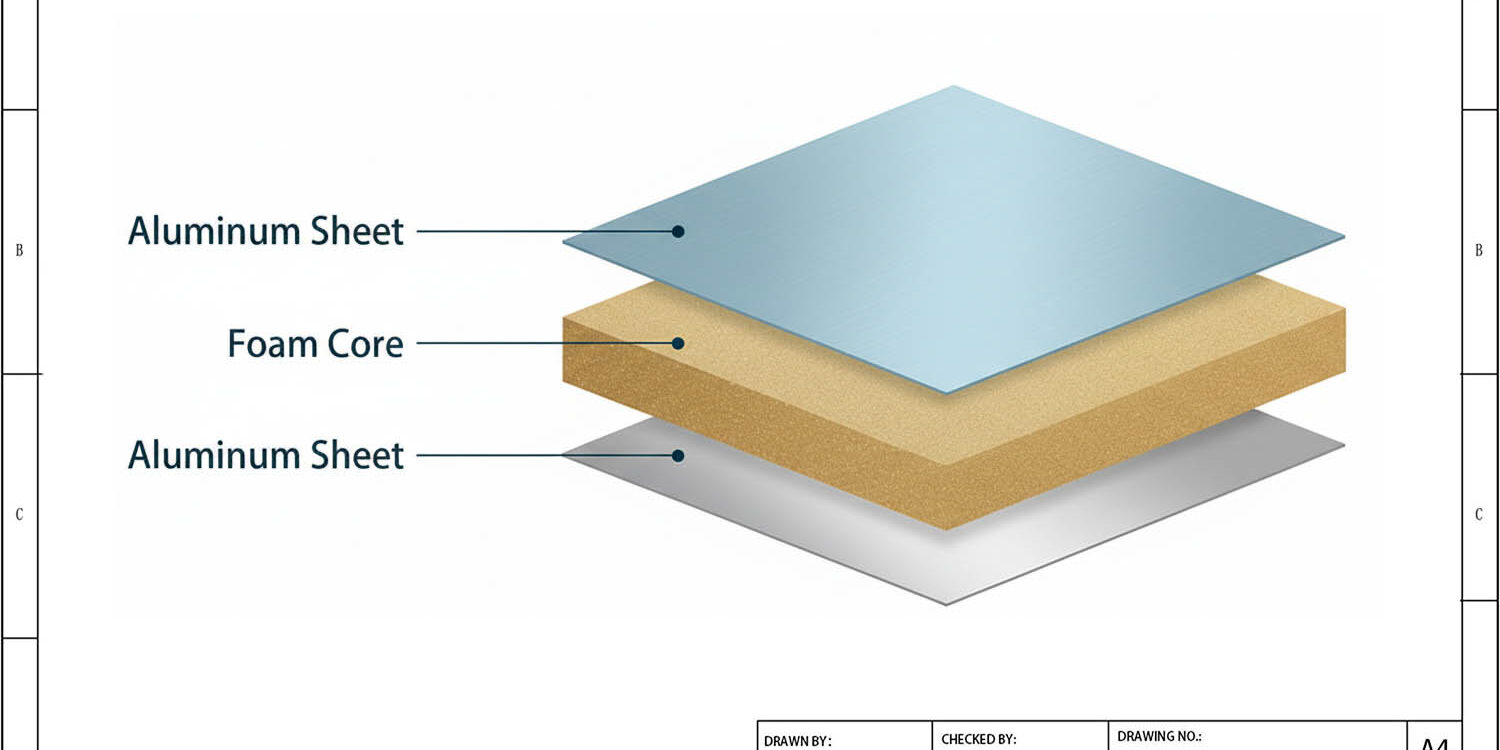
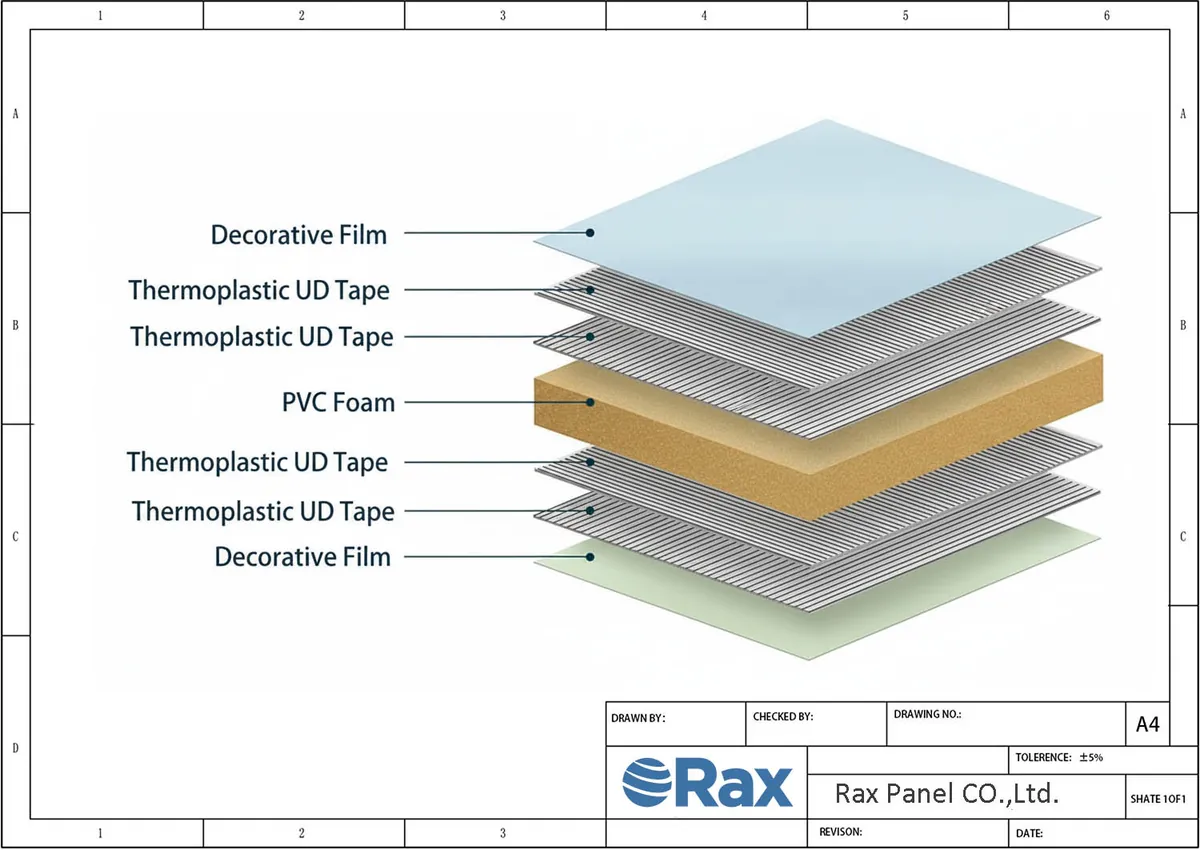
Agricultural insulated walls must satisfy three functional loads: thermal retention, structural integrity, and environmental resistance. Specifying a single factory-bonded sandwich panel that addresses all three prevents stick-built assembly failures.
Defining the Three Functional Loads
When engineering agricultural insulated walls, the building envelope must resist combined stresses that differ significantly from standard commercial construction. We evaluate these structures against three primary functional loads to ensure long-term performance and code compliance.
- Thermal Retention: The capacity to maintain strict temperature differentials without excessive energy consumption. This is measured by consistent R-values across the entire wall assembly, preventing the thermal bridging that typically occurs at stud locations in traditional builds.
- Structural Integrity: The requirement to withstand axial loads, wind uplift, and equipment impact without compromising the insulated core. Panel flatness, core density (such as PET foam at 80-200 kg/m³), and facing material rigidity dictate the structural capacity.
- Environmental Resistance: The defense against moisture ingress, chemical exposure, biological attack from pests, and continuous high humidity. Closed-cell cores and impermeable facings provide a critical barrier against these degrading elements.
Mapping Functional Loads to Agricultural Use-Cases
Different agricultural operations prioritize these three loads differently. Selecting the correct composite panel specification depends entirely on the specific interior environment and operational goals of the facility.
Dairy Barns: High Moisture and Structural Rigor
Dairy operations generate massive amounts of humidity and require robust wash-down protocols, placing the environmental load at the forefront of material selection. Standard fiberglass batts absorb moisture and harbor bacteria, whereas closed-cell PET foam cores absorb less than 1% water by volume. The structural load is equally critical here; walls must survive impacts from large livestock and heavy cleaning equipment. We recommend GRP/FRP faced panels for these environments because the non-porous skins resist chemical degradation from manure and alkaline detergents while providing a zero-maintenance interior surface.
Grain Storage: Maximum Thermal Retention and Pest Proofing
For grain storage facilities, thermal retention is the primary functional load. Temperature fluctuations lead to condensation, which causes spoilage and fungal growth. A 100mm PET foam core sandwich panel achieves an R-20 insulation value with zero thermal bridging, equivalent to 150mm of traditional fiberglass batt with studs. Furthermore, the environmental load includes severe pest vulnerability. Traditional exposed insulation provides nesting material for rodents and birds. Factory-bonded sandwich panels with aluminum or FRP skins eliminate this risk entirely by encapsulating the core in a solid, pest-proof barrier.
Poultry Houses: Fire Safety and Chemical Resistance
Poultry houses operate at high densities, meaning strict fire safety codes and extreme ammonia exposure define the environmental load. Modern GRP/FRP faced panels achieve a Euroclass B-s1,d0 fire rating without the need for additional fire retardant coatings, which is critical for passing agricultural building inspections. Simultaneously, the continuous insulation provided by foam core panels prevents the condensation that leads to respiratory issues in birds. Installation speed also plays a major role in large-scale poultry operations. Modular sandwich panel assemblies install 3-5x faster than stick-built cladding, reducing on-site labor by up to 60% and minimizing facility downtime during retrofits.
Core Materials: Foam vs Honeycomb vs Balsa
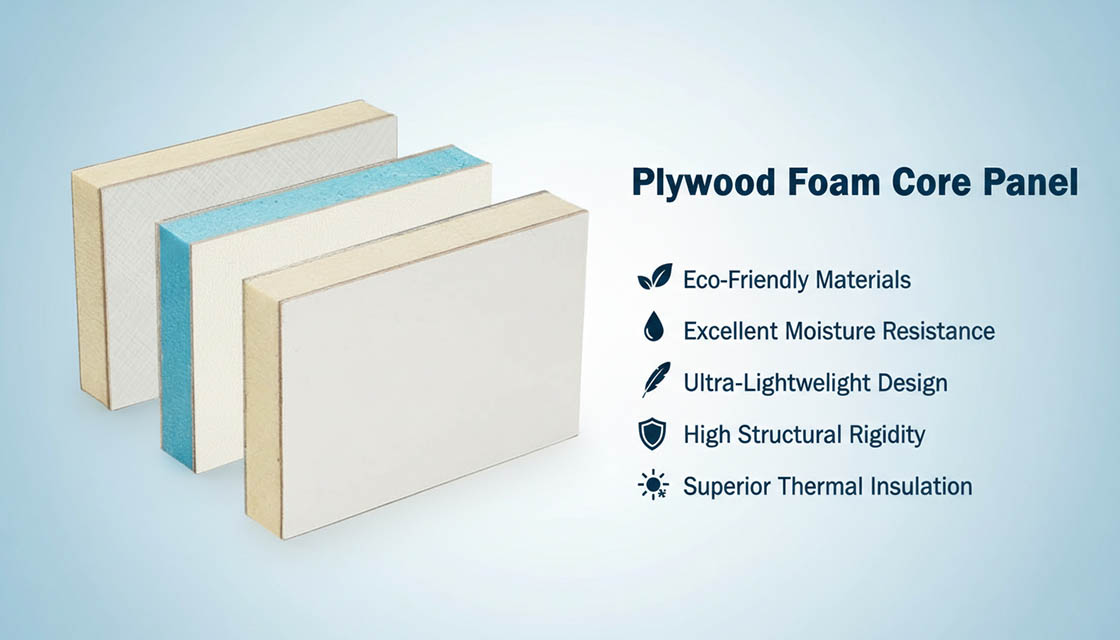
Core material selection accounts for 60-70% of a sandwich panel’s final thermal and structural performance. In agricultural environments, getting this wrong means moisture intrusion, thermal bridging, and premature panel failure within 5-8 years.
Technical Comparison: PET Foam, XPS Foam, Honeycomb, and Balsa Wood Cores
Engineers specifying agricultural insulated wall panels face a choice between four core families, each with distinct trade-offs in density, thermal resistance, compressive strength, and moisture behavior. The right selection depends on whether the priority is R-value per inch, structural load-bearing, or long-term durability in high-humidity livestock environments. Below we break down the critical specifications that drive real-world performance.
- PET Foam Core: Density 80–200 kg/m³; compressive strength 0.8–2.5 MPa; thermal conductivity 0.030–0.035 W/(m·K); R-value approximately R-4.2 per inch; water absorption less than 1% by volume.
- XPS Foam Core: Density 30–45 kg/m³; compressive strength 0.2–0.7 MPa; thermal conductivity 0.028–0.034 W/(m·K); R-value approximately R-5.0 per inch; water absorption less than 0.3% by volume but lower structural capacity than PET.
- PP Honeycomb Core: Density 80–120 kg/m³; compressive strength 1.0–3.0 MPa; thermal conductivity significantly higher than foam due to open cell geometry; R-value substantially lower than foam cores; water absorption minimal but provides virtually no insulation without additional fill.
- Balsa Wood Core: Density 100–250 kg/m³; compressive strength 3.0–12.0 MPa depending on grain orientation; R-value approximately R-1.0 per inch; water absorption 15–20% by volume in humid conditions.
A 100mm PET foam core sandwich panel achieves R-20 with zero thermal bridging. That is thermally equivalent to 150mm of traditional fiberglass batt with studs, based on Purdue AE-95 data adjusted for thermal bridging losses inherent in stick-built assemblies. Continuous insulated sandwich panels reduce thermal bridging by 90% compared to stud-wall batt insulation, per ASHRAE 90.1 compliance modeling.
Why PET Foam Is Replacing Balsa in Humid Agricultural Environments
Balsa wood has been a traditional core material in marine and structural composites for decades, valued for its high compressive strength and ease of machining. However, in agricultural applications, specifically poultry houses, dairy barns, and swine facilities, balsa presents a critical liability that outweighs its structural advantages.
The fundamental problem is moisture. Livestock facilities routinely operate at 60–80% relative humidity with frequent washdown cycles. Balsa wood absorbs 15–20% water by volume under these conditions. Once saturated, balsa loses structural integrity, becomes a substrate for mold and bacterial growth, and begins to rot from the inside out. A panel that appears structurally sound on the exterior can have a compromised core within 3–5 years in these environments.
Closed-cell PET foam absorbs less than 1% water by volume under identical conditions. It does not support biological growth, does not degrade when exposed to ammonia-laden air common in poultry operations, and maintains its compressive strength rating over a 20-year lifecycle. Our GRP-faced PET foam panels also achieve Euroclass B-s1,d0 fire ratings without additional fire retardant coatings, which is critical for compliance in agricultural building codes.
From an installation standpoint, foam core sandwich panels install 3–5 times faster than stick-built insulation plus cladding assemblies, reducing on-site labor by up to 60% for modular agricultural builds. Combined with pest-proof FRP or aluminum skins that eliminate exposed fibrous material for rodents to nest in, PET foam core panels solve the moisture, thermal, structural, and pest challenges in a single factory-finished product.
| Material Type | Density & Strength | Thermal Performance | Durability & Water Resistance |
|---|---|---|---|
| PET Foam Core | 80-200 kg/m³ density; 0.8-2.5 MPa compressive strength | 0.030-0.035 W/(m·K); R-4.2/inch (R-20 @ 100mm) | <1% water absorption; rot-resistant in high humidity |
| PP Honeycomb Core | 80-120 kg/m³ density; 1.0-3.0 MPa compressive strength | Lower R-value; primarily used for structural stiffness | Moisture resistant plastic core; pest-proof with sealed skins |
| Balsa Wood Core | Natural wood density; varying mechanical strength | Moderate insulation; lower R-value per inch than PET foam | 15-20% water absorption; high risk of rot in humid environments |
R-Value Targets by Climate Zone
This factor has a direct bearing on project performance and long-term cost. Addressing it with specific data rather than general assumptions leads to better outcomes.
ASHRAE Climate Zones 4–7: Minimum Wall R-Values for Agricultural Buildings
Per ASHRAE 90.1 and the IECC, agricultural structures fall under semi-conditioned or unconditioned commercial classifications, but livestock and cold-storage facilities effectively demand conditioned-wall performance. Zone 4 typically mandates R-13 to R-16 continuous insulation. Zone 5 jumps to R-16 to R-19. Zone 6 targets R-19 to R-21. Zone 7 requires R-21 to R-25. These are minimums — engineers specifying for dairy milking parlors or poultry houses with continuous ammonia exposure often exceed them by 15–20% to account for long-term degradation in traditional materials.
The critical distinction here is between cavity insulation R-values and continuous insulation R-values. Traditional stud-wall construction using fiberglass batts relies on cavity fill between framing members. The studs themselves — whether wood or steel — create thermal bridges that can reduce the effective wall R-value by 20–40%. A stud wall rated at R-19 might deliver only R-13 in actual field performance. This is the gap that continuous insulated sandwich panels eliminate entirely.
Our ASHRAE 90.1 compliance modeling confirms that factory-bonded sandwich panels reduce thermal bridging by 90% compared to stud-wall batt insulation. The rated R-value of a continuous panel is effectively the in-service R-value because there are no studs, fasteners penetrating the insulation layer, or compression points where the core material thins out.
Calculating Sandwich Panel Thickness to Hit Targets Without Studs or Thermal Bridging
The calculation is straightforward once you remove the stud-wall variable. PET foam cores deliver approximately R-4.2 per inch of thickness (thermal conductivity: 0.030–0.035 W/(m·K)). Polyurethane cores deliver roughly R-6.5 per inch. XPS foam sits between them at R-5.0 per inch. Because sandwich panels provide absolute continuous insulation — no framing members interrupting the thermal envelope — the panel thickness calculation is simply: target R-value divided by R-per-inch of the selected core material.
Below are the practical panel thickness specifications we recommend for each climate zone using PET foam core (R-4.2/inch) as the baseline. These calculations assume GRP/FRP or aluminum facings, which add negligible thermal resistance but provide the structural and moisture-protection layers.
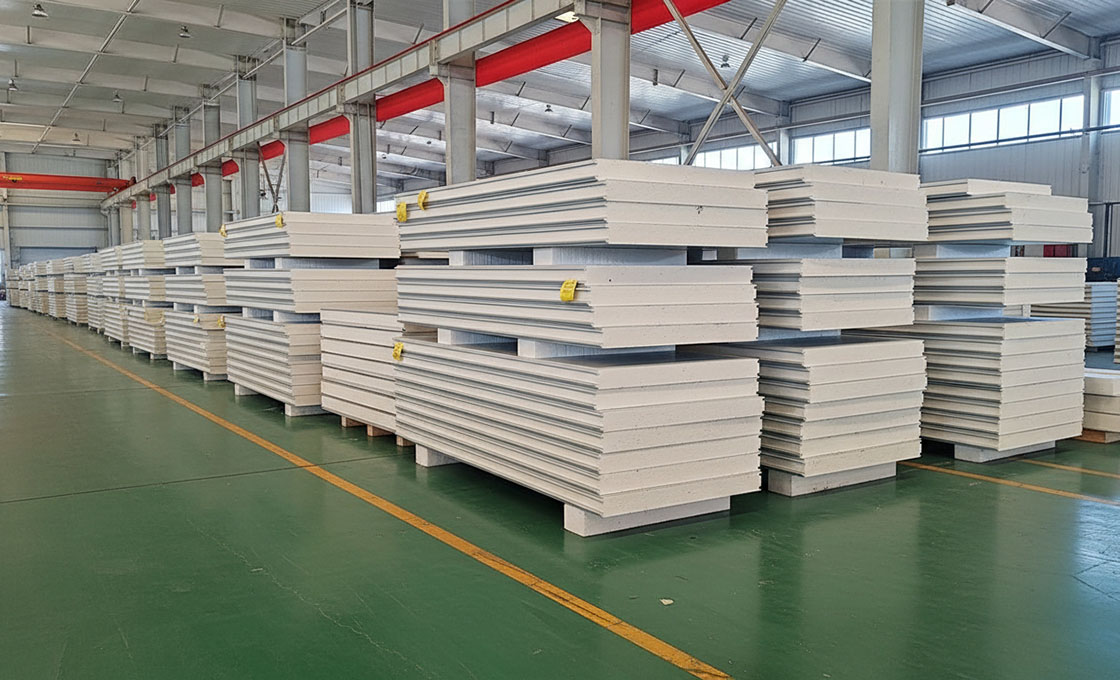
- Zone 4 (R-16 target): 100mm (3.94″) PET foam core panel delivers R-16.5. This is our baseline configuration for temperate agricultural regions.
- Zone 5 (R-19 target): 120mm (4.72″) PET foam core panel delivers R-19.8. Alternatively, 80mm polyurethane core at R-5.0/inch achieves R-20.0 in a thinner profile.
- Zone 6 (R-21 target): 130mm (5.12″) PET foam core panel delivers R-21.5. For weight-sensitive applications like specialized vehicle panels, a 100mm PU core hits R-21.3 at 30% less weight.
- Zone 7 (R-25 target): 150mm (5.91″) PET foam core panel delivers R-24.8. At this thickness, engineering review of panel spanning capability is required — we provide deflection data per application.
For context, a 100mm PET foam core sandwich panel achieves R-20 with zero thermal bridging — equivalent to 150mm of traditional fiberglass batt with studs, based on Purdue AE-95 data adjusted for framing losses. That 33% reduction in wall assembly thickness translates directly to increased usable interior floor space and reduced foundation load, which matters in modular agricultural builds where every kilogram per square meter counts.
We cut all panels to ±0.5mm thickness tolerance. That precision means predictable R-values across every panel in a production run — no gaps, no compression artifacts, no field-cut inconsistencies that degrade thermal performance over time.

Moisture and Condensation Control
Livestock barn condensation destroys traditional insulation from the inside out. Closed-cell PET foam cores absorb less than 1% water by volume, making sandwich panels the only structural insulation that survives decades of high-humidity exposure without rot.
The Dew Point Problem in Livestock Barns
In agricultural structures, livestock continuously respire, generating massive amounts of internal moisture. When this warm, humid air contacts a wall surface that has dropped below the dew point, condensation forms. In traditional stick-built barns, this moisture migrates straight into the wall assembly.
Over time, fiberglass or cellulose batts act like sponges. Wet insulation loses its R-value, sags under its own weight, and creates a breeding ground for mold. Wood framing rots, and exposed insulation becomes an easy nesting ground for rodents and birds. The structural integrity of the wall degrades rapidly, forcing expensive replacements that disrupt operations.
Continuous Panel Skins vs. Traditional Batt Insulation
Traditional wall assemblies rely on vapor barriers draped over studs, which are easily punctured during installation or degraded by constant ammonia exposure. Batt insulation leaves gaps and thermal bridges at every framing member. Conversely, factory-bonded foam core sandwich panels provide true continuous insulation. The inner and outer skins act as inherent vapor barriers when joints are properly sealed.
- Water Absorption: Closed-cell PET foam absorbs less than 1% water by volume, whereas balsa wood or fiberglass batts retain 15-20% moisture, leading to rot.
- Thermal Bridging: Continuous insulated sandwich panels reduce thermal bridging by 90% compared to stud-wall batt insulation, per ASHRAE 90.1 compliance modeling.
- Pest Resistance: FRP and aluminum skins offer no exposed fibrous material, completely eliminating the nesting environments that plague traditional agricultural walls.
Vapor Barrier Specification Recommendations
Relying on standalone peel-and-stick membranes or thin polyethylene sheeting in a high-ammonia, high-moisture agricultural environment is a calculated risk. We recommend specifying panels with factory-applied impermeable skins to serve as the primary vapor barrier. For dairy and poultry barns, GRP/FRP faced panels are highly effective because the skins resist chemical degradation from aggressive cleaning agents.
Ensure your joint detailing utilizes compatible sealants—typically polyurethane or silicone specifically formulated for the panel face material—to maintain an unbroken envelope. Never pierce the interior skin with unsealed mechanical fasteners. A single unsealed screw hole compromises the vapor barrier, inviting localized condensation directly into the panel core and defeating the purpose of a continuous insulation system.
Fire Ratings and Building Code Compliance
Modern GRP/FRP faced sandwich panels achieve Euroclass B-s1,d0 fire ratings natively, eliminating the need for supplemental fire retardant coatings in livestock and poultry facilities.
Common Fire Rating Requirements for Agricultural Structures
Agricultural buildings fall under a fragmented regulatory landscape. In the United States, the International Building Code (IBC) typically classifies livestock barns and poultry houses as Type U (utility) structures, which historically carried minimal fire rating mandates. However, that exemption is eroding rapidly. Insured operations and facilities housing high-value livestock or controlled-environment agriculture now face insurer-driven requirements that effectively mirror commercial standards. Class A (ASTM E84 flame spread index 0-25) is increasingly specified for anything adjacent to milking parlors, feed storage, or equipment rooms.
In the European market, Euroclass ratings dominate specification language. Euroclass B-s1,d0 is the practical threshold for agricultural insulated walls in most EU member states. The “s1” designation indicates negligible smoke production, which is critical in enclosed poultry and swine operations where smoke inhalation losses can exceed direct fire damage. The “d0” rating confirms zero flaming droplets, a non-negotiable requirement when panels are specified above livestock holding areas.
In Australia and New Zealand, the NCC/BCA framework references AS 1530.3 and AS/NZS 3837 for wall and ceiling assemblies. Agricultural sheds in bushfire-prone regions must meet specific BAL (Bushfire Attack Level) ratings, which directly impacts permissible core materials and facing substrates. Engineers specifying for export markets must cross-reference all three systems simultaneously, as we frequently see projects where a single manufacturer must satisfy IBC, Euroclass, and NCC requirements within the same facility complex.
Core Materials and Fire Performance Characteristics
Not all foam cores are equal when confronting flame. The distinction between self-extinguishing and non-combustible is critical, and mis-specifying between the two triggers code rejection. Our testing data across agricultural panel configurations shows clear performance tiers.
- PET Foam Core (100% recycled polyethylene terephthalate): Achieves self-extinguishing behavior (UL 94 V-0) with limiting oxygen index (LOI) values above 28%. Density range of 80-200 kg/m³. Does not melt or drip in standard fire exposure, making it acceptable for Euroclass B and C configurations when paired with FRP skins.
- XPS (Extruded Polystyrene) Foam Core: Provides R-5.0 per inch thermal performance but carries inherent flammability. Requires fire-retardant additives and protective facings to approach building code thresholds. Not recommended for high-risk agricultural zones without additional barrier systems.
- PP Honeycomb Core: Density of 80-120 kg/m³ with compressive strength of 1.0-3.0 MPa. The open-cell structure limits fuel load per unit volume compared to solid foams. When encapsulated between GRP/FRP skins, the assembly achieves favorable fire propagation indices.
- Aluminum Skinned Panels with Mineral Core: The only configuration in our product range that achieves true non-combustible classification (Euroclass A2) when specified with mineral wool or specialized fire-resistant cores. Reserved for high-risk zones such as chemical storage adjacency and boiler rooms within agricultural complexes.
We consistently recommend GRP/FRP faced panels with PET foam cores for standard livestock barn wall assemblies. The FRP skins provide chemical resistance to ammonia and aggressive cleaning agents while simultaneously containing the core material during fire exposure. The Euroclass B-s1,d0 rating is achieved without additional fire retardant coatings, which reduces both material cost and installation complexity.
2026 Building Code Shifts: Continuous Insulation Mandates
The 2026 IECC (International Energy Conservation Code) cycle introduces stricter continuous insulation requirements that directly impact agricultural wall assembly design. The critical change: thermal bridging through framing members is no longer grandfathered in agricultural exemptions in most climate zones 4 through 8. Continuous insulated sandwich panels reduce thermal bridging by 90% compared to stud-wall batt insulation, per ASHRAE 90.1 compliance modeling. This is not a marginal improvement; it is a fundamental assembly redesign for any facility previously using stick-built insulation with cladding.
Factory-bonded sandwich panels qualify as continuous insulation by definition. There are no mechanical fasteners penetrating the insulation layer, no studs creating thermal shortcuts, and no gaps at framing intersections. A 100mm PET foam core sandwich panel achieves R-20 with zero thermal bridging, equivalent to 150mm of traditional fiberglass batt with studs according to Purdue AE-95 data adjusted for real-world installation factors. This distinction matters because inspectors in 2026 will calculate assembly R-values using the parallel-path method, which penalizes stud-wall constructions heavily.
For engineers specifying modular agricultural wall panel specifications in 2026 and beyond, the practical implication is straightforward. Panel-to-panel joint design must maintain thermal continuity. Our custom-cut composite panels to ±0.5mm tolerance ensure consistent joint closure across modular agricultural builds, preventing the edge leakage that undermines stated R-values in field conditions. Combined with the moisture resistance of closed-cell PET foam, which absorbs less than 1% water by volume compared to balsa wood at 15-20%, these panels address fire compliance, thermal performance, and long-term durability in a single factory-finished assembly.
Sandwich Panels vs Traditional Insulation
Factory-bonded sandwich panels eliminate the structural compromises of stick-built insulation, cutting thermal bridging by 90% and installation labor by up to 60%.
Head-to-Head: Five Critical Performance Criteria
Engineers evaluating wall assemblies must look beyond the insulation material itself and consider the system performance. Traditional batt insulation relies on a perfect install that rarely happens on site. Sandwich panels integrate the structure and insulation into a single factory-controlled unit. We have compared the two systems across the five metrics that impact long-term building performance.
- Install Speed: Sandwich panel installation is 3-5x faster than stick-built methods, reducing on-site labor by up to 60% for modular agricultural builds.
- R-Value Consistency: Factory bonding ensures consistent thermal performance, whereas fiberglass batts often settle, sag, or leave gaps around studs during installation.
- Pest Resistance: Aluminum or FRP skins provide an impenetrable barrier, eliminating the risk of rodent nesting and bird damage common in exposed fibrous insulation.
- Lifespan: Closed-cell cores like PET foam absorb less than 1% water by volume, preventing the rot and degradation that plagues organic or fibrous materials in humid barns.
- Thermal Bridging: Continuous insulation sandwich panels reduce thermal bridging by 90% compared to stud-wall assemblies, per ASHRAE 90.1 compliance modeling.
Quantifying Labor Savings and Energy ROI
We focus heavily on total installed cost rather than just material unit price. The speed of installation fundamentally changes the project economics. Our internal tracking on modular agricultural builds shows that installing a 100mm PET foam panel is 3-5x faster than assembling a stud frame with fiberglass batts. This efficiency results in a 60% reduction in on-site labor hours. For a commercial operation, this speed allows for quicker facility turnover and lower general conditions costs.
The energy ROI is equally compelling. A 100mm PET foam core sandwich panel achieves R-20 with zero thermal bridging. To match this performance using traditional methods, you would need 150mm of fiberglass insulation plus the structural studs. Since studs conduct heat, the real-world performance of that wall assembly drops significantly. Our continuous insulation approach maintains the rated R-value, ensuring your HVAC systems work less to maintain stable temperatures for livestock or storage.
Specification Checklist for Buyers
Getting specifications right upfront avoids change orders during fabrication. Confirm thickness, facing material, joint type, and dimensional tolerances in writing before production begins.
Conclusion
Stick-built insulation with fiberglass batts is a liability in livestock environments. Rodents destroy the material within months, and moisture load cuts your thermal performance in half. Spec GRP-skinned PET foam panels to lock in that R-20 value and eliminate the pest risk entirely.
Pull the engineering data sheet for our 100mm PET core panels today. Check the Euroclass B-s1,d0 fire rating against your local poultry code before you finalize the blueprints. It saves you a costly rejection notice during the first inspection.
Frequently Asked Questions
This factor has a direct bearing on project performance and long-term cost. Addressing it with specific data rather than general assumptions leads to better outcomes.
What are the four types of insulation?
The four primary types are batt/blanket (R-3.1-3.5/inch), rigid board (R-3.6-6.5/inch), spray foam (R-3.7-6.5/inch), and loose-fill/blown-in (R-2.2-3.7/inch). For agricultural walls, sandwich panels with foam or honeycomb cores function as a 5th hybrid category combining structural load-bearing capacity with continuous insulation, eliminating thermal bridging entirely.
What is the code for insulation in walls?
The International Energy Conservation Code (IECC) and ASHRAE Standard 90.1 govern wall insulation requirements. For agricultural buildings, the 2026 code cycle increasingly mandates continuous exterior insulation (ci) to eliminate thermal bridging at studs. Factory-bonded sandwich panels meet this requirement by default because the insulation core runs uninterrupted across the full panel surface.
How to determine insulation type?
Base your selection on three factors: (1) Environmental humidity—closed-cell foam cores resist moisture absorption (<1% vs 15-20% for balsa), critical for livestock barns. (2) Structural requirements—honeycomb cores handle higher compressive loads for multi-story ag structures. (3) Fire code—FRP-faced panels achieve Euroclass B-s1,d0 without additional coatings. Always request thermal conductivity (W/m·K) and fire test certificates before specifying.
What R-value do I need in zone 5?
ASHRAE 90.1 recommends R-19 for above-grade walls in Climate Zone 5 heated agricultural buildings. A sandwich panel with a 100mm PET foam core (λ=0.030 W/m·K) delivers approximately R-19.2 without any thermal bridging penalty. Traditional stud walls with R-19 batts lose 15-25% of rated performance due to thermal bridging at studs, meaning actual performance is closer to R-15.
How to choose insulation type for livestock buildings?
Prioritize moisture resistance, pest resistance, and cleanability. Livestock barns generate high humidity (60-80% RH) and ammonia vapor that degrades open-cell and fibrous insulation. Closed-cell foam core sandwich panels with FRP or aluminum skins provide a sealed, non-porous surface that withstands pressure washing, resists rodent damage, and maintains R-value stability over 20+ years.