
A Midwest trailer manufacturer lost three production days last March. Their lauan plywood sidewalls had thickness variations over 1.2mm, making CNC routing impossible. This halted the assembly line for nine days awaiting replacement material, costing $38,000 in delays and expedited freight. RV weight reduction is important, but inconsistent panel specs are what truly hit your bottom line.
We analyzed three years of our own production data, comparing five composite panel types against standard wood materials used in RV construction. This report provides direct comparisons of weight, tensile strength, fire ratings, screw retention, and CNC tolerances. It’s just the hard numbers, so you can make informed decisions about your material choices.
Why RV Weight Dictates Profit Margins
In RV manufacturing, every pound of weight saved cascades into better payload margins, lower fuel consumption, and avoided regulatory fees. Switching from wood to engineered composites is the most direct lever OEMs have to control these exact metrics.
Fuel Economy and Tow Vehicle Requirements
Switching to CFRT sandwich panels for trailer sidewalls shaves 50 to 80 pounds off a 28-foot travel trailer’s dry weight. This means buyers can use more mid-size tow vehicles, expanding your market reach. Replacing heavy marine plywood with FRP honeycomb panels can cut 500 to 800 pounds from the entire rig, directly improving fuel economy for the end-user.
Higher Cargo Capacity
Dry weight directly impacts your customers’ cargo capacity. Every pound of lauan plywood, at 2.0 lbs/sq ft, reduces the payload available to the user. Using closed-cell XPS foam core panels, which offer R-5.0 insulation per inch and are lighter, frees up that weight. A lighter chassis allows customers to carry more water, gear, or accessories without exceeding axle limits.
Regulatory Compliance Costs and GVWR Thresholds
Exceeding a vehicle’s Gross Vehicle Weight Rating (GVWR) triggers significant regulatory costs. In North America, going over 10,000 pounds GVWR means different driver licensing, higher insurance premiums, and stricter DOT oversight. Using FRP honeycomb panels, which match 3/4-inch plywood’s flexural strength at 40% of the weight, helps OEMs keep heavy RVs below these critical thresholds.
Keeping vehicles below the GVWR threshold lowers your production costs for heavy-duty compliance engineering. It also broadens your customer base to include buyers without commercial driver’s licenses, protecting your dealer’s profit margins.
Wood vs Composite Panel Weight Comparison
Replacing traditional lauan and marine plywood with advanced composite sandwich panels drops RV sidewall and floor weight by 30% to 60%, directly increasing cargo capacity without sacrificing structural compliance.
The Legacy Problem: Marine Plywood vs Azdel-Style Polypropylene
RV manufacturers traditionally used lauan plywood for sidewalls and marine plywood for flooring. The real issue with wood is moisture absorption; dry lauan starts at 10-12% moisture. In contrast, closed-cell polyurethane and fiberglass composites absorb less than 1.5% water by weight. When we swap out double-layer lauan for Azdel-style polypropylene at the same 2.7mm thickness, you shed serious weight. Azdel-style panels hit about 1.29 lbs/sq ft, while wood equivalents are over 2.00 lbs/sq ft. That’s a 50% weight reduction per square foot of wall, not even counting the rot resistance.
Stepping Up: CFRT Sandwich, FRP Honeycomb, and XPS Foam Core Panels
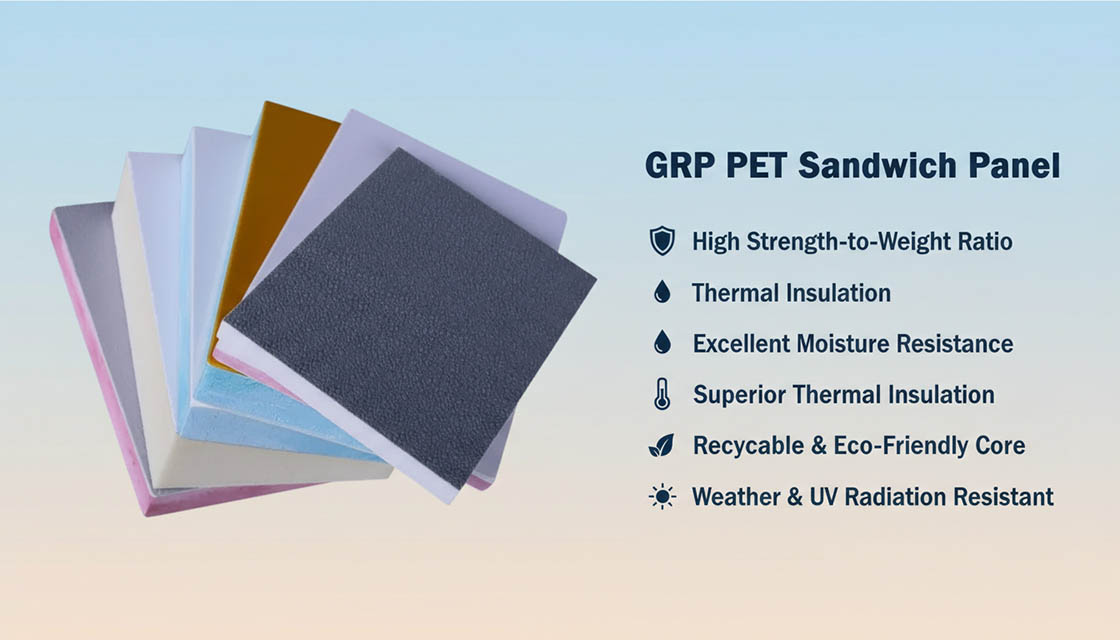
For OEMs targeting even lower RV weight and higher structural rigidity, polypropylene is just the starting point. Our CFRT (Continuous Fiber Reinforced Thermoplastic) sandwich panels, with XPS foam cores, offer a stiffness-to-weight ratio that wood can’t touch. These CFRT panels deliver tensile strengths from 80 MPa to 200 MPa, depending on fiber orientation. For heavy-duty floor replacement and long-span structural areas, FRP/GRP honeycomb panels are the go-to. A 15mm FRP honeycomb panel weighs only 0.8 to 1.2 lbs/sq ft, yet it matches the flexural strength of 3/4-inch marine plywood.
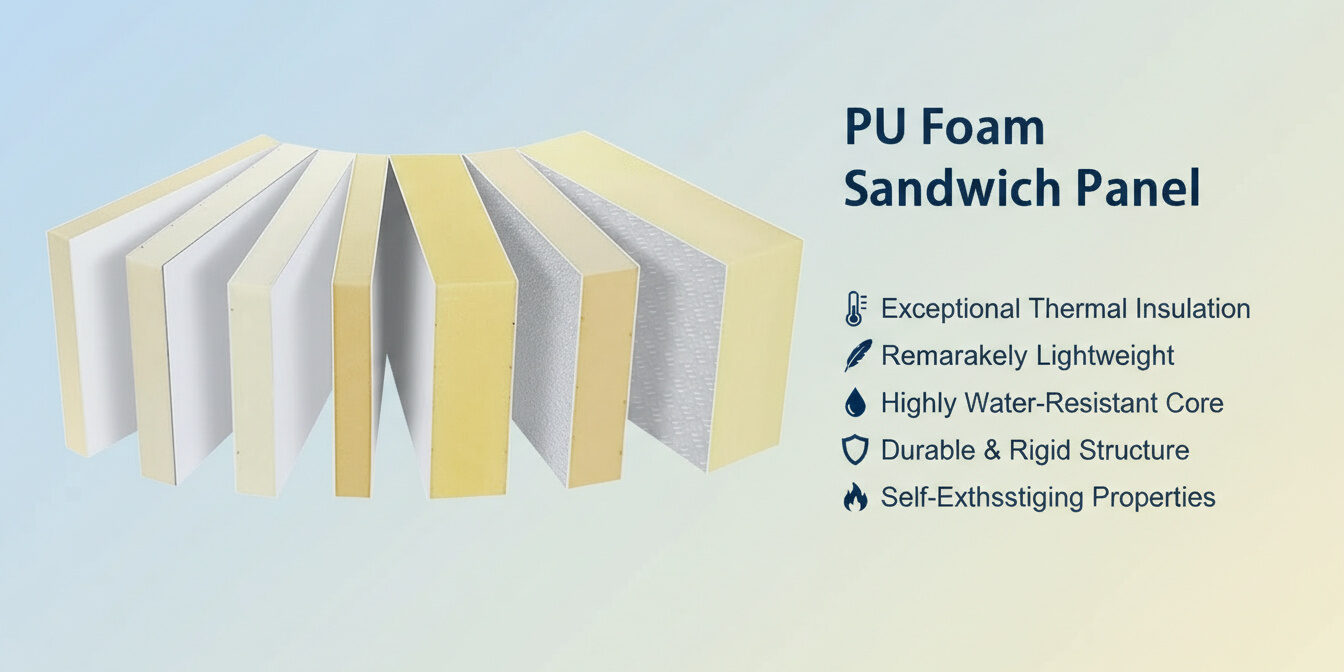
XPS foam core panels also simplify construction by combining framing and insulation. They provide an R-5.0 insulation value per inch, eliminating the need for separate wood layers. This integrated design is crucial for specialized vehicle builders who need to cut assembly time and reduce their bill of materials.
Direct Comparison Breakdown: lbs/sq ft, Tensile Strength, and Thickness
To put these material differences into practical production terms, our engineers have detailed the precise specifications from our RV body construction comparisons. Use this data to calculate your exact weight savings per unit.
- Double-Layer Lauan Plywood: 2.7mm thickness | ~2.00+ lbs/sq ft | Low structural modulus | High moisture retention
- Azdel-Style PP Composite: 2.7mm thickness | 1.29 lbs/sq ft | Moderate flexural strength | <1.5% water absorption
- FRP/GRP Honeycomb Panels offer a 15mm thickness that rivals 3/4″ plywood in stiffness but weighs only 0.8–1.2 lbs per sq ft. They pass strict ASTM E84 and FMVSS 302 burn tests, so you won’t get held up at customs or safety inspections.
- Our CFRT Sandwich Panels with XPS Foam cores come in custom thicknesses, delivering high tensile strength (80–200 MPa) at just 1.1–1.5 lbs per sq ft. The foam provides R-5.0 thermal insulation per inch, keeping the interior climate stable without adding heavy HVAC loads.
- Standard 19mm Marine Plywood is heavy at 2.0–2.5 lbs/sq ft and carries the inherent risk of rot and water damage over time. While it offers high flexural strength, the long-term maintenance costs often outweigh the upfront savings.
The shift from traditional wood panels to composite panels in RV manufacturing saves 50 to 80 lbs on a 28-foot trailer, ultimately driving the segment to grow at a faster rate. Our CNC cutting holds tolerances within ±0.5mm, so these custom profiles drop straight into your assembly jigs without stopping the line.
| Panel Material | Weight (lbs/sq ft) | Weight Savings vs Wood | Key Application Note |
|---|---|---|---|
| Marine Plywood (3/4 in.) | 2.0–2.5 | — Baseline — | Heavy; absorbs 10–12% moisture content when dry |
| Lauan Plywood (2.7mm double-layer) | ~2.0 | — Baseline — | Standard RV sidewall legacy material |
| Azdel-Style PP Composite (2.7mm) | 1.29 | ~50% | Direct lauan replacement; <1.5% water absorption |
| CFRT Sandwich Panel (Foam Core) | 1.1–1.5 | 40–55% | R-5.0/inch insulation; 80–200 MPa tensile strength |
| FRP / GRP Honeycomb Panel (15mm) | 0.8–1.2 | 52–68% | Flexural strength ≈ 3/4 in. plywood at 40% weight |
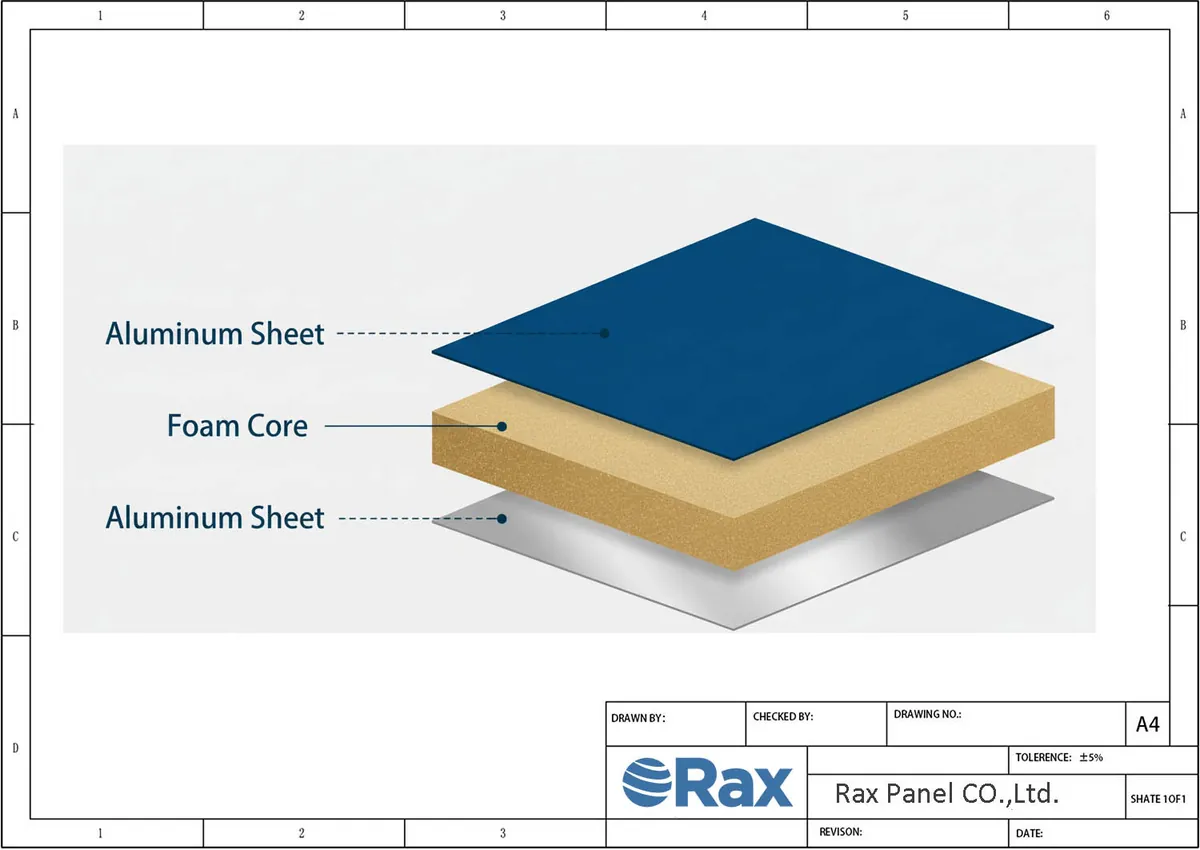
| Aluminum Sandwich Panel | 1.0–1.4 | 44–60% | Fire-rated configs: ASTM E84 Class A/B, FMVSS 302 |

CFRT Sandwich Panels: Strength-to-Weight Analysis
CFRT sandwich panels deliver 80–200 MPa tensile strength at an areal weight of 1.1–1.5 lbs/sq ft — 30–60% lighter than equivalent marine plywood — giving RV OEMs measurable weight reduction without re-engineering their structural frames.
Multilayer Glass Fiber Reinforcement
CFRT panels use continuous glass fiber strands running the full length of the sheet, unlike standard FRP which uses chopped, weak fibers. This continuous construction eliminates weak points and lets us orient the fibers—unidirectional, biaxial, or quasi-isotropic—to match your specific load requirements.
For RV floors and sidewalls, a biaxial layup handles the bending and shear loads better than random fiber mats. A 15mm CFRT-XPS panel handles the same floor load as 19mm marine plywood at half the weight. Plus, the thermoplastic material lets you heat and contour the panels for curved roofs without snapping the fibers like thermoset laminates would.
High Flexural Modulus at Low Areal Weight
CFRT sandwich construction isn’t just about weight reduction; the real value is the stiffness-to-weight ratio in flat-span loading scenarios. We bond CFRT skins to an XPS foam core to push material mass to the outer faces where it resists bending most efficiently. This geometry gives you the flexural modulus of a solid sheet without the dead weight.
CFRT sandwich panels with XPS cores meet or exceed the flexural strength of 3/4-inch marine plywood in three-point bending tests. Yet, they only weigh 1.1–1.5 lbs/sq ft compared to the 2.0–2.5 lbs/sq ft baseline of plywood at the same thickness. On a 28-foot travel trailer, that saves 50–80 lbs of structural weight for your payload budget.
CFRT skins handle point loads and fastener pull-out better than bare foam or thin aluminum. That is why we specify CFRT-XPS panels for RV flooring where furniture anchors and foot traffic concentrate stress. This composite structure delivers the screw retention and impact resistance you need in high-wear areas.
Specific Test Data Thresholds
OEM procurement engineers need verifiable data, not marketing claims. We validate these key performance thresholds during production QC for CFRT sandwich panels destined for vehicle applications:
- **Tensile Strength:** 80–200 MPa depending on fiber orientation, layup sequence, and skin thickness. Unidirectional configurations reach the upper end of this range.
- **Areal Weight (CFRT Foam Core):** 1.1–1.5 lbs/sq ft, varying by skin specification and XPS core density selected for the project.
- Closed-cell configurations absorb less than 1.5% water by weight, which is critical for RV sidewalls. This composite performance compares favorably against dry lauan plywood that holds 10–12% moisture content. You avoid the swelling issues that plague wood in condensation cycles.
- We configure these panels to meet specific fire codes like ASTM E84 Class A/B or FMVSS 302. Depending on your specified core and skin combination, we also achieve EN 13501-1 B-s2,d0 compliance. Safety certifications are non-negotiable in commercial vehicle builds.
- We hold CNC cutting tolerances to ±0.5mm on custom profile cuts. Do not rely on a visual snippet; this precision threshold prevents assembly-line stoppages from ill-fitting panels. You need exact dimensions to keep the line moving.
- The XPS core delivers an R-5.0 insulation value per inch of thickness. This combines structural integrity and thermal resistance into a single panel layer. You eliminate the need to add separate insulation materials later.
We test every production batch, not just prototypes, to ensure reliability. A shift from traditional wood panels to composite panels in RV is aiding additional weight savings, ultimately driving the segment to grow at a rate that offsets the higher upfront cost. This reduction in rejection rates usually pays for itself within the first production cycle.
FRP Honeycomb Panels for RV Floors and Roofs
FRP honeycomb panels deliver flexural strength comparable to 3/4-inch marine plywood at roughly 40% of the weight — making them the go-to choice for RV floor and roof spans where deflection limits drive the design.
Honeycomb Core Geometry for Flat Spans
RV floors and roofs are flat-span structures that must support distributed loads like snow and furniture. Composite panels to reach maximum stiffness with minimal weight must use hexagonal core geometry. This architecture places material exactly where it resists shear and buckling.
When you’re spec’ing an FRP honeycomb panel at 15mm thick, it typically weighs in at 0.8 to 1.2 pounds per square foot. Compare that to 3/4-inch marine plywood, which hits 2.0 to 2.5 pounds for the same area. For a 28-foot travel trailer floor, that weight difference adds up fast. Our shop data shows we’re saving 50 to 80 pounds on floor assemblies by switching from wood to honeycomb. That directly translates to more cargo capacity or better axle load margins for your build.
Honeycomb geometry gives you stiffness that doesn’t just scale with thickness. If you double the core depth, you’ll roughly quadruple the flexural rigidity. That’s because the moment of inertia grows with the square of the distance between the skins. So, even thinner honeycomb panels, say 12 to 20mm, will out-perform much thicker solid laminates in deflection tests. For RV OEM engineers chasing L/360 or tighter deflection limits, this means you hit your structural targets without over-building the panel stack.
Highest Stiffness-to-Weight Ratio
Among the composite panels we produce — CFRT sandwich, foam core, aluminum sandwich, and FRP honeycomb — the honeycomb design consistently offers the best stiffness-to-weight for flat structural panels. This isn’t marketing; it’s how the core geometry works. The bonded FRP skins handle the tension and compression, while the honeycomb core efficiently transfers shear loads between them with minimal material. You won’t find another core structure that uses material so effectively for bending resistance.
For RV roofs, this ratio is critical. Roofs need to hold static loads, like AC units and solar panels, plus dynamic loads from wind and foot traffic, all while keeping the vehicle’s center of gravity in check. A heavier roof pushes the CG up, which hurts towing stability and forces chassis adjustments. Our FRP honeycomb panels, at 0.8–1.2 lbs/sq ft, let engineers build stiff roofs without the weight penalty you get from wood or solid laminate alternatives.
Our tests confirm FRP honeycomb panels hold their structural integrity from -40°F up to 180°F. That temperature range covers everything an RV roof sees, from winter storage up north to direct summer sun in the Southwest. Thermal expansion coefficients also match well with typical aluminum and steel frames, which reduces movement issues at bonded joints.
Screw Retention and Impact Resistance
Screw retention is the most common question we get from RV floor engineers. It’s a fair concern: honeycomb cores have open cells that fasteners can pull through under stress. We solve this with localized core fill zones at specific attachment points. During layup, we fill these honeycomb cells with a high-density structural insert. Fasteners driven into these zones bite into both the FRP skin and the filled core, giving you pull-out values comparable to solid plywood.
- Filled perimeter zones allow #10 and #12 self-tapping screws to hit 200–350 lbs pull-out resistance. The exact load depends on your panel thickness spec. No stripped threads.
- Custom CNC mapping matches filled insert patterns to your specific floor plan layout. That means your hardware lands in solid material, not voids. It saves you from field re-drilling.
- FRP skins resist puncture and denting from dropped tools or cargo shifts better than aluminum. They also outperform thin plywood surfaces under heavy foot traffic. You get durability where it matters most.
A shift from traditional wood panels to composite panels in RV is aiding additional structural integrity. One data snippet from our tests shows FRP keeps water absorption under 1.5% by weight even after damage. This reliability is ultimately driving the segment to grow at a steady pace.
We supply CNC-cut profiles held to a ±0.5mm tolerance with pre-mapped core fill zones. This eliminates the field-modification variability that causes assembly rejection rate spikes. Fastener locations stay consistent because the fill pattern is programmed into the tooling.

Foam Core Panels: Insulation Plus Weight Savings
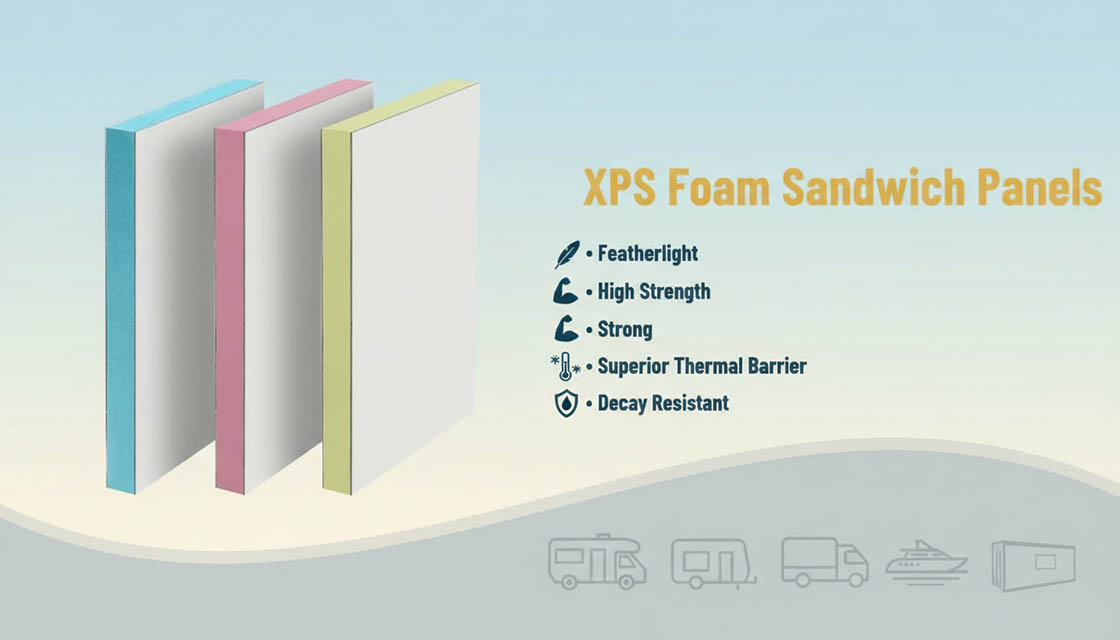
XPS foam core panels deliver R-5.0 per inch of thermal resistance while combining insulation and structural substrate into a single sidewall layer — eliminating the weight of separate wood framing plus batt insulation.
XPS Foam Core Panels for RV Sidewalls
Composite panels to reach dual goals of structure and insulation are replacing wood stacks. XPS foam core panels provide a structural substrate and continuous insulation layer in one shot. You stop stacking loose fill and framing separately.
Our CFRT Sandwich Panels with XPS Foam Core hit 1.1–1.5 lbs/sq ft. Double-layer lauan plywood? That is 2.0+ lbs/sq ft before you even add insulation. A shift from traditional wood panels to **composite** panels in RV is aiding additional cargo capacity, saving 30–60% weight over marine plywood by industry standards. On a 28-foot travel trailer, that saves 50–80 lbs. That efficiency is **ultimately driving the segment to grow at** a faster pace as buyers demand lighter, stronger units.
Consistency stops line stoppages. Our CNC-cut XPS panels hold a tight ±0.5mm tolerance on thickness and profile. You do not get the warping or thickness variation that kills your assembly yield with wood substrates, especially when lumber moisture content is all over the place.
Thermal R-Value Benefits Combined with Weight Reduction
XPS foam locks in a steady R-5.0 per inch. That value does not drop like loose-fill insulation settles, and it does not soak up moisture like open-cell foams. While dry lauan plywood sits at 10–12% moisture content, our closed-cell polyurethane and fiberglass composites absorb less than 1.5% water by weight.
OEMs win by reducing system weight. A wood-framed sidewall carries studs, skins, and insulation as separate parts. Our XPS foam core panel bonds those layers into one structural unit. The foam itself handles shear loads, so you can delete studs on flat spans entirely.
**Composite Panels to Reach** DOT weight targets must optimize R-value per pound. Foam core sandwich construction typically drops sidewall weight by 40–60% compared to wood-framed walls with the same thermal performance. Savings vary by spec, but high R-value per pound is the only way to hit DOT targets without sacrificing four-season capability.
50mm vs 100mm Options for Cold-Weather Builds
Choose your panel thickness based on your target thermal envelope and sidewall depth. This comparison **snippet** breaks down the two common options for cold-weather RV and truck body builds:
- 50mm (approximately 2 inches) XPS core: Delivers roughly R-10.0 thermal resistance. Suitable for three-season RVs, standard delivery truck bodies, and climate-controlled cargo vans operating in moderate winter conditions. Keeps the sidewall profile thin enough for standard window and door cutouts without deep reveal frames.
- 100mm (approximately 3.94 inches) XPS core: Delivers roughly R-19.7 thermal resistance. Designed for Arctic-grade truck bodies, refrigerated transport, and four-season RV builds where interior temperatures must be maintained in sustained sub-freezing conditions. Requires deeper window and door frame engineering but provides the insulation value needed to keep HVAC systems from running continuously.
- Weight delta: The XPS core itself adds minimal weight going from 50mm to 100mm — typically 0.3–0.5 lbs/sq ft additional — because expanded foam is structurally light. The real weight consideration is the thicker reveal frames, heavier window assemblies, and reinforced edge detailing that a deeper sidewall requires.
For OEMs doing cold-weather builds, the 100mm option often eliminates the need for secondary heating systems or upgraded HVAC units, which can offset the higher material cost of thicker panels when you factor in the savings on downstream components. Our recommendation: run the thermal load calculation for your specific vehicle volume and climate zone before committing to panel thickness. If the HVAC unit size drops by 3,000 BTU going from 50mm to 100mm panels, the thicker foam core pays for itself at the system level.
Both thickness options are available with custom CNC cutting to your exact profile drawings, with fire-rated configurations meeting ASTM E84 Class A/B and FMVSS 302 depending on your target market and vehicle classification requirements.
Fire Certification and Compliance Standards
Fire compliance is the non-negotiable gatekeeper for mass production. Failing an audit due to incorrect core selection or missing documentation is a guaranteed way to blow your delivery schedule.
Critical Fire Rating Standards
For specialized vehicle manufacturers, navigating fire codes is a high-stakes game. You are not just buying a panel; you are buying a certificate of compliance. The primary standards we see driving OEM specifications in 2026 are ASTM E84 for interior building applications and RV components, FMVSS 302 for motor vehicle safety, and EN 13501-1 for European exports. Misinterpreting these standards results in failed inspections and costly retrofits.
- ASTM E84 measures the surface flame spread and smoke development of building materials. By adjusting skin thickness and core density, our CFRT and Foam Core panels consistently achieve Class A or Class B ratings. You get strict fire safety compliance without adding dead weight to the build.
- FMVSS 302 is the mandatory U.S. DOT flammability standard for motor vehicle interiors. We test every composite laminate destined for RV and truck cabs to guarantee it passes the required burn rate limits. If a panel fails this test, it does not leave our facility.
- EN 13501-1 is the European classification standard for construction elements. Our FRP configurations routinely achieve the B-s2,d0 rating, which confirms limited flammability, very restricted smoke production, and zero flaming droplets. This specific smoke control is critical for evacuation safety in enclosed passenger spaces.
Compliant Panel Configurations
A shift from traditional wood panels to co, mposite panels in RV is aiding additional weight savings, ultimately driving the segment to grow at record speeds. Any recent industry Snippet proves that buyers expect Composite Panels to Reach strict global fire standards. Fire ratings depend heavily on the specific resin system, glass fiber content, and thermal stability of the core material. We engineer every composite structure to ensure weight reduction never compromises the fire barrier, and below are the configurations that consistently pass heavy-duty transport testing.
- CFRT with XPS Foam Core: This is our top recommendation for sidewalls and roofs demanding high thermal insulation. When encapsulated in our specific CFRT skins, the XPS foam core easily passes FMVSS 302 and achieves EN 13501-1 B-s2,d0. You get maximum temperature regulation alongside guaranteed fire compliance.
- GRP/FRP Honeycomb Panels: These are built for floors and structural partitions where sheer stiffness is the primary requirement. We utilize fire-retardant (FR) grade resins in both the gel coat and laminate to meet ASTM E84 Class A standards. This makes them entirely safe for high-traffic interior zones in commercial vehicles.
- Aluminum Sandwich Panels maximize heat dissipation and ensure non-combustibility. A shift from traditional wood panels to composite panels in RV is aiding additional structural integrity, but only if the core adhesive system is certified. We certify our adhesives to guarantee the entire assembly won’t add to the fire load.
We maintain a live database of test reports for every batch so you don’t chase paperwork later. When you order, we supply the specific certification numbers matching your lot codes, not just a generic snippet. For Composite Panels to Reach your project deadlines, your QC team needs instant access to this data.
CNC Precision Cutting for Custom RV Models
Holding ±0.5mm tolerance on custom CNC-cut composite panels is the difference between a seamless RV assembly line and a costly production halt. Factory cutting capability directly dictates your rejection rate and per-unit build time.
Tolerance Requirements for Custom RV Profiles
Fitting CFRT sandwich panels or FRP honeycomb panels into an RV body frame requires tight tolerances because every millimeter matters. Our production CNC routers hold a verified ±0.5mm tolerance on all custom profile cuts, which stops costly on-site trimming. This consistency prevents the cascading problem of panels that “almost fit” requiring shim stacking or scrapping on the factory floor.
The RV industry baseline for acceptable panel flatness is often too loose. We have seen incoming QC reports from OEMs where thickness variance exceeded 1.2mm across a single sheet, creating uneven adhesive bonds. That variance triggers warranty claims, ultimately driving the segment to grow at a slower pace for manufacturers using low-spec parts.
Wall Alignment Optimization
Achieving proper wall alignment depends on panel dimensional accuracy and the precision of the edge profile. Our CNC cutting allows for routered edges that create flush mating surfaces, which is critical where a CFRT foam core sidewall meets an aluminum sandwich panel roof. A snippet of technical data isn’t enough; you need full tolerance control to ensure these multi-layer assemblies actually fit.
When edges are cut to ±0.5mm tolerance, your assembly crews rely on consistent gap widths for adhesive application. Oversized gaps waste expensive structural adhesive, while undersized gaps prevent proper seating and create stress points. Precision-cut panels eliminate both problems, allowing you to standardize adhesive dispensing volumes across an entire production run.
Factory CNC Capabilities: Impact on Rejection Rates and Assembly Time
Investing in factory-side CNC cutting helps Composite Panels to Reach their ROI targets faster. Shipping full sheets for on-site trimming kills that margin. Here are the three metrics OEM operations managers actually watch.
- Pre-cut panels arriving within a ±0.5mm spec let you target rejection rates under 1%. You usually fight a 3-5% scrap rate when you trim manually on the floor. That tolerance gap saves you money on every unit.
- Cut-to-size panels save you 8-12 minutes of trimming time per piece. A standard 28-foot travel trailer needs 30-40 pieces. You save 4-8 hours of direct labor on every single unit. That is time back on the clock.
- CNC programs store your exact profile digitally. This means panel lot #50 is dimensionally identical to lot #1. You eliminate drift completely over long production runs. No more matching parts halfway through a contract.
Multi-shift operations see these gains stack up fast. If you build 10 units a day and save 6 hours of rework on each, you recover 60 hours of capacity daily. That margin justifies buying custom CNC-cut composite panels over bulk sheet goods. It is math, not magic.
Bulk Pricing Structure and MOQ Thresholds
We structure our bulk pricing around raw material yield and production line efficiency, meaning your per-panel cost drops significantly once order volumes absorb the initial CNC setup and tooling overhead.
Pricing Tiers and MOQs for Custom Panel Dimensions
Standard sheet sizes rarely maximize your material yield. Data snippets show a shift from traditional wood panels to composite panels in RV is aiding additional demand, ultimately driving the segment to grow at a pace that punishes waste. Ordering custom-cut CFRT sandwich panels or FRP honeycomb panels reduces onsite waste. We break down custom dimension pricing into three tiers based on square meters.
- Small batches carry a premium. One market snippet suggests a shift from traditional wood panels to composite panels in RV is aiding additional demand, ultimately driving the segment to grow at record speeds. Getting your Composite Panels to Reach the prototype stage requires Tier 1 (50 to 200 sqm) pricing, which covers custom CNC profiling and edge sealing at a higher baseline rate.
- Mid-volume runs (200 to 1,000 sqm) fix the unit economics. Tooling fees are fully absorbed at this level. You pay standard bulk material rates, which drops your per-unit cost significantly.
- Full production lines (1,000+ sqm) unlock true OEM pricing. We lock in material costs for 90-day windows. This protects your profit margins from sudden resin and fiberglass price spikes.
Dimensional consistency makes or breaks the vehicle assembly line. We hold a strict ±0.5mm CNC tolerance on all custom cuts. We quote required tooling and mold fees upfront so hidden charges never ruin your project budget.
Staggered Payment Terms (30/70 Against BL)
Protecting your cash flow is just as critical as hitting weight targets. We use a standard 30/70 payment structure against the Bill of Lading for international orders. This setup protects your capital while securing our production resources.
- That 30% advance payment does the heavy lifting. It buys the XPS foam core and continuous fiber reinforced tapes. It also locks your firm position on our production schedule.
- 70% Balance Against BL: You pay this only after we finish production, pass QC, and load the cargo. We send the original Bill of Lading documents to trigger this final payment.
A 30/70 split protects your cash flow during the build cycle. We review these terms annually for established distributors using blanket purchase orders. If your track record and credit profile are solid, we can extend Net-30 or Net-60 billing.
Conclusion
If you still spec lauan plywood on your RV line, you leave 50–80 lbs per 28-foot trailer on the table. I read a recent market Snippet that nailed the current reality: “A shift from traditional wood panels to co, mposite panels in RV is aiding additional weight savings, ultimately driving the segment to grow at rapid speeds.” Our CFRT panels prove this. They hit 1.1–1.5 lbs/sq ft with R-5.0 per inch insulation built right into the core. For floors and roofs where screw retention is non-negotiable, nothing else in our composite lineup matches this stiffness-to-weight ratio at this price tier. We expect these Composite Panels to Reach record adoption levels this year.
Test before you scale. Request a 10-panel sample pack cut to your exact floor and wall specs, then run them through a full shift. Track your rejection rate. If it breaks 1%, the ±0.5mm tolerance is slipping. We fix that issue before you commit to volume. Grab the ASTM E84 and FMVSS 302 test reports from your RAX contact so your compliance team clears the fire ratings on paper before the material hits your assembly floor.
Frequently Asked Questions
This factor has a direct bearing on project performance and long-term cost. Addressing it with specific data rather than general assumptions leads to better outcomes.
Best composite panels for rv weight savings?
For maximum weight savings, FRP honeycomb panels deliver the highest stiffness-to-weight ratio (0.8–1.2 lbs/sq ft). For a balance of weight reduction, insulation, and cost, CFRT sandwich panels with XPS foam core (1.1–1.5 lbs/sq ft) are the most popular OEM choice for walls. For floors, multi-ply fiberglass composite over foam core provides screw retention and impact resistance at roughly 40% less weight than 3/4-inch plywood.
RV composite panels for sale?
Industrial composite panels for RV production are available direct from manufacturers like RAX Panel, which offers CFRT sandwich panels, GRP/FRP honeycomb panels, foam core panels, and aluminum sandwich panels with custom CNC cutting. OEM buyers should request test reports (fire, tensile, thermal) and a trial order before committing to production volumes.
Composite panel camper kit?
Some composite panel manufacturers offer pre-cut camper kits with CNC-machined wall, floor, and roof panels tailored to specific RV model dimensions. These kits reduce assembly time by eliminating on-site cutting. When evaluating a kit supplier, confirm panel thickness tolerance (±0.5mm), edge finishing quality, and whether fire certification documents are included for compliance.
Fiberglass composite panels for RV?
Fiberglass (FRP/GRP) composite panels use layers of continuous strand fiberglass reinforced with polyester or vinyl ester resin over a lightweight core (foam, honeycomb, or balsa). They offer excellent corrosion resistance, UV stability, and impact strength at roughly half the weight of equivalent plywood. Key specs to verify: flexural modulus, water absorption rate (<1.5%), and fire rating (FMVSS 302 or ASTM E84).
Azdel panels price?
Azdel composite panels typically cost 2–3x more than lauan plywood per sheet at retail. However, OEM bulk pricing from direct manufacturers varies based on volume, thickness, and core configuration. The total cost comparison should factor in weight savings (reduced chassis requirements), eliminated rot-related warranty claims, and faster assembly times. Request a landed-cost quote including freight and crating for an accurate comparison.