
Over a commercial building thirty-year operational lifecycle, exterior cladding panels endure relentless environmental stresses including cyclic wind buffeting, freeze-thaw thermal shocks, and intense solar infrared radiation. The long-term architectural durability of metal composite cladding depends on the thermo-mechanical stability and shear modulus of its internal core material. When dark-colored building facades absorb direct solar irradiance, exterior aluminum skin temperatures frequently climb to 85°C, while inner cavity skins remain near 25°C, establishing severe differential thermal gradients ($\Delta T \ge 60 ext{ K}$). Under standard low-density polyethylene (LDPE) cores, whose heat deflection temperature under flexural load measures merely 85°C in accordance with ASTM D648 test standards, sustained negative wind suction forces (often exceeding 3.5 kPa) trigger severe creep relaxation, bimetallic thermal bowing beyond $L/150$ deflection limits, and irreversible surface oil-canning. Conversely, advanced mineral-filled FR and non-combustible A2 cores maintain heat deflection temperatures exceeding 180°C, preserving structural integrity across 500 accelerated environmental cycles governed by ASTM C481 laboratory aging protocols.
Inside our facade engineering division at Raxpanel, we manufacture high-performance aluminum composite panels with engineered cores tailored for complex architectural envelopes. Our automated continuous lamination lines bond structural architectural aluminum sheets (complying with ASTM B209 Alloy 3003-H14 or 5005-H34) to diverse core matrices using 80-micron modified maleic anhydride grafted polyolefin adhesive films. Across extensive climbing drum peel testing per ASTM D1781, our panels achieve initial peel strengths exceeding 35 N·mm/mm, retaining over 88% of interfacial adhesion after 3,000 hours of cyclic salt spray and humidity chamber conditioning. Paired with 70% fluoropolymer PVDF coil coatings complying with AAMA 2605 coating durability specifications, our composite systems prevent core debonding, eliminate edge corrosion, and deliver pristine flat aesthetics on commercial high-rises. For detailed fire safety specification benchmarks, explore our comprehensive guide to flame retardant aluminum composite panels.
Why Does Core Chemistry Govern Panel Durability
A common misconception among building designers is treating composite cladding as a solid aluminum sheet, assuming that the two thin outer aluminum skins alone dictate structural rigidity. In reality, a composite panel functions as a classic sandwich beam, where face sheets resist bending tension and compression while the central core resists transverse shear stresses and maintains uniform spacing between skins.
The shear modulus of the core dictates how effectively wind pressures transfer across the panel to structural anchors. If a core possesses insufficient shear stiffness or degrades under elevated ambient temperatures, the composite sandwich action collapses into two independent flexible sheets. This loss of composite action reduces the effective moment of inertia by over 80%, allowing massive center-span deflections and fastener hole tear-out during high wind events.
Simultaneously, the chemical bonding compatibility between the core matrix and polymer adhesive film governs long-term delamination resistance. Cores containing high moisture absorption tendencies or unstable filler polymers expand hydrothermally, generating internal interfacial shear stresses that exceed adhesive shear limits and cause catastrophic blistering across rainscreen facades.
During high-temperature continuous roll lamination, modified maleic anhydride grafted polyolefin adhesive films establish covalent chemical bonds (Al-O-C linkages) with chromate or titanium-zirconium conversion pre-treatments on inner aluminum coil surfaces. When cheap non-grafted adhesives or low-grade recycled plastic resins are deployed, environmental humidity and cyclic thermal expansions prompt rapid bond-line hydrolysis. Microscopic void spaces nucleate at the adhesive interface, allowing shear cracking to propagate rapidly under fluctuating wind turbulence.
Evaluate Four Primary Composite Core Architectures
Modern facade engineering classifies metal composite materials into four primary core architectures, each presenting distinct mechanical capabilities, weight profiles, and environmental life expectancies.
Standard PE cores provide excellent formability and low weight for interior partitions and low-rise retail facades. However, for commercial towers requiring thirty-year durability, mineral-filled Class B and non-combustible Class A2 cores provide double the shear rigidity and complete resistance to solar softening. For mega-tall structures or high-wind coastal zones, all-aluminum honeycomb and corrugated cores eliminate organic polymers entirely, offering unsurpassed durability. To compare advanced structural honeycomb bonding techniques, read our technical review on structural adhesive bonding in honeycomb panels.
Recent innovations in all-metal composite panels include aluminum corrugated core panels, frequently designated as ACCP. By replacing dense mineral matrices with a continuous wave-profile sinusoidal aluminum core foil (0.2 mm to 0.3 mm thickness), ACCP reduces total panel dead weight to merely 3.8 to 4.2 kg/m² while achieving an A2 non-combustible rating. The continuous internal corrugated channels deliver dual benefits: providing internal drainage pathways for incidental condensation while maintaining high section modulus along the primary corrugation axis.
Analyze Thermal Expansion and Bimetallic Warping Risks
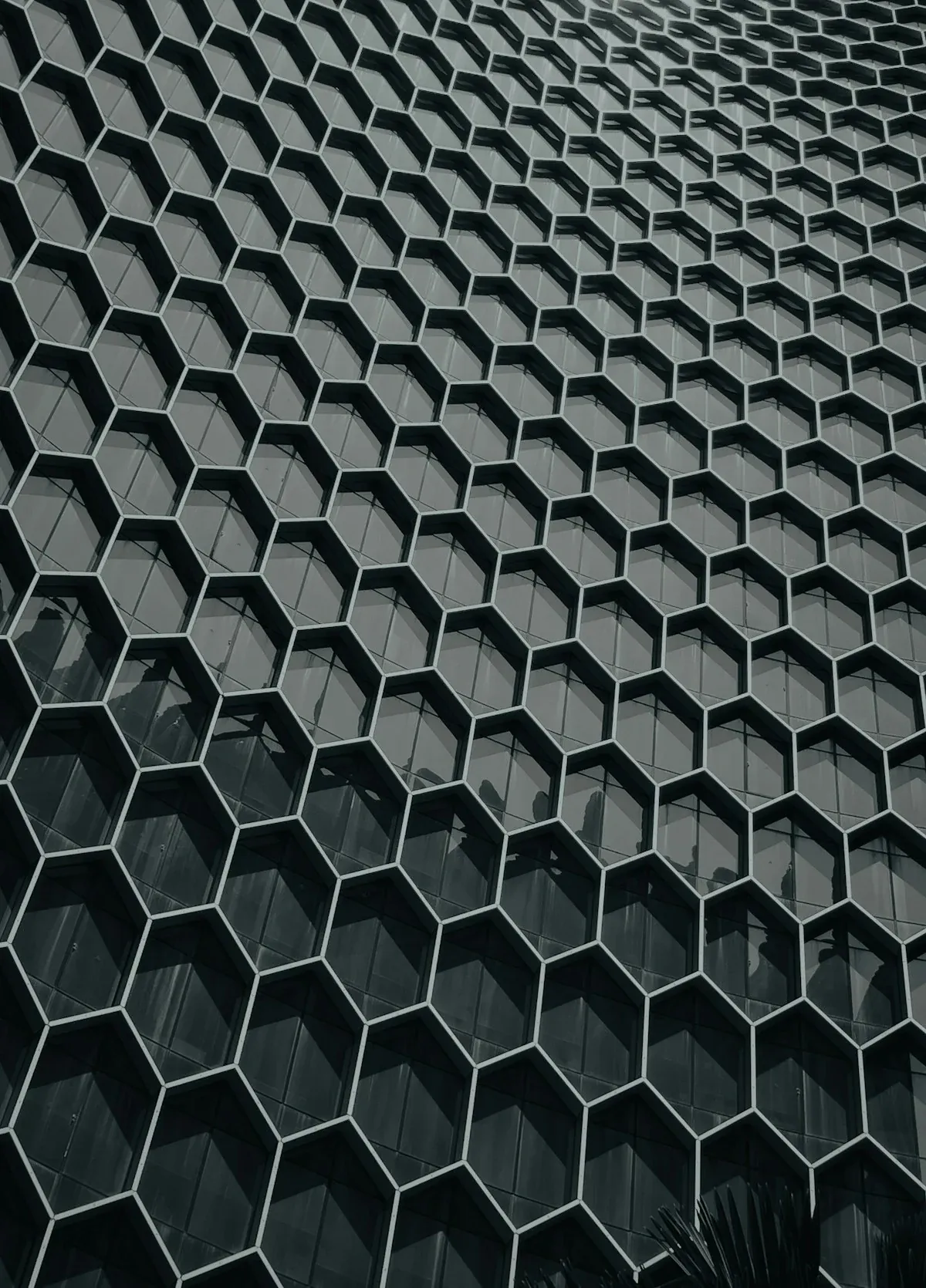
Facade panels exposed to direct sunlight experience severe thermal cycling. Aluminum has a linear thermal expansion coefficient of approximately $24 imes 10^{-6} ext{ /K}$, meaning a 3-meter panel expands roughly 3.6 mm over a 50°C temperature swing. When composite panels utilize cores with drastically differing thermal characteristics or weak shear transfer, bimetallic thermal bow emerges as a major durability failure mode.
When solar radiation heats the outer aluminum sheet while the rear sheet remains cooler, the differential expansion causes the panel to bow outward during midday sun and inward during cold winter nights. High-shear mineral cores and all-aluminum honeycomb cores restrain this differential movement through structural shear coupling, transferring stresses smoothly to perimeter sub-framing anchors.
Conversely, low-density polyethylene cores soften under peak solar temperatures, losing the shear coupling stiffness needed to restrain face expansion. The outer aluminum sheet expands independently, resulting in severe permanent oil-canning and aesthetic panel distortion that degrades commercial property value.
Structural engineers calculate maximum theoretical thermal bow deflection ($y_{max}$) across simply supported panel spans using the equation $y_{max} = \frac{\alpha \cdot \Delta T \cdot L^2}{8 \cdot d}$, where $\alpha$ represents the coefficient of thermal expansion, $\Delta T$ denotes the temperature difference between outer and inner skins, $L$ is the unsupported panel span, and $d$ represents overall composite panel thickness. For a standard 4 mm panel spanning 2.4 meters with an unmitigated temperature gradient of 50 K, uncoupled theoretical deflection reaches 17.3 mm. Specifying high-shear mineral or aluminum cores provides the internal shear transfer ($G \ge 300\text{ MPa}$) necessary to restrain this bowing to less than 4.5 mm under peak solar exposure.
Testing Peel Strength After Environmental Aging Cycles
Initial adhesion strength measured immediately after factory lamination provides zero guarantee of long-term field durability. True envelope resilience requires evaluating climbing drum peel strength (ASTM D1781) and flatwise tensile strength (ASTM C297) after aggressive accelerated environmental aging regimens.
Standard specification criteria require initial climbing drum peel values of at least 35 N·mm/mm (approximately 8 lbf-in/in). In high-performance architectural testing, sample panels undergo 500 complete freeze-thaw cycles under ASTM C481, transitioning from -20°C immersion to +60°C radiant heat every twelve hours. Superior mineral FR and A2 composite panels retain over 85% of their initial peel bond strength after cyclic testing, with failure modes occurring entirely as cohesive core tearing rather than adhesive interface peeling.
Inferior panels fabricated with cheap solvent-based glues or non-grafted polyolefins experience rapid adhesive hydrolysis. Water molecules diffuse along microscopic skin-core interfaces, weakening polymer bond lines and reducing peel strength below 15 N·mm/mm within 200 cycles, setting the stage for wind-driven panel blow-offs.
In certified materials testing laboratories, post-aging inspection protocols incorporate phased array ultrasonic testing (PAUT) across aged panel edges. Ultrasonic c-scan mapping reveals microscopic delamination spots before visible surface blisters appear. Panels certified for 30-year design lives must demonstrate zero interface debonding growth exceeding 1.5 mm inward from raw panel edges after 1,000 hours of continuous condensing humidity exposure per ASTM D2247 standards.
Preventing Moisture Penetration and Delamination Failures
While aluminum face skins act as impermeable vapor barriers, exposed cut edges at open rainscreen joints present an ongoing vulnerability to atmospheric moisture and airborne salt deposition. The chemical structure of the composite core determines whether moisture remains isolated at the perimeter or wicks deep into the panel sandwich.
Standard polyethylene cores are naturally hydrophobic and resist liquid water absorption. However, low-grade mineral-filled cores containing unbonded porous fillers can exhibit capillary wicking along internal fiber channels, absorbing over 3% water by weight when exposed to standing water in clogged rainscreen drainage tracks.
High-performance composite cores integrate hydrophobic coupling agents, such as organosilane primers and silane-treated ATH mineral particles. These surface treatments prevent water molecules from bonding to inorganic particles. Combined with cassette folded perimeter edges and ventilated cavity drainage details, hydrophobic core formulations ensure zero delamination in marine and tropical climates.
Cassette routing protocols represent an essential line of defense against moisture ingress. Fabricators must maintain precision CNC cutter calibration, preserving exactly 0.5 mm of virgin aluminum backing sheet beneath the 90-degree V-groove. Perimeter cassette return flanges must be sealed with high-modulus neutral cure silicone sealants compliant with ASTM C920 Class 50 standards, ensuring structural air and water barriers remain impervious across heavy monsoonal rain events.
Four Critical Pitfalls in Core Material Selection
Selecting composite cladding cores requires balancing initial capital costs against thirty-year operational maintenance risks. Architects and general contractors frequently encounter four critical pitfalls that lead to premature facade failure and costly legal disputes.
Specifying Thermoplastic Cores for Dark Colored High Solar Facades
Specifying standard polyethylene cores on dark charcoal, black, or metallic bronze facade panels exposed to intense southern solar radiation inevitably causes visual oil-canning. Peak surface temperatures easily exceed the core 85°C heat deflection threshold, causing core softening and irreversible panel pillowing under cyclic wind gusts. High solar radiation facades must utilize mineral-filled FR cores or all-aluminum honeycomb cores.
Ignoring Long Term Creep Rupture Under Sustained Wind Suction
Wind engineering calculations frequently account only for instantaneous peak gust pressures, overlooking sustained cyclic suction fatigue. Under continuous vortex shedding at building corners, low-shear core materials experience progressive microscopic shear strain accumulation, known as creep rupture. Over ten to fifteen years of service, creep fatigue causes panel fasteners to loosen, producing clattering noises and structural anchor disengagement.
Overlooking Bimetallic Thermal Expansion in Rigidly Fixed Panels
Attaching composite panel cassettes with rigid, unslotted fasteners prevents natural longitudinal thermal expansion and contraction. Because aluminum expands at twice the rate of steel sub-framing, rigid fastening concentrates thermal stresses at fastener holes, causing face sheet tearing, sheared rivets, and bowed panel faces. Facade details must provide slotted holes and sliding clips that permit 3 mm to 5 mm of free thermal movement.
Failing to Seal Cut Edges in Severe Marine Environments
Leaving raw cut panel edges exposed in coastal salt fog environments accelerates galvanic corrosion between aluminum skins and porous core interfaces. Atmospheric chloride ions penetrate micro-crevices, triggering filiform corrosion beneath the PVDF primer layer and degrading edge adhesive bonds. Specifiers must mandate cassette return folds that conceal raw edges or require continuous perimeter edge sealing primers before site erection.
Select the Optimal Core Architecture for Your Facade Project
Consult with Raxpanel composite engineering specialists to calculate wind shear loads, thermal bow allowances, and ASTM C481 durability benchmarks. We manufacture custom mineral FR, A2, and all-aluminum composite panels for commercial envelopes.
Frequently Asked Questions About Composite Core Durability
How does core chemistry affect the long term durability of composite panels?
The core determines shear modulus, heat deflection temperature, and adhesive bond retention under environmental stress. Mineral-filled FR and A2 cores maintain structural rigidity above 180 degrees Celsius, whereas standard polyethylene softens near 85 degrees Celsius, risking creep and delamination.
What is bimetallic thermal bow and how can core selection prevent it?
Bimetallic thermal bow occurs when intense solar radiation creates large temperature differentials between exterior and interior aluminum skins. High-shear mineral cores and 3D all-aluminum cores resist differential strain, restricting deflection well within structural facade limits of length divided by 150.
How do freeze thaw cycles degrade the bond between aluminum skins and the core?
Moisture penetrating unsealed panel perimeters condenses within core micro-voids. During freezing cycles, expanding ice crystals generate hydrostatic pressures exceeding adhesive yield limits, causing progressive edge debonding unless panels utilize continuous polymer tie-layer films tested under ASTM C481.
Why are standard polyethylene cores prone to oil canning on dark facades?
Dark facade coatings absorb heavy solar heat, raising surface skin temperatures above 80 degrees Celsius. Because standard polyethylene cores possess low heat deflection temperatures, the thermoplastic core softens and yields under cyclic wind suction, resulting in permanent visual wave distortion.
When should all aluminum honeycomb cores be specified instead of mineral cores?
All-aluminum honeycomb cores should be specified on mega-high-rises, wide-span canopies, and extreme coastal typhoon zones. They offer zero combustible material content, extreme strength-to-weight ratios, and identical thermal expansion rates between core and face sheets, eliminating shear fatigue entirely.