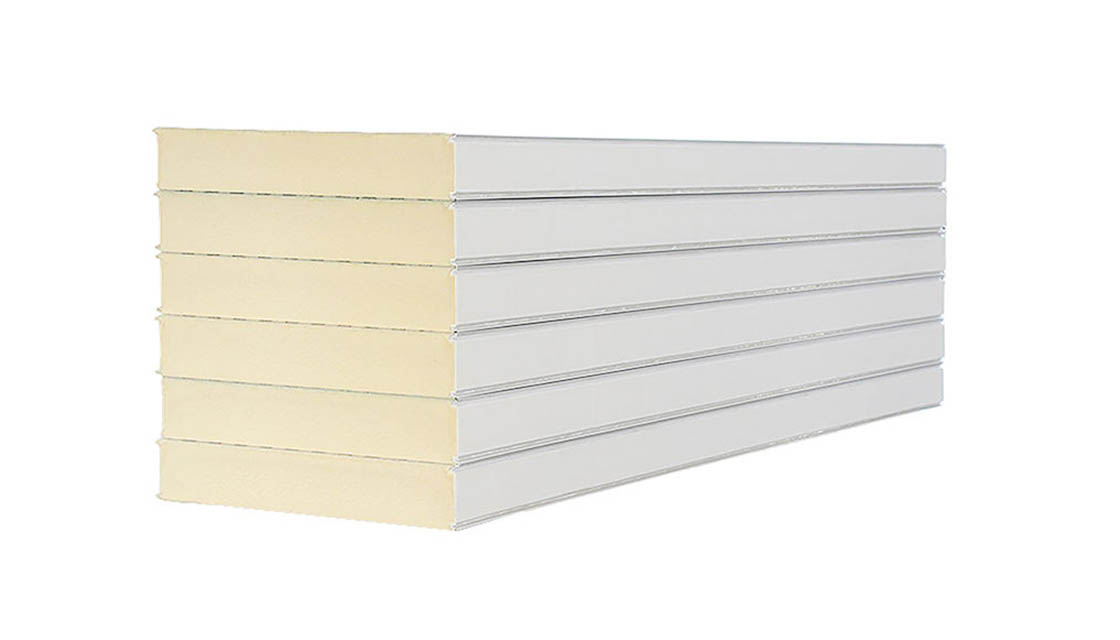
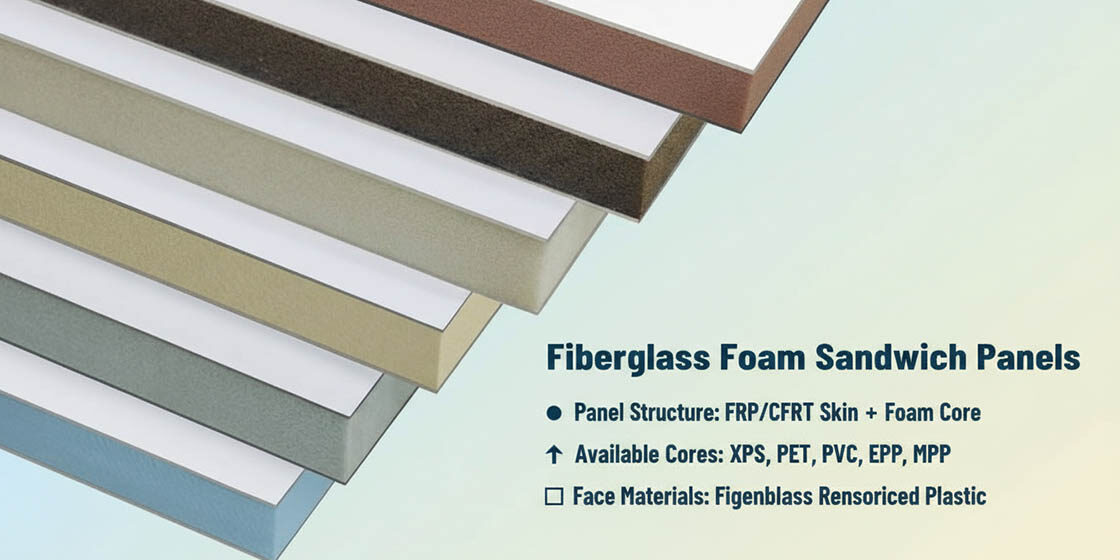
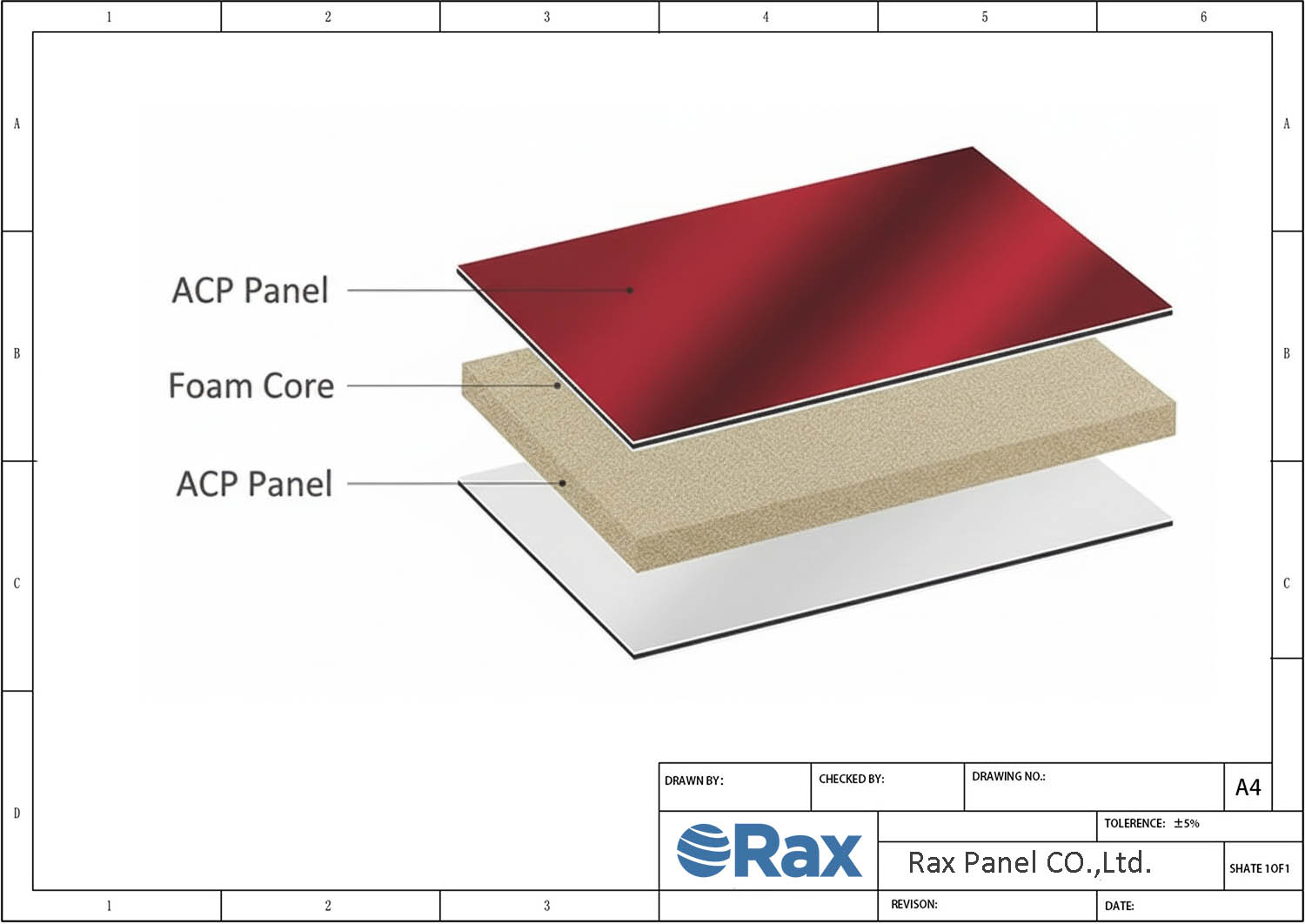
An aluminum sandwich panel with a foam core works like an I-beam — thin aluminum skins carry structural loads while the low-density foam core between them handles insulation. That structural efficiency is exactly why these panels have moved from industrial warehouses into office facades, cold storage, and clean rooms. But the foam core is where most projects go wrong. At RaxPanel, we see it constantly: generic indoor-rated adhesives specified on exterior facades, XPS cores chosen for hot-humid zones where they absorb moisture, and fire-retardant cores substituted without verifying the actual EN 13501-1 rating.
Understanding insulation efficiency in foam core panels starts with thermal conductivity values by material type, then moves into how closed-cell structure and adhesive quality determine long-term performance. PU leads on R-value per inch. PIR delivers the fire ratings most commercial codes now require. XPS and PET sit somewhere in between on cost and performance. The real challenge is matching core material to your climate zone and building type. We break that down alongside the adhesive specifications and certification requirements that separate panels lasting decades from panels failing inspection. You’ll get a practical framework for making that call without the guesswork.
How Core Properties Drive Insulation Efficiency
Insulation performance is not solely determined by thickness; it is a function of the foam’s gas composition and the physical integrity of its cellular structure.
Thermal Conductivity and the “Race” for Lowest Lambda
The primary driver of insulation efficiency is thermal conductivity, often expressed as Lambda (λ) or k-value. In ACP foam core panels, this metric dictates how much heat penetrates the panel per square meter. While the table provides specific values, the engineering reality is that these numbers are determined by the specific gas trapped inside the foam cells during the manufacturing process. PU (Polyurethane) and PUR foams typically utilize blowing agents with lower thermal conductivity than air, giving them a distinct advantage in thin-wall applications where every millimeter of thickness impacts design and load capacity.
However, high initial efficiency does not guarantee long-term performance. In our 15 years of manufacturing composite panels, we have observed that the raw material purity of the isocyanate and polyol components significantly impacts the consistency of the cellular structure. Even minor impurities can create “hot spots” or irregular cells that compromise the overall Lambda value. For specifiers, this means demanding batch-test certificates rather than relying solely on generic datasheet values, as variances in blowing agent retention can shift thermal conductivity by 5-10% over the panel’s lifespan.
The Moisture Trap: Why Closed-Cell Structure is Critical
A foam core’s ability to resist moisture ingress is arguably more critical for long-term insulation than its initial R-value. Water is a highly efficient conductor of heat compared to the still gas trapped in foam cells; if water displaces the insulating gas, the thermal performance collapses. This is where the distinction between closed-cell and open-cell structures becomes a decisive factor in panel durability.
XPS (Extruded Polystyrene) and PVC foams are renowned for their extremely high closed-cell content, often exceeding 90%. This structure acts as a hydraulic barrier, preventing liquid water from permeating the core. In contrast, materials with lower density or inconsistent cell walls can act as sponges in high-humidity environments or refrigerated applications where condensation is prevalent. We have encountered retrofit projects where cheaper, moisture-permeable cores had degraded to less than 50% of their original insulating capacity because they had absorbed ambient humidity over years of service. For marine or refrigerated truck bodies, prioritizing moisture resistance via closed-cell XPS or PVC cores is not optional—it is a structural necessity.
Density vs. R-Value: Finding the Sweet Spot
There is a common misconception in the industry that increasing the density of a foam core automatically yields better insulation. This is false. The relationship between density and R-value is non-linear. Density is primarily a driver of compressive strength—the ability of the core to withstand loads without crushing—rather than thermal resistance. If you increase density beyond the optimal point for a given chemistry, you increase the amount of solid polymer material relative to the gas volume. Since solid polymer conducts heat faster than the insulating gas, an over-densified panel can actually show a marginal decrease in thermal efficiency.
The engineering challenge is balancing the minimum density required for structural integrity against the maximum gas volume required for insulation. For example, in flooring applications where high point-loads are expected, a higher density foam is necessary to prevent dimpling or failure, even if it sacrifices a fraction of R-value. Our engineering team routinely runs simulation matrices to match the specific density profile to the load requirements of the project, ensuring that buyers are not paying for unnecessary weight or losing thermal performance to excessive material.
Long-Term Thermal Stability and Aging
Insulation efficiency is a moving target due to a phenomenon known as “thermal drift.” Over time, the high-performance blowing agents trapped inside the foam cells slowly diffuse out through the cell walls, and air—which has a higher thermal conductivity—diffuses in to replace them. This causes the R-value to degrade from the initial “aged” value to a “long-term thermal resistance” (LTTR) value, typically stabilizing after several years.
The rate of this degradation is dictated by the permeability of the foam’s cell walls. PUR and PIR foams are particularly susceptible to this drift if the facings are not perfectly sealed. A critical failure point we often see in the field is edge delamination or poor joint sealing. Once the edge of an ACP panel is compromised, the diffusion rate accelerates drastically, effectively negating the premium paid for the core material. This is why we emphasize rigorous edge-sealing protocols in our installation guides; a high-spec PU core will perform like a cheap EPS board if the air barrier is breached. Specifiers must look for LTTR values, not just initial R-values, to accurately predict the energy efficiency of the building envelope over a 20-year service life.
| Core Material | Key Physical Properties | Insulation Efficiency Driver | Common Application |
|---|---|---|---|
| PU / PUR Foam | Low Thermal Conductivity, Lightweight Density | Optimized cellular structure provides superior thermal barriers for strict temperature control | Refrigerated Truck Bodies, Cold Storage Facilities |
| XPS Foam | High Moisture Resistance, Lightweight Density | Closed-cell composition prevents thermal conductivity degradation from moisture ingress | Construction Walls, Roofing, Exterior Cladding |
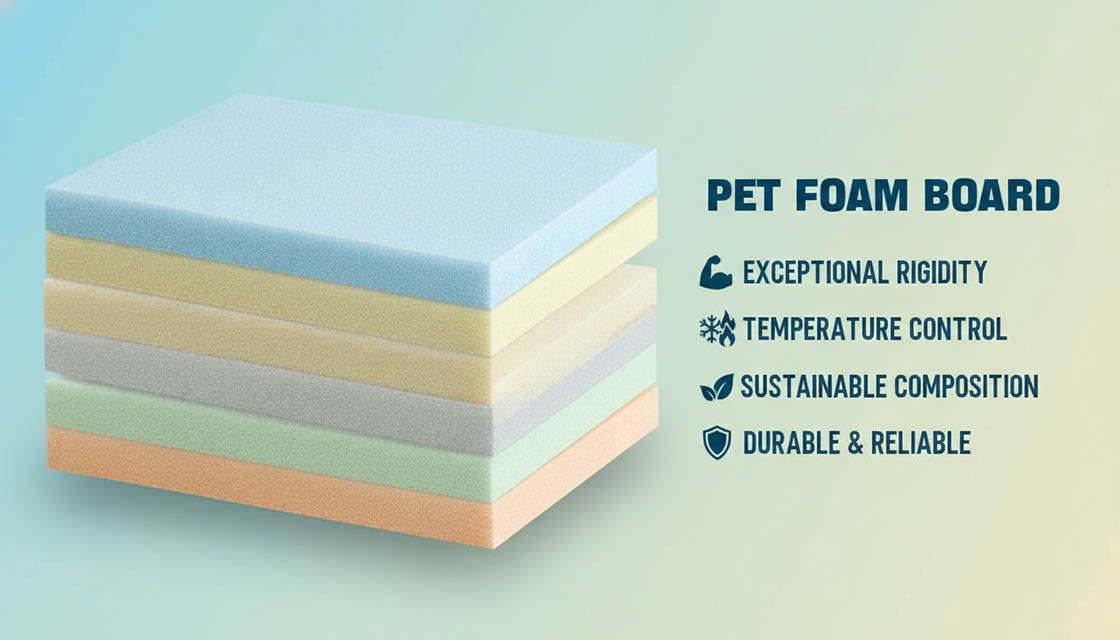
| PET Foam | Low Thermal Conductivity, High Structural Strength | Balanced cellular structure offers consistent thermal resistance with mechanical support | RV Solutions, Industrial Equipment |
| PVC Foam | High Moisture Resistance, Chemical Durability | Resistance to rot and chemicals ensures consistent insulation in harsh environments | Marine Vessels, Industrial Enclosures |
| PP Honeycomb | High Strength-to-Weight, Structural Rigidity | Geometric honeycomb cells create thermal breaks while supporting heavy structural loads | Flooring Panels, Furniture, Aviation Interiors |
Foam Core Panels vs. Alternative Cladding Systems
Foam core sandwich panels outperform conventional cladding and insulation combinations by eliminating thermal bridging, reducing structural load by 70–90%, and cutting installation time by 40–60%, making them the most efficient high-performance cladding system available for commercial construction.
Continuous Insulation vs. Fragmented Thermal Layers
Conventional cladding systems—such as metal panels over batt insulation attached to steel stud framing—create continuous thermal bridges at every structural attachment point. Cold-bridge formation occurs where metal brackets, fasteners, and vertical studs penetrate the insulation layer, allowing heat to escape at rates that can increase total wall heat loss by 25–40% compared to the insulated area alone.
Foam core aluminum sandwich panels eliminate this problem entirely. The foam core runs continuously across the full panel surface with no gaps, penetrations, or breaks. Every square meter of the facade delivers the rated thermal resistance without interruption. The aluminum facings also act as a thermal break between the interior and exterior environments, further reducing conductive heat transfer through the panel substrate itself.
When compared to alternative cladding systems, the thermal bridging advantage becomes clear:
| Cladding System | Thermal Bridge Risk | Continuous Insulation | U-Value Range (W/m²K) |
|---|---|---|---|
| Foam Core ACP Panels | None | Full surface coverage | 0.25 – 0.55 |
| Metal Panel + Batt Insulation | High (at every stud) | Interrupted | 0.45 – 0.90 |
| ACM (Solid Core) | Moderate (metal-to-metal) | None | 1.80 – 4.50 |
| Brick Veneer + Insulation | Moderate (wall ties) | Partial | 0.35 – 0.70 |
| Stone Veneer | High (anchors penetrate) | None | 1.20 – 2.50 |
Note: U-values vary by climate zone, panel thickness, and installation method. Data represents typical commercial construction ranges.
The elimination of thermal bridging in foam core panels also means that the rated thermal resistance of the foam core is actually achievable in practice. With conventional systems, the effective R-value is often 20–35% lower than the material rating due to thermal bridging losses through structural attachments.
Drastic Load Reduction on Building Structure
Foam core aluminum sandwich panels typically weigh between 8 and 15 kilograms per square meter, depending on core type and panel thickness. This is dramatically lighter than traditional cladding materials:
- Brick veneer: 500–600 kg/m² — requiring substantial structural support and foundation work
- Natural stone cladding: 40–80 kg/m² — still 3–8× heavier than foam core panels
- Concrete panels: 150–300 kg/m² — heavy and expensive to transport and lift
- Aluminum composite panels (ACP) without foam core: 4–7 kg/m² — lighter but zero insulation value
- Foam core aluminum sandwich panels: 8–15 kg/m² — lightweight with integrated insulation
The weight savings translate directly into structural cost reductions. For a typical mid-rise commercial building, switching from brick veneer to foam core panels can reduce the required structural steel tonnage by 30–50%, since the facade load is one of the primary drivers of structural design. On renovation projects where existing structures were not designed for heavy cladding, foam core panels often allow facade upgrades without any structural reinforcement — a cost savings that can exceed the panel material cost itself.
Even when compared to other lightweight systems like ACM, foam core panels provide superior strength-to-weight ratio. The bonded aluminum-foam-aluminum sandwich construction creates a rigid panel that resists deflection and wind load more effectively than solid-core ACM of equivalent thickness.
Single-Trade vs. Multi-Trade Installation
Conventional cladding systems require sequential installation by multiple trades. A typical metal panel over batt insulation wall system involves: structural framing installation, weather-resistant barrier application, insulation batt placement, vapor barrier installation, metal panel attachment, and flashing detailing. Each trade must coordinate with the previous one, and delays in any step cascade through the entire schedule.
Foam core panels are installed as a single component. The panel arrives on site with the cladding, insulation, and structural backing already engineered and bonded together. Installation typically involves only the panel attachment and joint sealing — tasks handled by a single trade team.
Installation Time and Labor Cost Comparison
| Cladding System | Installation Complexity | Trades Required | Install Rate (m²/day per crew) | Labor Cost Premium |
|---|---|---|---|---|
| Foam Core ACP Panels | Low (single component) | 1 | 40–60 | Baseline |
| Metal Panel + Batt Insulation | High (multi-layer) | 3–4 | 15–25 | +40–70% |
| Brick Veneer | Very High | 3–5 | 5–10 | +150–250% |
| Stone Veneer | Very High | 3–4 | 8–15 | +120–200% |
| ACM (Solid Core) | Low | 1 | 50–70 | Baseline (no insulation) |
Note: Rates vary by project complexity, weather conditions, and crew experience. Labor costs reflect typical North American commercial construction ranges.
The labor cost advantage of foam core panels is compounded by reduced coordination overhead. Fewer trades on site means fewer scheduling conflicts, less rework from trade interference, and lower site supervision requirements. For projects with tight schedules or limited site access, this efficiency gain can be decisive.
Budget and Pricing Context for Buyers
Price variability is a real concern in the foam core panel market. Bulk export pricing from Asian manufacturing hubs can start as low as $1.28 per square meter for basic configurations, while premium installed projects in North America can exceed $40 per square foot. This enormous range — driven by core type, panel thickness, aluminum gauge, finish quality, and regional labor costs — creates significant budgeting uncertainty for specifiers.
The key to accurate budgeting is understanding what drives the price difference. Entry-level panels with thinner aluminum facings and standard foam cores offer the lowest material cost but may not meet all fire code or performance requirements for your project. Mid-range options with thermoset foam cores and 300-series aluminum facings represent the best value for most commercial applications. Premium panels with specialty finishes, higher fire ratings, or marine-grade adhesives command higher prices but deliver correspondingly longer service life and better performance in demanding environments.
Total Cost of Ownership Comparison
Lifecycle cost analysis must account for three components: initial installation cost, ongoing maintenance cost, and energy operating cost. When all three are combined over a 30-year building lifespan, foam core panels often demonstrate a lower total cost than conventional cladding systems — despite sometimes higher upfront material costs.
| Cost Component | Foam Core ACP | Metal Panel + Batt Insulation | Brick Veneer | Stone Veneer |
|---|---|---|---|---|
| Initial Material + Installation ($/m²) | $45–$85 | $35–$65 | $120–$200 | $150–$280 |
| Annual Energy Cost ($/m²) | $1.50–$3.00 | $3.00–$5.50 | $2.00–$4.00 | $2.50–$4.50 |