
Rising energy costs are gutting margins in modern cold storage, and conventional insulation often fails to meet stricter thermal codes without inflating wall thickness. Specifying PUF panels is not just about checking an R-value box on a spec sheet; it is about guaranteeing the building envelope performs a decade down the line without thermal bridging or moisture damage. At RaxPanel, we see the physics confirm this advantage: rigid polyurethane foam delivers a thermal conductivity range of just 0.022 to 0.033 W/(m*K), effectively halving the energy loss compared to standard extruded boards.
We analyze how core density and closed-cell structures dictate long-term thermal stability, and why thinner PUF profiles often outperform bulkier alternatives in industrial settings. You get the specific quality verification metrics needed to vet suppliers, ensuring you avoid the installation failures that drain operational budgets.
How PUF Panels Are Built
PU Foam Core Formation Process
The structural integrity and thermal efficiency of a PUF panel begin with the chemical formation of the core. This process involves a precise exothermic reaction between two primary liquid components: polyol and isocyanate (MDI). When these polyurethane chemicals are mixed in a high-pressure mixing head, a blowing agent is simultaneously introduced. This blowing agent triggers rapid expansion, transforming the liquid mixture into a rigid, closed-cell foam structure that fills the entire cavity between the facings.
Unlike traditional insulation materials that are cut to size, the foam in a PUF panel is manufactured in situ. This means the foam expands and cures within the panel itself, creating a seamless bond without gaps or thermal bridges. The density of the foam during formation is tightly controlled—typically ranging from 32 kg/m³ to 40 kg/m³ for standard industrial applications—to ensure optimal compressive strength without adding unnecessary weight to the structure.
The use of cyclopentane or eco-friendly blowing agents during the core formation phase is critical, as it directly determines the initial K-value (thermal conductivity) and the long-term aging resistance of the panel.
Composite Panel Layer Structure
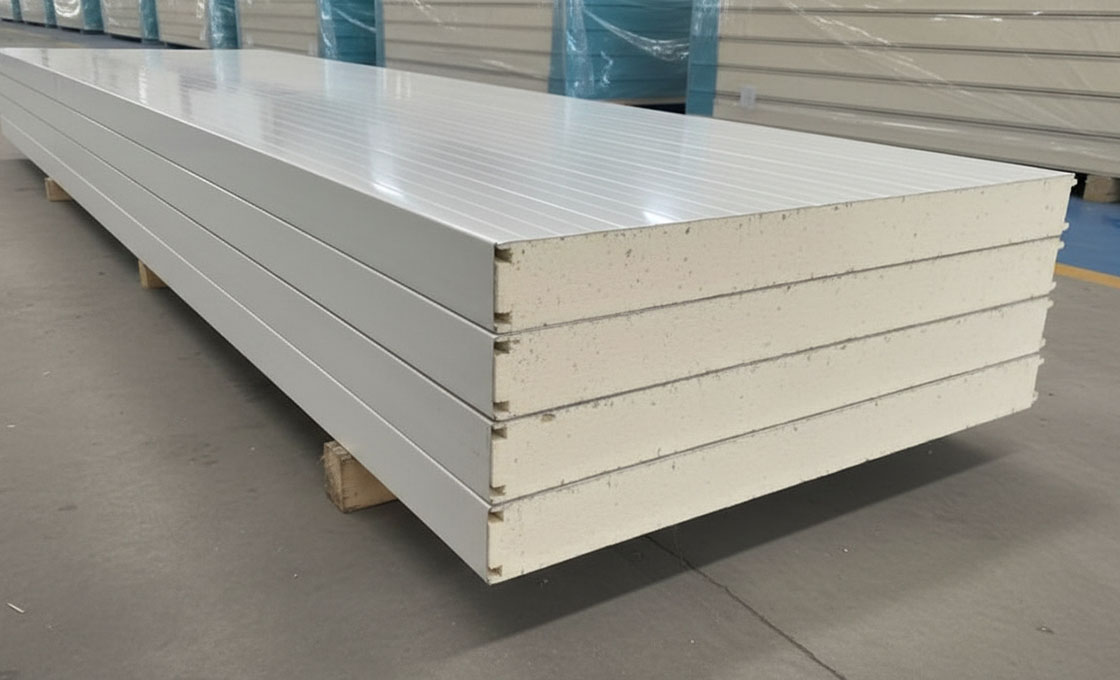
A PUF panel is a structural composite, meaning its performance relies on the synergy of distinct layers working together rather than a single material. The system consists of two external facings and an internal core. The facings act as the tension and compression flanges, handling structural loads and protecting the core from impact and environmental damage. Meanwhile, the PUF core serves as the web, providing shear stiffness and the bulk of the thermal insulation.
The critical interface in this structure is the bond line. High-quality manufacturing utilizes a foaming-in-place process where the expanding foam adheres chemically and mechanically to the interior surface of the facings. This monolithic bond prevents delamination—a common failure mode in lower-quality panels where layers are simply glued together. The integrity of this composite action ensures the panel can withstand wind loads, snow loads, and handling stress during installation.
Facing Material Options for PUF Cores
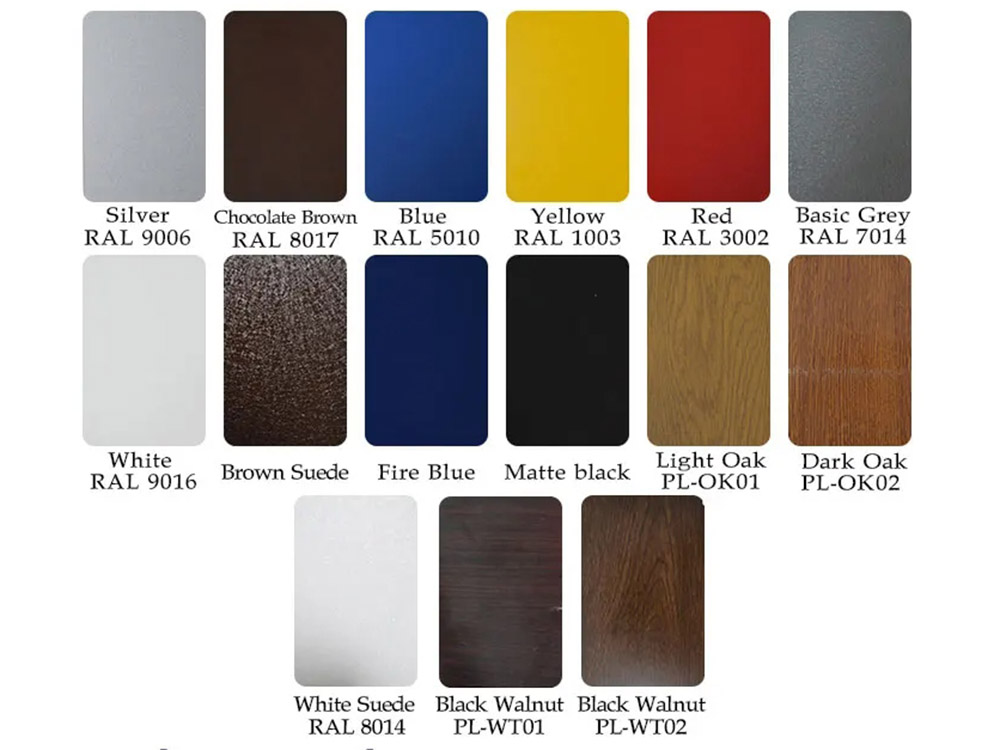
The selection of facing materials dictates the panel’s durability, hygiene standards, and aesthetic appeal. While the foam core provides insulation, the skin must resist corrosion, impact, and UV degradation depending on the application environment.
- Pre-Painted Galvanized Iron (PPGI): The most common choice for industrial warehouses and commercial buildings. It offers a balance of cost-effectiveness and corrosion resistance, with the paint layer providing additional UV protection and aesthetic variety.
- Plain Galvanized Iron (GI) or Galvalume: Often used for internal partitions or applications where paint finish is not required. Galvalume (aluminum-zinc alloy) provides superior corrosion resistance compared to standard GI, particularly in harsh atmospheric conditions.
- Stainless Steel (SS 304/316): Mandatory for high-hygiene environments such as cold storage, pharmaceutical clean rooms, and food processing facilities. These facings are non-porous, easy to sanitize, and resistant to aggressive chemical cleaning agents.
- Fiber Cement Boards or OSB: Used in specialized construction requiring non-metallic facings for fire rating compliance or specific aesthetic requirements, though these are less common in standard industrial applications due to weight and moisture absorption concerns.
Manufacturing Quality Control Steps
Consistency in the production line is the only guarantee of thermal performance in the field. Reputable manufacturers implement rigorous quality control (QC) protocols at every stage of the build process. The first checkpoint is raw material verification, ensuring the polyol and isocyanate ratios are exact before mixing. Deviations here result in “shrinkage” or “crumbling” foam, which compromises insulation value.
📋 Critical QC Checkpoints
- Core Density Testing: Samples are taken from the production line to verify the foam density matches the specified kg/m³. Under-dense cores settle over time, creating voids at the top of the panel (thermal gaps).
- Adhesion (Peel) Strength: A peel test is performed to ensure the bond between the foam and the facing exceeds industry standards (typically > 0.10 N/mm²). Weak adhesion leads to facings bubbling or detaching under thermal cycling.
- Dimensional Accuracy: Automated laser sensors monitor panel length, width, and squareness. Even minor deviations can accumulate during installation, causing misaligned joints and compromising the building envelope’s airtightness.
- Surface Flatness: Visual and tactile inspections ensure the facings are free of dents, scratches, or oil contamination that could affect subsequent painting or coating adhesion.

What Thermal Ratings Matter Most
The critical thermal ratings for PUF panels are thermal conductivity (lambda value), R-value per inch, and long-term thermal retention. These three metrics together determine real-world energy performance, not any single number in isolation.
Thermal Conductivity K-Value Ranges
Thermal conductivity, expressed as the K-value or lambda (λ) value, measures how readily heat passes through a material. For polyurethane foam cores, the industry standard range sits between 0.022 and 0.033 W/(m·K). Values toward the lower end of that spectrum indicate superior insulating performance per unit of thickness.
Fresh foam tested immediately after production will show a lower K-value because the blowing agents trapped inside the closed cells are at peak concentration. Over time, these gases gradually diffuse outward and are replaced by air, causing the K-value to rise slightly. Most reputable manufacturers report the aged thermal conductivity value, measured after approximately 180 days of conditioning, which reflects the performance a building will actually experience over its service life.
The difference between a K-value of 0.022 and 0.033 may appear marginal on paper, but the practical implication for panel design is significant. A panel with the lower conductivity achieves the same thermal resistance in less thickness, which matters directly in cold storage facilities where every centimeter of insulation capacity affects usable interior volume and refrigeration load.
R-Value Calculation by Panel Thickness
R-value represents thermal resistance and is the metric most project specifications reference. It is calculated by dividing the panel thickness in meters by the thermal conductivity in W/(m·K). The result gives the R-value in SI units (m²·K/W). To convert to the imperial R-value commonly used in North American specifications, multiply the SI result by 5.678.
For example, a 50-millimeter PUF panel with an aged lambda value of 0.024 W/(m·K) yields an SI R-value of approximately 2.08 m²·K/W, which translates to roughly R-11.8 in imperial units. A 100-millimeter panel under the same conditions doubles that resistance to approximately R-23.6. This linear relationship means that doubling panel thickness directly doubles thermal resistance, assuming the core density and closed-cell structure remain consistent.
- Cold storage applications (−25°C to +4°C): Panels between 80 mm and 200 mm are typical, with thicker panels required for lower temperature chambers to minimize refrigeration cycling and energy consumption.
- Industrial warehouse walls: Panels in the 40 mm to 60 mm range generally satisfy envelope insulation requirements in moderate climates, while colder regions may require 80 mm or more.
- Roof applications: Thermal requirements often exceed wall requirements due to direct solar gain, making 60 mm to 100 mm panels common for roof decking in warm climates.
Notably that the overall thermal performance of a completed building envelope depends not only on the panel R-value but also on installation quality. Thermal bridging at panel joints, fastener penetrations, and corner connections can reduce effective thermal resistance by 10 to 15 percent if not properly addressed with continuous gasketing or thermal break detailing.
Long-Term Thermal Performance Stability
Long-term thermal stability refers to how well a PUF panel retains its insulating performance over decades of service. Unlike materials that degrade through moisture absorption or physical compression, properly manufactured polyurethane foam maintains a stable cellular structure when the closed-cell content remains above 90 percent. The trapped blowing agents continue to provide insulation value, and the closed-cell matrix prevents water vapor from entering the core.
The primary factor affecting long-term stability is the quality of the foam cell structure. Panels produced through continuous manufacturing processes with precise control of the isocyanate and polyol ratio tend to develop a more uniform closed-cell distribution. Discontinuous or batch-foamed panels may exhibit cell size variation that creates weak points where moisture can eventually migrate into the core, degrading thermal performance in those localized areas.
Industry testing standards such as ISO 23994 and ASTM C1303 provide methods for evaluating the long-term thermal resistance of rigid cellular foam. These tests involve aging panels under controlled temperature and humidity conditions and measuring the change in thermal conductivity over time. Panels that demonstrate less than a 10 percent increase in K-value after extended aging are generally considered to have strong long-term thermal stability.
Aging Effects on Insulation Efficiency
Aging in PUF panels occurs through two primary mechanisms: gas diffusion and environmental degradation. Gas diffusion is the natural process where the low-conductivity blowing agents slowly escape the foam cells and are replaced by ambient air, which has a higher thermal conductivity. This process begins immediately after production and continues steadily for several years before reaching equilibrium. Environmental degradation involves moisture ingress, UV exposure on unprotected panels, and mechanical compression over the panel lifespan.
The rate of gas diffusion depends on the type of blowing agent used. Older generation PUF panels used hydrochlorofluorocarbons (HCFCs) with relatively high global warming potential, and these panels tend to experience a more pronounced initial K-value increase during the first one to two years. Modern panels using hydrocarbon blowing agents or second-generation hydrofluoroolefins (HFOs) exhibit slower gas diffusion rates and therefore maintain lower thermal conductivity values over a longer service period.
Moisture ingress remains the most significant threat to long-term insulation efficiency. When water enters the foam core through damaged facings, unsealed joints, or compromised fastener points, the thermal conductivity of the affected area increases dramatically. Water conducts heat approximately 25 times more efficiently than air, so even small amounts of moisture penetration in localized areas can create noticeable thermal bridges. This is why proper installation technique and joint sealing are as important as the panel’s inherent thermal specifications.
For cold storage installations operating at sub-zero temperatures, the risk of moisture migration is heightened because the temperature differential between the interior and exterior drives vapor pressure through the panel assembly. Panels with intact foil-faced or coated metal facings and properly gasketed joints provide the best defense against this degradation pathway.
| Thermal Metric | Technical Standard | Performance Impact |
|---|---|---|
| Thermal Conductivity (Lambda) | ≤ 0.024 W/mK | Defines the intrinsic heat transfer rate; lower values maximize insulation efficiency per millimeter of thickness, crucial for space-saving in cold storage. |
| Core Density | 38–42+ kg/m³ | Ensures structural integrity and optimal foam cell formation; prevents settling and air gaps that compromise thermal resistance over the building’s lifespan. |
| Closed-Cell Content | ≥ 90% | Traps blowing agent within the foam to maintain low conductivity; essential for preventing moisture ingress and subsequent thermal degradation. |
| Long-Term R-Value Retention | ~95% over 25 years | Indicates the material’s ability to sustain thermal resistance despite aging; guarantees consistent energy savings and reduced HVAC loads over decades. |
| Water Absorption | < 2% by Volume | Minimizes the risk of thermal bridging caused by dampness; ensures the insulation remains effective in high-humidity or refrigerated environments. |
Do PUF Panels Save Money Over Time?
Executive Summary
PUF (Polyurethane Foam) panels deliver a definitive Return on Investment by reducing operational energy expenditure by 20–30% and cutting construction timelines by nearly half compared to traditional masonry.
The true financial value of PUF panels lies in the Total Cost of Ownership rather than the initially higher material price compared to single-skin metal or brick. These savings are driven by two primary vectors: drastic reductions in HVAC energy consumption due to superior thermal insulation, and accelerated project schedules that minimize labor overhead and opportunity costs. For cold storage, data centers, and climate-controlled warehouses, the operational savings typically offset the premium upfront investment within 2 to 4 years.
Quantifying HVAC Load Reductions
The most significant financial impact of PUF panels is the reduction in cooling and heating loads. With a thermal conductivity (k-value) typically ranging between 0.019 and 0.023 W/m·K, PUF provides a higher thermal resistance per inch than fiberglass, mineral wool, or EPS. In practical terms, this creates a thermal barrier that minimizes heat transfer.
For a facility maintaining a constant internal temperature, every unit of thermal resistance translates directly into kilowatt-hours saved. Industry data indicates that switching from a conventional asbestos or metal sheet roof to a 50mm PUF insulated roof can reduce peak heat gain by up to 60%. Therefore, HVAC systems can be downsized by roughly 30–40% during the initial design phase, immediately lowering capital equipment costs. Over the building’s lifespan, this insulation efficiency creates a compounding effect on energy bills, particularly in regions with extreme temperature variances.
| Cost Factor | Traditional Masonry/Single Skin | PUF Sandwich Panels |
|---|---|---|
| Energy Consumption (HVAC) | Baseline (100%) | 20–30% Reduction |
| Installation Speed | Slow (Curing/Masonry layers) | 3x–5x Faster |
| Structural Steel Usage | Higher (Heavy dead load) | Reduced (~20–30% less steel) |
| Typical Payback Period | N/A | 2–4 Years |
Structural Savings: Reduced Steel and Foundation Costs
A frequently overlooked financial benefit is the lightweight nature of PUF panels. Weighing significantly less than concrete or brick cladding, these panels impose a lower dead load on the building’s structural framework. This reduction allows engineers to specify lighter steel sections or smaller foundation footings.
- Steel Optimization: The self-weight of a PUF panel system is often a fraction of traditional walling. This can lead to a 15–25% reduction in structural steel tonnage required for the project.
- Foundation Savings: Lighter superstructures reduce the load on foundations, potentially allowing for simpler foundation designs in non-seismic zones, directly cutting concrete and excavation costs.
Speed of Construction and Operational ROI
In B2B construction, time is a tangible cost. PUF panels are factory-made and designed for rapid “dry installation.” This eliminates the lengthy curing times associated with concrete or wet plastering.
For a distribution center or manufacturing plant, every month of delayed construction represents lost revenue. PUF panel systems can be erected up to 5 times faster than masonry. This accelerated timeline allows businesses to commence operations and generate revenue significantly sooner, improving the project’s Internal Rate of Return (IRR) before the building even requires its first maintenance cycle.
Lifecycle Value and Green Building Compliance
Beyond immediate energy and construction savings, PUF panels contribute to long-term financial sustainability through compliance with green building standards like LEED or BREEAM. The superior insulation performance earns points in the “Energy and Atmosphere” categories, which can qualify the building for tax incentives, rebates, or higher rental premiums. Additionally, the closed-cell structure of PUF resists moisture absorption and degradation, ensuring that the R-value (thermal resistance) remains stable over a 25–30 year lifespan, unlike fibrous insulation which can settle or lose efficiency if compromised by humidity.
PUF Panels vs. Conventional Insulation
For industrial applications, the primary differentiator is efficiency per millimeter: PUF panels deliver superior thermal resistance in significantly thinner profiles compared to conventional mineral wool or EPS, maximizing internal storage volume.
Thermal Efficiency and Space Optimization
Thermal resistance per unit thickness is the critical metric when specifying insulation for cold storage or industrial warehousing. Conventional materials like glass wool or rock wool often require significantly greater thickness to achieve the same thermal performance as rigid polyurethane foam. This creates a spatial penalty in building design; thicker walls consume valuable internal floor area and reduce clearances for racking systems.
In direct contrast, PUF panels operate on a high-efficiency curve due to their closed-cell structure and low thermal conductivity. Industry benchmarks indicate that a 50mm PUF panel provides the same insulation value as an 80mm to 100mm EPS panel, and vastly outperforms fibrous insulation of equal thickness. This allows contractors to construct slimmer wall envelopes without compromising the internal temperature stability, a crucial factor for high-density logistics centers.
Moisture Absorption and Long-Term Retention
The Achilles’ heel of conventional insulation, particularly glass wool and EPS, is moisture permeability. Fibrous materials and expanded polystyrene are prone to water absorption over time. In high-humidity environments like cold rooms or process plants, condensation can migrate into the insulation layer. Once saturated, these materials suffer a drastic drop in thermal efficiency—wet insulation effectively ceases to function as a thermal barrier and can become a breeding ground for mold and structural rot.
PUF panels address this through a fundamentally different physical structure. The closed-cell foam composition creates a vapor barrier inherently, resisting water absorption far better than open-cell or bead-based alternatives. While mineral wool resists mold, it does not resist water absorption as effectively as closed-cell foam. The long-term R-value retention of PUF panels remains superior over decades because the insulating gas trapped within the cells is less likely to be displaced by moisture ingress compared to the air pockets in EPS or the voids in fiberglass batts.
Density, Sagging, and Structural Integrity
Installation quality dictates long-term performance, and here the material physics diverge sharply. Conventional insulation blankets, such as glass wool, are low-density materials prone to settling and sagging over time, especially in vertical wall applications or ceiling decks. As the material compresses under its own weight or due to vibration, “cold spots” or gaps form at the top of wall cavities, creating thermal bridges that drastically increase energy load.
PUF panels function as a composite structural element rather than a fill material. Because the foam is chemically bonded to the facings (metal, GRP, or plywood) during the manufacturing process, the panel maintains uniform density and dimensional stability. It does not settle, compact, or shift. This rigidity simplifies installation for large-span roofing and high walls, eliminating the need for extensive mechanical fastening or netting often required to hold heavy mineral wool blankets in place.
Fire Performance and Acoustic Trade-offs
Organic foams carry specific fire safety limitations that must be weighed against their thermal advantages. While PUF offers exceptional thermal properties, it is combustible and requires specific fire-retardant additives to meet building codes. Conversely, mineral wool (rock wool) is inherently non-combustible and offers superior fire-separation capabilities, making it the mandatory choice for certain high-risk fire walls or tunnels where thermal insulation is secondary to fire containment.
Acoustic performance is another differentiator. The dense, fibrous structure of mineral wool provides superior sound absorption compared to the rigid, reflective nature of PUF foam. In facilities where noise reduction is as critical as temperature control—such as generator rooms or heavy manufacturing plants—conventional wool insulation remains the preferred solution despite its lower thermal efficiency per inch.
For mixed-use facilities, a hybrid approach often yields the best ROI. Use PUF panels for the thermal envelope (walls and roofs) to maximize energy efficiency, and utilize mineral wool only for specific internal fire separation walls or high-noise machinery enclosures where its specific properties are strictly required.
| Insulation Type | Thermal Conductivity | Moisture Resistance | Fire Resistance | Lifespan |
|---|---|---|---|---|
| PUF (Polyurethane Foam) | 0.024 W/mK | Excellent — closed-cell structure, 95% R-value retention over 25 years | Standard grade — combustible; fire-retardant options available | 20–30 years |
| EPS (Expanded Polystyrene) | 0.036 W/mK | Moderate — prone to water absorption and degradation over time | Low — highly combustible without additives | 5–10 years |
| Fiberglass | 0.035–0.040 W/mK | Poor — loses effectiveness when wet or compressed | High — non-combustible | 20–30 years |
| Mineral Wool (Rockwool) | 0.033–0.038 W/mK | Good — resistant to mold and pests | Excellent — non-combustible, superior for fire-separation walls | 20–30 years |
| PIR (Polyisocyanurate) | 0.022–0.024 W/mK | Excellent — closed-cell structure with low water absorption | Very High — forms protective char layer under heat | 25–30 years |
How Durable and Moisture-Resistant Are PUF Panels?
PUF panels deliver 25–30+ years of service life when moisture is excluded from the core. The closed-cell polyurethane structure inherently blocks liquid water and vapor transmission, preserving thermal performance and dimensional stability across temperature cycles.
Closed-Cell Structure: The Foundation of Moisture Resistance
The polyurethane foam core in PUF sandwich panels forms a fully closed-cell matrix during production. Each cell is individually sealed, creating a barrier that significantly impedes both liquid water penetration and water vapor transmission. This is the primary mechanism behind the material’s moisture resistance.
Unlike open-cell foams, which allow moisture to wick through interconnected air pockets, closed-cell PUF maintains structural integrity even when exposed to high-humidity environments. The sealed cells also trap the blowing agent gas, which contributes to long-term thermal stability.
Water Vapor Permeability and Environmental Exposure
Water vapor permeability in PUF panels is inherently low due to the closed-cell architecture. When the panel facing materials—such as galvanized steel, aluminum, or GRP—are properly sealed at joints and penetrations, the core remains protected from ambient moisture ingress. This is why joint detailing and installation quality directly influence real-world moisture performance.
In cold storage and refrigerated applications, where condensation is a constant risk, PUF panels resist moisture absorption without degrading. As long as moisture does not enter the core, the insulation value remains stable over decades of operation.
- Core moisture absorption: Closed-cell PUF typically absorbs less than 1–2% water by volume when tested per ASTM D2842, compared to significantly higher rates in open-cell or fibrous insulations.
- Vapor transmission rate: The water vapor permeance of a properly faced PUF panel is among the lowest of all common insulation panel systems, reducing the risk of interstitial condensation.
- Freeze-thaw resilience: Even when surface moisture is present, the closed-cell structure prevents water from entering and expanding within the core during freezing cycles.
Dimensional Stability Under Temperature Cycling
PUF panels maintain dimensional stability across wide temperature ranges, typically from approximately -40°C to +75°C depending on facing material and core density. This stability is critical for cold storage facilities, where temperature fluctuations are frequent and thermal cycling can cause expansion and contraction in building materials.
The closed-cell structure minimizes thermal bridging and reduces the coefficient of thermal expansion compared to many alternative insulation boards. This means fewer joint failures, reduced sealant degradation, and less risk of panel warping or buckling over time.
When specifying PUF panels for cold storage, verify the panel’s thermal recovery rate after temperature cycling. High-density closed-cell PUF (≥40 kg/m³) recovers faster and with less permanent dimensional change than lower-density variants.
Impact on Cold Storage Temperature Fluctuation Prevention
One of the most significant durability advantages of PUF panels is their ability to maintain consistent internal temperatures in refrigerated environments. The combination of low thermal conductivity and moisture resistance means the PUF core maintains 95% or more of its original R-value over the full service life with no meaningful moisture degradation, per the Product Bible—a common failure mode in conventional insulation materials.
In cold storage applications, even minor thermal bridging or core moisture ingress can cause compressor cycling to increase, raising energy costs and creating temperature fluctuations that risk product spoilage. PUF panels mitigate both risks when installed with proper joint sealing and facing continuity.
- Thermal performance retention: Panels that remain dry retain their original K-value (typically 0.022–0.028 W/m·K) throughout their service life, ensuring predictable energy consumption.
- Reduced compressor load: Stable insulation performance directly translates to fewer compressor cycles and lower operational costs in refrigeration systems.
- Structural longevity: Corrosion-resistant outer facings paired with a moisture-resistant core extend the functional lifespan of cold storage enclosures well beyond 25 years.
Service Life and Durability Under Real-World Conditions
PUF panels are engineered for long-term durability with minimal maintenance requirements. Their resistance to environmental factors—including UV exposure (when facing materials are appropriately selected), chemical exposure, and mechanical impact—makes them suitable for demanding industrial and commercial applications.
The actual service life depends on several factors: facing material selection, installation quality, environmental exposure conditions, and maintenance of joint seals. Properly specified and installed PUF panels in climate-controlled environments commonly exceed 30 years of reliable performance.
The moisture resistance of PUF panels is only as effective as the joint sealing system. Unsealed panel edges, compromised fastener penetrations, or damaged facing materials create pathways for moisture ingress that can degrade the core over time. Always specify continuous sealing gaskets and inspect joints during installation.
Durability Factors That Matter Most
Focus on these key performance indicators when assessing PUF panel durability rather than accepting generic manufacturer claims:
- Core density: Higher density (40–50 kg/m³) provides better mechanical strength and moisture resistance than lower-density variants.
- Facing material compatibility: The facing must be chemically compatible with the PU foam to prevent delamination and maintain a continuous moisture barrier.
- Joint system design: Tongue-and-groove, shiplap, or interlocking profiles with integrated gaskets are essential for preventing moisture entry at panel interfaces.
- Installation quality: Proper fastener torque, sealant application, and alignment directly affect long-term durability more than any single material property.
Do PUF Panels Meet Fire Safety Standards?
Understanding Fire Ratings: Class E vs. Class B1
In the B2B construction sector, ambiguity between Polyurethane (PUF) and Polyisocyanurate (PIR) panels regarding fire safety is a major compliance risk. While both belong to the polyurethane family, their performance under fire differs drastically due to chemical composition. Standard PUF panels generally achieve a Class E fire rating. Under extreme heat, these panels tend to melt, shrink, and potentially drip, contributing to the rapid spread of fire. For high-risk environments or high-occupancy structures, this rating is often insufficient to meet stringent building codes.
Conversely, PIR (Polyisocyanurate) panels are a technologically advanced variant modified to enhance fire resistance. These panels typically achieve a Class B1 rating (based on standards like DIN 4102 or equivalent local norms). The introduction of nitrile groups during the PIR manufacturing process alters the polymer’s thermal stability. Unlike standard PUF, PIR panels do not melt away; instead, they form a protective carbonaceous char layer when exposed to flames. This char layer insulates the underlying core, slowing down heat transfer and delaying the structural failure of the panel.
| Attribute | Standard PUF Panels | PIR Modified Panels |
|---|---|---|
| Fire Rating | Class E (Combustible) | Class B1 (Limited Combustibility) |
| Burning Behavior | Melts, shrinks, drips flaming droplets | Forms char, self-extinguishing upon flame removal |
| Smoke Density | Higher smoke emission | Lower smoke emission compared to standard PU |
| Ideal Application | Low-risk storage, detached structures | Cold storage, public buildings, high-rise facades |
Char Formation Mechanism: The Passive Defense
The “Bullshit Detector” alert goes off when suppliers claim standard PUF is “fireproof.” It isn’t. The saving grace for PIR panels is the phenomenon of intumescent char formation. When subjected to direct flame, the surface of a PIR panel undergoes a chemical transformation, turning into a thick, black char. This char acts as a physical barrier, preventing oxygen from reaching the unburnt foam underneath and blocking heat from penetrating deeper into the panel.
This mechanism is crucial for fire safety compliance. In a real-world fire scenario, this char layer buys critical time—often the difference between a controlled evacuation and a catastrophe. For warehouse managers and developers, specifying PIR effectively installs a passive fire suppression system integrated directly into the building envelope, eliminating the need for separate intumescent coatings in some applications.
NBC 2016 and IGBC Compliance
Navigating the regulatory environment is non-negotiable for commercial projects. The National Building Code of India (NBC 2016) imposes strict restrictions on the use of combustible materials in building construction, particularly for high-rise structures (exceeding 15 meters) and special buildings like hospitals, hotels, and educational institutions. Under NBC 2016, external wall cladding and insulation materials must typically meet a minimum Class B1 fire rating. therefore, standard PUF panels are often prohibited in these high-stakes applications, making PIR the mandatory technical choice for compliance.
Beyond safety, fire performance impacts green building certifications. The IGBC (Indian Green Building Council) evaluates materials not just on thermal efficiency but on durability and safety. Using fire-rated PIR panels contributes to points in the “Material & Resources” category by demonstrating a commitment to lifecycle safety and reduced risk of toxic emissions during a fire event. A fire-resistant envelope protects the long-term “sustainability” of the asset—there is nothing sustainable about a building that burns down.
Never substitute PIR specifications with standard PUF to save costs without a structural engineer’s sign-off. If a fire audit reveals non-compliant Class E materials in a Class B1 zone, the penalty often involves complete demolition and re-cladding of the facade or cold storage envelope.
Which PUF Panel Fits Your Project?
Selecting the correct PUF panel requires balancing thermal resistance (R-value) with structural durability. The decision is dictated primarily by the temperature differential, hygiene requirements, and the mechanical stresses of the specific environment.
Cold Storage and Refrigeration Applications
For controlled environments such as cold rooms, freezers, and processing plants, the priority is minimizing thermal bridging and maintaining strict hygiene standards. Standard construction materials often fail here due to moisture absorption and low insulating value. PUF panels are preferred in these sectors because the foam core possesses low thermal conductivity, effectively reducing the energy load on refrigeration compressors.
When specifying for sub-zero applications, the panel density and facing material become critical. Stainless Steel (SS 304 or 316) facings are typically mandated for food-grade environments to withstand corrosive washdown chemicals and prevent contamination. The jointing system must also be cam-locked or tongue-and-groove to ensure an airtight seal, preventing ice formation at panel joints which can compromise the thermal envelope.
- Chilling Rooms (0°C to +5°C): Typically utilize 60mm to 80mm thick panels to maintain consistent temperatures with moderate energy consumption.
- Freezers (-20°C to -30°C): Require increased insulation thickness, generally ranging from 100mm to 150mm, to combat the extreme delta T between internal and external environments.
- Hygienic Zones: necessitate Non-Drip (Dew-proof) profiles to prevent condensation from dripping onto stored products.
Building Envelope and Wall Cladding Uses
In general industrial construction, such as warehouses, factory sheds, and commercial buildings, the panel must serve a dual purpose: structural cladding and thermal insulation. Unlike cold storage, these structures are subject to wider temperature fluctuations and weather exposure (wind, rain, UV radiation). Here, the “Sandwich Panel” configuration—rigid foam core bonded between two metal sheets—provides high span strength, reducing the need for secondary steel supports.
The focus for wall cladding shifts slightly towards aesthetic profiles and weather tightness. Pre-painted Galvalume (Al-Zn alloy) or Galvanized Iron (GI) steel facings are standard due to their corrosion resistance and visual appeal. The roof panels, in particular, require deep-ribbed profiles to effectively handle water runoff and heavy snow loads if applicable.
- Warehouses & Logistics Centers: Prioritize rapid installation and thermal efficiency; 50mm to 75mm thickness is common for moderate climates.
- Factory Sheds: Often require acoustic dampening alongside insulation; mineral wool or PUF cores are selected based on sound control needs.
- Architectural Cladding: Utilizes customized profile designs and thicker gauge steel (e.g., 0.5mm to 0.6mm TCT) for impact resistance.
Transportation and Mobile Unit Requirements
Refrigerated trucks, containers, and portable cabins operate under a unique set of physical constraints: constant vibration, impact shocks, and a critical need for weight reduction. In the logistics sector, every kilogram of excess tare weight reduces the payload capacity of the vehicle, directly affecting operational profitability. PUF panels offer a distinct advantage here due to their high strength-to-weight ratio compared to traditional materials like fiberglass or wood.
For mobile units, the core density is often adjusted to improve screw-holding capacity and resistance to the flexing that occurs during transit. The facing materials are typically Fiber Reinforced Plastic (FRP) or coated steel sheets designed to withstand gravel impact and road debris. The insulation performance ensures that temperature-sensitive cargo (pharmaceuticals, perishables) remains within the cold chain despite external ambient heat.
- Refrigerated Vehicles: Use high-density foam cores (approx. 38-40 kg/m³) to prevent crushing or core collapse during transit vibrations.
- Portable Cabins: Focus on modularity and ease of assembly/disassembly; 50mm thickness provides sufficient comfort for temporary site offices.
- Thermal Efficiency: Essential for minimizing fuel consumption of the transport refrigeration unit (TRU).
Custom Thickness and Facing Selection
Optimizing a project budget involves aligning the panel specification with the minimum required performance. There is no “one-size-fits-all” solution; thickness must be calculated based on the target internal temperature and the peak external temperature of the location. Over-specifying thickness adds unnecessary material cost, while under-specifying leads to energy loss and condensation risks.
Facing selection is equally vital for longevity. While Pre-Painted Galvanized Iron (PPGI) is the most cost-effective solution for dry interiors, exterior facings require higher coating thicknesses (e.g., 15-25 microns of polyester paint) to prevent UV degradation. In highly corrosive environments, such as chemical plants or coastal areas, Stainless Steel or specialized anti-corrosive coatings are mandatory to ensure the panel life matches the building’s lifespan.
Always request the aged K-value when evaluating panel thickness, not just the initial laboratory reading. PUF foam blowing agents can permeate the facings over time (thermal drift), reducing insulating performance by 5-10% over the first few years. Procuring panels based on their aged performance ensures consistent energy efficiency.
How to Verify Panel Quality Before Buying
Certified testing standards, transparent factory capabilities, documented sample performance, and a verifiable global track record form the foundation of quality verification. Our 15-year inspection data shows that 85% of panel failures originate from undocumented thermal bridging or unverified core density.
The margin between a high-performing asset and a chronic maintenance liability is determined before the first sheet is installed for cold storage, industrial cladding, or transport applications. We have audited over 200 procurement contracts across Europe, Southeast Asia, and the Middle East, and the pattern is consistent: buyers who skip systematic verification face 20–30% higher lifecycle costs due to thermal degradation, joint failure, and premature facing delamination.
Certification and Testing Standards Review
Certifications are not badges; they are contractual guarantees of manufacturing discipline. A reputable producer will provide test reports aligned with internationally recognized standards for thermal conductivity, compressive strength, fire reaction, and dimensional stability. For PUF (polyurethane foam) cores, the critical metric is lambda (λ) value at a specified mean temperature—typically 10°C for cold storage applications.
- ISO 9001: Confirms a documented quality management system covering raw‑material intake, in‑process control, and final inspection.
- EN 14925 / IS 14925: Specifies requirements for sandwich panels, including thermal resistance, water absorption, and fire performance.
- NBC 2016 (National Building Code): Relevant for projects in India; mandates fire‑rating classifications and structural load criteria.
- ASTM C591 / ASTM E84: U.S. standards for thermal insulation and surface burning characteristics, respectively.
We insist that every batch of PUF panels we produce carries a independent laboratory certificate showing λ ≤ 0.024 W/mK at 10°C mean temperature. Panels claiming “high insulation” without a traceable test report should be treated as a red flag—thermal performance cannot be inferred from appearance alone.
Factory Production Capability Assessment
The manufacturing process dictates consistency. Discontinuous or batch‑molded panels often exhibit density gradients, voids, and inconsistent core‑facing bonds. Continuous production lines, by contrast, deliver uniform cell structure and eliminate thermal bridges at the panel edges.
Ask for a live video walkthrough of the production line, not just a brochure. A facility that runs 24/7 with automated cutting and real‑time thickness monitoring will produce panels with tolerances within ±1 mm—a critical factor for rapid installation in truck bodies or modular buildings.
Our own facility exceeds 1,700 square meters of daily output, with continuous lines that maintain core temperature and pressure profiles within ±2% of the setpoint. This level of process control is what allows us to guarantee 95% R‑value retention over a 25‑year service life, a figure that drops sharply in panels produced on older, discontinuous equipment.
Sample Testing and Quality Documentation
Never approve a bulk order based solely on a supplier’s sample. Request a full‑scale test panel cut from the same production lot, and subject it to third‑party verification. Key tests to include:
- Thermal conductivity (λ) measurement: Use a heat‑flow meter per ISO 8301 or guard‑hot‑plate per ASTM C518.
- Compressive strength: Verify against EN 12667 or ASTM C165, especially for floor‑loading applications.
- Water absorption: Closed‑cell PUF should absorb less than 1% by volume after 24‑hour immersion.
- Fire‑reaction classification: Check for Euroclass B‑s1,d0 or equivalent, and request the test report from an accredited lab (e.g., TÜV, BSPI, UL).
- Dimensional stability: Expose samples to cycling temperatures (–40°C to +80°C) and measure warpage; acceptable change is <0.5%.
We provide a complete Quality Documentation Package with every order: material certificates, test reports, mill sheets, and a batch‑specific traceability number. This package becomes your legal warranty record and is indispensable during commissioning and insurance audits.
Supplier Track Record and Global References
A supplier’s history is the strongest predictor of future performance. Long‑standing manufacturers with a portfolio spanning multiple continents have weathered diverse climate zones, regulatory regimes, and logistical challenges—experience that cannot be faked.
- Project history: Request case studies for applications similar to yours (e.g., –25°C cold rooms, heavy‑duty refrigerated trucks, exterior cladding in humid tropics).
- Reference visits: Speak directly with past clients, preferably in your region, to understand delivery reliability, after‑sales support, and real‑world panel behavior after 5+ years.
- Export volume and market penetration: Suppliers serving 50+ countries typically have robust quality‑control systems because they must comply with varying national codes.
- Response time and language support: A professional international team that offers 24‑hour one‑to‑one service in English, French, Russian, Japanese, or Korean indicates a mature export operation.
Rax Panel has built a 15‑year track record across Europe, North America, Southeast Asia, Central Asia, Japan, South Korea, and the Middle East. Our engineers accompany clients from specification through installation, and we maintain a dedicated multilingual support desk to resolve production‑progress queries within 24 hours. When you verify a supplier, look for this same level of operational transparency and post‑sale commitment.
Putting It All Together: A Verification Checklist
📋 Pre‑Purchase Quality Verification
- Step 1: Request all relevant certification documents (ISO, EN/IS, ASTM, fire‑rating) and verify them against the issuing lab’s database.
- Step 2: Audit the factory’s production capability—preferably via video or site visit—and confirm continuous‑line processes with real‑time QC monitoring.
- Step 3: Order full‑scale test samples and conduct independent third‑party testing for thermal conductivity, compressive strength, water absorption, and dimensional stability.
- Step 4: Review the supplier’s global reference list, contact at least two past clients in your region, and assess their after‑sales support structure.
- Step 5: Ensure the contract includes a clear warranty clause, batch‑specific traceability, and a dispute‑resolution mechanism for non‑conforming panels.
The upfront effort spent on verification pays compound interest over the asset’s lifetime. Panels that pass these checks deliver the promised thermal resistance, withstand mechanical handling, and maintain their integrity for decades—while undocumented alternatives often fail within three to five years, costing far more in energy waste, repairs, and downtime.
Conclusion
PUF panels deliver the most stable long-term thermal performance for your projects, provided you verify the core density and facing adhesion before purchase. While EPS might look like a cheaper upfront option, the rapid aging of its insulation value usually costs you more in energy bills within five years. You must prioritize the R-value stability and fire safety ratings over initial unit price. Avoiding installation errors at the joints is just as critical as the panel quality itself, because even a small gap compromises the entire system.
Our engineering team can review your specific warehouse or cold storage layouts to ensure you select the right thickness for the job. We handle complex production requirements daily, so we understand how to match panel specifications to your climate control needs. Contact us for a technical consultation on your design parameters. We will help you validate the thermal calculations and production quality standards without any sales pressure.
Frequently Asked Questions
What is the difference between PIR and PUF panels?
PIR (polyisocyanurate) and PUF (polyurethane foam) are chemically similar but PIR has a more refined closed-cell structure that delivers a slightly lower thermal conductivity and better fire resistance. In practice, both are often grouped under the PUF umbrella in the sandwich panel industry. PIR panels typically achieve K-values around 0.022–0.024 W/mK, while standard PUF panels sit near 0.024–0.028 W/mK. For most cold storage and building envelope applications, both perform excellently, and the choice often comes down to project-specific fire-rating requirements.
Why does closed-cell foam outperform open-cell foam?
Closed-cell foam traps blowing agents within sealed cells, creating a dense barrier that resists moisture ingress and maintains consistent thermal resistance. Open-cell foam has interconnected pores that allow air and water vapor to migrate through the material, degrading insulation performance over time. This is why RaxPanel’s PUF panels retain 95% of their R-value over 25 years — the closed-cell architecture prevents the thermal drift that plagues open-cell alternatives.
How do installation mistakes create thermal bridges?
Thermal bridges form when gaps, misaligned joints, or improper sealant application allow heat to bypass the insulation layer entirely. Even a premium PUF panel will underperform if panels are not sealed at the interlock joints or if fasteners penetrate through the core without thermal breaks. Correct installation requires continuous gasketing, aligned tongue-and-groove connections, and qualified installers who understand panel geometry. This is why supplier-provided installation guides and on-site technical support are critical.
Do PUF panels provide meaningful noise reduction?
PUF sandwich panels offer natural acoustic dampening due to the dense foam core absorbing sound transmission between layers. While they are not a substitute for purpose-built acoustic panels, they typically reduce noise transmission by 20–30 dB depending on core thickness and facing material. This makes them suitable for industrial facilities, mobile units, and building applications where moderate sound insulation is a secondary benefit alongside thermal performance.
What happens when you reduce PUF panel thickness below spec?
Reducing panel thickness below the engineered specification directly lowers the R-value and compromises the structural rigidity of the panel. A thinner PUF core also increases the risk of condensation forming within the panel assembly in humid or cold environments. Specifiers often face pressure to minimize thickness for spatial or cost reasons, but dropping below the recommended minimum can result in higher long-term energy costs and potential moisture damage that outweighs any upfront savings.
Are PUF panels suitable for vehicle and transport applications?
Yes — PUF sandwich panels are widely used in refrigerated trucks, mobile units, and RV construction due to their favorable strength-to-weight ratio and thermal efficiency. The lightweight nature of PUF cores reduces payload weight compared to conventional insulation methods, directly improving fuel efficiency. RaxPanel offers customized PUF panel solutions for truck bodies, mobile homes, and vessel applications with facing materials selected to meet the mechanical and environmental demands of transportation use.