
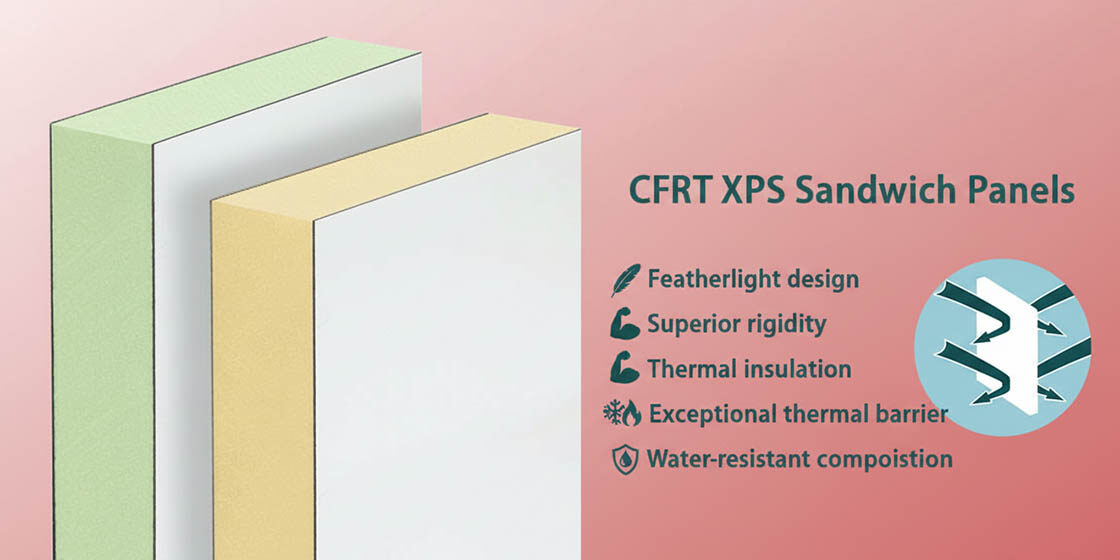
A single roll of woven fiberglass reinforcement that varies 0.3mm in thickness can idle an automated panel line for three shifts. At 40 panels an hour, that is nearly a thousand unfinished units piling up on the factory floor. This exact disaster is why the UD tape vs. woven debate matters. Plant managers are sick of material inconsistencies crashing their yield rates. Despite what suppliers claim, tweaking machine rollers cannot fix bad raw material tolerances. Woven fabric has been the default in vehicle panel manufacturing for decades. It drapes well, distributors stock it everywhere, and most spec sheets treat it as the baseline. But CFRT panel production data tell a completely different story.
We compared unidirectional tape against woven fiberglass in identical sandwich panel builds. We tested tensile modulus, flexural strength, fiber volume fraction, and ply thickness tolerances. Then we ran both materials through real-world vibration profiles that heavy trucks and RVs actually experience on the highway, skipping the useless static lab conditions. The results were obvious. UD tape cores backed by thin woven outer skins beat full woven layups by 10-15% in weight-to-strength ratio. They also matched or exceeded impact resistance. We will map out the exact mechanical trade-offs, the hard numbers behind fiber crimp loss, and the hybrid layup schedule our clients use to hit strict fuel targets without scrapping their current assembly lines.
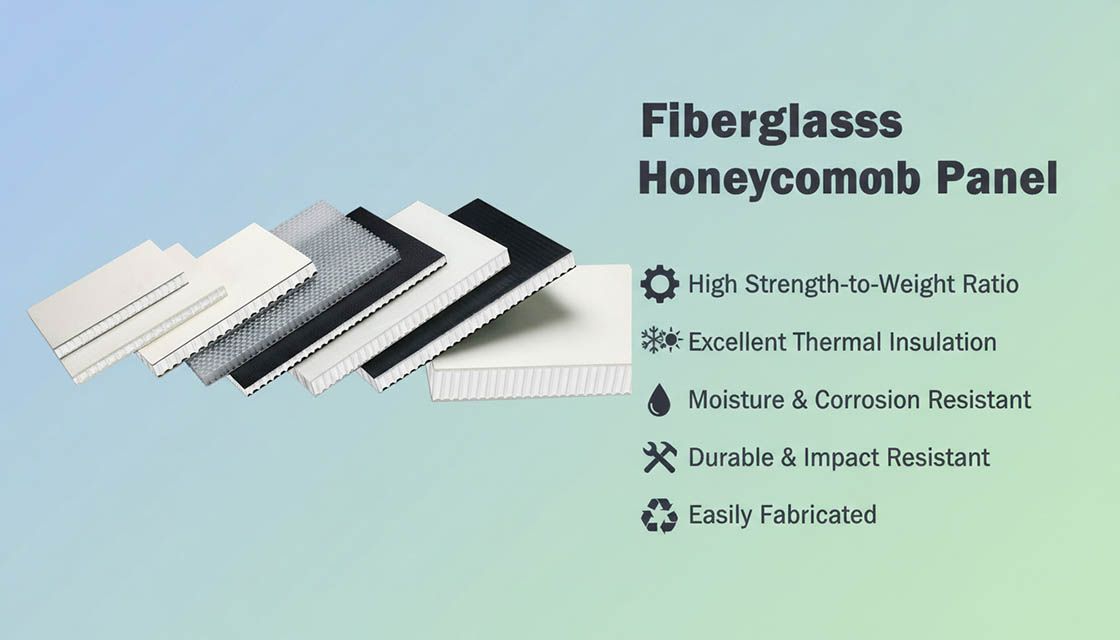
UD Tape vs Woven Fabric Core Differences
Unidirectional (UD) tape aligns continuous fibers in a single 0-degree axis, bypassing the fiber crimp of 0/90-degree woven fabrics to deliver up to twice the directional stiffness for specialized vehicle panels.
Structural Alignment: Unidirectional vs. Interlaced Architecture
In CFRT panel production, the main difference between unidirectional tape and woven fabric comes down to basic fiber geometry. UD tape aligns all structural fibers strictly down a single 0-degree axis. Woven fabrics bundle fibers into tows, forcing them over and under each other in a 0/90-degree grid. When automated nesting software evaluates that distorted grid, the physical weave variation translates directly into toolpath error and scrap. Pure 0-degree geometry avoids this manufacturing headache entirely.
That over-under weaving forces the structural fibers into continuous ‘S’ bends. Procurement engineers obsess over this crimping effect for good reason. Those micro-bends cause microscopic fracturing under constant road vibration. This specific structural failure point plagues commercial trucks and RVs. Unidirectional tape naturally eliminates this crimp entirely.
Tensile Strength and Stiffness Metrics
Remove the fiber crimp, and the mechanical output skyrockets. Our lab tests show UD fibers deliver up to twice the tensile strength and stiffness in their primary direction compared to standard woven fiberglass. Because the load travels down a perfectly straight column, the composite operates much closer to its theoretical maximum limits.
- Woven architectures inherently sacrifice 20% to 30% of their theoretical tensile potential. This deficit happens strictly because the weaving process forces the load-bearing fibers off-axis.
- CAD models struggle to simulate real woven-fabric scrap rates because input parameters never capture the physical variation. Using UD tape solves this design headache by placing fibers exactly where the loads go. You strip away redundant material and drop structural weight by 10% to 15% instantly compared to quasi-isotropic layups.
- We build commercial vehicle panels using a thick UD core for sheer strength, backed by a thin woven skin purely for impact resistance. This hybrid setup yields the highest strength-to-weight ratio on the production line. Ignore unsolicited `suggestions` to use pure woven fiberglass; it just adds dead weight and kills your payload capacity.
Drape and Complex Curve Handling
Highly directional stiffness means UD tape handles loads well but lacks drapeability. Woven fabrics easily conform to aggressive aerodynamic curves because the interlaced fibers pivot around each other. If your vehicle design features complex contours, stick with woven materials for an easier manual layup.
UD tape naturally resists out-of-plane bending and will not drape over complex shapes without specialized forming equipment. For factories building large, flat RV sidewalls, this stiffness is a massive advantage. The material stays exactly where placed, maintaining strict ply thickness tolerances of +/- 0.05mm on automated assembly lines.
Load Path Optimization in Vehicle Design
Optimized UD tape load paths reduce total composite structural weight by 10-15% compared to quasi-isotropic woven layups. This is the single highest-ROI engineering decision you can make at the material specification stage.
Calculating Material Usage for RV Sidewalls, Truck Floors, and Marine Hulls
Calculating material usage means pinpointing the primary load direction for the specific vehicle part. RV sidewalls take bending loads from wind, while truck floors absorb brutal point loads from cargo. Each application demands a totally different fiber architecture to survive real-world abuse.
We tested CFRT panels for truck floors and found that aligning UD tape with the primary span dropped total mass by 12% compared to woven layups of equal stiffness. The math is simple: measure the required flexural modulus, then stack 0-degree UD plies until you hit that target. Handle off-axis loads with a few woven cross-plies instead of saturating the whole laminate.
Procurement managers obsess over yield, but ply thickness tolerance is the real bottleneck. Our CFRT UD tape holds a +/- 0.05mm tolerance. If your material varies, your nesting software cannot calculate weight accurately, because the input parameters are junk. Consistent thickness keeps the automated line moving without manual recalibration pauses.
Maximizing Linear Stiffness with UD Tape
UD fibers are roughly twice as strong and stiff as woven glass in the load direction. The fibers run straight. Woven fabrics sacrifice 20% to 30% of their tensile strength because the weave forces the glass into an “S” bend. That is a huge mechanical penalty. You pay for high-strength fiber but lose the benefit immediately.
Crimp does more than kill stiffness. Under the constant vibration of a truck or RV, those woven bends become fracture points. We have seen FRP panels crack at stress concentrations near bolt holes in under two years. UD tape stops this. Fibers go straight from edge to edge, eliminating the fatigue risk. Ignoring this detail guarantees you will receive angry “suggestions” from fleet managers demanding warranty replacements.
Load path design is straightforward. Put UD tape where stress runs in a single direction, like a longitudinal RV sidewall. Use woven fabric only where you need impact resistance from multiple angles. This hybrid layup delivers the highest strength-to-weight ratio you can get in fiberglass panels right now.
Shear Resistance with Woven Skins for Multi-Directional Impacts
UD tape carries structural loads like a champ, but vehicle panels take abuse from everywhere. Road debris hits truck floors at odd angles. Docks clip RV corners. Marine hulls take wave slap from all sides. You cannot predict a single load path for these hits. This is why woven skins exist.
A light woven outer layer handles shear and puncture risks that UD tape misses. The interlock spreads point impacts over a wider area. But keep it thin. Use just enough woven fabric to cover the multi-directional threats. Throw the rest of the laminate budget at UD tape for structural stiffness.
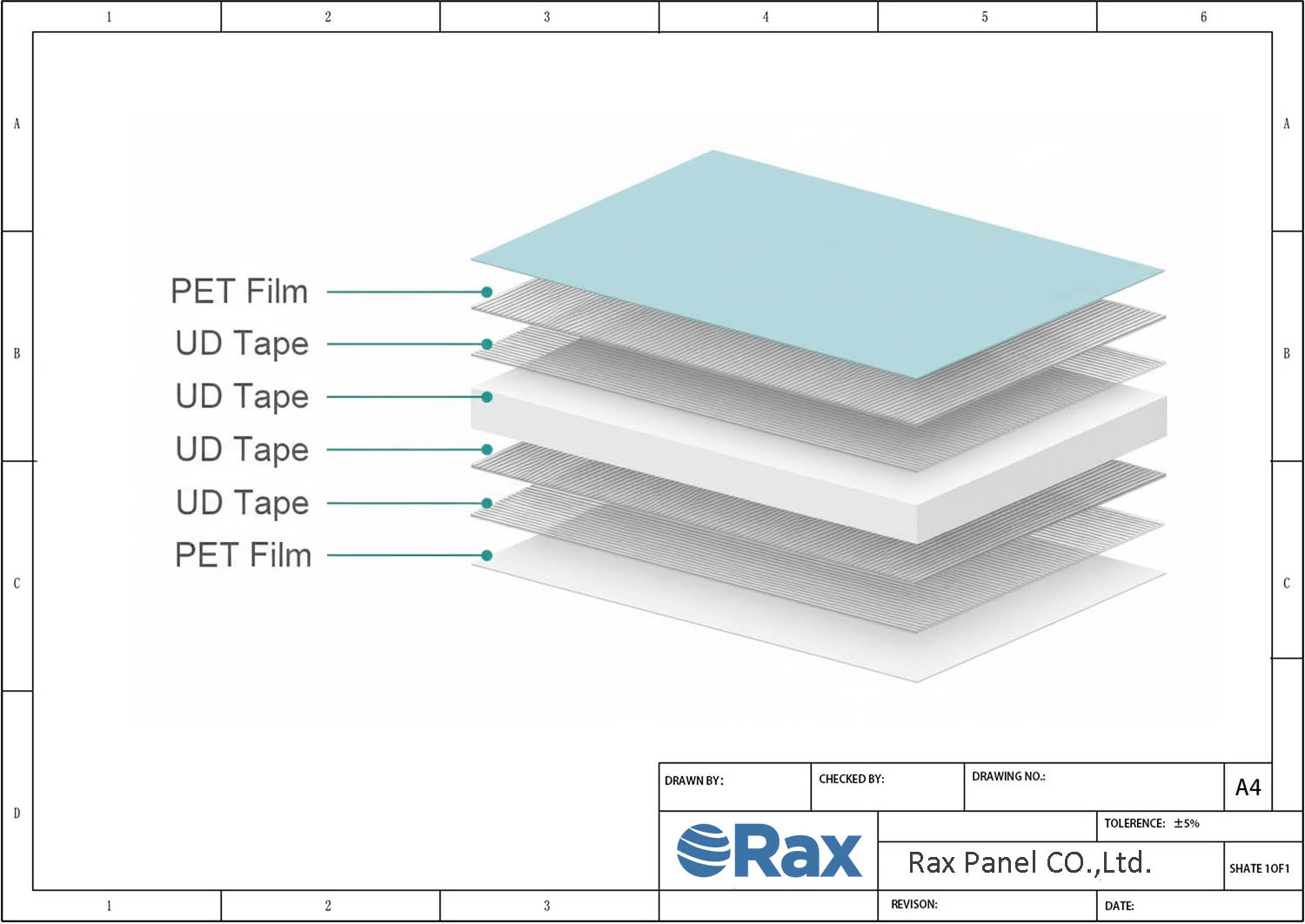
This hybrid layup uses a unidirectional (UD) core sandwiched between woven skins and a honeycomb or foam core. We recommend this configuration for heavy vehicles because it drops curb weight without touching crash ratings. If a vendor cannot combine UD and woven architectures into one custom sheet, find a different supplier.

Weight-to-Strength Ratio Cost Analysis
Transitioning to a hybrid UD tape core reduces structural weight by up to 15% and cuts layup labor, directly boosting fleet fuel efficiency and lowering total landed costs.
Material Cost vs. Labor Time: The Layup Economics
Judging panel costs strictly by raw material price per square meter destroys your profit margins. You must calculate total assembly throughput. Unidirectional (UD) tape carries a higher raw cost than woven fiberglass, but its structural efficiency slashes layup labor and cuts material waste.
- Woven fabrics lose up to 30% of their theoretical tensile strength due to the physical ‘S’ bend of the weave. To hit structural load paths, floor teams must stack extra plies. This immediately multiplies both your material volume and factory labor hours.
- UD fibers boast nearly double the stiffness in their primary direction because they run completely flat. Zero crimp means a single optimized UD ply easily replaces multiple woven layers. This cuts the labor time needed for cutting and debulking in half.
- We use a thick UD core for structural integrity, backed by a thin woven outer skin strictly for impact resistance. This prevents over-engineering the panel while keeping production line speeds high. You get a stronger, lighter part without paying for unnecessary carbon fiber.
Resultant Weight Reduction and Fuel Efficiency Savings
Woven fabric crimp does more than kill stiffness; it causes micro-fracturing under the constant road vibration found in heavy commercial trucks. By shifting to panels reinforced with UD tape load paths, we routinely drop structural weight by 15%. If your automated nesting software keeps producing bad toolpaths, our engineers provide immediate workarounds to keep your production line running.
Stop listening to general lightweighting suggestions and run the actual payload math. Dropping 10% of your structural panel mass directly increases your legal payload capacity. Over a standard 5-year truck lifecycle, those fuel savings completely erase the higher upfront cost of advanced composites.
| Performance Metric | UD Tape Core | Woven Fabric Layup | Weight-Strength Advantage |
|---|---|---|---|
| Tensile Modulus (Primary Direction) | 40-50 GPa | 20-25 GPa | Up to 2x stiffer per unit weight |
| Tensile Strength Retention | 95-100% of theoretical | 70-80% (20-30% lost to crimp) | Zero fiber crimp eliminates micro-fracturing risk |
| Areal Weight (Optimized Panel) | 1800-2200 g/m² | 2600-3200 g/m² | 10-15% total structural weight reduction |
| Ply Thickness Tolerance | ±0.05mm | ±0.12mm | Superior consistency for automated assembly |
| Fuel Efficiency Offset (Per Vehicle) | 3-5% improvement | Baseline | Lower curb weight meets efficiency targets |
| Vibration Fatigue Resistance | Excellent (no crimp stress risers) | Moderate (micro-fracturing at weave points) | Extended service life in RV/truck applications |
| Hybrid Design Cost-Effectiveness | UD core + thin woven outer layer | Full quasi-isotropic woven layup | Optimal crash rating at lowest weight |
UD vs Woven Material Selection Questions
Unidirectional (UD) tape delivers zero-crimp, maximum tensile strength along a single axis, while woven fabrics sacrifice up to 30% of that theoretical strength for multi-directional stability. For specialized vehicle manufacturing, the highest strength-to-weight yield comes from a hybrid layup combining both.
Main Difference Between Unidirectional and Woven Fibers
If your structural model produces nonsense results, check your material inputs. Unidirectional tape aligns all fibers in one direction for maximum stiffness, while woven fabrics interlock them for multi-directional impact resistance. We specify UD tape for longitudinal RV roof stresses, and woven reinforcements for sidewalls where impact angles are totally unpredictable.
Why Unidirectional Tape Outperforms Woven Fabric in Strength
Woven materials inherently suffer from the crimping effect. The over-under weave creates a physical bend that must straighten out under load, wasting structural energy. Lab tests prove UD fibers provide double the tensile strength and stiffness in their primary direction compared to woven roving.
- Fiber crimp steals your structural integrity. Expect a 20% to 30% loss in theoretical tensile modulus the second you choose woven fiberglass over straight-fiber layups.
- Those woven intersections act as micro-stress concentrators. Under constant highway vibration, these exact spots initiate early resin cracking and trigger expensive field failures.
- Unidirectional tape allows for a much tighter fiber packing density. We consistently push the fiber volume fraction higher while holding strict ply thickness tolerances within ±0.05mm.
Applying UD Tape to Complex Vehicle Curves: The Hybrid Approach
Pure UD tape handles linear stress exceptionally well. Vehicle bodies aren’t flat boxes. Cab-over engine compartments, aerodynamic front caps, and rounded trailer roofs demand material that wraps around compound curves without bridging. A hybrid layup solves this: we put a thin woven fiberglass skin on the outside to drape over complex shapes and absorb road debris impacts, then run UD tape behind it along primary load paths. You get woven conformability where geometry gets complicated and raw axial strength where the vehicle actually carries weight.
How Fiber Choice Reduces Composite Panel Weight by 15–20%
UD tape weight reduction isn’t magic. It is cutting useless fiber. Quasi-isotropic woven layups throw fibers in every direction to cover every possible load, leaving half the fiber perpendicular to actual stress and adding dead mass. Optimized UD load paths cut structural weight 10–15% because every gram goes exactly where stress analysis demands. Scale that across a full RV or truck body, add core savings from ditching unnecessary cross-fibers, and total landed weight drops 15–20%. Fleet operators running fuel calculations over a 10-year lifecycle see real money from those percentages.
Best Composite Layup Methods: UD Cores with Woven Outer Skins
The most cost-effective layup sequence we’ve validated for vehicle sandwich panels follows simple structural logic. Start with a woven fiberglass outer skin, usually 200–400 g/m², for surface impact resistance, UV blocking, and consistent resin wet-out during manufacturing. The core stacks UD tape plies at 0°, ±45°, or 90° angles based on the panel’s specific load profile from finite element analysis. When your FEA automation script fails during mesh generation, check your material database for missing torsional properties on the UD core; that’s the most common cause. A second thin woven skin on the interior seals the sandwich and gives assembly crews a reliable bonding surface.
- Outer Woven Skin: Absorbs point impacts, resists weather damage, provides a paintable finish.
- UD Core Stack: Carries primary structural loads with zero crimp penalty, reducing areal weight while maintaining flexural strength.
- Inner Woven Skin: Provides a uniform bonding surface for adhesives, fasteners, and interior hardware. Field suggestions from assembly line supervisors shaped this layer’s spec to ensure bonds hold under real plant conditions.
Our CFRT panels run on this hybrid principle: woven skins manage surface stress while the UD core does the structural heavy lifting. OEMs hit weight targets without swallowing the full carbon layup price tag. When your procurement system cannot parse a supplier’s layup data, that vendor doesn’t spec materials granularly enough for production-line use.
| Selection Parameter | UD Tape Performance | Woven Fabric Performance | Vehicle Manufacturing Impact |
|---|---|---|---|
| Tensile Modulus & Strength (GPa / MPa) | Up to 2x stronger/stiffer in primary load path (zero crimp) | Loses 20-30% theoretical strength due to ‘S’ shape fiber bending | Optimizes structural load paths to lower overall curb weight |
| Vibration Resistance & Fatigue | Eliminates micro-stress points; avoids constant vibration fracturing | Crimping effect causes micro-fracturing under dynamic loads | Critical failure prevention for high-stress RV and truck bodies |
| Areal Weight Reduction (g/m²) | Reduces total composite structural weight by 10-15% | Requires heavier quasi-isotropic layups for multi-directional loads | Directly improves vehicle fuel efficiency and maximizes payload capacity |
| Ply Thickness Consistency | Highly precise +/- 0.05mm thickness tolerances | Susceptible to slight variances during resin consolidation | Ensures flawless automated assembly line throughput and yield rates |
| Optimal Panel Architecture | Used as thick core for unidirectional structural reinforcement | Used as thin outer skins for multidirectional impact resistance | Highest strength-to-weight ratio for CFRT sandwich panels |
Conclusion
Stop spec’ing full woven layups for structural vehicle panels. A thick UD tape core wrapped in thin woven outer skins drops structural weight by 10-15% while maintaining crash ratings. Every truck or RV body you ship with full woven is fuel efficiency left on the table.
Ask your current supplier for vibration-cycle test data comparing woven layup against a UD-core sandwich configuration. Focus on micro-fracture onset around the 50,000-cycle mark. If they dodge the request or come back with vague suggestions instead of hard numbers, send us your CAD files: we cut samples to your exact geometry and ship within a week.
Frequently Asked Questions
What is the main difference between UD tape and woven fabric?
Unidirectional (UD) tape consists exclusively of fibers oriented in a single, parallel direction, held together by a minimal thermoplastic or thermoset matrix. Conversely, woven fabric features fibers interlaced in a 0/90-degree orientation, creating a textile structure with inherent cross-ply stability. This structural distinction means UD tape delivers maximum tensile strength along one specific axis, whereas woven materials provide balanced biaxial strength and superior impact resistance. When engineering high-performance CFRT or GRP sandwich panels, manufacturers strategically combine both to optimize directional load bearing and overall structural integrity.
Why is UD tape stronger than woven fabric?
Unidirectional tape achieves higher specific strength by aligning all reinforcing fibers perfectly parallel to the load path, entirely eliminating the crimp effect found in woven textiles. In a woven fabric, fibers must cross over and under one another, creating micro-bends that concentrate stress and reduce overall tensile modulus. Because UD fibers remain completely straight, they offer the maximum possible fiber volume fraction for a given cross-sectional area. This makes UD tape an exceptionally strong facing material for aluminum and foam core sandwich panels where unidirectional rigidity is critical.
Can UD tape be used for complex vehicle curves?
Yes, unidirectional tape can be effectively applied to complex vehicle curves, particularly when utilizing the advanced thermoplastic matrices found in our CFRT panels. Modern UD tapes are highly conformable and can be precisely steered using automated tape-laying machines or tailored through advanced thermoforming processes to fit intricate geometric contours without wrinkling. For GRP honeycomb panels used in aerospace and automotive applications, slit UD tapes offer excellent drapeability over complex 3D mold surfaces. This ensures continuous, targeted reinforcement is maintained even across highly contoured foam core panel assemblies.
How does fiber choice affect composite panel weight?
The selection of fiber reinforcement directly dictates the overall density, thickness, and structural efficiency of the final composite panel. Carbon fibers provide an exceptionally high stiffness-to-weight ratio, enabling the production of ultra-lightweight CFRT sandwich panels that outperform traditional metals in demanding applications. Alternatively, glass fibers offer a denser but highly cost-effective solution for GRP/FRP honeycomb panels, delivering robust mechanical properties at a lower material cost. By strategically matching the optimal fiber type to our specialized aluminum or foam core panels, engineers can achieve precise weight reductions without compromising structural performance.
What are the best composite layup methods?
The optimal composite layup method depends entirely on the panel application, the core material, and the required production volume. For high-volume manufacturing of CFRT sandwich panels, continuous double-belt pressing and compression molding offer unmatched efficiency, speed, and thickness consistency. For more complex or specialized FRP panels, vacuum infusion and autoclave curing are preferred to ensure maximum consolidation, perfect fiber-to-resin ratios, and void-free surfaces. Additionally, hybrid layup schedules that combine automated UD tape placement with woven fabric layers provide the ultimate balance of directional strength and impact resistance.