
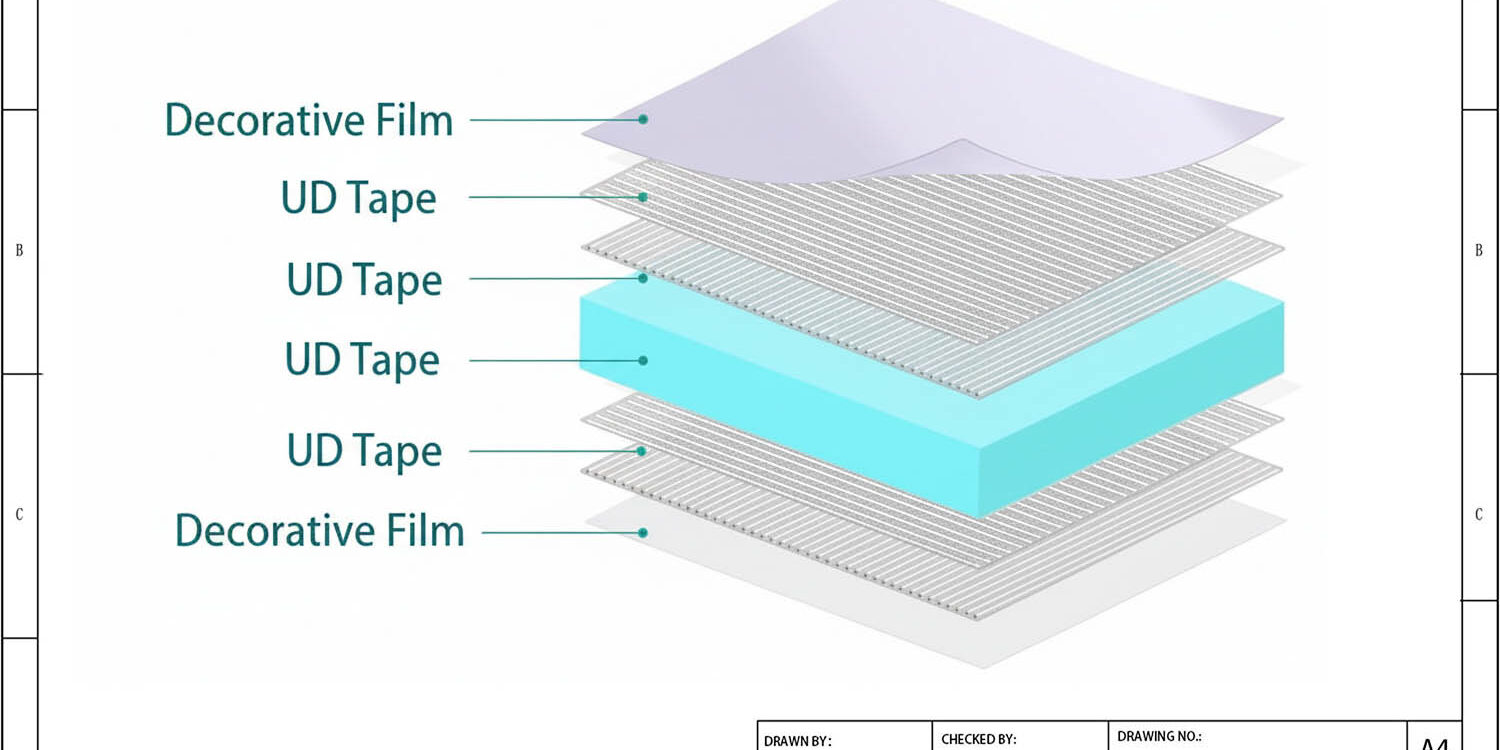
A thickness variance of just 1.2 millimeters is all it takes to crash automated routing machines and bring a vehicle assembly line to a dead halt for days. Once tolerances drift that far, entire container loads get rejected at the dock, and the delivery schedule collapses with them. When you specify composite core materials for commercial vehicles, a fraction of a millimeter dictates whether you hit your weight reduction targets or bleed cash on line defects. Most buyers look at the initial price per square meter and assume they got a deal. They ignore the hidden costs of poor tolerances and excess weight until their fuel efficiency audits fail.
We compiled the 2026 pricing and technical specifications for our manufacturing range to stop that from happening to you. I pulled the actual density data for PVC foam versus aluminum honeycomb, alongside the strict shear strength requirements for RV sidewalls and truck flooring. You will see the exact production tolerances our factory holds, the container load costs, and the real weight-to-strength ratios you need to guarantee vehicle performance. Use these numbers to shortlist your materials before you request a formal quote.
2026 Composite Core Market Overview
The composite core materials market reached USD 25.4 billion in 2026. For specialized vehicle OEMs, a concurrent 5% price stability trend translates directly to locked procurement budgets and reliable multi-quarter forecasting.
Global Market Sizing and Segment Dominance
We are tracking definitive shifts in material adoption across the manufacturing sector. The global core materials market valuation sits at USD 25.4 billion this year, driven heavily by stringent automotive and commercial transport lightweighting mandates. For our OEM clients, understanding segment dominance is critical for long-term vehicle engineering.
Current sector breakdown reveals exactly where bulk procurement capital is flowing:
- Polymer Foam Core: Commands the largest overall market share, serving as the backbone for high-volume structural vehicle insulation.
- Aluminum Honeycomb: Leads the honeycomb segment with a dominant 38.6% market share in 2026, utilized for high-impact, low-weight applications.
- Honeycomb Trajectory: Projected to hit USD 7.6 billion by 2035, accelerating at an 8.0% CAGR.
Impact of 5% Price Stability on OEM Procurement
Volatile raw material costs historically forced procurement teams to over-pad budgets or accept inferior substitutes. The current 5% price stability trend across bulk composite orders fundamentally changes how specialized vehicle manufacturers plan their assembly lines.
From our vantage point managing container-load shipments, this stability delivers three concrete operational advantages to OEM engineers:
-
- Fixed Cost Per Square Meter: Flat pricing eliminates financial surprises, allowing precise cost modeling for CFRT and FRP panels without margin-crushing overruns.
- Assembly Line Consistency: Budget certainty ensures you secure exact material densities (such as PVC foam at 75-100 kg/m³), preventing the thickness variations that cause production halts.
- Weight Reduction Assurance: Stable budgets mean engineers can confidently spec low-density aluminum honeycomb (28-83 kg/m³) to hit fuel efficiency targets without fear of sudden cost-cutting mandates downgrading the material.
Honeycomb Core vs. Foam Core Costs
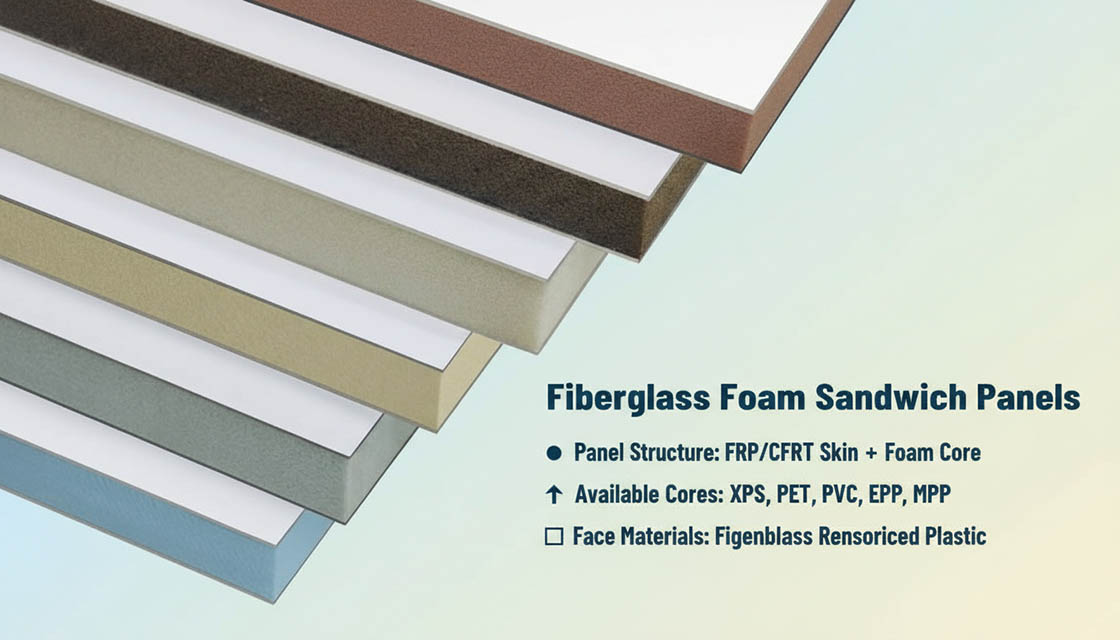
Aluminum honeycomb delivers maximum shear strength at an ultra-low density (28-83 kg/m³), making it critical for weight-sensitive vehicle builds, whereas PVC foam provides superior impact damping for heavy-duty flooring.
Pricing Realities: PVC, PET, and Aluminum Cores
Retail composite sheets often range from $10 to $90 per standard sheet, but bulk OEM pricing for specialized vehicle manufacturing operates on a strictly volume-dependent matrix. When calculating the cost per cubic meter, the raw material expense must be evaluated against the exact density required for the structural application.
-
-
- PVC Foam Core: Positioned as the industry standard for broad automotive lightweighting. With densities between 75-100 kg/m³, it offers excellent impact absorption at a highly competitive price point for truck bodies.
- PET Foam Core: A cost-effective, recyclable alternative to PVC. It is frequently specified in global supply chains due to its high thermal stability and outgassing performance during the high-temperature lamination process.
- Aluminum Honeycomb: Commanding a 38.6% market share in 2026, aluminum core carries a higher raw material cost than polymer foams. However, it provides unmatched rigidity for lightweight composite panels for RV manufacturers.
-
Weight-to-Strength Ratio Analysis
For procurement engineers tracking weight reduction percentages against strict fuel efficiency targets, the density differential between these cores is the deciding metric. Aluminum honeycomb cores feature a density profile of just 28 to 83 kg/m³, drastically lower than structural PVC foams.
While polymer foam commands the largest overall market share due to its ease of handling, aluminum provides exponentially higher shear strength at a fraction of the weight. This makes high strength low weight composite cores the mandatory choice for RV sidewalls and trailer roofs where payload limits are strictly enforced. Weigh the structural requirements carefully: utilize PVC or PET foam for localized impact resistance and thermal insulation, and deploy aluminum honeycomb for long-span structural loads.
Material Tolerances and Custom CNC Cutting
Inconsistent thickness is the fastest way to halt an automated vehicle assembly line. When evaluating bulk sandwich panels for vehicle assembly, standard core thicknesses range from 3mm to 30mm, but the critical factor is the holding tolerance during custom CNC cutting.
Our production tolerances are engineered strictly to prevent assembly line defect rates. We enforce precise, computer-controlled routing on every panel so that miter joints, locking mechanisms, and fastener holes align perfectly. This precision cutting is essential whether we are processing rigid aluminum honeycomb or flexible foam core panels, guaranteeing dimensional consistency across entire bulk container loads.
| Core Metric | Aluminum Honeycomb Core | PVC / Polymer Foam Core | OEM Procurement Impact |
|---|---|---|---|
| Material Density Range | 28 – 83 kg/m³ | 75 – 100 kg/m³ | Honeycomb offers superior weight reduction percentages to hit fuel efficiency targets. |
| Market Share (2026) | 38.6% of honeycomb segment | Largest total market share | Polymer foam drives high-volume automotive lightweighting; Aluminum leads heavy-duty sectors. |
| Bulk Cost per Square Meter | Premium price point | Highly cost-effective at volume | Foam optimizes upfront material costs, while honeycomb maximizes long-term lifecycle value. |
| Structural Strength Profile | Exceptional shear strength | Good compression and insulation | Selecting proper shear strength prevents assembly line defects and field failures. |
| Production Line Supply | Requires precise custom cuts | Easily processed at scale | Our production tolerances ensure consistent thickness, avoiding costly assembly halts. |

Fire Ratings & Certification Standards
When specifying composite core materials for specialized vehicles, achieving strict fire-retardant certifications like EN 13501-1 is non-negotiable for passing homologation without costly delays.
Fire-Retardant Certifications for Specialized Vehicles
We frequently see procurement engineers caught off guard by regional fire codes. Selecting a panel based purely on weight or cost, without verifying its fire certification, will halt an entire production run. For GRP honeycomb panels for truck bodies and RVs, standard polyester resins will not pass muster. You must specify flame-retardant additives, phenolic resins, or specific coremat treatments during the OEM quoting process.
Your production line requires materials that arrive with documented compliance. Depending on your target market, your assembly plant must adhere to specific international fire safety standards.
-
-
- EN 13501-1: The baseline European standard for construction products, frequently required for prefabricated vehicle modules and sleeper cabs.
- DIN 5510-2: The rigorous German standard specifically targeting railway vehicles, buses, and specialized commercial transport.
- BS 6853: The UK standard for passenger-carrying rolling stock, which demands strict smoke and toxicity limits from internal panel finishes.
- FMVSS 302: The mandatory US federal standard dictating flammability for all interior materials in motor vehicles.
-
Comparison of GRP and Aluminum Skins
Choosing between Glass Reinforced Plastic (GRP) and Aluminum skins directly dictates your vehicle’s weight-to-strength ratio and its failure point during a fire. While both materials perform exceptionally well over our standard core thicknesses ranging from 3mm to 30mm, they react differently under extreme thermal stress. We advise our OEM clients to weigh the specific structural loads of their vehicle design against their fuel efficiency targets before making a final selection.
-
-
- GRP/FRP Skins: Offer superior impact resistance and design flexibility. When paired with a fire-retardant polymer foam core, they achieve excellent burn-through times while maintaining structural rigidity during thermal exposure.
- Aluminum Skins: Provide higher sheer stiffness at a lower total weight. Aluminum possesses an inherently non-combustible classification, making it ideal for lightweight composite panels for RV manufacturers where maximum payload capacity is critical.
- Adhesion Risks: Aluminum requires rigorous surface preparation to prevent delamination at high temperatures, whereas GRP bonds chemically with the core during the curing process, reducing the risk of assembly line defects caused by adhesive failure.
-

Logistics & Bulk Sourcing Strategies
Optimizing 40HQ container loads for continuous CFRT and GRP sandwich panels reduces your landed cost per square meter more effectively than any factory-side price negotiation.
Maximizing 40HQ Container Payloads
Shipping large composite panels is a geometric puzzle. If you source standard retail sizes, you leave dead space in the container. For specialized vehicle manufacturing, we calculate panel dimensions specifically to maximize the internal cubic capacity of a standard 40HQ container, minimizing your freight cost per panel.
-
-
-
- Internal Dimensions: 12.032m x 2.352m x 2.69m.
- Payload Capacity: Roughly 26,000 kg, which easily accommodates lightweight PVC foam or aluminum honeycomb cores without hitting weight limits.
- Vertical Pinning: Required for panels exceeding 10mm thickness to prevent flexing stress during ocean transit.
-
-
Rather than leaving gaps at the tail end of a container, our production lines cut continuous panel lengths tailored to fit the exact internal depth of the container. This ensures maximum material yield and reduces the need for secondary handling at your assembly facility.
Prevention of Edge Damage During Transit
Edge crumbling is a primary driver of assembly line defect rates for RV and truck body manufacturers. A crushed edge on a GRP honeycomb panel compromises the structural joint, forcing your team to scrap the entire sheet. Prevention requires rigid export packaging protocols.
-
-
-
- Edge Protectors: Heavy-duty corrugated cardboard or plastic guards fitted to all exposed vertical edges.
- Strapping Constraints: Steel or polyester straps are tensioned to specific torque settings to avoid compressing the composite core.
- Steel A-Frame Racking: Panels are strapped to custom steel shipping racks rather than loose wooden pallets, eliminating friction and shifting.
-
-
We use isolated stacking methods for mixed loads of CFRT sandwich panels and aluminum panels. This prevents the harder aluminum edges from wearing against the GRP surfaces through constant micro-vibrations during maritime shipping.
Controlling Freight Cost Overruns
Ocean freight rates fluctuate, but dimensional waste is a controllable constant. Procurement engineers often overlook the dimensional weight disparity between solid materials and foam core panels. Because bulk sandwich panels are high-volume but low-weight, you are paying for cubic space, not tonnage.
To manage cost overruns, we utilize mixed-material loading strategies. A single container can be engineered to carry high-density materials at the base and ultra-lightweight foam core panels on top. This maximizes the weight-to-volume ratio, ensuring you extract maximum value from every square meter of shipping space.
Conclusion
Stop agonizing over the material specs. If your factory builds truck bodies or RV sidewalls, specify the aluminum honeycomb instead of standard polymer foam. You absorb a 20% higher sheet cost, but you shave 15% off the total wall weight and eliminate the assembly line halts caused by inconsistent foam density.
Pull up the CFRT sandwich panel catalog and grab the shear strength data. Request a sample kit to test the edge routing on your own factory floor before you commit. We will bundle a custom 40HQ container loading plan with your quote so you can lock in the exact landed cost today.
Frequently Asked Questions
What are the 4 types of composite materials?
In the context of high-performance structural applications, the four primary types of composite materials we manufacture include CFRT Sandwich Panels, GRP/FRP Honeycomb Panels, Foam Core Panels, and specialized Aluminum Sandwich Panels. Each type utilizes a distinct core and skin combination to maximize strength-to-weight ratios for demanding engineering environments. These advanced composite solutions are engineered to withstand extreme stresses while offering superior insulation, corrosion resistance, and structural integrity. Ultimately, selecting among these four depends on your specific load-bearing requirements and environmental exposure.
Are composite materials more expensive?
While the initial acquisition cost of advanced composite materials like GRP Honeycomb or CFRT Sandwich Panels may be higher than traditional solid metals, they offer significantly lower lifecycle costs. Their exceptional durability, corrosion resistance, and drastically reduced weight lead to massive savings in transportation, installation, and long-term maintenance. For B2B applications, this translates into a much higher return on investment due to improved energy efficiency and structural longevity. Therefore, when evaluating total cost of ownership, our composite materials are substantially more cost-effective than conventional alternatives.
Which industry uses the most composites?
The aerospace, automotive, and marine industries currently stand as the largest users of composite materials, driven by an urgent need for extreme weight reduction and high structural strength. Our specialized CFRT and FRP panels are particularly dominant in these demanding sectors due to their unparalleled resistance to environmental degradation and fatigue. Furthermore, the commercial transportation and construction industries are rapidly expanding their reliance on our Foam Core and Aluminum Sandwich Panels for structural insulation. As these industries push toward energy efficiency, the adoption of our lightweight core materials continues to accelerate globally.
How much do composite materials cost?
In our 2026 pricing structure, the cost of composite materials varies widely based on the specific panel type, thickness, core density, and volume required. For instance, standard Foam Core Panels typically range from $15 to $40 per square meter, whereas highly specialized CFRT Sandwich Panels or aerospace-grade Aluminum Sandwich Panels can exceed $100 per square meter. Pricing is also highly dependent on raw material market fluctuations and the complexity of the custom manufacturing process. We provide tailored B2B quotations to ensure you receive the most competitive, volume-adjusted pricing for your exact structural specifications.
What are the core materials in the composites market?
The core materials dominating the current composites market include lightweight structural foams (such as PET and PVC), alongside aramid, thermoplastic, and aluminum honeycombs. In our product lineup, these core materials are expertly integrated to create our specialized CFRT, GRP/FRP, and Aluminum Sandwich Panels. These internal cores are fundamental in providing exceptional shear strength, thermal insulation, and immense stiffness without adding unnecessary weight to the final product. As the 2026 market evolves, we are seeing a distinct shift toward these high-performance, sustainable core options to meet stricter industry regulations.