
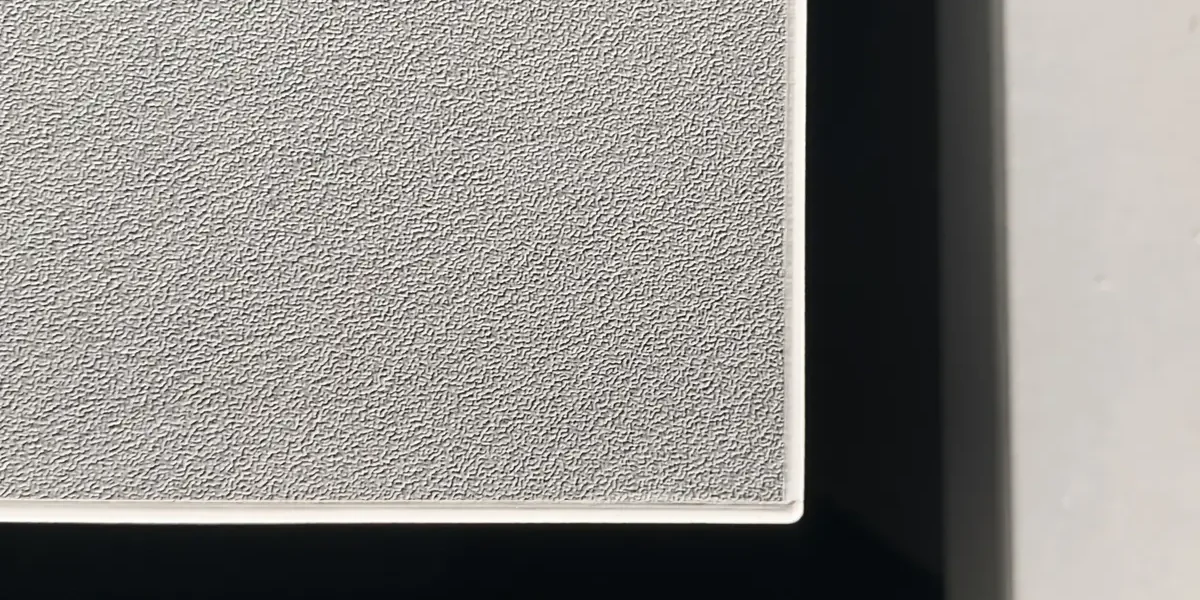
Specifying the wrong surface material does not just hurt your budget, it forces facility shutdowns when hygiene protocols fail. You might assume a high-pressure laminate surface is sufficient, but a standard compact laminate HPL panel behaves very differently under stress than the thin sheets bonded to particleboard you see in cheaper installs. That difference in structure dictates whether your walls withstand a chemical spill or delaminate within the year.
The technical distinction driving this performance gap is simple: standard HPL is a decorative layer bonded to a substrate, whereas compact laminate is a solid core panel. At RaxPanel, we manufacture these monolithic sheets specifically because the lack of a substrate prevents water from wicking into the core and causing structural swelling at the seams.
We will walk through how moisture permeability impacts total lifecycle cost, analyze impact absorption capabilities in high-traffic zones, and assess when the extra density actually lowers your long-term maintenance expenses. You will finish with a clear ROI framework for choosing the right durability grade for your next project.
Solid core construction eliminates the substrate failure points found in standard HPL, ensuring waterproof integrity and reducing lifecycle maintenance costs in high-traffic facilities.
Why Structure Drives Performance Differences
The fundamental architectural difference between a monolithic panel and a bonded assembly dictates the product’s lifecycle, determining whether it fails due to environmental stress or endures as a permanent structural asset.
Monolithic Core Structure vs. Bonded Layers
The distinction between a Compact Laminate and a standard composite assembly is not merely about thickness; it is about material continuity. Standard solutions typically rely on a decorative surface bonded to a separate substrate—such as particleboard, plywood, or foam core—using secondary adhesives. In this bonded configuration, the adhesive line becomes the weakest link, creating a plane of potential failure where shear stress and thermal expansion can cause separation. Over time, the differing coefficients of thermal expansion between the surface layer and the substrate induce internal stress that standard glues often cannot withstand in fluctuating climates.
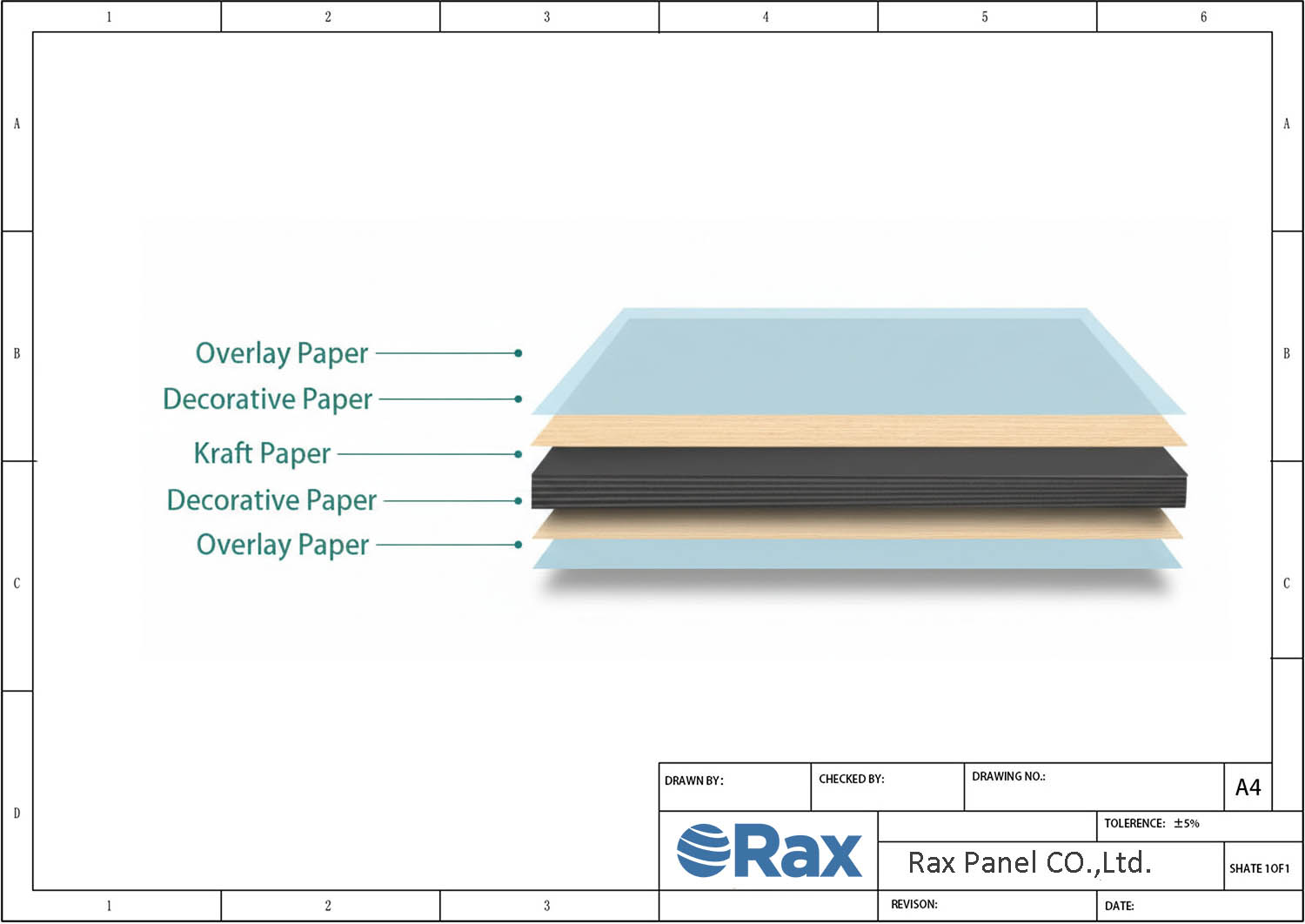
In contrast, the monolithic structure of Compact Laminate is manufactured by fusing multiple layers of kraft paper and decorative sheets under extreme high pressure and temperature into a single, homogeneous unit. This eliminates the “glue line” entirely. In our production experience, this integration means the panel behaves as one solid material rather than an assembly of parts. For B2B specifiers, this translates to zero risk of delamination, a critical factor for high-stress applications like locker room benching or vertical cubicles where mechanical fasteners are used. When you screw into a monolithic panel, the material compresses rather than separating, ensuring hold-down power remains consistent over decades of use.
Moisture Permeability in Solid vs. Laminated Cores
Water ingress is the silent killer of composite panels, and the structural architecture dictates exactly how moisture behaves within the material. In laminated systems, even if the surface skin is waterproof, the panel edges remain vulnerable. Capillary action can draw moisture into the exposed core substrate at the seams or cut edges. Once water penetrates the outer shell, it becomes trapped between the surface and the core, leading to swelling, rotting, or mold growth within the substrate itself. This internal degradation often remains invisible until the panel surface warps or blisters, at which point the entire unit usually requires replacement.
A solid phenolic core operates on the principle of impermeability throughout its entire cross-section. Because the material is homogeneous and non-porous, moisture cannot wick into the interior; there is no “inner core” to absorb water. Even if the panel is submerged or subjected to constant humidity, the material maintains dimensional stability. We have utilized this property in marine and laboratory applications where panels are frequently hosed down or exposed to chemical spills. The structural integrity remains uncompromised because there is no internal wood or foam fiber to degrade. For procurement officers, this means specifying a solid core effectively eliminates the maintenance costs associated with water damage and the lifecycle replacement costs typical of damp environments.
Impact Absorption Capabilities of Black Core
The color of the core in Compact Laminate—typically black—indicates a high saturation of phenolic resin, which is the primary driver of impact resistance. While surface hardness protects against scratches, the core’s density determines how the panel absorbs kinetic energy. When a heavy object impacts a bonded panel, the force transfers directly through the thin surface skin to the softer substrate, often resulting in denting, puncture, or a fracture of the surface layer. The substrate cannot effectively disperse the energy shock, leading to immediate cosmetic or structural failure.
The dense, black phenolic core of a Compact Laminate panel acts as a shock absorber. Its high-density resin matrix distributes impact forces laterally across the panel, preventing localized damage. This rigidity prevents the “bruising” or crushing often seen in lower-density composite boards. Our engineers have tested this extensively in high-traffic transit applications; unlike foam-core or wood-core alternatives that require protective edge banding to prevent chipping, the black core resists impact through its entire thickness. This characteristic allows the material to be machined and exposed without the immediate need for edge treatments, providing a cleaner aesthetic and reducing fabrication labor costs for fabricators and installers.
| Structural Factor | Technical Variation | Performance Driver | Commercial Value |
|---|---|---|---|
| Core Configuration | Compact Solid Phenolic vs. Standard HPL Core | Monolithic structure eliminates delamination risks and ensures 100% waterproof integrity | Ideal for high-humidity lab/medical applications; Rax Panel provides ISO 22196 antibacterial certification |
| Panel Thickness | Compact Laminate (2-25mm) vs. Decorative HPL (0.7-1.2mm) | Increased thickness grants self-supporting strength and high impact resistance | Reduces substrate costs for locker room and exterior cladding projects with 15-year durability assurance |
| Core Composition: Solid Phenolic vs. Layered Paper | Solid phenolic laminate offers uniform density and moisture resistance throughout the panel thickness, unlike layered paper cores that exhibit directional weakness | Ideal for high-traffic interior applications including laboratory countertops, bathroom partitions, and heavy-duty work surfaces requiring consistent structural integrity | |
| Compact Laminate Core Consistency | The monolithic core structure of compact laminate eliminates the need for separate core materials found in sandwich panels. | The entire panel is homogeneous phenolic, ensuring uniform mechanical and thermal performance throughout the full cross-section | This structural consistency delivers reliable impact absorption and dimensional stability without core-related failure modes |
| Surface Integration | Melamine-Impregnated Decorative Layers | Surface finish integration in compact laminate relies on melamine impregnation rather than gelcoat application. This process thermofuses decorative layers directly to the core under high pressure. | Provides a durable, non-porous surface resistant to scratches, impact, and chemicals without the risk of peeling or UV degradation found in post-applied coatings. |
Compact vs Standard: Strength and Impact
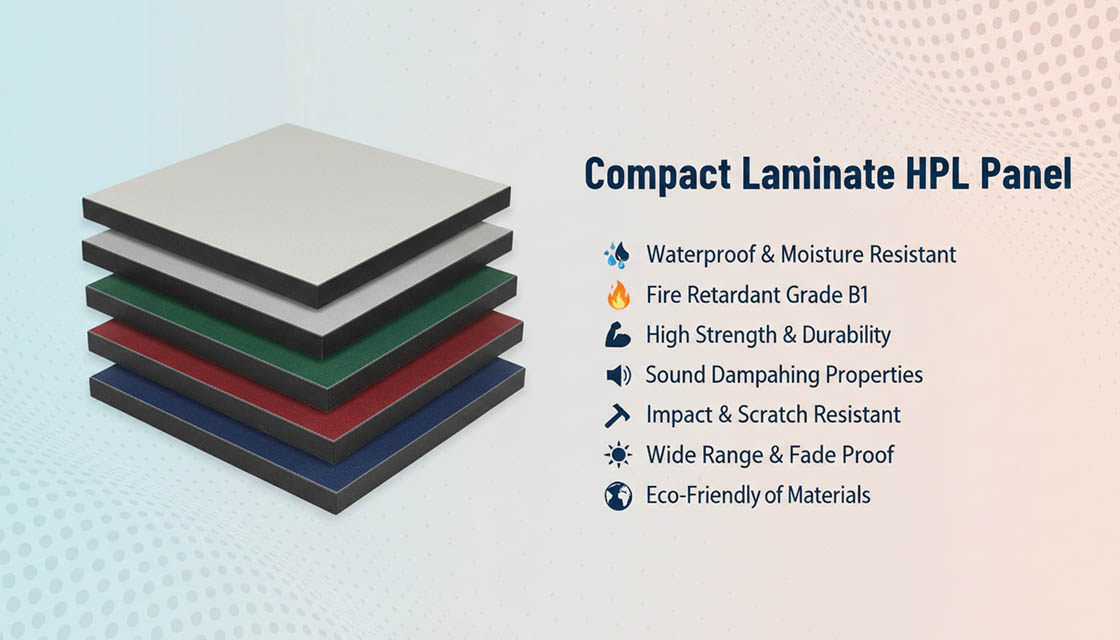
Compact laminate absorbs and distributes impact energy through its solid monolithic core, while standard HPL relies entirely on the substrate beneath it — a fundamental structural difference that dictates where each material can safely perform.
Impact Resistance: The Core Difference
The manufacturing process behind compact laminate creates a fundamentally different material architecture compared to standard HPL. Compact laminate absorbs and distributes impact energy through its solid monolithic core, while standard HPL relies entirely on the substrate beneath it — a fundamental structural difference that dictates where each material can safely perform. Consequently, the material exhibits consistent mechanical properties throughout its entire cross-section, and when an impact force is applied, the energy is distributed evenly across the panel thickness rather than concentrated at a single failure plane.
Standard HPL: Substrate-Dependent Performance
Standard HPL sheets consist of a thin decorative laminate layer (typically 0.4mm to 1.5mm) bonded to a separate substrate such as particleboard, MDF, or plywood. The scratch, stain, and heat resistance at the surface is broadly similar to compact laminate because both share the same high-pressure laminate wear surface. However, the critical vulnerability lies beneath: a thin HPL sheet is only as impact-resistant as the board beneath it. A direct knock over an unsupported area can crack the substrate or cause the laminate to delaminate from the core.
- Mechanical performance specifications separate compact laminate from substrate-dependent standard HPL. Bending strength: Compact laminate typically achieves >75 MPa due to its dense, uniform core; standard HPL performance varies entirely with substrate quality and thickness.
- Edge robustness: Compact laminate resists edge chipping and damage because the core material is identical to the surface; standard HPL edges expose the raw substrate, which is susceptible to moisture ingress and mechanical failure.
- Impact tolerance: In high-traffic, vandal-prone environments such as institutional washrooms and public corridors, compact laminate is the preferred specification because it absorbs knocks without structural compromise.
Load-Bearing and Structural Integrity
For vertical applications such as partitions and high-stress installations, compact laminate panels in thicknesses ranging from 2mm to 20mm provide reliable load-bearing capacity without additional reinforcement. Standard HPL installations in equivalent applications require a structurally adequate substrate, which adds cost, weight, and a potential failure point where the laminate bond can degrade over time under repeated stress.
How Water and Humidity Affect Panels
Water absorption is the defining differentiator between compact laminate and standard HPL — the difference is structural, not cosmetic.
Moisture vulnerability in standard HPL systems originates at the cut edge, not the laminate surface. Standard HPL consists of decorative paper bonded to a substrate such as MDF or particleboard. While the laminate face itself is water-resistant, any unsealed cut edge becomes a direct pathway for moisture ingress through capillary action. Once water reaches the substrate, swelling and delamination are inevitable — standard HPL on MDF substrates typically absorbs 8–12% water by weight, with swelling rates that can exceed 3mm per meter of edge exposure. In contrast, high-performance phenolic resin in compact laminate produces a water absorption rate below 1%, creating a fully monolithic core with no substrate to fail.
Quantified Water Absorption Performance
High-performance phenolic resin in compact laminate produces a water absorption rate below 1%, creating a fully monolithic core with no substrate to fail. Standard HPL on MDF substrates typically absorbs 8–12% water by weight, with swelling rates that can exceed 3mm per meter of edge exposure in sustained humidity.
- Compact laminate: Below 1% water absorption; no swelling under continuous wetting; suitable for direct water exposure and shower environments.
- Standard HPL on MDF: 8–12% water absorption; dimensional instability begins at approximately 6% humidity; edge swelling occurs within 24 hours of unsealed exposure.
- Standard HPL on moisture-resistant board: Improved but not immune; swelling resistance depends entirely on complete edge sealing, which degrades over time in high-traffic installations.
Resisting Scratches, Abrasion, and Daily Wear
Compact laminate HPL panels achieve superior abrasion resistance through high-pressure lamination and optional transparent overlay layers, significantly outperforming standard HPL in high-traffic environments.
Martindale Cycle Ratings and Surface Hardness
The abrasion resistance of compact laminate HPL panels is quantified using the Martindale test, which measures the number of cycles a surface can withstand before visible wear occurs. Standard HPL typically achieves between 1,500 and 3,000 Martindale cycles, while compact laminate variants often exceed 5,000 to 10,000 cycles depending on the overlay system used.
A transparent anti-scratch overlay applied to both sides of the panel provides an additional protective layer that absorbs surface abrasion without compromising the decorative print beneath. This overlay is integrated during the high-pressure lamination process at approximately 1,000 psi, ensuring it bonds monolithically with the core rather than sitting as a superficial coating.
Real-World Wear Performance Under Heavy Traffic
In laboratory settings, compact laminate HPL demonstrates a surface hardness rating of approximately 3H to 4H on the pencil hardness scale, compared to 1H to 2H for standard HPL. This difference translates directly to real-world performance: in environments with frequent equipment movement, cart traffic, or impact from tools and materials, compact laminate maintains its surface integrity significantly longer.
- Martindale cycles: Compact laminate ≥5,000 cycles vs. standard HPL 1,500–3,000 cycles
- Pencil hardness: 3H–4H for compact laminate vs. 1H–2H for standard HPL
- Overlay benefit: Transparent anti-scratch layer on both sides extends service life in high-abrasion zones
For applications such as laboratory countertops, hospital partitions, and commercial kitchen worktops, the combination of high Martindale ratings and pencil hardness ensures that daily wear from cleaning agents, equipment placement, and repeated contact does not degrade the panel surface within the expected service life.
How Thickness and Density Affect Lifespan
The durability of compact laminate depends on a precise interaction between core density and structural thickness. Unlike standard HPL, which serves as a decorative skin, compact laminate is a monolithic solid where density directly dictates mechanical resistance.
Density Thresholds and Structural Integrity
High-density core materials are non-negotiable for extended lifespan. Quality compact laminate typically exhibits a density range of 1,350 to 1,500 kg/m³. This specific mass ensures the panel resists warping and maintains rigidity under stress. Panels falling below this threshold often suffer from core instability, significantly shortening their service life in high-traffic environments.
Thickness as a Load-Bearing Factor
Thickness determines the panel’s ability to act as a self-supporting structural element. Ranging from 2mm to 25mm, thicker panels provide superior screw-holding power and resistance to impact deflection. While a 2mm board serves as a thin divider, a 12mm variant is essential for heavy-duty applications like lab benches or lockers, as it absorbs kinetic energy that would otherwise crack thinner materials.
Is Compact Laminate Worth the Cost?
Compact laminate carries a higher upfront price per panel than substrate-backed HPL, but its monolithic construction delivers significantly lower total cost of ownership over a 15-to-25-year service life.
Replacement Cycle Economics
Standard HPL sheets bonded to particleboard or MDF substrates typically require full panel replacement within 8 to 12 years in high-moisture or high-traffic environments. Moisture ingress at joints and cut edges causes substrate swelling, delamination, and core failure that cannot be repaired economically. Compact laminate panels, constructed from multiple layers of kraft paper saturated in resin and compressed under high pressure into a solid core, resist moisture absorption across the entire cross-section. This extends the replacement cycle to 15 to 25 years depending on application severity.
Maintenance and Downtime Costs
Maintenance frequency differs sharply between the two systems. Substrate-based HPL requires periodic sealing of joints, edge banding replacement, and spot repairs for localized swelling. Each maintenance event carries labor cost and facility downtime. Compact laminate surfaces resist staining, chemicals, and abrasion without requiring sealants or edge treatments. In laboratory, healthcare, and food-processing environments, the reduced maintenance schedule translates directly into lower operational disruption and fewer unplanned shutdowns.
- Initial panel cost: Compact laminate is priced higher per square meter than substrate-backed HPL.
- Lifecycle cost: When replacement frequency, labor, and downtime are factored in, compact laminate often reaches a lower total cost within 10 to 15 years.
- Repair feasibility: Damage to substrate HPL usually demands full panel replacement; compact laminate allows localized repair or edge re-machining in many cases.
When the Premium Justifies Itself
The cost premium for compact laminate is most defensible in applications where moisture exposure, chemical contact, or heavy physical use is expected. For dry interior partitions with low traffic and controlled environments, standard HPL may deliver acceptable performance at a lower initial outlay. Procurement teams should model the total cost of ownership over the intended service life rather than comparing unit prices alone.
Preventing Chipping and Delamination on Edges
Edge failure is the primary point of compromise in panel systems. Compact laminate offers inherent structural integrity at machined edges, whereas standard HPL requires physical edge banding to mask substrate exposure and prevent layer separation.
Surface Integrity at Machined Edges
The fundamental difference in edge handling lies in material construction. Standard HPL consists of a thin decorative skin bonded to a substrate like particleboard or MDF. When machined, this composite structure reveals a distinct cross-section: the decorative layer, the glue line, and the core substrate. Because the fibers of the substrate are softer and less dense than the resin-impregnated surface, standard HPL is prone to “tear-out” or chipping along the cut line if the tooling is not perfectly sharp or feed rates are inconsistent.
In contrast, compact laminate is a monolithic solid core panel. It is constructed by layering multiple kraft paper sheets saturated with phenolic resin and fused under high pressure and temperature. There is no “substrate” to expose. When a compact panel is routed or sawn, the cross-section reveals a homogeneous, solid edge. While both materials require sharp tooling to prevent micro-chipping on the surface decorative layer, compact laminate maintains a clean, solid edge profile that does not require additional banding to be visually acceptable or structurally sound.
Delamination Risks in High-Impact Zones
Delamination is a failure mechanism specific to composite materials where layers separate under stress. In high-impact zones—such as locker bases, corner guards, or partition door kicks—standard HPL faces significant risk. The impact force travels through the thin decorative layer and creates shear stress at the bond line between the laminate and the substrate. If this adhesive bond fails, the HPL layer will bubble, crack, and peel away from the core, exposing the vulnerable substrate to moisture and further mechanical damage.
Compact laminate mitigates this risk through structural unity. Because the core and surface are thermoset into a single solid piece, there is no bond line to fail. While high-velocity impact can chip or fracture the edge of a compact panel, it cannot “delaminate” in the traditional sense. The energy from the impact is absorbed and dispersed through the solid core thickness rather than concentrating at a glue joint. This makes compact laminate the superior specification for high-traffic environments where edge impact is inevitable.
Repair Feasibility for Corner Damage
When corner damage occurs, the feasibility of repair depends entirely on the severity of the impact and the material type. For standard HPL, if the impact causes the laminate to detach from the substrate (delamination), repair is difficult and rarely permanent. Regluing the laminate requires clamping pressure that is often impossible to apply effectively on an installed corner. Furthermore, if the substrate itself is crushed, the structural integrity of the corner is permanently compromised, necessitating panel replacement.
Repairing compact laminate corners is more straightforward but aesthetically distinct. Since the panel is solid through the core, a minor chip does not expose a different internal material (assuming a black or matching core). Technicians can sand the damaged area to remove burrs and fill the void with a color-matched epoxy resin or hard wax filler. Once cured and polished, the repair blends with the solid surface. While a perfect color match is challenging with any solid surface repair, the structural integrity of the corner remains intact, unlike the bond-line failure seen in laminated substrates.
How to Verify Quality and Standards
Certifications mean nothing without verification. Here is how procurement teams actually validate what suppliers claim on paper.
Validating EN 438 and Fire Rating Certifications
The first mistake we see in B2B procurement is treating EN 438 and fire rating certificates as the same thing. They are not. EN 438 covers decorative laminates — surface properties, abrasion resistance, and colorfastness. It does not certify fire performance. Fire ratings come from a completely separate standard, EN 13501-1, which classifies reaction-to-fire behavior. When a supplier hands you a single certificate packet, you need to ask which standard each document actually addresses.
Our engineering team has reviewed hundreds of certification packages across European and North American projects. The pattern is clear: too many buyers accept face-value documentation without cross-referencing certificate numbers against issuing bodies. This is where counterfeit or expired certificates slip through. We always verify by calling the certification body directly or using their online registry. If a supplier hesitates or cannot provide a verifiable certificate number, walk away.
For fire-rated compact laminate applications — especially in healthcare, transportation, and public infrastructure — the gap between Class B and Class A can determine whether your project passes building inspection. Do not assume a supplier’s “fire-rated” label means anything without the specific test report. Request the full EN 13501-1 test dossier, not just the summary classification. The test report will show the exact specimen configuration, ignition source, and flame spread measurements. If the report lacks these details, it is not a credible document.
- EN 438 scope: Surface performance only — abrasion, scratch, and chemical resistance. Does not address fire, structural integrity, or core properties.
- EN 13501-1 scope: Reaction to fire classification for all building products. Look for the specific class assigned to your exact panel configuration, not a generic product line rating.
- Certificate verification: Always cross-reference the unique certificate number with the issuing body’s public database. Expired or revoked certificates are common in unauthorized reseller channels.
- ASTM E84 vs EN 13501-1: These are different test methodologies. A panel passing one standard does not automatically qualify under the other. Confirm which standard your jurisdiction requires before ordering.
Cross-Section Inspection for Core Consistency
The core is where most quality failures hide. A compact laminate panel may look perfect on the surface, but if the core density is inconsistent, you will see problems within months — warping, delamination at joints, and fastener pull-out under load. We inspect cross-sections on every production batch because visual surface approval is never enough.
When you receive a shipment, cut a sample panel and examine the cross-section under good lighting. The core should appear homogeneous with no visible layers, voids, or density gradients. In lower-quality panels, you will see banding — alternating light and dark zones that indicate uneven resin distribution during curing. This banding is a structural weakness. Under thermal cycling, these zones expand and contract at different rates, which eventually causes cracking at cut edges and fastener points.
Our production line uses automated thickness monitoring precisely because manual inspection misses subtle density variations. When we supply panels for RV flooring or truck body applications, the core must withstand repeated flexing and vibration. A panel with inconsistent core density will fail these dynamic loads long before a uniformly dense panel would. Always request a core density test report from the manufacturer, and verify that the testing was done on panels from the same production batch as your order.
Some suppliers send cross-section photos taken from ideal samples rather than from actual shipment batches. Always inspect physical samples from your delivered order before signing the receiving report.
Assessing Thickness Tolerance Deviations
Thickness tolerance is not just a number on a spec sheet — it is the difference between a panel that installs cleanly and one that causes field rework, material waste, and schedule delays. In our experience, the most costly thickness-related failures come from buyers who do not check tolerance compliance upon delivery and only discover the problem during installation.
When panels arrive, measure thickness at a minimum of six points per sheet using calibrated digital calipers. Record the readings and compare them against the ordered specification. If you are ordering 6mm panels, do not accept 5.4mm or 6.6mm as “close enough.” In wall cladding applications, even a 0.5mm deviation across a large installation creates visible seams, uneven surfaces, and compromised joint sealing. In structural applications, thickness reduction directly reduces load-bearing capacity.
The industry standard for compact laminate thickness tolerance is typically within ±0.1 to ±0.3mm depending on the nominal thickness range. Panels outside this band should be rejected at the dock. We hold our production to this standard because our engineers know that field installation tolerances are already tight — giving installers a panel that is already out of spec guarantees problems downstream. If a supplier cannot commit to documented thickness tolerances in writing, treat that as a red flag for overall quality control discipline.
- Measurement protocol: Use digital calipers with 0.01mm resolution. Measure at corners and center points of each panel. Document every reading.
- Rejection threshold: Any panel exceeding the agreed tolerance band should be segregated and returned before signing the delivery receipt.
- Batch consistency: Thickness variation between panels in the same shipment is often more problematic than a single out-of-tolerance sheet. Consistent deviation across a batch indicates a systemic production issue, not a one-off defect.
- Installation impact: Cumulative thickness variation across a 100-panel wall installation can result in visible step-offs of several millimeters at joints, requiring costly field correction or cosmetic covering.
Request a mill test certificate from the supplier before placing your order. This document should show actual measured thickness data from the production batch, not just a statement of compliance. A supplier that provides this transparently is demonstrating confidence in their quality control process.
| Quality Dimension | Standard Requirement | Rax Panel Assurance | Client Verification Method | Business Value |
|---|---|---|---|---|
| Fire Safety & Compliance | ISO 9001 QMS, CE, UL Standards; EN 13501-1 Fire Rating (Class B / B1) | Valid certifications for 50+ countries; strict adherence to international safety protocols | Cross-reference certificate numbers with official issuing bodies; review audit reports | Eliminates legal liability risks and ensures regulatory inspection approval |
| Surface Integrity & Finish | ISO 4586-2; Zero air bubbles/pinholes; Uniform color/texture; High smoothness | Advanced high-pressure curing (140°C+); 15+ years of surface uniformity refinement | Conduct visual and tactile inspection; test for delamination or unevenness | Guarantees premium aesthetics and prevents early-stage wear or bacterial growth |
| Structural Consistency | Homogeneous core density; Thickness tolerance ±0.1–0.3mm (Range: 2-25mm) | Daily production >1,700 sqm with automated thickness monitoring and QC | Measure thickness with calipers at multiple points; inspect cross-section bonds | Reduces installation failures and ensures long-term structural stability |
| Core Material Performance | Waterproof and boil-proof; Low water absorption (ISO 4582); Thermal insulation | 100% Phenolic resin impregnation; R&D-matched core density for project needs | Review third-party test reports for water absorption and thermal conductivity | Optimizes TCO by preventing moisture damage, warping, and energy loss |
| Supplier Reliability & Service | Verified export capability; Transparent logistics; Flexible MOQ; <24hr response | 24-hour multilingual support (EN/FR/RU/JP/KR); 15+ years of export expertise | Evaluate response time on technical inquiries; request live factory video audit | Mitigates supply chain disruptions and eliminates vendor ghosting risks |
When to Invest in Compact Laminate
Compact laminate HPL panels are the optimal material choice when projects demand proven moisture resistance, high impact durability, and structural load-bearing capacity that standard composite panels cannot reliably deliver.
High-Humidity Environment Suitability Criteria
Compact laminate HPL panels are engineered for environments where moisture exposure is persistent or extreme. The monolithic core structure, formed through high-pressure lamination of cellulose fibers saturated with thermosetting resin, creates a panel that is virtually impermeable to water vapor. This distinguishes it sharply from standard HPL composite panels, which consist of a decorative paper layer bonded to a paper core and remain vulnerable to moisture ingress at the edges and cut surfaces.
The decision to specify compact laminate should be driven by the severity and permanence of the humidity exposure. Environments that consistently exceed 70% relative humidity, or those subject to direct water contact such as wet areas behind sinks, shower enclosures, and laboratory workstations, demand the dimensional stability that only a solid-core panel can provide. Standard composite panels in these conditions will experience core swelling, surface delamination, and eventual structural failure within months rather than years.
- Indoor high-humidity zones: Commercial kitchens, food processing facilities, and hospital wet rooms where ambient humidity is sustained and cleaning protocols involve frequent water exposure.
- Direct water contact areas: Shower panels, laboratory splash zones, and wash-down environments where standing water or repeated hosing is routine.
- Unconditioned or semi-outdoor spaces: Covered patios, pool surrounds, and ventilation-challenged utility rooms where condensation cycling occurs without climate control.
- Antibacterial compliance requirements: Healthcare and pharmaceutical laboratories where non-porous, cleanable surfaces are mandated by infection control standards, and compact laminate’s solid surface eliminates harborage points for microbial growth.
When specifying compact laminate for high-humidity applications, ensure all cut edges and drilled holes are properly sealed with a compatible waterproof edge sealant. The panel core is impermeable, but unsealed edge exposure can allow capillary wicking in prolonged standing-water conditions.
ROI Analysis for High-Traffic Volumes
High-traffic commercial and institutional environments impose sustained mechanical wear that quickly exceeds the service life of standard laminated panels. The ROI calculation for compact laminate must account for total lifecycle cost rather than upfront material price alone. In corridors, reception areas, educational facilities, and healthcare waiting spaces where panel surfaces endure constant contact, abrasion, and impact, compact laminate delivers a materially longer service interval before replacement becomes necessary.
The abrasion resistance of compact laminate, measured under EN 438 standards, significantly exceeds that of standard HPL composite panels. This translates directly into reduced maintenance cycles, lower replacement frequency, and decreased operational disruption. For facility managers and project specifiers, the deciding factor is not the per-square-meter price difference but the extended service life and diminished lifecycle cost in demanding usage scenarios.
- Abrasion class performance: Compact laminate panels rated for heavy commercial use (EN 438 Class 3 and above) maintain surface integrity under continuous foot and hand traffic where standard panels show premature wear patterns within 12 to 18 months.
- Impact resistance in public zones: Educational and healthcare environments experience frequent impact events from carts, equipment, and daily use. Compact laminate’s dense, homogeneous core absorbs and distributes impact energy without cracking or delaminating, reducing repair frequency.
- Chemical and cleaning agent resistance: Hospitals and laboratories require aggressive disinfection protocols. Compact laminate withstands repeated exposure to industrial cleaning agents and alcohol-based sanitizers without surface degradation, whereas standard panels may exhibit clouding or etching over time.
- Reduced downtime costs: In operational facilities, panel replacement requires shutting down or rerouting space usage. The extended replacement interval of compact laminate directly reduces these indirect costs, which often exceed the material price premium.
Selecting compact laminate based solely on initial cost comparison with standard panels is a common procurement error. The true ROI emerges over a 10-to-15-year operational horizon, where replacement frequency, maintenance labor, and facility downtime for standard panels accumulate costs that far exceed the compact laminate premium.
Load-Bearing Requirements for Partitions
When compact laminate is specified for partition applications, the load-bearing capacity of the panel becomes a critical engineering parameter. Unlike standard HPL composite panels, which are primarily designed as surface cladding materials with limited structural capacity, compact laminate’s monolithic construction provides consistent density and mechanical strength throughout the full panel thickness. This allows it to function as both a cladding material and a structural partition element in single-leaf applications.
The load-bearing performance of compact laminate is directly correlated with panel thickness and density. Thicker panels, typically ranging from 8mm to 30mm depending on the application, provide proportionally greater flexural strength and stiffness. For partition walls that must support attached fixtures such as sanitaryware, cabinetry, or handrails, the panel thickness and fixing methodology must be engineered to meet the specific load requirements of the installation.
- Thickness-to-strength ratio: Panels in the 12mm to 19mm range are commonly specified for load-bearing partition applications, providing sufficient flexural rigidity for single-leaf installations without requiring a secondary structural backing in many cases.
- Fixing point integrity: The homogeneous core allows mechanical fixings to be anchored directly into the panel material with reliable pull-out resistance, eliminating the risk of fixing failure that occurs when screws are anchored into the weaker paper core of standard composite panels.
- Span and deflection limits: Partition panels must be evaluated against the span distance between vertical supports. Compact laminate’s higher modulus of elasticity compared to standard panels allows for longer unsupported spans while maintaining deflection within acceptable architectural tolerances.
- Fire-rated partition assemblies: Where fire resistance is required for compartmentalization, compact laminate panels are available in configurations that meet established fire rating standards, combining structural load-bearing performance with certified fire protection properties.
The selection between compact laminate and standard composite panels for partition applications ultimately depends on the specific load requirements, span distances, and fixture attachments of the design. When structural performance, long-term durability, and moisture resistance converge as project requirements, compact laminate provides a technically justified specification that standard panels cannot replicate.
Conclusion
When your project demands exceed the capabilities of standard off-the-shelf options, our team is ready to deliver solutions tailored to your exact specifications.
Our manufacturing facility handles custom thicknesses daily while maintaining strict EN 438 compliance. Do not guess on specifications. Contact our engineering team directly for a custom quote and physical material samples. Verify the density yourself before you stock the warehouse.
Frequently Asked Questions
Can HPL panels be used outdoors?
Exterior-grade compact HPL panels are engineered with UV-resistant resins to withstand prolonged sun exposure without fading. They also possess high dimensional stability to handle thermal expansion and contraction caused by weather changes. While standard HPL is for indoor use, UV-stabilized compact variants are excellent for facade cladding and outdoor signage.
How is compact laminate installed?
Installation generally involves mechanical fixings such as screws or rivets into pre-drilled holes, utilizing the panel’s inherent structural strength. For vertical applications, adhesives and profiles may be used to secure the panels to the substructure. Proper installation ensures that the panels remain flat and stable under varying environmental conditions.
Can compact laminate resist chemical spills?
Compact laminate offers excellent resistance to common acids, alkalis, and solvents, making it ideal for laboratories and healthcare settings. The non-porous surface prevents chemical absorption, ensuring the material does not degrade or stain easily. This chemical resilience contributes to its long-term performance in sterile or industrial environments.
Is compact laminate antimicrobial?
Yes, high-quality compact laminates inherently resist bacterial growth due to their non-porous surface structure which lacks crevices for microbes to inhabit. For enhanced protection, specific antibacterial treatments can be applied during manufacturing to meet strict hygiene standards. This makes the material a safe choice for hospitals, schools, and commercial kitchens.
Do compact laminates meet environmental standards?
Yes, reputable manufacturers produce panels that comply with rigorous environmental certifications such as GREENGUARD and ISO 9001, ensuring low chemical emissions. These standards verify that the materials are safe for use in sensitive environments like schools and healthcare facilities. Compliance demonstrates the manufacturer’s commitment to sustainable production and indoor air quality.
Do compact panels support undermount sinks?
Compact laminate is strong enough to support undermount sinks when properly fabricated and installed with adequate reinforcement. Its monolithic structure allows for precise machining to create clean, stable edges for sink mounting. However, professional fabrication is critical to ensure a watertight seal and long-term structural integrity.
Can Rax Panel provide custom designs?
Rax Panel offers extensive customization services, providing engineers who develop tailored composite solutions to meet specific project data standards. With over 15 years of manufacturing experience, they can modify core materials and facings to fit unique technical requirements. This bespoke approach ensures that clients receive cost-effective materials optimized for their specific application.