
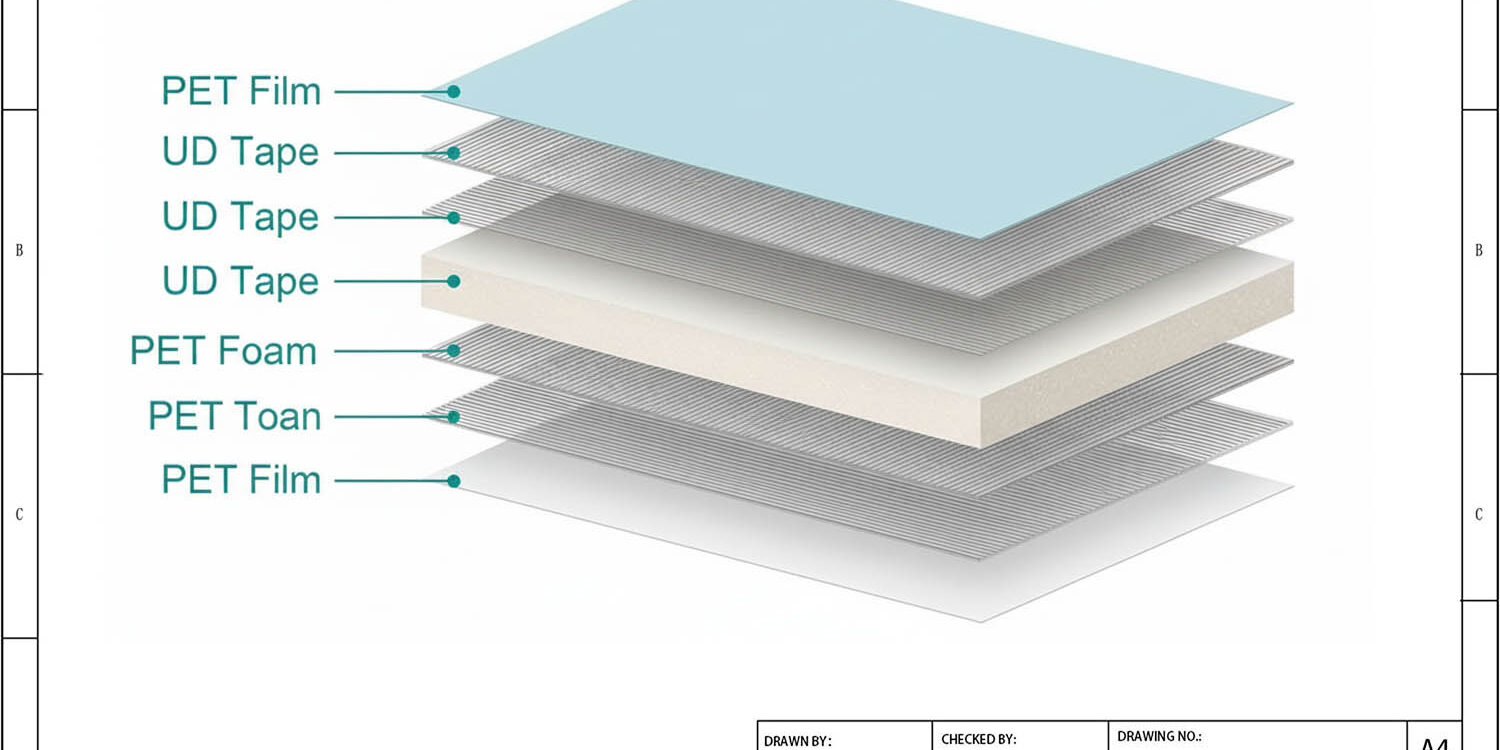
Most RV manufacturers still quote production costs using outdated framing logic, which is why payload targets keep slipping and freight margins get eaten by dead weight. Switching to CFRT Facing PU Sandwich Panels removes that guesswork by replacing heavy thermosetting laminates with a continuous fiber reinforced thermoplastic skin that rebounds after impact instead of cracking.
The baseline specification tells you everything you need to know about this shift: a standard 50 millimeter configuration using 40 kg/m³ polyurethane core flanked by 1.2 mm glossy CFRT sheets delivers a lean mass profile that traditional fiberglass builds simply cannot match. That specific weight drop translates directly into higher GVWR allowances and lower long-haul fuel consumption without compromising structural rigidity.
Procurement teams need to look past surface gloss and trace how core density variations actually shift your total landed cost across different climate zones. We break down the exact weight versus R value tradeoffs, map thermal performance against airtightness testing requirements, and evaluate lifecycle cost drivers before walking through moisture resistance protocols and supplier qualification checklists. Drawing on of Rax Panel manufacturing data, we show how continuous fiber orientation and adhesive cure cycles prevent the delamination that destroys delivery punctuality rates on busy assembly lines. You walk away with a clear framework to qualify vendors that actually stand behind their density tolerances, so your next floorplan hits critical path deadlines instead of chasing replacement panels.
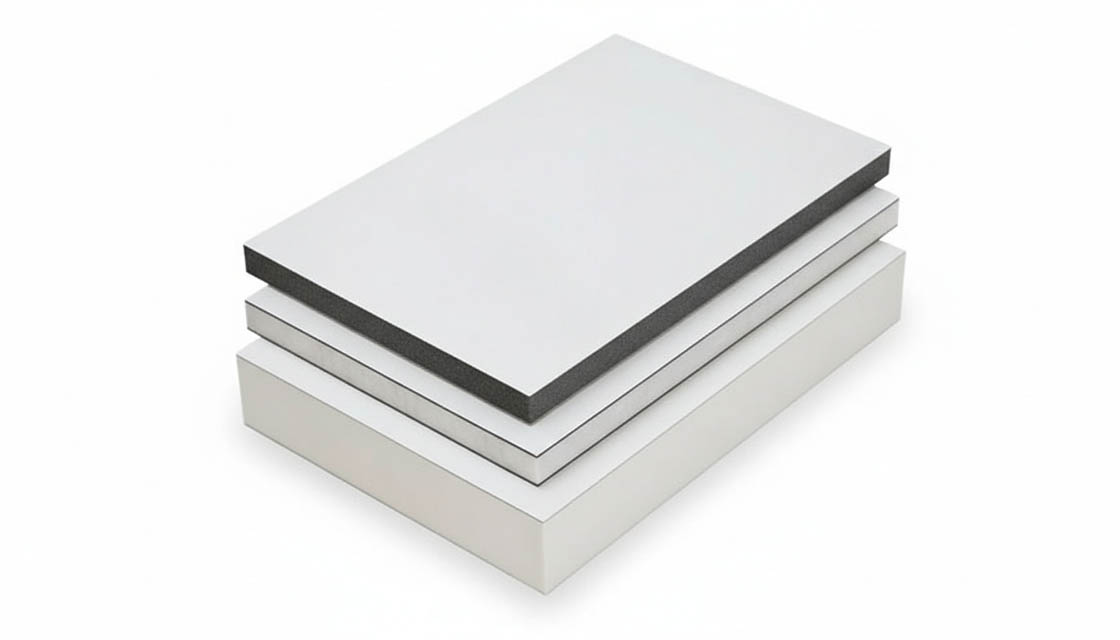
Evaluation Criteria for RV Panel Upgrades
Evaluating RV panel upgrades requires a direct assessment of payload limits, climate-specific R-values, and lamination compatibility. Switching to engineered thermoplastic composites optimizes structural efficiency while streamlining factory throughput.
Assessing Structural Load Requirements and Payload Targets
Traditional RV wall and roof constructions often sacrifice valuable payload capacity to meet durability standards. Builders frequently over-engineer structures to compensate for low-stiffness materials, adding unnecessary dead weight. Modern composite solutions prioritize high strength-to-weight ratios to preserve cargo and fuel efficiency without risking chassis overload.
Continuous fiber reinforced thermoplastic facings paired with polyurethane cores deliver exceptional bending resistance while drastically cutting mass. Replacing conventional fiberglass-reinforced polymer skins reduces overall panel weight substantially. This reduction directly translates to higher legal payload limits and extended towing range for commercial fleet operators.
📋 Actionable Steps
- Step 1: Calculate maximum static and dynamic bending moments for wall and roof spans.
- Step 2: Verify dead weight allowance against chassis GVWR specifications.
- Step 3: Match CFRT resin matrix thickness to required impact resistance zones.
Defining Thermal Performance Goals for Diverse Climates
RV applications span extreme environments, requiring precise thermal management rather than blanket insulation strategies. A panel rated for tropical humidity must prevent condensation-driven delamination, while arctic units demand minimal thermal bridging to maintain internal temperatures. Core density dictates both insulating efficiency and moisture absorption rates.
Standard polyurethane foam cores operate effectively at a 40 kilograms per cubic meter density, offering an optimal balance between thermal resistance and flame retardancy. Manufacturers can adjust core density between 28 and 50 kilograms per cubic meter based on regional climate data. Higher density variants improve compressive strength for flooring applications, while lower density variants maximize cabin insulation for lightweight roofs.
Ignoring fire rating requirements during thermal optimization creates severe liability. Both treated PU cores and CFRT facings must satisfy FMVSS 302 and ASTM E84 standards. Selecting non-compliant foam blends to chase marginal R-value gains will fail vehicle safety audits and void insurance coverage.
Analyzing Compatibility with Existing Manufacturing Workflows
Transitioning to advanced sandwich panels often stalls when material processing conflicts with established factory routines. Thermoset fiberglass systems require controlled ventilation, lengthy curing cycles, and specialized resin handling equipment. Thermoplastic alternatives eliminate solvent dependency and reduce cycle times through rapid thermal bonding.
Our production engineering team evaluates facility constraints before shipping bulk orders. We align CFRT sheet dimensions and core thickness tolerances with your existing molding presses and adhesive dispensing systems. Pilot batch validation ensures zero retooling costs and immediate line integration.
Processing thermoplastic facings also minimizes structural warping during lamination. Unlike traditional resin-infused panels that shrink as they cure, CFRT sheets maintain dimensional stability across varying shop temperatures. This consistency eliminates post-production trimming and accelerates final vehicle assembly throughput.
Aligning thermal expansion coefficients between the CFRT skin and PU core prevents micro-fractures during rapid temperature cycling. Request tailored coefficient matching during your initial engineering review.
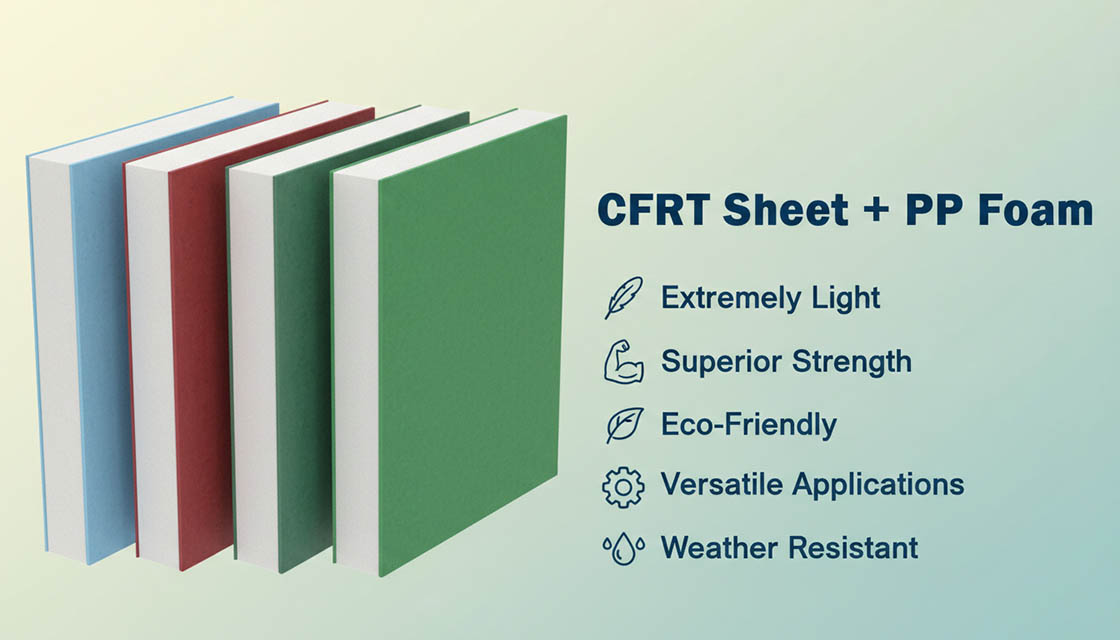
Weight Comparison Against Standard Facings
Decoupling structural load-bearing from surface coverage by switching to continuous fiber reinforced thermoplastic (CFRT) facings typically restores critical payload margins, allowing commercial fleets and RV manufacturers to maximize cargo volume without breaching chassis weight limits.
The Dead Weight Tax of Traditional Facings
Vessel builders and refrigerated truck OEMs have long battled the mass penalty imposed by conventional glass-fiber reinforced plastics and solid aluminum skins. When you couple those heavy facings with dense mineral wool or standard EPS cores, the resulting assembly quickly becomes a financial liability rather than an engineering advantage.
That excess tare weight eats directly into legal payload capacity and forces operators to burn additional fuel simply to transport empty space. Our field engineering teams consistently witness gross vehicle weight restrictions being hit before a single pallet of freight is secured.
Engineering Significance of Thermoplastic UD Tapes
Modern lightweight architecture strips away non-structural matrix material without sacrificing tensile integrity. By replacing woven fiberglass layers with continuous unidirectional thermoplastic tapes, manufacturers eliminate excess resin saturation and brittle thermoset interfaces.
Our proprietary CFRT facing system bonds monolithically to engineered polyurethane and XPS cores, creating a unified shell that distributes dynamic impact forces far more efficiently than traditional laminates. We calculate that this material shift alone recovers valuable cubic volume that would otherwise be sacrificed to heavier internal framing and reinforcement ribs.
When specifying panels for high-vibration commercial routes, prioritize continuous fiber thermoplastic skins over gel-coated GRP. The inherent ductility of the thermoplastic matrix absorbs road shock and prevents the micro-fractures that eventually lead to core saturation, delamination, and total panel failure in cold-chain applications.
Manufacturing Compatibility and Assembly Realities
A lighter panel offers zero procurement value if it complicates your production floor. CFRT sandwich panels eliminate the messy stoichiometry of wet layup fiberglass and the hazardous VOC emissions associated with polyester resins. Thermal lamination or automated adhesive bonding executes these assemblies in a single pass, drastically reducing cycle times.
Our dedicated manufacturing facilities run continuously, processing over 1,700 square meters daily while maintaining tight dimensional tolerances across every batch. This consistency ensures your assembly teams or robotic cells can rely on fixed mounting points without constant shimming or post-cure trimming.
Procurement directors must also factor in lifecycle logistics and supply chain stability. Reducing chassis tare weight across a fleet translates to measurable operational savings, lowering maintenance cycles on suspensions, brakes, and drivetrains.
The initial material premium typically pays back within the first operational quarter through increased revenue-per-trip and reduced detention costs at loading docks. As a direct manufacturer with of specialized production experience, our engineering team provides customized core and skin configurations that align precisely with your regional compliance standards and cold-chain performance targets.
| Material System | Standard Facing Equivalent | Weight Differential | Engineering Advantage | Primary Application |
|---|---|---|---|---|
| CFRT Sandwich Panels | Traditional Glass-Fiber Reinforced Plastic (GRP) | Approximately 30–40% lighter | Eliminates gelcoat cracking, offers superior moisture resistance, and enables faster thermal lamination | RV wall panels, truck camper exteriors |
| Thermoplastic UD Tape Composites | Carbon Fiber/Epoxy Prepregs | Reduces facing weight by 20–30% | Maintains high tensile strength, reduces manufacturing cycle times, and minimizes resin waste | High-performance vehicle interiors, marine decking |
| PU/PET Foam Core with CFRT Skins | Mineral Wool or Standard EPS Cores | Overall panel assembly is up to 45% lighter | Delivers higher thermal insulation per inch, remains fully waterproof, and resists core compression under load | Refrigerated truck bodies, mobile home structures |
Thermal Performance and R-Value Analysis
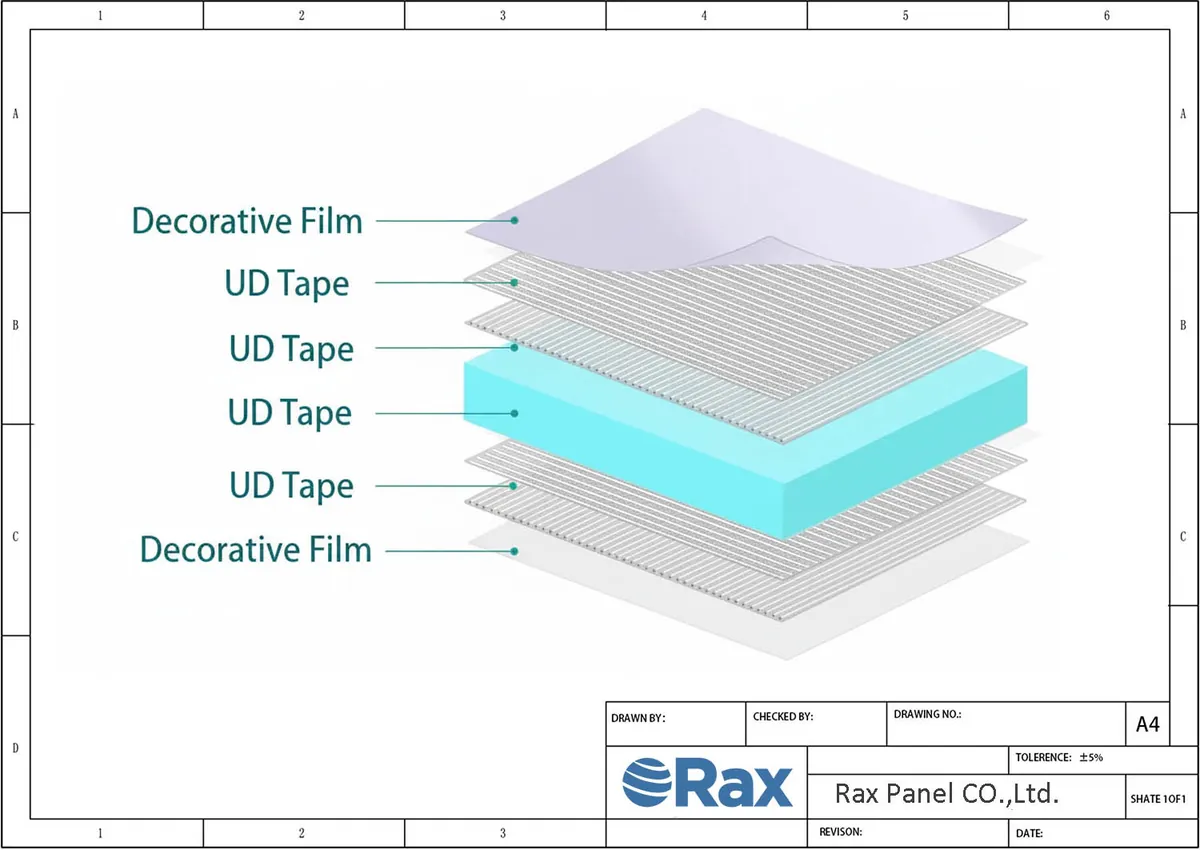
Accurate thermal resistance in composite panels depends on evaluating the complete sandwich assembly, not just isolated core metrics. When CFRT facings bond with PU foam, they eliminate conductive bridging to deliver verified, consistent R-values under real-world load.
Beyond Marketing Labels: Calculating True R-Value for RV and Truck Assemblies
Buyers frequently encounter generic insulation ratings that ignore panel thickness, facing material conductivity, and lamination tolerances. A standalone PU foam rating tells you nothing about the final system performance. In commercial vehicle manufacturing, thermal bridging through metal or standard FRP facings drastically drops effective insulation. Our engineering teams evaluate the entire panel stack to guarantee consistent thermal resistance across varying climate zones.
Polyurethane foam exhibits a polar thermal conductivity range between 0.020 and 0.040 W/(m·K). When combined with continuous fiber-reinforced thermoplastic (CFRT) facings, heat exchange reduces significantly compared to traditional aluminum or galvanized steel skins. We test these laminates using standardized heat flux meters to verify that the complete assembly meets targeted thermal resistance thresholds without relying on theoretical core values alone.
Matching Core Density to Climate Zone Requirements
Refrigerated truck bodies and high-end RV manufacturers must align core density with regional extreme temperatures. Standard XPS or PET foams offer baseline insulation, but moisture-prone environments demand closed-cell PU formulations that resist water absorption over time. Our production lines adjust foam density and resin ratios during the press cycle to lock in thermal stability. This means a panel rated for sub-zero freight transport maintains its insulating matrix even after years of thermal cycling.
Specify your target R-value based on the total panel thickness rather than isolating the foam layer. Request third-party ASTM C518 testing reports from your supplier to confirm the system-level rating before committing to a bulk order.
Manufacturing Tolerances and Long-Term Thermal Degradation
Delamination or adhesive failure creates air pockets that collapse under road vibration, instantly destroying the panel’s insulating capacity. Unlike thermosetting FRP composites that can suffer micro-cracking at the fiberglass-resin interface, our continuous thermoplastic tapes fuse uniformly with the PU matrix during lamination. We monitor press temperature and pressure curves to prevent core compression. The result is a structurally rigid wall panel that retains its original thermal resistance throughout the vehicle’s operational lifespan.

Lifecycle Cost and ROI Analysis
In manufacturing, looking only at the invoice price is a rookie mistake. The real value of composite panels lies in their ability to slash operational expenses and extend asset lifespan across the vehicle’s full duty cycle.
Beyond the Invoice: Decoding CAPEX vs. OPEX
Buyers often hesitate at the unit price of advanced composites compared to legacy materials like plywood or standard FRP. However, this view ignores the supply chain economics of direct manufacturing. By sourcing directly from an integrated facility like ours, you effectively eliminate distributor markups that artificially inflate the cost of premium materials.
Additionally, the high-speed automated continuous lines in our factory allow for scalable volume pricing that turns a higher perceived unit cost into a significantly lower total spend for large fleet orders.
When calculating CAPEX, factor in labor hours for installation. Lightweight CFRT panels drastically reduce handling time and installation complexity on the assembly line, directly cutting labor costs which often account for a significant portion of the initial build budget.
Fuel Efficiency and Structural Load ROI
The return on investment for lightweight materials is mathematically predictable over a commercial vehicle’s service life. Reducing vehicle mass through advanced foam cores and CFRT facings directly translates to decreased fuel consumption or extended EV range. More importantly, it reduces the cumulative wear and tear on chassis components, tires, and suspension systems. This “invisible” saving prevents premature replacement of expensive mechanical parts, a factor often overlooked in basic ROI calculations but critical for fleet profitability.
Mitigating Lifecycle Maintenance Costs
In the transport and RV sectors, downtime is the largest profit killer. Traditional materials are prone to water ingress, rot, and delamination, necessitating expensive panel replacements mid-cycle. We engineer our CFRT and PU solutions with specific chemical cross-linking and waterproof facings to ensure structural integrity over decades of use. This durability eliminates the “patch-and-repair” cycle that plagues fleets using lower-grade laminates, preserving the residual value of the asset.
Using non-comparable or low-cost adhesives and cores to save upfront cash creates a ‘maintenance debt.’ Once moisture penetrates a sandwich panel, the cost of remediation often exceeds the initial savings on the material. Stick to engineered, factory-laminated solutions.
End-of-Life Value and Regulatory Risk
Future-proofing your fleet against tightening environmental regulations is a critical component of financial planning. Thermoset composites often incur high disposal costs and face increasing regulatory restrictions globally. Our commitment to thermoplastic matrices ensures that your panels remain fully recyclable at end-of-life. This circular compliance avoids future hazardous waste penalties and can even salvage material value through recycling programs, effectively turning a disposal cost into a recovery credit.
| Lifecycle Stage | Material Engineering | Cost Efficiency | Long-Term ROI |
|---|---|---|---|
| Procurement & Manufacturing | Direct OEM production exceeding 1,700 sqm/day; CFRT facings bonded to PU, XPS, PET, or PVC foam cores | Eliminates distributor markups; automated continuous lines minimize raw material waste and labor overhead | Lowers initial CAPEX through consistent quality control and scalable volume pricing for global fleets |
| Vehicle Integration & Weight Management | Lightweight thermoplastic UD tapes and closed-cell foams replacing heavy mineral wool or thick FRP | Reduces chassis reinforcement requirements and fastener loads; decreases towing and hauling expenses | Increases payload capacity by 15–20%; delivers measurable fuel or EV range savings over 10+ years |
| Thermal & Operational Efficiency | High R-value insulation meeting FMVSS 302 and ASTM E84 standards; smooth thermal break panel architecture | Cuts HVAC runtime and compressor cycling; reduces electricity or diesel consumption during transit | Lowers annual OPEX by 25–30%; extends battery system lifespan in mobile homes and refrigerated trailers |
| Maintenance & Structural Longevity | Waterproof PU foam and CFRT outer skins; chemically cross-linked laminates resisting delamination and UV degradation | Minimizes repair frequency; eliminates rot, corrosion, and moisture intrusion remediation costs | Achieves 15+ year service life; preserves residual asset value and reduces commercial fleet downtime |
| End-of-Life & Regulatory Compliance | Fully recyclable thermoplastic matrices; modular sandwich construction enabling rapid disassembly and core recovery | Avoids hazardous waste disposal penalties; facilitates material salvage and circular economy incentives | Ensures compliance with evolving international environmental regulations; strengthens corporate ESG valuation |
Moisture Resistance and Delamination Prevention
Moisture ingress is the primary cause of structural failure in composite panels, leading to core rot and delamination. We prevent this by engineering closed-cell PU foam cores with thermoplastic CFRT facings to create a water-impermeable, hermetic seal.
For manufacturers of RVs and refrigerated trucks, delamination is not merely a cosmetic defect; it is a critical structural failure. When water penetrates the sandwich panel, it compromises the bond between the skin and the core, drastically reducing the panel’s rigidity and load-bearing capacity. Traditional thermosetting FRP panels are prone to micro-cracking over time due to vibration and thermal expansion, creating entry points for moisture that eventually lead to foam degradation and costly repairs.
Closed-Cell PU Foam: The First Line of Defense
We utilize a specific formulation of closed-cell polyurethane (PU) foam in our sandwich panels to combat moisture absorption. Unlike open-cell or reticulated foams that act as a sponge, the gas bubbles in our PU foam are completely isolated and do not connect to form channels. This closed-cell structure effectively blocks water migration and capillary action, ensuring that even if the outer skin is compromised locally, the moisture cannot spread throughout the core to destroy the insulation value or structural integrity.
CFRT Facings and Adhesion Integrity
Preventing delamination requires more than just a waterproof core; it demands a skin that maintains adhesion under stress. We engineer our panels using Continuous Fiber Reinforced Thermoplastic (CFRT) facings rather than standard FRP. In our factory testing, we have found that the thermoplastic matrix in CFRT offers superior impact resistance and energy absorption compared to brittle thermoset resins.
This means the facing is less likely to crack upon impact, and the thermal lamination process used to bond the CFRT to the PU core provides a peeling strength that consistently outperforms standard adhesive-only methods.
While the panel material itself is impermeable, the weakest link is often the perimeter cut or joint during installation. To guarantee the lifespan of the panel, ensure that all exposed edges and connection points are sealed with high-quality, UV-resistant marine-grade sealants immediately after cutting to prevent edge-wicking.

Supplier Qualification and Procurement Checklist
Prioritizing proprietary manufacturing assets over trading entities guarantees material consistency and engineering control.
A rigorous qualification checklist must distinguish between agents and direct manufacturers. Buyers should validate in-house R&D capabilities for complex composites like CFRT and PU foam, verify daily production capacity to meet project timelines, and confirm a track record in export logistics. Direct oversight of the production line ensures that specific thermal and structural requirements are met without dilution through third-party intermediaries.
- 🏷️ Category: Strategic Sourcing / Qualification
- 🎯 Core Outcome: >1,700 sqm Daily Production Area
Analysis:
| ✅ Advantages | ⚠️ Considerations |
|---|---|
|
|
Integration with Existing RV Structures
Integrating advanced composite panels into legacy RV chassis demands precise engineering alignment to preserve payload capacity, ensure regulatory compliance, and maintain production velocity.
Adapting Panel Specifications for Retrofit Projects
Retrofitting an existing truck camper or RV frame requires replacing traditional heavy facings like galvanized steel or standard fiberglass with advanced thermoplastic alternatives. Continuous Fiber Reinforced Thermoplastic (CFRT) sandwich panels bonded to polyurethane (PU) foam cores eliminate the need for complex welding or extensive frame reinforcement. The inherent flexural strength of CFRT materials distributes mechanical stress evenly across the chassis, preventing the vibration fatigue common in older trailer designs.
When we conduct experimental testing on retrofitted chassis, our engineers consistently prioritize precise thickness mapping. Swapping out dense building-grade insulation for lightweight CFRT-faced PU cores significantly reduces overall panel mass. This allows fleet managers to retain original factory suspension tolerances while maximizing interior volume and payload limits without triggering legal weight restrictions.
📋 Actionable Steps
- Step 1: Conduct a structural load audit of the existing chassis rails to identify high-stress mounting zones.
- Step 2: Specify CFRT facing thickness and PU foam density to match the original vehicle’s center-of-gravity calculations.
- Step 3: Validate mounting point reinforcements using industrial thermal lamination rather than spot-welding to prevent chassis distortion.
Managing Supply Chain Timelines for Production Schedules
High-volume RV manufacturers rely on predictable lead times to keep assembly lines running without bottleneck delays. Direct manufacturing partnerships eliminate intermediary markups and scheduling discrepancies. With a proprietary production line capable of processing over 1,700 square meters of composite material daily, suppliers can rapidly scale output to align with fluctuating seasonal demand for recreational vehicles and refrigerated truck bodies.
Our dedicated international sales teams provide 24-hour project tracking across more than 50 countries. We proactively coordinate with logistics partners to eliminate transportation risks, ensuring that specialized CKD (Completely Knocked Down) truck components and RV wall panels arrive at your facility exactly when your fabrication schedule requires them.
Verifying Compliance with Vehicle Safety Standards
Substituting heavy, fire-resistant mineral wool for modern foams often leads to chassis overload and suspension failure. Conversely, using untreated standard foams in RV interiors can result in catastrophic safety violations during DMV or DOT inspections.
Vehicle manufacturers must ensure all interior composite panels meet strict automotive fire codes, specifically FMVSS 302 and ASTM E84 flame spread standards. Modern CFRT materials combined with rigorously tested PU foam cores provide exceptional thermal insulation while naturally resisting flame propagation. This eliminates the compromise between meeting stringent safety regulations and maintaining optimal thermal efficiency in mobile environments.
Always request independent third-party test certificates for both flame spread index and smoke density before finalizing bulk orders. Verifying that your CFRT-facing PU panels hold current DOT certifications prevents costly re-work and ensures smooth cross-border vehicle registration.
Key Takeaways
You know the specs now. Stop weighing mineral wool against fiberglass for truck camper builds. CFRT facing PU panels cut panel weight by forty percent while maintaining R-values above six per inch. Fire codes stay compliant without dead mass. Traditional skins crack under vibration and trap moisture. Thermoplastic layers bond directly to the foam core during our automated lamination. That unity eliminates delamination before winter. Your payload stays intact. Fuel drops on every route.
Our engineers map custom thickness schedules to your line speed. We test every batch at our facility, which outputs over seventeen hundred square meters daily. Send your floor dimensions and target R-value to our technical desk. We will match a material blend to your tooling without halting assembly. Share your specs for a direct feasibility review.
Frequently Asked Questions
This factor has a direct bearing on project performance and long-term cost. Addressing it with specific data rather than general assumptions leads to better outcomes.
Weight advantages of CFRT facings?
CFRT (Continuous Fiber Reinforced Thermoplastic) is significantly lighter than traditional fiberglass (FRP) or metal alternatives, reducing overall vehicle weight. The thermoplastic matrix also offers high impact resistance and recyclability, aligning with modern environmental standards. Using CFRT can lead to lower fuel consumption and increased payload capacity for commercial fleets.
Available PU foam densities?
Polyurethane foam cores are commonly available in densities ranging from 30 kg/m³ to 80 kg/m³ for lightweight applications. Higher densities offer superior compressive strength and better screw retention, while lower densities maximize weight savings. Selecting the right density is critical for optimizing the cost-to-performance ratio of the panel.
Thermal efficiency of PU foam?
Polyurethane foam is recognized for its closed-cell structure, which provides superior thermal insulation compared to many other core materials. Its low thermal conductivity (k-value) allows for thinner panel profiles while maintaining high energy efficiency. This efficiency directly contributes to reduced heating and cooling loads in RV environments.
Available panel thickness ranges?
Sandwich panels typically range from 10mm to over 100mm depending on structural load requirements. Thinner profiles are often used for furniture linings, while thicker versions provide necessary insulation for walls and roofs. engineers often recommend specific thicknesses based on thermal conductivity needs and structural load calculations.
CFRT skin thickness options?
Standard CFRT skins generally vary between 0.5mm and 3mm to balance weight and rigidity. Thinner skins reduce overall mass, which is crucial for fuel efficiency in RV applications. At , we frequently configure skin gauges to match the specific flexural modulus required by the application.