

Specifying a cold storage facility based solely on cubic footage usually ends in disaster when the operational load shifts from chilled produce to frozen meat. You are not just selecting a cold room panel; you are defining an envelope that dictates your compressor’s run time and your long-term energy spend. A standard chill room operating at 0°C requires a vastly different engineering approach than a freezer room holding steady at -18°C. That temperature gap dictates everything from the core density to the specific thickness needed to stop thermal bridging at the joints.
Polyisocyanurate (PIR) cores offer a thermal conductivity of roughly 0.018 W/mK, while standard Polyurethane (PU) typically sits at 0.021 W/mK. That difference in heat transfer efficiency becomes a massive variance in operational cost when you scale up to a 5,000 square meter facility. We will examine how material selection and panel thickness requirements diverge between chillers and freezers, specifically analyzing fire safety ratings and long-term lifecycle costs. You will learn exactly which specification protects your product without inflating your energy bill.

What Makes Cold Rooms Different from Freezers?
A cold room and a freezer room are not the same asset merely set to different temperatures. They require fundamentally different envelope engineering, from core density to facing chemistry, to survive thermal shock and long-term moisture intrusion.
Temperature Ranges and Cooling Stage Definitions
The distinction between chilled and frozen storage begins with the phase behavior of the product being stored, but the real engineering challenge lies in the defrost cycle. In a chilled environment, the goal is stable humidity and minimal temperature fluctuation. In a freezer environment, the system must endure repeated thermal cycling where surface temperatures swing dramatically during defrost periods. This creates a vapor drive that pushes moisture into the insulation core if the panel construction is not properly sealed.
We have observed that many procurement teams treat these two room types as interchangeable, ordering identical panel specifications for both. That approach fails when the facility operates continuously in sub-zero conditions. The insulation material must resist shrinkage and maintain cell integrity despite constant expansion and contraction. Our engineering team specifies high-density cores for freezer applications because they resist the mechanical stress of thermal cycling better than standard formulations.
- Cooled Storage Stage: Focuses on maintaining consistent freshness with minimal frost formation. Panel joints and seals prioritize airtightness over extreme thermal resistance.
- Deep Freeze Stage: Requires materials that withstand rapid defrost heat spikes without absorbing moisture. The panel system must act as a continuous vapor barrier across the entire envelope.
Thermal Conductivity of PU vs. PIR: Which Should You Choose?
Polyurethane and polyisocyanurate are often grouped together, but their performance trajectories diverge significantly over the lifespan of the cold room. PU is a proven, mature technology that offers reliable insulation at a competitive price point. However, its thermal resistance can degrade slightly as blowing agents equilibrate with the surrounding environment over time. PIR is chemically modified to create a more stable molecular structure, resulting in lower long-term thermal conductivity and superior fire performance.
For buyers managing operational costs, initial conductivity matters less than retained performance. A panel that starts efficient but degrades quickly will increase compressor runtime and energy bills within three to five years. We prioritize testing for long-term thermal retention because our clients run facilities 24/7. When fire safety compliance is a hard requirement, PIR delivers B1 to A-class ratings out of the box, whereas standard PU may require additional treatment to meet the same benchmarks.
- PU Advantage: Cost-effective for moderate thermal loads and standard chilled storage where extreme fire ratings are not mandatory.
- PIR Advantage: Lower thermal conductivity retention, inherent fire resistance, and better suitability for high-risk or heavily regulated food and pharmaceutical storage.
Panel Thickness and Density Requirements
Specifying panel thickness without considering core density is a common mistake that leads to underperforming cold rooms. A thicker panel with low density will not match the structural rigidity or thermal resistance of a properly engineered thinner panel. Density determines how well the insulation resists compression, holds fasteners, and prevents moisture wicking through microscopic pathways. In freezer rooms, where floor heave and structural vibration are real risks, high-density cores are non-negotiable.
Rax Panel manufactures composite panels across a wide thickness spectrum to match exact thermal calculations. We do not rely on one-size-fits-all specifications. Our production line monitors density and dimensional tolerance at every stage, ensuring that each batch meets the engineering requirements for the intended temperature zone. For projects demanding maximum energy efficiency in extreme cold, we recommend validating the core density alongside the thickness to guarantee both structural integrity and long-term R-value performance.
Facings Selection: Steel vs. GRP Skins
The outer skin of a cold room panel is exposed to impact, cleaning chemicals, humidity, and temperature swings. Selecting the wrong facing can compromise hygiene standards or accelerate corrosion, especially in freeze environments where condensation forms rapidly during defrost cycles.
Stainless steel offers exceptional durability and meets strict food safety regulations, making it the default choice for slaughterhouses, seafood processing, and pharmaceutical storage. However, it carries a higher cost and requires careful handling to prevent surface scratching that could become corrosion initiation points.
Glass-reinforced plastic, commonly known as GRP, provides a compelling alternative for corrosive or moisture-heavy environments. GRP skins are inherently resistant to rust, lightweight, and easy to clean. They also eliminate thermal bridging concerns associated with metal facings, which can lead to localized ice formation at panel edges.
Our customization team pairs GRP and stainless steel facings with appropriate core materials to balance weight, cost, and performance. For buyers operating in coastal regions or chemical-exposed cold chains, GRP often delivers longer service life with lower maintenance overhead compared to coated steel alternatives.
- Stainless Steel: Best for high-hygiene food processing, heavy impact zones, and facilities requiring frequent washdowns.
- GRP Skins: Ideal for corrosion resistance, chemical exposure, marine-adjacent sites, and projects prioritizing weight reduction.
| Parameter | Cold Room Specification | Freezer Room Specification | Engineering Rationale |
|---|---|---|---|
| Temperature Range | -5°C to +10°C | -18°C to -30°C | Thermal delta dictates required insulation R-value and panel thickness. |
| Panel Thickness | 50mm – 100mm | 100mm – 200mm | Increased depth is required to minimize heat transfer in sub-zero environments. |
| Insulation Core | PU, PIR, XPS, Rockwool | High-Density PU, PIR | High-density cores prevent shrinkage and condensation risks at low temperatures. |
| Surface Facing | Stainless Steel, GRP, Pre-painted Steel | Stainless Steel, GRP | Corrosion-resistant facings withstand expansion/contraction and hygiene standards. |
| Joint System | Standard Interlocking | Cam-lock / Thermal Break Profiles | Enhanced profiles minimize thermal bridging and ice formation at seams. |
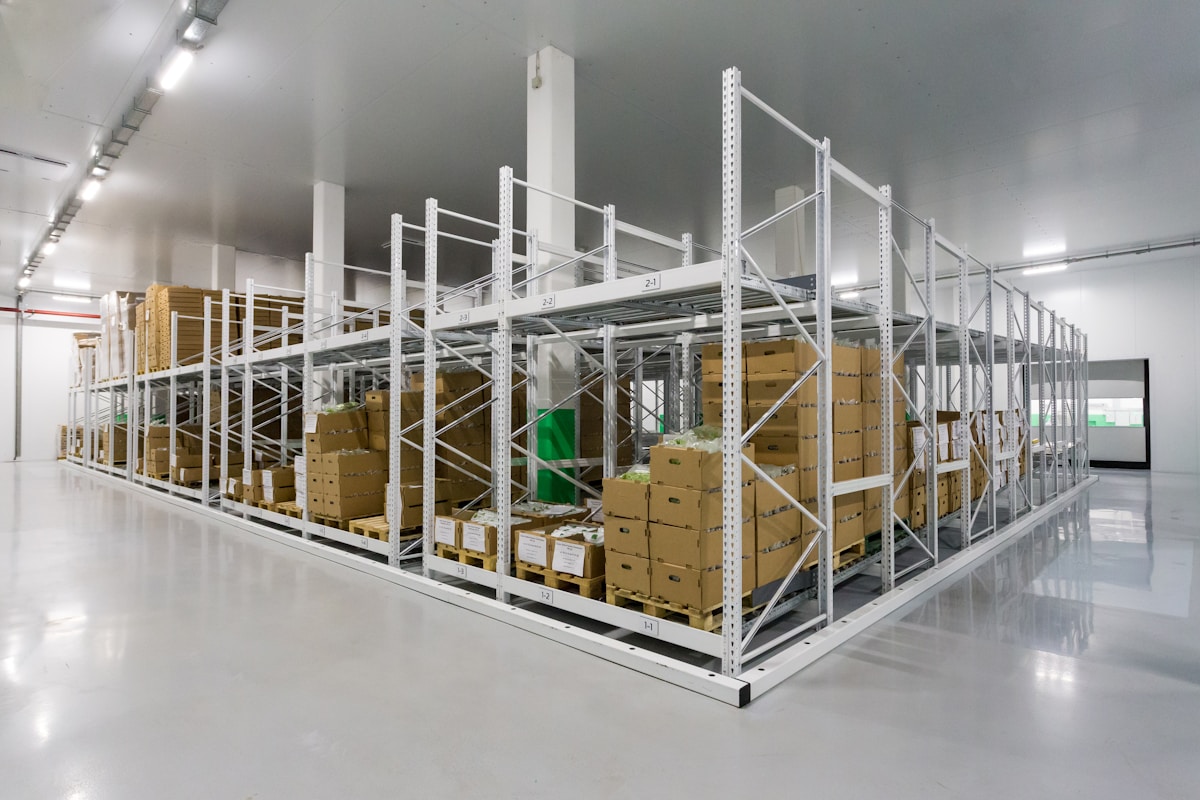
Temperature Ranges for Cold Rooms and Freezers
This factor has a direct bearing on project performance and long-term cost. Addressing it with specific data rather than general assumptions leads to better outcomes.
Defining Critical Temperature Zones
In commercial refrigeration, distinct temperature zones dictate the engineering requirements of the building envelope. Chilling environments, typically used for fresh produce, dairy, and beverages, maintain a range of 0°C to +10°C. In these zones, the primary thermal challenge is managing moisture ingress and maintaining consistent cooling loads.
Freezer environments, designated for long-term storage of frozen goods, operate at a standard of -18°C to -25°C. Beyond this, specialized deep-freeze or blast-freezing applications demand extreme conditions ranging from -30°C down to -45°C. As the temperature delta between the internal and external environment increases, the margin for error in panel insulation performance narrows significantly.
Thermal Expansion and Contraction Physics
A critical but often overlooked physical phenomenon in cold storage construction is the substantial contraction of materials when shifting from ambient installation temperatures to sub-zero operating conditions. When a facility stabilizes at -25°C, both the facing materials (such as steel or GRP) and the insulation core undergo contraction. If the sandwich panel utilizes dissimilar materials with mismatched coefficients of thermal expansion, or if the core material lacks sufficient low-temperature resilience, this stress can result in delamination, warping, or seam separation.
Qualified panel engineers prioritize foam cores with high closed-cell content and strong adhesive bonds to facings to withstand these cyclic stresses. In freezer applications, the risk of thermal bridging increases if joints pull apart due to contraction, allowing warm, moist air to infiltrate the insulation.
This leads to ice accumulation within the panel structure, which destroys thermal resistance (R-value) and eventually compromises the structural wall. Advanced composite panels designed for deep-freeze environments are specifically tested to ensure dimensional stability at temperatures as low as -40°C, preventing long-term degradation of the building envelope.
Standard EPS (Expanded Polystyrene) panels often lack the compressive strength and low-temperature stability required for deep-freeze applications. Using lower-grade EPS in -25°C environments increases the risk of panel shrinkage and joint failure over time.
Insulation Performance and Energy Consumption
The relationship between operating temperature and energy consumption is significant. While a chiller room (+4°C) might tolerate minor thermal leaks with a manageable increase in electricity bills, a freezer room (-20°C) consumes significantly more energy per unit of heat infiltration.
therefore, the insulation specifications for freezers must be far more rigorous. Higher density polyurethane (PU) or polyisocyanurate (PIR) cores are typically specified for freezer panels because they offer lower thermal conductivity (lambda values) compared to standard foams, effectively reducing the required panel thickness to achieve the necessary thermal resistance.
For buyers, strictly comparing the per-square-meter price of panels is a flawed strategy. A freezer room operating with inefficient insulation will incur operational costs that dwarf the initial capital expenditure on panels over a 5-year period. High-quality insulation acts as a long-term hedge against rising energy prices.
Additionally, in deep-freeze scenarios, the insulation thickness must be calculated not just to stop heat gain, but to prevent the outer skin of the panel from reaching the dew point of the ambient air, thereby eliminating condensation and mold risks on the facility exterior.
Validation for Pharmaceutical and High-Value Storage
Pharmaceutical storage, including vaccines and biologics, imposes the strictest requirements on temperature uniformity. Unlike general food storage where a slight fluctuation may affect quality but not safety, medical standards often require validation that every cubic centimeter of the room stays within a tight band (e.g., +2°C to +8°C). In this context, the thermal homogeneity of the sandwich panels is critical. Variations in foam density or voids in the core can create “hot spots” or “cold spots” that compromise inventory integrity.
Engineers must select panels with validated and consistent R-values across the entire surface area. For these applications, composite panels using advanced continuous lamination production processes provide superior uniformity compared to discontinuous manufacturing methods. This uniformity ensures that the refrigeration system does not have to overwork to compensate for structural insulation weaknesses, maintaining the strict temperature stability required for regulatory compliance in the medical sector.
How Insulation Materials and Thickness Vary
Specifying panel depth without matching core density to the target temperature class guarantees joint condensation, R-value decay, and costly retrofitting.
Temperature-Class Correlation Matrix
Panel depth is never selected in isolation from core material density. A standard 100 mm rigid polyurethane core rated at 38–42 kg/m³ performs acceptably in a 0 °C to 5 °C chilled storage environment, but the same assembly fails thermally and mechanically when deployed at −18 °C.
At sub-zero temperatures, the vapor pressure differential across the panel skin increases, driving moisture migration into the cellular core. When that moisture freezes, it compromises the insulating cell structure and drops the effective R-value faster than the nominal k-value would predict.
Freezer-grade assemblies typically require 120 mm to 150 mm of closed-cell foam, often pushed toward 45–50 kg/m³ density to resist compressive stress from forklift traffic and to limit vapor permeability.
Lightweight thermoplastic cores such as PET or PVC foam can substitute for specific moisture-critical zones, but their thermal conductivity remains higher than hydrocarbon-blown PU in deep-freeze conditions. Engineers size panel depth by calculating the dew point under maximum humidity load, not by applying a single thickness rule across all refrigeration classes.
- Chilled Storage (0 °C to 5 °C): 75–100 mm core depth; standard 38–42 kg/m³ density; acceptable for high-cycle loading with reinforced facings.
- Standard Freezer (−18 °C to −25 °C): 100–150 mm core depth; 42–50 kg/m³ density required to suppress vapor drive and prevent cavity icing.
- Ultra-Low or Blast Freezing (below −25 °C): Multi-layer composite stacks or 150 mm+ monolithic cores; often paired with thermal-break facings and continuous sealant channels.
Joint Geometry and Thermal Bridge Elimination
The weakest thermal link in a cold room envelope is rarely the center-of-panel insulation; it is the panel-to-panel connection. Open grooves, poorly mated cam-locks, or missing EPDM gaskets create conductive pathways where warm, humid air infiltrates the cavity. Once that micro-leak forms, frost accumulates along the seam, expanding with each cooling cycle until the joint loses mechanical integrity.
Premium sandwich panels use a tongue-and-groove or double-cam profile with a continuous silicone or polyurethane sealant bead behind the interlock. This geometry isolates the inner and outer skins thermally while maintaining a vapor barrier across the full panel length. Buyers comparing supplier quotes should request joint cross-section drawings before ordering, because two panels with identical foam density can perform completely differently if the thermal break is compromised at the seam.
Pre-Shipment Verification Protocols
International buyers sourcing panels from overseas manufacturing hubs face a verification gap. Nominal thickness printed on a purchase order does not guarantee actual installed performance, especially when extrusion tolerances, foam shrinkage, or facing delamination occur during transit. A documented inspection protocol removes this ambiguity before cargo leaves the port.
Third-party testing certificates from recognized laboratories (SGS, TUV, UL, or equivalent ISO 17025 accredited bodies) should cover thermal conductivity at 10 °C mean temperature, compressive strength, water absorption by volume, and dimensional tolerance across the full panel batch. Field checks on arrival must include caliper measurements at ten random points per container, seam fit verification without forcing, and visual inspection for core exposure or facing voids.
- Thermal Conductivity Test: Must report λ-value at 10 °C mean temperature, not room temperature, because foam insulation performance shifts with delta-T.
- Dimensional Tolerance: Standard industry tolerance is ±1.5 mm on thickness and ±2 mm on length/width; panels outside this range cause visible joint misalignment and air leakage.
- Density Confirmation: Batch density must match the quoted kg/m³ within ±3%; lower density indicates excessive blowing-agent loss or incomplete foam expansion.
Best Uses for Cold Rooms and Freezers
Cold room applications dictate envelope specifications. Food facilities prioritize washdown resistance and rapid throughput, while pharmaceutical environments demand validated thermal uniformity for GDP/GMP compliance.
Food Processing and Distribution Applications
Cold rooms and freezer units support the entire post-harvest chain, from primary processing to last-mile distribution. In food manufacturing, walls must withstand frequent washdowns without degrading at temperatures ranging from +2°C to -25°C.
Freezer rooms require panels that resist thermal shock during defrost cycles, preventing condensation buildup that compromises structural integrity. Buyers should match facing materials to the specific sanitation protocol of their facility, ensuring surfaces remain non-porous and compatible with approved cleaning agents.
- High-Moisture Zones: GRP facings with gelcoat finishes provide superior resistance to chemical washdowns compared to untreated metals.
- Impact Areas: Textured metal or reinforced thermoplastic skins reduce denting from pallet jacks and sorting equipment.
- Drainage Integration: Floor-to-wall panel joints should accommodate coving to prevent bacterial accumulation during sanitation cycles.
Pharmaceutical and Biotech Requirements
Panel specifications must deliver consistent R-values to support this uniformity, and suppliers should cooperate during commissioning to validate thermal performance. Unlike standard food storage, pharma facilities often require integrated monitoring points within panel joints to maintain chain-of-custody documentation.
Thermal bridging at door frames and corner connections becomes a compliance risk rather than just an efficiency issue. Designers must specify continuous insulation breaks and validated sealant applications to ensure mapping studies pass regulatory audits without requiring costly retrofits.
Regional Logistics and Transit Buffering
Wholesale distributors use cold rooms as thermal buffers between refrigerated transport and final delivery. In these setups, high door traffic makes thermal bridging a critical failure point.
Panels designed for logistics hubs prioritize rapid recovery times after door openings, reducing compressor runtime and energy waste. Facings typically require impact resistance to handle heavy material handling equipment, making reinforced composite cores more suitable than lightweight decorative finishes.
- Throughput Efficiency: Higher density foam cores recover internal temperature faster after repeated access events.
- Structural Rigidity: Honeycomb or foam-filled cores prevent panel flexing under vibration from forklift operations.
- Modular Expansion: Interlocking tongue-and-groove systems allow facilities to reconfigure space as seasonal demand shifts.
Compliance Mapping by Destination Market
Fire rating requirements differ significantly by jurisdiction, with EN 13501 applying in Europe and UL standards governing North America. Procurement teams must verify that panel certifications align with the end-use market before placing orders.
Incorrect certification can delay customs clearance or fail local building inspections, adding substantial cost to otherwise compliant projects. Buyers should request third-party test reports early in the design phase to ensure the selected core material meets both thermal performance targets and regional fire safety mandates.
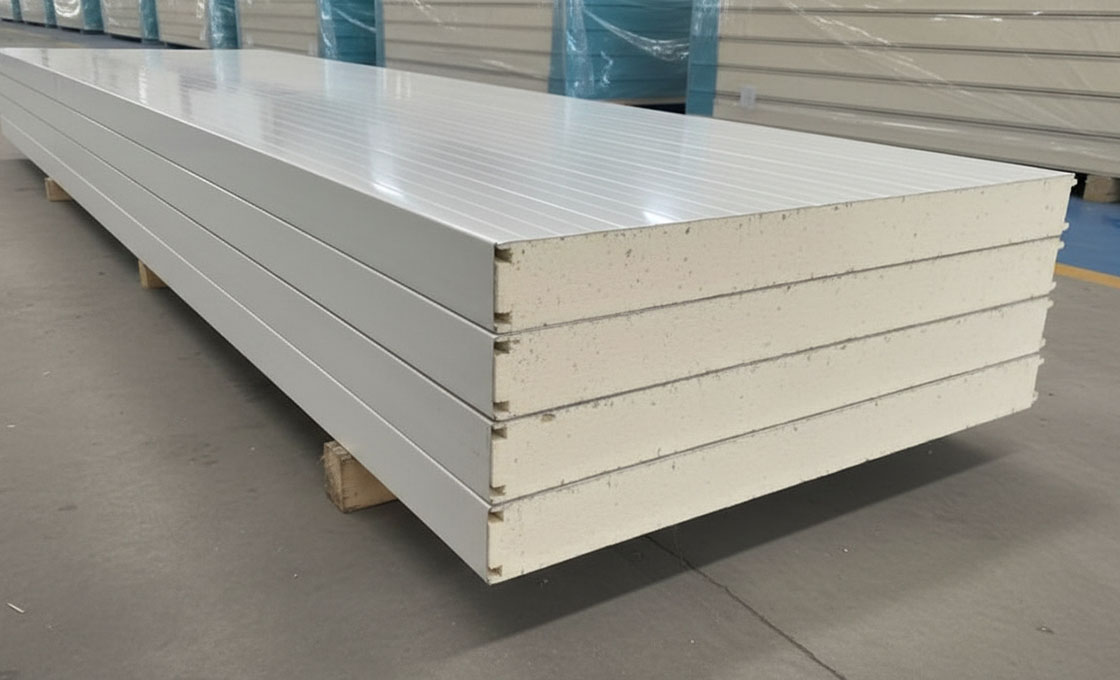
Initial Costs Versus Long-Term Energy Savings
Panel selection for cold storage should never rest on unit price alone. A higher-insulating envelope pays back through reduced compressor runtime, fewer defrost cycles, and lower peak-load charges across a 5-to-10-year operating window.
The True Cost Equation for Cold Storage Envelopes
Procurement teams often compare cold room panels on a per-square-meter basis during the tender phase. That comparison captures installation material cost only. It ignores the thermal load the envelope places on the refrigeration plant, which is where the actual project economics live.
A panel that saves $15 per square meter at purchase but delivers a higher U-value forces a larger compressor, bigger evaporators, longer runtimes, and more frequent defrost events. Over five years of continuous operation, those operating expenses typically eclipse the initial hardware premium.
Total Cost of Ownership calculations for freezer rooms must model energy consumption alongside panel specifications from day one. Freezer environments operating at -18°C or below experience far greater temperature differentials than standard cold rooms, which drives heat ingress through the envelope at a materially higher rate. Every additional watt of transmitted heat directly extends compressor cycling time and increases electricity demand charges, particularly in facilities subject to peak-demand tariffs.
- Thermal conductivity: Lower lambda values mean less panel thickness is required to achieve the same insulating performance, reducing material weight while maintaining the target U-value.
- Defrost frequency: Poorer insulation allows more moisture accumulation on evaporator coils, triggering defrost cycles that temporarily raise internal temperatures and spike energy draw.
- Compressor sizing: Correctly insulated envelopes allow smaller, more efficient refrigeration units to maintain setpoint conditions without running at maximum capacity continuously.
Why Freezer Room Economics Punish Thin Margins
A practical energy model should incorporate local electricity rates, expected annual operating hours, compressor coefficient of performance under design conditions, and defrost schedule assumptions. Facilities in regions with high peak-demand charges benefit most from optimized insulation because reducing instantaneous heat load directly lowers utility bills during the most expensive periods of the day.
Refrigeration Pairing Determines Actual System Efficiency
Even a high-performance insulated panel cannot deliver energy savings if paired with an undersized or mismatched refrigeration unit. Freezer rooms require compressors rated for low-temperature operation, with defrost cycles matched to the moisture load introduced by the specific product being stored. Panel suppliers typically provide U-values and thermal resistance data, but the final system efficiency depends on how those values align with the installed refrigeration capacity.
- Design temperature differential: The refrigeration plant must be sized against the maximum expected heat load, including ambient conditions, product load, door openings, and internal lighting.
- Defrost cycle compatibility: Electric, hot-gas, and water defrost methods each impose different thermal penalties on the stored product and the compressor system.
- Control integration: Modern cold room controllers adjust compressor staging and defrost timing based on real-time thermal load data, which rewards properly insulated envelopes with more predictable performance.
Frequently Asked Questions
This factor has a direct bearing on project performance and long-term cost. Addressing it with specific data rather than general assumptions leads to better outcomes.
Does thicker insulation always mean better energy savings?
Specifying the thickest available board ignores the critical relationship between core density and target U-value. Demonstrating that material performance allows for thinner profiles while exceeding energy codes, graphite polystyrene cores can enhance panel R-value by over 20% compared to standard EPS. Always calculate against the required thermal resistance for your specific application rather than assuming maximum thickness is optimal.
Model the annual energy consumption for each panel option using local electricity costs, expected operating hours, and compressor COP under your design conditions. Subtract the additional upfront cost from the annual energy savings to determine the simple payback period. For freezer rooms operating continuously, payback typically occurs within three to five years when moving to higher-performance insulation.
Can a better refrigeration unit offset poor panel insulation?
Mechanical compensation cannot substitute for a thermally efficient building envelope. While a better refrigeration unit can improve comfort at the margins, it does not eliminate the underlying problem; an oversized compressor running longer at full capacity consumes more electricity than a properly sized plant paired with a well-insulated envelope.
Structural insulated panel systems achieve 15 times greater airtightness than traditional framing, thereby minimizing the air leakage responsible for up to 40% of heat loss. Aligning panel thermal performance with appropriately rated refrigeration equipment from the design stage delivers the most cost-effective solution.
Safety Standards and Key Factors to Consider
Safety and compliance are non-negotiable in cold storage construction. Selecting the right fire rating and hygiene standard not only ensures legal operation but directly impacts long-term asset durability and insurance premiums.
Fire Resistance Ratings: PIR vs. PU
The choice between Polyurethane (PU) and Polyisocyanurate (PIR) cores is often the most critical decision regarding facility safety. While both materials offer excellent thermal insulation, their chemical reactions to fire differ significantly. Standard PU foam, when exposed to high heat, can burn rapidly and produce dripping molten material that propagates flames.
In contrast, PIR foam is engineered with a modified chemical structure that forms a protective char layer when exposed to fire. This char layer insulates the underlying foam and significantly slows down the spread of flames.
For international projects, particularly in Europe and North America, building codes are increasingly stringent. PIR panels typically achieve B1 to A-class fire ratings, making them the industry standard for enclosed public spaces and high-value storage facilities.
While PU may be acceptable for lower-risk agricultural storage in certain regions, relying on it for commercial freezers or food processing zones can lead to regulatory rejection. We have observed that contractors who switch to PIR significantly reduce their liability and often benefit from lower insurance premiums due to the enhanced passive fire protection.
- PIR Advantages: Superior char formation, higher limiting oxygen index (LOI), and compliance with stricter European (EN 13501) and North American (FM/UL) fire standards.
- PU Considerations: Cost-effective for lower-risk applications but requires careful scrutiny of local fire codes and often needs additional fire-retardant barriers.
Food Safety and Hygiene Compliance Standards
In cold storage environments, the internal surface of the panel is the primary barrier against contamination. Hygiene standards are not merely about cleanliness; they are about surface chemistry and integrity. Regulatory bodies such as the FDA (USA) and EFSA (Europe) impose strict requirements on materials that come into direct contact with foodstuffs. Panels must feature a smooth, non-porous surface finish that prevents bacterial adhesion and allows for vigorous cleaning with high-pressure hoses or chemical sanitizers without degradation.
Material selection plays a key role here. While painted steel can chip or rust over time, exposing the underlying metal to corrosion and bacteria traps, Stainless Steel and high-quality GRP (Glass Reinforced Plastic) facings offer superior resistance. At our factory, we apply specialized gel coats to our GRP sheets to ensure a smooth, impermeable surface that meets modular clean room sanitation standards.
This is particularly critical in high-humidity zones where condensation can otherwise promote mold growth on inferior surfaces. Buyers should always request verification that the facing materials are certified for direct food contact (e.g., FDA 21 CFR compliance) to avoid costly retrofitting or facility shutdowns during health inspections.
Moisture Resistance and Long-term Durability
The long-term thermal efficiency of a cold room is entirely dependent on the panel’s ability to resist moisture ingress. Water has a thermal conductivity roughly 20 times higher than insulation foam; even a small amount of moisture penetration can drastically reduce the R-value of the wall, leading to skyrocketing energy bills and eventual ice formation. This durability is determined not just by the core material, but by the precision of the assembly details.
Precision-engineered interlocking profiles are essential to creating an airtight seal. When panels are manufactured with loose tolerances, gaps inevitably form during installation, creating thermal bridges where condensation accumulates. This moisture can seep into the core, causing the insulation to delaminate or rot from the inside out.
Our engineering team prioritizes strict dimensional accuracy to ensure that the tongue-and-groove or cam-lock systems fit perfectly, eliminating the need for excessive on-site sealant which can degrade over time. Furthermore, using facings with inherent corrosion resistance—such as Stainless Steel or Aluminum-Zinc coated steel—ensures that the exterior skin withstands harsh weather and industrial cleaning agents for decades without rusting, protecting the structural integrity of the investment.
When auditing suppliers, specifically ask for a sample of the panel joint assembly. Test the seal by spraying a fine mist of water along the joint; any penetration indicates poor profiling that will lead to condensation and thermal failure in sub-zero environments.
| Safety Parameter | Technical Specification | Material Requirement | Operational Benefit |
|---|---|---|---|
| Fire Resistance Rating | B1 to A-Class Compliance | PIR, PU, Rockwool, or XPS Cores | Prevents fire propagation and ensures adherence to international building safety codes for enclosed cold chain facilities. |
| Quality Management Certification | ISO 9001 Standard Compliance | Certified PU, PIR, XPS, or Rockwool Core Materials | Guarantees consistent mechanical strength and insulation performance across global supply chains. |
| Structural Load Optimization | High Strength-to-Weight Ratio Design | Stainless Steel or GRP Reinforced Panel Facings | Reduces stress on building frameworks while maintaining panel rigidity under demanding operational conditions. |
Key Takeaways
Cold rooms run at 0°C to 4°C, so 50mm or 75mm PU panels do the work. Freezer rooms hit -18°C or lower, requiring 100mm to 150mm builds with strict thermal bridging control. We recommend PIR for freezers. Its fire rating outperforms PU, and higher density blocks condensation during rapid defrost. Thinner skins crack under those loads, bringing frost heave and energy spikes. Pick thickness from your coldest setpoint, never from upfront savings.
- Verify fire certification matches your local code before ordering.
- Ask for thermal conductivity data on the exact core density.
- At Rax Panel, our engineering team reviews custom panel layouts against defrost protocols at zero obligation.
Frequently Asked Questions
This factor has a direct bearing on project performance and long-term cost. Addressing it with specific data rather than general assumptions leads to better outcomes.
What are cold room panels?
Cold room panels are insulated composite sandwich panels used to construct the walls, roof, and ceiling of temperature-controlled storage facilities. They typically consist of two rigid facings bonded to a high-performance insulation core such as polyurethane, polyisocyanurate, or extruded polystyrene. These panels provide structural integrity, thermal resistance, and moisture protection to maintain consistent internal temperatures.
What are main cold room components?
The primary components include insulated wall and roof panels, refrigeration units, evaporators, control systems, and specialized access doors. Floor insulation systems, vapor barriers, and heating elements around door frames are also essential for preventing frost buildup and condensation. Together, these elements form a complete thermal envelope that regulates humidity and temperature throughout the storage space.
Why do freezer doors differ?
Freezer doors incorporate heated frames, anti-condensation seals, and strong hardware to prevent ice accumulation and ensure reliable operation in sub-zero conditions. Unlike cold room doors, they must withstand frequent thermal shock and maintain a vapor-tight seal despite significant temperature differentials. Heavy-duty hinges and automatic closers are also used to minimize warm air infiltration during access.
Do freezer rooms need special floors?
Yes, freezer room floors require dedicated insulation and load-bearing design distinct from standard wall panels. They must accommodate ground moisture, thermal cycling, and heavy static loads while preventing frost heave caused by freezing soil beneath the slab. Heated subfloors or ventilated air gaps are often installed to manage heat flow and protect the foundation from extreme cold penetration.
Mixed cold and freezer zones can share a single facility but require separate thermal envelopes and independent refrigeration circuits for each temperature zone. Transfer doors with air curtains or vestibules are necessary to prevent warm air migration between compartments. Designing shared systems demands careful pressure balancing and zoning to avoid condensation risks at intermediate temperature boundaries.