
Most procurement managers compare the sticker price of Insulated Metal Panels against bare lumber studs and immediately write off the metal option. That shortcut destroys project margins. Wood framing consistently introduces double-digit budget variance during winter bids. At Rax Panel, we have manufactured custom envelope systems for over fifteen years, and the math stays the same every cycle: lumber ties you to manual labor sequences and sudden price spikes, while engineered panels lock in a predictable installed baseline.
A standard composite panel delivers rated thermal resistance between R-16 and R-40+ while eliminating the thermal bridging that drains efficiency in traditional wood framing. We break down why initial material acquisition numbers often mislead buyers, how prefabricated installation reduces field labor hours, and what long-term energy efficiency ROI actually looks like when accounting for HVAC downsizing. You will know exactly where to allocate your budget to avoid code failures and schedule slippage.
Table of Contents
- 1 Addressing Lumber Market Volatility Risks
- 2 Comparing Initial Material Acquisition Costs
- 3 Analyzing Installation Labor Expenses
- 4 Calculating Long-Term Energy Efficiency ROI
- 5 Evaluating Maintenance and Lifecycle Durability
- 6 Selecting Optimal Panel Specifications
- 7 Conclusion
- 8 Frequently Asked Questions
Addressing Lumber Market Volatility Risks
Market volatility is the silent margin killer in commercial construction. While lumber prices swing wildly based on tariffs and seasonal logistics, engineered composite panels offer a predictable, index-based pricing model that protects your project budget from start to finish.
Budget Forecasting Challenges in Material Procurement
For B2B contractors and developers, the primary pain point with lumber is not just the price, but the unpredictability of that price. Lumber is a commodity subject to volatile market forces—including tariffs, transportation bottlenecks, and seasonal demand spikes—that can fluctuate by 20-30% within a single quarter. This variability makes accurate bid submission nearly impossible; if you lock in a price today but material costs spike before procurement, your profit margin evaporates instantly.
In contrast, composite panels function as manufactured goods rather than raw commodities. The pricing for core materials like XPS, PET, or PU foam, combined with metal facings (steel or aluminum), generally tracks more stable industrial indices. At Rax Panel, we utilize a vertically integrated production model—controlling everything from raw material intake to the final roll-forming process. This allows us to offer firm price quotations for extended periods, shielding your project from the whims of the global timber market. We can lock in costs for large-scale tenders, ensuring that the estimate you sign is the invoice you pay.
Impact of Supply Chain Fluctuations on Project Margins
Supply chain reliability is as critical as material cost. Traditional lumber supply chains are fragmented and highly sensitive to environmental factors. A wet season in a logging region can halt harvesting, while a shortage of trucking capacity can leave your job site idle. Additionally, lumber is an organic material; it is vulnerable to moisture absorption, warping, and mold during transit. If a shipment of timber arrives saturated or warped, it is effectively unusable, forcing costly delays while you wait for replacement material.
Always calculate the “Cost of Delay” into your procurement risk assessment. In our experience shipping to over 50 countries, we’ve found that a single week of delay due to material defects or shortages can consume 2-3% of a project’s total profit in soft costs alone.
Composite sandwich panels eliminate these specific risks. Our GRP and metal-faced panels are inert and weather-resistant. They do not rot, warp, or degrade if exposed to rain during storage or transit. With a daily production capacity exceeding 1,700 square meters, our factory acts as a buffer against supply chain shocks. We maintain strict inventory controls and utilize our international logistics network to guarantee delivery timelines, ensuring that your envelope materials arrive on-site, defect-free, and ready for immediate installation.
Establishing a Total Cost of Ownership (TCO) Framework
To truly mitigate risk, you must move beyond “Initial Material Cost” and adopt a Total Cost of Ownership (TCO) framework. TCO in construction procurement factors in the cost of risk, replacement, and operational consistency. When evaluating lumber versus composite panels, B2B buyers must assign a financial value to volatility. A cheaper material that causes a 10% schedule overrun or requires 15% overage for waste and defects is actually more expensive in the long run.
Key TCO Factors to Consider:
- Procurement Risk Premium: The capital required to hedge against potential price spikes in lumber often exceeds the premium paid for stable composite pricing.
- Waste and Yield Rates: Lumber typically incurs 10-15% waste due to warpage or defects. Our panels are precision-engineered to exact dimensions (e.g., specific widths for modular trucks or containers), reducing waste to under 3%.
- Storage Durability: Lumber requires climate-controlled storage to prevent degradation. Foam core sandwich panels with GRP or steel skins can be stored outdoors without quality loss, reducing on-site management costs.
We work closely with our clients to model these TCO scenarios before production begins. By analyzing your specific project timeline and logistics, we can demonstrate how switching to composite materials not only stabilizes your budget but often improves your bottom line by eliminating the hidden costs of volatility.
Comparing Initial Material Acquisition Costs
Comparing raw lumber unit costs against finished sandwich panels creates a false financial baseline. True acquisition analysis requires evaluating system integration, where prefabricated composites consolidate structural, insulating, and weatherproofing functions into a single line-item purchase.
Procurement teams frequently stumble into the classic unit-price trap. On paper, bare dimensional lumber appears significantly cheaper per linear foot than engineered foam core sandwich panels. However, this comparison ignores the fragmented supply chain required for traditional framing. A standard timber envelope demands separate purchases for studs, batt insulation, vapor barriers, house wrap, mechanical fasteners, and exterior cladding. Each component requires dedicated delivery scheduling, on-site staging, and specialized trade coordination. When you factor in the logistical overhead of sourcing multiple material systems to achieve what a single composite panel delivers, the apparent price advantage evaporates almost instantly.
The Engineering Reality of System Integration Costs
The architectural and engineering significance of material consolidation cannot be overstated. Modern commercial and industrial projects demand precise thermal continuity and moisture management. Traditional stick-built methods inherently create thermal bridges at every stud location, forcing contractors to over-insulate elsewhere to meet modern energy codes. Composite panels eliminate this inefficiency by bonding high-performance cores directly to continuous structural facings. This monolithic construction ensures zero thermal bridging right off the truck, while simultaneously providing integrated waterproofing that traditional wraps often fail to achieve at corner seams.
Supply Chain Volatility vs. Factory-Delivered Pricing
Raw timber markets operate on reactive commodity pricing, heavily influenced by regional harvest cycles, seasonal demand spikes, and international shipping bottlenecks. This volatility makes fixed-bid commercial contracts nearly impossible to guarantee. In contrast, vertically integrated manufacturers lock in raw material costs through long-term supplier agreements and continuous production runs. Facilities operating advanced automated lines with daily outputs exceeding 1,700 square meters benefit from massive economies of scale that decentralized lumber distributors simply cannot match.
We monitor global material indices constantly. When we coordinate cross-border shipments for projects spanning Europe, North America, or Southeast Asia, our dedicated logistics division maps out consolidated container loads to minimize demurrage fees and port delays. This proactive supply chain architecture translates directly to procurement stability. You receive a single invoice covering structural strength, waterproofing, and thermal resistance, removing the unpredictable markup layers that plague fragmented timber acquisitions.
- Material Matrix Customization: Clients can specify exact core compositions like CFRT thermoplastics, aramid honeycomb, or specialized PIR foams tailored to specific fire-rating and weight constraints without renegotiating multiple vendor contracts.
- Prefabrication Accuracy: CNC-cut panel edges and pre-drilled connection points arrive ready for immediate erection, eliminating on-site trimming waste and reducing material disposal costs associated with traditional framing.
- Warranty Consolidation: A single manufacturer backs the complete assembly. This unified liability structure prevents the blame-shifting disputes common when insulation suppliers, framing contractors, and cladding distributors all point fingers at each other during performance failures.
Evaluating initial acquisition costs requires shifting your procurement mindset from buying isolated commodities to purchasing engineered building systems. While the upfront sticker price for composite assemblies sits higher than untreated lumber, the financial mathematics change dramatically once you account for reduced material handling, eliminated rework due to warping or moisture damage, and accelerated project timelines. Our design specialists routinely run side-by-side material takeoffs for general contractors, demonstrating how consolidated panel procurement consistently protects project margins against market fluctuations.
| Material System | Acquisition Cost Profile | System Integration | Thermal & Structural Performance | Long-Term Value Impact |
|---|---|---|---|---|
| Traditional Bare Lumber | Low base unit price with high market volatility | Requires separate insulation layers, vapor barriers, and mechanical fasteners | Exhibits inherent thermal bridging and susceptibility to moisture-induced deformation | Increases on-site labor expenditure and requires periodic treatment for decay and pests |
| Rax Panel Foam Core Sandwich | Moderate upfront cost with stable bulk pricing | Integrates structural, insulating, and weatherproofing functions into a single panel | Delivers zero thermal bridging with high strength-to-weight ratio and impact resistance | Reduces installation labor through prefabrication and eliminates routine surface maintenance |
| Metal-Faced Composite Systems | Premium initial investment relative to basic materials | Features factory-applied metal facings that eliminate on-site cladding or painting | Provides superior corrosion resistance and consistent dimensional stability under load | Extends service lifespan while maintaining consistent thermal performance over time |
Analyzing Installation Labor Expenses
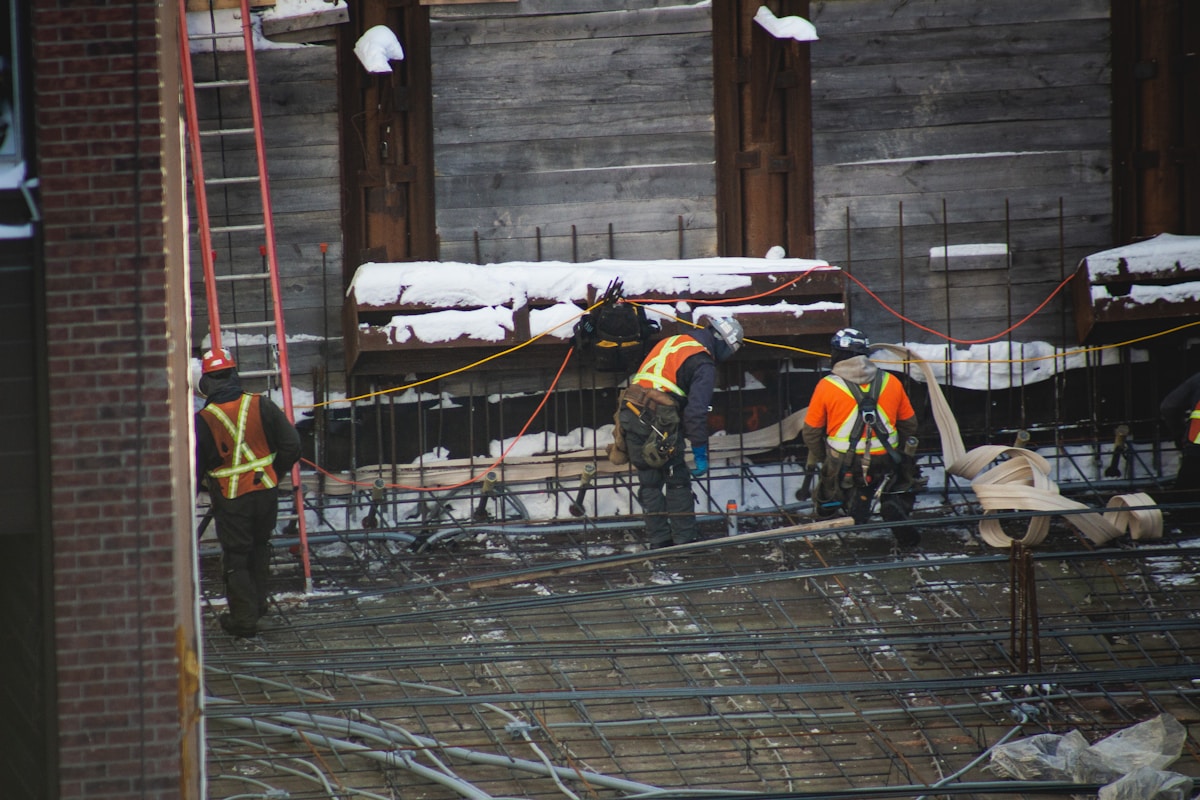
Installation labor expenses are primarily dictated by the number of sequential trade mobilizations required on-site. Conventional stick-framing demands distinct crews for structural framing, bulk insulation, vapor barriers, and exterior cladding. This fragmentation multiplies man-hours and schedule risk. Integrated Insulated Metal Panels (IMPs) consolidate the structural load, thermal barrier, and weather envelope into a single, factory-engineered component. By shifting assembly from sequential field work to rapid mechanical fastening, projects typically realize a 40 to 60 percent reduction in overall installation labor hours.
Consolidating structural, thermal, and weather barriers into a single prefabricated unit eliminates sequential trade scheduling, directly compressing site man-hours and mitigating weather-related downtime risks.
The Sequencing Bottleneck in Conventional Envelope Systems
Traditional commercial envelopes require overlapping schedules for carpenters, insulation specialists, and waterproofing applicators. Each handoff introduces potential coordination delays and rework triggers. Field-cut insulation often leaves gaps around studs, creating thermal bridges that demand additional air-sealing labor.
Weather exposure further compounds this, as moisture intrusion during multi-stage assembly can halt progress entirely. General contractors frequently absorb these delays through extended equipment rentals and overtime pay. Integrated panels bypass this bottleneck by delivering a continuous, unbroken barrier that is ready for immediate anchoring.
Prefabrication Velocity and On-Site Man-Hour Reduction
Dimensional consistency is the primary driver of labor efficiency. Rax Panel manufactures composite panels using precision extrusion and lamination processes across facilities exceeding 1,700 square meters of daily output. This controlled environment guarantees tight tolerances for XPS, PET, PU, and PVC foam cores paired with galvanized steel or aluminum facings.
When panels arrive on-site, they fit structural rails without extensive field trimming or shimming. Installers secure pre-grooved locking mechanisms using standard power drivers, drastically lowering the skill threshold and cycle time per bay. Uniform panel thickness eliminates the need for costly leveling scaffolding or iterative adjustments.
Technical Support and Installation Risk Mitigation
Our engineering team reviews every project layout before dispatch to optimize fastener spacing and joint alignment. We provide standardized installation guides tailored to specific regional wind loads and seismic requirements, preventing costly field modifications. For complex applications like refrigerated truck bodies, mobile home frames, or marine vessel hulls, we adjust core density and facing gauge to match exact handling equipment limits.
additionally, our multilingual technical support team monitors production progress and provides real-time troubleshooting for crane placement and sequence planning. This proactive coordination eliminates guesswork and keeps labor budgets strictly aligned with the original bid, ensuring predictable financial outcomes for wholesale distributors and general contractors.
Calculating Long-Term Energy Efficiency ROI
The Bottom Line: For high-performance envelopes, energy efficiency ROI is typically realized within 3 to 5 years, driven by a 25–35% reduction in HVAC operational costs rather than initial material savings.
Beyond the Invoice: Operational Expenditure (OpEx) Reduction
Calculating the Return on Investment (ROI) for composite sandwich panels requires shifting focus from the “CapEx” (initial purchase price) to the “OpEx” (operational expenditure). In industrial and commercial applications, energy consumption is often the single largest ongoing variable cost. The fundamental value proposition of advanced composite systems—specifically those utilizing PIR, PUR, or high-density XPS cores—lies in their ability to decouple the internal environment from external temperature fluctuations.
Unlike traditional assemblies that may suffer from settling or moisture ingress, the closed-cell structure of our foam cores maintains consistent thermal resistance over decades. When you specify a panel system with a U-value of less than 0.15 W/m²K, you are effectively installing a fixed-rate insurance policy against volatile energy markets. The ROI equation is straightforward: the delta between your current energy spend and the projected post-installation spend, plotted against the material premium.
Engineering for Thermal Stability
It is critical to understand that not all insulation performs equally under load. In our R&D facility, we subject our CFRT and GRP sandwich panels to rigorous stress testing to ensure the core material does not compress under structural loads—a common failure point that crushes insulation value and kills long-term ROI. For refrigerated logistics and cold storage, this stability is non-negotiable. A minute reduction in thermal bridging at the joints or facings translates to massive savings in refrigeration tonnage.
We have observed that clients utilizing our PIR foam cores with steel or aluzinc facings often report a stabilization of indoor temperature variance within the first 12 months of operation. This stability reduces the “churn” of HVAC machinery—less cycling on and off—which extends the lifespan of the mechanical equipment itself. This deferred capital expenditure on HVAC replacement is a frequently overlooked component of the energy efficiency ROI calculation.
The ROI Calculation Framework
To accurately project the payback period for a composite panel upgrade, B2B buyers must model the following three distinct financial drivers. We advise our partners to run these numbers before approving final specifications.
- Utility Savings (Direct): Calculate the reduction in kilowatt-hours (kWh) or cubic meters of gas based on the improved R-value. For many industrial warehouses, switching from single-skin metal to insulated composites yields an immediate 25–35% drop in energy consumption.
- Peak Demand Shaving: Composite panels with high thermal mass and insulation slow the rate of heat transfer. This flattens the peak cooling load during summer hours, significantly lowering demand charges from utility providers which are often based on the highest 15-minute usage window.
- Compliance and Insurance Offsets: Utilizing Class A1 non-combustible systems, such as our Rockwool core panels, can reduce fire insurance premiums. Additionally, meeting stringent energy codes (such as local green building standards) avoids retrofit fines and may qualify the property for tax incentives, accelerating the break-even point.
| Material System | Thermal Performance Metric | Energy Cost Impact | Lifecycle Durability | ROI Calculation Factor |
|---|---|---|---|---|
| XPS/PET/PU Foam Core + Aluminum/GRP Facing | R-Value: 5–8 per inch / U-Value: <0.15 W/m²K | Reduces annual HVAC consumption by 25–35% | 25+ years: Resists thermal degradation & moisture-induced mold | Utility Savings: Offsets initial premium within 3–5 years |
| PIR Foam Core + Steel/Aluzinc Facings | R-Value: 6–9 per inch / Class A1 Fire Rating | Minimizes peak demand charges & stabilizes indoor temperature variance | 20+ years: Anti-corrosion facings prevent structural decay | Compliance & Insurance: Reduces premiums & future retrofit expenditures |
| Honeycomb (PP/Fiberglass/Aramid) + Composite Skins | R-Value: 4–7 per inch / Optimized weight-to-insulation ratio | Lowers transport & installation energy overhead by ~20% | 15+ years: High fatigue resistance maintains integrity under vibration | Deployment Speed: Accelerated installation compresses overall payback timeline |
| Rockwool Core + Durable Metal Facings | R-Value: 3–5 per inch / Non-combustible Class A1 thermal barrier | Eliminates thermal bridging & reduces passive cooling loads by 15–20% | 30+ years: Inorganic composition ensures long-term structural stability | Maintenance Avoidance: Zero routine upkeep maximizes long-term net present value |
| Custom Engineered (PMI/EPP/MPP) + Tailored Facings | R-Value: 5–10 per inch / Climate-zone calibrated thermal coefficient | Optimizes energy consumption per square meter for specialized applications | Custom-rated: Validated via accelerated aging & extreme stress protocols | Lifecycle Modeling: Project-specific calibration ensures targeted ROI thresholds |
Evaluating Maintenance and Lifecycle Durability
Lifecycle durability in commercial and industrial construction hinges on material resistance to environmental stressors and integrated system design. Unlike fragmented traditional assemblies that demand continuous upkeep, modern composite sandwich panels eliminate recurring maintenance by bonding high-performance facings with stable, closed-cell cores. This integration prevents moisture ingress, eliminates thermal bridging-induced condensation, and resists chemical degradation. For fleet operators, warehouse managers, and general contractors, evaluating maintenance should shift from initial material cost to Total Cost of Ownership (TCO), prioritizing manufacturers that enforce rigorous experimental testing and provide certified installation protocols.
Deconstructing the Maintenance Liability
The primary failure point in legacy building envelopes and vehicle bodies is compartmentalization. When insulation, moisture barriers, and structural skins are installed separately, differential expansion, joint fatigue, and micro-fractures inevitably form. These gaps become conduits for water infiltration and biological decay, triggering a cycle of costly repainting, sealant replacement, and component swapping. Integrated composite systems solve this by manufacturing the envelope as a single, stress-distributed unit. In our factory audits across global supply chains, we consistently see projects where traditional cladding requires major intervention within 8 to 10 years, whereas properly specified sandwich panels maintain structural integrity and aesthetic performance well beyond that threshold.
- Closed-Cell Core Stability: Materials like XPS, PET, and PVC foams resist water absorption rates below 0.5% by volume, effectively halting rot, mold, and core collapse in high-humidity or marine environments.
- Facing Material Integration: Aluminum, galvanized steel, and GRP/FRP facings are inherently corrosion-resistant. When laminated to thermoplastic or thermoset cores, they eliminate galvanic coupling issues that plague bare metal assemblies.
- Thermal Cycle Resilience: Advanced polymers like PMI and specialized PU formulations accommodate significant thermal expansion without delaminating, a critical factor for refrigerated transport and exterior wall cladding.
Engineering Protocols for Decade-Long Performance
Durability is not accidental; it is engineered through standardized testing and precise application matching. Rax Panel leverages over 15 years of production experience to validate every laminate configuration against stringent industry benchmarks. Our engineering team conducts experimental testing on custom substrate combinations, ensuring that each panel—whether deployed for RV roofing, dry freight truck bodies, or mobile home foundations—meets exact load-bearing and weathering requirements. We explicitly avoid one-size-fits-all material stacking, which is the leading cause of premature warranty claims in the B2B sector.
Ultimately, lifecycle durability translates directly to predictable operational expenditures. By selecting vertically integrated manufacturers who control both raw material sourcing and lamination processes, procurement teams guarantee consistency across thousands of square meters. This eliminates the variables of third-party subcontractors and ensures that every panel delivered meets the exact performance baseline required for 15 to 20-year asset depreciation schedules.
Selecting Optimal Panel Specifications
Selecting a composite panel is not a generic commodity purchase; it is an engineering decision that defines the building’s thermal envelope and structural longevity. Optimal specification requires matching core physics to climatic stress, legal safeguards to economic horizons, and installation precision to factory tolerances.
Verifying Thermal Ratings Against Regional Climate Demands
A common specification error is selecting a panel based solely on R-value thickness without considering the local climate’s humidity profile and temperature variance. In regions with extreme diurnal temperature swings or high humidity, the dew point location within the wall assembly is critical. If the insulation core is insufficient or vapor permeable, condensation can form within the panel, leading to structural degradation and mold growth that voids performance guarantees.
For cold chain facilities or refrigerated transport in tropical climates, we recommend specifying closed-cell cores such as XPS (Extruded Polystyrene), PET, or PU (Polyurethane) rather than mineral wool. While Rockwool offers superior fire resistance, closed-cell foams provide virtually zero moisture absorption, ensuring the thermal conductivity (lambda value) remains stable over the system’s life. Conversely, for high-heat industrial applications requiring fire compliance, PIR (Polyisocyanurate) or mineral wool cores are mandated not just for insulation but for reaction-to-fire classifications. Always demand third-party validated thermal conductivity data at 24°C mean temperature, rather than relying on nominal values, to ensure the envelope meets local energy codes.
When designing for extreme climates, verify the facing material’s thermal expansion coefficient. Aluminum facings expand significantly more than GRP/FRP or Steel. If not accounted for in the joint detailing, this movement can break seal integrity over time, creating thermal bridges that compromise the entire system’s rating.
Aligning Warranty Terms With Projected Lifecycle Costs
Warranties are often treated as legal boilerplate, but for commercial construction, they are financial instruments that must align with the building’s intended lifespan and usage profile. A standard 10-year material warranty is insufficient for a distribution center designed for a 30-year operational life. B2B buyers must scrutinize the warranty scope to distinguish between “material defects” and “system performance.” A material warranty might cover delamination but will not cover thermal failure if the installation was improper, leaving a significant gap in liability.
Additionally, investigate whether the warranty is pro-rated or full-value. A non-pro-rated warranty for the first 5-10 years is crucial for protecting the initial investment against premature failure. At Rax Panel, we subject our materials to accelerated aging tests simulating UV exposure, thermal cycling, and freeze-thaw conditions to validate our warranty claims. We advise clients to require a warranty that specifically covers the core’s retention of thermal properties, not just the structural integrity of the facings. This ensures that if the insulation settles or degrades—common in lower-density foams—the manufacturer remains liable for the resulting energy efficiency loss.
- Specific vs. Generic: Ensure the warranty explicitly names the application (e.g., “interior refrigerated wall” vs. “general cladding”). Generic exterior warranties often void coverage in high-humidity interior environments like cold storage.
- Labor Coverage: Separate material and labor warranties create a blame game between the panel supplier and the contractor. Aim for a system warranty that covers both, provided installation is supervised by the manufacturer’s technicians.
Validating Contractor Installation Standards
High-performance composite panels cannot compensate for low-performance installation. Even a panel with a factory-perfect R-30 rating will fail if the joints are improperly sealed or the fasteners create thermal bridges. It is imperative to validate that the installing contractor possesses specific experience with the chosen panel system—whether it is a tongue-and-groove configuration, a cam-lock system, or hidden mechanical fixings. General construction crews without sandwich panel experience often over-tighten fasteners, dimpling the facings and crushing the core insulation at the joint points.
Project specifications should mandate a pre-installation conference and a mock-up panel review. This phase verifies the contractor’s understanding of sealant application in varying temperatures and the correct handling methods to prevent edge damage during lifting. Our engineering team provides detailed installation guides and on-site technical support because we know that 80% of water infiltration failures occur at the penetrations and transitions, not in the field of the panel itself. Requiring the contractor to strictly adhere to the manufacturer’s tolerance specs for squareness and leveling is the only way to ensure the performance guarantees remain valid.
Never accept “substituted” sealants or adhesives. Panel systems are engineered with specific chemical compatibilities. Using a generic generic silicone instead of the specified polyurethane or MS polymer sealant can chemically react with certain foam cores (like PU) or gel coats, causing the bond to fail within months.
Conclusion
Stop comparing unit prices and look at the installed reality. Lumber might look cheaper upfront, but volatile markets and slow stick-frame labor kill your margins. IMPs install fast, reducing cycle times significantly. For warehouses and commercial builds, that speed and thermal performance outweigh the initial sticker shock. You aren’t just buying a wall; you’re buying a weather-tight envelope that goes up in days, not weeks.
We produce over 1,700 square meters daily in our vertically integrated facility, ensuring you hit tight deadlines without compromising on thermal ratings. Send us your architectural specs. Our engineering team can calculate the exact ROI for your climate zone and panel thickness requirements. Let’s run the numbers on your specific layout to see if the system fits your budget.
Frequently Asked Questions
What core materials are available?
Insulated metal panels utilize various rigid foam cores including polyurethane, polyisocyanurate, extruded polystyrene, and expanded polystyrene. Advanced applications may incorporate mineral wool or phenolic foams for enhanced fire ratings. The selection depends on specific thermal resistance requirements and local building codes. Manufacturers typically match core density to structural load expectations.
Do insulated metal panels stop thermal bridging?
Properly engineered insulated metal panels significantly reduce thermal bridging by integrating continuous insulation between exterior and interior facings. The structural separation of conductive materials prevents heat transfer through framing members. High-performance designs often include thermal breaks at joints and fastener points. This continuity directly improves overall envelope efficiency and reduces condensation risks.
Are insulated metal panels fire resistant?
Fire resistance depends entirely on the core composition and facing materials selected during specification. Non-combustible cores like mineral wool achieve the highest fire ratings and meet strict commercial codes. Combustible foams require specialized additives to limit flame spread and smoke development. Engineers must verify test results against regional fire safety standards before procurement.
Can IMPs be recycled after use?
Metal facings are highly recyclable and retain value through standard scrap processing streams. Core materials present varying recovery challenges depending on their chemical composition. Some thermoplastic foams can be reprocessed, while cross-linked polymers require specialized disposal methods. Designers increasingly specify modular systems to facilitate component separation and material recovery.
Do IMPs require special fasteners?
Installation relies on concealed clip systems or exposed fasteners designed specifically for panel profiles. Fastener placement must align with underlying structural framing to distribute mechanical stress evenly. Sealing washers prevent water infiltration around penetration points. Proper torque application maintains joint integrity without damaging protective coatings.