
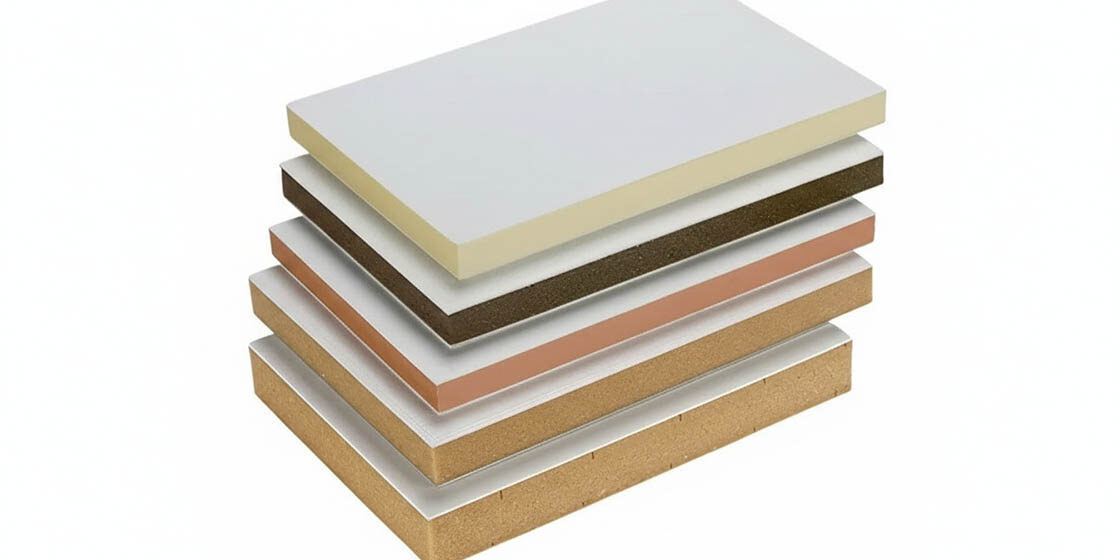
Plywood and multiplex boards have been the default RV subfloor material for decades. They’re also the reason most warranty claims exist. Water intrusion from plumbing leaks, condensation, or road spray soaks into the wood core, and you end up with rot, mold, and structural softening — problems that conventional coated plywood sheets were never designed to prevent.
A CFRT composite sandwich panel for RV flooring solves this at the material level. The continuous fiber reinforced thermoplastic skins bonded to closed-cell foam cores like PET, PU, or XPS simply don’t absorb water, which means the floor structure stays intact regardless of what the environment throws at it.
Having supplied composite panel solutions to RV manufacturers across 50-plus countries, we’ve watched the data stack up consistently. CFRT sheets outperform traditional FRP sheets in wear resistance and deformation recovery while weighing less per square meter. PU foam cores alone offer lower density and better thermal insulation than the XPS foam that dominated RV floor construction for years.
In this article, I’ll break down exactly how CFRT sandwich panels compare to plywood and aluminum frame floors in load-bearing capacity, walk through the structural design options that matter for different chassis configurations, and cover customization capabilities that directly affect production-line efficiency. The bottom line: if you’re still selling or specifying wood-based RV flooring, you’re absorbing warranty costs that thermoplastic composites eliminate entirely.
Common Problems with Traditional RV Flooring
Traditional plywood and multiplex RV flooring fails because it absorbs moisture, adds dead weight, and delaminates under thermal cycling. These three mechanisms drive the majority of premature floor replacements in the industry.
Wood Rot and Water Damage
Wood-based subfloors in RVs are essentially a ticking clock. Plywood and oriented strand board (OSB) are hygroscopic by nature—they pull moisture from the air, plumbing leaks, and condensation that forms between the insulated underbelly and the living space above.
Once moisture penetrates the wood fibers, fungal decay begins at moisture contents above 20%. The problem is compounded by the fact that most RV manufacturers leave the bottom edge of the floor exposed or only partially sealed, allowing road spray and splash to wick upward during travel.
From a manufacturer’s perspective, wood rot is a warranty liability. A single plumbing fitting leak behind a shower pan can saturate an entire floor section before the owner notices any softness underfoot. By that point, the structural integrity of the floor is compromised, and the repair requires tearing out interior cabinetry and fixtures.
This is why RV builders are increasingly moving toward waterproof composite sandwich panels with closed-cell foam cores like XPS, PET, or PVC—materials that simply cannot rot because they contain zero organic fiber content.
Heavy Weight and Poor Insulation
Standard plywood RV subflooring typically weighs between 1.8 and 2.2 kg per square meter per millimeter of thickness. A 15mm plywood floor panel runs roughly 30 kg/m². Multiply that across the entire floor area of a typical Class C motorhome, and you are carrying hundreds of kilograms of material that provides virtually zero thermal insulation value. For RV manufacturers trying to maximize payload capacity and meet weight targets for regulatory compliance, this dead weight is unacceptable.
Beyond weight, plywood offers negligible thermal resistance. Wood has an R-value of approximately 1.0 per inch, meaning a 15mm plywood floor delivers roughly R-0.6. In cold-weather deployments, this allows significant heat transfer through the floor, forcing the HVAC system to work harder and reducing off-grid battery life.
Composite solutions using GRP or CFRT facings over PET or PU foam cores achieve significantly higher R-values at a fraction of the weight. For example, a PP honeycomb core panel with fiberglass skins can reduce floor weight by 40-60% compared to plywood while providing superior rigidity and insulation in a single integrated structure.
Insect Infestation and Delamination
In humid and subtropical regions, wood-based RV flooring attracts termites, carpenter ants, and other wood-boring insects. Unlike residential construction where chemical treatments and barriers are standard, RV flooring is often left untreated or minimally treated to keep manufacturing costs down. Insect damage accelerates the structural degradation cycle and often goes unnoticed until the floor deflects visibly under load.
Delamination is the other silent failure mode. Traditional RV floor assemblies are typically built as a multi-layer sandwich—plywood core, adhesive layer, and a thin laminate or vinyl surface. Thermal cycling during travel (from freezing nights to sun-baked afternoons) causes differential expansion between these layers. Over time, the adhesive bond breaks down, moisture intrudes into the gap, and the floor begins to feel spongy.
This is not a surface-level cosmetic issue; it is a structural failure of the bond line. Factory-produced composite sandwich panels eliminate this risk because the facing and core are consolidated under controlled heat and pressure into a single monolithic panel with no secondary adhesive layer to fail.
What Is CFRT Composite Sandwich Panel
A CFRT composite sandwich panel bonds continuous fiber reinforced thermoplastic skins to a structural foam core—delivering a fully recyclable, impact-resistant panel that outlasts plywood in wet environments.
Continuous Fiber Reinforced Thermoplastic (CFRT) Explained
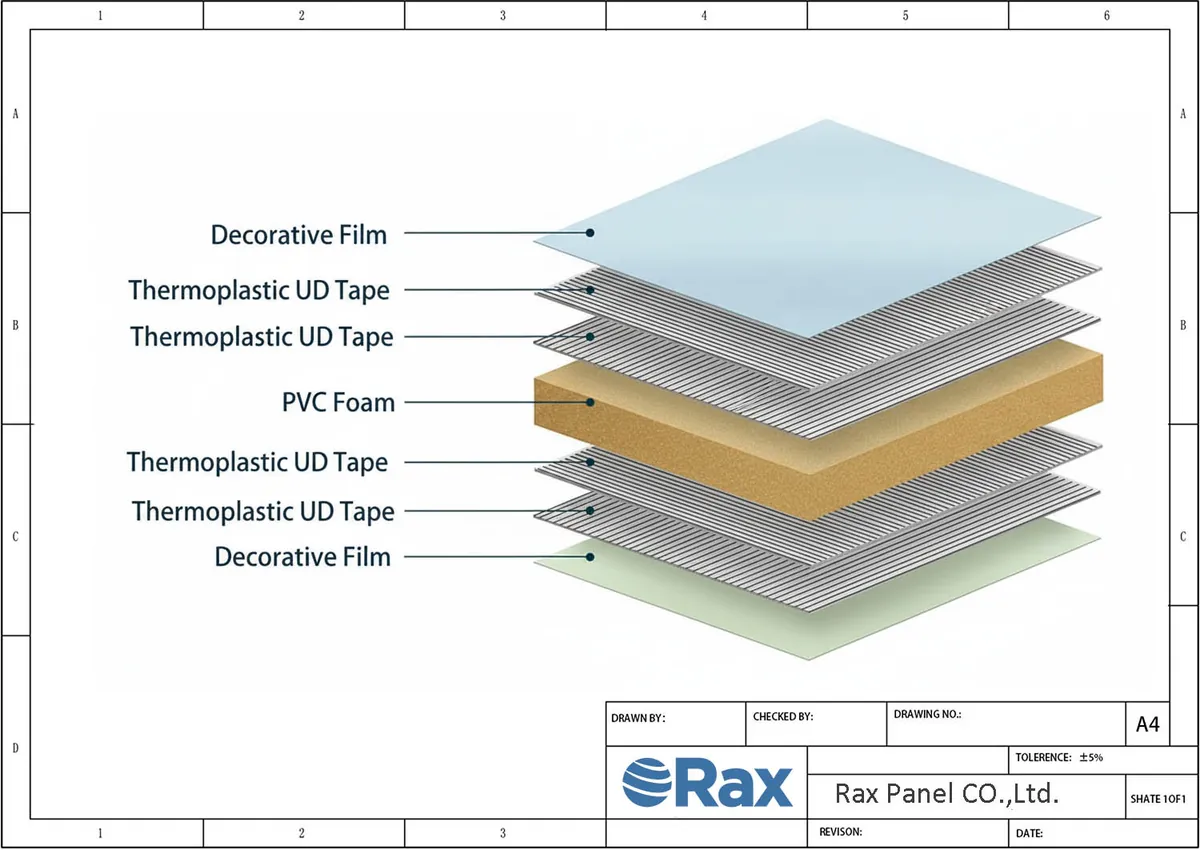
CFRT stands for Continuous Fiber Reinforced Thermoplastic. Unlike traditional FRP (Fiber Reinforced Polymer) sheets that rely on thermoset resins, CFRT uses a thermoplastic matrix reinforced with continuous unidirectional fiberglass strands. The result is a skin material that is lighter, thinner, and significantly more resilient than conventional fiberglass sheets. Because the thermoplastic binder can be reheated and reformed, CFRT is inherently recyclable—a major advantage for manufacturers tracking environmental compliance.
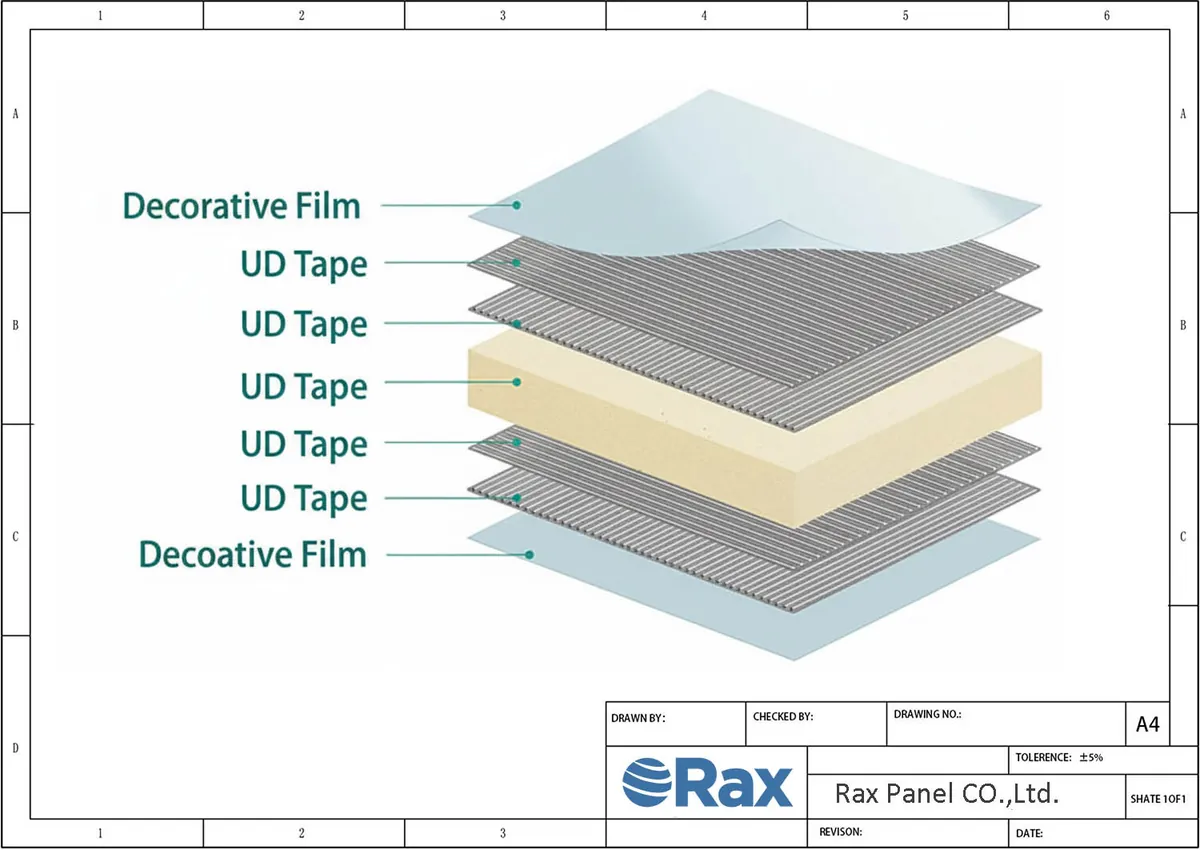
In a sandwich panel configuration, two CFRT skins are bonded to a lightweight core. The skins handle tensile and compressive loads, while the core manages shear forces and provides thickness without weight. This is the same structural principle used in aircraft flooring and high-end marine bulkheads, now adapted for commercial-scale vehicle and construction applications.
For RV manufacturers specifically, CFRT composite sandwich panel flooring solves three persistent problems simultaneously: water intrusion that rots plywood, excessive weight that reduces payload capacity, and delamination caused by thermal cycling. The thermoplastic matrix does not absorb moisture, meaning the panel’s mechanical properties remain stable even after prolonged humidity exposure.
Core Materials: PET Foam and XPS Foam
The core material determines the panel’s stiffness-to-weight ratio, thermal insulation performance, and cost. Rax Panel manufactures CFRT sandwich panels with both PET and XPS foam cores, among others. Understanding the difference between these two options is critical for specifying the right panel for your application.
PET (Polyethylene Terephthalate) foam is a closed-cell, thermoplastic structural foam. It offers high compressive strength, excellent chemical resistance, and full recyclability since both the CFRT skins and PET core share a thermoplastic family. This makes PET-cored panels the preferred choice for manufacturers who need to meet strict end-of-life recyclability requirements, particularly in European markets. PET foam also handles elevated temperatures better than XPS, maintaining dimensional stability in environments where surface temperatures may climb above 70°C.
XPS (Extruded Polystyrene) foam is a cost-effective closed-cell insulation core. It delivers a lower thermal conductivity than PET, meaning XPS-cored panels provide slightly better insulation per unit of thickness. For refrigerated truck bodies and cold-chain logistics, this insulation advantage translates directly into energy savings over the vehicle’s service life.
XPS is also lighter than PET at equivalent thicknesses, which is why it is widely specified in RV flooring and wall panels where minimizing vehicle curb weight is a primary engineering target.
The trade-off is straightforward: PET cores deliver higher mechanical performance and recyclability at a higher material cost, while XPS cores deliver better insulation values and lower weight at a more competitive price point. Rax Panel’s engineering team configures the skin thickness, core density, and overall panel gauge based on your specific load requirements and thermal performance targets, rather than defaulting to a one-size-fits-all construction.
Beyond PET and XPS, Rax Panel also produces CFRT sandwich panels with PU (polyurethane) and PVC foam cores for applications requiring different balances of fire resistance, acoustic damping, or structural rigidity. The full range of core options allows distributors and OEMs to source a complete product family from a single manufacturer, simplifying procurement and ensuring consistent quality across multiple panel types.
Key Advantages of CFRT RV Flooring
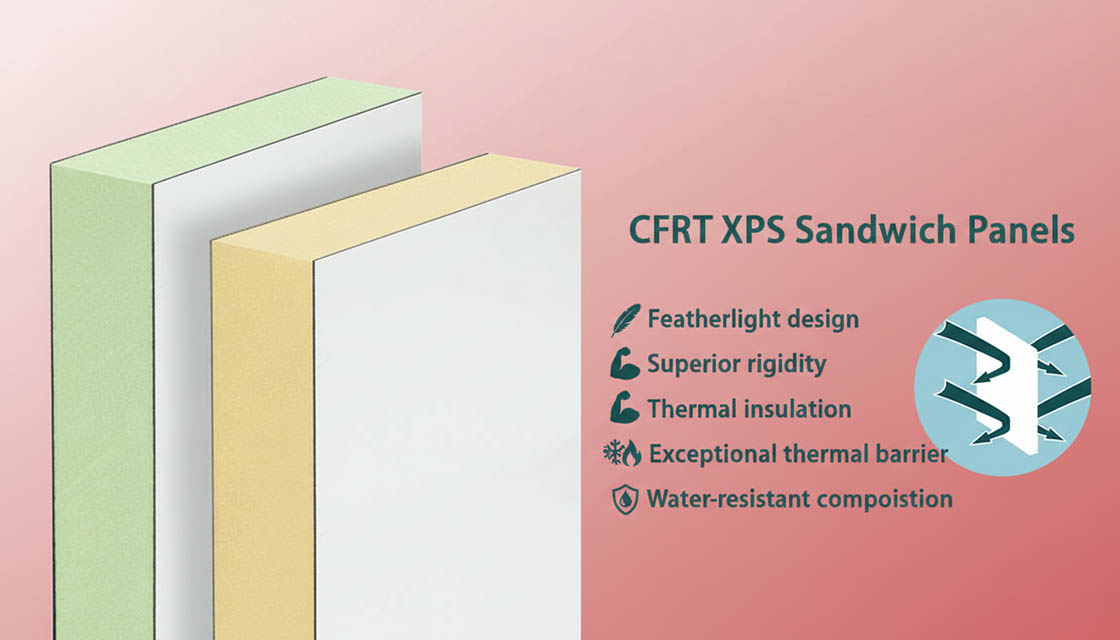
CFRT (Continuous Fiber Reinforced Thermoplastic) sandwich panels deliver the strength-to-weight ratio that plywood simply cannot match, while eliminating the rot and delamination issues that plague traditional RV flooring.
Lightweight and High Strength
RV manufacturers have been stuck with a false choice for decades: use heavy plywood for structural rigidity, or save weight with thinner materials that fail under load. CFRT sandwich panels break that tradeoff entirely. The continuous fiber reinforcement in the thermoplastic facing sheets creates a panel that is significantly lighter than an equivalent plywood structure while maintaining higher bending stiffness and impact resistance.
At Rax Panel, we produce CFRT sandwich panels using a continuous fiber reinforced thermoplastic sheet as the facing material, bonded to core options including XPS, PET, PU, and PVC foams. The result is a flooring panel that reduces overall vehicle weight, directly improving fuel efficiency and increasing payload capacity. For manufacturers building to strict weight budgets, this is not a marginal improvement — it changes how you engineer the entire vehicle.
The engineering logic is straightforward. Sandwich panel construction works by separating two stiff, thin facing sheets with a lightweight core. This geometry multiplies flexural rigidity without adding proportional mass. CFRT facing sheets are lighter, thinner, and more resilient than traditional FRP sheets, making them particularly effective in this configuration.
100% Waterproof and Rot-Proof
Water intrusion is the single most expensive failure mode in RV construction. A slow plumbing leak or a compromised seal can destroy a plywood subfloor from the inside out, and by the time the damage is visible on the surface, the structural core is already gone. This is not a rare scenario — it is the most common complaint among RV owners and the biggest warranty cost for manufacturers.
CFRT sandwich panels eliminate this vulnerability at the material level. The thermoplastic matrix is inherently impervious to water absorption. Unlike wood-based products, there is no organic material to swell, warp, or host mold and fungal growth. The closed-cell foam cores we use — whether XPS, PET, PU, or PVC — do not absorb moisture. The panel cannot rot because there is nothing in it that can rot.
For manufacturers, this translates to a tangible reduction in warranty claims and a measurable improvement in long-term customer satisfaction. For distributors, it means selling a product that does not degrade in humid storage conditions or during maritime transport.
Superior Thermal and Acoustic Insulation
RV flooring is a critical thermal boundary. In extreme climates — desert heat or freezing winters — an uninsulated or poorly insulated floor creates continuous heat transfer that forces HVAC systems to work harder and drains battery reserves. Traditional plywood provides essentially zero thermal resistance.
CFRT sandwich panels address this through the core material itself. The foam cores used in our panels — particularly PET and PU foams — provide genuine, measurable thermal insulation. This is not an add-on layer; the structural core of the panel is simultaneously the insulation layer. This dual function simplifies the manufacturing bill of materials and reduces assembly labor.
Acoustic insulation is equally important for occupant comfort. Road noise, vibration, and impact sound transmit directly through rigid, dense flooring materials. The foam core in a sandwich panel acts as a vibration dampener, absorbing and dissipating acoustic energy rather than transmitting it. Our engineering team customizes the core density and facing thickness to meet specific project requirements, balancing insulation performance with structural load capacity.
With over 15 years of production experience and a daily output exceeding 1,700 square meters from our advanced composite panel production line, we have the capacity and the technical depth to supply consistent, tested flooring panels at manufacturer scale. Every panel configuration is validated through experimental testing to confirm it meets the performance data standards required by the project before it enters production.
CFRT vs Plywood and Aluminum Frame Floors
CFRT sandwich panels deliver 30-50% weight savings over plywood while outlasting it by years. For RV manufacturers, that translates directly to higher payload capacity and fewer warranty claims.
Weight Comparison and Payload Capacity
Traditional RV flooring relies on plywood or multiplex boards supported by aluminum framing. It is a proven system, but it carries significant dead weight. A standard 18mm plywood floor in a typical 25-foot RV can account for 150 to 200 kg of unnecessary mass. Add aluminum cross-members and structural adhesives, and the framing system alone eats into your gross vehicle weight rating (GVWR) before a single piece of furniture or appliance is installed.
CFRT composite sandwich panels change this equation. By bonding continuous fiber reinforced thermoplastic skins to lightweight cores like XPS, PET, or PP honeycomb, Rax Panel produces flooring that maintains equivalent flexural rigidity at a fraction of the mass. The thermoplastic matrix also means the skins themselves are lighter than traditional GRP laminates, which still rely on heavier thermoset resins.
For a specialized vehicle manufacturer, every kilogram saved on the floor structure is a kilogram available for batteries, water systems, or premium interior fitments. In the electric and hybrid RV segment emerging in 2026, this weight reduction directly extends range.
Manufacturers we work with consistently report payload gains of 200 to 400 kg per unit after switching from plywood-aluminum floor assemblies to engineered CFRT sandwich panels. That is not a marginal improvement. It is a competitive advantage that shows up in the spec sheet your dealers sell from.
Lifespan and Long-Term Durability
Plywood floors fail. It is not a question of if, but when. Moisture intrusion from plumbing leaks, condensation, or seal degradation seeps into the wood fibers. Rot sets in, delamination follows, and the floor structure weakens progressively. Most RV owners report soft spots or visible floor damage within 5 to 8 years of regular use, particularly in humid climates or coastal regions. For manufacturers, this means warranty exposure and brand reputation risk.
Aluminum frame floors address the rot issue but introduce their own problems. Thermal bridging through aluminum cross-members creates condensation points that corrode fasteners and degrade surrounding materials over time. Fastener holes in aluminum enlarge under vibration, loosening structural connections. The material itself does not rot, but the assembly degrades.
CFRT sandwich panels eliminate both failure modes. The thermoplastic skins are inherently waterproof. There is no wood fiber to absorb moisture, no metal to corrode. The closed-cell foam cores, whether PET, XPS, or PVC, resist water absorption entirely. In accelerated aging tests, properly manufactured CFRT sandwich panels show no measurable structural degradation after simulated exposure equivalent to 15+ years of service life.
- Water resistance: CFRT panels are waterproof through the entire cross-section. No rot, no mold, no delamination from moisture exposure.
- Fastener retention: Thermoplastic composites hold screws and mechanical fasteners better than degraded plywood, maintaining pull-out strength over the full service life.
- Thermal stability: No thermal bridging. The foam core provides continuous insulation, reducing condensation risk within the floor cavity.
- Impact resistance: CFRT skins flex under point loads that would permanently dent aluminum or crush plywood fiber, then recover their original shape.
There is skepticism in some engineering departments about whether composite panels can handle concentrated point loads like jack stands or heavy cabinetry. Valid concern, but it is solvable. Rax Panel engineers work with manufacturer specifications to localize core density and skin thickness in high-load zones.
A CFRT panel is not a single-spec material; it is an engineered system tuned to your floor plan. The durability advantage only materializes when the panel is specified correctly for the application, which is why we conduct experimental validation before production rather than shipping generic sheet goods.

Structural Design of CFRT Sandwich Panels
A CFRT sandwich panel bonds continuous fiberglass reinforced thermoplastic skins to a structural foam core, creating an I-beam effect where the skins handle tensile and compressive loads while the core manages shear forces.
Schematic Diagram of Structure
The structural logic behind a CFRT composite sandwich panel mirrors a traditional I-beam, just flattened. Two high-strength CFRT face sheets act as the flanges, resisting bending stresses. The lightweight core material between them functions as the web, transferring shear loads and maintaining the distance between the skins. That distance is what drives the panel’s moment of inertia and stiffness.
At Rax Panel, we configure CFRT sandwich panels with four core options depending on the application’s mechanical and thermal demands:
- XPS (Extruded Polystyrene): Closed-cell structure, strong moisture resistance, cost-effective for RV walls and flooring.
- PET (Polyethylene Terephthalate): Recyclable thermoplastic foam, excellent weight-to-stiffness ratio, widely used in transportation applications.
- PU (Polyurethane): Superior thermal insulation properties, common in refrigerated truck bodies and temperature-controlled enclosures.
- PVC (Polyvinyl Chloride): High shear strength and fatigue resistance, suited for marine and demanding structural environments.
The critical design variable is the skin-to-core bond. We use continuous thermoplastic matrix resins in our CFRT sheets rather than thermoset resins, which gives the finished panel a distinct advantage: the entire assembly remains recyclable. For B2B buyers managing fleet sustainability targets or green building certifications, that matters. The thermoplastic skins also make the panels tougher under impact compared to traditional GRP sheets, because the matrix can absorb energy through controlled deformation rather than brittle fracture.
Performance Parameters and Testing
Specifying a CFRT sandwich panel for RV flooring, truck bodies, or structural cladding requires verifiable data, not marketing language. Our engineering team conducts experimental testing on every custom configuration to ensure it meets the specific data standards required by the project. Below is the framework of core parameters we validate during production.
- Flexural Strength and Stiffness: Measured via three-point and four-point bending tests. The panel’s bending stiffness scales with the square of the core thickness, so a small increase in core depth produces a disproportionate gain in rigidity. This is why a 25mm CFRT PET panel can outperform a 15mm plywood board in deflection testing at a fraction of the weight.
- Flatwise Compressive Strength: Tests the core’s resistance to crushing loads applied perpendicular to the panel face. Essential for RV flooring where point loads from heavy furniture or equipment concentrates stress on small areas.
- Interlaminar Shear Strength: Evaluates the bond integrity between the CFRT skin and the core material. Delamination is the primary failure mode in poorly manufactured sandwich panels, so this test directly reflects production quality.
- Thermal Conductivity (R-Value): Varies by core selection. PU cores typically achieve thermal conductivity values in the range of 0.022–0.028 W/m·K, making them the preferred choice for refrigerated applications.
- Water Absorption: CFRT skins are inherently waterproof, and when paired with closed-cell cores like XPS or PET, the total water absorption rate drops to negligible levels. This eliminates the rot and mold issues that plague plywood-based RV floors.
We recognize that some RV manufacturers and fleet buyers remain skeptical about swapping proven plywood or metal frameworks for composite alternatives. That skepticism is healthy. The right approach is to request material test reports for the exact panel configuration you plan to use, not generic datasheets.
Our engineers work directly with your technical team to match core density, skin thickness, and panel dimensions to your specific load cases. If your application demands higher point-load capacity, we adjust the CFRT skin layup or increase the core grade rather than overselling a one-size-fits-all spec.
With our advanced composite panel production line running over 1,700 square meters of daily output, we have the capacity to produce consistent, test-verified panels at the volumes B2B buyers require. Every batch ships with traceable quality documentation, because in fleet manufacturing and commercial construction, consistency is as important as peak performance.
Customization Options for RV Manufacturers
Rax Panel engineers custom RV panels to your exact specifications—dimensions, thickness, core density, and surface texture—so your production line gets drop-in ready materials with zero rework.
Custom Dimensions and Thickness
Off-the-shelf panel sizes force RV manufacturers into one of two bad options: redesign your floor plan around standard sheet dimensions, or pay your assembly team to cut, trim, and waste material on every build. Neither makes financial sense at scale. Rax Panel eliminates that compromise by cutting panels to your precise CAD drawings before they leave our factory.
Our engineering team works directly with your design department to match panel geometry to your specific RV floor plan—whether you are building a compact camper van or a Class A motorhome. We adjust total panel thickness based on your structural load requirements, not the other way around.
- Thickness Range: Panels can be configured from thin furniture-grade sheets up to structural flooring panels exceeding 50mm, depending on the core material selected.
- Core Options for RV Flooring: XPS, PET, PU, PVC, PMI, EPP, and MPP foams. Each offers a different balance of weight, insulation R-value, compressive strength, and cost.
- Facing Options: GRP/FRP, CFRT, aluminum, plywood, or stainless steel skins. CFRT facings are increasingly popular for RV floors due to their thermoplastic properties—they are lighter, thinner, and more resilient than traditional thermoset FRP.
- Cut-to-Size Delivery: Panels arrive at your facility pre-cut to your specified dimensions, reducing your in-house labor and material waste.
The key advantage for OEMs is consistency. Our production line runs over 1,700 square meters of composite panel output daily, and every batch adheres to the same data standards validated through our experimental testing protocol. If your design calls for a 28mm CFRT PET sandwich panel with a specific flexural modulus, panel 5,000 ships with the same tolerances as panel 1.
Anti-Slip Surface Treatments
RV flooring has a unique requirement that most composite panel suppliers overlook: it must provide reliable traction underfoot in wet conditions, barefoot comfort in dry conditions, and resistance to wear from foot traffic, pet claws, and sliding furniture. A smooth gelcoat surface—standard on many GRP panels—fails the first test the moment someone steps out of a shower compartment.
Rax Panel addresses this with purpose-built anti-skip and anti-skid surface treatments designed specifically for vehicle flooring applications. These are not aftermarket coatings sprayed onto finished panels. The texture is integrated into the panel surface during production, ensuring it will not peel, wear thin, or delaminate over the life of the RV.
- Non-Skid Honeycomb Panels: For heavy-duty applications such as RV entry steps, cargo areas, and exterior platforms, we offer specialized non-slip honeycomb panels with textured surfaces that maintain grip even when wet or muddy.
- GRP Gelcoat Textures: Standard GRP sheets are available with or without gelcoat. For flooring, we apply a textured gelcoat finish that balances slip resistance with cleanability—critical for hygiene in living spaces.
- CFRT Surface Options: Continuous fiberglass reinforced thermoplastic sheets can be produced with embossed or patterned surfaces that provide traction without the roughness of industrial anti-slip coatings.
We test surface friction performance internally because there is no single universal standard that covers every RV use case. A fifth-wheel toy hauler ramp door demands a different friction coefficient than a Class B van conversion bathroom floor.
Our engineers work with your team to specify the right texture depth and pattern for each zone in your vehicle, then validate it before full production begins. This is the difference between ordering a panel from a catalog and engineering a solution for a specific vehicle.
Conclusion
CFRT composite sandwich panels beat plywood for RV flooring on every metric that matters — weight, water resistance, and structural lifespan. A 20mm CFRT PET foam panel sheds 40% of the weight of marine-grade plywood while refusing to rot. For dealers quoting fleet orders in 2026, this material eliminates the floor warranty callbacks that eat your margin alive.
Request physical samples from Rax Panel and run a side-by-side flex test against whatever plywood spec you’re currently selling. See the deflection numbers yourself. Our engineers customize core density and facing thickness to your exact load requirements and ship test panels within 3 weeks.
Frequently Asked Questions
This factor has a direct bearing on project performance and long-term cost. Addressing it with specific data rather than general assumptions leads to better outcomes.
Are CFRT sandwich panels water resistant?
Yes, CFRT sandwich panels are highly water resistant, eliminating issues like rot, mold, and delamination that commonly affect traditional plywood RV floors.
What core materials are available for CFRT sandwich panels?
Common core options include XPS (extruded polystyrene), PET, PU (polyurethane), and PVC foam, each offering different thermal and structural properties.
How do CFRT panels compare to GRP panels?
CFRT panels use continuous fiber reinforced thermoplastic faces, providing better impact resistance and durability compared to traditional GRP (fiberglass) sandwich panels.
Can cabinets and fixtures be attached to composite panels?
Yes, cabinets and fixtures can be securely attached to composite panels using appropriate fasteners and bonding methods designed for sandwich panel construction.
What industries use CFRT sandwich panels besides RVs?
CFRT sandwich panels are also widely used in truck bodies, dry cargo vehicles, caravans, and other transportation applications requiring lightweight structural solutions.