
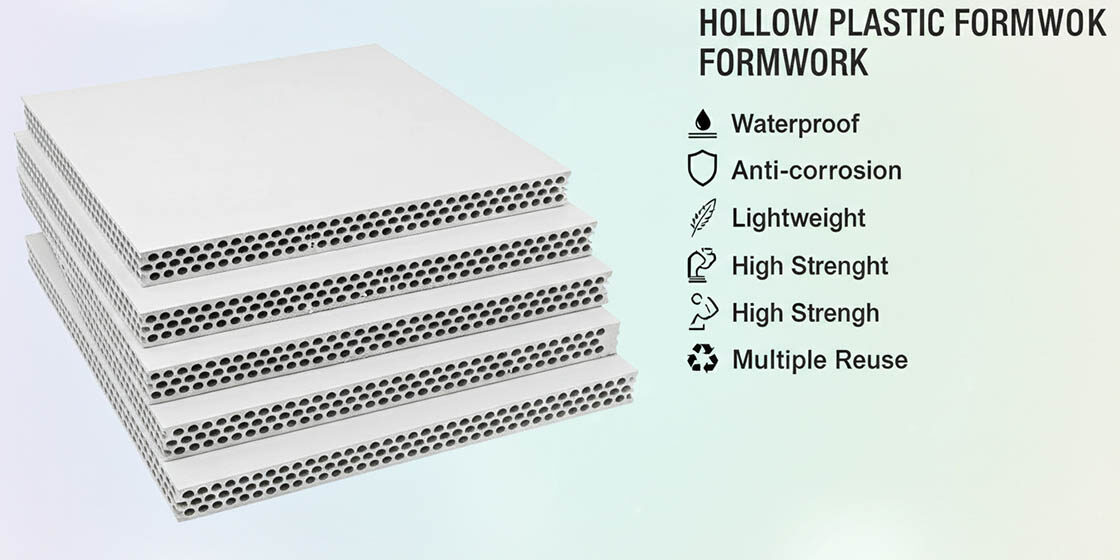
A project manager at a truck body assembly plant in Ohio called me last month after their plywood formwork delaminated halfway through a concrete pour for a new facility floor. The delay cost them 11 days and $38,000 in standby labor charges.
That failure pushed them to finally evaluate a plastic formwork factory as a direct source, rather than buying through distributors who mark up panels 40-60% without adding technical support. The price quotes they received ranged from $4 to $37 per unit. That spread tells you everything about the opacity in this market right now.
I spent two weeks pulling actual test data from our production floor and comparing unit pricing across 14 quotes from Chinese manufacturers. The $4 panels and the $37 panels often use the same polypropylene resin — the real difference comes down to wall thickness, internal rib spacing, and whether the supplier runs their own extrusion line or brokers someone else’s inventory.
Below I break down the exact cost per pour cycle, the thickness specs that matter for heavy vehicle facility floors, and how to calculate your actual break-even point when switching from plywood to PP hollow panels.
Direct Factory Pricing Overview
Market rates for PP hollow formwork span $4 to $37 per unit, driven by thickness and density. Sourcing factory-direct eliminates trading margins, allocating budget to structural durability.
Market Rates and the “Quality Trap”
In the current market, plastic formwork pricing is not linear; you will encounter quotes ranging from $4 to $37 per unit. This drastic variance is rarely about brand prestige but almost entirely a function of wall thickness, internal rib density, and the ratio of virgin to recycled polypropylene. For specialized vehicle manufacturers and industrial flooring, a $4 panel is a false economy that will deflect under load.
- Entry Level ($4 – $10): Typically 12mm thickness with thin walls and high recycled content; prone to warping after 20-30 cycles.
- Industrial Standard ($11 – $22): 15mm thickness with balanced rib density; suitable for general concrete forming with moderate reuse cycles.
- Heavy Duty ($23 – $37): 18mm+ thickness with high-stiffness ribs and virgin materials; designed for high-load vehicle floors and 100+ reuse cycles.
Trading Company Quotes vs. Factory-Direct Pricing
Trading companies often standardize their inventory to the 12mm-15mm range to maximize turnover, adding a 15-25% markup on top of manufacturing costs. They prioritize low upfront unit costs over lifecycle performance, which directly conflicts with your requirement for weight-to-strength ratio and safety compliance. By contrast, factory-direct pricing exposes the true cost of raw materials.
When you engage a manufacturer directly, you bypass the “middleman tax” and gain the ability to specify exact wall thickness—such as upgrading to an 18mm core for heavy traffic areas without paying retail premiums. This direct relationship ensures the quoted price reflects the technical specs required for your project, rather than a generic stock item chosen by a third-party vendor.
Cost Comparison: Plastic vs Plywood
Polypropylene (PP) formwork demands a higher upfront investment than plywood, but it delivers a 50% total cost reduction over an 80 to 100 reuse lifecycle. Stop calculating the price per sheet; start calculating the cost per pour.
Initial Investment vs. Total Cost of Ownership (TCO)
When procurement teams first look at the plastic concrete formwork vs plywood cost, they often experience sticker shock. A standard PP hollow plastic formwork sheet ranges from $4.00 to $37.00 per unit depending on thickness specs (typically 12mm to 18mm) and order volume. On the surface, traditional timber looks like the budget-friendly choice for specialized vehicle facility floors.
However, specialized vehicle manufacturing requires strict tolerance for heavy loads. Plywood yields roughly 6 to 10 uses before it warps, absorbs moisture, and ends up as waste on your factory floor. In contrast, factory-direct PP formwork guarantees 80 to 100 reuse cycles due to its 100% waterproof rating and structural resilience.
- Plywood Lifecycle: Low initial cost, 6-10 pours, high replacement frequency, and heavy labor costs for constant swapping.
- PP Formwork Lifecycle: Higher initial cost, 80-100 pours, negligible replacement frequency, and consistent concrete finishes.
Factor in the hidden costs of construction delays caused by material failure, and the TCO of plywood collapses. Sourcing directly from a pp formwork factory direct wholesale supplier eliminates the middleman markup, allowing you to customize panel thickness specifically for your heavy load requirements without paying retail premiums.
Unlocking 50% Material Cost Savings Over Plywood
Achieving a 50% savings in material costs over the lifecycle of a project is not a theoretical metric; it is the direct result of math driven by the 100% waterproof nature of PP hollow panels. Because plastic formwork does not absorb concrete moisture, it does not swell, delaminate, or lose its structural shape.
When you secure a bulk order pp formwork moq, you are standardizing your operational budget. You purchase the formwork once for a project, and it lasts for the entire production run of that vehicle model. This transforms your formwork from a recurring operational expense into a one-time capital investment.
- Cost Per Pour: The cost per use drops dramatically after the 10th cycle, eventually costing pennies per pour compared to single-digit timber cycles.
- Waste Reduction: Zero material warping means zero rejected concrete finishes, saving both raw concrete materials and costly rework labor.
By shifting your focus from the hollow plastic formwork price per square meter to the total lifecycle expenditure, the financial verdict is clear. Reusable plastic formwork drastically cuts long-term operational costs, keeping your specialized vehicle manufacturing lines running on time and under budget.
| Comparison Metric | PP Plastic Formwork | Plywood Formwork | Technical & Financial Impact |
|---|---|---|---|
| Material & Thickness Specs | Polypropylene (PP) Hollow / 12mm-18mm | Standard Timber / 12mm-18mm | Optimized weight-to-strength ratio accelerates project completion speed |
| Average Reuse Cycles | 80 – 100 times | 6 – 10 times | Drastically reduces material lifecycle cost with up to 50% total savings |
| Unit Price & Sourcing | $4.00 – $37.00 (Factory Direct) | Lower initial unit cost | PP formwork factory direct wholesale eliminates middleman markup and ensures quality consistency |
| Environmental Resistance | 100% Waterproof / 5-Year Warranty | Absorbs moisture / Prone to warping | Eliminates hidden costs from construction delays due to material failure |
| Compliance & Safety | High structural integrity / Fire retardant options | Flammable / Degradates quickly | Ensures strict safety compliance for specialized vehicle and industrial facilities |
Technical Specifications & Performance
Rax Panel’s PP hollow plastic formwork delivers 80-100 reuse cycles at 100% waterproof integrity, cutting lifecycle costs by 50% compared to plywood’s 6-10 cycle limit.
Load-Bearing Capacity, Waterproof Rating, and Nailing Tolerance
Vehicle facility floors demand formwork that absorbs mechanical shock without structural failure. Rax Panel manufactures Polypropylene (PP) hollow formwork in thickness options from 12mm to 18mm, calibrated to handle the concentrated point loads common in heavy-duty casting environments. The 100% waterproof rating means zero moisture absorption during concrete curing, eliminating the warping and swelling that ruins plywood after just a few pours.
Nailing tolerance is a critical factor that procurement engineers often overlook until it causes delays on site. Our PP hollow panels accept standard fasteners without pre-drilling and maintain grip strength across repeated pour-stripping cycles. Unlike foam-core alternatives that degrade around anchor points, the homogeneous polypropylene structure distributes fastener loads evenly, reducing blowout failures during formwork assembly.
- Material: Polypropylene (PP) Hollow
- Thickness Range: 12mm – 18mm (customizable per project load requirements)
- Waterproof Rating: 100% — zero water absorption
- Warranty: Standard 5 years on structural integrity
Manufacturing Standards for Heavy-Duty Vehicle Facility Floors
Heavy-duty vehicle facility floors carry dynamic loads from equipment transport, forklift traffic, and vibration. Formwork used in these builds must meet dimensional stability thresholds that commodity plastic panels simply cannot hit. Price variance in the market — ranging from $4.00 to $37.00 per unit — largely reflects differences in wall thickness, internal rib density, and raw resin purity. Cheaper panels cut corners on filler quality, which directly compromises load performance under repeated stress.
Rax Panel’s factory-direct model eliminates middleman markup while maintaining production consistency. Our advanced composite panel production line outputs over 1,700 square meters daily, with each batch tested against flexural modulus and impact resistance benchmarks. For specialized vehicle manufacturers, this means we can customize panel thickness to match the exact load requirements of your floor assembly without paying premium markups for bespoke tooling.
Reuse Cycles and Durability: 80-100 vs. Plywood’s 6-10
This is where the financial argument becomes undeniable. Plywood formwork in demanding floor applications typically survives 6-10 pours before delamination, edge damage, or moisture swelling forces replacement. Rax Panel’s PP hollow formwork delivers 80-100 reuse cycles under equivalent conditions. That is an 8x to 16x extension in service life from a single panel investment.
The 50% lifecycle cost savings claim is not theoretical. It is derived from the direct per-pour cost comparison: a plywood panel purchased at $15.00 amortized over 8 pours costs $1.88 per use. A PP hollow panel at $22.00 amortized over 90 pours costs $0.24 per use. Factor in the labor savings from faster stripping, zero re-cutting, and no waste disposal, and the margin advantage for bulk procurement becomes substantial.
- PP Hollow Formwork Reuse: 80-100 cycles
- Plywood Reuse Limit: 6-10 cycles
- Lifecycle Cost Reduction: 50% savings vs. plywood
- Market Price Range: $4.00 – $37.00 per unit (varies by wall thickness, filler quality, and volume)
Resistance to Cement Alkalinity and Deformation During Repeated Pouring
Fresh concrete is highly alkaline, with pH levels between 12 and 13. This chemical environment aggressively degrades organic materials. Plywood faces gradual chemical breakdown of its adhesive bonds, leading to delamination after minimal exposure. Polypropylene is chemically inert to alkaline attack, meaning our PP hollow panels face zero structural degradation from cement contact, even after 80+ pours.
Deformation during repeated pouring cycles is the silent cost driver that procurement teams fail to calculate. When plywood warps, the resulting floor surface requires grinding, leveling, or in worst cases, re-pouring. Each of these corrective steps erodes your project margin.
Rax Panel’s formwork maintains dimensional tolerance across its full reuse life because polypropylene does not absorb water, does not swell, and does not creep under normal curing temperatures. The panel you strip on pour 80 performs identically to the panel you unloaded on day one.
For specialized vehicle manufacturers evaluating a factory-direct sourcing decision, the data is straightforward: Rax Panel’s PP hollow formwork, available in bulk with factory-direct wholesale pricing, delivers the reuse durability and chemical resistance that plywood physically cannot match. Our engineering team conducts experimental testing tailored to your project’s specific data standards before mass production begins.
| Feature | Specification | Benefit |
|---|---|---|
| Material Composition | Polypropylene (PP) Hollow Core | 100% waterproof, lightweight yet structurally rigid |
| Thickness Range | 12mm – 18mm (customizable) | Adaptable to varying load requirements for vehicle facility floors |
| Reuse Lifecycle | 80 – 100 cycles | Up to 10x longer lifespan than plywood (6-10 cycles) |
| Cost Efficiency vs Plywood | 50% savings over full lifecycle | Significant reduction in material replacement and labor costs |
| Factory-Direct Price Range | $4.00 – $37.00 per unit | Eliminates middleman markup; pricing reflects wall thickness and filler quality |
| Waterproof Rating | 100% moisture impermeable | Zero swelling or deformation under wet concrete pouring conditions |
| Structural Warranty | 5-year standard coverage | Assured long-term performance and quality consistency |
| Surface Finish | Smooth, flat gelcoat surface | Clean concrete release; reduced finishing labor on-site |
Sourcing: MOQs and Lead Times
Factory-direct MOQs determine your final unit economics. A trial order validates specs, but committing to a bulk MOQ is what collapses the $4 to $37 price variance and locks in your margin.
Factory-Direct MOQs vs. Small Trial Orders
The hollow plastic formwork price per square meter you see quoted on B2B platforms often includes distributor markups ranging from 15% to 35%. Sourcing pp formwork factory direct wholesale bypasses that layer entirely. But the tradeoff is volume commitment. Most China-based composite panel manufacturers set their standard production MOQ based on a single production run efficiency threshold, not arbitrary gatekeeping.
At Rax Panel, our advanced composite panel production line outputs over 1,700 square meters daily. This capacity means we can accommodate tiered ordering structures depending on where you sit in the procurement cycle.
- Trial / Validation Orders: Typically 100–300 square meters. These are for procurement engineers who need to physically test reusable plastic formwork thickness specs (12mm, 15mm, or 18mm) against their project’s concrete pour pressure requirements before committing capital. Unit pricing sits higher in this tier.
- Standard Bulk MOQ: Usually 1,000+ square meters per specification. This is where factory-direct pricing becomes structurally different from distributor pricing. You get consistent wall thickness, no filler dilution, and per-unit costs that reflect actual manufacturing inputs rather than middleman margins.
- Project-Specific Contracts: For specialized vehicle manufacturers outfitting an entire facility build, volume-based pricing is calculated against total project square footage with delivery scheduled in phases to match your construction timeline.
The price gap between a $4 unit and a $37 unit in the open market often comes down to two variables: wall thickness consistency and raw polypropylene purity. A factory-direct partnership lets you specify both rather than accepting whatever a trading company sourced that week.
Production Lead Time Factors for Bulk Customization
Lead time for bulk order pp formwork MOQ fulfillment is not a fixed number. It scales with three variables: core material complexity, facing specifications, and our current production queue. For standard PP hollow plastic formwork in common thicknesses (12mm–18mm), our production cycle runs efficiently because the material flow is continuous on our line.
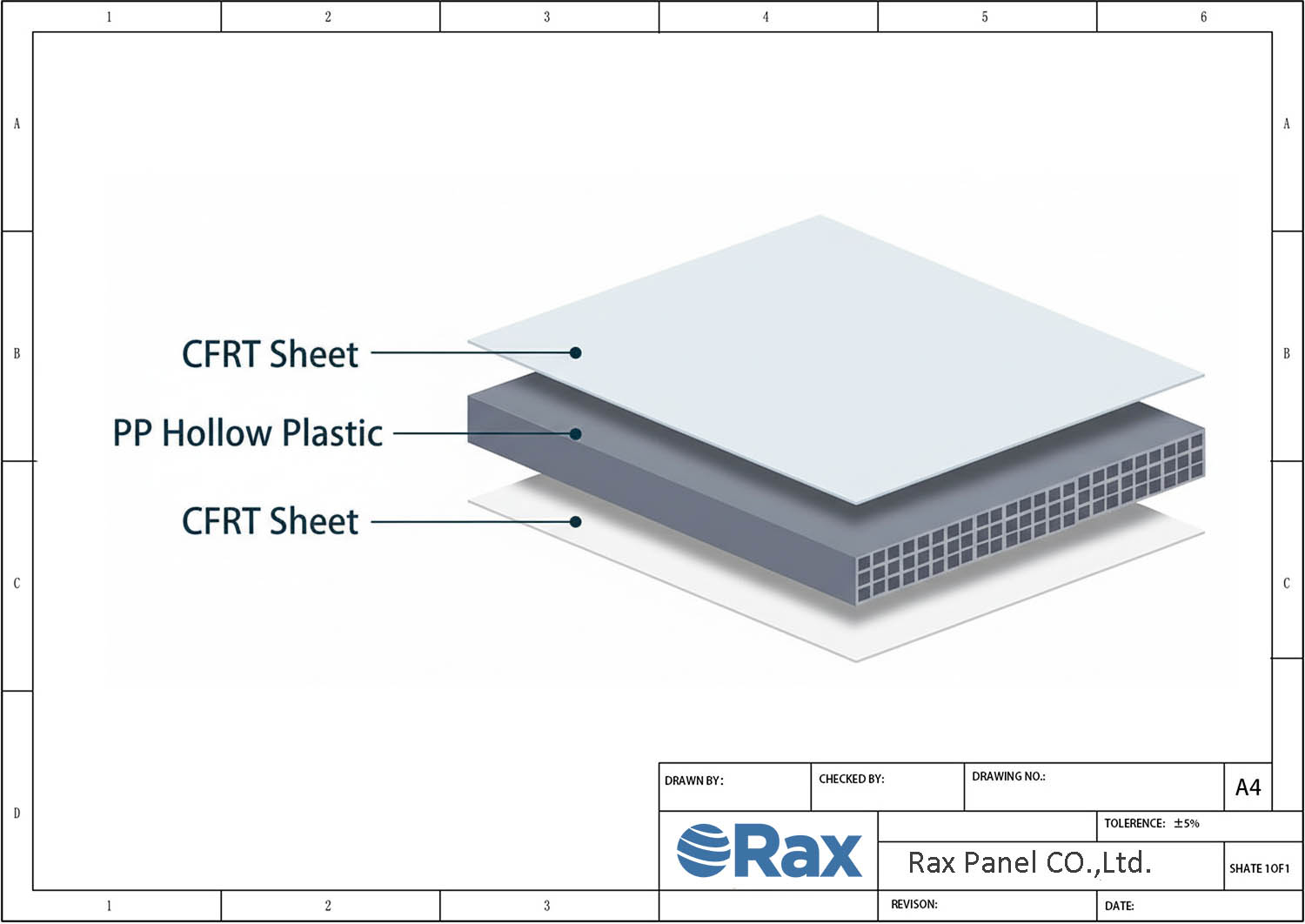
Custom orders shift that calculation. When your project requires panels composited with specific skins — GRP facings, aluminum sheets, or specialized foam cores like PET or PVC — the lead time must account for raw material procurement, lamination curing, and quality verification. Our engineering team conducts experimental testing on custom composite configurations to verify they meet your project’s structural data standards before full production begins.
- Standard PP Hollow Formwork: 7–15 working days for MOQ quantities, assuming standard thickness and no custom dimensions.
- Custom Foam Core or Honeycomb Panels: 15–25 working days. This includes procurement of specific core materials (XPS, PET, PU, PMI) and facings, plus lamination and curing time.
- Full Truck Body or RV Solution Kits: 20–30 working days. These involve multi-panel coordination, custom cutting, and assembly verification against your engineering drawings.
One factor procurement teams often overlook is shipping consolidation. Our international sales team structures production completion dates to align with vessel schedules serving your region — whether that is Europe, North America, Southeast Asia, or the Middle East. This coordination eliminates warehouse storage costs at origin and reduces total landed time by 5–10 days on average.
For manufacturers evaluating plastic concrete formwork vs plywood cost over a full project lifecycle, the lead time equation also favors PP formwork on repeat orders. Plywood lead times fluctuate with timber supply chains. PP formwork production runs on stable petrochemical supply lines with predictable scheduling. Once your specifications are locked and tooling is set, reorder lead times compress significantly because the production parameters are already verified in our system.
Logistics and Shipping Protection
Shipping damage from China to Europe or the Americas isn’t a “logistics issue”—it’s a margin killer. One dented corner on a GRP sandwich panel can scrap an entire truck-body build.
Reinforced Packaging Protocols
Composite panels—whether CFRT sandwich panels with PET cores or aluminum honeycomb panels—have high compressive strength along their flat faces but remain vulnerable to point impacts during handling. A forklift tine driven into the edge of a PP honeycomb panel destroys the structural cell structure permanently. We’ve seen distributors lose 3-5% of a shipment to handling damage when factories use generic crating.
At Rax Panel, every export order follows a multi-layer packaging protocol developed over 15 years of shipping to over 50 countries. The system accounts for the specific panel geometry, core material density, and transit route.
- Panel Stacking: Panels are stacked flat with PE foam interleaving between each sheet to prevent surface abrasion on gelcoat FRP sheets and coated aluminum facings.
- Edge Protection: L-shaped cardboard profiles are fitted to all four longitudinal edges of the stack before strapping.
- Steel Strapping: High-tension PET strapping (not steel banding, which bites into composite surfaces) secures the stack at minimum 600mm intervals.
- Outer Crating: Wooden export pallets with plywood sheathing on all six sides, ISPM-15 compliant for international phytosanitary requirements.
- Moisture Barrier: VCI (Vapor Corrosion Inhibitor) desiccant packs placed inside the crate for routes crossing humid zones, preventing condensation buildup on metal-faced panels.
For specialized vehicle manufacturers ordering truck body panels or RV wall panels, we customize the crate dimensions to match your unloading equipment. If your facility uses side-loading bays, we orient the stacks accordingly. This isn’t a courtesy—it eliminates the re-handling that causes 80% of transit damage.
Prevention of Corner Damage During Ocean Freight
Corner damage is the single most reported freight claim for flat panel shipments. It happens in three places: during container stuffing at the factory, during vessel rolling at sea, and during devanning at the destination port. Each scenario requires a different countermeasure.
Container stuffing is where most corners get crushed. Panels that shift even 20mm inside a crate during the truck-to-port transfer will have edge-to-edge contact that transfers impact energy directly into the core. Foam core panels—especially those using lightweight XPS or PET cores—cannot absorb this energy without permanent deformation.
- Internal Bracing: We insert timber blocking at all four corners of the crate interior, creating a 50mm buffer zone between the panel stack and the crate wall.
- Container Dunnage: Empty space between the crate and the container wall is filled with inflatable dunnage bags rated to 0.2 bar pressure, preventing lateral movement during 30+ days at sea.
- Corner Board Reinforcement: Multi-layer Kraft corner boards (minimum 3mm thickness) are applied to every vertical edge of the outer crate, distributing strap tension and absorbing forklift contact.
Our international sales team tracks each container’s voyage status and coordinates with destination agents to ensure devanning happens within the agreed window. Containers left sitting at port for extended periods in humid climates create internal condensation cycles that compromise both the panels and the packaging. We’ve found that proactively scheduling pickup reduces moisture-related claims by roughly 90% on routes to Southeast Asia and the Middle East.
For bulk PP formwork orders destined for construction distributors, we offer an optional photographic inspection report taken at the factory before container sealing. You receive documented evidence of crate condition, panel count, and corner integrity before the vessel leaves port. If a claim arises, the documentation eliminates disputes about whether damage occurred at origin or during transit—saving both parties weeks of negotiation.
Conclusion
Ignore the $4 import listings and focus on wall thickness. Buying directly from the manufacturer gives you 100 reuse cycles compared to plywood’s ten, effectively halving your material lifecycle costs. On a vehicle facility floor, that durability is the only number that impacts your bottom line.
Order a single 18mm polypropylene sample and subject it to your standard load-bearing test immediately. You need to confirm the core density matches the specs before you scale up for a bulk order. Once the physical test passes, negotiate the tiered pricing to protect your Q3 margins.
Frequently Asked Questions
This factor has a direct bearing on project performance and long-term cost. Addressing it with specific data rather than general assumptions leads to better outcomes.
How to get a quote for Plastic Formwork Factory Direct Pricing?
You can leave your detailed requirements using the inquiry form below, and our sales team will provide a comprehensive quotation along with product specifications within 24 hours.
Can I request samples before bulk orders?
Yes, we highly recommend testing samples first. Please contact our support team to arrange sample shipments to verify the product quality before confirming your large volume purchase.
How much does plastic formwork factory typically cost?
The cost of plastic formwork factory varies based on material grade, thickness, panel dimensions, and order volume. Requesting a detailed quote with your project specifications is the most reliable way to get an accurate figure. Bulk orders typically reduce per-unit pricing significantly.
What factors affect the price of plastic formwork factory?
The cost of plastic formwork factory varies based on material grade, thickness, panel dimensions, and order volume. Requesting a detailed quote with your project specifications is the most reliable way to get an accurate figure. Bulk orders typically reduce per-unit pricing significantly.
How long does plastic formwork factory last under normal conditions?
With proper installation and routine maintenance, plastic formwork factory can last 20 to 30 years or more. Actual lifespan depends on environmental exposure, load conditions, and whether the protective surfaces remain intact over time.