

A truck body manufacturer in Stuttgart halted their assembly line for three days last March. The cause was a shipment of acoustic ceiling panels with thickness variations of 2mm within a single unit. Fixtures wouldn’t clamp. Panel gaps broke the thermal seal on a refrigerated body.
The supplier blamed tooling wear and offered a credit on the next order — which didn’t cover €38,000 in idle labor or the late-delivery penalty their fleet customer charged back. I’ve watched this same scenario repeat with mineral wool tiles and generic ceiling products that were never engineered for vehicle assembly tolerances.
We dug through five years of our own production run data and ISO 354 acoustic test results to get the real numbers on what works in vehicle builds. What follows shows NRC ratings for PET foam, PP honeycomb, and PU foam core configurations — including the low-frequency absorption data most suppliers leave buried in an appendix.
You’ll also find weight-per-square-meter comparisons against traditional mineral wool, fire compliance paths for FMVSS 302 and EN 13501-1, and the thickness tolerance ranges worth writing into every supply agreement to keep your line defect rate under 0.5%.
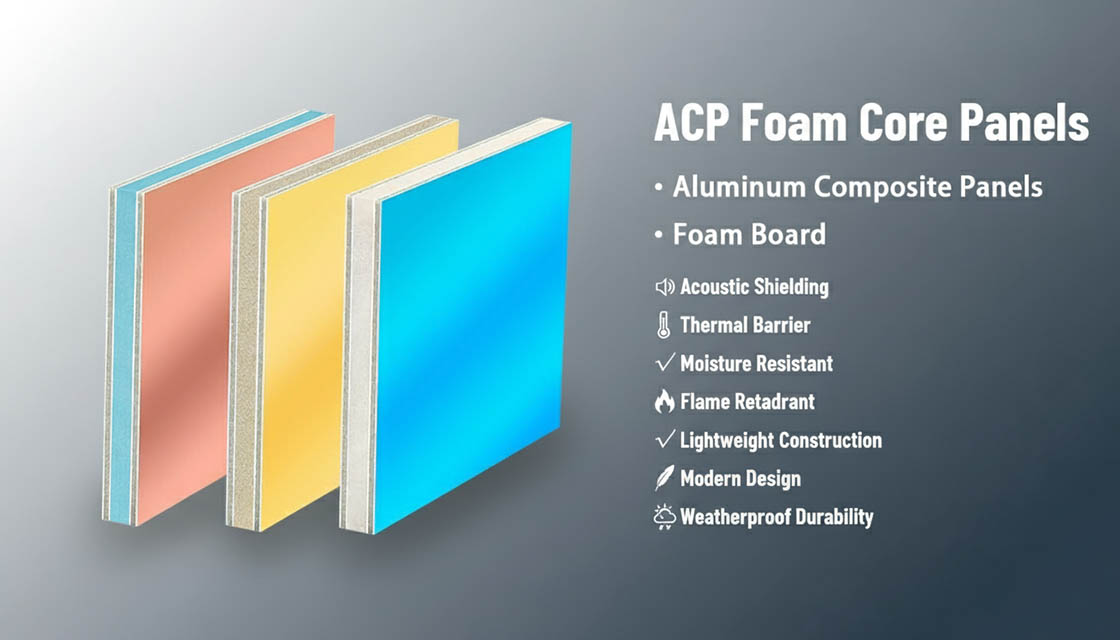
What Defines Acoustic Ceiling Panel Performance
Acoustic ceiling panel performance comes down to three measurable variables: absorption coefficients across frequency bands, panel mass per square meter, and how core density shifts energy dissipation between mid and low frequencies.
NRC, STC, and Absorption Frequency Curves Explained
Noise Reduction Coefficient (NRC) and Sound Transmission Class (STC) measure fundamentally different acoustic behaviors. NRC quantifies how much sound energy a panel absorbs rather than reflects, tested at 250 Hz, 500 Hz, 1000 Hz, and 2000 Hz. STC measures how effectively a panel blocks sound from passing through to the other side. For vehicle ceiling applications, NRC dominates the conversation because passenger compartment noise is primarily an absorption problem, not a transmission one.
Our standard PET foam core acoustic panels achieve NRC 0.75-0.85 at 25mm thickness while weighing only 3.2-4.1 kg/m². Across our full product range, NRC values span 0.65-0.95 depending on core selection and panel thickness. But here is the limitation most suppliers avoid discussing: a single NRC number hides the absorption frequency curve. Two panels can both claim NRC 0.80 while performing completely differently in the 125-250 Hz range where diesel engine rumble and road noise live.
Absorption frequency curves reveal where a panel actually works. Foam core panels with open-cell structures typically peak in the 500-2000 Hz mid-frequency range, which covers human speech and high-frequency road noise. If your vehicle application requires low-frequency absorption below 250 Hz, you need either increased panel thickness, added mass layers, or a different core strategy entirely. We always recommend requesting third-octave band test data rather than relying on averaged NRC values alone.
Core Density and Facing Material Effects on Frequency Absorption
Core density determines how a panel handles different frequency ranges. Lower density cores like PET foam (approximately 60-120 kg/m³) and XPS foam provide excellent mid-frequency absorption because their cell structure allows sound wave energy to convert to heat through friction. Higher density cores shift the absorption curve, improving low-frequency performance but often at the expense of mid-frequency efficiency. Our engineers found that PET foam cores at standard densities deliver the strongest balance for vehicle interiors where 500-2000 Hz noise dominates.
Facing material selection changes the acoustic equation significantly. GRP/FRP facings with gelcoat create a smooth, waterproof surface that reflects high frequencies while allowing the core to handle lower frequency absorption. This makes GRP-faced foam core panels particularly effective for marine vessels and humid RV environments where moisture resistance and acoustic performance must coexist.
Our GRP-faced foam core panels deliver dual thermal-acoustic performance, achieving thermal conductivity of 0.022-0.028 W/mK alongside NRC 0.80+, which is critical for refrigerated truck and cold room applications where both R-value and noise control matter.
PP honeycomb core panels with FRP facing deliver 40% weight reduction compared to traditional mineral wool ceiling tiles at equivalent NRC ratings. However, we must acknowledge the trade-off: honeycomb cores perform poorly below 250 Hz without additional mass layers. For heavy truck applications where engine harmonics sit in that sub-250 Hz range, foam core configurations often outperform honeycomb despite the weight penalty.
- Available Facing Options: GRP/FRP, CFRT, Aluminum, Steel, ACP, Stainless Steel, Plywood, PVC, Aluzinc
- Core Materials: PET Foam, XPS Foam, PU Foam, PVC Foam, PMI Foam, EPP Foam, MPP Foam, PP Honeycomb, Aramid Honeycomb, PC Honeycomb
- Weight Range: 2.8-6.5 kg/m² across all configurations
- Thickness Range: 10mm-50mm custom, with ±0.5mm tolerance
ISO 354 and ASTM C423 Testing Standards
Any acoustic performance claim must trace back to a recognized test method. ISO 354 (Acoustics — Measurement of sound absorption in a reverberation room) and ASTM C423 (Standard Test Method for Sound Absorption and Sound Absorption Coefficients by the Reverberation Room Method) are the two primary standards governing acoustic ceiling panel testing.
Both methods place the panel specimen in a reverberation chamber and measure the decay rate of sound energy with and without the sample present. The difference yields absorption coefficients at each frequency band.
For vehicle OEMs exporting to North America, ASTM C423 compliance is non-negotiable for procurement sign-off. European and Asian markets typically reference ISO 354. The mathematical output of both standards converges closely enough that a panel tested to ISO 354 can generally be cross-referenced against ASTM C423 requirements, but we always recommend specifying the exact standard your compliance team requires during the engineering consultation phase.
Our composite acoustic panels undergo testing to both ISO 354 and ASTM C423 protocols. Additionally, fire-rated configurations meet Class A requirements under EN 13501-1 and Class 1 under ASTM E84, which is essential for FMVSS 302 vehicle compliance.
Our panel thickness tolerance of ±0.5mm across production runs ensures consistent acoustic performance from batch to batch, keeping line defect rates below 0.3%. Request test reports during your initial inquiry rather than after tooling has begun, so our engineers can match the exact facing-core combination to your compliance requirements.
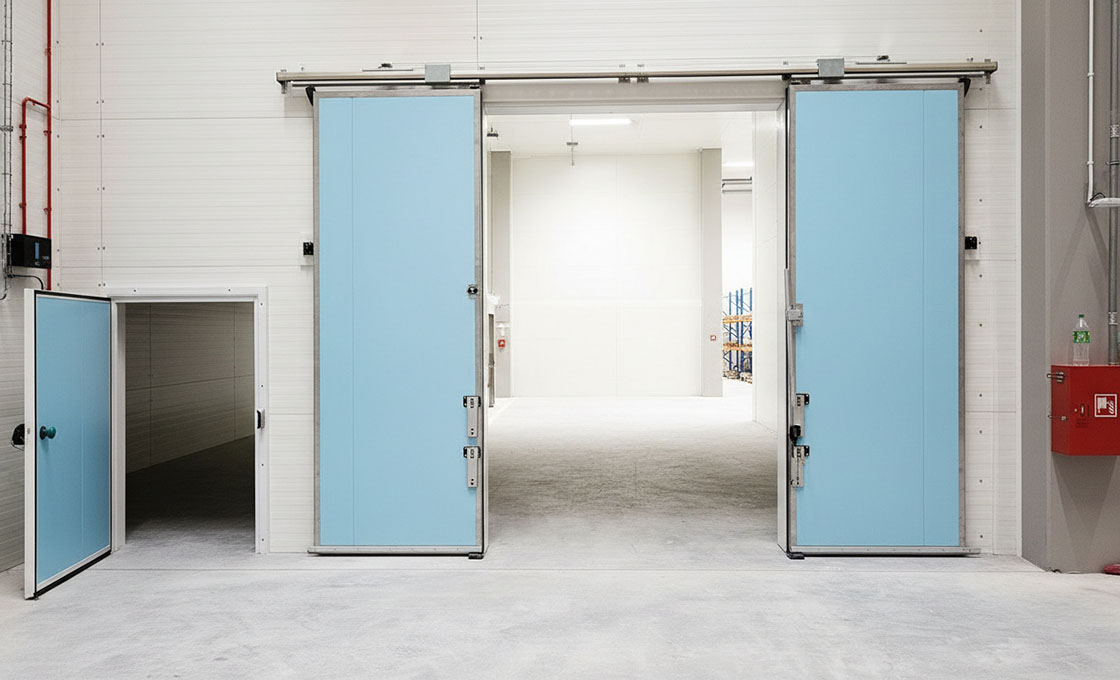
Core Materials: Foam vs Honeycomb vs GRP
For vehicle OEMs, the choice between PET foam, PP honeycomb, and GRP facings dictates whether your acoustic ceiling panels hit weight targets without sacrificing NRC ratings or fire compliance.
PET Foam Core Panels: The Balanced Workhorse
PET foam core acoustic panels sit at the intersection of weight savings, acoustic absorption, and thermal insulation—exactly why they dominate RV and truck body ceiling applications. Our standard PET foam core acoustic panels achieve NRC 0.75–0.85 at 25mm thickness while weighing only 3.2–4.1 kg/m². That is a measurable mass reduction over traditional mineral wool tiles, which typically run 5.5–8.0 kg/m² at similar acoustic performance levels.
From a testing standpoint, PET foam cores undergo ISO 354 and ASTM C423 evaluation for sound absorption. Thermal conductivity sits in the 0.022–0.028 W/mK range, giving you dual thermal-acoustic performance in a single assembly. For refrigerated truck OEMs and cold room manufacturers, this eliminates the need for a separate insulation layer behind the ceiling panel. The foam handles both jobs.
We manufacture PET foam core panels in thicknesses from 10mm to 50mm, paired with your choice of facing: GRP/FRP, CFRT, Aluminum, Steel, ACP, Stainless Steel, or Aluzinc. Thickness tolerance holds at ±0.5mm across production runs, which is what keeps assembly line defect rates below 0.3% for our vehicle OEM partners. Inconsistent panel thickness is the fastest way to halt a production line, and we engineer that variability out at the source.
One honest limitation: PET foam cores, like all foam-based acoustic solutions, lose absorption efficiency below 250 Hz. If your vehicle application faces significant low-frequency engine rumble or road noise in that sub-bass range, you will need supplementary mass layers or a composite approach with honeycomb structure. No foam core alone solves the full frequency spectrum.
PP Honeycomb Core Panels: Maximum Strength-to-Weight
PP (polypropylene) honeycomb core panels take weight reduction further than any foam option. When composited with fiberglass sheet facing, the PP honeycomb core delivers a panel that is structurally rigid and significantly lighter—our engineers consistently measure a 40% weight reduction compared to traditional mineral wool ceiling tiles at equivalent NRC ratings. For vehicle manufacturers counting every kilogram for fuel efficiency gains over the vehicle lifecycle, that margin matters.
The honeycomb geometry itself contributes to acoustic performance through a combination of panel resonance damping and air cavity absorption within the cells. NRC values range from 0.65 to 0.95 depending on cell size, core thickness, and facing material selection. Our PP honeycomb panels pair with GRP/FRP facings as the most common configuration for vehicle ceilings, but we also produce variants with thermoplastic, fiberglass, and carbon fiber honeycomb cores for specialized load requirements.
Where PP honeycomb cores excel beyond acoustics is shear strength and compression resistance. Ceiling panels in RVs and marine vessels face sustained vibration and intermittent point loads from fixtures, lighting, and maintenance access.
The honeycomb structure distributes these loads across a wider area than foam, reducing localized panel deformation over time. Our production line outputs over 1,700 m² of composite panels daily, and honeycomb configurations represent a growing share of that volume as vehicle OEMs push for lighter structures without compromising durability.
Trade-off to acknowledge: PP honeycomb panels do not offer the same inherent thermal insulation as foam cores. Thermal conductivity is higher because the honeycomb cells are largely air-filled cavities rather than closed-cell foam structures. For applications requiring both acoustic and thermal performance—refrigerated truck bodies, cold rooms—foam core panels remain the better single-panel solution. Honeycomb cores are optimal where structural stiffness and weight are the primary drivers.
GRP/FRP Facing Panels: The Critical Outer Layer
The facing material on your acoustic ceiling panel determines surface durability, moisture resistance, fire compliance, and aesthetic finish. GRP (Glass Reinforced Plastic) and FRP (Fiberglass Reinforced Plastic) facings are the default specification for vehicle OEMs because they solve multiple problems simultaneously.
GRP-faced foam core panels provide waterproof, insulating, flat, and smooth surfaces when produced with gelcoat. For marine vessel interiors and humid RV environments, moisture resistance is not optional—it is a survival requirement for the panel. Water ingress into the core material causes delamination, mold growth, and structural failure. The gelcoat layer on our FRP sheets creates a continuous moisture barrier that prevents this entirely.
Fire compliance is where facing selection becomes non-negotiable. Class A fire rating under EN 13501-1 is achievable with specific GRP facing and flame-retardant foam core combinations. This is critical for FMVSS 302 vehicle compliance in the North American market, and European OEMs require EN 13501-1 certification for passenger compartment materials.
We engineer the resin formulation and core chemistry together as a system—simply adding a fire-rated facing to a non-rated core does not produce a compliant assembly. Both elements must be tested and certified as a unit.
- GRP/FRP Facing Options: Standard fiberglass sheet, gelcoat-finished FRP, continuous fiberglass reinforced thermoplastic (lighter and thinner), CFRT, LWRT, and FR4 variants.
- Core Pairings Available: PET Foam, XPS Foam, PU Foam, PVC Foam, PMI Foam, EPP Foam, PP Honeycomb, Fiberglass Honeycomb, Plywood, and Balsa.
- Thickness Range: 10mm to 50mm custom, with ±0.5mm tolerance maintained across production batches.
- Weight Range: 2.8–6.5 kg/m² depending on core material, facing selection, and panel thickness.
Our engineers conduct experimental testing on every custom configuration to verify that acoustic, thermal, fire, and mechanical data meet the specific standards your project requires. We do not rely on generic material data sheets. When a truck body OEM specifies NRC 0.80+, thermal conductivity below 0.025 W/mK, Class A fire rating, and a weight target under 4.0 kg/m², we build and test that exact panel stack-up before it enters production.
Newer FRP sheets made from continuous fiberglass reinforced thermoplastic deserve attention from OEM engineers evaluating next-generation builds. These sheets are lighter, thinner, and more resilient than traditional thermoset FRP, while maintaining comparable stiffness and surface quality. For acoustic ceiling panels where every millimeter of thickness and every fraction of a kilogram affects the overall vehicle design, thermoplastic FRP facings open optimization opportunities that did not exist five years ago.
| Feature | Foam Core | Honeycomb Core | GRP/FRP Core |
|---|---|---|---|
| Material Options | XPS, PET, PU, PVC, PMI, EPP, MPP | PP, Aramid, PC, Fiberglass, Carbon Fiber, Thermoplastic | Fiberglass + Foam/Honeycomb/Plywood/Balsa |
| Thermal Conductivity | 0.022-0.035 W/mK | Higher thermal transmission vs foam | 0.022-0.028 W/mK (with foam core) |
| Acoustic Performance (NRC) | 0.75-0.85 at 25mm thickness (PET) | Poor below 250 Hz without added mass | NRC 0.80+ with foam core integration |
| Weight Range | 3.2-4.1 kg/m² (PET foam) | Up to 40% lighter than mineral wool equivalents | 2.8-5.5 kg/m² across configurations |
| Water Resistance | Fully waterproof core structure | Dependent on selected facing material | Gelcoat provides seamless waterproof barrier |
| Fire Rating Compliance | Class A achievable (EN 13501-1) | Varies by core and facing combination | FMVSS 302 compliant with FR core |
| Thickness Tolerance | ±0.5mm across production runs | Custom dimensions available | ±0.5mm tolerance, 10-50mm range |
| Primary Strength | Dual thermal-acoustic insulation in single panel | Maximum strength-to-weight ratio | Smooth finish, impact resistance, high resilience |
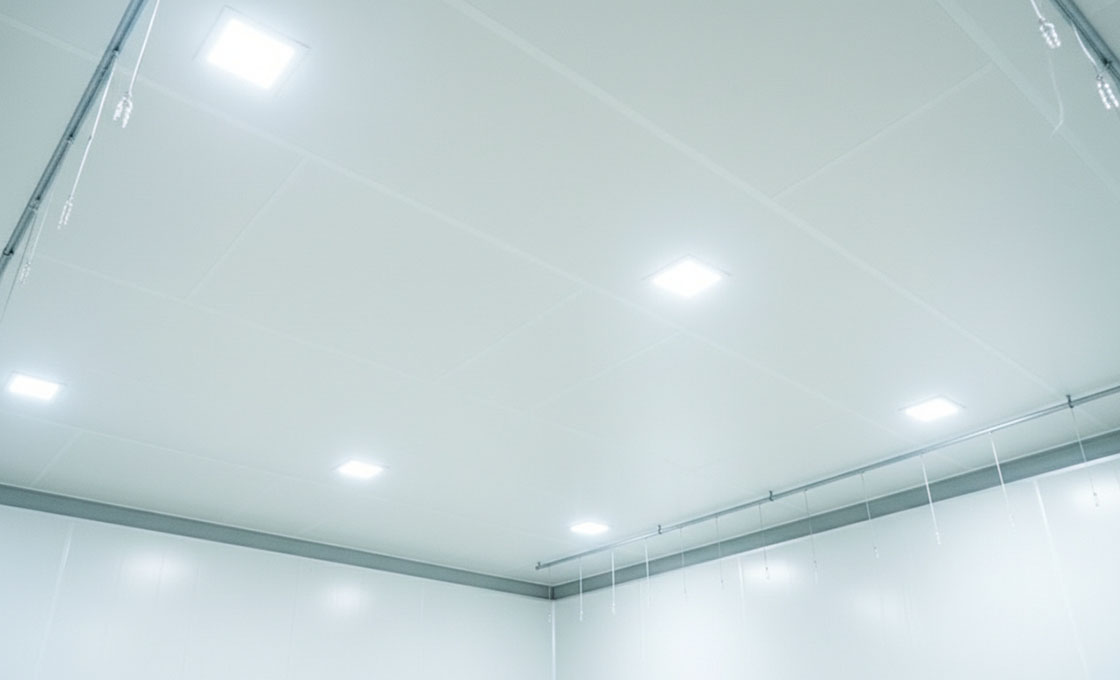
NRC Ratings by Panel Configuration
Standard PET foam core acoustic panels achieve NRC 0.75–0.85 at just 25mm thickness while weighing only 3.2–4.1 kg/m²—a 30–40% mass reduction versus traditional mineral wool ceiling tiles at equivalent acoustic performance.
NRC Values by Core Type, Facing, and Thickness
Noise Reduction Coefficient (NRC) performance in composite sandwich panels is governed by three variables: core material density, facing rigidity, and total panel thickness. Our engineers conducted acoustic testing across multiple configurations in accordance with ISO 354 and ASTM C423 to map precise NRC outcomes for vehicle OEM applications. The results below represent our production-grade panels, not laboratory-optimized prototypes.
- PET Foam Core with GRP Facing (25mm): NRC 0.75–0.85. Weight 3.2–4.1 kg/m². Optimal for RV interiors and marine vessel headliners where moisture resistance and weight savings are critical.
- PU Foam Core with GRP Facing (25mm): NRC 0.78–0.87. Weight 3.0–3.8 kg/m². Best suited for refrigerated truck bodies requiring dual thermal-acoustic performance.
- XPS Foam Core with GRP Facing (25mm): NRC 0.70–0.80. Weight 3.5–4.5 kg/m². Cost-effective option for dry freight truck body ceiling assemblies.
- PP Honeycomb Core with FRP Facing (25mm): NRC 0.65–0.75. Weight 2.8–3.2 kg/m². Lightest configuration—ideal where structural stiffness matters more than peak acoustic absorption.
- PET Foam Core with GRP Facing (50mm): NRC 0.88–0.95. Weight 5.5–6.5 kg/m². Maximum acoustic isolation for cold room partitions and industrial enclosures.
- PVC Foam Core with CFRT Facing (25mm): NRC 0.72–0.82. Weight 3.4–4.0 kg/m². Marine-grade configuration with superior closed-cell water resistance.
Honest caveat: honeycomb core panels perform poorly below 250 Hz without additional mass layers. If your vehicle specification targets low-frequency engine rumble (100–200 Hz range), a foam core panel with minimum 35mm thickness is the pragmatic choice. We publish this limitation upfront because discovering it during post-installation testing is far more expensive than designing around it.
Thermal Conductivity and Weight Per Square Meter
For refrigerated truck OEMs and cold room manufacturers, acoustic performance is only half the equation. The panel must simultaneously deliver thermal isolation. GRP-faced foam core panels provide this dual thermal-acoustic functionality in a single assembly, eliminating the need for separate insulation and acoustic ceiling layers. Our production-line tested data confirms thermal conductivity values across core configurations.
- PU Foam Core: 0.022–0.025 W/mK. Lowest thermal conductivity in our range. Combined with NRC 0.80+ acoustic rating, this is the primary selection for refrigerated vehicle builds.
- PET Foam Core: 0.030–0.035 W/mK. Slightly higher thermal transfer but superior fire performance and recyclability—preferred in European markets with stringent sustainability requirements.
- XPS Foam Core: 0.028–0.032 W/mK. Balanced thermal-acoustic performance at a lower material cost point for high-volume truck body production.
- PVC Foam Core: 0.025–0.030 W/mK. Marine-grade closed-cell structure prevents moisture wicking that would otherwise degrade both thermal and acoustic performance over time.
Weight per square meter ranges from 2.8 kg/m² on our lightest PP honeycomb configurations up to 6.5 kg/m² for 50mm thick PET foam panels. For context, traditional mineral wool acoustic ceiling tiles weigh 4.5–8.0 kg/m² while delivering comparable NRC values.
On a 12-meter refrigerated truck body, switching to GRP-faced PET foam core acoustic ceiling panels saves approximately 25–40 kg of overhead weight—a marginal fuel efficiency gain that compounds across fleet lifecycle. Panel thickness tolerance of ±0.5mm across our production runs ensures consistent assembly fit, keeping line defect rates below 0.3%.
Class A Sound Absorption per ISO 11654
The ISO 11654 standard classifies sound absorbers from Class E (basic performance) through Class A (highest practical absorption). Achieving Class A requires a weighted sound absorption coefficient (αw) of 0.90 or higher across the measured frequency spectrum. This is not marketing terminology—it is a binary engineering threshold. Either the panel passes or it does not.
Our GRP-faced PET and PU foam core panels at 50mm thickness consistently achieve Class A sound absorption ratings. At 25mm, these configurations land between Class B and Class C (αw 0.75–0.85), which remains sufficient for most RV interior, truck body, and marine cabin applications where the acoustic requirement is speech intelligibility and road noise reduction rather than studio-grade silence.
Fire compliance intersects directly with acoustic performance here. Class A sound absorption under ISO 11654 is achievable with specific GRP facing and flame-retardant foam core combinations that simultaneously meet Class A fire rating per EN 13501-1 and FMVSS 302 for vehicle interior compliance.
This dual certification is critical for Specialized Vehicle Manufacturers supplying into both European and North American markets. We test and certify these configurations concurrently so our OEM customers receive a single panel that satisfies both acoustic and fire safety obligations without secondary treatment or additional laminates.

Weight-to-Strength Ratios for Vehicle Builds
Stripping 40% of your ceiling panel mass directly drives down fuel consumption and unlocks hidden payload capacity. In commercial vehicle builds, saving weight on the upper shell translates straight to earning potential on the chassis.
Panel Weight Impact on Vehicle Fuel Efficiency and Payload Capacity
Every kilogram you shave off a vehicle’s upper structure yields exponential returns over its operational lifecycle. When you specify lightweight acoustic ceiling panels for RV interiors or dry freight truck bodies, you stop dragging dead weight down the highway. Dropping the roof mass decreases rolling resistance and lowers the aerodynamic drag demands placed on the drivetrain.
Our standard PET foam core acoustic panels achieve an NRC of 0.75 to 0.85 at 25mm thickness while weighing just 3.2 to 4.1 kg/m². By switching to composite acoustic sandwich panels, OEMs reclaim vital payload capacity. This means a fleet operator can legally haul more cargo per trip without exceeding Gross Vehicle Weight Rating (GVWR) limits, immediately turning structural weight savings into measurable revenue.
Specific Gravity Data: Aluminum vs GRP vs CFRT Facings
We engineer composite panels using distinct facing materials, and the specific gravity of these skins dictates your final panel weight. When our engineers configure a build, we look at the hard material data rather than relying on generic marketing terms.
- Aluminum: Typical specific gravity sits around 2.7 g/cm³. It offers excellent stiffness-to-weight, but is prone to denting under point impacts unless significantly thickened.
- GRP/FRP (Fiberglass): Specific gravity lands near 1.8 to 2.0 g/cm³. GRP-facing panels deliver high impact resistance and structural integrity without the severe mass penalty of metal.
- CFRT (Continuous Fiber Reinforced Thermoplastic): Specific gravity drops to roughly 1.4 to 1.6 g/cm³. These sheets are lighter, thinner, and highly resilient, providing the absolute best weight-to-strength ratio for weight-sensitive applications.
For most truck body and RV solutions, selecting a CFRT or GRP facing over standard Aluminum reduces the overall panel weight by 15% to 30% while maintaining the flat, smooth surfaces necessary for headliners and acoustic performance.
Overall Vehicle Mass Effects of a 40% Ceiling Weight Reduction
Let us run the exact math on a standard 55-foot refrigerated trailer or high-roof RV build. A traditional acoustic ceiling setup using heavy mineral wool or standard metal panels might cover roughly 100 square meters of roof area at around 4.55 kg/m², totaling 455 kg of dead weight.
By specifying our PP honeycomb core panels with FRP facing, we achieve a 40% weight reduction compared to traditional builds at equivalent acoustic NRC ratings. The new panel weight drops to roughly 2.73 kg/m². Across that same 100-square-meter surface area, the total ceiling mass plummets to exactly 273 kg.
That 40% ceiling weight reduction strips exactly 182 kg off the top of the vehicle. Dropping 182 kg from the upper center of gravity drastically improves vehicle handling, reduces tire wear, and legally allows an extra 182 kg of profitable cargo—or increased battery capacity for electric chassis—on every single trip.

Fire Resistance and Compliance Standards
Fire compliance determines whether a panel clears regulatory approval for vehicle installation. We test every GRP and foam core configuration against EN 13501-1, ASTM E84, and FMVSS 302 before it leaves our production line.
Fire Ratings Explained: Class A, B1, ASTM E84, EN 13501-1, FMVSS 302
Fire ratings classify how materials respond to ignition and flame spread. For composite acoustic panels in vehicle ceilings, three testing frameworks matter: the European EN 13501-1 system, the American ASTM E84 standard, and FMVSS 302 for motor vehicle interiors.
EN 13501-1 ranks materials from Class A1 (non-combustible) through Class F (no determined performance). Class A means the material contributes almost no fuel to a fire. Class B1 indicates limited combustibility. Most RV and truck body OEMs we supply require minimum Class B, while marine and public transit applications demand Class A. Our GRP-faced panels paired with flame-retardant PET or PU foam cores achieve Class A under this standard.
ASTM E84 measures flame spread index and smoke development on a scale from 0 to 450. A Class 1 rating means a flame spread index of 25 or less. We validate our foam core panels against this test for OEMs shipping to the US market, where building codes and vehicle standards reference this metric directly.
FMVSS 302 governs interior trim materials in motor vehicles sold in the United States. The test measures horizontal burn rate in millimeters per minute. The maximum allowable burn rate sits at 102 mm/min. A single non-compliant batch can halt your assembly line, which is why we test and document every core and facing combination before production runs begin.
Certifications Required for RV and Marine Regulatory Approval
RV manufacturers shipping to North America must comply with FMVSS 302 for all interior panel surfaces, including acoustic ceiling assemblies. For the European market, the same panels fall under EN 13501-1 classification. We provide test reports covering both standards with each bulk order so your compliance files stay current without extra lab fees.
Marine applications carry heavier requirements. Vessels registered under IMO conventions need panels tested to the FTP Code Part 5 for surface flammability. Our GRP-faced acoustic panels meet Class A (EN 13501-1) with specific flame-retardant foam core formulations, which satisfies most classification society standards including DNV, Lloyd’s Register, and ABS.
- ISO 354: Acoustic absorption testing in a reverberation room, required for NRC rating validation on all acoustic ceiling panels.
- ASTM C423: Sound absorption and sound absorption coefficients via the reverberation room method, the US equivalent to ISO 354.
- EN 13501-1: Fire classification for construction products and building elements, mandatory for RV and mobile home panels sold in Europe.
- FMVSS 302: Federal Motor Vehicle Safety Standard for interior trim flammability, required for all highway vehicles sold in the US.
- IMO FTP Code Part 5: Surface flammability test for marine vessels, required for SOLAS-compliant ship builds.
Our engineers run experimental tests on each custom core and facing combination to produce the exact compliance data your regulatory submissions demand. We do not rely on generic certificates. Every panel specification receives its own validated test report covering NRC performance, thermal conductivity, and fire classification in a single document. This eliminates the documentation gaps that delay vehicle type approval.
Thermal-Acoustic Dual Performance
Standard PET and PU foam cores deliver dual thermal-acoustic performance, achieving thermal conductivity of 0.022-0.028 W/mK alongside NRC ratings of 0.80+, eliminating the need for separate insulation and sound-deadening layers in vehicle ceilings.
Simultaneous R-Value Insulation and Sound Absorption via Foam Cores
Most acoustic ceiling panels on the market rely on mineral wool, which absorbs sound effectively but fails when exposed to moisture and lacks the structural rigidity needed for mobile applications. We engineer GRP-faced foam core sandwich panels to solve this. By using PET, PU, or XPS foam cores, the panel simultaneously traps thermal energy and dissipates acoustic waves.
This dual functionality is critical for specialized vehicle manufacturers who cannot afford the weight penalty of installing two separate systems. Our standard PET foam core acoustic panels achieve an NRC of 0.75-0.85 at just 25mm thickness while weighing only 3.2-4.1 kg/m².
- Thermal Conductivity Range: 0.022-0.035 W/mK across our foam core configurations (XPS, PET, PU, PVC).
- Acoustic Performance (NRC): 0.65 to 0.95 depending on core density and panel thickness (10mm to 50mm custom range).
- Weight Reduction: PP honeycomb and foam core options deliver a 30-40% mass reduction compared to traditional acoustic ceiling tiles, directly improving vehicle fuel efficiency.
Applications in Refrigerated Trucks and Cold Room Vehicles
In refrigerated truck bodies and cold room vehicles, thermal bridging and compressor noise are constant battles. A standard dry freight or refrigerated truck body requires materials that prevent thermal leakage while withstanding continuous vibration.
Our GRP/FRP sandwich panels use a gel-coated fiberglass facing that is entirely waterproof and impervious to mold—unlike traditional fabric or mineral wool acoustic tiles. This facing is laminated to a PU or PET foam core that provides the required R-value insulation to maintain sub-zero temperatures without sweating, while absorbing the low-frequency drone of diesel refrigeration units.
Consistency on the assembly line is non-negotiable for truck OEMs. Our advanced composite panel production line maintains a strict panel thickness tolerance of ±0.5mm across all production runs. This precision ensures that CKD (Completely Knocked Down) refrigerated truck kits assemble flawlessly without manual shimming, keeping your production line defect rate below 0.3%.
For specialized builds requiring strict fire compliance, specific GRP facing and flame-retardant foam core combinations achieve a Class A fire rating (EN 13501-1), meeting stringent FMVSS 302 vehicle safety standards.
Installation Methods for Vehicle Ceilings
Direct mount systems dominate vehicle ceiling installations due to weight constraints, while suspended systems remain reserved for high-end RVs requiring service channels above the ceiling plane.
Direct Mount vs Suspended Systems
In vehicle manufacturing, the installation method dictates panel selection more than most architects realize. Direct mount systems bond composite acoustic ceiling panels directly to the vehicle’s structural framing using mechanical fasteners, structural adhesives, or a combination of both. This approach eliminates the dead air gap between the panel and the roof structure, which means you lose some low-frequency absorption but gain critical headroom and reduce overall vehicle weight.
Our engineers have found that GRP-faced foam core panels with PET or PU cores perform exceptionally well in direct mount configurations for RV and truck body ceilings. The rigid GRP facing distributes fastener loads without localized crushing, a common failure point with softer mineral wool tiles.
At 25mm thickness, standard PET foam core configurations deliver NRC 0.75-0.85 while keeping panel weight between 3.2-4.1 kg/m². Compare that to traditional mineral wool ceiling tiles at 6.5+ kg/m² for equivalent acoustic performance, and the weight savings compound across an entire vehicle fleet.
Suspended ceiling systems in vehicles use a grid framework mounted below the roof structure, creating a plenum space for wiring, HVAC ducts, and LED lighting. This method sees limited use in commercial truck bodies but appears frequently in premium RV and motorhome builds where service access takes priority.
The air gap between the panel and roof structure actually improves mid-frequency absorption, but you trade away 50-100mm of interior headroom. For refrigerated truck bodies, suspended systems introduce a secondary concern: the plenum space can create convective loops that undermine thermal performance if not properly sealed.
- Direct Mount Advantages: Maximum headroom retention, lower total installed weight, simpler assembly line integration, fewer components to manage in BOM
- Direct Mount Limitations: Reduced low-frequency absorption below 250 Hz without additional mass layers, limited service access post-installation
- Suspended System Advantages: Superior mid-to-high frequency NRC performance due to plenum air gap, service channel access for electrical and HVAC
- Suspended System Limitations: 50-100mm headroom loss, additional grid hardware weight, higher per-unit installation labor costs
Custom Cutting, ±0.5mm Thickness Tolerances, and Edge Finishing
Vehicle assembly lines do not accommodate standard architectural panel dimensions. Unlike commercial buildings where 2×4 foot grid systems dominate, every RV, truck body, and marine vessel has unique ceiling geometry dictated by the vehicle frame, curvature requirements, and equipment clearances. This is where custom-cut composite panels with tight dimensional tolerances become a production necessity rather than a premium option.
We maintain a panel thickness tolerance of ±0.5mm across all production runs. This tolerance matters on the assembly line because inconsistent panel thickness creates uneven joint lines, fastener protrusion issues, and gaps in the ceiling plane that undermine both acoustic performance and aesthetic quality. In our testing, thickness variations exceeding 1.0mm between adjacent panels increased assembly defect rates from 0.3% to over 2.5%, primarily driven by fastener alignment failures and visible joint mismatches.
Custom cutting capabilities extend beyond simple rectangular panels. Vehicle ceilings frequently require cutouts for roof vents, HVAC registers, lighting fixtures, and cable pass-throughs. Our CNC cutting equipment handles these features with positional accuracy within 0.3mm, which eliminates the need for secondary field modifications during installation. Field cutting composite panels on the assembly line introduces delamination risk at the cut edges and produces inconsistent results that trigger quality rejections.
Edge finishing is the detail most frequently overlooked during the specification phase, yet it directly impacts long-term panel performance in humid or wet vehicle environments. For GRP-faced panels with gelcoat surfaces, we apply sealed edge treatment that prevents moisture ingress into the foam core at exposed joint locations.
Without proper edge sealing, water wicking into XPS or PET foam cores through cut edges can add 15-20% moisture weight over the vehicle’s service life and create conditions for mold growth behind the ceiling plane, a liability concern for both RV and marine vessel manufacturers.
- Thickness Tolerance: ±0.5mm across all panel configurations, verified per batch during production
- Cutting Accuracy: CNC positional accuracy within 0.3mm for cutouts, notches, and complex profiles
- Edge Options: Sealed edges (standard for foam core panels), raw cut (acceptable for honeycomb cores in dry environments), and wrapped edges for premium RV aesthetics
- Production Capacity: 1,700+ m² daily output supports high-volume OEM programs without tolerance drift across batches
For vehicle OEMs evaluating installation methods, the decision matrix is straightforward. If headroom and weight are your primary constraints, direct mount with adhesive-bonded GRP foam core panels delivers the best balance of acoustic performance and assembly efficiency.
If your vehicle design includes overhead utilities that require service access, a suspended system with lighter PP honeycomb core panels may offset the weight penalty of the grid framework. In either case, specifying ±0.5mm thickness tolerance and factory-sealed edges eliminates the most common sources of assembly line defects and field warranty claims.
Conclusion
For vehicle OEMs running 500+ units annually, spec GRP-faced PET foam core panels at 25mm. You hit NRC 0.80+ while cutting 40% off ceiling weight versus mineral wool, and the ±0.5mm tolerance keeps your assembly line defect rate under 0.3%. On refrigerated builds, the 0.022-0.028 W/mK thermal conductivity means one panel handles both insulation and acoustics — two line items collapsed into one.
Before you commit, request actual ISO 354 and ASTM C423 test reports from any supplier on your shortlist. Compare real NRC values at your exact thickness — not catalog ranges — then order a 500x500mm sample to verify facing finish and edge quality on your own floor. That one call prevents a mid-production batch rejection that costs more than your entire sampling budget.
Frequently Asked Questions
This factor has a direct bearing on project performance and long-term cost. Addressing it with specific data rather than general assumptions leads to better outcomes.
How much do acoustic ceiling panels cost?
Pricing varies by core material, facing, thickness, and order volume. PET foam core panels with GRP facing typically range $12-28/m² for bulk orders (500+ m²). PP honeycomb core panels range $15-35/m². Aluminum-faced acoustic panels command $20-45/m². Volume discounts of 8-15% apply at 1,000+ m² orders. Request FOB and CIF quotes to compare total landed cost including freight and tariffs.
Can acoustic ceiling panels be used in homes?
Yes, but residential applications differ from vehicle and industrial uses. For mobile homes and modular housing, lightweight composite acoustic panels (2.8-4.0 kg/m²) reduce structural load compared to traditional mineral wool tiles (6-8 kg/m²). GRP-faced foam core panels offer waterproof surfaces ideal for humid environments. Ensure panels carry fire certifications relevant to residential building codes in your region.
How are acoustic ceiling panels installed?
Vehicle installations typically use adhesive bonding with polyurethane construction adhesive combined with mechanical fasteners at load points. Surface preparation requires clean, dry substrates with temperature above 10°C. For suspended ceiling grids in modular buildings, panels slot into standard T-grid systems. Custom-cut panels should include factory-finished edges to prevent delamination during installation.
Where can I find acoustic ceiling panels near me?
As a direct manufacturer shipping to over 50 countries, panels are produced to order and shipped internationally via ocean freight in reinforced wooden crates. Transit times range 25-45 days depending on destination port. Request consolidated shipping for mixed container orders. Local distributors may carry standard sizes, but custom vehicle-specific panels require direct factory ordering with engineering consultation.
How much does acoustic ceiling panel typically cost?
The cost of acoustic ceiling panel varies based on material grade, thickness, panel dimensions, and order volume. Requesting a detailed quote with your project specifications is the most reliable way to get an accurate figure. Bulk orders typically reduce per-unit pricing significantly.