
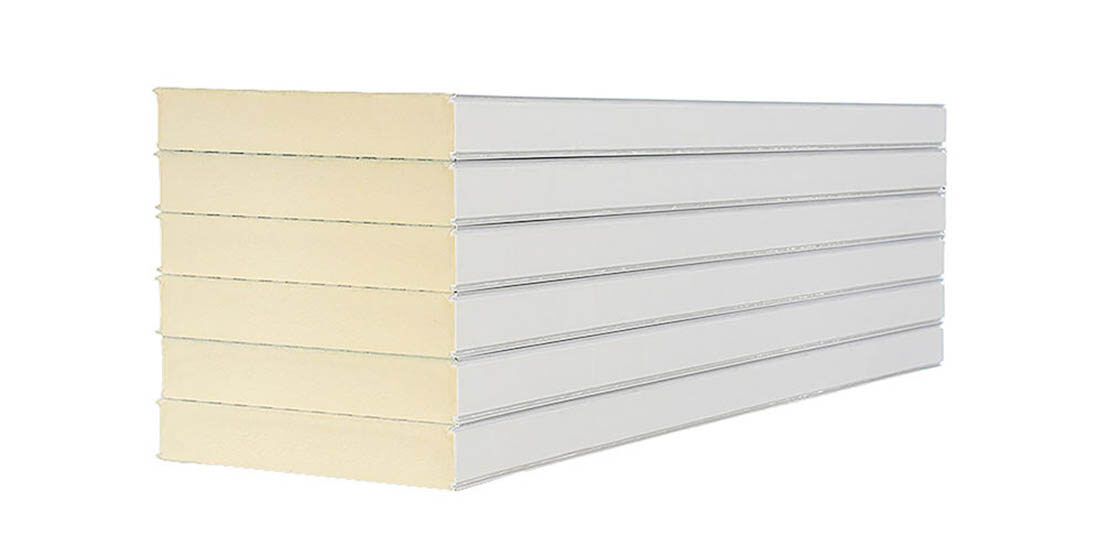
Last year, a German RV manufacturer scrapped 240 completed vehicles after their fire resistant aluminum panels failed EN 13501-1 testing during a random customs audit. The aluminum facings held up fine.
The PE core they’d quietly swapped in to save €8 per panel melted at 130°C, dropping the entire assembly from an A2 rating to a complete failure. Insurance denied the claim. The buyer ate €2.3 million in losses and missed their peak sales season by five months. That €8 savings per panel cost them €9,600 per vehicle.
We spent three years running core materials through ASTM E84 and EN 13501-1 tests at our facility, and this guide lays out what the data actually shows. You’ll get straight comparisons between FR PET foam cores and mineral wool — weight, fire rating, and what happens to each one above 600°C. We also cover the documentation chain required to pass local inspections, from batch traceability numbers to third-party test certificates that match the panels sitting on your production floor.
Fire Resistant Aluminum: Core Certifications
Fire compliance is the highest-risk line item in any aluminum composite panel specification. A mismatch between your core material and local fire code voids insurance and halts projects at customs. Before you shortlist a product, it helps to see where fire sits among the six ranked disadvantages of ACP cladding – it is rarely the only one that matters.
Global Fire Standards and True Fire-Rated Composite Panels
Solid aluminum melts at approximately 660°C, but it does not combust or release toxic fumes. The real fire risk in any aluminum composite panel comes from the core material sandwiched between the skins. Standard PE cores melt at roughly 130°C, creating rapid flame spread and toxic smoke. True fire-rated panels use FR (Fire Retardant) foam cores or mineral cores that char to insulate, maintaining structural integrity above 600°C.
Global fire compliance is not a single test. It is a matrix of regional standards that dictate which panel assemblies are legally permitted for specific building types and vehicle classes. Our engineers work with three primary certification frameworks depending on where the panels will be installed and shipped:
- EN 13501-1: The European classification standard governing A1 through F fire ratings for construction products.
- ASTM E84: The North American standard measuring surface burning characteristics — flame spread index and smoke developed index.
- NFPA 285: The US standard evaluating fire propagation in multi-story wall assemblies using combustible components.
Many importers fail local audits because the batch they receive does not precisely match the initial test specimen. Rax Panel addresses this directly: every production run carries traceable batch numbers linked to third-party fire test certifications, mitigating customs and inspection risks before panels leave our facility.
A2 vs B1 Fire Ratings: Combustibility Levels and Use-Cases
Under EN 13501-1, the A2 fire rating indicates a material that is virtually non-combustible with minimal heat release. This is the highest rating achievable for aluminum composite material (ACM) panels and is typically required for high-rise cladding, public transit infrastructure, and medical facilities. A2-rated panels almost always use mineral cores with densities around 100–120 kg/m³.
The B1 fire rating (difficult to ignite) is the more common target for specialized vehicle manufacturing and RV applications. B1 panels must demonstrate strict limits on flame spread and smoke development. Here is where the weight-to-fire trade-off becomes critical for our clients.
While competitors heavily promote heavy mineral wool cores for A2 ratings, our engineering team configures FR PET foam cores (densities approximately 100–200 kg/m³) and fire-retardant-treated PP honeycomb cores to achieve B1 and B2 fire ratings at a fraction of the weight. For truck body builders and RV manufacturers, this weight savings directly impacts payload capacity and fuel efficiency without sacrificing fire compliance.
- A2 Use-Case: High-rise exterior wall cladding, tunnels, public buildings requiring maximum non-combustibility.
- B1 Use-Case: RV walls and roofing, refrigerated truck bodies, marine vessel interiors, mobile homes.
- Core Density Trade-off: Mineral cores (100–120 kg/m³) for A2 vs FR PET foam (100–200 kg/m³) for B1 — comparable fire performance with different weight profiles.
In vehicle manufacturing specifically, containing smoke is often more critical than containing the flame itself. Aluminum skins paired with our specially formulated FR foams produce significantly less toxic smoke compared to standard laminated materials, extending evacuation time in emergency scenarios.
ASTM E84 and NFPA 285: US-Specific Testing and Wall Assemblies
For projects specifying US compliance, ASTM E84 is the baseline surface burning test. It measures two values: the Flame Spread Index (FSI) and the Smoke Developed Index (SDI). A Class A rating under ASTM E84 requires an FSI of 25 or less and an SDI of 450 or less. Our fireproof B1 panels are engineered to pass these thresholds, providing documented compliance for import into North American markets.
NFPA 285 is a completely different evaluation. It is a full-scale wall assembly test that assesses fire propagation characteristics of exterior non-load-bearing wall systems containing combustible components. This standard applies when your project uses foam core sandwich panels in multi-story construction. The test evaluates whether fire spreads vertically or horizontally through the wall assembly over a 30-minute exposure period.
Our engineers conduct experimental testing during the specification phase to confirm that panel configurations — aluminum facings at 0.3mm to 0.5mm thickness paired with the selected core — will meet the specific standard your project requires. We do not guess. We test, document, and certify before production begins.
- ASTM E84 Scope: Individual material surface burning characteristics (FSI and SDI indices).
- NFPA 285 Scope: Complete wall assembly fire propagation in multi-story building applications.
- Panel Tolerance: Thickness consistency held within ±0.5mm to prevent assembly line defects and thermal bridging gaps.
If your project requires ASTM E84 or NFPA 285 documentation, request the test reports early in the specification process. Our international sales team provides certification documents tied to your specific batch numbers, ensuring the material arriving at your facility matches the material that passed testing.
Solid Aluminum vs ACM Panels
ACM panels deliver exponentially higher rigidity at a fraction of solid aluminum’s weight. Aluminum itself will never combust, but your actual fire rating hinges entirely on the core material you specify.
Structural Differences: Why ACM Outperforms Solid Aluminum
Solid aluminum sheet relies solely on its own material thickness for rigidity. Double the span, and you need to roughly double the gauge. In vehicle manufacturing and commercial construction, this brute-force approach destroys your weight budget and corrodes your fuel efficiency margins. ACM (Aluminum Composite Material) sandwich panels flip that equation entirely.
By bonding thin aluminum facings—typically 0.3mm to 0.5mm—to a structured core like FR PET foam or PP honeycomb, you create an I-beam effect. The skins handle tensile and compressive loads while the core manages shear forces and spacing. Our engineers consistently see stiffness increases of 5x to 10x over solid aluminum at equivalent weights, depending on the core selected.
- Core Density Range: FR PET foam runs approximately 100–200 kg/m³; mineral wool sits around 100–120 kg/m³.
- Facing Thickness: Standard aluminum skins range from 0.3mm to 0.5mm for composite configurations.
- Thickness Tolerance: Panel consistency held within ±0.5mm to prevent assembly line defects.
- Weight Trade-off: Rax Panel engineers FR PET foam and treated PP honeycomb cores to hit B1/B2 fire ratings at a fraction of the weight of mineral wool A2 solutions.
For specialized vehicle manufacturers, this weight-to-fire rating balance is the critical calculation. Heavier mineral wool cores achieve A2 ratings but add mass that degrades chassis performance. Our approach targets the sweet spot: high fire resistance with minimal weight penalty.
Is 6061 Aluminum Flammable? Melting Point, Oxide Layer, and Toxicity
No. 6061 aluminum and its common alloys will not ignite, sustain combustion, or release toxic fumes when exposed to fire. Solid aluminum melts at approximately 660°C. ACM structures with bonded facings show composite failure points in the 750–800°C range. In real-world fire scenarios involving RVs, truck bodies, or building envelopes, you will never reach these thresholds before the surrounding materials have already failed.
The reason is aluminum’s natural oxide layer. Within seconds of exposure to oxygen, aluminum forms a thin aluminum oxide (Al₂O₃) skin with a melting point around 2,072°C. This layer self-heals when scratched and acts as a thermal barrier that dramatically slows heat transfer into the bulk metal. Even at temperatures approaching its melting point, aluminum does not produce particulate smoke, carbon monoxide, or halogenated gases.
This brings us to the real risk buyers face: the core material determines your fire certification outcome. A standard PE core melts at roughly 130°C—well below the aluminum facing’s failure point. It liquefies, drips, and can act as an accelerant.
FR foam cores and mineral cores behave completely differently. They char and insulate, maintaining structural integrity above 600°C. When we run ASTM E84 tests on our B1 fireproof aluminum composite panels, the FR foam cores limit both flame spread and smoke development indices to compliant levels.
In enclosed spaces like RV cabins and marine vessels, smoke toxicity often kills faster than flame spread. Aluminum skins paired with specially formulated FR foams produce significantly less toxic smoke than standard laminated materials, buying critical evacuation time. This is precisely why international distributors and specialized vehicle manufacturers should never treat fire ratings as interchangeable line items—your choice of core chemistry directly determines whether your finished product passes local inspection.
Fireproof Core Materials Compared
Not all fire-rated cores perform equally under thermal stress. Choosing between PE, mineral-filled, FR PET foam, and honeycomb cores dictates whether your panel survives a fire event or becomes a liability on the assembly line.
Fire Performance by Core Type: PE vs. Mineral vs. FR Foam vs. Honeycomb
The core material inside an aluminum sandwich panel is the single greatest determinant of its fire rating. While solid aluminum melts at approximately 660°C and does not combust, the core dictates how quickly heat transfers, how much smoke generates, and whether the panel maintains structural integrity during a fire.
Standard PE cores melt at roughly 130°C, making them unsuitable for any application requiring ASTM E84 or B1 compliance. Our engineers consistently advise against PE cores for vehicle manufacturing and construction projects subject to strict fire codes.
- Standard PE Core: Melts at ~130°C. No fire retardancy. Suitable only for interior signage or low-risk decorative applications where fire codes do not apply.
- Mineral-Filled Core: Achieves Class A2 fire rating (virtually non-combustible with minimal heat release). High thermal stability but adds significant weight. Densities typically exceed 150 kg/m³.
- FR PET Foam Core: Densities range from 100–200 kg/m³. Chars to form an insulating barrier rather than melting. Achieves B1/B2 fire ratings at substantially lower weight than mineral cores. Thermally stable above 600°C.
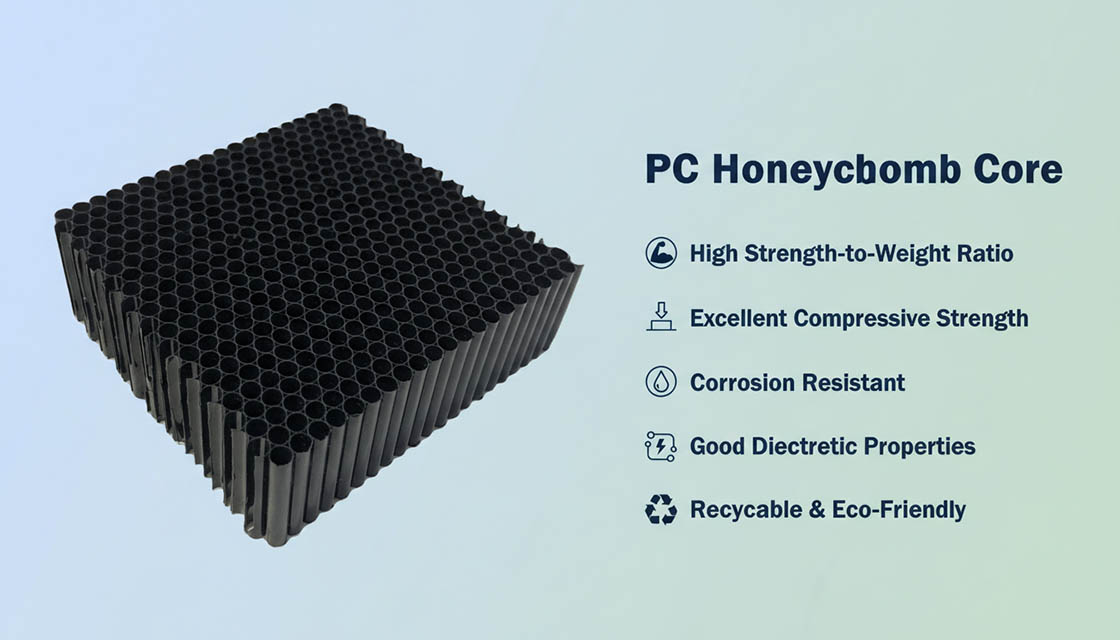
- PP Honeycomb Core (Fire-Retardant Treated): Exceptionally lightweight. When treated with fire retardants and composited with fiberglass or aluminum skins, achieves strong B1/B2 ratings while minimizing overall panel mass.
In vehicle manufacturing—particularly RVs, refrigerated truck bodies, and marine vessels—containing smoke is often more critical than containing the flame itself. Aluminum skins paired with our specially formulated FR PET foams produce significantly less toxic smoke compared to standard laminated materials, providing crucial evacuation time. This is a detail many suppliers overlook, but it directly impacts passenger safety and insurance compliance.
Mineral Wool vs. FR Foam Cores: The Weight-Cost-Fire Triangle
This is where many procurement decisions go wrong. Mineral wool cores deliver the highest fire ratings—Class A2 under EN 13501-1—making them the default recommendation for building facade projects requiring NFPA 285 certification. However, mineral wool densities sit around 100–120 kg/m³, and when sandwiched between 0.3mm–0.5mm aluminum facings, the resulting panel is heavy. For stationary construction, this weight is manageable. For specialized vehicles, it is a serious engineering problem.
Every kilogram added to an RV wall or refrigerated truck body reduces payload capacity and increases fuel consumption over the vehicle’s lifetime. Our engineers found that switching from mineral wool to FR PET foam cores in truck body panels reduces core weight by up to 40% while still achieving B1 fireproof compliance under ASTM E84. The thermal conductivity remains competitive, and the panel maintains structural rigidity under road vibration conditions where mineral wool can settle or degrade over time.
- Mineral Wool Advantages: Class A2 rating, proven NFPA 285 compliance history, excellent acoustic dampening, zero combustibility.
- Mineral Wool Disadvantages: Heavy, can absorb moisture if skins are compromised, settles under constant vibration, higher freight costs for bulk shipping.
- FR PET Foam Advantages: Lightweight (100–200 kg/m³), waterproof, closed-cell structure prevents moisture absorption, B1/B2 fire rating, excellent dimensional stability.
- FR PET Foam Disadvantages: Cannot achieve Class A2 rating, higher material cost per cubic meter compared to basic foams.
The practical decision matrix is straightforward. If your project requires A2 certification for static building facades, mineral wool is the correct core. If you manufacture RVs, truck bodies, marine vessels, or mobile homes where weight directly impacts operational cost and chassis limits, FR PET foam or fire-retardant PP honeycomb cores deliver the optimal balance. We customize these cores at the engineering stage, ensuring the panel thickness and skin gauge meet both your fire certification requirements and your weight budget.
One critical detail importers frequently miss: batch traceability. Many buyers pass initial fire tests with a sample, then fail local inspections on a production batch because the core material composition shifted. Rax Panel links traceable batch numbers directly to third-party fire test certifications for every production run. This eliminates the compliance gap between your prototype approval and full production delivery.
| Core Material | Fire Rating | Critical Threshold | Primary Limitation |
|---|---|---|---|
| Standard PE Core | B2 / Combustible | Melts at ~130°C | Releases toxic smoke; fails strict codes |
| FR PET Foam | B1 / Fire Retardant | Chars to insulate above 600°C | Slightly heavier than PP honeycomb |
| Mineral Wool Core | A2 / Non-Combustible | Withstands 1000°C+ | Heavy; reduces vehicle fuel efficiency |
| FR PP Honeycomb | B1 / B2 Retardant | Treated retardant chars at 600°C+ | Lower rigidity than solid foam cores |
| Aluminum Honeycomb | A2 / Non-Combustible | Melts at ~660°C; no toxic fumes | Higher cost; conducts heat through cells |

Thermal Stability in Vehicle Builds
Thermal management in vehicle builds is a structural engineering problem, not just an insulation problem. The core material you select dictates whether a refrigerated truck holds temperature or a marine cabin stays condensation-free.
Thermal Bridging and Engine Heat Management
Thermal bridging occurs when highly conductive materials—like solid aluminum or steel framing—create a direct path for heat transfer between the exterior and interior of a vehicle structure. In RV and truck body manufacturing, these bridges defeat the purpose of premium insulation. You can spec a panel with an R-value of 6.0, but if your structural joints transfer heat at every stud point, the effective envelope performance drops dramatically.
Our engineers address this by specifying foam core sandwich panels where the continuous core—whether XPS, PET, PU, or PVC—acts as a thermal break between the interior and exterior skins. Unlike traditional framing where metal-to-metal contact is unavoidable, a properly bonded composite panel with GRP/FRP or aluminum facings isolates the thermal path entirely.
The foam core densities we work with range from approximately 100 kg/m³ for PET foam up to denser configurations, allowing us to tune the thermal resistance for the specific application.
Engine heat management in truck bodies and RVs presents a separate challenge. The powertrain and exhaust systems generate sustained temperatures that radiate into the cabin or cargo space. In refrigerated truck bodies, this heat load directly fights the cooling system, increasing compressor cycle time and fuel consumption.
We have found that specifying FR PET foam or PU foam cores in the floor and front-wall panels provides a measurable reduction in heat ingress compared to standard XPS cores. The key metric our vehicle manufacturing clients track is temperature differential maintenance over a 24-hour cycle—panels that lose less than 1°C per hour under a 40°C ambient differential are the benchmark.
Environmental Fluctuations in RVs, Refrigerated Trucks, and Marine Vessels
Vehicle structures experience thermal cycling that static buildings never see. An RV might sit in sub-zero temperatures overnight and face 45°C sun exposure by midday. A refrigerated truck body runs at -20°C internally while the road surface radiates 60°C. Marine vessels face saltwater spray, constant humidity, and solar loading simultaneously. Each scenario demands a panel system that does not delaminate, warp, or lose thermal performance under repeated cycling.
The critical failure mode in these environments is differential thermal expansion between the skin and core materials. Aluminum expands at roughly 23.1 × 10⁻⁶ per °C, while foam cores expand at significantly lower rates.
If the adhesive bond line cannot absorb this differential movement, you get skin separation—a catastrophic failure in a refrigerated truck that compromises the entire cargo load. Our production line holds panel thickness tolerances within ±0.5mm specifically to ensure consistent adhesive distribution and bond integrity across the full panel surface.
For refrigerated truck applications, PU foam cores remain the industry standard due to their closed-cell structure and low thermal conductivity. However, we are seeing a shift toward PET foam cores among clients who need both thermal performance and fire compliance. FR PET foam provides a workable balance—it chars to insulate rather than melting, maintaining structural integrity at temperatures where standard PE cores (which melt at approximately 130°C) would fail completely.
Marine thermal stability is arguably the most demanding. GRP/FRP sandwich panels with PVC or PET foam cores are our standard recommendation for vessel interiors and hull linings. The gelcoat finish on FRP sheets provides a waterproof, smooth surface that resists moisture absorption—a critical factor because waterlogged foam loses its thermal resistance entirely.
Saltwater environments also accelerate corrosion on metal fasteners, so the reduced need for mechanical fasteners in fully bonded composite panel systems is a structural advantage, not just a weight savings.
We test these panels under simulated cycling conditions before shipping. The data our engineering team collects directly informs the core and skin combination we recommend for each project. There is no universal “best” panel—only the correct specification for the thermal load, humidity exposure, and fire rating requirement of the specific vehicle build.
Conclusion
If you’re spec’ing panels for truck bodies or RV walls, stop defaulting to mineral wool cores just to chase A2 ratings. Our FR PET foam cores deliver B1 fire compliance at roughly half the weight — and on a vehicle chassis, that weight savings translates to measurable fuel efficiency within months of deployment. We’ve run the thermal and structural tests at our facility: you sacrifice zero integrity by choosing the lighter option.
Before your next procurement cycle, request our batch-traceable ASTM E84 and EN 13501-1 test reports covering both FR PET and mineral core configurations. Compare the fire ratings and weight specs side by side. Then have us cut a sample panel to your exact thickness tolerance — your engineers need to validate it on the line before you commit volume.
Frequently Asked Questions
This factor has a direct bearing on project performance and long-term cost. Addressing it with specific data rather than general assumptions leads to better outcomes.
What is the fire rating of aluminium panels?
Class A2 fire rating indicates that the material is virtually non-combustible with minimal heat release. It is the maximum fire rating achievable for Aluminium Composite Panels to date, making it suitable for high-rise structures and strict vehicle regulations.
Is 6061 aluminum flammable?
No. Aluminum products in their solid state (including 6061 grade) present no fire or explosive hazard. Solid aluminum will melt at roughly 660°C, but it will not ignite or combust due to its natural oxide layer.
What is the difference between ACM and aluminum panels?
ACM (Aluminum Composite Materials) panels consist of two thin aluminum sheets bonded to a core (like FR foam or mineral). This structure makes ACM panels significantly lighter and stronger than solid aluminum panels, while offering better thermal insulation and flatness.
What is the fire rating of ACM panels?
The highest ACM fire protection rating is Class A2, which possesses superior non-combustible characteristics. Builders and contractors recommend using A2 or B1 class ACM for fireproof construction due to their high fire protection ratings and structural integrity.
How fire-resistant is aluminum?
Aluminium is a uniquely fireproof material. It has a natural oxide layer that prevents the metal from reacting with oxygen and causing ignition. Solid aluminium will not catch fire; at temperatures of 750-800°C it will melt, but it will not combust.