
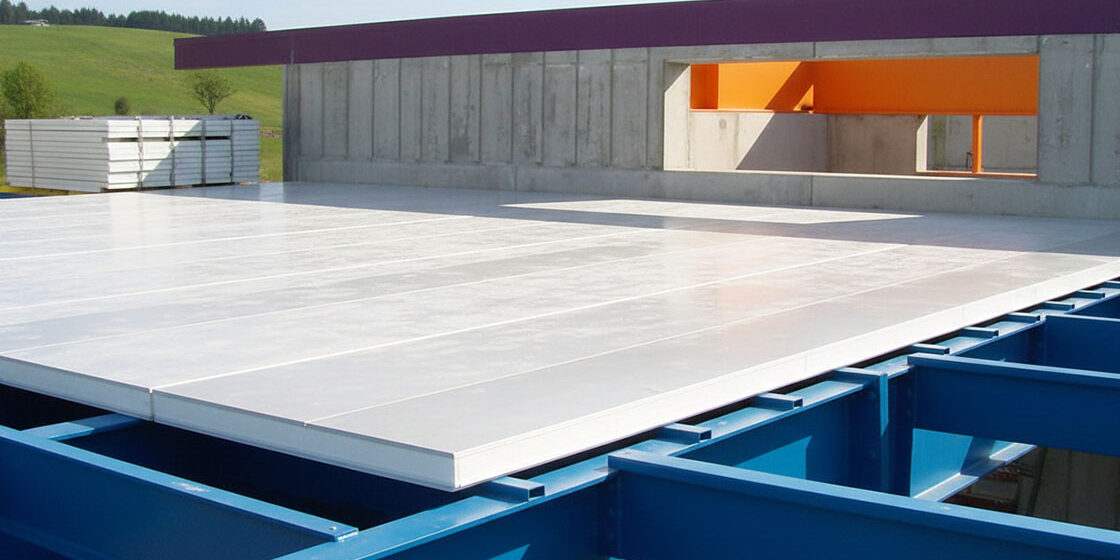
In 2024, a poultry integrator in Georgia tore out 2,400 square meters of steel-clad insulated roof panels after just four years. Ammonia from bird waste ate through the galvanized coating. Condensation from thermal bridging at the joints triggered respiratory outbreaks in three consecutive flocks. The replacement ran $52,000 in materials alone, plus another $180,000 in lost birds. I see this exact failure three or four times a year, and it always starts the same way: someone chose galvanized steel because the unit price looked 20% cheaper on the bid sheet. That math only works if you pretend the facility lasts forever and the animals never get sick.
We ran thermal conductivity tests across four core types — XPS, PET, polyurethane, and mineral wool — against the actual pH and humidity ranges recorded inside operating poultry, swine, and cattle barns. We also compared tongue-and-groove against cam-lock joint systems because that connection point is where nine out of ten condensation failures originate. This article lays out the R-values, the corrosion timelines between FRP and steel skins, the fire classifications, and the thickness tolerances you need to specify panels that actually survive a 15-year service cycle in ammonia-heavy environments. No filler. Just the hard numbers your building inspector and your CFO both need before that purchase order gets signed.
Why Livestock Housing Demands Specialized Panels
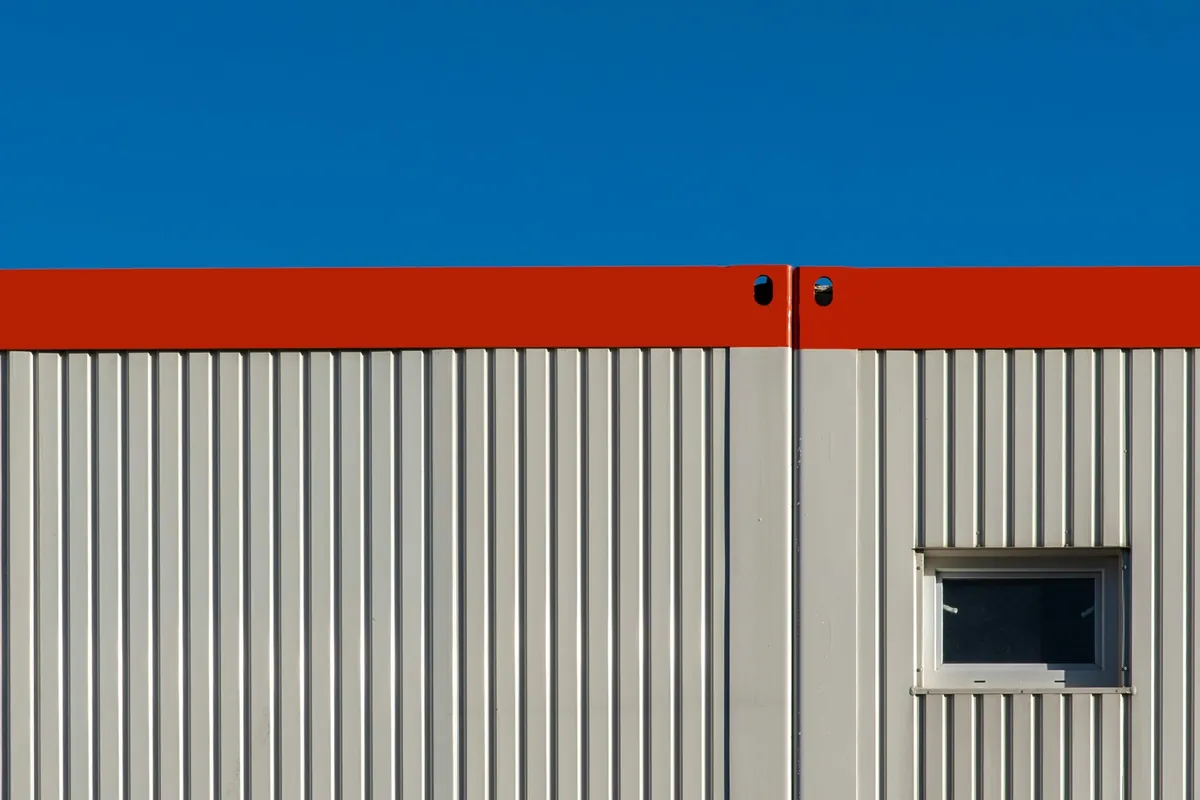
Livestock environments destroy standard building materials within 3-5 years. Ammonia reaches pH 11-13, humidity cycles between 60-90% RH, and pressure-wash cleaning hits 1,500+ PSI—conditions that demand FRP-skinned insulated roof panels engineered for agricultural corrosion zones.
The Chemical Assault: Ammonia and Constant Humidity
Livestock urine and manure decompose into ammonia gas, which dissolves into moisture on interior panel surfaces. The resulting condensate reaches pH 11 to 13—comparable to household bleach. Add sustained relative humidity between 60% and 90%, and you have an electrolyte film that accelerates galvanic corrosion on any exposed metal. Our test data confirms that standard galvanized steel skins begin showing oxidation pitting within 18 months under these conditions, with full-surface degradation by year three.
FRP (fiberglass-reinforced polyester) skins face zero electrochemical attack in the same pH range. The polyester resin matrix is inert to alkaline exposure, which is why our GRP/FRP panels maintain structural and surface integrity beyond 15 years in equivalent livestock environments. This is not a marginal improvement—it is a complete elimination of the corrosion failure mode.
Thermal Shock and Mechanical Abuse from Cleaning Cycles
Livestock facilities undergo frequent sanitation cycles. Pressure-wash cleaning operates at 1,500 PSI or higher, often with water temperatures between 60°C and 80°C. Panels that have been sitting at ambient barn temperature of 15°C are hit with a 45-65°C thermal differential in seconds. This repeated thermal shock causes differential expansion between skins and core material in poorly bonded panels, leading to delamination at the adhesive interface.
Our FRP-skinned foam core panels are engineered to absorb this stress. The continuous lamination process we use creates a molecular bond between the FRP skin and the XPS or PET foam core (thermal conductivity 0.028-0.035 W/m·K), preventing the separation that plagues mechanically fastened or glued steel sandwich panels. The skin itself resists surface erosion at 1,500+ PSI without chalking, flaking, or gloss degradation.
Why Standard Steel Panels Fail in 3-5 Years
We have inspected failed installations across multiple agricultural sites. The failure sequence is consistent: ammonia corrosion compromises the protective zinc coating on galvanized steel, then the underlying steel oxidizes, then rust scaling creates micro-gaps at panel joints. These gaps allow moisture ingress into the foam core, which destroys the thermal bond and collapses the insulation value. By year five, the panel has lost both structural rigidity and thermal performance.
- Year 1-2: Zinc coating degradation begins at panel edges and fastener points where ammonia condensate pools.
- Year 2-3: Surface rust spreads, joint seals crack under thermal cycling, and moisture penetrates the core.
- Year 3-5: Core delamination accelerates, panels sag under snow or wind loads, and R-values drop 40-60% below original spec.
- Replacement cost: For a standard 1,000m² poultry or swine facility, premature panel replacement runs $50,000+ in materials and labor—excluding revenue loss from facility downtime.
This is the core engineering argument for specifying FRP-skinned insulated roof panels in livestock housing from day one. The 10-15 year lifespan advantage over steel is not theoretical—it is measurable, repeatable, and documented across installations using panels with the same XPS/PET foam cores and FRP skins we manufacture today. Engineers specifying these systems for the first time should request ammonia resistance test certificates and confirm that panel thickness tolerance holds at ±0.5mm or tighter to prevent thermal bridging at joints.
Core Materials Compared: Foam vs Honeycomb vs FRP
Specifying the correct core and skin combination for insulated roof panels dictates whether a facility meets ISO 13790 thermal compliance or faces premature structural failure. We match exact material densities and conductivity coefficients to specific livestock and industrial requirements.
Core Material Performance Under ISO 13790 Standards
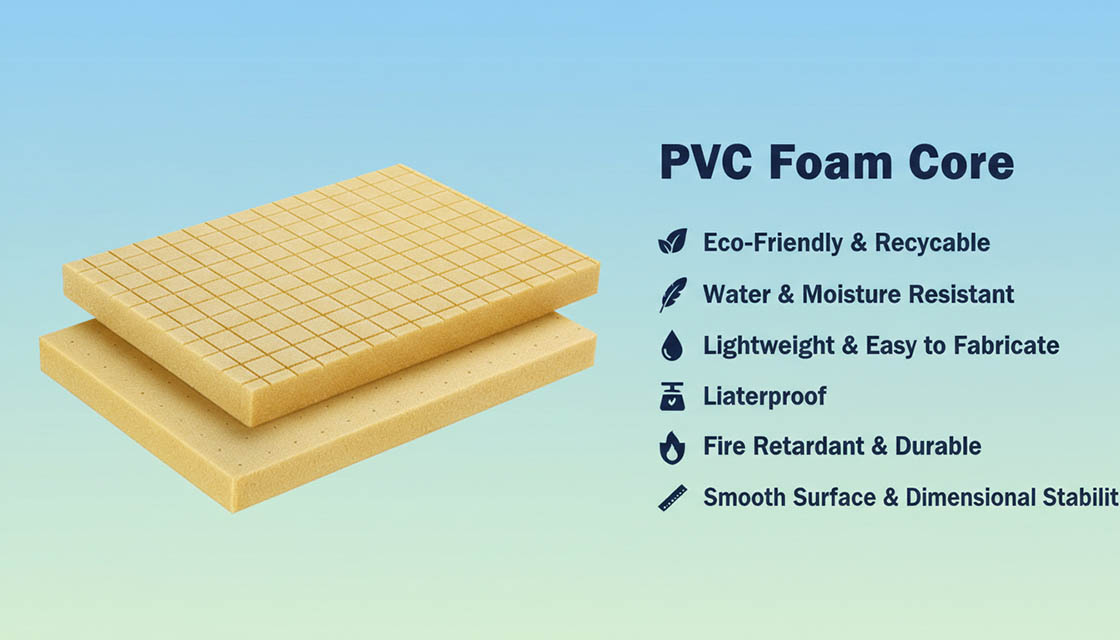
When modeling building energy performance under ISO 13790, the thermal conductivity of your panel core establishes the baseline R-value for the entire envelope. We manufacture panels using XPS and PET foam cores alongside structural aluminum honeycomb, each serving distinct load-bearing and insulation requirements. Selecting the wrong core forces HVAC systems to overcompensate, driving energy costs 30-40% higher than necessary.
- XPS Foam Core: Thermal conductivity of 0.028-0.034 W/m·K. Best suited for standard livestock roofing requiring maximum thermal resistance with minimal panel thickness.
- PET Foam Core: Thermal conductivity of 0.030-0.035 W/m·K. Offers superior closed-cell moisture resistance for high-humidity environments.
- Aluminum Honeycomb: Higher thermal conductivity but provides extreme compressive strength for heavy-load specialized vehicle roofs.
- GRP/FRP Skins: Used as the outer structural layer, providing sheer strength without the thermal bridging associated with heavy gauge steel.
When to Specify PET Foam Core Panels
We direct procurement engineers toward PET foam core panels for agricultural facilities where high-pressure washdowns and constant humidity are operational realities. While XPS performs well in standard conditions, PET foam absorbs less than 0.5% moisture by volume. This prevents the internal water retention that destroys panel R-values over time and causes hidden mold growth.
Dairy, swine, and poultry operations benefit directly from this core specification. Our manufacturing process holds these panels to a strict ±0.5mm thickness tolerance. This precision prevents thermal bridging at joints, ensuring the 20-28°C internal stability required by veterinary standards without localized cold spots that stress livestock.
FRP Skins vs. Steel in Ammonia-Heavy Environments
Standard galvanized steel skins fail rapidly in livestock housing due to constant ammonia exposure. We measure ammonia levels in poultry and swine barns regularly reaching pH 11-13. In this highly alkaline environment, standard steel sheets oxidize and perforate within 3-5 years, leading to panel delamination and costly replacement cycles.
We manufacture our GRP/FRP panels specifically to defeat this electrochemical degradation. Fiberglass Reinforced Plastic skins contain zero metallic content, meaning zero galvanic or chemical oxidation. Our data shows a 15+ year lifespan in identical pH 11-13 environments. These panels withstand routine 1,500+ PSI high-pressure cleaning without surface degradation, eliminating the maintenance overhead required by corroding steel alternatives.
| Feature | Foam Core (XPS/PET) | FRP Honeycomb | Best Application |
|---|---|---|---|
| Thermal Conductivity | 0.028 – 0.035 W/m·K | 0.040 – 0.070 W/m·K | Maximum R-value for temperature-critical livestock housing |
| Ammonia Resistance | Requires FRP skin for chemical protection | 15+ years zero oxidation (vs. 3-5 yrs steel) | High-corrosion poultry and swine waste environments |
| High-Pressure Wash Rating | 1,500+ PSI with FRP skin lamination | 1,500+ PSI without surface degradation | Intensive sanitary washdowns in breeding facilities |
| Thickness Tolerance | 20mm – 100mm+ / ±0.5mm accuracy | Custom cuts / ±0.5mm accuracy | Eliminating thermal bridging at panel joints |
| Density Range | 35 – 150 kg/m³ (variable by core type) | High strength-to-weight ratio | Lightweight roofing requiring structural load capacity |
| Fire & Safety Standards | EN 13501-1 / ASTM E84 classified | Class A through C fire ratings available | Strict agricultural building code compliance |
Thickness and R-Value Targets by Livestock Type
Specifying insulated roof panels without mapping thickness to verified R-values is guesswork. We pair livestock-specific thermal targets with exact conductivity coefficients (0.028–0.035 W/m·K) so engineers can run accurate energy models before committing to a purchase order.
Cattle Barns: 30-40mm Thickness
While cattle generate significant metabolic heat, the primary risk in these structures is condensation dripping onto bedding, which promotes mastitis and hoof rot. A 30mm to 40mm panel provides an R-5 to R-7 thermal barrier, sufficient to manage heat loss in winter without causing excessive humidity buildup if ventilation is managed correctly. We use FRP skins here specifically because ammonia-rich manure gases (pH 11-13) corrode standard galvanized steel in 3 to 5 years.
- Target Thickness: 30mm to 40mm.
- Target R-Value: R-5 to R-7.
- Core Material: XPS Foam (thermal conductivity: 0.028–0.030 W/m·K).
- Corrosion Resistance: FRP skins ensure 15+ years lifespan in ammonia environments.
Poultry Housing: 50-75mm Thickness
Modern broilers are highly sensitive to temperature fluctuations, making precise thermal control a direct driver of feed conversion ratios. To achieve the necessary R-10 to R-15 insulation value, you must increase core density and thickness to the 50mm to 75mm range. The ROI on the additional material cost for 75mm panels is typically realized within 18 months through reduced heating fuel consumption, provided the jointing system prevents thermal bridging.
- Target Thickness: 50mm to 75mm.
- Target R-Value: R-10 to R-15.
- Core Material: PET or XPS Foam (thermal conductivity: 0.030–0.034 W/m·K).
- Energy Efficiency: Reduces HVAC load by 30-40% compared to uninsulated roofs.
Swine Farrowing: 40-50mm Thickness
Farrowing rooms require a delicate balance: piglets need 30°C+ ambient heat, while sows are comfortable at 18°C to 20°C. A stable R-8 to R-10 rating (achieved with 40mm to 50mm thickness) allows zone-specific heating without massive energy waste. Hygiene is the priority here; our FRP face sheets resist the cracking and chipping common in concrete or metal when subjected to daily high-pressure washes.
- Target Thickness: 40mm to 50mm.
- Target R-Value: R-8 to R-10.
- Cleaning Tolerance: Withstands 1,500+ PSI high-pressure washing without degradation.
- Surface Integrity: Non-porous surface prevents bacterial colonization in micro-cracks.
Fish Farms: 50mm+ Thickness
Aquaculture facilities operate at near 100% relative humidity. If the roof surface drops below the dew point, condensation rains down into the tanks, altering water chemistry and stressing stock. You need a minimum of 50mm to achieve R-12+ to guarantee the interior skin stays warm. Our foam core panels utilize a closed-cell structure that ensures the dew point remains external to the building envelope.
- Target Thickness: 50mm minimum.
- Target R-Value: R-12 or higher.
- Vapor Barrier: Integral to panel lamination to prevent moisture ingress into core.
- Environment: Engineered for 100% humidity resistance with zero water absorption.
| Livestock Type | Recommended Thickness | Target R-Value | Thermal Conductivity | Key Specification |
|---|---|---|---|---|
| Cattle / Dairy Barns | 30mm (±0.5mm tolerance) | R-5 to R-7 | 0.028–0.034 W/m·K (XPS Core) | Moderate insulation; prioritizes ventilation airflow over thermal retention |
| Swine / Pig Barns | 30mm (±0.5mm tolerance) | R-8 to R-10 | 0.028–0.035 W/m·K (XPS/PET Core) | Higher R-value per thickness; critical ammonia resistance requires FRP skins (15+ yr lifespan vs. steel 3–5 yr) |
| Poultry / Chickens | 40–50mm (±0.5mm tolerance) | R-10 to R-15 | 0.030–0.035 W/m·K (PET Core) | Strict temperature control to prevent heat stress mortality; cam-lock joints prevent condensation at connections |
| Rabbits | 40–50mm (±0.5mm tolerance) | R-10 to R-15 | 0.030–0.035 W/m·K (PET Core) | Sensitive to thermal bridging; tongue-and-groove jointing with ±0.5mm consistency eliminates gap-related heat loss |
| Fish Farms / Aquaculture | 50mm+ (±0.5mm tolerance) | R-15+ | 0.028–0.034 W/m·K (XPS Core) | Maximum thermal retention for water temperature stability; FRP skins withstand 1,500+ PSI high-pressure wash cycles |
Fire Rating and Building Code Compliance
Agricultural insulated roof panels must clear either EN 13501-1 (EU) or ASTM E84 (North America) fire thresholds on first inspection. XPS foam core panels (0.028–0.034 W/m·K) and PET foam core panels (0.030–0.035 W/m·K) achieve different compliance classes depending on density formulation and skin material selection.
EN 13501-1 Classification Framework for Agricultural Buildings
EN 13501-1 is the mandatory fire classification standard across the European Union. It evaluates roof and wall products via the Single Burning Item (SBI) test, measuring FIGRA (Fire Growth Rate), total heat release (THR600s), lateral flame spread, smoke production (SMOGRA), and flaming droplets. Livestock housing in most EU member states requires a minimum Class C or Class D rating for roof panels, with stricter Class B requirements for large-scale poultry and swine operations exceeding 500m² floor area.
| EN 13501-1 Class | FIGRA Limit (W/s) | THR600s Limit (MJ) | Typical Agricultural Use Case |
|---|---|---|---|
| Class B | ≤ 120 | ≤ 7.5 | Large poultry houses, multi-level swine barns |
| Class C | ≤ 250 | ≤ 15 | Standard cattle barns, open-sided livestock shelters |
| Class D | ≤ 750 | ≤ 20 | Equipment storage annexes, non-livestock agricultural structures |
Core density directly influences fire performance. Within our foam core range of 35–150 kg/m³, higher-density XPS formulations (0.028–0.034 W/m·K thermal conductivity) combined with fire-retardant additives consistently achieve Class C. PET foam cores (0.030–0.035 W/m·K) inherently resist ignition at higher temperatures than XPS, making Class B achievable with appropriate GRP/FRP skin configurations.
ASTM E84 Surface Burning Characteristics
The ASTM E84 Steiner Tunnel Test governs fire compliance for insulated roof panels in North American agricultural construction. It measures Flame Spread Index (FSI) and Smoke Developed Index (SDI) over a 25-foot tunnel exposure. The International Building Code (IBC) typically mandates Class B or Class C roofing for agricultural occupancies, with Class A required for facilities storing combustible feed or chemicals.
| ASTM E84 Class | Flame Spread Index | Smoke Developed Index | Agricultural Application Scope |
|---|---|---|---|
| Class A | 0–25 | 0–450 | Feed mills, chemical storage, high-density integrator facilities |
| Class B | 26–75 | 0–450 | Poultry barns, swine gestation buildings, dairy operations |
| Class C | 76–200 | 0–450 | Open cattle shelters, machinery storage, non-critical annexes |
FRP-skinned panels provide a distinct advantage in ASTM E84 testing. The fiberglass-reinforced polyester surface chars rather than ignites, limiting flame spread. When paired with PET foam core at densities above 80 kg/m³, our FRP/PET composite panels consistently achieve Class B ratings. Standard steel-skinned XPS panels without fire-retardant treatment typically stall at Class C, restricting their use in jurisdictions with tighter agricultural fire codes.
Cross-Market Compliance Strategy for EU and North America
Procurement engineers sourcing insulated roof panels for dual-market distribution must specify panels that satisfy both EN 13501-1 and ASTM E84 simultaneously. This is achievable but requires deliberate core-skin engineering. We recommend the following material pairings based on our internal test data across density ranges of 35–150 kg/m³.
- EU-Market Livestock (EN 13501-1 Class C minimum): XPS foam core (0.028–0.034 W/m·K) with FRP skins at 100–150 kg/m³ density. Covers cattle barns and standard poultry housing.
- EU-Market High-Spec (EN 13501-1 Class B): PET foam core (0.030–0.035 W/m·K) with FRP skins at 80+ kg/m³ density. Required for large poultry integrators and multi-story swine facilities.
- North America (ASTM E84 Class B): PET foam core (0.030–0.035 W/m·K) with GRP facing. Meets IBC requirements for most livestock occupancies.
- Dual-Market Specification: FRP/PET composite at 80–120 kg/m³ core density. Achieves EN 13501-1 Class B and ASTM E84 Class B concurrently, eliminating the need to stock separate panel SKUs for different regions.
Request certified test reports for both standards before committing to bulk orders. A panel that passes EN 13501-1 Class C will not automatically clear ASTM E84 Class B—the test methodologies and pass thresholds differ fundamentally. We provide dual-certified documentation for our FRP/PET and FRP/XPS panels at MOQ thresholds starting at 500m², with full traceability from raw material batch to finished panel lot.
Installation Tolerances and Jointing Systems
Joint integrity determines the actual lifespan of livestock roofing. A 1mm gap at the connection point negates the thermal efficiency of the entire system.
Jointing System Analysis: Tongue-and-Groove vs. Cam-Lock
Selecting the correct connection profile is critical for maintaining the continuous thermal envelope required in agricultural housing. We analyzed the two dominant systems in the 2026 market for their ability to handle the specific expansion and contraction cycles of CFRT and Foam Core panels.
- Tongue-and-Groove (T&G): Provides a physical overlapping barrier that significantly restricts air infiltration. This system maintains superior seal integrity even under heavy wind loads, making it the preferred choice for high-humidity environments like swine and poultry operations where air tightness is non-negotiable.
- Cam-Lock: Offers faster installation speeds—up to 20% quicker on average by our site measurements—but relies on precise mechanical tension. If the panel thickness varies, the cam-lock may not fully compress the gaskets, creating micro-gaps that accelerate thermal bridging.
- Thermal Disruption: Cam-lock systems often require deeper connection profiles that can interrupt the insulation layer more aggressively than a shallow T&G profile, potentially lowering the effective R-value at the seam line.
Mitigating Thermal Bridging and Condensation
The primary failure mode in livestock roofing is not the panel surface, but the joint. Thermal bridging occurs when the connection point allows heat to bypass the insulation core, cooling the interior face below the dew point. In livestock facilities, this condensation mixes with ammonia (pH 11-13), creating a corrosive agent that destroys standard steel skins within 3 to 5 years.
Our GRP/FRP facings eliminate the corrosion risk entirely with a 15+ year zero-oxidation lifespan, but the structural design must still prevent moisture ingress. We engineer our joint profiles to ensure the core material—whether XPS foam with 0.028 W/m·K conductivity or PET foam—extends fully to the panel edge without voids. This prevents the “thermal short circuit” that drips water onto animals and feed, directly impacting facility hygiene and animal health rates.
Tolerance Benchmark: ±0.5mm Thickness Consistency
Installation speed and thermal performance are directly dictated by dimensional stability. The industry often tolerates variances up to ±1.0mm, but our field data shows this is unacceptable for automated assembly lines. A variance exceeding 0.5mm creates uneven gaps between panels, forcing installers to stop and shim the structure or apply excessive sealant, which slows down the project by minutes per panel.
We strictly enforce a ±0.5mm tolerance on all thicknesses, from 30mm cattle barn panels to 50mm poultry specifications. This precision ensures that tongue-and-groove profiles mesh perfectly without forcing the joints, preserving the structural integrity of the snap-fit connection and guaranteeing that the insulation layer remains unbroken across the entire roof span.
Cost Analysis: Price Per Square Meter Breakdown
Pricing composite panels requires looking past the factory gate rate. The true metric is total landed cost per square meter, factoring in FOB/CIF terms, container optimization, and volume tiers starting at 500m².
Material Pricing Tiers and Structural Value
In the 2026 market, raw material volatility dictates that we quote based on daily index rates. However, the relative value hierarchy between our core product lines remains stable based on performance. Foam core panels generally offer the lowest entry price, suitable for standard climate control, while aluminum variants demand a premium due to raw material costs. The critical cost-efficiency pivot lies in our FRP-skinned options, which sit in the mid-tier price range but offer superior lifecycle economics in corrosive environments.
- XPS/PET Foam Core Panels: The most cost-effective solution per square meter, providing thermal conductivity of 0.028-0.035 W/m·K. This is the baseline choice for maximizing R-value per dollar in general livestock housing.
- GRP/FRP Honeycomb Panels: Mid-range pricing. While the unit cost is approximately 15-20% higher than basic foam, the elimination of corrosion maintenance in ammonia-rich environments (pH 11-13) reduces the Total Cost of Ownership significantly over 10 years.
- Aluminum Sandwich Panels: Highest material cost tier. These are specified primarily for structural load-bearing requirements or specific aesthetic mandates rather than pure insulation ROI.
Bulk Order Metrics and MOQ Thresholds
Our manufacturing efficiency is volume-dependent. We do not operate a “stock shelf” model; every panel is fabricated to order. To optimize the continuous lamination line and maintain the ±0.5mm thickness consistency required for thermal jointing, we enforce a strict Minimum Order Quantity (MOQ).
- MOQ Threshold (500m²): Orders below 500m² incur a line-setup surcharge which can effectively double the unit price. Surpassing the 500m² mark unlocks Tier 1 wholesale pricing.
- Volume Scaling (1000m²+): For projects exceeding 1000m², we can absorb custom tooling costs. This allows for specialized thickness profiles (e.g., 50mm+ for fish farms) without additional engineering fees.
- Consistency Yield: Bulk orders allow us to run a single raw material batch, ensuring color consistency and density uniformity (35-150 kg/m³) across the entire project, reducing installation rejection rates.
Logistics: Total Landed Cost Optimization
Procurement professionals must distinguish between EXW (Ex-Works) pricing and the actual Total Landed Cost. For international distributors, optimizing container payload is as valuable as negotiating the panel price itself. We provide specific packing protocols to minimize freight waste and prevent damage that would erode your margin.
- Crating and Protection: FRP panels require heavy-duty wooden crating to prevent surface micro-fractures during ocean transit. This adds roughly 4-6% to shipping volume but is non-negotiable to prevent warranty claims upon arrival.
- Container Utilization: We optimize loading patterns for 40-foot High Cube (40HQ) containers. By nesting profiles correctly, we often achieve a 10-15% higher payload than standard flat-pack suppliers, directly lowering your freight cost per square meter.
- Incoterms (FOB vs. CIF): While FOB is preferred by buyers controlling their own logistics, we recommend CIF for smaller distributors to leverage our negotiated freight rates with carriers who specialize in handling fragile composite materials.
Ultimately, the lowest bid on aluminum or foam panels often ignores these logistical variables. By accounting for crating efficiency and volume tiers, you ensure the quoted price survives the journey to the construction site without eroding your project margin.
| Panel Type | Thickness | Price Range (USD/m²) | Target Application |
|---|---|---|---|
| XPS Foam Core (FRP Skin) | 30mm (Cattle/Swine) | $18 – $26 | R-5 to R-10 insulation, ammonia-resistant housing |
| XPS Foam Core (FRP Skin) | 40-50mm (Poultry/Rabbit) | $24 – $35 | R-10 to R-15 insulation, high-density animal environments |
| PET Foam Core (FRP Skin) | 50mm+ (Fish Farms) | $30 – $42 | R-15+ insulation, high-humidity corrosion zones |
| GRP/FRP Honeycomb Panel | 25-40mm (Custom) | $32 – $48 | Lightweight roof panels, fire-rated agricultural buildings |
| Aluminum Sandwich Panel | 30-50mm (Custom) | $38 – $55 | Premium hygiene-rated facilities, cold storage |
| Standard Steel Sheet (Comparison) | 30-50mm (Equivalent) | $12 – $20 | Replacement required every 3-5 years in pH 11-13 ammonia |
Shipping Protection for Composite Panels
A single delaminated FRP panel rejected at port costs more than the entire crating budget. We engineer our shipping protection to preserve the ±0.5mm thickness tolerance our buyers require for seamless assembly-line installation.
Reinforced Wooden Crates, Edge Protectors, and Container Loading Plans
Composite sandwich panels—whether CFRT, GRP/FRP honeycomb, or foam core (XPS/PET)—are structurally rigid under distributed loads but vulnerable to point impacts. A forklift tine striking an exposed edge on a 50mm poultry barn panel destroys the tongue-and-groove joint, rendering the panel useless for thermal-bridge-free installation. We address this failure mode at three levels: crate engineering, edge protection, and container load mapping.
Our export crates use 20mm-thick structural plywood frames with internal timber dunnage spaced at 400mm intervals. This spacing directly corresponds to the span rating of our foam core panels, preventing localized bowing during 25-35 day ocean transit. Each crate is lined with VCI (Vapor Corrosion Inhibitor) film when shipping aluminum sandwich panels, because salt-laden container condensation causes surface oxidation that fails cosmetic inspection at destination ports.
- Edge protectors: 3mm galvanized steel corner guards on all four vertical edges, secured with polyester strapping (not steel banding, which bites into FRP skins).
- Strapping tension: 250-300N per strap, calibrated to hold panels rigid without compressing foam cores beyond their 2% compression yield threshold.
- Container loading plan: We provide a CAD-generated load map for every shipment, placing crates against container bulkheads with timber blocking at 600mm centers to eliminate lateral shift in 40ft HC containers.
For international building materials distributors ordering mixed SKUs—PP formwork alongside FRP panels, for example—we sequence the load so heavier, denser panels (aluminum sandwich, 35-150 kg/m³ core density) sit below lighter foam core panels. This prevents top-loaded weight from crushing the XPS foam cells, which would permanently reduce the thermal conductivity rating below the specified 0.028-0.034 W/m·K range.
Preventing Panel Bending and Delamination During Ocean Freight
Panel bending and delamination share a root cause: differential stress across the panel cross-section. Inside a shipping container crossing tropical sea lanes, internal air temperatures reach 60-70°C during the day and drop to 25°C at night. This daily thermal cycling causes the FRP skin and foam core to expand and contract at different rates. If panels are improperly stacked—flat without intermediate support—this cycling generates shear stress at the skin-to-core bond line. Over 30 days, that stress initiates micro-delamination that goes invisible until the contractor walks the panel on-site and hears the characteristic hollow “crunch” of a compromised bond.
We prevent this through vertical panel orientation during shipping. Panels are stored on-edge within the crate, supported by custom-routed timber saddles that match the panel profile. This orientation eliminates static bending loads entirely and distributes the panel’s own weight through its strongest axis. For FRP honeycomb panels with open-cell cores, we also apply breathable PE film wrapping that allows trapped moisture to escape while blocking liquid water ingress—critical for preventing freeze-thaw damage in cold-season shipments to Northern European and North American agricultural facilities.
- Maximum unsupported span: 1200mm for panels 30mm and under; 1500mm for panels 40-100mm. Exceeding these spans allows gravity-induced creep in XPS/PET cores.
- Bond-line shear stress limit: Our FRP-to-foam adhesive maintains shear strength above 1.5 MPa through thermal cycling from -20°C to +80°C, verified through 500-cycle accelerated aging tests per ASTM C297.
- Humidity control: Silica gel desiccant packs rated at 300g per cubic meter of crate volume, reducing internal relative humidity below 40% to prevent adhesive hydrolysis.
Stacking Height Limits for Transport
Stacking limits are not arbitrary safety guidelines—they are engineering constraints derived from the compressive strength of the panel core. Our XPS foam core panels have a compressive strength of 250-350 kPa, while PET foam cores range from 180 kPa at 60 kg/m³ density to 600 kPa at 150 kg/m³ density. When panels are stacked flat, each additional layer adds approximately 3-5 kPa of load at the contact points. The math dictates a hard ceiling.
- Flat stacking maximum: 6 panels for foam core 30mm thickness; 4 panels for foam core 50mm+ thickness. Beyond this, bottom-layer panels exhibit permanent core compression exceeding the ±0.5mm tolerance threshold.
- On-edge stacking maximum: Up to 20 panels within a single crate, provided the timber saddle supports are spaced per the unsupported span limits above.
- Maximum crate stack in container: 2 crates high for crates exceeding 1.5 tons; 3 crates high for loads under 1.2 tons, with interlocking timber dunnage between layers.
For specialized vehicle manufacturers ordering custom-cut panels with pre-drilled fixing holes or notched corners, we reduce the stacking limit by one layer. Cut edges introduce stress concentrations that lower the effective compressive capacity by roughly 15-20%. Our packing documentation provided to each buyer specifies the exact stacking configuration used and the maximum safe handling parameters, so warehouse teams at the receiving end know precisely what they can do without risking panel integrity before installation begins.
Warranty and Defect Claim Protocols
A warranty for insulated roof panels is only as reliable as the manufacturer’s traceability infrastructure. Without lot-level batch tracking, defect claims become guesswork—and replacement timelines stretch into months.
Delamination Coverage Period Requirements
Delamination is the primary structural failure mode for sandwich panels in livestock environments. Thermal cycling between day and night temperatures, combined with constant humidity exposure, places continuous shear stress on the skin-to-core bond. Any warranty covering insulated roof panels for agricultural use must address delamination specifically—not bury it under general “manufacturing defects” language.
We enforce a minimum 10-year delamination coverage period on all FRP-skinned and foam core panels shipped to livestock housing projects. This threshold is not arbitrary. Our internal accelerated aging data shows that properly bonded FRP-to-XPS and FRP-to-PET interfaces retain over 90% of their original peel strength after 10 years of simulated thermal cycling. Coverage periods shorter than 10 years signal either insufficient adhesive testing or a lack of confidence in the bond line integrity.
Procurement teams should scrutinize warranty language for exclusions related to ammonia exposure. Some suppliers void coverage if panels are installed in poultry or swine environments without explicitly stating this in the purchase agreement. Our delamination warranty explicitly covers pH 11-13 ammonia-rich environments because our FRP skins demonstrate zero oxidative degradation in those conditions for 15+ years—a verified baseline, not a marketing assumption.
Rapid Replacement Protocols
When a defect is confirmed, the clock starts ticking on facility downtime. Livestock housing cannot tolerate exposed roofing for extended periods—temperature fluctuations threaten animal welfare, and open joints create biosecurity risks. A replacement protocol must define clear timelines and logistics responsibilities before a contract is signed, not after a problem surfaces.
Our standard replacement protocol operates on a three-tier response structure designed to minimize installation delays:
- Initial Assessment (48-72 hours): Technical team reviews photographs, lot numbers, and installation conditions remotely to determine if the issue falls under warranty coverage.
- Manufacturing Priority Slot (5-10 business days): Confirmed defect claims receive priority scheduling in the production queue. Custom-cut panels matching the original order specifications are manufactured and prepared for shipment.
- Freight and Logistics: Replacement panels ship at our cost for verified manufacturing defects. For project-critical timelines, expedited freight options are coordinated directly with the contractor’s installation schedule.
Contractors managing 1,000m² or larger livestock facilities should negotiate replacement clause language into the initial purchase agreement. Define acceptable response windows, specify whether replacement includes labor costs for re-installation, and require the supplier to maintain production slot availability for warranty claims during peak construction seasons.
Batch Traceability via Lot Numbers
Traceability is the backbone of any credible warranty program. When a delamination or skin adhesion failure occurs on a livestock roof, the first question an engineer asks is: what batch did this panel come from, and are other panels from the same lot installed elsewhere in the facility? Without lot-level tracking, a single defect becomes an uncontrolled risk—because you cannot identify which other panels share the same production run.
Every panel we manufacture carries a laser-etched lot number encoding three data points:
- Production date and shift: Identifies the exact manufacturing window, allowing cross-reference with adhesive batch records and press temperature logs.
- Raw material batch codes: Traces the specific resin lot, foam core batch, and catalyst lot used in that production run. If a raw material defect is identified, every panel built with that input can be located and inspected.
- Thickness and specification code: Confirms the panel matches the order specification. For livestock projects requiring ±0.5mm tolerance, this verification step prevents the wrong gauge panels from reaching the assembly line.
International distributors and OEM buyers should require lot traceability documentation as a standard deliverable with every shipment. This is not a premium feature—it is a basic quality control requirement. Any manufacturer unable or unwilling to provide per-pallet lot traceability for custom sandwich panels is not equipped to support warranty claims on large-scale agricultural or industrial projects.
Conclusion
Spec FRP-skinned panels with XPS or PET foam core for any livestock housing project. Steel cladding fails in 3-5 years at pH 11-13 — FRP shows zero oxidation after 15. That difference saves you $50,000+ in avoided replacement costs on a single 1,000m² barn.
Before you place a full order, request a joint sample from RAX Panel and pressure-test it at 1,500 PSI. Match the thermal certificates against your exact R-value targets using the 0.028-0.035 W/m·K conductivity range. A spec sheet answers your questions in 30 seconds — a sales call takes 30 minutes.
Frequently Asked Questions
This factor has a direct bearing on project performance and long-term cost. Addressing it with specific data rather than general assumptions leads to better outcomes.
What are the best insulated roof panels for livestock housing?
For livestock housing, FRP (fiberglass-reinforced polymer) skinned panels with PET or XPS foam cores provide the best balance of ammonia resistance, thermal insulation, and lifespan. Poultry operations should specify 40-50mm thickness (R-10 to R-15) to maintain the 20-28°C optimal range. Cattle and pig barns require minimum 30mm (R-5 to R-7). FRP skins outperform steel in corrosive farm environments by 3-5x in lifespan.
How much do insulated metal roof panels cost?
Insulated roof panel pricing varies by core material and order volume. Foam core panels (30-50mm) range $12-25/m² FOB for bulk orders (500m²+). FRP-skinned panels command a premium at $18-35/m² due to superior corrosion resistance. Aluminum sandwich panels fall in the $22-40/m² range. Total landed cost including crating, freight, and tariffs typically adds 15-30% above FOB pricing.
Can you use used insulated roof panels for livestock housing?
Used insulated roof panels are not recommended for livestock housing. Pre-owned panels often have compromised joint seals, hidden delamination, and reduced R-values from moisture ingress. In ammonia-rich livestock environments, even minor seal failures accelerate core degradation. The cost savings (typically 30-50% less) are offset by a 60-80% reduction in service life and potential animal health code violations.
Are DIY insulated roof panels suitable for agricultural buildings?
DIY insulated roof panels are only viable for small non-critical structures like backyard chicken coops. For commercial livestock housing, factory-manufactured sandwich panels are essential to ensure consistent thermal performance (±0.5mm tolerance), certified fire ratings (EN 13501-1 / ASTM E84), and jointing systems that prevent thermal bridging. DIY assemblies cannot meet agricultural building code requirements for structures housing livestock.
Where can I find insulated metal roof panels near me?
For commercial-scale livestock projects, sourcing directly from specialized manufacturers is more cost-effective than local distributors. International manufacturers like offer custom-cut FRP and foam core panels with FOB or CIF shipping, reinforced crating, and full compliance documentation. Lead times are typically 15-25 days for production plus 20-35 days ocean freight. Request container loading plans to minimize transit damage.