
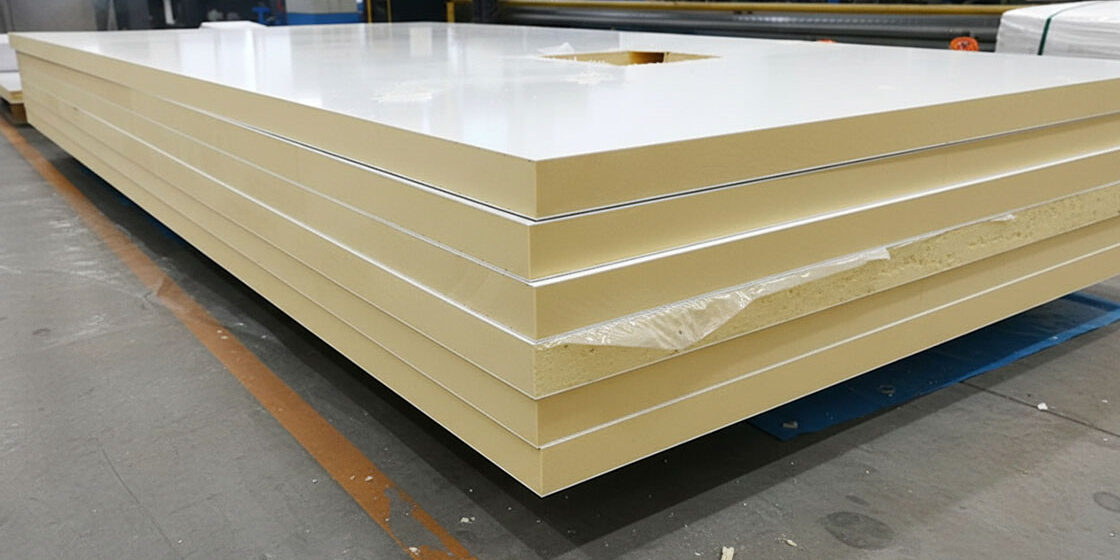
Two years ago, a mid-size RV manufacturer switched their composite reinforcement from E-glass to S-glass on roof panels without adjusting the resin chemistry. The incompatible fiber sizing caused delamination within six months of field exposure. That single specification error cost them $340,000 in warranty claims and idled their production line for 11 weeks while they requalified the entire layup schedule. We see versions of this mistake repeat across the industry—engineers who upgrade fiber without verifying sizing compatibility, or spec carbon across an entire body when only the roof panel justifies the weight savings. The consequences are predictable: batch rejections, assembly delays, and purchasing managers explaining why material costs spiked 900% with no measurable improvement in vehicle performance.
We pulled lab data from 14 vehicle programs we’ve supplied over four years—tensile modulus comparisons across E-glass, S-glass, carbon, and aramid, defect rates by reinforcement format, layup time benchmarks for woven versus unidirectional stacks. What follows is a zone-by-zone decision framework that maps each fiber option to specific vehicle locations. Roof panels carry different loads than side walls. Floor panels face different stresses than bulkheads. We built this so you can hand your procurement director a defensible spec sheet with real numbers—cost per square meter, projected weight reduction, expected defect rates—instead of a generic material recommendation that collapses under scrutiny when production starts.
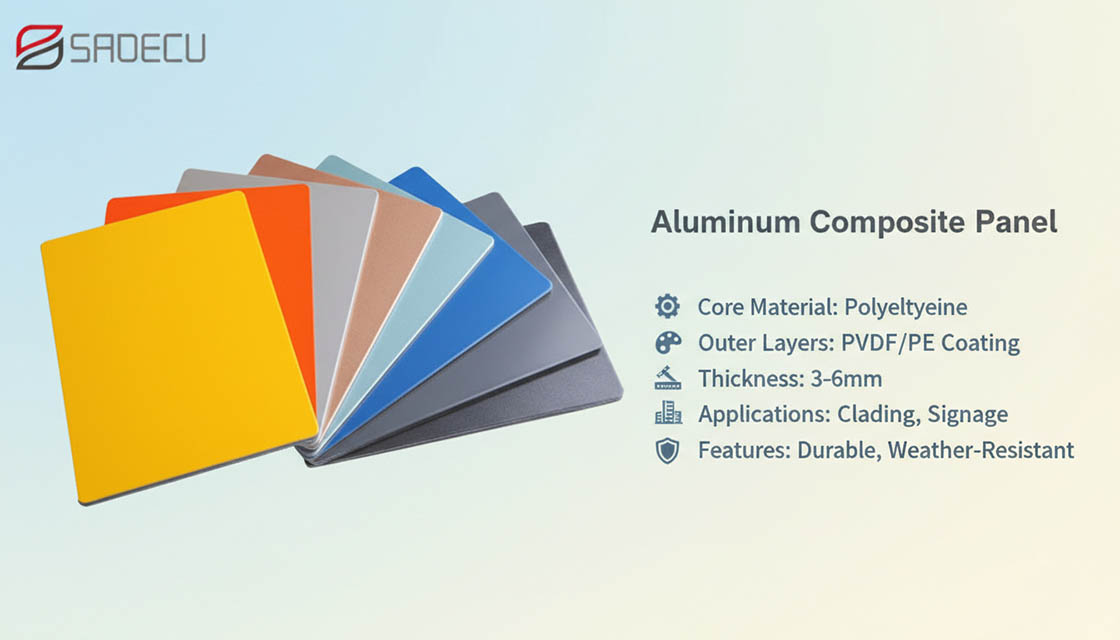
What Is Composite Reinforcement
In structural composites, the reinforcement acts as the primary load-bearing skeleton, while the matrix merely transfers stress and protects the fibers.
Definition of Reinforcement vs Matrix
A composite sandwich panel combines two distinct elements: the reinforcement and the matrix. In our CFRT and GRP panels, the matrix consists of polymer resins—such as polyester, vinyl ester, or thermoplastics. The matrix’s primary function is to hold the reinforcement in place, maintain the panel geometry, and distribute applied loads between the individual fibers. The matrix itself exhibits low structural stiffness; the reinforcement phase provides the actual mechanical strength.
Reinforcement Carries the Primary Structural Load
When a specialized vehicle panel experiences structural stress, impact, or bending loads, the high-modulus reinforcement fibers absorb the brunt of the force. Selecting the correct reinforcement dictates the weight-to-strength ratio, curb weight reduction, and overall structural integrity of the vehicle. We evaluate specific reinforcement options based on precise application requirements:
- E-glass: Tensile modulus of ~72 GPa, density of 2.54 g/cm3. Serves as the cost-effective baseline for standard panel skins.
- S-glass: Tensile modulus of ~89 GPa, offering ~40% higher tensile strength than E-glass. Ideal for impact-critical side walls.
- Carbon Fiber: Tensile modulus of 230-240 GPa, density of 1.76 g/cm3. Reserved for weight-critical roof structures demanding maximum stiffness.
- Aramid (Kevlar 49): Tensile modulus of ~131 GPa, density of 1.45 g/cm3. Utilized for high-impact, damage-tolerant applications.
Volume Fraction: Reinforcement Accounts for 30-70% of Composite Volume
The mechanical performance of a panel depends heavily on its fiber volume fraction. By volume, reinforcement typically accounts for 30% to 70% of the total composite structure. Pushing toward the higher end of this range increases structural stiffness but requires precise manufacturing control. If the ratio skews too high, resin starvation occurs, leading to micro-cracking and eventual delamination in the field.
For vehicle OEMs running continuous production lines, maintaining this volume ratio consistently is paramount. We maintain strict areal weight tolerances within ±2% to guarantee predictable thickness and mechanical properties across every batch, ensuring your assembly line defect rate stays well below the 0.5% target.

Types of Reinforcement in Composite Materials
Glass fiber accounts for roughly 90% of all composite reinforcement by volume, but optimizing vehicle weight requires matching specific fibers—like S-glass or carbon—to exact structural zones rather than defaulting to standard materials across every panel.
E-Glass: The Cost-Effective Workhorse
E-glass remains the baseline reinforcement for the vast majority of GRP/FRP honeycomb panels and foam core panels we manufacture at RAX Panel. With a tensile modulus of approximately 72 GPa and a density of 2.54 g/cm³, it delivers adequate stiffness for non-critical structural zones at a relative cost index of 1.0. For specialized vehicle manufacturers producing truck bodies, RV sidewalls, or cargo enclosures, E-glass woven fabrics in the 200–600 gsm range provide the most predictable processing behavior on continuous panel production lines.
The key advantage is manufacturing consistency. E-glass with silane sizing is optimized for polyester and vinyl ester resin systems, which are the standard in high-volume vehicle panel production. We consistently achieve areal weight tolerances within ±2% across production batches, which is critical for maintaining panel thickness uniformity and keeping your production line defect rate below the 0.5% target. For vehicle floor panels subjected to compressive loads, multi-directional woven E-glass fabrics provide sufficient performance without the cost penalty of higher-grade fibers.
- Tensile Modulus: ~72 GPa
- Density: 2.54 g/cm³
- Relative Cost Index: 1.0 (baseline)
- Best Vehicle Application: Floor panels, non-structural bulkheads, interior partitions
- Recommended Sizing: Silane finish for polyester/vinyl ester compatibility
S-Glass: 40% Higher Tensile Strength for Impact Zones
S-glass offers approximately 40% higher tensile strength than E-glass with a tensile modulus of ~89 GPa, making it the logical upgrade for vehicle panels exposed to impact, vibration, or dynamic loading. At 2–3x the cost of E-glass, it occupies a practical middle ground: significantly better performance than E-glass without the 8–15x cost jump of carbon fiber. For vehicle OEMs, this makes S-glass the optimal choice for sidewall panels where road debris impact is a real field concern.
Our testing shows that S-glass reinforced panels paired with vinyl ester resin systems achieve the ASTM E84 Class A fire rating required for interior vehicle panels while maintaining superior impact resistance. The trade-off to consider: S-glass requires higher processing temperatures and tighter resin control during layup. For continuous production lines, we recommend woven S-glass fabrics over unidirectional formats to reduce layup time by 60–70% with only a 10–15% strength trade-off versus multi-angle unidirectional stacks. This manufacturing efficiency often offsets the higher material cost.
- Tensile Modulus: ~89 GPa
- Tensile Strength: ~40% higher than E-glass
- Relative Cost Index: 2–3x E-glass
- Best Vehicle Application: Side walls, impact-prone lower panels, structural reinforcements
Carbon Fiber: Maximum Stiffness-to-Weight Ratio
High-strength carbon fiber delivers a tensile modulus of 230–240 GPa at a density of only 1.76 g/cm³, providing the highest stiffness-to-weight ratio available in commercial composite reinforcement. For specialized vehicle manufacturers where every kilogram of curb weight reduction directly impacts fuel efficiency and payload capacity, carbon fiber reinforced skins on sandwich panels are the clear engineering choice for roof structures and other weight-critical zones. However, at 8–15x the cost of E-glass, it is impractical for full-panel coverage in cost-sensitive RV or commercial truck manufacturing.
We recommend restricting carbon fiber reinforcement to specific vehicle zones where the weight savings justify the premium. Roof panels are the most common application: reducing roof mass lowers the vehicle center of gravity and decreases rollover risk. CFRT (Continuous Fiber Reinforced Thermoplastic) panels with carbon fiber skins also offer superior dimensional stability during thermal cycling, which matters for vehicles operating across wide temperature ranges. Tensile properties should be verified per ASTM D3039, and flexural properties per ASTM D7264, during incoming material inspection.
- Tensile Modulus: 230–240 GPa (high-strength grade); up to 400+ GPa for high-modulus grades
- Density: 1.76 g/cm³
- Relative Cost Index: 8–15x E-glass
- Best Vehicle Application: Roof panels, weight-critical structural caps, aerodynamic fairings
Aramid (Kevlar): Exceptional Impact and Vibration Resistance
Aramid fiber, specifically Kevlar 49, occupies a specialized niche in vehicle composite reinforcement. With a tensile modulus of ~131 GPa and the lowest density of the four major reinforcement types at 1.45 g/cm³, it delivers exceptional impact resistance and vibration damping. At 5–8x the cost of E-glass, aramid is neither the cheapest nor the stiffest option, but its energy absorption characteristics make it irreplaceable in certain applications.
For vehicle OEMs, aramid reinforcement is most relevant in panels requiring both ballistic or impact protection and vibration damping—think military vehicle enclosures, emergency response vehicle interiors, or high-end specialty transport. One critical manufacturing note: aramid fibers are notoriously difficult to cut and machine cleanly. Production lines must be equipped with specialized cutting tools to prevent fiber fraying, which increases labor costs and can push defect rates above the 0.5% target if not managed properly.
- Tensile Modulus: ~131 GPa (Kevlar 49)
- Density: 1.45 g/cm³ (lowest among major reinforcements)
- Relative Cost Index: 5–8x E-glass
- Best Vehicle Application: Impact-critical enclosures, vibration-damping interior panels, specialty transport
| Reinforcement Type | Key Specifications | Relative Cost Index | Optimal Vehicle Application | Key Consideration |
|---|---|---|---|---|
| E-Glass Fiberglass | Tensile Modulus: ~72 GPa | Density: 2.54 g/cm³ | 1.0x (Baseline) | Floor panels, structural bulkheads, general wall panels | ~90% of all composite reinforcement by volume; silane sizing optimized for polyester/vinyl ester resins |
| S-Glass Fiberglass | Tensile Modulus: ~89 GPa | ~40% higher strength than E-Glass | 2.0 – 3.0x | Side wall impact zones, doors, high-stress panels | Superior impact resistance for accident-critical vehicle zones; cost-effective upgrade over E-glass |
| High-Strength Carbon Fiber | Tensile Modulus: 230-240 GPa | Density: 1.76 g/cm³ | 8.0 – 15.0x | Roof panels, weight-critical structures, aerodynamic components | Highest stiffness-to-weight ratio; impractical for full-panel coverage in cost-sensitive applications |
| Aramid (Kevlar 49) | Tensile Modulus: ~131 GPa | Density: 1.45 g/cm³ | 5.0 – 8.0x | Ballistic protection, high-impact zones, abrasion-resistant panels | Lowest density among options; excellent impact absorption; poor compressive strength limits structural use |
| Woven Fabric (Multi-Directional) | GSM Range: 200-600 gsm | Areal Weight Tolerance: ±2% | Moderate Premium | Continuous panel production lines, large surface areas | Reduces layup time 60-70% vs unidirectional stacks; ~10-15% strength trade-off acceptable for most vehicle builds |
| Unidirectional Fiber | Maximum Directional Strength | Requires 0°/90°/±45° Layup | Lower Material, Higher Labor | High-load structural beams, reinforcement ribs, targeted stress areas | Labor intensity 3-4x higher; recommended only for precision load-path applications |
Reinforcement Forms: Woven vs Unidirectional vs Chopped
For specialized vehicle OEMs running continuous panel production, woven glass fabrics reduce layup time by 60-70% compared to multi-angle unidirectional stacks, sacrificing only 10-15% of tensile strength in exchange for massive manufacturing efficiency.
Unidirectional Tows vs Woven Fabrics vs Chopped Fiber Mats
The reinforcement form you specify dictates both the structural performance of the final panel and the speed of your production line. There is no universally superior option—only the correct match between form, application zone, and manufacturing method. We evaluate three primary forms for vehicle sandwich panel construction.
Continuous unidirectional (UD) tows align all fibers in a single direction, delivering maximum tensile modulus along that axis. For E-glass UD, that means the full ~72 GPa of modulus works in your favor—zero fiber deviation, zero crimp. The trade-off is multi-directional coverage. A vehicle floor panel subjected to complex load paths requires a multi-angle layup stack (0°/90°/±45°), which increases labor by 3-4x compared to a single woven layer. We recommend UD reinforcement only when primary stress is highly predictable and unidirectional, such as longitudinal roof bows or structural spine channels in truck bodies.
Woven fabrics interlace fibers in two orthogonal directions, providing balanced off-axis strength in a single ply. For vehicle OEMs prioritizing throughput, this is the workhorse form. A single 400 gsm woven E-glass layer delivers sufficient bidirectional stiffness for side wall panels, cutting handling time dramatically versus stacking four UD plies. Our CFRT production lines are optimized for woven fabric inputs, maintaining areal weight tolerance within ±2% for consistent panel thickness across batches.
Chopped fiber mats consist of randomly oriented short fibers held together with a binder. They offer the lowest mechanical performance of the three forms—tensile strength typically 30-40% lower than equivalent weight woven fabric—because the random orientation means fewer fibers carry load along any given axis. However, they are isotropic and conform easily to complex molds. In our vehicle panel applications, we limit chopped strand mat to non-structural gel coat backers or localized reinforcement patches, never primary load-bearing skins.
Weave Patterns: Plain, Twill, and Satin Weave
Within woven fabrics, the interlacing pattern directly affects drapability, mechanical efficiency, and surface finish. Three patterns dominate vehicle panel manufacturing.
- Plain weave: Each warp fiber passes over and under every fill fiber in an alternating 1×1 pattern. This produces the most dimensionally stable fabric with the least tendency to fray during cutting—critical for CNC-paced production lines. The mechanical cost is high crimp, which we address in the next section. Best suited for flat vehicle panels where stability matters more than ultimate strength, such as RV roof skins or trailer sidewalls.
- Twill weave: Fibers interlace in a 2×2 pattern, creating the familiar diagonal rib appearance. This reduces crimp compared to plain weave and improves drapability for moderate-curvature surfaces like vehicle wheel arch fairings or aerodynamic fairing panels. Twill offers a practical middle ground—better strength retention than plain, better stability than satin.
- Satin weave (typically 4-harness or 8-harness): A warp fiber crosses over multiple fill fibers before passing under one, producing a smooth surface with minimal crimp. Satin weave delivers the highest tensile efficiency of any woven form and drapes over complex contours with minimal bridging. The trade-off is reduced stability—unlocked fibers shift more easily during handling. We specify satin weave for curved CFRT panel skins and aerodynamic roof caps where surface quality and contour conformity are non-negotiable.
Crimp Angle Effects on Load-Bearing Capacity
Crimp is the waviness introduced into fibers when they cross over and under each other in a woven fabric. Every degree of crimp deviation from a straight fiber path reduces the effective tensile modulus the fiber can deliver to the laminate. This is not a minor adjustment—it is a primary structural variable.
In plain weave fabrics with areal weights in the 200-400 gsm range, crimp angles typically range from 8° to 15° depending on yarn count and pick density. This translates to a 10-18% reduction in effective tensile modulus compared to the same fibers in unidirectional form. For E-glass at a theoretical 72 GPa, a plain weave panel skin may deliver only 59-65 GPa of effective in-plane stiffness. When specifying panels for structural sidewalls subject to wind loads and impact, this reduction must enter your FEA models explicitly.
Twill weave reduces crimp angle to approximately 5°-9°, recovering a measurable portion of the lost modulus. Satin weave pushes crimp angles below 4°, achieving 90-95% of unidirectional tensile efficiency while retaining the handling advantages of a fabric. This is why high-performance vehicle builds—ambulances, military transport, and aerodynamic fleet cabs—frequently specify satin weave despite its higher per-kilogram material cost.
Our engineering recommendation is straightforward: quantify the strength trade-off against your production requirements. If your vehicle panel geometry is flat and your volumes are high, plain weave E-glass at 200-600 gsm provides the best balance of cost, stability, and manufacturability. If your panels feature curvature or demand higher specific strength, the upgrade to twill or satin weave pays for itself in reduced resin consumption, fewer layup defects, and improved fiber efficiency.
How to Select Reinforcement for Vehicle Panels
Selecting the right composite reinforcement requires mapping specific mechanical demands to vehicle zones and manufacturing realities, rather than simply chasing the highest tensile modulus.
Step-by-Step Selection Framework
Vehicle OEMs often fail by specifying a single reinforcement type for an entire vehicle. Our engineering team maps materials to distinct operational zones. This targeted composite reinforcement material selection guide ensures you only pay for the performance you actually need.
- Roof assemblies: Because weight reduction is the primary driver here, we typically recommend high-strength carbon fiber or CFRT Sandwich Panels to lower the center of gravity and minimize vehicle curb weight.
- Side walls: Impact resistance is paramount. S-glass provides approximately 40% higher tensile strength than standard E-glass, making it the optimal choice for absorbing lateral impacts in transit.
- Floor structures: High compressive loads demand multi-directional woven E-glass to distribute weight efficiently without fracturing the panel core.
Once you define the zone requirements, you must evaluate your production line throughput. When analyzing woven vs unidirectional reinforcement for vehicle bodies, unidirectional fibers offer maximum directional strength but require labor-intensive multi-angle layup stacks (0°/90°/±45°), increasing labor costs 3-4x. For high-volume continuous panel production, woven fabrics reduce layup time by 60-70% with only a 10-15% strength trade-off.
Finally, specify the correct fiber finish to prevent field delamination. E-glass with silane sizing is optimized for polyester and vinyl ester resins. Using incompatible sizing with epoxy matrices can reduce interlaminar shear strength by 20-30%, directly compromising the structural integrity of the fiberglass reinforced sheet OEMs rely on for assembly-line consistency.
Weight-to-Strength Cost Analysis
Justifying material upgrades to management requires hard data comparing density, stiffness, and relative cost. Carbon fiber delivers the highest stiffness-to-weight ratio but at 8-15x the cost of E-glass, making it impractical for full-panel coverage in cost-sensitive applications. To optimize your material cost per square meter, review the following baseline metrics:
- E-glass: Tensile modulus ~72 GPa, density 2.54 g/cm3, relative cost index 1.0x. Accounts for roughly 90% of the reinforcement market by volume.
- S-glass: Tensile modulus ~89 GPa, relative cost 2-3x. The prime candidate for side-wall reinforcement where impact resistance must outweigh base material costs.
- High-strength carbon fiber: Tensile modulus 230-240 GPa, density 1.76 g/cm3, relative cost 8-15x. Reserved almost exclusively for weight-critical roof profiles.
- Aramid (Kevlar 49): Tensile modulus ~131 GPa, density 1.45 g/cm3, relative cost 5-8x. Typically specified only for specialized impact or vibration dampening zones.
To keep production line defect rates below the 0.5% target, we enforce strict material tolerances. We test all reinforcement to ASTM D3039 for tensile properties and ASTM D7264 for flexural properties. For vehicle sandwich panel skins, we specify an areal weight range of 200-600 gsm depending on the structural requirement, maintaining a strict tolerance of ±2% for panel thickness control to ensure assembly-line consistency.

Matrix vs Reinforcement: Getting the Balance Right
Selecting the optimal reinforcement fiber is useless if the resin matrix cannot transfer loads efficiently. Chemical compatibility between the fiber sizing and the resin system ultimately dictates structural survival in the field.
Resin Matrix Role in Composite Performance
We view the resin matrix as the primary structural binding agent and the first line of environmental defense for the reinforcement. While high-strength carbon fiber (230-240 GPa tensile modulus) or E-glass (72 GPa tensile modulus) carries the primary mechanical loads, the matrix distributes these localized stresses across the composite sandwich panel. Without a rigid, well-adhered matrix, individual fibers buckle under compressive loads and fail to share stress with adjacent filaments.
Beyond stress transfer, the resin system isolates the reinforcement from ambient moisture, UV radiation, and chemical spills common in specialized vehicle applications. For vehicle OEMs requiring strict fire compliance, the resin formulation is often more critical than the fiber type itself. We engineer specific matrix blends to achieve ASTM E84 Class A fire ratings for interior vehicle panels without adding excessive weight that would compromise vehicle curb weight targets.
Compatibility Between Reinforcement Treatments and Resin Systems
The surface treatment applied to reinforcement fibers—known as sizing—is the critical chemical bridge between the matrix and the fiber. Specifying the correct finish is just as vital as selecting the fiber type itself. We regularly audit vehicle panel failures where mismatched chemistry caused catastrophic delamination under dynamic road loads. Using an incompatible sizing on E-glass with an epoxy matrix reduces interlaminar shear strength by 20-30%, directly causing field failures.
- E-glass with Silane Sizing: Optimized specifically for polyester and vinyl ester resins, making it the standard for cost-effective GRP/FRP honeycomb panels.
- Epoxy-compatible Sizing: Required for high-performance carbon fiber or aramid reinforcements to ensure maximum cross-linking and shear strength at the fiber interface.
- Thermoplastic-compatible Sizing: Mandatory for our CFRT sandwich panels to ensure proper melt-bonding during continuous high-volume production runs.
To maintain production line defect rates below the target 0.5%, incoming reinforcement batches must pass strict material validation. We verify interlaminar shear strength using ASTM D3039 tensile testing parameters to ensure the matrix and reinforcement act as a unified structural element before panels ever reach your assembly floor.
Quality Control: Ensuring Panel Consistency
Areal weight variance as small as 3% in composite reinforcement shifts panel thickness enough to jam tooling fixtures on a vehicle production line. Specifying a ±2% gsm tolerance and demanding mill certificates per batch eliminates this variable entirely.
How Inconsistent Thickness Disrupts Vehicle Assembly Lines
Thickness inconsistency in sandwich panels is rarely a visible defect. It shows up downstream. A panel that runs 0.3mm oversize on a CFRT Sandwich Panel skin will not seat correctly in the vehicle subframe channel, forcing line workers to hand-shim or reject the unit. Undersized panels create adhesive bond-line gaps that compromise structural integrity under ASTM D7264 flexural testing conditions.
The root cause almost always traces back to one variable: areal weight inconsistency in the reinforcement fabric. When fiberglass reinforced sheet specifications allow loose tolerance on fiber areal weight, the resin uptake fluctuates proportionally. More fiber per square meter means more resin absorbed, which means a thicker cured laminate. For a vehicle OEM targeting a production line defect rate below 0.5%, this is an unacceptable source of uncontrolled variation.
We see this problem most often when procurement teams switch reinforcement suppliers based on price alone, without verifying that the incoming gsm tolerance matches the original qualification data. The panel looks identical to the naked eye, but the cured thickness has drifted outside the fixture tolerance window.
Areal Weight Consistency and the ±2% GSM Tolerance Standard
For vehicle sandwich panel skins operating in the 200–600 gsm range, we mandate an areal weight tolerance of ±2% on all incoming reinforcement fabric. This is tighter than the generic ±5% tolerance that many mills ship as standard, and for good reason. At 400 gsm, a ±5% tolerance means the actual fiber weight could range from 380 to 420 gsm per square meter. That 40-gram spread translates directly into measurable thickness and weight variance across the panel surface.
Tightening to ±2% collapses that range to 392–408 gsm, a band narrow enough that resin flow and cure thickness remain predictable within the tooling clearance envelope. Our own manufacturing data confirms that enforcing this tolerance on E-glass and S-glass reinforcement reduces post-cure thickness deviation from ±0.4mm to ±0.15mm on standard GRP/FRP Honeycomb Panel skins.
- Reinforcement gsm range: 200–600 gsm depending on structural zone requirement
- Mandated tolerance: ±2% areal weight on all reinforcement fabrics
- Thickness control result: ±0.15mm deviation on cured panel skins versus ±0.4mm at industry-standard ±5% gsm
- Verification method: Tensile testing per ASTM D3039 and flexural validation per ASTM D7264
Why You Must Request Mill Certificates on Every Batch
A mill certificate is the only document that proves the reinforcement you received matches the specification you qualified. Without it, you are trusting that the supplier’s internal quality process caught any drift in fiber linear density, sizing content, or weave construction. In our experience supplying specialized vehicle manufacturers, the cost of verifying incoming material through mill certificates is negligible compared to the cost of a production line stoppage caused by an out-of-tolerance panel batch.
Every reinforcement shipment entering our facility is cross-referenced against the mill certificate data before it touches the production line. Weighing a sample against the stated gsm, checking the fiber sizing compatibility with the target resin system, and confirming the weave construction matches the qualified specification. This is non-negotiable under ISO 9001 manufacturing certification and it should be non-negotiable for any vehicle OEM evaluating a panel supplier’s quality control rigor.
Conclusion
For 90% of your vehicle panel applications, woven E-glass at 200-400 gsm delivers the structural performance you need at baseline cost. Reserve S-glass for impact-critical side walls, and only spec carbon fiber when the kilogram savings directly hit your fuel budget. The real money drain isn’t choosing the wrong fiber type — it’s ordering incompatible sizing that causes delamination 18 months after installation.
Before you place a production order, request physical samples of our fiberglass reinforced sheets with the exact fiber-resin combination you’re considering. Run your own ASTM D3039 tensile test against the numbers we publish. That 48-hour validation step prevents a six-figure field failure.
Frequently Asked Questions
This factor has a direct bearing on project performance and long-term cost. Addressing it with specific data rather than general assumptions leads to better outcomes.
What is matrix and reinforcement in composites?
In composite materials, the matrix acts as the continuous binder that protects the reinforcement from environmental damage and transfers loads, typically utilizing high-performance resins in our GRP/FRP Honeycomb Panels. Conversely, the reinforcement is the strong, load-bearing component—such as glass fibers, carbon fibers, or structural cores—that provides stiffness and tensile strength to the assembly. Together, these two elements synergize to create our specialized CFRT Sandwich Panels and Aluminum Sandwich Panels, resulting in lightweight yet exceptionally durable solutions engineered for demanding industrial applications.
What are the types of reinforcement in composites?
In the manufacturing of advanced composite panels, reinforcements primarily take the form of robust fibers, particles, or structural core geometries tailored to specific load requirements. Within our product portfolio, common fiber reinforcements include continuous fiber reinforced thermoplastics (CFRT) used for high-strength sandwich panels, as well as glass fibers utilized in our GRP/FRP Honeycomb Panels. Additionally, structural reinforcements extend to specialized aluminum layers and rigid foam cores, which collectively provide superior shear strength and impact resistance across our diverse range of lightweight panel solutions.
How does composite reinforcement selection affect vehicle weight?
The strategic selection of composite reinforcement materials is the primary driver in achieving significant vehicle weight reduction without compromising structural integrity or safety. By integrating our CFRT Sandwich Panels or lightweight Foam Core Panels into vehicle architectures, manufacturers can replace heavy traditional metals with high-strength-to-weight ratio alternatives. This meticulous material engineering decreases the overall curb weight to improve fuel efficiency and extend electric vehicle battery range, while maintaining the critical crashworthiness provided by our specialized Aluminum Sandwich Panels.
What is the matrix in composites?
The matrix in composite materials is the binding substance that encapsulates the reinforcement, serving to maintain fiber alignment, distribute applied stresses evenly, and shield the structure from environmental degradation. In the production of our GRP/FRP Honeycomb Panels and Foam Core Panels, the matrix typically consists of high-performance thermosetting resins or advanced thermoplastics that cure to form a rigid, cohesive structure. Ultimately, this crucial component dictates the thermal stability, chemical resistance, and overall longevity of the panel, ensuring our diverse product range meets the rigorous demands of modern industrial applications.
What are fiber reinforced composites used for in vehicles?
In modern vehicle manufacturing, fiber reinforced composites are extensively utilized for structural and semi-structural components where extreme weight reduction, high strength, and corrosion resistance are paramount. Our CFRT Sandwich Panels and GRP/FRP Honeycomb Panels are frequently engineered for applications such as lightweight flooring, wall partitions, roofs, and aerodynamic fairings in commercial transport, rail cars, and electric vehicles. By leveraging these advanced composite solutions, automotive manufacturers can dramatically increase payload capacity and meet stringent 2026 emissions regulations while ensuring long-term operational durability.