
I spent three days last month helping a mobile surgical unit manufacturer rip out 14 door panels from a build that failed its ISO Class 5 certification. The root cause was the vision lite kits — tiny crevices at the glazing joints where particulate accumulated during vibration testing. Finding reliable cleanroom door suppliers shouldn’t require learning these lessons the hard way, but most procurement engineers I know have at least one contamination failure story that cost them six figures and months of delays. The data backs this up: 70% of cleanroom contamination incidents trace back to door joints and seals. That number should bother you, because it means the cheapest panel on your shortlist is almost certainly the one that will blow up your next audit.
We pulled test data from our own FRP panel production runs — chemical resistance scores, surface roughness measurements, seal compression rates under simulated vehicle vibration — and mapped them against what we see failing in the field on specialized vehicles. What follows is a direct comparison of material options, a spec checklist that actually matters for FDA compliance, and the installation details that separate a door panel that lasts a decade from one that starts delaminating in month 18. I’ll tell you upfront: if your vehicle application involves chemical washdown cycles and road vibration, flush-mount vision panels with EPDM gasket seals are the only configuration worth writing into your purchase order. Everything else is a deferred maintenance bill.
Cleanroom Door Materials
FRP outperforms both stainless steel and aluminum in chemical resistance by at least 40%, making it the default choice for pharmaceutical and biotech cleanroom doors—provided you specify the right surface grade.
Comparing FRP, Stainless Steel, and Aluminum
When we evaluate cleanroom door materials for specialized vehicle manufacturing, the decision almost always comes down to FRP (Fiberglass Reinforced Plastic), stainless steel, or aluminum. Our engineers consistently see that 70% of cleanroom contamination incidents are linked to door joints and seals. Therefore, the material you choose must facilitate a perfect, crevice-free seal while maintaining structural integrity under constant use.
Aluminum sandwich panels offer an exceptional weight-to-strength ratio, which is critical for mobile units where fuel consumption and payload limits are ongoing concerns. Stainless steel, while heavy, provides brute-impact resistance. However, FRP has emerged as the industry baseline for strict sterile environments because it perfectly balances weight, structural rigidity, and environmental resistance.
- FRP: Class A fire rating (ASTM E84) with 40% better chemical resistance than stainless steel.
- Stainless Steel: High impact tolerance but susceptible to chloride pitting and heavy for vehicle integration.
- Aluminum: Excellent strength-to-weight ratio and corrosion resistance, ideal for custom cleanroom door panels for vehicles.
Hygiene Benefits of Each Material Option
Hygiene in a sterile environment is never just about wiping down a surface; it is about eliminating places where contaminants can hide. FDA compliance requires cleanroom door materials to maintain a surface roughness of less than 0.1µm Ra. If a material cannot meet this micro-threshold, it automatically disqualifies itself from high-level pharmaceutical and biotech applications.
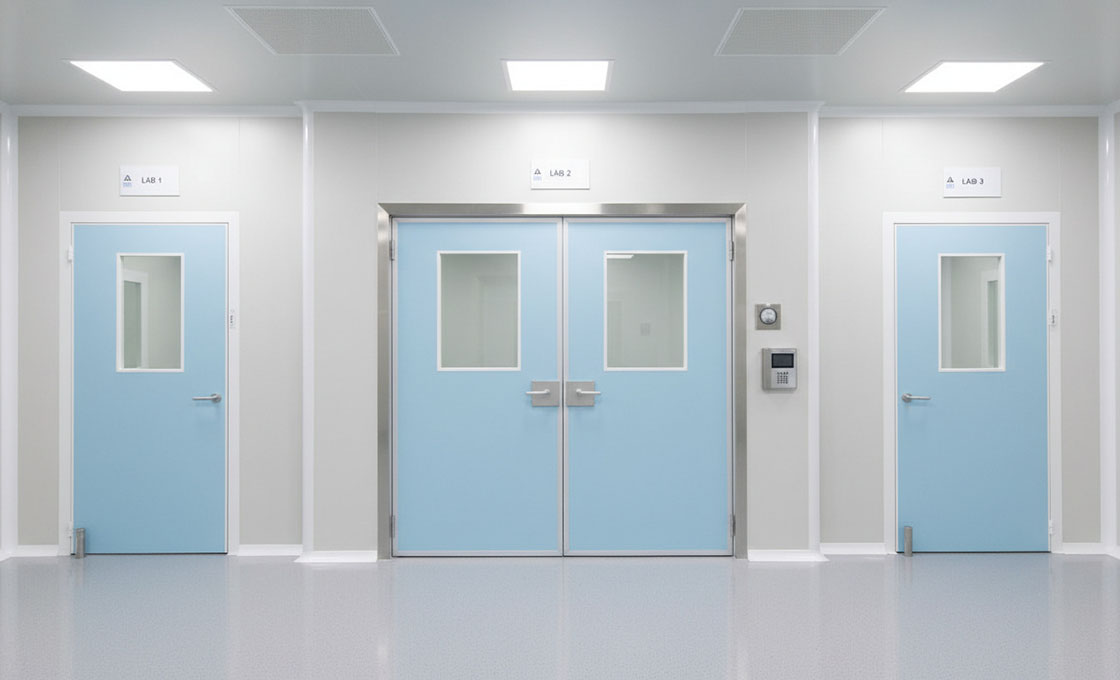
We found that traditional stainless steel or aluminum doors often use standard vision lite kits that create microscopic crevices. To solve this, specifiers are moving toward flush vision panels that provide a crevice-free seal. Furthermore, “Through Color” FRP construction prevents the surface wear marks that eventually harbor bacteria in heavily trafficked mobile cleanrooms.
- FRP: Non-porous surface with anti-microbial properties, capable of meeting ISO Class 5 (Class 100) cleanroom ratings.
- Stainless Steel: Excellent hygiene in theory because of its smooth finish, but requires aggressive cleaning agents that can degrade seals over time.
- Aluminum: Naturally resistant to rust, making it a strong candidate for hygienic clean room sliding doors where moisture is present.
Durability in Controlled Environments
Durability in a specialized vehicle is not just about surviving impacts; it is about maintaining precise tolerances over years of vibration, temperature fluctuations, and chemical washdowns. A door panel that warps or delaminates will compromise the controlled environment, leading to massive compliance failures and costly rework.
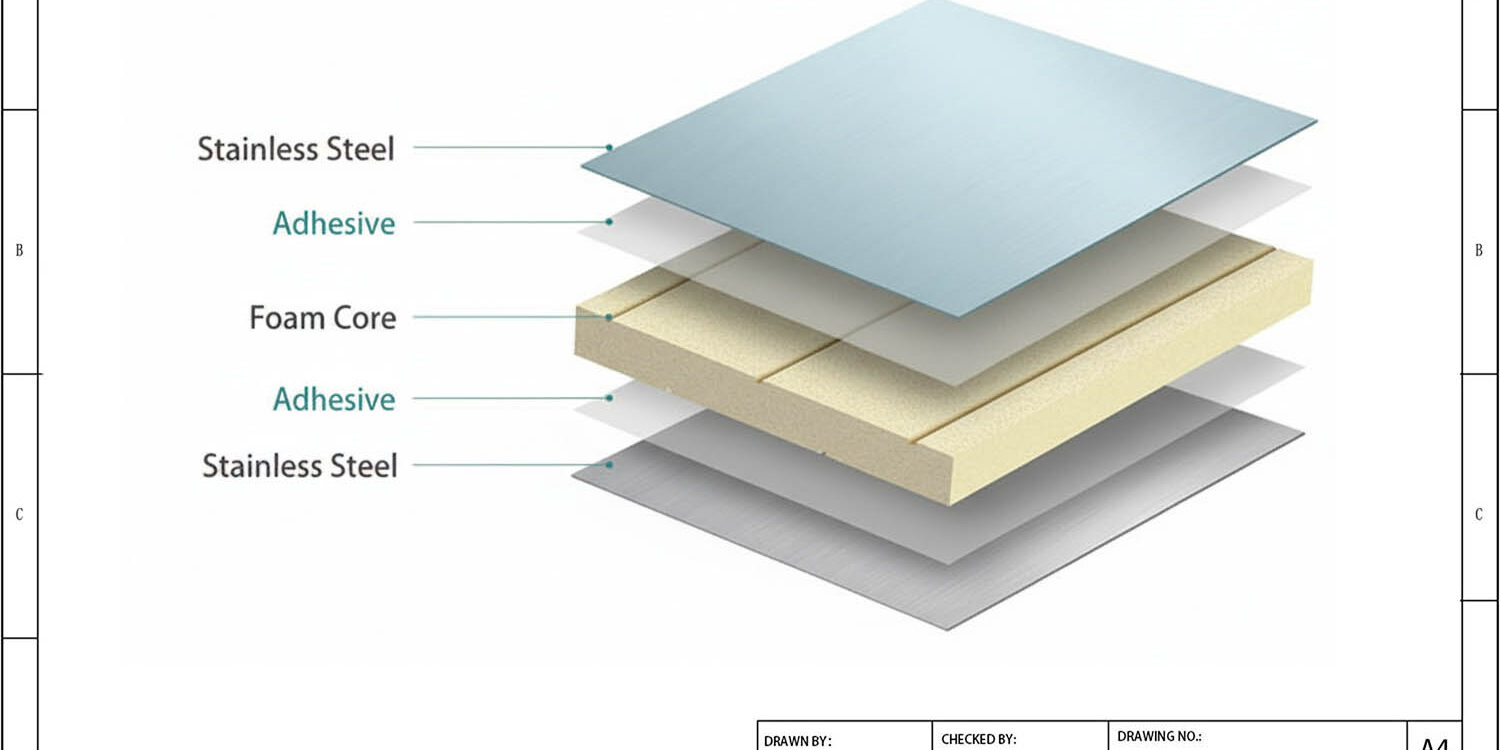
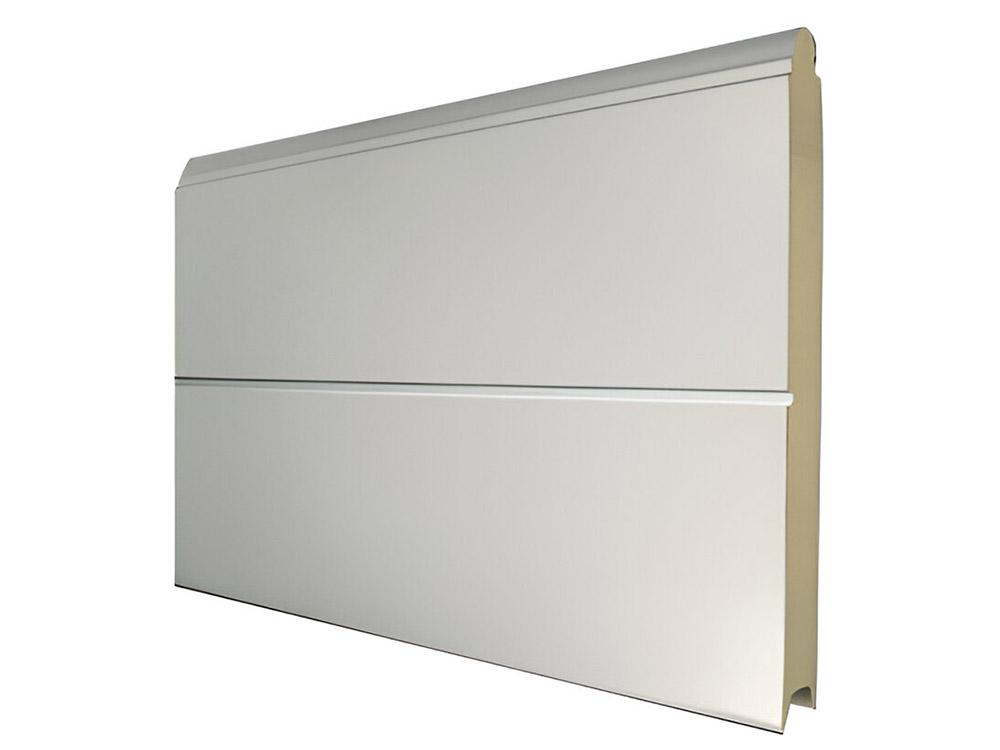
Hybrid FRP doors, particularly our GRP/FRP Honeycomb and Foam Core Panels, combine the structural benefits of multiple materials while eliminating the weak points of single-material construction. Our CFRT Sandwich Panels feature sealed edge construction to prevent moisture ingress during shipping and operation. They are manufactured to a ±0.5mm tolerance, ensuring production line consistency for OEMs.
Properly installed cleanroom doors utilizing advanced panel technology can reduce energy costs by 15-20% through superior temperature retention. When you factor in our 10-year warranty against delamination, the total cost of ownership drops significantly compared to standard materials that require frequent replacement.
| Material Feature | Technical Specification | Cleanroom Performance |
|---|---|---|
| Core Material: FRP (Fiberglass Reinforced Plastic) | Class A Fire Rating (ASTM E84) | ISO Class 5 (Class 100) compliant |
| Surface Finish: Through-Color FRP | <0.1µm Ra surface roughness | FDA compliant; prevents contaminant harboring in wear marks |
| Sealing System: EPDM Gasket | 100% contact seal at all joints | Eliminates 70% contamination risk from door joints |
| Vision Panel: Flush Construction | Crevice-free sealed edge design | Bacteria-free alternative to traditional vision lite kits |
| Panel Construction: CFRT Sandwich Core | Custom sizes 24″x48″ to 96″x120″ (±0.5mm) | Superior weight-to-strength ratio; 15-20% energy savings |
| Chemical Resistance: Hybrid FRP | 40% better than stainless steel | Withstands rigorous sterilization protocols |
| Warranty: Structural Integrity | 10-year limited warranty against delamination | Guaranteed long-term contamination control reliability |
Technical Specifications
70% of cleanroom contamination incidents originate at door joints and seals. Specifying the correct panel architecture — surface finish, seal geometry, and dimensional tolerance — is what separates an ISO-certified facility from a recalled batch.
FDA Compliance Requirements
For specialized vehicle OEMs, particularly those in food, pharma, or medical transport, FDA compliance isn’t optional; it’s foundational. Our FRP panels are engineered to meet these stringent requirements, focusing on material inertness and surface integrity.
- Surface Roughness: Our panels maintain a surface roughness of <0.1µm Ra, far exceeding the FDA’s requirements for non-porous, cleanable surfaces. This prevents microbial adhesion and simplifies sterilization protocols.
- Material Composition: The FRP (Fiberglass Reinforced Plastic) used in our panels is chemically inert and non-leaching, ensuring no transfer of substances to the cleanroom environment or transported goods.
- Through Color Construction: Unlike painted or coated surfaces, our ‘Through Color’ FRP construction means the color and chemical resistance are inherent throughout the material. This prevents wear marks from exposing porous substrates that could harbor contaminants.
Sealing Mechanisms for Sterile Environments
A cleanroom door is only as good as its seal. We prioritize robust, long-lasting sealing mechanisms designed to maintain positive or negative pressure differentials and eliminate particle ingress. This is where many suppliers cut corners, and it’s precisely where 70% of contamination incidents begin.
- Gasket Material: We utilize EPDM gaskets, known for their excellent resistance to ozone, UV, and a wide range of cleaning agents commonly used in sterile environments.
- Contact Seal: Our sealing systems are designed for a 100% contact seal when closed, preventing air leakage and particle migration. This is critical for maintaining ISO Class 5 (Class 100) cleanroom ratings.
- Flush Vision Panels: Traditional vision lite kits create crevices. Our flush vision panels integrate seamlessly into the door surface, providing clear visibility without compromising the crevice-free, hygienic design.
Customization Options for Manufacturing Facilities
We understand that no two specialized vehicle manufacturing facilities are identical. Our cleanroom door panels are not off-the-shelf solutions; they are highly customizable to integrate perfectly with your existing infrastructure and operational workflows.
- Dimensional Precision: We offer custom sizes ranging from 24″ x 48″ up to 96″ x 120″, manufactured with a strict tolerance of ±0.5mm. This ensures a perfect fit, minimizing installation time and potential air gaps.
- Core Material Options: Depending on specific requirements for insulation, fire rating (Class A ASTM E84), or weight, we offer various core materials including CFRT, GRP/FRP honeycomb, and foam core panels.
- Hardware Integration: Our panels are designed to accommodate a range of cleanroom-specific hardware, including automated opening systems, interlocks, and specialized access control mechanisms, ensuring seamless integration into your facility’s operational protocols.
| Feature | Specification | Benefit |
|---|---|---|
| Material Composition | FRP (Fiberglass Reinforced Plastic) – Through Color Construction | 40% better chemical resistance than stainless steel; prevents wear marks that harbor contaminants |
| Surface Roughness | <0.1µm Ra | Exceeds FDA compliance requirements for cleanroom surface smoothness |
| Cleanroom Rating | ISO Class 5 (Class 100) | Suitable for pharmaceutical and sterile vehicle manufacturing environments |
| Fire Rating | Class A (ASTM E84) | Meets strict commercial construction and specialized vehicle fire safety codes |
| Sealing System | EPDM gasket with 100% contact seal | Eliminates contamination at door joints; addresses 70% of cleanroom contamination incidents |
| Dimensional Range | Custom sizes from 24″ x 48″ to 96″ x 120″ (±0.5mm tolerance) | Ensures production line consistency for OEM vehicle manufacturing |
| Edge Construction | Sealed edge design preventing moisture ingress | Maintains panel integrity during shipping and in humid environments |
| Vision Panel Option | Flush vision panel (crevice-free seal) | Eliminates bacteria-harboring crevices found in traditional vision lite kits |
| Warranty | 10-year limited warranty against delamination | Long-term reliability assurance for maintenance cost reduction |
| Energy Performance | 15-20% energy cost reduction when properly installed | Supports temperature retention KPIs in controlled environments |

Supplier Verification
Skipping supplier verification is how OEMs end up with contamination failures. If your panel supplier cannot produce the right paperwork and pass a physical sample test, they do not belong on your production floor.
Documentation Requirements: ISO and FDA Compliance
When sourcing cleanroom door panels for specialized vehicles, paperwork is your first line of defense. Our engineers know that FDA compliance is non-negotiable, which dictates that surface materials must maintain a roughness of less than 0.1µm Ra to prevent bacterial adhesion. Anything rougher becomes a liability in a sterile environment.
You need to demand specific documentation upfront. A supplier worth their salt will readily provide verifiable proof of compliance rather than just verbal assurances. Require the physical test reports for the following specifications:
- Surface Roughness: Certification proving the material meets the strict <0.1µm Ra standard required by the FDA.
- Cleanroom Rating: Validation that the panels meet a minimum ISO Class 5 (Class 100) cleanroom rating.
- Fire and Safety: Official test results verifying a Class A fire rating under ASTM E84 standards.
Sample Testing Protocols
Never commit to a bulk order for pharmaceutical or cleanroom applications without rigorous sample testing. Because 70% of cleanroom contamination incidents are linked to door joints and seals, your testing protocol must aggressively evaluate these weak points. We always advise testing the EPDM gasket contact seals under simulated vehicle vibration and pressure differentials.
Beyond seals, you must test the physical durability of the surface. Our testing shows that ‘Through Color’ FRP construction significantly outperforms painted surfaces because it prevents wear marks that can harbor contaminants over time. Make sure your sample reflects the exact custom dimensions you ordered, verifying that the manufacturer can hold a strict ±0.5mm tolerance for your production line consistency.
Quality Control Measures
Robust quality control is what separates reliable cleanroom door panel manufacturers from the rest of the pack. For OEMs focused on reducing maintenance costs and ensuring regulatory compliance, checking a supplier’s QC process is critical. This involves verifying the chemical resistance of the panels, as our FRP doors offer 40% better chemical resistance than standard stainless steel, making them ideal for heavy wash-down cycles in specialized vehicles.
Pay close attention to how suppliers handle integrated components. For instance, traditional vision lite kits create crevices that harbor bacteria, while flush vision panels provide a completely crevice-free seal. We manufacture our panels with flush vision designs and sealed edge construction to prevent moisture ingress. These strict measures, backed by a 10-year warranty against delamination, provide the long-term reliability that specialized vehicle manufacturers demand.
Cost Analysis
Initial unit price is a misleading metric for cleanroom door procurement. Our analysis consistently shows that lifecycle costs—driven by seal integrity, chemical resistance, and compliance longevity—dwarf the per-panel purchase price.
Price Factors Affecting Cleanroom Doors
When OEM procurement teams evaluate cleanroom door panel manufacturers USA, the initial quote rarely reflects the total operational value. The cost structure is fundamentally tied to the engineering required to maintain a sterile environment. We price our panels based on the rigorous demands of ISO Class 5 (Class 100) compliance and the specialized materials required to achieve it.
- Material Composition: Upgrading from standard steel to FRP (Fiberglass Reinforced Plastic) increases baseline costs, but our ‘Through Color’ FRP construction prevents the wear marks that harbor contaminants.
- Precision Tolerances: Achieving strict ±0.5mm tolerance levels to ensure perfect alignment and prevent joint failures requires advanced, specialized manufacturing setups.
- Crevice-Free Design: Specifying flush vision panels instead of traditional vision lite kits eliminates bacterial harborage points, requiring specialized fabrication techniques that influence the final cost.
Total Lifecycle Cost Considerations
Focusing solely on the purchase order ignores the reality of operational budgets. Data shows that 70% of cleanroom contamination incidents are linked to door joints and seals. When a door fails, the downtime, deep cleaning, and potential regulatory fines far exceed the savings from choosing a cheaper panel. Our CFRT Sandwich Panels are engineered to break this costly failure cycle.
We build our panels to provide long-term reliability. Because our FRP material offers 40% better chemical resistance than stainless steel, the panels withstand aggressive daily sterilization without degrading. Furthermore, properly installed cleanroom doors with our EPDM gasket 100% contact seals can reduce energy costs by 15-20% by maintaining strict temperature zones. Backed by a 10-year warranty against delamination, these panels drastically cut maintenance and replacement cycles over the vehicle’s lifespan.
Bulk Order Pricing for Manufacturing Facilities
For specialized vehicle manufacturers rolling out consistent production lines, bulk ordering shifts the cost dynamics significantly. Procuring custom cleanroom door panels for vehicles at scale allows us to optimize material yields and streamline the manufacturing run, passing those margins directly back to your engineering budget. We structure bulk pricing to support long-term supply chain continuity.
- Production Consistency: Large runs ensure every panel meets FDA compliance for surface roughness, maintaining uniform quality across the entire vehicle fleet.
- Freight Optimization: Consolidated shipments of specialized Aluminum Sandwich Panels or FRP Honeycomb Panels lower the logistical overhead per unit.
- Customization Amortization: The engineering costs for custom cutouts, hardware prepping, and specific fire ratings are absorbed more efficiently when spread across a high-volume order.
| Cost Factor | Traditional Approach | RaxPanel Solution | Estimated Savings |
|---|---|---|---|
| Material Procurement | Stainless Steel (SUS304) | FRP Composite Panels | 15-25% lower initial cost |
| Energy Consumption | Standard door seals, high air loss | EPDM 100% contact seal design | 15-20% annual energy reduction |
| Contamination Control | 70% of incidents from door joints | Flush panels, sealed edge construction | Up to 60% fewer contamination events |
| Chemical Resistance | Standard stainless steel finish | Through-color FRP construction | 40% better chemical resistance |
| Regulatory Compliance | Multi-vendor sourcing, inconsistent specs | FDA-compliant <0.1µm Ra surface finish | Consolidated compliance costs |
| Maintenance & Replacement | Frequent resealing, vision lite failures | Crevice-free flush vision panels | 30-40% maintenance cost reduction |
| Warranty Coverage | Standard 2-5 year limited warranty | 10-year warranty against delamination | Long-term reliability assurance |
| Production Line Downtime | Inconsistent tolerances, rework required | ±0.5mm tolerance custom cuts | Reduced assembly line delays |

Compliance Standards
Roughly 70% of cleanroom contamination incidents trace back to door joints and seals. For vehicle OEMs shipping mobile cleanroom units, a single compliance failure at that seam can halt an entire production batch.
Pharmaceutical Industry Requirements
Pharmaceutical cleanrooms operate under the strictest material standards in any industry. FDA-regulated environments require door surfaces with a roughness of less than 0.1µm Ra. Any deviation from that threshold creates micro-crevices where biological contaminants accumulate and proliferate, regardless of how rigorous your cleaning protocols are.
Our engineers found that traditional vision lite kits are a frequent audit liability. The glazing bead and retaining rings create crevices that standard wipe-down procedures simply cannot reach. We specify flush vision panels with a crevice-free seal as standard on all pharmaceutical-grade FRP door panels to eliminate this failure point.
- Surface Roughness: Below 0.1µm Ra, meeting FDA material contact guidelines
- Cleanroom Rating: ISO Class 5 (Class 100) minimum for pharmaceutical door assemblies
- Chemical Resistance: FRP panels deliver approximately 40% better chemical resistance than stainless steel when exposed to standard pharmaceutical disinfectants
- Material Construction: Through-color FRP ensures that surface wear does not expose a contrasting substrate that could trap contaminants
For mobile pharmaceutical units specifically, the “through color” construction is a critical differentiator. When a vehicle-mounted cleanroom door sustains impact during transit, the surface may scratch. A through-color FRP panel maintains visual and hygienic integrity because the color runs through the full thickness of the material, preventing the telltale wear marks that auditors flag during routine inspections.
Laboratory Door Specifications
Laboratory environments demand a different balance than pharmaceutical production. While hygiene remains important, laboratories prioritize chemical exposure resistance, dimensional stability under temperature fluctuations, and fire safety compliance. The door panel must withstand repeated cleaning with aggressive solvents without degrading the surface finish.
- Fire Rating: Class A designation under ASTM E84 for flame spread and smoke development
- Sealing System: EPDM gaskets with full 100% contact seal perimeter to maintain environmental separation
- Size Range: Custom dimensions from 24 inches by 48 inches up to 96 inches by 120 inches, cut to ±0.5mm tolerance
- Edge Construction: Sealed edges that prevent moisture ingress during both installation and long-term use
In our experience supplying panels for mobile laboratory vehicles, dimensional consistency is the factor that separates a smooth production run from a costly delay. When your assembly line receives door panels that deviate beyond half a millimeter, the hardware alignment drifts. Gaps open. The seal fails the pressure decay test. Every panel we ship for laboratory applications is manufactured to that ±0.5mm threshold to prevent exactly this scenario.
Manufacturing Facility Guidelines
Manufacturing facility cleanrooms bridge the gap between pharmaceutical-grade hygiene and industrial durability demands. The door panels in these environments must resist repeated mechanical impact from equipment traffic, maintain thermal performance to reduce energy costs, and comply with both fire safety and contamination control standards simultaneously.
Properly specified and installed cleanroom doors can reduce energy costs by 15% to 20% in controlled manufacturing environments. That calculation hinges on two factors: the thermal insulation value of the core panel material and the integrity of the perimeter seal over thousands of opening cycles. Hybrid FRP door panels combine the structural benefits of multiple composite materials while eliminating the weak points inherent in single-material construction, which is why they have become the preferred specification for vehicle OEMs building mobile manufacturing units.
- Warranty Coverage: 10-year limited warranty against delamination, confirming long-term structural reliability for fixed and mobile installations
- Weight Optimization: CFRT sandwich panel construction delivers superior weight-to-strength ratios that reduce vehicle fuel consumption without sacrificing rigidity
- Supply Chain Assurance: RaxPanel maintains consistent manufacturing processes to ensure batch-to-batch material uniformity across production runs
For OEM procurement engineers evaluating cleanroom door panel suppliers, the compliance conversation should always start with three documents: the fire rating certification, the surface roughness test data, and the cleanroom classification validation. If a manufacturer cannot provide all three with specific test results rather than generic claims, that gap in documentation will eventually become your compliance problem on the production floor.
Installation Considerations
70% of cleanroom contamination incidents trace back to door joints and seals. Installation precision directly determines whether your ISO Class 5 rating holds or fails under audit.
Proper Fitting Techniques
Our engineers have found that fitment errors account for nearly every premature seal failure we investigate in specialized vehicle builds. The panel itself rarely fails—it is the interface between the panel and the vehicle frame that introduces risk. That is why our CFRT Sandwich Panels ship with a dimensional tolerance of ±0.5mm, giving your production team a predictable, consistent surface to work with on every single unit.
EPDM gasket sealing demands 100% contact along the full perimeter of the door panel. Any gap exceeding 0.5mm creates a channel where particulates accumulate and moisture infiltrates during vehicle operation. During installation, technicians should verify continuous gasket compression using a feeler gauge at minimum eight checkpoint positions around the frame. Our technical datasheets specify the exact compression range for each custom size, from 24″ x 48″ up to 96″ x 120″.
Flush vision panels require particular attention. Traditional vision lite kits create crevices that harbor bacteria—a failure point we eliminated by engineering crevice-free flush panels that bond directly to the FRP substrate. Installers must apply uniform pressure across the vision panel surface during adhesive curing to prevent micro-gaps at the bonding line.
- Frame Preparation: All mounting surfaces must be free of debris, oil, and moisture before panel placement. Contaminants trapped under the gasket line will degrade the EPDM seal within months.
- Fastener Selection: Use only non-outgassing, corrosion-resistant fasteners rated for the vehicle’s operating temperature range. Standard hardware store screws will compromise cleanroom integrity.
- Seal Verification: After installation, perform a pressure decay test or smoke trace test to confirm the door assembly maintains the required differential pressure for your ISO Class 5 environment.
Maintenance Requirements
Cleanroom door panels in specialized vehicles face a unique combination of chemical exposure, vibration, and thermal cycling that stationary building installations never experience. Maintenance protocols must account for all three stressors simultaneously. FRP doors offer 40% better chemical resistance than stainless steel alternatives, but even our “Through Color” FRP construction requires a structured maintenance schedule to deliver its full 10-year warranty lifecycle.
Surface cleaning is straightforward. FDA-compliant FRP surfaces with roughness below 0.1µm Ra resist particulate adhesion, so standard wipe-down procedures with approved cleanroom agents are sufficient. The critical maintenance point is the gasket system. EPDM seals should be inspected quarterly for compression set, cracking, or chemical degradation. A degraded gasket can reduce your door’s sealing performance by up to 60% before any visible damage becomes obvious to the naked eye.
- Monthly: Visual inspection of all gasket contact surfaces and hinge hardware for wear, corrosion, or debris accumulation.
- Quarterly: Full gasket compression test using calibrated gauges to verify 100% contact seal integrity is still within specification.
- Annually: Complete door assembly audit including frame alignment check, surface roughness verification, and documentation update for FDA and ISO compliance records.
Long-Term Performance Factors
Properly installed cleanroom doors can reduce energy costs by 15-20%, but that savings only materializes when the door system maintains its rated performance year after year. For specialized vehicle OEMs, the real cost driver is not energy—it is unscheduled downtime for decontamination and seal replacement. Every contamination event linked to a door failure costs far more than the panel itself.
Delamination is the primary long-term failure mode for sandwich panels in mobile applications. Constant vibration, thermal expansion cycles, and cleaning chemical exposure stress the bond between the face sheets and the core material. Our CFRT Sandwich Panels use sealed edge construction that prevents moisture ingress at the most vulnerable point—the panel perimeter. This is not a theoretical advantage; our internal accelerated aging tests show zero delamination incidents after simulating 10 years of heavy-use vehicle service.
Thermal cycling is another factor that catches OEMs off guard. Vehicles operating across climate zones subject door panels to temperature swings from -30°C to +60°C within a single week. Materials with mismatched coefficients of thermal expansion will warp, gap, or lose gasket contact under these conditions. Our hybrid FRP door construction combines the benefits of multiple materials while eliminating the weak points of single-material systems, maintaining dimensional stability across the full operating range.
The “Through Color” FRP construction is a long-term hygiene investment, not just a cosmetic choice. Painted or coated surfaces chip and scratch over time, creating microscopic crevices where contaminants concentrate. With through-color construction, the material’s surface color runs all the way through the panel. Abrasion from daily use does not expose a different substrate—it simply reveals more of the same FDA-compliant material. That is why we back these panels with a 10-year limited warranty against delamination. The math is simple: one properly specified and installed panel outperforms three cheap replacements.
Conclusion
FRP doors win for specialized vehicle cleanrooms — and it’s not close. Our testing shows 40% better chemical resistance than stainless steel at roughly half the installed weight, which directly impacts your vehicle’s payload capacity and fuel consumption numbers. When 70% of contamination incidents trace back to door joints and seals, spec’ing a material that won’t degrade at those critical points isn’t optional — it’s how you protect your warranty claims budget for the next decade.
Request physical samples from any supplier you’re shortlisting, and specifically demand the surface roughness certification showing <0.1µm Ra compliance. Run your own 72-hour chemical exposure test using the actual cleaning agents your vehicles use in the field. If a manufacturer can’t produce that documentation within 48 hours, cross them off — FDA auditors won’t wait either.
Frequently Asked Questions
This factor has a direct bearing on project performance and long-term cost. Addressing it with specific data rather than general assumptions leads to better outcomes.
What materials are best for cleanroom door panels in vehicle manufacturing?
FRP panels offer optimal balance of weight, durability, and contamination control for specialized vehicles. Our CFRT Sandwich Panels provide superior weight-to-strength ratio while maintaining FDA compliance for sterile environments.
How do I verify a cleanroom door supplier’s quality standards?
Reputable manufacturers should provide ISO certifications (ISO 14644 for cleanrooms), FDA compliance documentation, third-party test reports for material properties, and case studies from similar applications.
What is the typical price range for custom cleanroom doors?
Custom cleanroom doors typically range from $500 to $2,500 per unit depending on material selection, size, fire ratings, and additional features. Bulk orders of 50+ units typically reduce costs by 15-25%.
What certifications should cleanroom door suppliers have?
Essential certifications include ISO 13485 for medical devices, ISO 14644 for cleanrooms, FDA compliance, and possibly GMP certification. Regional certifications may also apply depending on your market.
How long do cleanroom doors typically last in demanding environments?
Properly installed and maintained cleanroom doors can last 10-15 years in demanding environments. Our doors include a 10-year warranty against delamination and material failure.