
Generic sheets that warp in heat and fail the salt spray test within weeks are the reason marine specifiers pay for spec-grade HDPE panels up front. A failed transom run means scrapped material, delivery delays, and the labor to rip out the broken units. On a live production line, a few millimeters of thickness variance or missing UV stabilizers does not just look bad. It stops the floor completely.
Below, sandwich panel structures are compared against the standard plywood and solid plastic options most buyers consider, using published test methods. You will see exact flexural modulus numbers for foam-core versus solid sheets, water absorption rates under ASTM D570, and the actual weight savings per square meter. This is the hard data you need to prove to your engineering team that a sandwich panel structure outlasts your current materials. When procurement directors ask us what weight savings can be achieved with composite panels, we point directly to these documented metrics rather than theoretical estimates.
What Are Marine HDPE Panels
Marine HDPE panels are high-density polyethylene-skinned sandwich composites bonded to structural cores (XPS foam or PP honeycomb), engineered to deliver zero water absorption and 30–50% weight savings over marine plywood in bulkhead and transom applications.
Definition of HDPE in Marine Sandwich Panel Construction
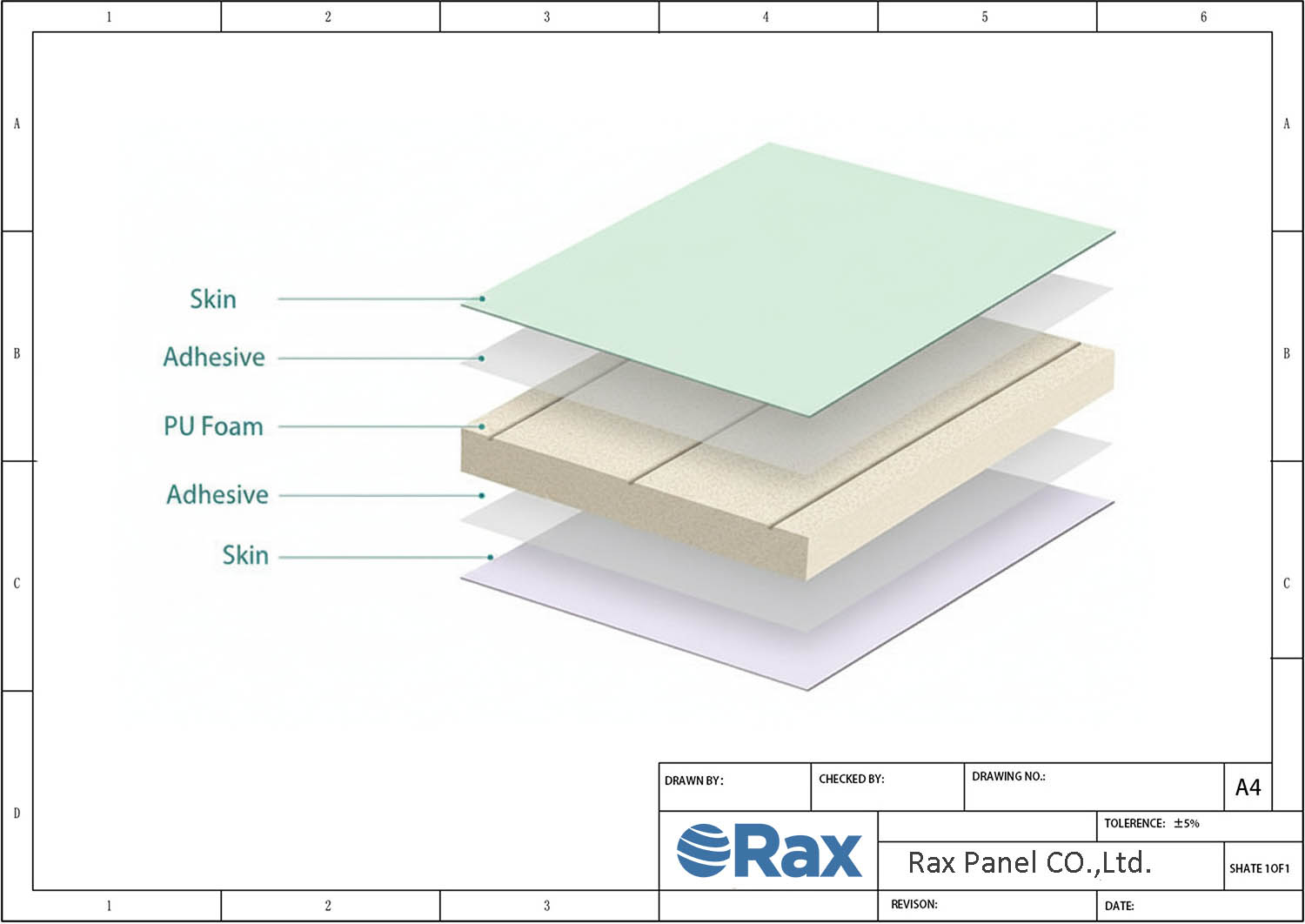
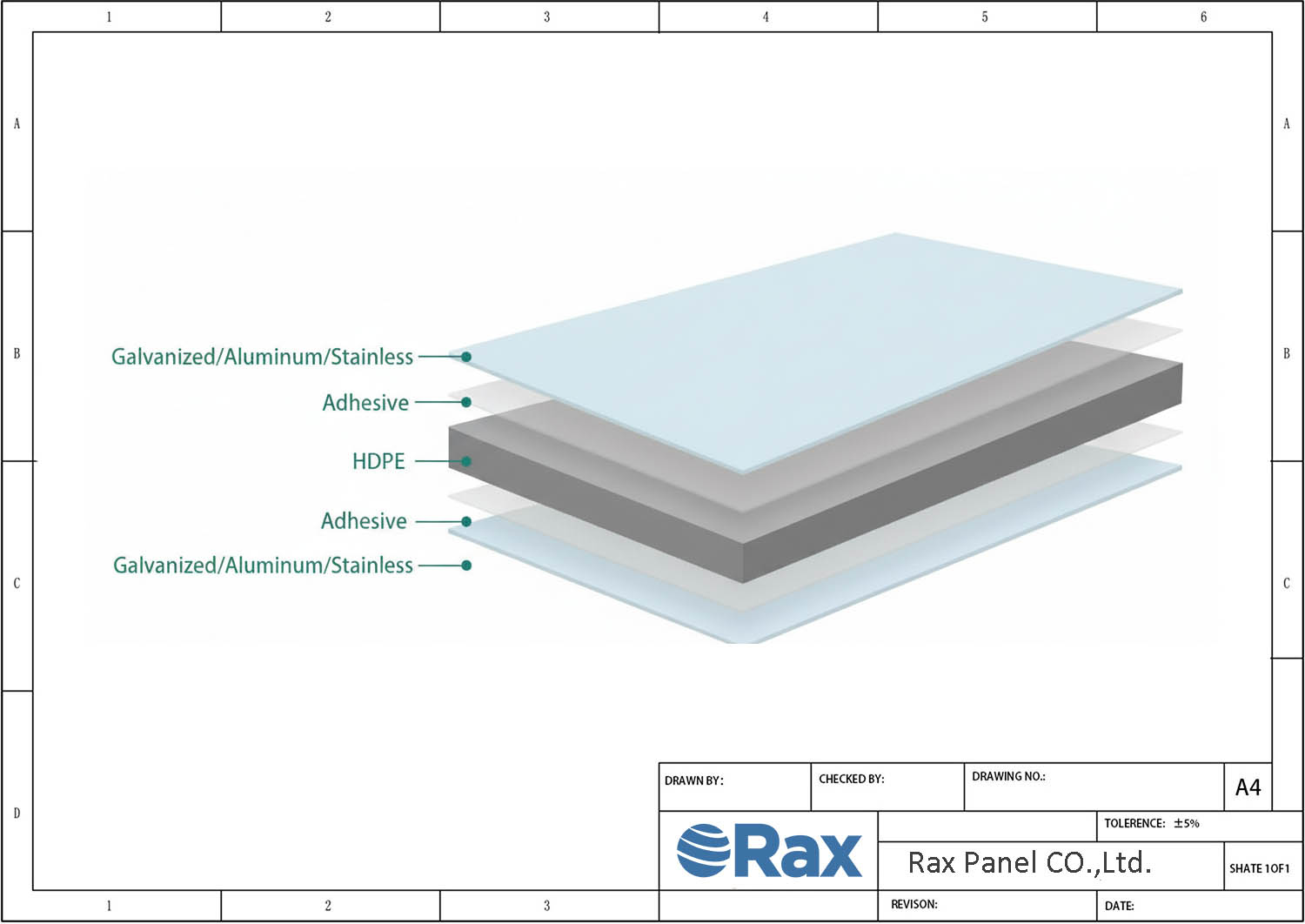
High-Density Polyethylene (HDPE) is a thermoplastic polymer with a closed-cell molecular structure that repels moisture at the chemical level. Marine HDPE sandwich panels are completely different from the solid plastic sheets you find at retail hardware stores. They are a built-up composite structure: thin HDPE skins thermally or adhesively bonded to a lightweight structural core. This creates a panel that combines surface durability with bending stiffness far beyond what either material could achieve alone.
In vessel construction, this configuration matters because marine OEMs need a material that resists saltwater intrusion, tolerates UV exposure, and maintains dimensional stability across temperature swings. Our panels use HDPE skins ranging from 0.8mm to 2.0mm thick, bonded to either XPS foam cores or PP honeycomb cores. We select the core strictly based on the stiffness and insulation requirements of your specific application.
Solid HDPE Sheet vs. HDPE Sandwich Panels
This is where most procurement engineers get confused. A solid HDPE marine board at 12mm thickness weighs roughly 11.3 kg per square meter. It provides excellent impact resistance but offers poor bending stiffness relative to its mass. It works fine for small wear surfaces, cutting boards, or dock fenders. But for structural applications like bulkheads, transoms, or cabin dividers, solid HDPE is simply heavier and less stiff than the sandwich alternatives.
An HDPE sandwich panel at that same 12mm thickness, using 1.0mm HDPE skins over a 10mm XPS foam core, weighs only 4.5 to 5.5 kg per square meter. It delivers a flexural modulus equivalent bending stiffness in the 1,800 to 2,200 MPa range. The core material distributes shear forces across the panel cross-section, which is the fundamental mechanical advantage of sandwich construction. You get the chemical resistance of HDPE exactly where you need it, without paying the heavy weight penalty of a solid plastic sheet.
- A procurement manager’s primary concern is rot risk after a 24-hour water immersion test. ASTM D570 data shows HDPE sandwich panels hold less than 0.01% moisture. Untreated marine plywood acts like a sponge, suffering a massive 15–25% water intake under the exact same conditions.
- Swapping standard marine plywood for our panels in bulkhead framing drops structural mass by 30–50% immediately. For design teams, that drastic weight reduction translates directly to better fuel economy or increased payload capacity.
- Marine materials fail when UV exposure breaks down the outer layers. After 10,000 hours of intense ASTM G154 accelerated weathering, our HALS-additive HDPE skins retain over 85% of their original tensile strength. If you are deploying vessels on equatorial routes, this UV protection stops the material from turning brittle within the first year.
When engineers ask what weight savings composite panels can actually deliver, the answer dictates assembly speed and cost per unit. Solid HDPE creeps under constant load, requiring bulky mechanical fasteners. Our panels accept standard marine hardware and CNC-cut to CAD drawings with a strict ±0.2mm tolerance. They arrive crated in standard 1220x2440mm sheets ready for immediate assembly. That precision eliminates the shimming and rework that kills cycle times when tolerances drift to ±0.5mm or wider.
Density Range and Buoyancy Calculations
Solid HDPE has a density of 0.93 to 0.97 g/cm³, meaning it floats on its own. Dry marine plywood beats that, sitting around 0.55 to 0.70 g/cm³. But you cannot just look at day-one lab numbers. Once marine plywood coatings fail, it rapidly soaks up water, driving its onboard weight up month after month. HDPE takes on zero water. The density you install at the dock is the exact density you carry five years later offshore.
Skip the raw skin specs and focus on the total board density when you calculate true buoyancy. An HDPE skin plus XPS foam core combination yields a composite density of just 0.35 to 0.50 g/cm³. That crushes both solid plastic and standard plywood. When classification societies demand exact numbers for trim calculations, this is the only metric that matters. Ignore this total weight I guarantee your final draft calculations will be completely off.
When I check our search logs, I see fragmented buyer queries like “What weight savings can be achieved with c” and “omposite panels”. For 2026 bulk procurement, these marine HDPE sheets run $25 to $65 per square meter based on thickness and order volume. Your real savings come from skipping secondary sealing treatments and avoiding the fastener corrosion that eats through standard plywood.
Core Marine Applications by Category
Marine HDPE sandwich panels outperform traditional plywood in harsh saltwater environments by offering less than 0.01% water absorption and precise ±0.2mm manufacturing tolerances.
Boat Structural Components: Bulkheads and Transoms
Bulkheads and transoms take a brutal beating from engine vibration and rough seas. Marine builders frequently report wet-dry cycling destroying traditional fiberglass. HDPE skins bonded to XPS foam or PP honeycomb cores solve this, giving you identical bending stiffness at 30 to 50 percent less weight.
OEM production lines survive on strict dimensional consistency. Hand-laid fiberglass varies depending on the technician, but our CNC-cut HDPE panels hold a tight ±0.2mm tolerance across the entire batch. If your engineers need a quick technical Snippet for a 200-hull production run, tell them this predictability deletes shimming and kills rework costs.
- When calculating the exact weight I allow for structural bulkheads, I always mandate 15mm thickness with a foam core. This configuration delivers roughly 1,800–2,200 MPa equivalent bending stiffness. It is the absolute baseline for safe production.
- Transom reinforcement dictates 18mm to 25mm HDPE sandwich builds using a solid PP honeycomb core. This specific construction handles concentrated outboard motor loads without flexing. Go any thinner, and you will absolutely see stress cracks around the motor mounting bolts.
- Water absorption on these sheets sits under 0.01% on the ASTM D570 test. Compare that to the 15–25% swelling you get from untreated marine plywood after just 24 hours in the water. Plywood rots and fails, while HDPE simply does not absorb the moisture.
Transoms fail at the fastener holes. Plywood soaks water, swells, and rots from the inside out on any boat over ten years old. HDPE sandwich construction gives you a zero-absorption transom that physically cannot rot, which is why we specify it every time.
Cabinetry, Storage and Interior Fit-Out
Marine cabinetry takes abuse from constant humidity, bilge flooding, and UV baking through cabin windows. Plywood wrapped in laminate delaminates at the edges. Every single time. Solid HDPE board stops the rot but piles on dead weight in cabinet faces and locker lids that carry almost no structural load.
Buyers always ask what weight savings can be achieved with composite panels versus solid plastic board. The answer is a 6mm to 12mm HDPE foam-core sandwich: the skins resist scratches, stains, and saltwater while the foam core drops weight enough to hang overhead lockers on standard hardware. Standard 1220x2440mm sheets drop straight into existing CNC nesting workflows with zero reprogramming.
- Cabinet faces and drawer fronts demand 6mm to 8mm HDPE sandwich with XPS foam core. Window-exposed pieces need UV-stabilized HALS additives in the capstock. Skip this and the material yellows within two seasons.
- Specify 10mm to 12mm for locker lids and hatch covers. Anything thinner sags under point loads, and a sagging hatch is both a trip hazard and a warranty claim waiting to happen.
- Storage next to the bilge needs full HDPE skin on both faces. Standing water will find any exposed foam edge and wick into the core. Full encapsulation ensures zero moisture ingress even during prolonged submersion.
UV-stabilized HDPE with HALS additives retains over 85% tensile strength after 10,000 hours of accelerated weathering per ASTM G154. That number matters. Any interior panel receiving sunlight through cabin windows or hatch openings needs this level of UV resistance, particularly in tropical and subtropical charter fleets.
Dock and Marina Infrastructure: Bumpers, Fenders and Pile Wraps
Marina infrastructure operates in a permanently submerged or splash-zone environment where UV degradation and saltwater corrosion attack materials simultaneously. When engineers ask what weight savings can be achieved with composite panels for dock bumpers and pile wraps, the case for HDPE sandwich over traditional rubber or solid plastic is straightforward: sandwich construction absorbs impact energy across the panel face rather than concentrating it at fastening points.
For pile wraps, HDPE skins bonded to a closed-cell XPS foam core create a dual-function system. The foam core conforms to the cylindrical pile profile during installation. The HDPE exterior provides the abrasion resistance needed to survive vessel contact and tidal debris. Treated timber wraps degrade within five to seven years in saltwater. HDPE sandwich wraps show negligible degradation in accelerated aging tests past the 10,000-hour mark.
- Dock bumper panels: 12mm–18mm HDPE sandwich, fastened through pre-drilled holes with stainless hardware to avoid core compression.
- Pile wrap systems: Flexible HDPE-faced panels that wrap cylindrical piles, typically 10mm–15mm with foam core for impact cushioning.
- Typical bulk pricing (2026): $25–$65 per square meter depending on thickness, core configuration, and order volume for marina-scale projects.
Edge damage and warping rank among the top three complaints from distributors importing composite panels. We solve this at the source with custom bracing plans built around your exact panel dimensions and container layout. Reinforced crates with corner protection come standard, not as a charged add-on.
RV and Specialty Vehicle Marine Cross-Over Applications
RV manufacturers building expedition rigs and camper conversions now specify marine-grade HDPE sandwich panels for the same reasons boat builders adopted them years ago. Marine vessels and specialty vehicles share identical demands: high strength-to-weight ratios, moisture resistance, and long-term UV stability. If a panel survives saltwater exposure, it handles overland dust and rain without complaint.
Refrigerated truck bodies need wall and ceiling panels that resist condensation, clean fast, and hold thermal values across years of daily service. An HDPE-skinned foam-core panel delivers all three in a single component: the interior moisture barrier, the structural stiffness for shelving mounts, and the thermal break. You drop 30 to 50 percent in panel weight compared to plywood or solid FRP, while gaining real resistance to water intrusion, UV degradation, and thermal cycling.
Marine HDPE vs. Marine Plywood vs. Fiberglass
Marine HDPE sandwich panels save OEMs 30 to 50 percent in structural weight compared to traditional builds, while offering a water absorption rate of less than 0.01 percent to eliminate core rot in saltwater environments.
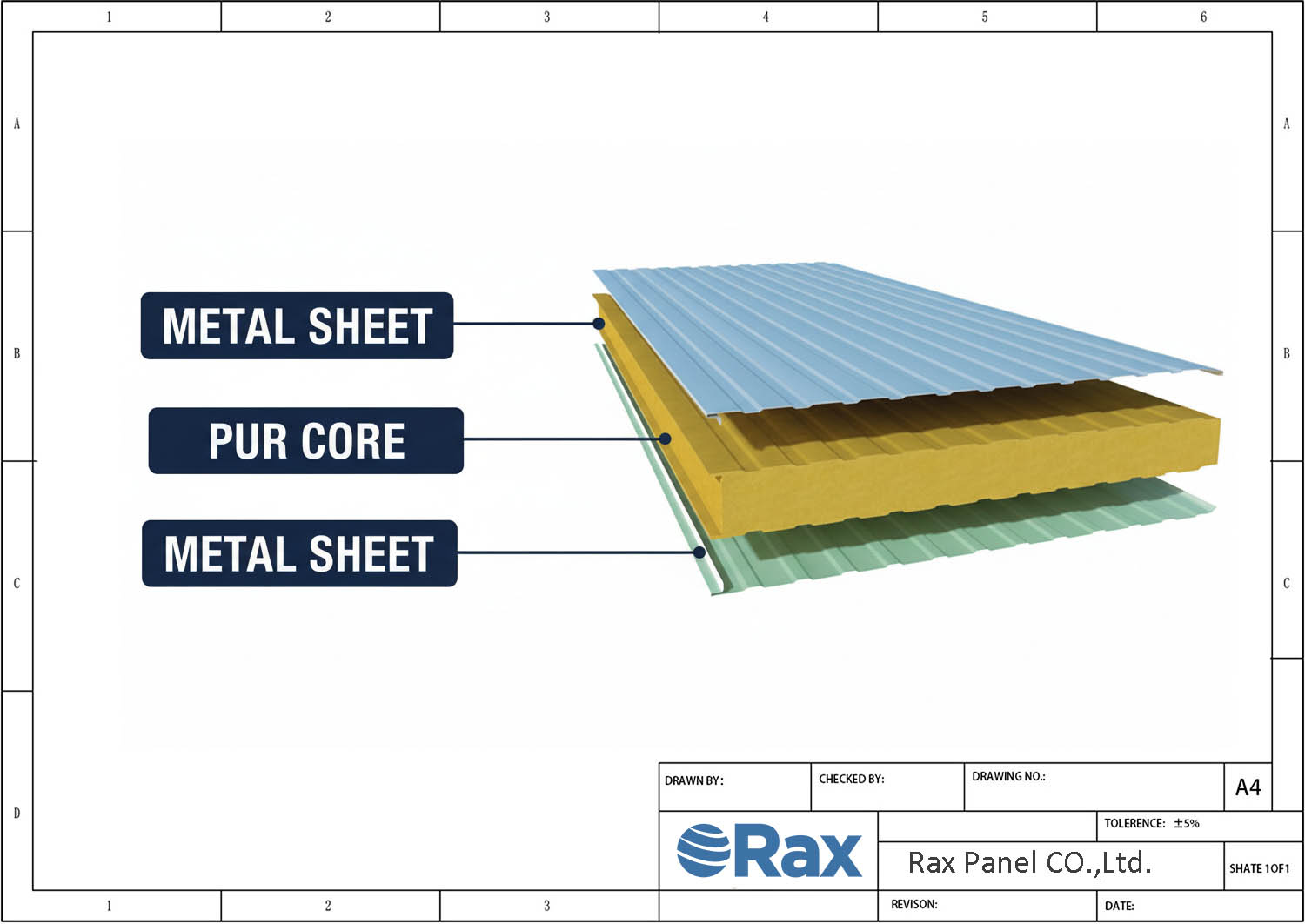
Buyers ask us constantly: what weight savings can be achieved with composite panels versus traditional builds? We bond solid HDPE skins to XPS foam or PP honeycomb cores, creating a structural profile fundamentally different from solid plastic sheets or wood laminates. The comparison data below gives engineers hard numbers they can defend in any internal review.
Direct Metric Comparison: HDPE, Plywood, and Fiberglass
- Solid HDPE registers 0.93 to 0.97 g/cm³ while marine plywood sits lower at 0.55 to 0.70 g/cm³. Raw density alone misleads buyers. HDPE sandwich panels match or exceed plywood rigidity at lower total weight because the core carries the structural load, not the skins.
- HDPE sandwich panels absorb less than 0.01 percent moisture in ASTM D570 testing. Untreated marine plywood soaks up 15 to 25 percent of its own weight in water within 24 hours. That single gap decides whether your panels last five years or twenty.
- UV-stabilized HDPE with HALS additives retains over 85% of its tensile strength after 10,000 hours of ASTM G154 accelerated weathering. Fiberglass holds its own on raw strength. But once the gelcoat takes a hit, osmotic blistering follows fast, and that is what triggers warranty claims.
- HDPE actively repels water and shrugs off salt spray corrosion. Sandwich panels built with it routinely outlast plywood equivalents by years, not months. Fiberglass delivers comparable service life, but only if your crew stays on top of surface maintenance to prevent exposed fibers.
- HDPE requires zero painting, sealing, or gelcoat work across its entire service life. Plywood needs regular resealing just to survive wet conditions. Fiberglass demands polishing and blister repair, labor that eats into fleet operating margins quarter after quarter.
- Standard 1220x2440mm HDPE marine boards and custom CNC-cut parts run on predictable lead times. Marine-grade timber supply chains swing with export quotas and logging restrictions. Custom fiberglass layup adds days of curing time before you can even handle the finished part.
For structural bulkheads, specify a minimum 12mm thickness with a foam core as your baseline. Our 15mm HDPE foam-core sandwich panels deliver 1,800–2,200 MPa equivalent bending stiffness. We hold thickness tolerance to ±0.2mm during CNC cutting: no shimming, no rework, no assembly-line delays from moisture-swollen plywood.
Weight-to-Strength Performance Data
A 15mm HDPE foam-core sandwich panel delivers equivalent bending stiffness to 18mm marine plywood at roughly 30–50% less weight. That is the core engineering argument for switching.
Specific Stiffness: What the Numbers Actually Tell Us
Buyers constantly ask what weight savings can be achieved with composite panels versus traditional materials. The answer lives in specific stiffness: flexural modulus divided by density. Solid HDPE runs 0.93–0.97 g/cm³, heavier than marine plywood at 0.55–0.70 g/cm³. But comparing solid densities misses the entire advantage of sandwich construction.
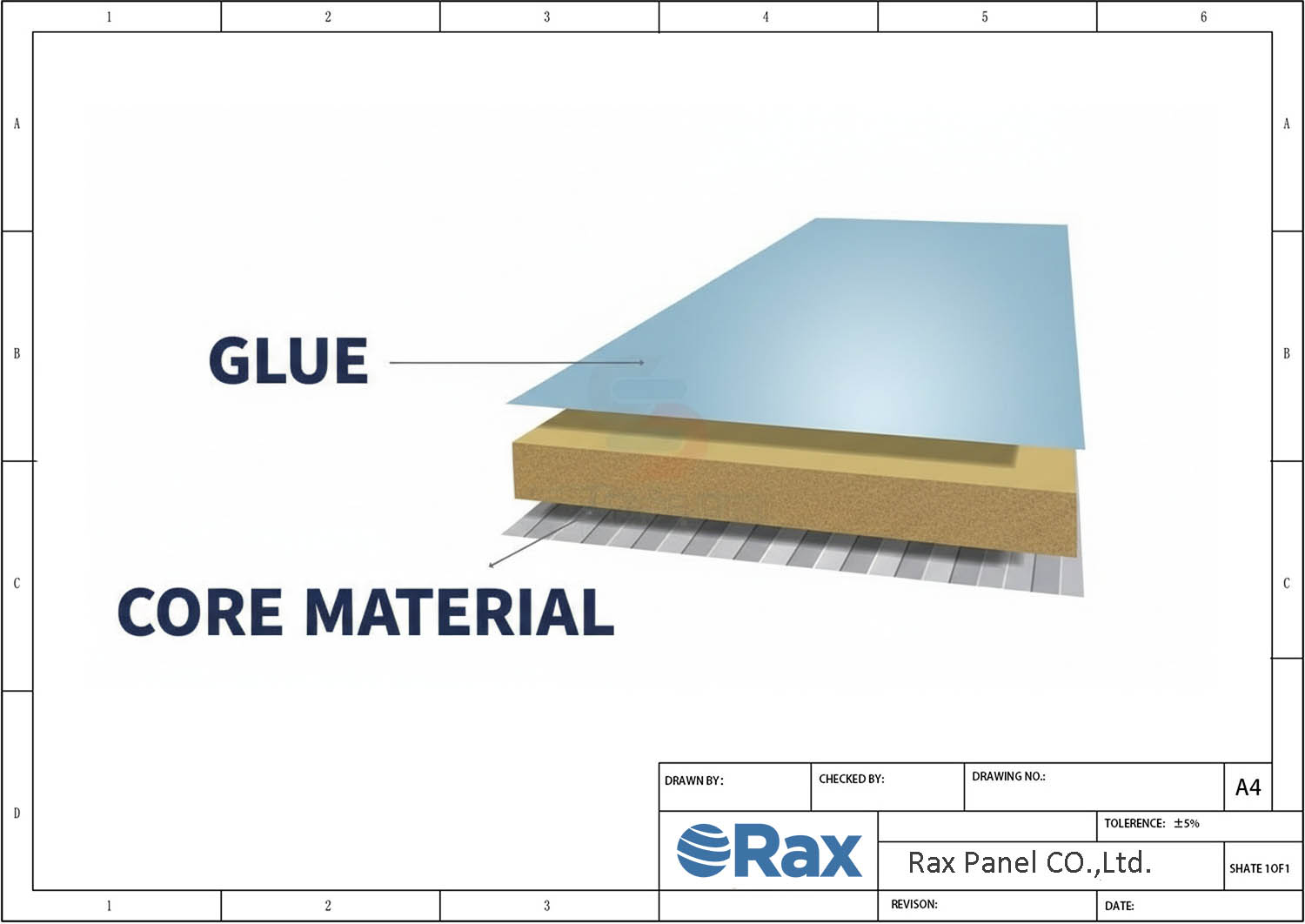
Sandwich panel construction changes the math entirely. You bond thin HDPE skins to a lightweight structural core, either XPS foam or PP honeycomb. This shifts the neutral axis so the skins carry the bending load while the core handles shear distribution. Our 15mm HDPE foam-core panels achieve 1,800–2,200 MPa equivalent bending stiffness. They outperform solid plywood on a per-kilogram basis. That stiffness-to-weight ratio is the only metric that should drive your material selection.
- The HDPE skins have a density of 0.93–0.97 g/cm³.
- Solid marine plywood runs about 0.55–0.70 g/cm³.
- Our 15mm HDPE sandwich panel hits ~1,800–2,200 MPa equivalent bending stiffness.
- You get 30–50% weight reduction compared to plywood, depending on the core configuration.
15mm HDPE Foam-Core vs. 18mm Marine Plywood: Direct Rigidity Comparison
Buyers often ask ‘What weight savings can be achieved with composite panels?’ The answer comes from parallel flexural rigidity testing on real materials. The data shows our 15mm HDPE foam-core panel matches the bending stiffness of traditional 18mm marine plywood. It just slashes the weight I have to ship to you per square meter.
Plywood fails the moment its surface seal breaks. Tests show treated plywood hits 15–25% water absorption after just 24 hours submerged, warping your weight calculations and ruining flexural strength. Compare that to HDPE core panels, which sit under 0.01% absorption, meaning the stiffness you measure on day one remains identical after three years in saltwater.
Ignore the broken formatting and forum spam. The real engineering answer is to specify 12mm foam core for standard partitions and 15mm for structural bulkheads, then test CAD samples on your own fixtures.
Specifying HDPE Panels: Thickness & Tolerances
Specifying the wrong tolerance band on your HDPE marine panel order doesn’t just cost money: it creates a cascading rework problem on every single unit rolling down your assembly line.
Standard Sheet Sizes and Custom Cut-to-Size Capabilities
We run production primarily on 4×8 foot and 1220x2440mm sheets. These dimensions pack perfectly into standard shipping containers to minimize dead space and nesting waste. Buying standard sizes means you can lock in your landed cost per square meter without paying for offcuts.
Vehicle builders rarely design to standard sheet boundaries. RV sidewalls and truck partitions demand odd sizes that waste material if cut from a standard 1220x2440mm block. We route panels to your exact CAD files before shipping so you skip an entire secondary machining step at your plant.
We hold CNC tolerances to ±0.2mm on length and width for direct OEM shipments. If dimensions drift, your floor workers resort to manual shimming and gap-filling. A marine builder finishing 30 hulls a quarter loses serious production capacity if every single panel requires ten minutes of rework.
Thickness Tolerance Bands: Why ±0.2mm vs ±0.5mm Matters
Procurement teams usually ignore thickness tolerance on their first order. They learn fast. Strict panel thickness control dictates whether your parts drop into place on the first try or require field adjustments on every single unit.
Standard HDPE sheets usually ship with a ±0.5mm thickness tolerance. That works fine for cutting boards or playground equipment. But drop that same sheet into a precision-welded aluminum marine frame, and you are asking for trouble. A 1.0mm thickness swing creates uneven bonding surfaces and inconsistent gaps. Your quality control team will reject the load on the spot.
Our production lines hold a strict ±0.2mm tolerance across the entire sheet. We monitor thickness continuously during lamination. If the press drifts, the system corrects it immediately. Catching a thickness variance after the sheet cools means scrapping the whole piece. If your build relies on structural bonding or flush multi-panel assemblies, demand this ±0.2mm spec.
Procurement teams often start their research with scattered web searches. Ignore that internet noise. Thickness tolerance is your real baseline for judging a manufacturer. A supplier failing to hold ±0.2mm is definitely cutting corners on core density consistency, bond strength, and UV stabilizer distribution. Request written tolerance data with your initial quote. A qualified operation provides lab reports immediately.
Saltwater & UV Resistance: Test Standards
HDPE sandwich panels absorb less than 0.01% moisture under ASTM D570 testing, a figure that renders plywood alternatives structurally indefensible for saltwater exposure.
ASTM D570: Water Absorption Testing
We test every HDPE skin formulation using the ASTM D570 standard. The lab submerges samples in distilled water at 23°C for exactly 24 hours to measure mass increase. Our marine-grade HDPE skins consistently return water absorption rates below 0.01%. That is effectively zero.
Compare that to untreated marine plywood, which soaks up 15–25% of its weight in water during the exact same test. Even pressure-treated lumber still absorbs 10–18%. Plywood swells, delaminates, and rots when water penetrates the fibers. Water just beads on HDPE and evaporates. Boat builders who switch to these sandwich panels for bulkheads and transoms wipe out an entire category of moisture-related warranty claims.
This low absorption rate directly protects the structural core. Because the HDPE skins take on zero moisture, the bonded internal core, whether XPS foam or PP honeycomb, avoids the differential swelling forces that pry inferior boards apart. Our skin-to-core adhesive bonds maintain full shear strength through repeated wet-dry cycling.
ASTM G154: UV Resistance and Accelerated Weathering
UV degradation destroys polymer panels in marine environments faster than any mechanical stress. Salt spray and relentless sunlight break down untreated polyethylene: you get surface chalking, fading, and eventual embrittlement that compromises the whole structure. We engineer our UV resistance directly into the formulation during extrusion rather than relying on a surface coating that wears off.
Our UV-stabilized HDPE skins incorporate HALS (Hindered Amine Light Stabilizers) and UV absorber additives at the compounding stage, before extrusion even begins. We validate every production batch against ASTM G154, which subjects samples to 10,000 hours of accelerated UV-A exposure and condensation cycling in a controlled chamber. When buyers ask what weight savings can be achieved with composite panels versus solid fiberglass or aluminum, the answer starts here: lighter skins that do not sacrifice long-term weatherability.
After 10,000 hours of ASTM G154 exposure, our stabilized HDPE retains over 85% of its original tensile strength. Unstabilized HDPE typically drops below 50% in the same window. For vessel OEMs deploying in equatorial marinas under year-round sun, that gap separates a panel that survives one season from one that performs for a decade.
ASTM B117 Salt Spray Testing: Adapted for Polymer Panels
ASTM B117 was originally written for metallic coatings, a continuous 5% sodium chloride fog at 35°C, running for hundreds or thousands of hours while inspectors watch for red rust. Polymers do not corrode in the electrochemical sense, so you might question the relevance. But salt fog testing still exposes critical failure modes in marine sandwich panel construction that many suppliers skip entirely.
We run adapted B117 protocols on our HDPE sandwich panels to measure three specific saltwater failure modes. First: does the skin chalk, craze, or lose gloss after prolonged fog exposure? Second: does salt moisture wick into exposed panel edges and attack the adhesive bond line where the core meets the skin? Third: does the panel warp or swell dimensionally after extended cycling?
After 1,000 hours of continuous salt fog, our panels show zero surface degradation, zero edge wicking past the sealed perimeter, and dimensional change below 0.3%. The HDPE skins function as a complete moisture and salt barrier, keeping the structural core dry and fully bonded for the life of the installation.
If your application sits in permanent saltwater, hull liners, transom cores, bait-well partitions, specify HDPE sandwich panels with UV-stabilized skins and sealed edges. Demand ASTM D570, G154, and B117 test certificates from your supplier. If they cannot produce them, you are buying from a middleman, not a manufacturer.
RAX Panel holds these test records for every production batch. Consistent quality is the only way to keep your assembly line running without rework.
Cost Factors: What Drives Marine HDPE Panel Pricing
Marine HDPE panel pricing in 2026 runs $25 to $65 per square meter. Three variables move that needle: core selection, thickness, and order volume.
Primary Material and Volume Cost Drivers
Your panel cost breaks down to four inputs: HDPE resin, structural core material, total panel thickness, and order quantity in a single run. Understand how each behaves, and you can forecast landed costs with precision.
HDPE resin pricing tracks the global polyethylene market index. Crude oil futures fluctuate, and resin costs follow within 30 to 60 days. Expect resin to represent roughly 40 to 55 percent of your total panel cost. Lock in orders during stable market periods to avoid surprise surcharges mid-production.
Core material: XPS foam cores cost less than PP honeycomb cores, but honeycomb delivers higher flexural modulus (approximately 1,800 to 2,200 MPa equivalent bending stiffness at 15mm thickness) for weight-critical bulkhead applications.
Panel thickness: Moving from 6mm to 25mm changes material volume significantly. Thicker panels require more core material and thicker HDPE skins, pushing the unit price toward the upper end of the range.
Order volume tiers: A single-pallet sample order carries a premium. Orders above 500 square meters typically unlock tier-one bulk pricing, and full container loads (roughly 1,200 to 1,500 square meters depending on thickness) secure the lowest per-sheet cost.
Custom Cutting Fees and Tolerance Costs
Standard 1220x2440mm (4×8 foot) sheets ship ready-to-use with no cutting surcharge. Most marine OEMs need panels cut to specific CAD dimensions for bulkheads, transoms, or locker liners. Our CNC cutting process holds a tight ±0.2mm thickness tolerance, eliminating the shimming and rework that plagues panels with ±0.5mm variance.
Custom CNC cutting typically adds $2 to $8 per square meter depending on cut complexity. Simple rectangular cuts fall at the low end. Intricate shapes with multiple notches, curves, or fastener holes require longer machine time and higher tooling wear. For production runs above 200 sheets of the same profile, we amortize the programming setup fee across the batch, reducing the per-sheet cutting cost substantially.
Per-Square-Meter Price Range for Budgeting
Based on current 2026 material costs and our standard manufacturing configurations, here is a practical budgeting framework. These figures assume standard HDPE skin colors, FOB pricing, and full container load volume.
Entry level (6mm to 10mm, HDPE skins with XPS foam core): $25 to $38 per square meter. Suitable for interior liners, locker floors, and non-structural partitions where weight savings matter but high bending stiffness is not critical.
Mid-range (12mm to 18mm, HDPE skins with XPS foam core): $35 to $52 per square meter. The most common configuration for marine bulkheads and cabin soles that require moderate structural rigidity and zero water absorption.
Performance tier (15mm to 25mm, HDPE skins with PP honeycomb core): $48 to $65 per square meter. Designed for transoms, structural bulkheads, and areas demanding maximum stiffness-to-weight ratio in saltwater environments.
For a precise quote, provide your panel drawings, required thickness, annual volume estimate, and delivery port. We calculate the exact landed cost including reinforced crate packaging designed to prevent edge damage and warping during ocean transit, a detail most competitors ignore until the customer files a damage claim.
| Cost Factor | Specification | Price Impact |
|---|---|---|
| Panel Thickness | 6mm – 25mm range | Thicker panels increase cost per sqm |
| Core Configuration | XPS Foam Core or PP Honeycomb Core | Honeycomb core commands premium over foam |
| Order Volume | Bulk production quantities | Higher volume unlocks lower per-unit pricing |
| CNC Custom Cutting | Cut to OEM CAD drawings, ±0.2mm tolerance | Custom cuts add processing fee; reduces your assembly rework |
| UV Stabilization Additives | HALS additives per ASTM G154 compliance | UV-grade HDPE skins priced above standard grade |
| Standard Sheet Size | 1220 x 2440mm (4×8 ft) | Standard sizes most cost-effective; custom dimensions adjusted |
| Baseline Bulk Pricing (2026) | $25 – $65 per square meter | Final price set by thickness, core type, and volume tier |
Sourcing Checklist for Marine HDPE Panels
Five non-negotiable verification points before you commit to a marine HDPE sandwich panel supplier. Miss any one of them, and you absorb risk that surfaces mid-production, or mid-ocean.
We have watched OEM procurement teams evaluate HDPE panel suppliers on price alone, only to discover material inconsistencies after the first container arrives. The checklist below is built from actual failure modes we have seen across marine vessel, RV, and truck body production lines. Each item is a binary pass/fail criterion. If a factory cannot document compliance, move on.
ISO 9001 Certification & Material Test Reports (MTR)
No MTR, no order. ISO 9001:2015 certification proves the factory has process control, but the MTR proves the specific batch in front of you meets spec.
ISO 9001:2015 certification is your baseline filter. It tells you the manufacturer documents their processes, tracks non-conformances, and operates under audited quality management. Any reputable marine HDPE sandwich panel supplier should hold current certification and provide the certificate upon request without hesitation. If they deflect, that is your answer.
Material Test Reports go further. An MTR provides traceability for the exact resin lot, core material batch, and bonding agent used in your panels. For HDPE skins, the MTR should confirm density (0.93–0.97 g/cm³), melt flow index, and UV additive loading. For the core, whether XPS foam or PP honeycomb, it must document compression strength and thermal stability. When a panel fails in the field, the MTR is the only document that lets you trace it back to root cause.
RAX Panel issues MTRs with every production run as standard documentation.
Before you sign off on any marine HDPE panel order, put four documents on the table: the supplier’s current ISO 9001:2015 certificate, an MTR for each shipment lot, ASTM D570 water absorption test results (<0.01%), and ASTM G154 UV weathering data. Together they close the loop on full batch traceability from resin lot to finished panel, with documented ASTM D570 and ASTM G154 compliance behind every claim.
The upside is concrete: batch-level traceability lets you isolate defects to a specific production run rather than scrapping an entire shipment, and documented ASTM compliance gives your quality team defensible data for internal sign-off on material switching decisions. The trade-offs are modest but real. Requesting MTRs adds 1–2 days to order processing, so build that into your procurement lead time, and keep in mind that MTRs are only as good as the lab that generates them; verify that test data comes from calibrated, accredited equipment.
Thickness Tolerance Guarantees
Demand ±0.2mm production tolerance. Anything wider means shimming, rework, or assembly line downtime on every single unit you build.
This spec separates panel suppliers who understand OEM production from those cutting corners. Many HDPE sheet suppliers quote ±0.5mm or even ±1.0mm thickness tolerance. That might pass for a DIY cutting board. On a marine vessel production line where panels mate to aluminum extrusions or fit into CNC-routed frames, a 0.5mm variance compounds fast. Your assembly team will be shimming, sanding, or rejecting panels, and every minute of rework erodes the margin you saved by choosing HDPE over fiberglass.
Our CNC-cut HDPE sandwich panels hold ±0.2mm thickness tolerance across standard 1220x2440mm sheets. We control the extrusion, core bonding, and final cutting under one roof. When evaluating suppliers, ask for the specific tolerance they guarantee in writing, not what their sales team verbally promises. Require dimensional inspection data from at least three sample sheets before approving a first production run.
For bulkheads, specify minimum 12mm thickness with foam core. For transoms, 15mm with PP honeycomb core delivers the bending stiffness you need (approximately 1,800–2,200 MPa equivalent).
What this buys you is a zero-shimming assembly fit: consistent panel-to-panel dimensional uniformity across the full batch. Hold every supplier to a hard line here. Reject any supplier who cannot guarantee ±0.2mm in writing, backed by inspection certificates for each lot.
The upside: tight tolerance eliminates the hidden labor cost of fitting inconsistent panels, the real cost driver most procurement teams miss, and CNC cutting to OEM CAD drawings means panels arrive ready to install, which shortens your assembly cycle time. The trade-offs: tighter tolerances may slightly limit maximum panel dimensions or require longer lead times for custom configurations, and you must specify tolerance requirements at the quoting stage, not after tooling has been set.
UV Stabilizer Grade: HALS vs Carbon Black
HALS-additized HDPE retains over 85% tensile strength after 10,000 hours of accelerated UV exposure (ASTM G154). Carbon black is cheaper but limits you to one color and can affect surface bonding in sandwich construction.
UV degradation is the slow failure mode that catches OEMs off guard. HDPE resists moisture and salt spray, but prolonged UV exposure breaks down polymer chains at the surface, causing chalking, embrittlement, and eventual cracking. The fix is UV stabilizers, but the type matters for your application.
Hindered Amine Light Stabilizers (HALS) are the premium choice for marine HDPE sandwich panels. They function as radical scavengers, continuously regenerating their protective action over years of UV exposure. Our UV-stabilized HDPE with HALS additives retains greater than 85% tensile strength after 10,000 hours of ASTM G154 accelerated weathering testing. HALS also allow for colored panels, critical if your vessel or RV interiors require specific finishes without secondary painting.
Carbon black is the budget alternative. It absorbs UV radiation effectively and is widely used in marine applications where black panels are acceptable. Carbon black loaded HDPE limits your aesthetic options, increases surface temperature significantly in sun exposure (thermal expansion concerns), and may interfere with adhesive bonding in sandwich panel lamination if loading rates are not precisely controlled.
For OEMs producing premium vessels or RVs where interior finish matters, HALS is the correct specification. Ask your supplier which stabilizer system they use, what the loading rate is, and whether they have ASTM G154 test data to back their UV resistance claims.
The goal is panel surfaces that retain structural integrity and appearance after years of sun and saltwater exposure. One rule of thumb covers most OEM applications: specify HALS for any visible or color-critical application; carbon black is acceptable for structural panels that are fully enclosed or painted over.
The upside: HALS enables colored panels without sacrificing UV resistance, eliminating secondary finishing costs, and documented ASTM G154 performance data gives your engineering team a defensible basis for warranty commitments. On the other side, HALS-additized resin costs more upfront, so factor it into your per-square-meter landed cost calculation, and carbon black panels run hotter in direct sun, which can accelerate thermal expansion movement in large panel installations.
Minimum Order Quantities (MOQ)
MOQ determines whether a supplier can prototype with you or only wants high-volume commitments. For HDPE sandwich panels in 2026, bulk pricing ranges from $25–$65 per square meter depending on thickness (6mm–25mm), core type, and order volume.
If you are a specialized vehicle manufacturer validating HDPE sandwich panels for the first time, you need a supplier willing to produce small pilot runs before you commit to container-load quantities. Ask upfront: what is the MOQ for a first trial order? Can they produce 50–100 sheets for prototyping, or do they require a full 20-foot container minimum?
The pricing structure for marine HDPE panels scales significantly with volume. At low volumes (under 200 sheets of standard 1220x2440mm), expect pricing toward the $55–$65 per square meter range for panels in the 12mm–18mm thickness band with foam core. At production volumes (full container loads, recurring orders), pricing compresses to $25–$40 per square meter. This spread is your negotiation room, but only after you have validated the material in your application. Do not lock into volume pricing until you have built at least one prototype unit and tested it through your full assembly process.
RAX Panel supports prototype and pilot production runs with flexible MOQs. OEM material switching requires real-world validation before volume commitment. We would rather earn your production volume through demonstrated performance than trap you in a large initial order before you have confidence in the fit.
Conclusion
If your build faces saltwater exposure, UV, or both: spec HDPE sandwich panels over marine plywood. Period. You drop 30–50% of your panel weight while absorbing less than 0.01% moisture compared to plywood’s 20% after 24 hours submerged. One delaminated plywood transom warranty claim costs more than your entire panel budget for that unit.
Ask your current supplier for their thickness tolerance data across a full production run. If they cannot hold ±0.2mm, you are already paying for the variance in rework and shimming on your assembly line. Request a CNC-cut sample from us at your exact production thickness. Run your own salt spray test and measure it against what you use today.
Frequently Asked Questions
How much do marine HDPE panels cost per sheet?
Pricing depends on thickness, core material, and order volume. A standard 4×8 foot (1220x2440mm) HDPE foam-core sandwich panel in 12mm thickness typically ranges from $45–$80 per sheet at wholesale volumes (100+ sheets). Thicker panels (18mm–25mm) with PP honeycomb cores range from $70–$130 per sheet. Request a formal quote with landed cost estimates including freight and duties.
Where can I buy marine HDPE panels near me?
For bulk and production-scale orders, sourcing directly from a manufacturer like RAX Panel offers 15–30% cost savings over local distributors, with custom CNC cutting and consistent batch quality. For small-quantity retail purchases, local marine supply stores carry solid HDPE board. Direct factory sourcing is recommended for orders above 50 sheets or when custom dimensions are required.
What standard sizes do HDPE marine boards come in?
The most common stock size is 4×8 feet (1220x2440mm). As an OEM buyer, you can specify custom dimensions cut to your exact CAD drawings. RAX Panel offers CNC precision cutting with ±0.2mm tolerances, allowing panels to arrive production-ready without secondary machining on your end.
How does HDPE compare to marine plywood for boat building?
HDPE sandwich panels weigh 30–50% less than equivalent-stiffness marine plywood, absorb virtually zero water (<0.01% vs. plywood’s 15–25%), require no sealing or varnishing, and will not rot, delaminate from moisture, or harbor mold. The trade-off is higher initial material cost, typically offset within 2–3 years by eliminated maintenance and longer service life.
Can HDPE marine panels be CNC machined to custom shapes?
Yes. HDPE sandwich panels machine cleanly on CNC routers with standard carbide tooling. Unlike fiberglass, HDPE produces no hazardous airborne fibers. For OEM production runs, provide your DXF or STEP files to the panel manufacturer for factory-direct cutting, which eliminates a fabrication step in your facility and ensures ±0.2mm dimensional accuracy.