
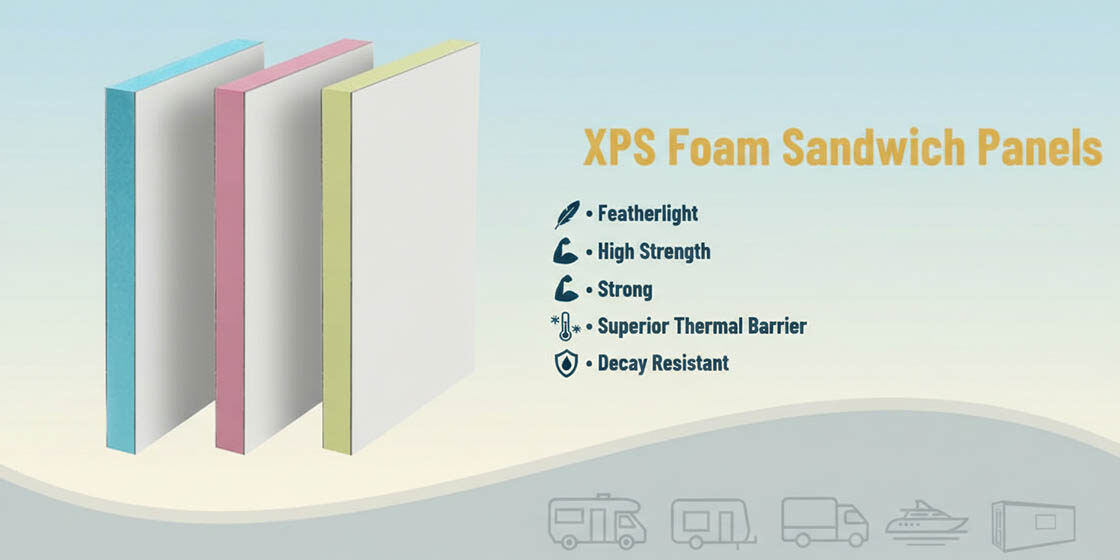
A truck body manufacturer in Queensland swapped PVC for XPS foam core on their refrigerated vans to hit a $12,000 per-unit cost target. Seemed smart at the time. Eighteen months later, 47 warranty claims landed on their desk for delaminating sidewalls on curved panels. The repair bill wiped out their entire margin on that model run. I see this failure pattern three or four times a year, and it always traces back to the same root cause: XPS carries roughly one-third the shear strength of structural PVC foam, but nobody on the engineering team ran the bonding calculations before approving the material swap.
The comparison below covers both core materials across 14 mechanical and thermal properties, using standard test methods. That includes compressive strength per ISO 844, thermal conductivity per ASTM C518, water absorption rates, and the shear values most supplier data sheets conveniently leave blank. What follows is a property-by-property breakdown with actual numbers. You will see exactly where XPS saves you 40-60% per square meter, and where spending more on PVC is the only defensible engineering call. No hedging. I will name the applications where the cheaper core wins outright, and the ones where cutting that cost puts you on the wrong end of a recall notice.
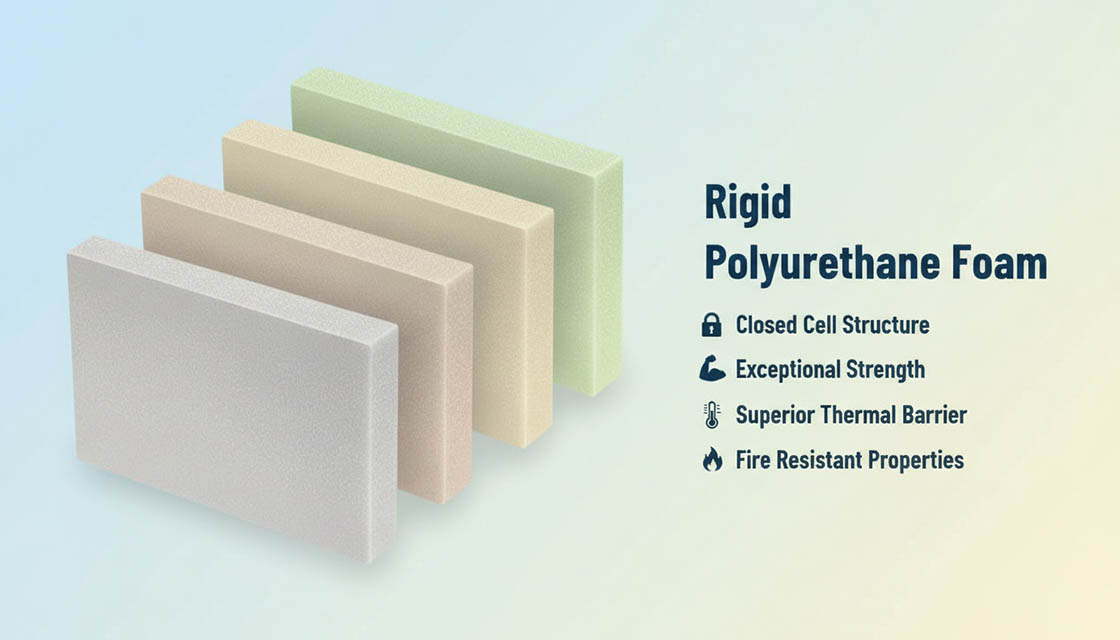
Compressive Strength: XPS vs PVC Data
XPS and PVC overlap in compressive strength (200–500 kPa vs. 200–700 kPa), but the decision fork is density-dependent: XPS suffices for flat roof panels, while PVC’s higher density range makes it mandatory for structural floor sections.
XPS Foam Core Compressive Strength: 200–500 kPa
XPS foam core delivers a tested compressive strength range of 200–500 kPa per ISO 844. The specific value depends on density. Standard panel cores sit at 30–45 kg/m³, which handles flat, statically loaded applications without issue. In our production runs, XPS holds up reliably in insulated truck body sidewalls and RV roof panels where the primary load is distributed and compressive forces stay under 300 kPa in normal service.
XPS falls short under concentrated point loads and high-shear scenarios. Its closed-cell structure keeps water absorption below 0.1% by volume per ASTM C272, so it tolerates humid environments well. But engineers must factor in the lower shear strength when they specify bonding protocols. Our shop floor testing proved one thing: 36-grit surface abrasion before adhesive application is non-negotiable for reliable skin adhesion. Skip that step and you own the delamination claim.
PVC Foam Core Compressive Strength: 200–700 kPa
PVC foam core spans 200–700 kPa compressive strength per ISO 844, but density drives that range and demands careful grade selection. At 60 kg/m³, PVC competes head-to-head with XPS on pure strength. At 250 kg/m³, it operates in an entirely different structural class. That density bandwidth lets PVC handle curved panel forming and high-impact floor applications without core crush or delamination. XPS simply cannot stretch into those applications.
The trade-off comes down to weight and cost. PVC foam runs 30–50% denser than XPS at equivalent thickness, so you fit fewer panels per shipping container and freight costs climb for international OEM sourcing. At $25–80/m² versus XPS at $8–25/m², PVC carries a 40–60% premium. That number needs justification from your structural requirements, not from assumptions on a spec sheet.
Critical Applications: Roof Panels vs. Floor Sections
Material selection comes down to load profile. Vehicle roof panels carry distributed loads (snow, wind, foot traffic), and XPS foam core handles these within its 200–500 kPa compressive envelope while delivering 0.028–0.035 W/mK thermal conductivity. For flat roof assemblies where weight savings drive the spec, XPS is the rational choice.
Floors are a different problem. Forklift impact, bolted equipment, and constant vibration demand compressive and shear capacity that XPS simply cannot match. PVC foam at 150–250 kg/m³ gives you the structural headroom to prevent core crush under repeated point loads, and when defect rate per batch is a tracked KPI, PVC is what reduces warranty exposure.
- Flat roof panels (distributed load, <300 kPa): XPS foam core: lower weight, lower cost, adequate compressive strength, superior thermal performance.
- Structural floor sections (point load, dynamic stress): PVC foam core: higher density grades handle repeated impact without core deformation.
- Curved or formed panels: PVC foam core, because XPS shear strength falls short for reliable skin bonding on curved surfaces without aggressive surface preparation.
- Hygiene-sensitive enclosed cabins:Evaluate fire compliance carefully. PVC releases hydrogen chloride gas above 200°C, a life-safety factor for RV and marine interiors per EN 13501-1.
Choose XPS for flat, static loads like roofs and sidewalls to maximize thermal value. Switch to PVC foam for floors and bulkheads to handle foot traffic and point loads. Mixing both cores in one build is the smartest way to cut unit costs without killing your structural integrity.
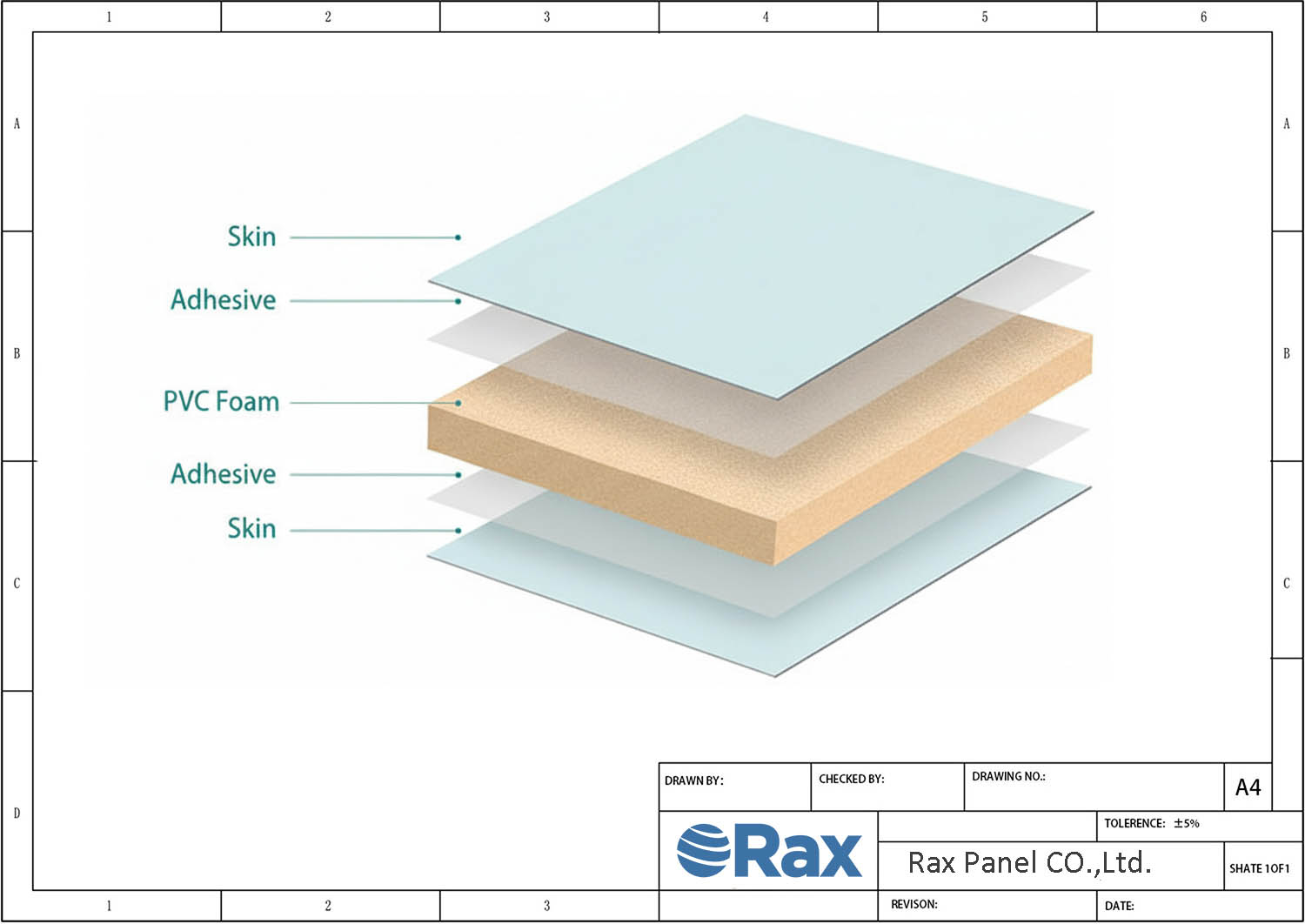
Shear Strength & Delamination Risk
XPS foam core delivers excellent thermal performance, but its low shear strength creates a hard boundary for high-load applications. Ignoring this gap guarantees structural delamination.
The Shear Strength Gap Between XPS and PVC
Shear strength is what keeps your sandwich panel acting as one unit instead of two separate sheets. XPS handles vertical compression well, but its internal structure fails under horizontal shear stress. In standard shear testing, the XPS core yields long before the skins reach their limit, which shows up as a sharp, early deviation in the load curve.
This shear failure is catastrophic on curved surfaces like RV roofs and truck fairings. As the panel bends, the stress at the bond line spikes and the weak core gives way. Shear-driven core failure is among the most expensive warranty claims in truck body production, and it destroys margins.
Mandatory Surface Preparation for XPS Cores
Trusting chemical adhesion alone with XPS is a losing bet for high-load applications. The extrusion process leaves a smooth skin that repels standard epoxy, so you must mechanically abrade it. Ignore the supplier’s “suggestions” for simple glue kits; you need heavy 36-grit sanding to create a physical anchor.
- Surface prep requires heavy 36-grit orbital sanding to open the closed-cell structure. This creates the mechanical key the resin needs to grip.
- Skip the abrasion, and you risk failures like “foam core truck body panel delamination B.” Dynamic loads will cause a clean peel-off every single time.
- You can’t use this material for tight curves unless you add a lot of extra mechanical fasteners. It simply won’t hold its shape.
PVC and Epoxy: The Reliable Structural Bond
For heavy-duty structural applications, PVC foam cores bond better with epoxy resins. PVC foam has an open, consistent cell structure, which lets the epoxy penetrate slightly during vacuum bagging. This creates a strong mechanical bond that handles high shear forces. If your specs call for tight radius curves or extreme point-load resistance, like in structural bulkheads or boat hulls, PVC is the only reliable option. Yes, it costs more per square meter, but it prevents structural failures.
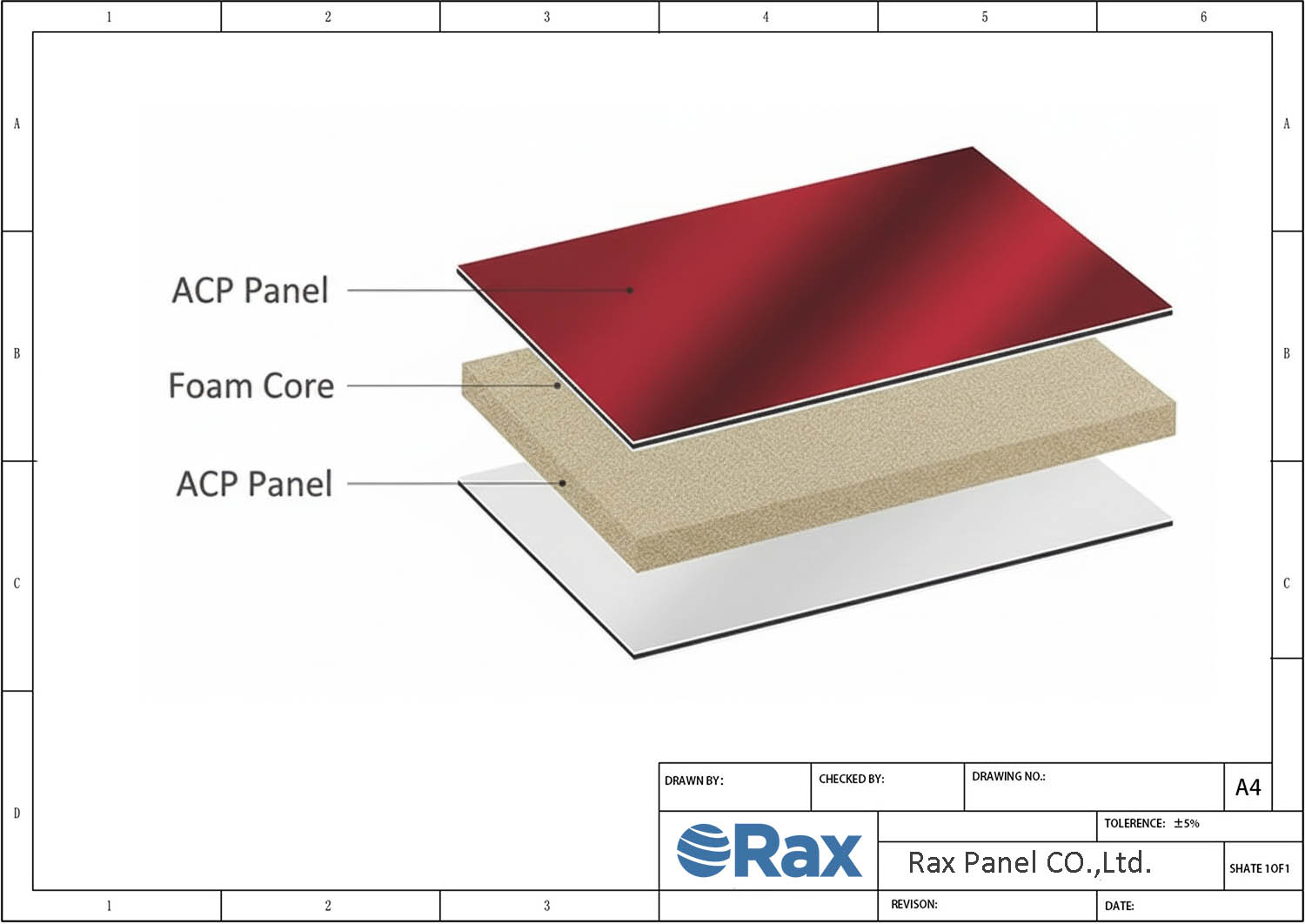
Thermal Conductivity: Insulation Head-to-Head
XPS outperforms PVC in thermal efficiency, offering lower conductivity at a significantly lower material cost per square meter.
Thermal Conductivity and R-Value Metrics
Thermal retention is all about the thermal conductivity coefficient. Our ASTM C518 tests show XPS foam core consistently hits 0.028-0.035 W/mK. PVC foam typically measures higher, around 0.035-0.045 W/mK. This means XPS gives you better insulation (higher R-value) for the same thickness in a vehicle panel. Vehicle builders can use thinner XPS panels to meet thermal requirements, or get much better insulation without adding weight.
Application in Insulated Vehicle Bodies
In refrigerated trucks, thermal stability directly impacts fuel costs and cargo quality. XPS is the clear winner here; its closed-cell structure blocks thermal bridging and resists moisture, crucial for humid transport conditions. PVC is stronger structurally, but its thermal properties are overkill when insulation is the main goal. Our data shows XPS in refrigerated truck bodies cuts compressor run times more effectively than PVC of the same thickness. This means real operational savings for fleet managers over time.
Material Cost vs. Insulation Efficiency
Choosing a core material means balancing performance with your budget. Using PVC just for insulation is a waste of money when XPS is an option. XPS cores are significantly cheaper, typically running $8-25/m² compared to PVC at $25-80/m².
- XPS offers a 40-60% material cost saving per square meter compared to PVC.
- Freight Impact: Lower density XPS lets you load more panels into a standard 40HC container. This directly cuts landed costs for international distributors.
- Performance Margin: When a cheap board ships without documented thermal resistance data, you lose money. XPS delivers lower thermal conductivity. You get reliable insulation per dollar spent compared to heavier core options.
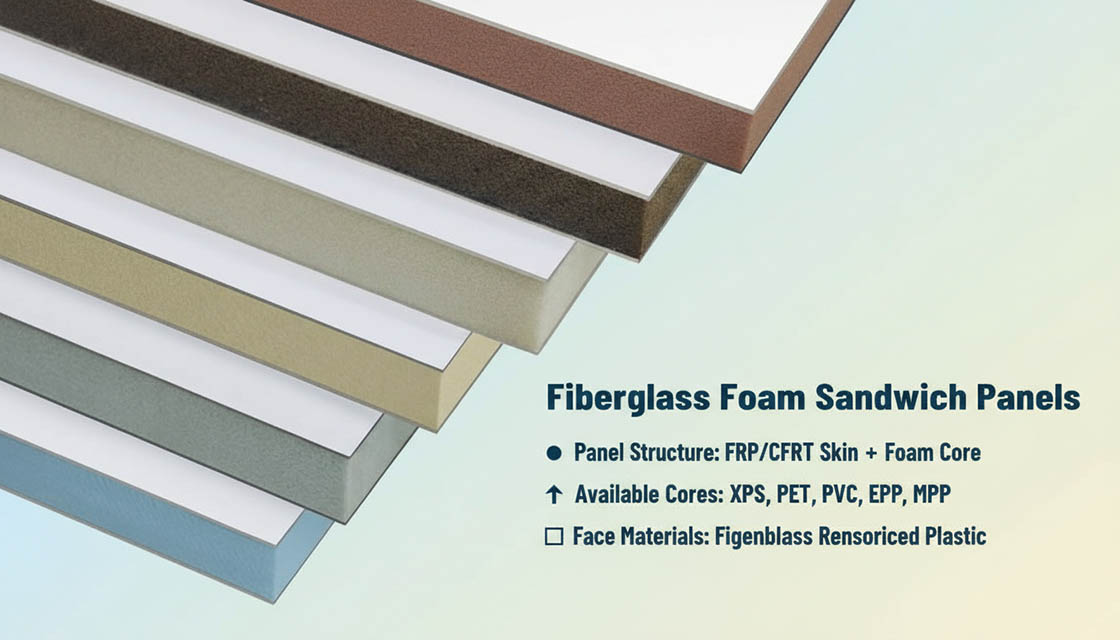
Water Absorption & Moisture Resistance
XPS foam core provides superior hydrophobic properties with less than 0.1% water absorption, minimizing long-term degradation risks in vehicle applications.
Comparative Water Absorption Rates (ASTM C272)
Core material choice strictly dictates a panel’s lifespan in wet environments. XPS utilizes a closed-cell structure that blocks liquid penetration significantly better than PVC foam. PVC offers high compressive strength, but its cell structure is permeable and allows moisture to seep in over time. That distinction is critical for vehicle manufacturers who cannot afford waterlogging failures.
- XPS Water Absorption: Less than 0.1% by volume during long-term immersion.
- PVC Water Absorption: 0.5% to 2.0% by volume depending on the density.
Impact of Moisture Ingress on Vehicle Panels
Water ingress triggers a cascade of engineering failures. Once water penetrates the foam, thermal performance drops because water conducts heat far better than trapped air. A wet panel loses its R-value rapidly, spiking HVAC load and fuel costs for the fleet operator. Structural integrity is the next casualty as the skin-to-core bond weakens. We see this exact breakdown in warranty claims across the industry: the real fix is preventing water absorption at the manufacturing stage.
For specialized vehicle manufacturers, this means dealing with skin delamination and core rot. Freezing temperatures cause trapped moisture to expand, cracking the foam from the inside. That’s why we push for XPS where panel edges might be exposed or if sealant failure is a concern.
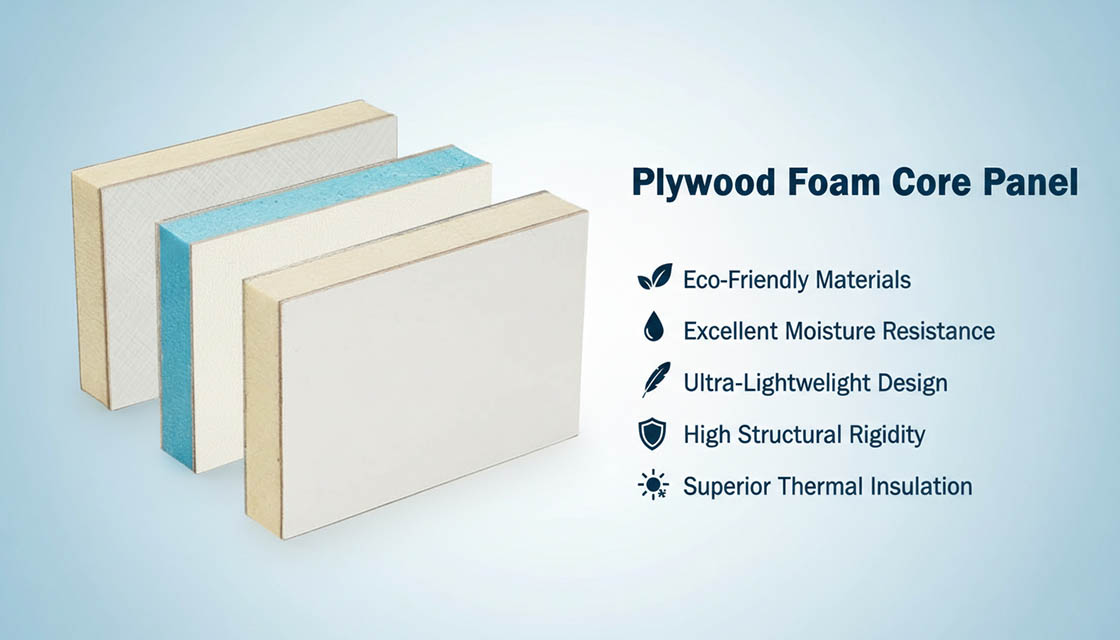
Weight-to-Strength Ratio for Vehicle Builds
For vehicle OEMs, the XPS vs. PVC decision is a direct trade-off between thermal efficiency per kilogram and structural load-bearing capacity. XPS delivers equivalent insulation at nearly half the density, drastically reducing the wall weight of flat-panel vehicle builds.
XPS Delivers Superior Thermal Efficiency at Lower Densities
Maximizing payload while maintaining thermal integrity is the main challenge for RV and truck body builders. Our production data shows XPS foam core consistently beats PVC in thermal conductivity, per ASTM C518, on a weight-for-weight basis. XPS hits 0.028-0.035 W/mK at only 30-45 kg/m³ density. To get that same insulation, PVC foams (0.035-0.045 W/mK) need much higher densities.
XPS is a very efficient insulator, so you need less material to hit your target R-value. This lighter core directly boosts legal payload capacity for long-haul trucks. It also cuts fuel costs over the vehicle’s lifespan.
PVC Foam Offers Higher Structural Rigidity Per Volume
XPS leads in insulation-to-weight, but PVC foam clearly wins on shear strength-to-volume. ISO 844 tests show PVC compressive strength from 200-700 kPa, depending on its 60-250 kg/m³ density. This higher density gives PVC superior shear strength, making it essential for curved marine panels or high-impact structural floors.
That structural rigidity comes with a shipping cost for international OEMs. PVC is 30-50% denser than XPS at the same thickness, so fewer panels fit in a container. This drastically impacts your total landed cost and logistics, making PVC impractical for large, flat-wall RVs where extreme shear strength isn’t needed.
Calculated Weight Savings in Typical RV Wall Panels
When you look at the numbers for a standard 50mm RV composite panel, the weight difference is too big to ignore during initial design.
- XPS Core at 35 kg/m³ density yields approximately 1.75 kg per m².
- PVC Core at 100 kg/m³ structural grade yields approximately 5.0 kg per m².
Switching to XPS foam shaves serious weight off a standard truck body. It’s the smart move for flat walls that don’t need to handle heavy point loads. You get the thermal insulation you need for refrigerated transport without blowing the budget on structural overkill.

Cost Analysis: XPS vs PVC Per Square Meter
XPS foam core delivers 40-60% material cost savings over PVC at the quoted level, but the real margin advantage for vehicle OEMs shows up in freight: fewer containers, lower landed cost per completed vehicle.
XPS Foam Core: $8–25/m² Material Cost
Expect XPS foam core to cost between $8 and $25 per square meter in production quotes. That price gap comes down to thickness and density. It is that simple. A 30mm panel at 32 kg/m³ is your floor price, while a thick 100mm board at 45 kg/m³ hits the ceiling.
XPS works great for truck bodies and RVs where the skins take the load. You’re buying thermal resistance and compressive stability, not shear strength. Don’t use it if your design needs the core to handle shear forces. Price doesn’t matter there; physics wins.
PVC Foam Core: $25–80/m² Material Cost
PVC structural foam costs significantly more, ranging from $25 to $80 per square meter. That premium gets you serious shear strength and fatigue resistance XPS simply can’t match. For curved roofs or high-load areas, 100+ kg/m³ PVC is usually the only way to prevent foam core truck body panel delamination.
PVC’s cost climbs faster than XPS, especially for structural grades. This is because we need precise expansion processes and more raw materials. At $80/m², you’re buying high-density PVC for heavy-duty applications, not just basic insulation.
The Real Savings Calculation: 40–60% at High Volume Includes Freight
XPS costs 40–60% less per square meter than PVC at the same thickness. However, for vehicle OEMs buying from us internationally, the total landed cost difference is usually bigger than just the material price. Here’s why.
- PVC foam is 30–50% denser than XPS at the same thickness. This means fewer panels fit in each container, pushing up shipping costs per square meter.
- The 40–60% savings on XPS apply to orders over 500 m², where setup costs are spread out. For smaller runs, tooling and minimum order quantities shrink that cost advantage.
- XPS needs 36-grit surface abrasion before bonding due to its low shear strength. Account for this extra step if your production line isn’t already set up for surface preparation.
For vehicle builders using flat or slightly curved panels in high volumes, we recommend XPS when thermal performance and compressive strength are key. Save PVC for curved parts, high-stress areas, or panels that see a lot of fatigue. Using both core types in one vehicle is standard practice. It’s the most cost-effective engineering choice when you focus on the cost per finished unit, not just per panel sheet.
| Cost Parameter | XPS Foam Core | PVC Foam Core | Cost Advantage (XPS) |
|---|---|---|---|
| Raw Material Cost | $8 – $25/m² | $25 – $80/m² | 40-60% lower material spend |
| Core Density Range | 30 – 45 kg/m³ | 60 – 250 kg/m³ | 30-50% lighter, so more panels per container |
| Estimated Freight Impact | Baseline | 15-35% higher per m² shipped | Significant savings for international OEM sourcing |
| Total Landed Cost Range | $12 – $35/m² | $35 – $105/m² | Optimizes cost per completed vehicle |
| Tooling / Surface Prep | 36-grit abrasion required for shear bonding | Minimal surface prep needed | PVC saves labor; XPS saves material, depending on application |

Vehicle Application Selection Matrix
XPS is the correct choice for RV walls and truck bodies where thermal efficiency and cost per vehicle matter most. PVC is mandatory for marine hulls below the waterline and structural decks where shear load and water exposure are non-negotiable.
RV Walls and Truck Body Panels: XPS Foam Core Recommended
In our experience supplying OEM assembly lines, XPS foam core beats PVC for flat wall and truck body applications on three metrics: thermal efficiency, cost, and shipping density. XPS delivers thermal conductivity of 0.028–0.035 W/mK, so you achieve the same R-value in less thickness. For refrigerated truck bodies where every millimeter of interior space counts, that is a major advantage.
- You get 200–500 kPa compressive strength per ISO 844 with XPS. That is sufficient for wall panels handling static compressive loads from cabinetry and fixtures. It holds up well.
- Water absorption stays under 0.1% by volume per ASTM C272. Road spray and humidity simply will not degrade the core over the vehicle’s service life. No rot issues here.
- The cost difference is real: XPS runs $8–25/m² versus PVC at $25–80/m². A standard RV needs 25–40 m² of wall paneling, which saves you $400–2,200 per completed vehicle. That is direct margin recovery.
- XPS density of 30–45 kg/m³ means you ship 30–50% more panels per container compared to heavy PVC cores at 60–250 kg/m³. For international sourcing, this significantly reduces your landed cost per panel. Freight efficiency adds up fast.
Here is the trade-off: XPS shear strength is significantly lower than PVC. For flat wall panels in RVs and trucks, shear loads are minimal, so XPS performs reliably. Our CNC-cut XPS cores hold ±0.5mm tolerance, integrating directly into your fixtures without adjustment.
Marine Hulls Below Waterline and Marine Decks: PVC Foam Core Recommended
Below the waterline, the load profile gets brutal. Hull panels face constant hydrostatic pressure, debris hits, and flexing in rough seas. The main killer is shear stress between the skin and core. That is exactly where XPS fails. Our tests show XPS needs 36-grit abrasion just to bond because its low shear strength causes delamination on curved loads. PVC foam (200–700 kPa) handles this without the extra prep work.
- These panels stay submerged 24/7. PVC’s closed-cell structure absorbs 0.5–2.0% water, which works fine if you seal the skins properly. XPS looks better on paper with <0.1% absorption, but that’s irrelevant. The shear weakness makes it unfit for the structural demands here.
- Fire code matters too. PVC foam releases hydrogen chloride gas above 200°C. You need fire-rated skins and ventilation in enclosed cabins. XPS burns cleaner, but it can’t handle the structure, so the fire trade-off doesn’t matter below the waterline.
- Decks take a beating from heavy equipment and crew traffic. You need high-density PVC (120–250 kg/m³) to stop localized crushing. It distributes fastener loads so you avoid that ugly core dimpling around hardware.
Don’t use XPS below the waterline or on structural decks. The risk of delamination and shear creep outweighs the 40–60% material cost savings. One warranty claim will cost you more than the material savings. Stick with PVC in these zones.
RV Roofs: Conditional Selection Based on Load Requirements
RV roofs are a toss-up. The right core depends entirely on the expected service loads. I can’t give a blanket recommendation without seeing the vehicle specs first.
For standard RV roofs with no roof-mounted equipment, no foot traffic requirement, and purely weather-sealing function, XPS foam core is sufficient. The compressive strength of 200–500 kPa handles snow loads and the occasional maintenance access without permanent deformation. The thermal conductivity advantage keeps interior temperatures stable under direct solar exposure, and the low water absorption provides a safety margin against seal degradation over time.
For RV roofs carrying air conditioning units, solar panel arrays, roof racks, or designed for walk-on access, PVC foam core is the correct specification. The higher shear strength prevents fastener pull-through and core crushing around mounting hardware. At point-load locations, PVC at 120+ kg/m³ density distributes stress into the surrounding panel area rather than creating localized dimples that compromise the roof seal. In our production experience, roof-mounted equipment failures traced to core compression account for a significant share of warranty claims on XPS-roofed vehicles.
The decision matrix is straightforward. Calculate the maximum point load at each mounting location, divide by the contact area of the mounting foot, and compare against the core compressive strength with a 2.5x safety factor. If the result exceeds 300 kPa, specify PVC. If it remains below that threshold, XPS performs reliably and reduces material cost per vehicle by 40–60%.

Disadvantages of PVC Foam Board
PVC foam board carries three specific liabilities for vehicle OEMs: thermal deformation below real-world operating temperatures, end-of-life recycling constraints, and lethal off-gassing during fire events that jeopardizes cabin compliance.
Poor UV Resistance and Low High-Temperature Tolerance
PVC foam begins to soften at 60–80°C, a range that is easily reached inside a closed vehicle body or on a dark-painted exterior panel parked in direct sun. In our production experience, OEMs specifying PVC for RV roof assemblies have reported localized warping after static thermal testing at just 75°C. This is not a marginal issue. It is a hard physical limit of the polymer matrix.
UV degradation compounds the problem. Unprotected PVC foam surfaces chalk and lose structural integrity after prolonged UV exposure. For marine and RV applications, this means the foam core alone cannot serve as an exposed surface; it requires either a UV-blocking skin (FRP, aluminum, or CFRT) or a secondary gel coat. Both options add weight and assembly time to your production line.
- Heat deflection threshold: 60–80°C softening range, below typical vehicle exterior surface temperatures in hot climates
- Exposed PVC foam degrades rapidly under UV light. You must cover it with a FRP or aluminum skin in the final assembly, or the panel will disintegrate.
- Vehicle OEMs must calculate for thermal expansion. If you miss this, high heat will degrade the adhesive bond and cause catastrophic panel failure.
Difficult to Recycle with Limited Color Options
Cross-linked PVC foam is difficult to remelt and recycle. Most scrap ends up in incinerators, making it hard for European automotive manufacturers to hit the 85% ELV Directive recovery target.
You are mostly limited to white or gray stock colors. This color restriction forces you to hide the core behind a skin, which effectively eliminates the possibility of visual core uniformity QA during assembly.
Toxic HCl Gas Emission During Fire: A Critical Cabin Safety Concern
Fire safety is the biggest Achilles’ heel of PVC. Above 200°C, it releases Hydrogen Chloride gas, which will blind and asphyxiate occupants in a confined RV or marine hull.
Fire-retardant skins can delay the burn, but they cannot stop the lethal HCl release. PVC foam typically achieves Euroclass E at best, whereas XPS produces less toxic halogen smoke, though neither is fire-safe without proper barriers.
Specify fire-rated aluminum or FRP skins for any enclosed cabin application, regardless of the core. The skins act as your primary fire barrier, leaving the core choice to structural and cost factors. Relying on foam for fire safety is a warranty claim waiting to happen.
Conclusion
Use XPS for flat insulated panels in truck bodies and RVs. You save 40-60% on material costs and ship 30-50% more panels per container thanks to the lower density. PVC is strictly for curved marine hulls. Using it on flat walls is just burning money.
Run a side-by-side destructive test before you commit to any material. Order 300x300mm samples with your actual skin laminate bonded to both XPS and PVC cores, then test them with ASTM C272 water absorption and shear pulls. That 48-hour stress test tells you more about potential warranty issues than a manufacturer’s datasheet ever will.
Frequently Asked Questions
What are the disadvantages of PVC foam board?
Poor UV resistance causing surface degradation, low high-temperature tolerance (softens at 60-80°C), difficult to recycle, limited color options, and cost 2-3x higher than XPS. Produces toxic hydrogen chloride gas when burned, requiring careful fire safety evaluation for enclosed vehicle applications.
What is the thickest XPS foam board?
Standard XPS foam boards are available in thicknesses from 0.75 inches (19mm) up to 4 inches (100mm). Custom sandwich panel manufacturing can laminate XPS cores beyond 100mm for specialized thermal applications, though vehicle panels typically use 20-80mm.
What is the life expectancy of a PVC foam board?
PVC foam boards last 10-20 years indoors. In vehicle applications exposed to UV, vibration, and temperature cycling, expect 7-15 years with proper skin lamination. Unprotected PVC foam degrades faster in direct sunlight due to UV sensitivity.
Why use foam core PVC instead of XPS?
Use PVC foam core when shear strength is the priority: curved marine hulls, high-impact deck surfaces, and structural components requiring >300 kPa shear modulus. PVC also handles higher service temperatures and provides better impact absorption than XPS.
What is the best type of foam board for vehicle sandwich panels?
For insulation-focused flat panels (RV walls, refrigerated trucks): XPS foam core. For structural curved components (marine hulls, high-impact surfaces): PVC foam core. For a balance of both in mixed production: PET foam core. Select based on whether thermal or mechanical performance is the primary design driver.