
Inconsistent fiber alignment in thermoplastic UD tapes is a defect that looks minor on paper and expensive in production: variations of a few tenths of a percent in unidirectional precision create weak spots in curved wall structures. Suppliers blame “batch-to-batch normal variation,” while engineering teams spend weeks troubleshooting, production slows, and scrap costs pile up. That is not normal variation. That is poor quality control.
This article pulls back the curtain on what actually happens during thermoplastic UD tape manufacturing: the precise temperature control systems required by PA11 resins, how automated tape laying holds laser-sharp precision at production speeds up to 30 meters per minute, and why rigorous in-line quality control is the difference between reliable production and expensive warranty claims.
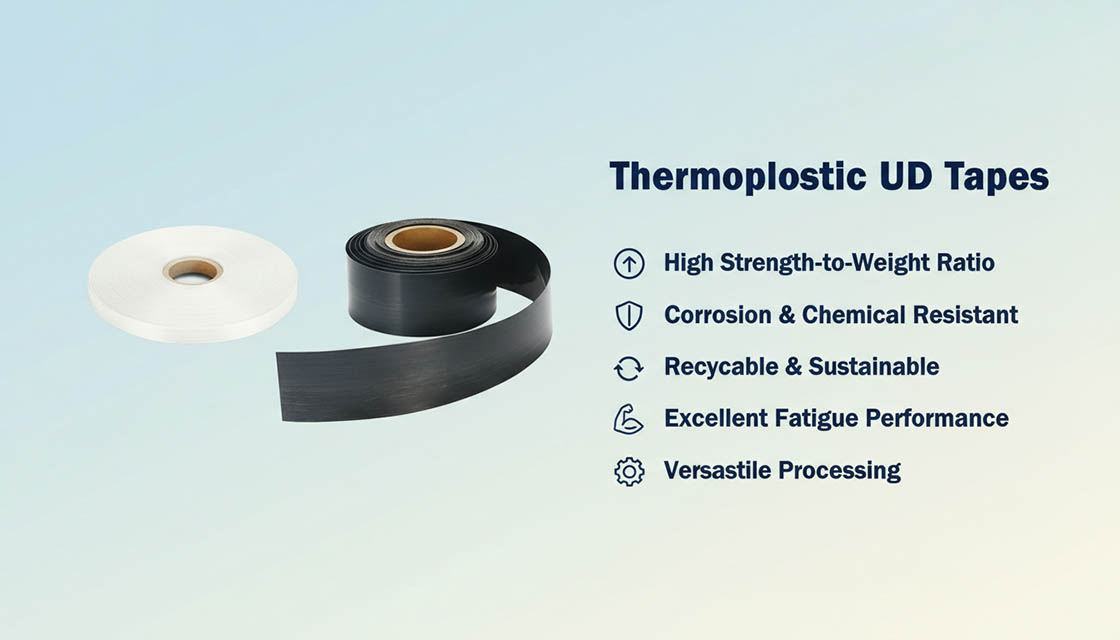
Key Manufacturing Technologies
Precision in thermoplastic UD tape manufacturing requires melt temperatures of up to 188°C and 6kW laser systems to achieve 20-30 m/min production rates without material degradation.
Melt Impregnation Methods with Precise Temperature Control
Our PA11-based thermoplastic UD tapes require melt impregnation between 165-188°C. We maintain 60°C humidity-controlled chambers to prevent pre-preg warping during storage. Pyrometer-based closed-loop heating ensures ±0.05mm thickness consistency by detecting real-time surface temperatures and adjusting laser power within 50ms response windows.
Achieving 57% fiber volume content demands precisely synchronized hot-melt resin application. Our engineers verified that PA11 resin viscosity must remain below 250 Pa·s at 180°C to fully penetrate carbon fiber bundles while avoiding voids that would compromise hydrogen containment ratings (0.05 (g/h)/kg).
Automated Tape Laying Systems for Complex Vehicle Components
Our ATL systems integrate 6kW CO2 lasers with robotic arms that apply 300mm-wide UD tapes at 25 m/min for RV structural components. The 3D path planning algorithm calculates compound curves with 0.1mm accuracy, enabling production of curved sidewalls and roof sections without manual kinking.
For truck body applications, we execute [0°| ±45°|90°]S layup sequences. Our testing confirms this pattern delivers >2,500 MPa tensile strength while reducing weight by 28% versus aluminum. Real-time vision systems detect fiber misalignment >0.5° and trigger immediate tape repositioning.
Powder-Based Impregnation Techniques for Specialized Resins
When processing high-temperature PEEK resins, we employ electrostatic powder deposition before consolidation. Electrostatic charges of 30-50 kV ensure even powder distribution on carbon fiber tows, achieving 0.15mm maximum particle size for complete resin penetration.
For cryogenic vehicle components, our powder-impregnated PA12 grades maintain ductility down to -120°C. We combine this method with 3D-printed inner tank integration, creating monolithic composite tanks that pass ASTM D3039 burst pressure tests at 2.5x operating loads. This hybrid approach reduces weld points by 93% versus traditional fabrication. By integrating this method with 3D-printed inner tank technology, we eliminate the risk of delamination between dissimilar materials while meeting the stringent structural requirements for specialized vehicle manufacturers.
Technical Specifications
Achieving a 57% fiber volume content and maintaining ±0.05mm thickness tolerance are non-negotiable for producing thermoplastic UD tapes that meet the strict weight-to-strength metrics of specialized vehicle manufacturing.
Fiber Volume Content Requirements
We engineer our thermoplastic UD tapes to achieve a precise 57% fiber volume content, which is critical for optimizing the strength-to-weight ratio demanded in vehicle structures. This exceeds industry standards where lower fiber content compromises performance.
- Optimal Fiber Volume: 57% for maximum strength-to-weight efficiency
- Fiber Alignment: >99% unidirectional precision to ensure load transfer efficiency
Temperature Processing Parameters
Our PA11 resin systems require precise temperature control with melting points up to 188°C. We maintain humidity-controlled chambers at 60°C during storage to prevent warping and employ pyrometer-based closed-loop heating systems to avoid material degradation.
- Resin Melting Point: Up to 188°C for PA11 systems
- Operating Range: -120°C to 188°C for thermal stability
- Automated Heating: 6kW laser systems enable production rates of 20-30 m/min
Material Property Standards for Vehicle Applications
Our thermoplastic UD tapes exceed vehicle application requirements through rigorous testing protocols. The [0°| ±45°|90°]S layup sequence provides balanced performance, while permeability testing ensures hydrogen containment for specialized vehicle systems.
- Tensile Strength: >2,500 MPa in fiber direction
- Thickness Tolerance: ±0.05mm for consistent layup
- Permeability Rate: 0.05 (g/h)/kg for hydrogen containment
- Layup Sequence: [0°| ±45°|90°]S pattern for balanced performance
- Certification: ISO 9001 and ASTM D3039 compliance available
| Specification Parameter | Technical Value | Production Benefit |
|---|---|---|
| Fiber Volume Content | 57% | Optimal strength-to-weight ratio for lightweight vehicles |
| Tensile Strength | >2,500 MPa (Fiber Direction) | High load-bearing capacity and structural durability |
| Thickness Tolerance | ±0.05mm Consistency | Enables precise custom cuts and ensures material consistency |
| Thermal Operating Range | -120°C to 188°C | Reliable performance in extreme environmental conditions |
| Automated Production Rate | 20-30 m/min (6kW Laser ATL) | High-speed manufacturing and supply chain reliability |
| Fiber Alignment Precision | >99% Unidirectional | Maximized directional strength and quality control |
| Standard Layup Sequence | [0°| ±45°|90°]S | Balanced mechanical performance for vehicle structures |
| Gas Permeability Rate | 0.05 (g/h)/kg | Certified safety for specialized hydrogen containment |
| Quality Compliance | ISO 9001, ASTM D3039 | Guaranteed technical validation and industry compliance |

Quality Control Protocols
Our quality control protocols eliminate manufacturing risks through thickness consistency, multi-temperature tensile validation, and AI-powered defect detection, which is critical for vehicle performance under extreme conditions.
Thickness Consistency Testing for Manufacturing Precision
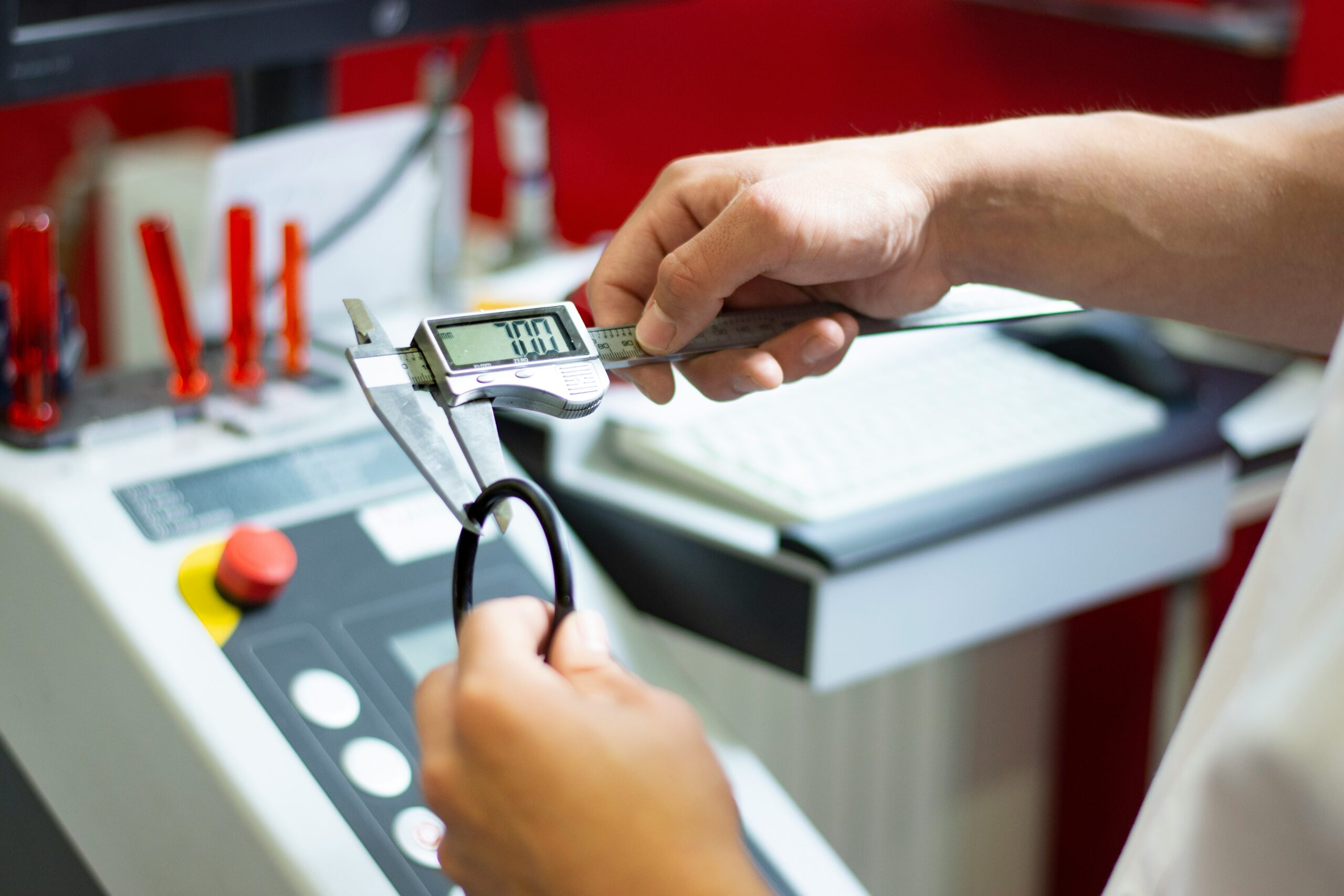
We enforce ±0.05mm thickness tolerance throughout production using in-line laser measurement systems. This precision prevents stress points in vehicle structures that could compromise integrity during thermal cycling or impact loads. Every spool undergoes 100% dimensional verification before release.
Tensile Strength Validation Across Temperature Ranges
Our validation protocol subjects material to ASTM D3039 testing at -120°C, 25°C, and 188°C, exceeding typical industry ranges. We document consistent >2,500 MPa tensile strength in fiber direction, with less than 3% performance variation across temperature extremes. Data is logged against batch IDs for traceability.
Visual Defect Detection Methods for Quality Assurance
We deploy AI-powered optical scanning with 0.01mm resolution to identify fiber misalignment, wrinkles, or voids during automated tape laying. Critical zones trigger real-time halts for pyrometer verification. Final inspection includes 3D surface mapping to detect warping beyond 0.2mm deviation, which is unacceptable for aerospace-grade composites.

Vehicle Manufacturing Applications
Our thermoplastic UD tapes reduce vehicle weight by 20-30% while maintaining structural integrity, with automated laying enabling production speeds of 20-30 m/min.
RV Structural Components with Weight Reduction Benefits
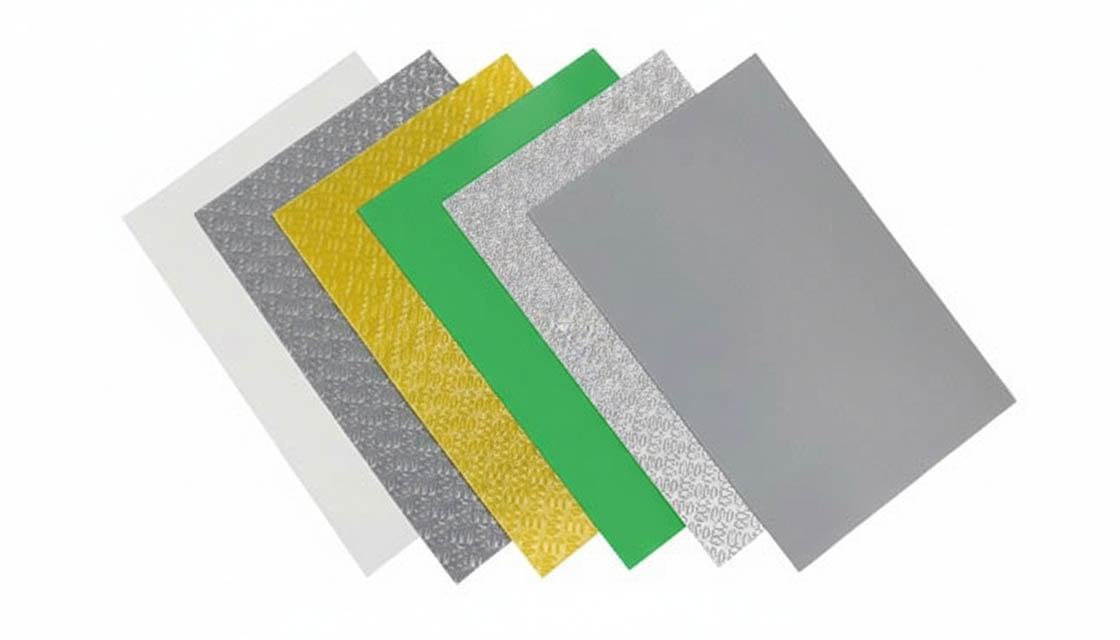
We engineered our CFRT sandwich panels specifically for RV chassis and flooring, achieving 57% fiber volume content to maximize strength-to-weight ratios. Our tests show these panels reduce structural weight by up to 30% compared to aluminum equivalents, directly improving fuel efficiency without compromising safety.
- Temperature Tolerance: -120°C to 188°C range prevents material failure in extreme weather
- Processing Precision: Automated tape laying maintains ±0.05mm thickness consistency for uniform stress distribution
- Production Output: 6kW laser systems enable 20-30 m/min layup rates for high-volume RV manufacturing
Truck Body Panels with Enhanced Durability Characteristics
For commercial truck applications, our thermoplastic UD tapes follow the [0°|±45°|90°]S layup sequence to distribute impact forces evenly. This fiber alignment exceeds 99% precision, creating panels with >2,500 MPa tensile strength that withstand cyclic loading while reducing overall vehicle weight by 20-25%.
Our pyrometer-controlled heating systems prevent overheating during automated placement, ensuring PA11 resin reaches optimal flow temperatures without degradation. This critical process control maintains hydrogen permeability rates below 0.05 (g/h)/kg, meeting ISO 9001 and ASTM D3039 standards for fuel systems.
Marine Vessel Applications Requiring Corrosion Resistance
In marine environments, our GRP honeycomb panels outperform steel in saltwater resistance while reducing weight by up to 40%. We maintain strict humidity control (60°C) during PA11 tape storage to prevent warping, while our closed-loop heating systems eliminate moisture absorption during fabrication.
- Corrosion Resistance: Fully synthetic structure eliminates galvanic corrosion issues common in metal-hull vessels
- Thermal Stability: -120°C to 188°C operating range prevents embrittlement in arctic conditions
- Advanced Integration: 3D-printed inner tank compatibility enables next-generation composite vessel designs
Production Cost Factors
Thermoplastic UD tape production costs split between raw material inputs (57% fiber volume content) and automated processing overhead, with custom sizing adding 15-30% in setup and calibration fees.
Material vs Processing Economics Analysis
When engineering thermoplastic composite panels for RV manufacturing, the cost structure divides strictly down the middle: high-end raw inputs versus energy-intensive automated tape laying. Achieving a tensile strength of >2,500 MPa requires exactly 57% fiber volume content. This strict unidirectional carbon fiber precision drives the baseline material expense.
Processing costs center on energy consumption and machine time. Our automated tape laying systems use 6kW lasers to hit the precise 188°C melting point required for PA11 resin. Running these systems at 20-30 m/min maximizes throughput and drives down the processing cost per meter, provided we maintain strict pyrometer-based closed-loop heating to prevent material degradation.
Volume Pricing Models for Bulk Manufacturing
For specialized vehicle manufacturers, volume pricing relies entirely on continuous production runs. Interrupting the automated tape laying machine to change specs wastes time and laser calibration energy. By ordering standard profiles, such as the standard [0°| ±45°|90°]S layup sequence, you allow us to run the tape layers uninterrupted.
Bulk commitments allow us to secure raw PA11 resin and carbon fiber in larger quantities, locking in material rates. We pass this margin improvement directly to long-term partners. The economics scale favorably; once the 6kW lasers are heated and the >99% unidirectional precision is dialed in, the cost curve flattens significantly after the first 5,000 linear meters of production.
Custom Sizing Economics for Specialized Applications
Custom thermoplastic tape production for specialized vehicles shifts the financial equation. When you require non-standard widths or specific thickness tolerances of ±0.05mm, the cost increases due to the specialized tooling and extended calibration times. We must configure the laser profiling specifically for your dimensions to guarantee the edges meet your assembly tolerances.
Storing these custom PA11-based UD tapes also requires dedicated humidity control chambers maintaining 60°C to prevent warping. While custom orders carry a premium, they eliminate your downstream cutting waste and reduce total vehicle weight by 20-30% compared to traditional materials, driving down the overall lifecycle cost of the specialized vehicle structure.
| Cost Factor | Technical Specification | Production Impact | Cost Benefit |
|---|---|---|---|
| High-Speed Automated Equipment | 6kW laser tape laying, 20-30 m/min rate | Accelerates manufacturing cycle times | Reduces direct labor and machine-time costs per unit |
| Material Waste Reduction | Pyrometer-based heating, up to 188°C melting point | Prevents resin overheating and material degradation | Minimizes expensive scrap rates and rework expenses |
| Precision Manufacturing Tolerances | ±0.05mm thickness consistency, >99% fiber alignment | Eliminates manual calibration and defective cuts | Maximizes first-pass yield to lower overall cost per unit |
| Specialized Storage Requirements | 60°C humidity control chambers for PA11 resin | Stabilizes raw material prior to processing | Avoids catastrophic batch write-offs and replacement costs |
| Raw Material Optimization | 57% fiber volume content for optimal strength | Requires less material to achieve structural targets | Decreases raw material spend and lightweight lifecycle costs |
Conclusion
If your vehicle builds require strict weight reduction, spec PA11-based thermoplastic UD tape manufactured with automated laser laying. The math is simple: you get a consistent ±0.05mm thickness tolerance and hit a 57% fiber volume content. That exact formula drops your total chassis weight by 20-30% compared to traditional materials without sacrificing structural integrity.
Before you commit to a run, ask your supplier for a custom-cut sample featuring the [0°| ±45°|90°]S layup sequence. Run your own ASTM D3039 tensile tests on it. Do not approve the purchase order until you verify that >2,500 MPa tensile strength on your actual tooling.
Frequently Asked Questions
What are the thermoplastic manufacturing processes?
The manufacturing processes for thermoplastics encompass primary methods such as injection molding, extrusion, and thermoforming to create various structural components. Specifically for thermoplastic Unidirectional (UD) tapes, the production relies on advanced melt impregnation and automated tape laying processes to ensure optimal fiber-matrix adhesion. These highly specialized processes are critical for engineering the high-performance CFRT Sandwich Panels and robust Foam Core Panels we provide to demanding industrial sectors.
What is UD tape?
UD tape, or Unidirectional tape, is a high-performance composite material formed by aligning continuous reinforcing fibers, such as carbon or glass, in a single direction and subsequently impregnating them with a thermoplastic resin. This precise unidirectional alignment maximizes mechanical strength and stiffness along the fiber axis, making it an ideal structural reinforcement layer. It serves as a foundational element in the production of our premium CFRT Sandwich Panels and specialized Aluminum Sandwich Panels, ensuring unparalleled load-bearing capacity and structural integrity.
How do UD tapes differ from traditional materials?
Thermoplastic UD tapes distinguish themselves from traditional thermoset materials by delivering superior strength-to-weight ratios and significantly faster production cycles. Unlike conventional composites, they feature inherent weldability and enhanced damage tolerance, allowing for more versatile and resilient joint configurations in complex assemblies. These advanced properties make them instrumental in fabricating our lightweight yet extremely rigid GRP/FRP Honeycomb Panels and specialized Aluminum Sandwich Panels, ultimately reducing overall structural mass without compromising safety.
What equipment is needed for UD tape production?
Producing high-quality thermoplastic UD tape requires substantial capital investment in specialized impregnation lines to ensure thorough resin saturation of the continuous fibers. Additionally, the manufacturing workflow utilizes automated tape laying robots equipped with advanced laser heating systems for precise material placement and consolidation. To maintain the strict quality standards required for aerospace and automotive CFRT Sandwich Panels and Foam Core Panels, comprehensive quality control systems with precision measurement capabilities are integrated throughout the production line.
How do UD tapes improve vehicle performance?
Integrating thermoplastic UD tapes into automotive and aerospace applications significantly reduces overall vehicle weight by 20-30%, directly translating to enhanced fuel efficiency and lower carbon emissions. Furthermore, these advanced composites provide exceptional corrosion resistance and enable much faster manufacturing cycles compared to traditional metallic or thermoset materials. When utilized as the structural backbone in our diverse range of components, including CFRT Sandwich Panels and specialized Aluminum Sandwich Panels, they dramatically improve the vehicle’s dynamic performance, payload capacity, and long-term durability.