
Last month, a specialized truck manufacturer rejected an entire shipment of partition walls. The marine plywood delaminated during a standard thermal cycling test, and the 45-kilogram weight per sheet blew past their chassis payload limits. When you specify a plastic formwork panel for vehicle floors or industrial enclosures, you are usually trying to hit an exact weight target without sacrificing structural load capacity. Most vendors just copy and paste generic concrete construction data. That does not work for us. Vehicle builds demand tight dimensional tolerances, zero moisture absorption, and materials that will not warp inside a sweltering trailer.
We compiled the exact lab test results for our 18mm PP boards to show how they actually perform under real manufacturing conditions. You will see the raw numbers for bending strength, fastener retention without pre-drilling, and heat deflection up to 155.2°C. I am skipping the marketing fluff entirely. This breakdown gives you the precise weight per square meter and thickness variances required to validate your CAD models and move straight to prototyping.
Table of Contents
- 1 18mm Plastic Formwork Panel Core Specs
- 2 Structural Performance vs. Plywood
- 3 Machinability: Cutting and Fastening
- 4 Plastic Formwork Panel Cost Analysis
- 5 Conclusion
- 6 Frequently Asked Questions
- 6.1 What are the specifications of an 18mm plastic formwork panel?
- 6.2 How does the price of 18mm plastic formwork compare to plywood?
- 6.3 Can plastic formwork panels be cut and nailed like wood?
- 6.4 Is 18mm plastic formwork fully waterproof?
- 6.5 What is the maximum temperature 18mm plastic formwork withstands?
18mm Plastic Formwork Panel Core Specs
At 18mm thick, this PP plastic formwork panel hits the structural sweet spot for specialized vehicle manufacturing: delivering a bending strength greater than 25 MPa while keeping panel weight strictly between 29 and 32 kilograms.
Weight and Density Data
For specialized vehicle manufacturers and industrial engineers, every kilogram dictates fuel efficiency and payload limits. A standard 1220 x 2440 x 18mm panel averages between 29 and 32 kg. This weight is tightly controlled during extrusion, with a normal weight variance of just ±0.25kg per panel.
The material density runs approximately 0.54 to 0.65 g/cm³. Unlike heavy plywood that absorbs moisture and warps, this polypropylene structure remains dimensionally stable in high-humidity industrial environments. We maintain a strict thickness tolerance of ±0.2mm across the entire sheet face, directly addressing the manufacturing fear of inconsistent assembly fits in automated production lines.
Mechanical Strength and Load Capacity
A lightweight panel is useless if it fails under dynamic loads. The 18mm hollow plastic formwork yields a bending strength greater than 25 MPa, making it highly capable of handling the structural demands of commercial vehicle flooring, bulkheads, and heavy-duty industrial partitions. This mechanical stability is proven under exact standard testing parameters.
- Bending Strength: > 25 MPa
- Heat Deflection Temperature: Up to 155.2°C (Ref. GB/T1633-2000)
- Surface Hardness: 93.5 (Shore D)
- Fastener Retention: Holds screws directly without pre-drilling
The combination of high surface hardness and structural rigidity ensures excellent fastener retention. The rigid PP structure holds screws securely without the need for pre-drilling, providing actionable time-savings for vehicle assembly lines while preventing the material warping commonly associated with temperature fluctuations. Depending on the framing and support structure used, these panels consistently deliver 50 to 100 or more reuse cycles in heavy-duty applications.
Structural Performance vs. Plywood
Replacing phenolic plywood with 18mm PP plastic formwork eliminates structural rot and fastener pull-out. It maintains strict tolerances under continuous 155.2°C thermal loads.
Water Resistance and Impact Strength vs. Phenolic Sheets
Phenolic and traditional wooden sheets fail predictably in high-moisture environments. They absorb water, warp, and suffer irreversible structural degradation. For specialized vehicle manufacturers, this leads to delaminated floors and compromised partitions. Our 18mm PP plastic formwork panel is entirely hydrophobic. It absorbs zero moisture, permanently eliminating the risk of rot or dimensional swelling.
Beyond water resistance, the mechanical fastener retention of wood degrades over time as fibers crush and strip. The rigid PP structure holds screws directly without requiring pre-drilling, speeding up vehicle assembly lines. It withstands repeated impact without losing its structural memory.
- Weight Specification: 29 to 32 kg per standard 1220 x 2440 x 18mm panel.
- Bending Strength: Consistently tests at > 25 MPa.
- Manufacturing Tolerance: Weight variance held strictly to ±0.25kg per panel.
Temperature and Chemical Resistance Profile
Industrial engineers require materials that will not warp under severe temperature fluctuations. Traditional plywood loses structural rigidity when exposed to engine heat or direct industrial thermal cycles. Our 18mm plastic formwork operates reliably at elevated temperatures without softening.
The polypropylene matrix resists standard industrial solvents, acids, and alkalis, preventing the chemical degradation commonly seen in coated wooden sheets. This inertness ensures the panel maintains its exact profile for 50 to 100+ reuse cycles depending on frame support.
- Heat Deflection: Up to 155.2°C (Vicat softening temperature, Ref. GB/T1633-2000).
- Surface Hardness: Rated at 93.5 (Shore D).
- Thickness Tolerance: ±0.2mm across the entire sheet face, ensuring consistent CAD-based assembly fits.
Machinability: Cutting and Fastening
The 18mm PP plastic formwork panel machines effortlessly with standard CNC routers and circular saws. Its homogeneous polypropylene structure prevents edge delamination and secures fasteners without pre-drilling.
CNC Routing and Sawing Operations
Engineers often hesitate to specify plastics for vehicle partitions due to tooling wear and edge chipping. Our testing proves otherwise. You can cut the 18mm hollow plastic formwork using standard carbide-tipped blades meant for wood or composites. The 93.5 Shore D surface hardness resists scratching during handling, yet the internal 0.54 – 0.65 g/cm³ density cuts smoothly without melting or tearing.
Dimensional consistency is critical for automated assembly lines. RaxPanel maintains a strict thickness tolerance of ±0.2mm across the standard 1220 x 2440 x 18mm size. This consistency guarantees your CNC-machined cutouts fit perfectly into structural vehicle frames without manual filing or shimming, directly reducing assembly time.
Fastener Retention and Direct Nailing
Plywood delaminates around screw threads, and standard composites crack under nail impact. The polypropylene matrix of this panel solves both problems. The material holds screws securely without requiring pre-drilled pilot holes. This speeds up vehicle partition and flooring installation by eliminating an entire step from the production line.
- Fastener Grip: The PP material compresses around the screw shank, creating a high-friction mechanical lock that resists vibration loosening in transit.
- Impact Resistance: Direct nailing does not fracture the core. The panel distributes the kinetic impact without compromising the > 25 MPa bending strength.
- Weight Consistency: With a weight variance of only ±0.25kg per panel (averaging 29 – 32 kg overall), structural loads and fastener retention remain highly predictable across bulk batches.
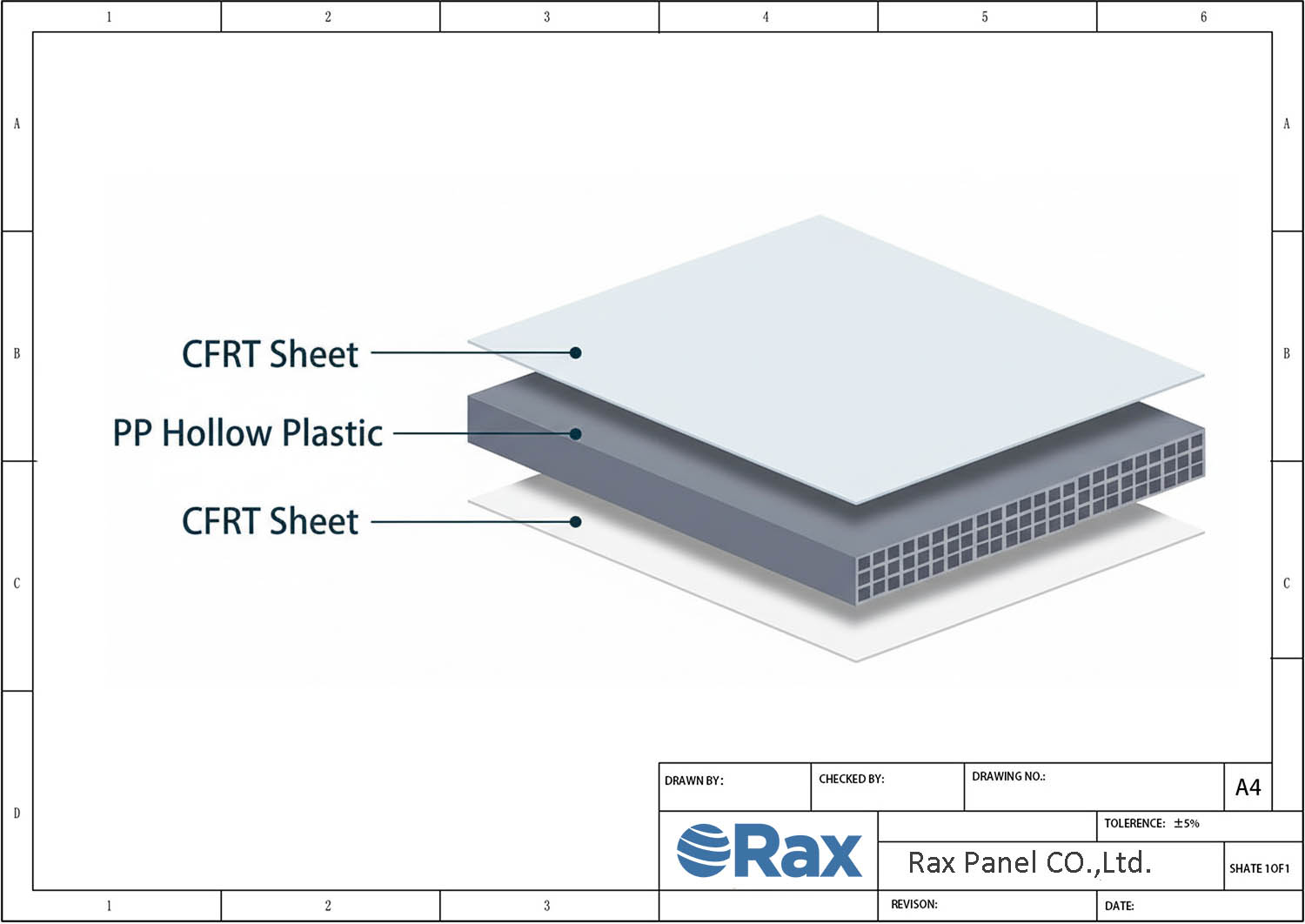
Plastic Formwork Panel Cost Analysis
True procurement cost runs deeper than the initial invoice. A 100-plus reuse cycle transforms a higher upfront sheet price into a fraction of the lifecycle cost compared to standard alternatives.
The Reusability Equation
Procurement teams often fixate on the initial plastic formwork panel price per sheet. Looking strictly at the purchase order ignores the operational reality of vehicle partition and flooring assembly. A standard 18mm plastic formwork panel handles 50 to 100 cycles. This durability drastically slashes material waste and replacement delays on the manufacturing line.
- Initial Investment: 18mm PP hollow plastic formwork carries a higher per-sheet cost than traditional timber.
- Lifespan Factor: Engineered for 50 to 100 reuses under proper frame support, outlasting plywood which degrades rapidly.
- Cost Per Use: Amortized over 80 cycles, the cost per use drops significantly below disposable alternatives.
Labor and Assembly Efficiencies
Assembly line speed dictates profitability. The 18mm PP plastic construction formwork weighs between 29 and 32 kg per panel. This lightweight profile speeds up handling without sacrificing a bending strength greater than 25 MPa. Fastener retention also plays a massive role in labor costs. The PP structure holds screws firmly without any pre-drilling. Workers lay floors and partitions faster, eliminating a tedious step from the manufacturing workflow.
Eliminating Rework Through Precision
Rework destroys budgets. Dimensional stability guarantees predictable assembly. Our panels maintain a strict ±0.2mm thickness variance. This precision ensures consistent assembly fits across large production runs, preventing the material warping that often plagues vehicle interiors under temperature fluctuations. Consistent parts mean fewer rejected units and tighter manufacturing tolerances.
| Parameter | Specification | Cost Analysis |
|---|---|---|
| Standard Size & Weight | 1220 x 2440 x 18mm | 29 – 32 kg per panel | Reduces overall vehicle weight and fuel consumption; lowers freight expenses. |
| Reuse Cycle | 50 to 100+ times (frame dependent) | Exceptional ROI; drastically minimizes long-term material replacement procurement costs. |
| Manufacturing Tolerances | Thickness: ±0.2mm | Weight Variance: ±0.25kg | Guarantees seamless CAD design fit; eliminates expensive manufacturing errors and rework. |
| Fastener Retention | Structural integrity maintained without pre-drilling | Accelerates vehicle partition assembly, significantly reducing direct labor and tooling costs. |
| Material Density & Strength | 0.54 – 0.65 g/cm³ Density | > 25 MPa Bending Strength | Optimizes structural load capacity without requiring costly, heavy reinforcements. |
Conclusion
Stop accepting plywood warp in your vehicle floor assemblies. This 18mm panel weighs just 29 kg and holds screws without pre-drilling, so you slash assembly time. You get 50+ reuse cycles from a material that won’t swell in high humidity.
Order a cut sample to verify the ±0.2mm thickness tolerance fits your CAD files. Then, drill a fastener into it to see the difference in torque retention compared to your current stock.
Frequently Asked Questions
What are the specifications of an 18mm plastic formwork panel?
A standard 18mm plastic formwork panel measures 1220x2440mm, weighs between 29kg and 32kg, and features a density of roughly 0.55 g/cm³. It typically delivers a bending strength greater than 25 MPa.
How does the price of 18mm plastic formwork compare to plywood?
The initial price of an 18mm plastic formwork panel is higher than standard phenolic plywood. However, because it can be reused 50 to 100 times compared to plywood’s 3-4 times, the cost per use is significantly lower, reducing total project material costs.
Can plastic formwork panels be cut and nailed like wood?
Yes. 18mm PP plastic formwork is engineered for high workability. It can be cut with standard woodworking saws, drilled, and nailed without pre-drilling, offering seamless integration with existing manufacturing tools.
Is 18mm plastic formwork fully waterproof?
Yes. Made from polypropylene (PP) or PVC, the panels are 100% waterproof. They do not absorb moisture, warp, or delaminate when exposed to rain or humid environments, making them ideal for demanding climates.
What is the maximum temperature 18mm plastic formwork withstands?
High-quality PP plastic formwork has a Vicat softening temperature of 150°C and a heat deflection temperature up to 155°C. It maintains structural integrity in extreme outdoor heat without bulging or cracking.