
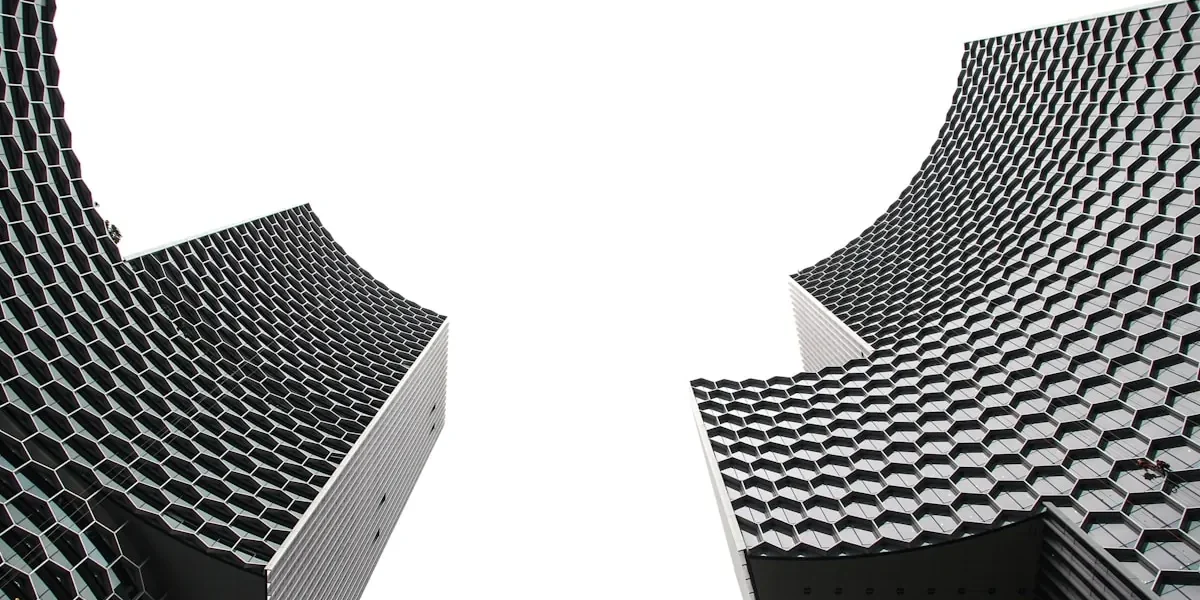
High-performance architectural facades and cleanroom ceiling systems demand structural flatness that manual workshops cannot consistently fabricate. Conventional cold-pressed contact adhesive panels often exhibit climbing drum peel strengths below 20 N·mm/mm and thickness variances reaching ±1.5 mm. Under summer surface temperatures of 80°C, these inferior bonds soften and cause extensive windward delamination. In contrast, an automated industrial production line delivers peel strengths exceeding 65 N·mm/mm and thickness tolerances within ±0.20 mm. This manufacturing precision prevents localized blistering across continuous facade spans measuring up to 1500 mm by 6000 mm under intense wind pressures.
Transforming coiled aluminum into rigid sandwich composites requires systematic chemical preparation, precision printing, and continuous thermal lamination. Our manufacturing plant operates a dedicated five-stage production sequence. This facility pairs Alloy 3003-H24 face skins with expanded hexagonal foil cores using thermosetting epoxy film adhesive. This guide outlines the industrial production process of aluminum honeycomb panel assemblies. We examine core node formation, contrast continuous roll-lamination against static pressing, identify critical bonding parameters, and review essential fabrication checkpoints required to ensure long-term architectural durability.
Raw Material Slitting and Surface Chemical Pretreatment
The manufacturing process begins with the rigorous inspection and physical preparation of raw aluminum coiled stock. Structural face skins require Alloy 3003-H24 or 5052-H32 sheets ranging between 0.7 mm and 1.5 mm in thickness. Concurrently, core production utilizes high-tensile Alloy 3003-H18 foil ribbons with thicknesses between 0.04 mm and 0.08 mm. High-speed rotary slitting machines shear master coils into precise widths, maintaining width tolerances within ±0.10 mm to guarantee uniform aluminum honeycomb panel depth.
Before adhesive application, the aluminum surfaces must undergo multi-stage chemical pretreatment to remove rolling oils and residual oxides. Unwashed metal surfaces harbor microscopic hydrocarbon films that cause premature adhesive bond failure under thermal cycling. The coils pass through an alkaline degreasing bath at 60°C, followed by high-pressure deionized water rinsing and an acid deoxidation wash. This cleaning stage establishes a chemically pristine substrate for subsequent conversion processes.
Following deoxidation, the coil strip enters a passivation chamber where automated spray nozzles deposit a chromium-free titanium-zirconium conversion coating. This chemical conversion creates a nanoscale crystalline passivating barrier measuring 15 to 35 mg/m² in coating weight. The inorganic layer prevents atmospheric oxidation and provides microscopic mechanical keying sites for epoxy adhesive films. Coil testing per ASTM B117 verifies that this pretreatment resists over 3,000 hours of continuous neutral salt spray fog without blistering.
How Precision Adhesive Printing Shapes Core Nodes
Fabricating the internal hexagonal honeycomb core requires precision adhesive printing onto continuous ribbons of treated aluminum foil. A specialized rotogravure printing cylinder deposits parallel lines of modified structural epoxy adhesive across the moving foil surface. The spacing between adjacent glue lines determines the final cell size of the expanded honeycomb core. For example, a 6 mm cell diameter requires an exact node pitch of 9.5 mm printed across the ribbon width.
Maintaining adhesive line weight requires active monitoring of roller contact pressure and resin viscosity. Automated gravure rollers deposit a wet film thickness calibrated between 25 and 35 microns. Excessive adhesive deposits add dead weight and create brittle joint fillets that crack under vibration. Conversely, inadequate adhesive volume yields starved nodes that separate during mechanical expansion. Inline optical scanners continuously verify line width consistency across the entire web width.
As the printed foil emerges from the gravure coater, it passes through a staggered indexing guillotine. The cutting blade slices the ribbon into individual rectangular foil sheets matching designated block lengths. The printing system offsets the line pattern on alternating sheets by half a pitch. This staggered geometry ensures that adjacent layers bond at alternating node points. When the cured block is later pulled apart, this alternating bonding pattern opens into perfect hexagonal chambers.
Stacking Heat Curing and Mechanical Block Expansion
The cut foil sheets are stacked sequentially on an automated indexing alignment table to build an unexpanded core block. A high-capacity block typically contains between 500 and 1,500 individual printed foil layers. Optical edge sensors align each consecutive sheet within a tolerance of ±0.05 mm. Misaligned sheets cause asymmetrical node geometries that distort the hexagonal pattern and degrade flatwise compressive strength across the finished core.
Once assembled, the stacked foil pack moves into a heavy-duty hydraulic curing press equipped with heated steel platens. The press applies a uniform pressure of 0.3 to 0.5 MPa while heating the block to temperatures between 160°C and 180°C. Under these thermal conditions, the thermosetting epoxy polymerizes and forms permanent chemical cross-links between foil node surfaces. The cycle maintains a dwell time of 45 to 60 minutes, followed by controlled in-press cooling to prevent thermal shock.
After curing into a rigid solid block, high-precision horizontal band saws slice the dense block into unexpanded core slices. The saw blade thickness and slicing feed rate determine the exact depth of the finished honeycomb core, such as 10 mm, 15 mm, or 25 mm. Next, automated mechanical expansion tables clamp the opposite ends of the sliced block. Synchronized pneumatic jaws exert uniform tensile force, drawing the compact slice outward into an expansive cellular core ready for aluminum honeycomb panel composite assembly.
Compare Continuous Roll-Lamination With Platen Pressing
Composite panel manufacturers laminate core and skins using either continuous hot-roll lamination or static multi-opening hydraulic platen presses. Static platen pressing relies on multi-daylight heated presses where assembled sandwich layers cure under batch pressure. While static presses accommodate complex custom edge profiles, batch cycle times limit daily throughput. Furthermore, thermal gradients across wide press platens can generate localized curing disparities.
In contrast, continuous roll-lamination lines deliver unmatched surface flatness and production efficiency for high-volume architectural orders. Exterior cladding specifiers evaluate aluminum honeycomb panel manufacturing systems based on core bonding consistency and thickness uniformity. The comparative engineering parameters below highlight the operational differences between these two primary lamination methodologies.
| Production Parameter | Continuous Roll-Lamination | Static Multi-Opening Press | Architectural Impact |
|---|---|---|---|
| Production Line Speed | 2.5 to 5.0 meters/minute | Batch cycles (30-45 min/load) | Faster project delivery schedules |
| Thickness Tolerance | ±0.20 mm across panel width | ±0.50 mm to ±0.80 mm | Precise visual facade joint alignment |
| Adhesive Fillet Quality | Uniform dynamic roller meniscus | Hydrostatic gravity pooling | Consistent peel strength without voids |
| Maximum Module Length | Continuous (up to 12,000 mm) | Fixed by platen length (6,000 mm) | Expansive architectural design freedom |
Continuous roll-lamination lines utilize synchronized pairs of heated steel rollers to apply continuous calibration pressure. Because the pressure is applied progressively along a narrow contact line, internal air pockets escape naturally ahead of the lamination zone. This rolling mechanical contact eliminates trapped air voids that often cause bubble defects on static press beds.
In addition, continuous thermal lines integrate infrared heating banks and cooling conveyors within a unified tensioned framework. This steady thermal progression minimizes residual internal stresses between the expanding core and skins. Panels emerge from the continuous line with planar stability, meeting stringent architectural criteria for exterior rainscreens.
Parameters That Dictate Honeycomb Panel Adhesive Bonding
The structural integrity of an aluminum honeycomb panel depends directly upon the performance of the adhesive bond between face skins and foil cell edges. While solid metals carry internal shear through atomic bonds, sandwich panels transmit all shear stresses across microscopic polymer adhesive fillets. As detailed in our technical guide on what is aluminum honeycomb panel construction, adhesive selection dictates long-term weatherability and fire resistance.
High-specification architectural panels utilize thermosetting epoxy or modified polyolefin structural adhesive films. These films measure between 80 and 120 microns in thickness and are supplied on release liners to guarantee precise areal weight. Under thermal lamination, the film softens and climbs upward along cell walls via capillary action. This forms robust adhesive fillets along the foil edges before curing into an insoluble, infusible polymer matrix.
In contrast, commodity fabricators often utilize liquid two-component polyurethane or solvent-based contact glues to minimize manufacturing costs. The comparative data table below contrasts the mechanical properties and environmental endurance of standard bonding chemistries used in commercial manufacturing.
| Adhesive System Type | Curing Temperature | Peel Strength (ASTM D1781) | Cyclic Aging (ASTM C481) | Fire Reaction Classification |
|---|---|---|---|---|
| Thermosetting Epoxy Film | 150°C to 180°C | > 65 N·mm/mm | Zero delamination after 6 cycles | Class A2-s1,d0 (Non-combustible) |
| Liquid Polyurethane (2K) | Ambient (20°C – 50°C) | 35 to 45 N·mm/mm | Moderate softening / micro-cracking | Class B-s1,d0 to Class C |
| Thermoplastic Polyamide | 190°C to 220°C | 40 to 50 N·mm/mm | Prone to thermal creep above 70°C | Class B-s2,d0 |
Adhesive performance directly determines how the sandwich composite behaves under severe thermal shifts. As explained in our analysis on factors affecting the performance of aluminum honeycomb cores, thermosetting epoxy films maintain glass transition temperatures (Tg) well above 120°C. This thermal resistance prevents creep delamination when dark exterior facade panels absorb direct solar radiation.
Secondary Five Axis Machining and Perimeter Detailing
After continuous lamination and cooling, master panels move to secondary finishing centers for custom architectural fabrication. High-precision flying cross-cut saws divide the continuous sandwich ribbon into project-specific panel lengths. The panels are transferred to heavy-duty 5-axis CNC router tables equipped with vacuum hold-down beds. These CNC systems mill perimeter return folds, fastener slots, and corner relief cutouts.
Edge detailing is critical to prevent moisture ingress into the cellular core cavity. CNC routers execute 90-degree V-grooves along the rear panel perimeter. Specialized V-groove router bits carve away the interior skin and honeycomb core while leaving the outer exterior aluminum skin and a 0.30 mm layer of core backing intact. Operators then fold the remaining exterior flange backward around an extruded aluminum perimeter sub-frame.
Source Precision Fabricated Honeycomb Panels for Your Facade
Review our automated continuous lamination line capabilities, custom CNC edge detailing, and certified ASTM test documentation.
The folded perimeter flanges are mechanically secured using countersunk stainless steel blind rivets or continuous welding. Structural neutral-cure silicone sealants fill perimeter seam voids to block liquid water penetration. Slotted mounting brackets are integrated along panel returns to accommodate thermal expansion movements when panels are hung onto building facades.
Four Critical Manufacturing Mistakes Fabricators Must Avoid
Fabricating high-performance architectural honeycomb panels requires tight control across every processing parameter. Slight calibration lapses during production produce hidden structural flaws that cause premature failure on job sites. Factory managers must rigorously avoid four primary manufacturing pitfalls.
Over-Pressurizing During Lamination Crushing Core Cell Walls
Applying excessive hydraulic pressure during lamination crushes the delicate vertical walls of the aluminum honeycomb foil core. When roller or platen pressure exceeds 0.6 MPa, hexagonal cell walls buckle outward in plastic deformation. This buckling reduces the effective core height and cuts flatwise compressive strength by more than 40%. Calibrated pressure transducers must continuously restrict lamination pressure within the safe 0.25 to 0.45 MPa operating window.
Inadequate Surface Pretreatment Causing Adhesive Delamination
Skipping multi-stage chemical degreasing or allowing deoxidation baths to accumulate excessive metal salts leaves passive oily residues on the aluminum skin surface. While newly laminated panels appear properly bonded upon leaving the factory, the adhesive cannot form covalent chemical bonds with the contaminated metal. Exposure to outdoor humidity causes adhesive release, resulting in skin delamination under cyclical wind suction.
Uneven Thermal Cooling Producing Permanent Panel Bowing
When laminated master panels exit the heated curing section, both exterior faces must cool at identical convective rates. If the top skin cools rapidly while the bottom skin remains hot on an unventilated roller conveyor, differential thermal shrinkage introduces severe residual stress. This stress warps the composite into permanent spherical dishing that cannot be flattened during field installation. Controlled cooling tunnels must equalize surface temperatures across both faces.
Slicing Foil Blocks with Dull Blades Creating Micro-Burrs
Using dull horizontal band saw blades to slice dense unexpanded foil blocks produces jagged micro-burrs and bent foil edges along the cut seam. These irregular edges prevent the adhesive film from making uniform planar contact with the skin surface. As a result, the cured panel develops localized adhesive voids and weakened shear load paths. Tooling protocols must mandate precision blade replacements after every forty cut blocks.
Rigorous Laboratory Quality Testing and Compliance Verification
Every industrial production batch must pass standardized laboratory testing before release to construction sites. Quality assurance technicians harvest test specimens from panel end trims to verify structural and environmental compliance. Structural integrity testing follows ASTM D1781 climbing drum peel specifications to verify core-to-skin adhesion strength.
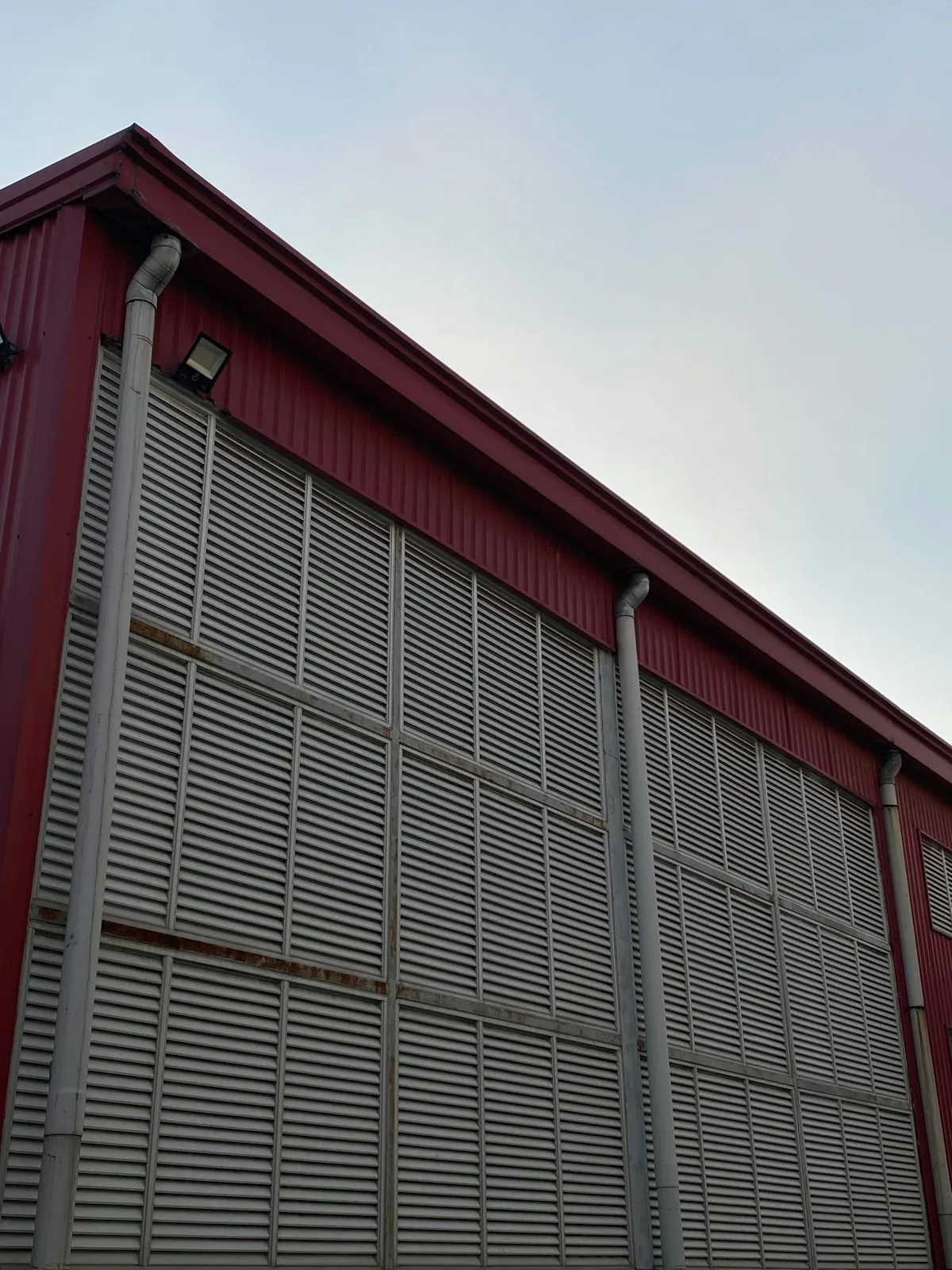
Flatwise tensile strength testing per ASTM C297 standards measures the perpendicular bond strength holding the panel skins to the honeycomb core. Quality criteria require flatwise tensile values exceeding 2.5 MPa, with failure occurring within the aluminum foil core rather than the adhesive interface. Specimens exhibiting adhesive release indicate surface contamination and trigger immediate batch quarantines.
Surface flatness is verified using automated laser scanning bridges traversing the panel surface. The laser profilometer records surface deviations across diagonal and longitudinal axes, ensuring that out-of-plane bow remains below 1.0 mm per 3,000 mm span. In addition, finished panels undergo environmental freeze-thaw chamber cycling per ASTM C481 to guarantee that moisture exposure will not degrade internal bond lines over the building lifecycle.
Frequently Asked Questions About Panel Production
How are aluminum honeycomb cores expanded into shape?
Solid blocks of glued foil sheets are sliced into strips of designated core thickness. Mechanical expansion pullers grip the opposite edges and stretch the unexpanded strip transversely, opening the alternating glued node lines into open hexagonal cells.
What adhesive creates the strongest honeycomb panel bond?
Thermosetting epoxy structural adhesive film provides the highest bond strength and heat resistance. It achieves climbing drum peel strengths exceeding 65 N·mm/mm and resists continuous operating temperatures up to 120°C without creep or delamination.
Why is continuous roll-lamination preferred over batch pressing?
Continuous roll-lamination provides consistent roller pressure and uniform heat across master panels. It continuously expels trapped air bubbles, eliminates internal adhesive voids, and delivers tight thickness tolerances within ±0.20 mm at high production speeds.
How do manufacturers prevent panel edge moisture ingress?
Panels undergo perimeter CNC routing where the rear skin and core are milled away. The remaining exterior skin flange folds backward around internal perimeter aluminum profiles, sealed with structural neutral-cure silicone to prevent rainwater infiltration.
What quality testing standards govern panel manufacturing?
Key standards include ASTM D1781 for climbing drum peel and ASTM C297 for flatwise tensile strength. ASTM C393 governs flexural properties, while EN 13501-1 verifies Class A2 fire safety.