
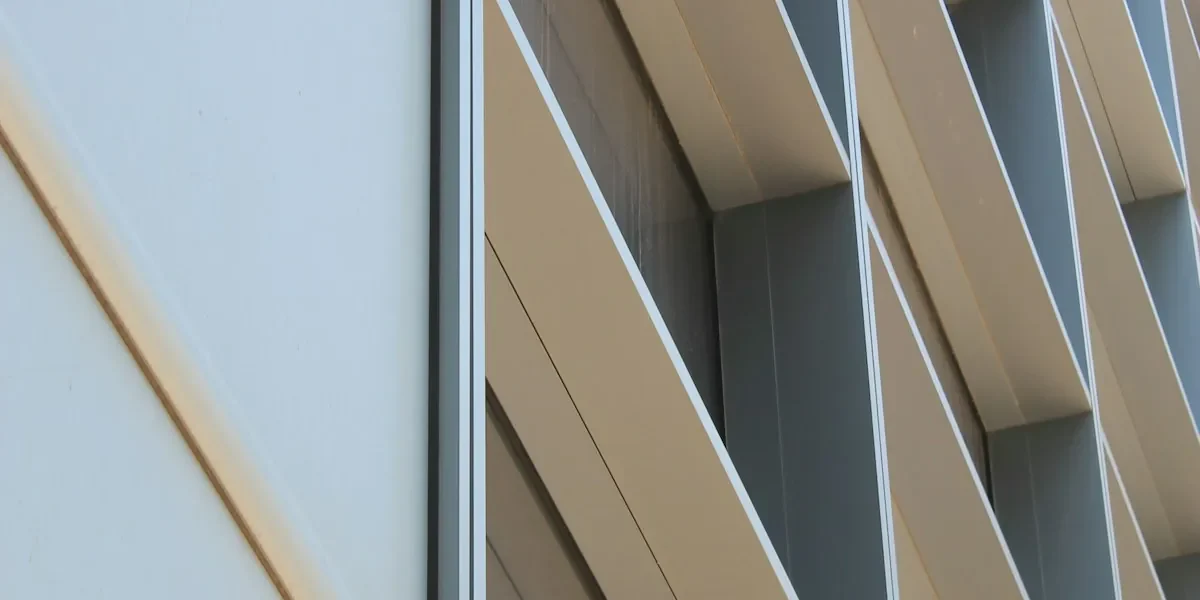
Commercial curtain walls, high-speed rail interiors, and ISO-classified cleanrooms demand flat surfaces that do not burden primary frames with dead weight. Standard 3.0 mm solid aluminum plate weighs 8.1 kg/m², while precast concrete panels impose 120 to 180 kg/m². In sharp contrast, an engineered 25 mm aluminum honeycomb panel weighs only 5.5 to 6.5 kg/m². It delivers a flexural rigidity of 0.85 to 1.85 kN·m²/m. This stiffness eliminates oil-canning across continuous spans reaching 1500 mm by 6000 mm under wind gust loads exceeding 4.5 kPa.
Achieving this structural integrity requires continuous roll-lamination, structural adhesives, and rigorous metallurgy. Our facility combines Alloy 3003-H24 or 5052-H32 exterior face skins with hexagonal foil cores using thermosetting epoxy film. This technical guide examines sandwich panel architecture and compares performance benchmarks against traditional cladding materials. We outline primary core production steps and detail the practical engineering checkpoints necessary to ensure long-term durability.
Understanding Three Layer Sandwich Panel Architecture
An aluminum honeycomb panel functions as an integrated structural composite engineered upon classical sandwich beam theory. Rather than relying on a solid cross-section to resist bending, the composite separates two dense facing sheets with a lightweight hexagonal cellular core. The structural face skins carry in-plane tension and compression stresses generated during wind pressure. Meanwhile, the bonded honeycomb core absorbs shear forces and maintains uniform spacing between skins. This separation magnifies the area moment of inertia while keeping material volume minimal.
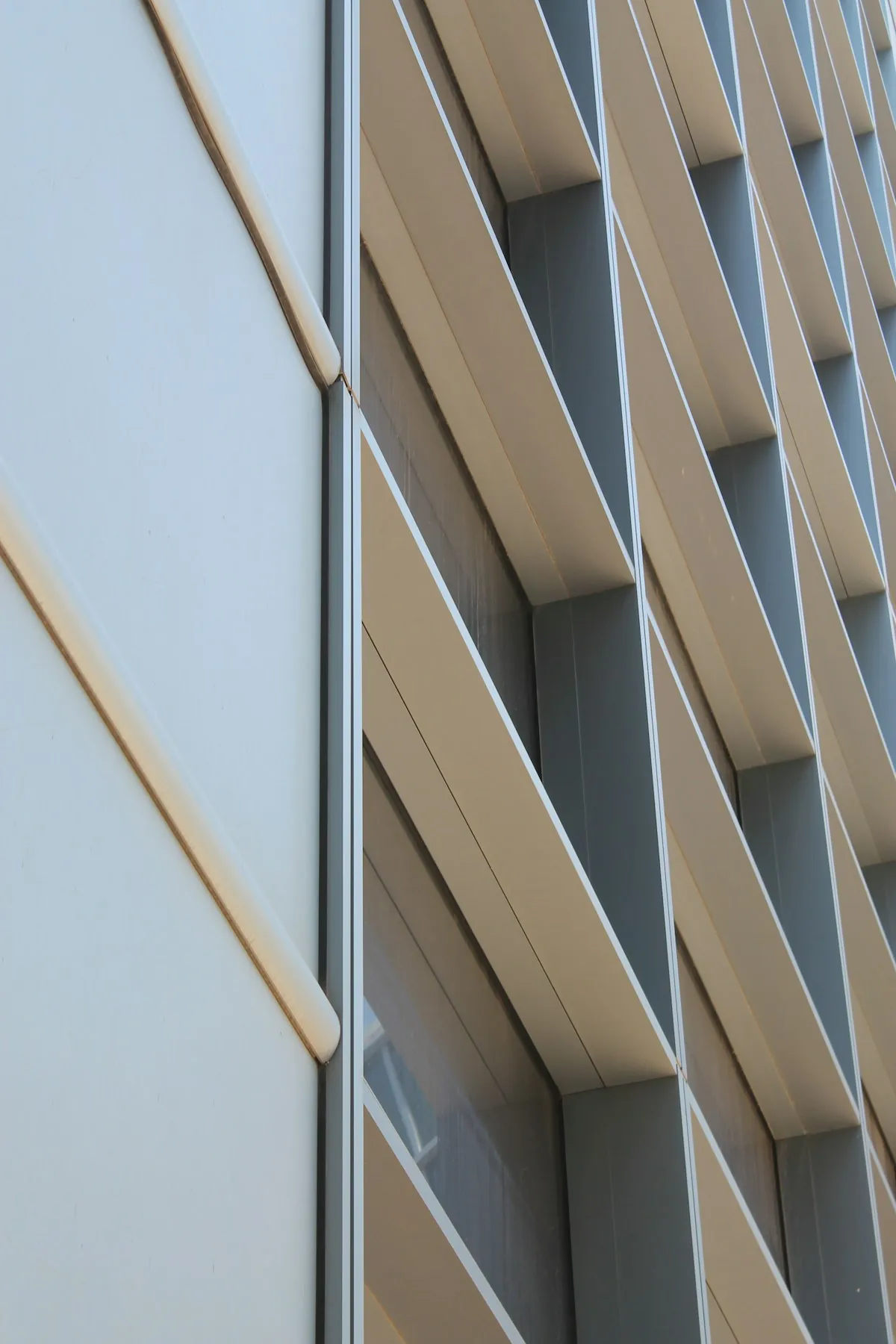
The top exterior skin typically ranges from 0.7 mm to 1.5 mm in thickness, depending on building height and architectural impact requirements. High-performance coil coatings like 70% PVDF or Lumiflon FEVE protect this exterior face against solar radiation, acid deposition, and salt spray fog. The bottom interior skin generally measures between 0.5 mm and 1.0 mm. It is finished with a protective wash coat or polyester primer to prevent galvanic oxidation when installed against steel sub-frames.
Between these metal skins sits the expanded honeycomb core, fabricated from structural aluminum foil ranging from 0.04 mm to 0.08 mm in gauge. Cell diameters span from 4 mm for ultra-high-density applications up to 12 mm for lightweight interior ceilings. A thermosetting structural adhesive film bonds the core cell edges to the outer skins under controlled roller lamination pressure. The process operates between 150°C and 180°C. This chemical-mechanical bond achieves climbing drum peel strengths exceeding 65 N·mm/mm per ASTM C393 standards.
Why Hexagonal Geometry Delivers Superior Rigidity
The hexagonal cell geometry inside an aluminum sandwich panel mimics the mechanical efficiency of repeated vertical I-beam webs. When positive wind loads push against the exterior face, the top skin enters compressive stress while the bottom skin enters tensile stress. The vertical cell walls resist transverse shear loads, preventing skins from sliding or buckling. This geometric arrangement yields high structural stiffness with low physical density.
Flexural rigidity (D) in a sandwich panel follows the formula D = (E · t_f · h²) / 2. Here, E represents aluminum elastic modulus (70,000 MPa), t_f represents face thickness, and h represents core height. Because the core height h is squared, doubling panel thickness from 10 mm to 20 mm quadruples flexural stiffness. Meanwhile, overall panel weight increases by less than 12%. Solid metal sheets must increase thickness linearly, which rapidly multiplies structural dead load and secondary steel framing costs.
This immense section modulus prevents optical waviness, commonly called oil-canning, across wide curtain wall spans. Even under harsh desert sun where surface temperatures reach 80°C, air inside interconnected cellular chambers equalizes thermal expansion gradients. The composite panel maintains a deflection limit under L/180 design wind criteria without welded intermediate stiffeners. This eliminates fabrication labor and assembly weight on active construction sites.
Compare Honeycomb Panels With Traditional Cladding
Building facade engineers evaluate composite panels against solid sheet aluminum, conventional aluminum composite material (ACM), and architectural precast concrete panels. Solid aluminum plate offers good impact resistance, but heavy weight requires closely spaced perimeter mullions and secondary sub-framing. Traditional 4 mm ACM panels offer lightweight handling, but their polymer cores present combustibility hazards and lack the stiffness needed for modules exceeding 1500 mm in width.
Architects specify aluminum honeycomb panel systems when their commercial designs demand ultra-large panel modules, crisp 90-degree fabricated corners, and certified non-combustible fire performance. The engineering data below illustrates how physical properties, fire ratings, and structural load metrics compare across standard commercial facade options.
| Cladding Material Type | Nominal Thickness | Areal Weight (kg/m²) | Flexural Rigidity (kN·m²/m) | Reaction to Fire Rating |
|---|---|---|---|---|
| Aluminum Honeycomb Panel | 20 mm (1.0/0.7 skins) | 5.8 kg/m² | 1.42 kN·m²/m | Class A2-s1,d0 (Non-combustible) |
| Solid Aluminum Sheet | 3.0 mm plate | 8.1 kg/m² | 0.16 kN·m²/m | Class A1 (Non-combustible) |
| Aluminum Composite Panel (ACM) | 4.0 mm (0.5/0.5 skins) | 5.5 kg/m² | 0.13 kN·m²/m | Class B-s1,d0 to Class A2 |
| Architectural Precast Concrete | 75 mm precast panel | 165.0 kg/m² | 85.00 kN·m²/m | Class A1 (Non-combustible) |
Testing proves that a 20 mm aluminum honeycomb panel delivers nearly nine times the flexural rigidity of a 3.0 mm solid aluminum plate. Concurrently, it lowers exterior dead weight by 28%. When structural engineers specify projects, this weight reduction lowers crane hoisting requirements. It simplifies seismic foundation anchorage and allows wider spacing between vertical structural brackets.
Honeycomb composite panels also offer excellent fabrication versatility. They permit clean edge folding and mechanical perimeter riveting directly into extruded aluminum profiles. The interior core maintains bonding strength under wind cycling. This avoids the fatigue cracking that solid sheets experience at welded stiffener joints.
How Alloy Selection Shapes Panel Durability
Specifying the proper metallurgical alloy determines whether an exterior honeycomb panel survives thirty years or suffers internal corrosion. The exterior skins and interior foil core withstand distinct mechanical and chemical stresses. While commodity manufacturers sometimes cut costs using commercial Grade 1100 pure aluminum, structural facade applications demand specialized manganese-bearing or magnesium-bearing alloys per ASTM B209 specifications.

For standard commercial building envelopes, Alloy 3003-H24 serves as the reliable industry standard. Formulated with 1.0% to 1.5% manganese addition, Alloy 3003 increases yield strength to 145 MPa. It retains superior elongation for sharp 90-degree CNC grooving and perimeter return folding. For marine environments within 1000 meters of seawater, engineers must specify Alloy 5052-H32. Containing 2.2% to 2.8% magnesium, Alloy 5052 forms a dense self-healing oxide barrier that resists chloride pitting corrosion.
Selecting the correct core foil alloy is equally important, as detailed in our guide on how to select high quality aluminum honeycomb cores. In unconditioned architectural environments, condensation cycles expose the interior core to warm moisture. Cheap Alloy 1100 foil cores corrode rapidly, causing cell collapse under wind cycling. High-grade Alloy 3003 or 5052 foil cores maintain structural shear stiffness throughout decades of exposure.
| Aluminum Alloy Grade | Tensile Strength (MPa) | Yield Strength (MPa) | Corrosion Resistance Rating | Optimal Panel Placement |
|---|---|---|---|---|
| Alloy 3003-H24 | 170 – 210 MPa | 145 MPa | High (Atmospheric / Urban) | Standard facade face skins & core foil |
| Alloy 5052-H32 | 215 – 265 MPa | 195 MPa | Superior (Marine / Salt Spray) | Coastal facades & high-stress core foil |
| Alloy 1100-H14 | 110 – 145 MPa | 95 MPa | Moderate (Low Industrial) | Interior decorative ceilings only |
Specifying engineers must also review core performance variables such as foil wall thickness and expansion ratio. These factors are detailed in our analysis on factors affecting the performance of aluminum honeycomb cores. Choosing the right alloy pairing between core foil and surface facing ensures thermal expansion compatibility across seasons.
Manufacturing Steps from Foil to Finished Panel
Fabricating high-performance architectural honeycomb panels requires a multi-stage production sequence. This process transforms coiled aluminum foil and pre-painted sheet coils into rigid structural composite panels. Any contamination or thermal variation during production risks adhesive voids and delamination under exterior wind pressure. The process operates under strict quality standards across five controlled stages.
The manufacturing flow follows this systematic industrial sequence:
- Foil Slitting and Node Line Printing: High-purity aluminum foil rolls pass through precision rotary slitters to achieve ribbon widths matching panel core depth. Automated gravure printing rollers deposit parallel lines of thermosetting structural epoxy adhesive across the foil surface at pitch intervals corresponding to desired cell sizes.
- Stacking, Heat Curing, and Block Expansion: Printed foil ribbons are layered continuously onto an indexing stacking table. The assembled foil stack enters a heated hydraulic press where uniform temperature cures the printed adhesive node lines into solid joints. Mechanical expansion pullers stretch the compact block transversely into uniform hexagonal cellular blocks.
- Surface Pretreatment and Coil Degreasing: Facing coils pass through multi-stage alkaline degreasing baths, deoxidation rinses, and titanium-zirconium conversion coating chambers. This chemical pretreatment removes mill oils and deposits a nanoscale passivating conversion layer that ensures permanent adhesive mechanical keying.
- Adhesive Film Layup and Continuous Thermal Lamination: Operators lay bi-component modified polyolefin or epoxy structural adhesive film between the expanded honeycomb core and metal facing skins. The composite sandwich enters a continuous heated roll-press operating at 160°C to 180°C, forming consistent adhesive fillets along every cell wall edge.
- Edge Trimming, CNC Routing, and Quality Inspection: Automated flying saws trim cured continuous master panels into specified project lengths. High-speed 5-axis CNC machining centers route perimeter return folds, drill slotted fastener locations, and mill corner relief notches, followed by climbing drum peel testing.
This automated lamination method ensures uniform core-to-skin adhesion across large master panels. Maintaining consistent temperature and pressure eliminates internal air pockets. It produces composite panels that resist extreme environmental freeze-thaw cycles without surface blistering.
Evaluating Fire Resistance and Acoustic Damping
Modern building safety codes enforce strict fire reaction requirements for mid-rise and high-rise exterior envelope assemblies. Following major urban facade fires involving standard polymer-core composite panels, international building authorities require non-combustible materials. All-aluminum honeycomb panels feature zero organic core mass, containing only thin thermoset adhesive layers between non-combustible metal sheets. As a result, certified panels achieve Class A2-s1,d0 classifications under EN 13501-1 fire testing standards.
During cone calorimeter testing per ISO 5660-1, an all-metal honeycomb panel produces negligible gross heat of combustion under 3.0 MJ/kg. The microscopic quantity of cured structural adhesive film does not release flaming droplets (d0 rating) and generates minimal smoke density (s1 rating). Under ASTM E84 testing, the composite achieves a Flame Spread Index under 15 and a Smoke Developed Index below 50, comfortably qualifying for Class A commercial interior and exterior ratings.
Engineer Architectural Facades with Honeycomb Panels
Review panel thickness calculations and certified Class A2 fire testing documentation tailored to your project.
Beyond life safety fire performance, aluminum honeycomb panels provide effective acoustic damping compared to single-layer sheet metal cladding. While monolithic solid aluminum vibrates like a drum skin when struck by rain droplets, air trapped inside thousands of individual honeycomb cells acts as a dampening cushion. Sound transmission loss testing per ISO 10140-2 confirms an acoustic insulation index (Rw) between 25 dB and 29 dB for standard 20 mm panels. This significantly dampens environmental street traffic and rainfall drumming.
Four Specification Mistakes Project Designers Make
While an aluminum composite sandwich panel delivers extraordinary engineering benefits, improper detailing and specification errors can undermine structural safety and aesthetic appearance. Facade engineers and project specifiers frequently make preventable oversights during initial procurement planning.
Ignoring Galvanic Isolation Between Dissimilar Metals
Connecting raw aluminum panel perimeter extrusions directly to carbon steel sub-framing without dielectric isolation creates an immediate galvanic corrosion battery in the presence of rainwater or condensation. The difference in electrochemical potential causes rapid oxidation of the aluminum skin around fastener holes, leading to joint looseness and panel dislodgement. Specifiers must mandate EPDM separation gaskets, polyamide isolator sleeves, and 316-grade stainless steel self-drilling fasteners across every structural connection.
Selecting Commercial Alloys for Marine Coastal Exposures
Specifying general-purpose Alloy 1100 or untreated commercial sheet metal for buildings situated within two kilometers of saltwater marine environments leads to rapid surface pitting and internal core failure. Airborne chloride salts penetrate unsealed perimeter panel seams, attacking the honeycomb foil walls and degrading adhesive bonding. Coastal specifications must explicitly require Alloy 5052-H32 skins paired with corrosion-resistant 5052 foil cores and high-performance AAMA 2605 PVDF coatings.
Underestimating Thermal Expansion Across Large Spans
Aluminum has a linear thermal expansion coefficient of 24 × 10−6 K−1. This equates to roughly 2.4 mm of movement per linear meter across a 100°C surface temperature change. When designers anchor large 4000 mm long panels using rigid, non-slotted screw holes at both ends, the panel cannot expand under hot summer solar radiation. This constraint induces severe internal compressive stress, forcing the panel face outward into prominent oil-canning waves and shearing perimeter fasteners.
Relying on Cold Contact Adhesives Over Thermal Film
Low-cost composite panel fabricators often substitute manual cold-applied liquid polyurethane or neoprene contact adhesives in place of continuous thermosetting hot-melt adhesive films. While cold-bonded panels appear identical upon factory dispatch, they lack thermal creep resistance under prolonged summer heat exposure. As surface temperatures reach 75°C, cold contact adhesives soften, leading to progressive delamination, hollow blisters, and structural failure under negative wind suction.
Key Commercial and Architectural Applications Today
The combination of structural rigidity, lightweight handling, and certified non-combustibility positions the honeycomb sandwich panel across diverse high-performance construction sectors. In modern architectural envelope design, these panels serve as premier cladding for commercial skyscraper curtain walls, airport terminal roofs, and mass transit railway station facades. Their ability to span wide structural bays without intermediate welded stiffeners gives architects complete design freedom to create expansive exterior surfaces.
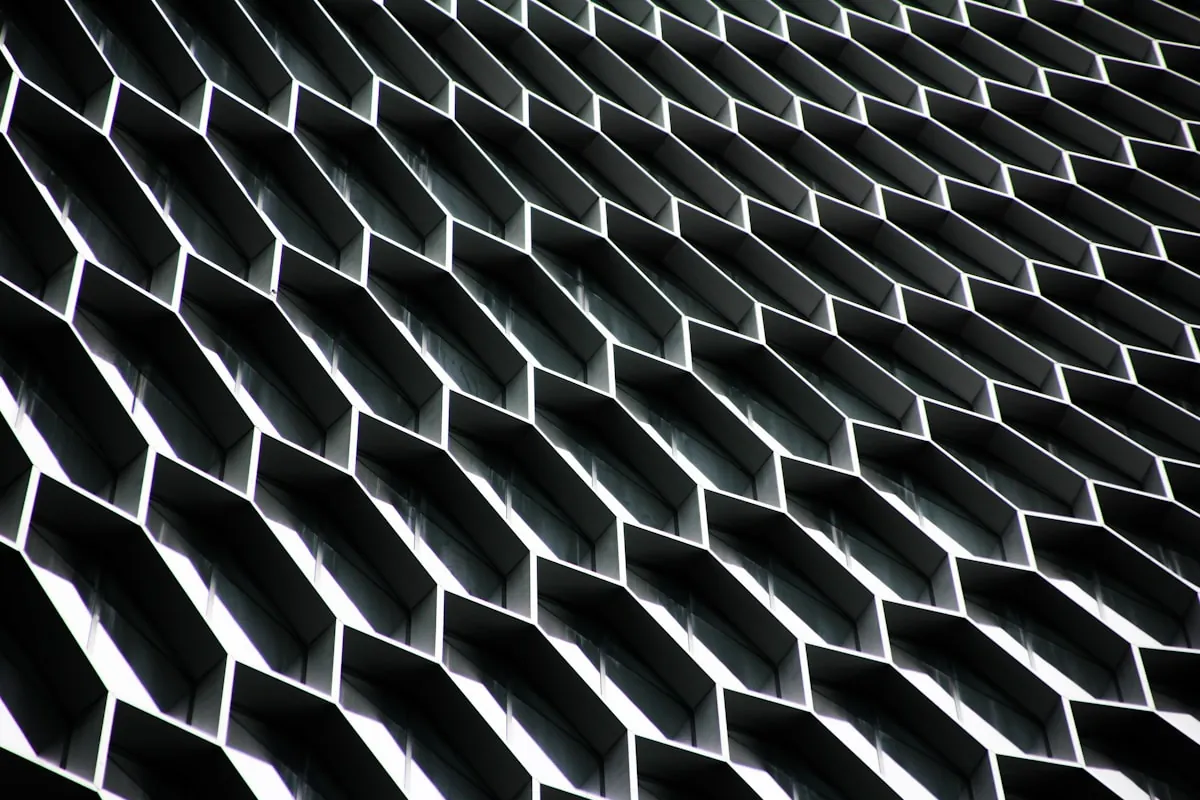
In high-precision controlled environments, such as pharmaceutical cleanrooms, biotechnology laboratories, and semiconductor fabrication facilities, honeycomb panels function as airtight modular partition walls and walkable ceiling systems. Their non-porous fluoropolymer finishes resist aggressive sterilization chemicals, while smooth continuous surfaces prevent particle accumulation. The rigid sandwich structure supports maintenance technicians walking directly across cleanroom ceiling plenums to service air handling equipment.
Beyond static architecture, the high-speed transportation sector relies on aluminum honeycomb composite panels to minimize vehicle dead load and lower operational fuel consumption. High-speed trains utilize honeycomb sandwich assemblies for passenger cabin doors, interior luggage partitions, and ceiling panels. Marine shipyards specify honeycomb panel partitions for luxury cruise liners and commercial catamarans, fulfilling strict International Maritime Organization non-combustibility requirements while maintaining low naval center-of-gravity stability.
Frequently Asked Questions About Honeycomb Panels
What is the standard thickness of an aluminum honeycomb panel?
Standard architectural panels range from 10 mm to 25 mm in total thickness, using 0.7 mm to 1.0 mm skins. Specialized cleanroom ceilings and industrial transport floors utilize 50 mm thick panels for maximum span stiffness.
Are aluminum honeycomb panels fireproof or non-combustible?
Yes, all-aluminum panels achieve Class A2-s1,d0 non-combustible certification under EN 13501-1 and Class A ratings under ASTM E84. The all-metal construction generates minimal smoke and zero flaming droplets under intense fire exposure.
Can aluminum honeycomb panels be curved for architectural columns?
Yes, panels can be roll-curved down to a minimum radius of 500 mm using specialized three-roll bending machinery. The manufacturing team calibrates cell orientation and skin thickness to prevent core cell buckling during curving.
How do honeycomb panels prevent moisture buildup inside cells?
Quality panels utilize micro-perforated core foil ribbons that allow internal air pressure to equalize between cells. Factory edge-folding and high-performance structural silicone sealants prevent exterior liquid water ingress along perimeter facade joints.
What is the typical lifespan of an exterior honeycomb panel?
Exterior panels coated with 70% PVDF or FEVE fluoropolymer resin achieve design lifespans exceeding 30 years. The durable coil coating resists severe UV chalking, color fading, and atmospheric corrosion in aggressive commercial environments.