
Most sourcing teams learn the hard way that price quotes are useless without verifying the manufacturer’s adherence to ISO9001 certified manufacturing standards. You know the nightmare of a batch failing peel tests. It happens. Finding an aluminum sandwich panel manufacturer who delivers consistent structural integrity means ignoring the marketing fluff and demanding specific technical proof. The difference between a stable thermal envelope and a compliance failure comes down to how the factory handles core density and adhesive curing.
RaxPanel operates on the principle that process control determines product lifespan. This guide details how to define your core material density upfront, inspect for edge damage risks before containers are loaded, and structure warranty terms that cover the specific delamination defects you fear most. You stop comparing spreadsheets and start vetting the actual production lines that will supply your project.
Set Technical Baselines Before Sourcing
Establishing clear technical baselines before engaging Chinese suppliers eliminates ambiguity, prevents costly specification drift, and ensures every quote you receive is comparable on identical parameters.
Define Core Material Type and Density
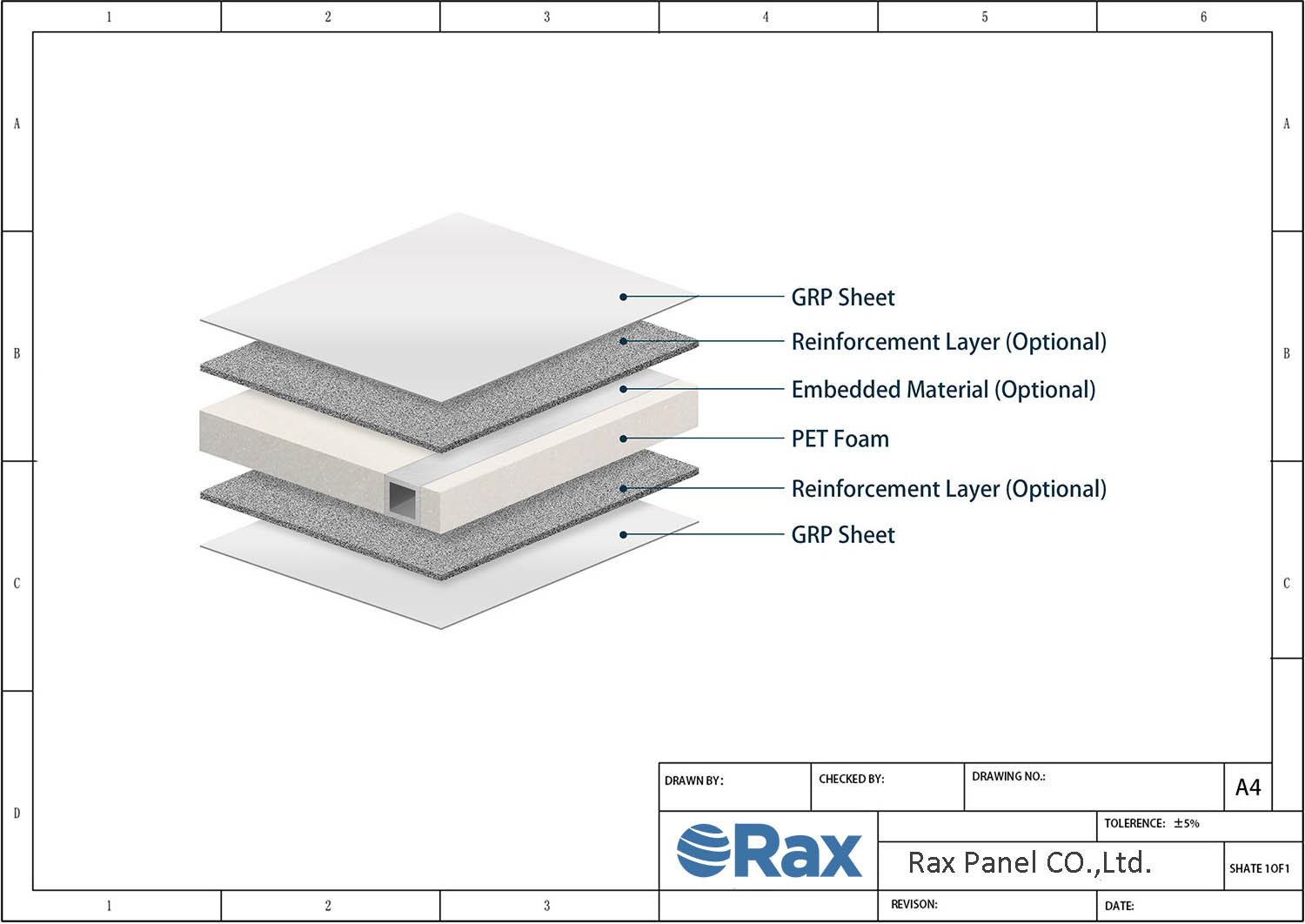
The core material is the structural heart of any sandwich panel, and selecting the wrong type is one of the most common sourcing mistakes we see. Buyers often assume all foam cores are interchangeable, but XPS, PET, PU, and PVC foams behave very differently under load, temperature variation, and moisture exposure. Honeycomb cores — whether PP, fiberglass, or aluminum — deliver dramatically higher compressive strength but come at a premium and require different handling during fabrication.
Density is equally critical. A core listed at a vague “medium density” could range from 40 kg/m³ to 120 kg/m³ depending on the manufacturer’s internal grading. For vehicle manufacturing applications, where every kilogram affects payload and fuel economy, you must specify exact density ranges in your purchase order. Our engineers routinely see buyers who receive panels with core density 15% below specification, resulting in reduced stiffness and premature delamination under vibration cycling.
When defining your core requirements, map the material to your application environment. Marine and RV applications demand moisture-resistant cores like PET or PMI, while dry freight truck bodies can accommodate cost-effective PVC or XPS. Always request the core supplier’s material safety data sheet and verify that the foam or honeycomb manufacturer holds relevant certifications for the claimed density grade.
Specify Aluminum Skin Thickness and Alloy
Aluminum skin specifications are where many sourcing negotiations break down. A quote that simply states “aluminum skin” without specifying alloy series and per-side thickness leaves the door open for material substitution. The aluminum industry recognizes several alloy series — 3003, 5052, and 6061 being the most common for sandwich panel facings — each offering different combinations of strength, formability, and corrosion resistance.
Thickness specification must account for both sides of the panel. A panel described as “1.0mm aluminum skin” could mean 1.0mm total (0.5mm per side) or 1.0mm per side, which represents a 100% difference in material cost and structural performance. In our experience, specifying minimum thickness per side and requiring mill test certificates that confirm both alloy designation and thickness measurement eliminates this ambiguity entirely.
Surface treatment also plays a role in skin selection. PVDF coatings provide superior UV resistance for exterior applications, while PE coatings offer a cost-effective solution for interior or sheltered installations. We recommend specifying the coating type, thickness, and color standard (RAL or custom) in your technical baseline document before requesting quotes. This prevents suppliers from substituting a lower-grade coating and then justifying the price difference as a “value option.”
Establish Thermal Insulation and Fire Standards
Thermal insulation performance and fire safety are non-negotiable parameters that directly affect regulatory compliance and end-use viability. Different core materials deliver fundamentally different thermal resistance values, and these differences become significant when you’re designing for specific climate zones or energy efficiency targets.
Fire rating requirements vary dramatically by application and region. Transportation applications in Europe typically require EN 13501-1 classification, while North American RV and mobile home manufacturers often reference UL or FM standards. PIR and PUR cores offer different fire performance characteristics — PIR generally provides better fire resistance due to its improved char-forming properties, but PUR may be specified where cost constraints are tighter and the application allows it.
We insist that every technical baseline document includes the exact fire standard, the required classification level, and the testing laboratory that must issue the certification. Buyers who skip this step often receive panels that look correct on paper but fail to meet the fire rating required by their local building or vehicle code — resulting in rejected shipments, project delays, and costly re-sourcing. Always verify that the fire certificate is issued by an accredited laboratory and matches the specific core material and panel construction you are ordering, not a generic certificate for a similar product line.
Never accept a supplier’s claim that “our panels meet your fire standard” without seeing the actual test certificate from an accredited laboratory. Generic or expired certificates are among the most frequent quality failures we encounter during incoming inspection.
| Technical Parameter | Required Baseline | Rax Panel Solution | Verification Method | Sourcing Impact |
|---|---|---|---|---|
| Aluminum Skin Integrity | Genuine Alloy (3003/5052) + Coating (PVDF/PE) | Verified Mill Test Certificates (MTC) with full material traceability; zero substitution policy | Spectrometry analysis & Coating thickness gauge | Eliminates MTC forgery and material bait-and-switch fraud; ensures warranty validity |
| Core Material Density | Consistent density (XPS/PU/PP Honeycomb) with void-free structure | Advanced production line (1700㎡/day capacity); high-quality PET, PU, PVC & PP Honeycomb cores | Core density sampling & Cross-section visual inspection | Guarantees 30–50% weight reduction vs steel without compromising structural strength |
| Fire & Safety Ratings | Compliance with B1/A Class or EN 13501-1 standards | Specialized PIR, PUR, and Rockwool sandwich panels with certified fire-retardant properties | Lab testing (Fire Reaction certificates) | Meets strict building and transport codes; ensures passenger safety and regulatory compliance |
| Dimensional Tolerance | Thickness tolerance ±0.2mm, Flatness ≤3mm/m | High-precision automated manufacturing with engineer-led customization | Digital caliper & Laser level measurement | Reduces installation gaps, lowers labor costs, and minimizes on-site waste |
| Environmental Resistance | Waterproof, UV resistant, and salt spray resilient (≥500 hours) | Gel-coat FRP facings, sealed edges, and marine-grade Aluminum/GRP composites | Salt spray test & Water immersion chamber | Extends service life in harsh marine/industrial environments; lowers maintenance TCO |
Check Capabilities and Spot Red Flags
Verifying manufacturing depth and certification authenticity is the only way to distinguish a true OEM from a trading company, preventing supply chain failures before they start.
Audit Manufacturing Capacity and Process Control
When sourcing aluminum sandwich panels, the physical capability of the facility directly correlates to product consistency. A manufacturer that claims to offer comprehensive composite solutions—ranging from aluminum honeycomb to foam cores—must possess the infrastructure to back it up. Buyers should prioritize facilities with a proven track record of stability; industry data suggests that manufacturers with over 15 years of production experience have significantly refined their process control, reducing the variance in panel flatness and bond strength.
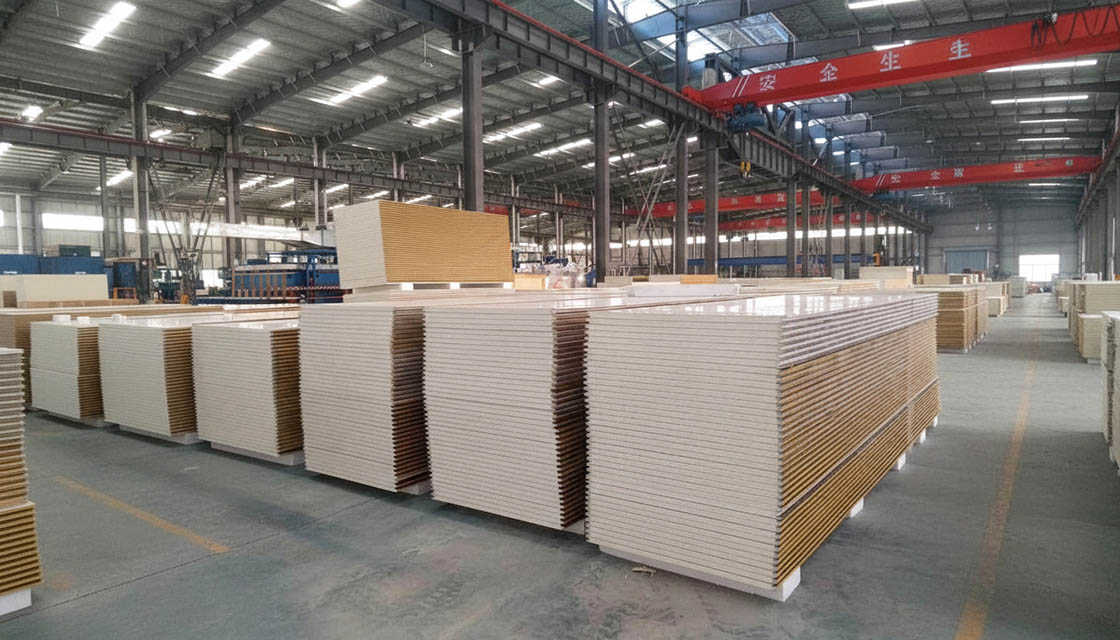
Production volume is another critical indicator of reliability. For large-scale commercial or vehicle manufacturing projects, a daily production area exceeding 1,700 square meters is often required to guarantee timely delivery without sacrificing quality. This scale ensures that the factory is not merely assembling panels but is actively controlling the lamination process, curing times, and material handling. Inspectors should look for continuous production lines rather than batch processing, as continuous lines typically yield superior adhesive consistency, which is the primary defense against delamination risks in harsh environments.
Verify Certification Authenticity and Testing Standards
Fire Compliance Uncertainty remains a major liability for buyers. To mitigate this, demand third-party test reports that validate fire resistance claims. High-quality insulated panels must meet or exceed Class A fire ratings to ensure safety in building and transportation applications. Do not accept generic sales promises; request specific documentation that correlates the core material (whether mineral wool, PU, or PIR) with the fire rating. For instance, while polyethylene cores offer cost benefits, they generally lack the fire resistance of mineral wool cores, which may violate strict building codes.
Beyond fire safety, assess the factory’s R&D capabilities. A reliable supplier should employ a dedicated team of engineers capable of conducting experimental testing to meet specific data standards. This includes verifying mechanical properties such as peel strength and shear modulus. If the manufacturer cannot provide detailed mechanical data resulting from their own internal testing, it indicates a lack of technical depth and increases the risk of coating and surface defects or structural failures down the line.
Identifying Operational Red Flags
Spotting warning signs early in the vetting process saves significant resources. Use the following checklist to identify high-risk suppliers or operational gaps that could compromise your project:
- Inability to Specify Core Origins: A red flag is the inability to trace the source of core materials (e.g., XPS, PET, PU). Reputable manufacturers control their supply chain to ensure consistent density and thermal insulation performance.
- Lack of Continuous Lamination Lines: If the factory relies on manual lay-up or discontinuous processes for bulk orders, the risk of adhesive voids and delamination increases dramatically.
- Vague ISO Compliance: ISO 9001 certification should be verifiable and specific to the panel production line, not a generic certificate covering unrelated business activities.
- Refusal of Factory Audits: Hesitation to allow a third-party inspection of the production area or the raw material warehouse is a definitive sign of outsourcing or quality inconsistency.
Never rely solely on product samples. Samples are often hand-picked and crafted with extra care, whereas bulk production quality depends on the robustness of the factory’s daily quality control system and raw material consistency.
Control Quality and Test for Defects
The Criticality of Bond Strength and Delamination Risks
The single most catastrophic failure mode in aluminum sandwich panels is delamination, where the aluminum skin separates from the core material. While visual inspections can catch surface imperfections, they are useless against internal bond failures. Two panels with identical nominal specifications can perform very differently if the adhesive bond is incomplete or improperly cured. In rigorous lab testing, samples exhibiting bond line inconsistencies often fail under structural loads far below their rated capacity, creating severe liability for structural applications.
To control this quality risk, buyers must verify that the manufacturer adheres to strict adhesive application protocols. The bond strength is typically measured using peel tests, which quantify the force required to separate the skin from the core. For high-performance applications, especially those involving CFRP, GRP, or specialized honeycomb cores, the adhesive layer requires precise curing temperatures and pressures. A failure to maintain these parameters results in “voids” within the bond line—areas where the skin is not actually attached to the core. These voids act as stress concentrators, propagating cracks across the panel under wind load or vibration. Quality control (QC) protocols must mandate a 100% bond integrity check for critical structural panels, rather than relying on statistical sampling.
Detecting Core Density Variance and Internal Consistency
Internal consistency of the core material is a frequent blind spot in procurement. Competitor analysis frequently reveals that core density can vary by more than 15% within a single panel—a defect invisible to visual inspection but catastrophic under structural load. This variance often occurs in foam cores like XPS, PET, PU, or PVC due to uneven expansion during the manufacturing process. If a section of the panel has lower density, it compresses under load, transferring stress to the surrounding areas and causing premature buckling or failure of the aluminum skins.
Effective quality control requires density verification using core sampling or non-destructive scanning methods. Manufacturers utilizing advanced composite panel production lines typically implement real-time density monitoring to ensure uniformity. When sourcing panels such as Aluminum Honeycomb or Foam Core configurations, buyers should request density reports that map specific points across the sheet, rather than a single average value. Ensuring the uniformity of the core—whether it is a lightweight PP honeycomb or a high-density PET foam—is essential for predicting the panel’s deflection behavior and thermal insulation performance.
Executive Summary: Visual inspections miss critical internal flaws. Density variance exceeding 15% or incomplete adhesive bonds are silent killers of project longevity. QC must focus on internal data, not just surface aesthetics.
Defining Acceptable Tolerances for Surface Defects
While structural integrity is paramount, surface finish defects drive rejection rates in architectural and visible applications. Aluminum sandwich panels often feature coatings, such as PE (Polyester) or PVDF (Polyvinylidene Fluoride), which provide corrosion resistance and aesthetic appeal. Quality anxiety stems from undefined tolerances regarding scratches, color inconsistencies, and coating peels. A “high-quality” standard for visible facades is significantly stricter than for industrial flooring or truck bodies.
Buyers must establish a clear “Defect Acceptance Criteria” document before production begins. This document should delineate the maximum allowable diameter of surface scratches, the allowable Delta E (color difference) value compared to the standard sample, and the acceptable number of pinholes per square meter. For instance, while a micro-scratch might be acceptable on a refrigerated truck wall panel, it is grounds for rejection on an exterior wall cladding panel. Furthermore, the coating adhesion must be tested via cross-hatch adhesion tests (ASTM D3359) to ensure the finish will not peel or flake under environmental exposure, thereby preventing long-term corrosion of the aluminum substrate.
Third-Party Inspection Triggers and Custom Orders
For custom orders involving specific dimensions, thickness tolerances, or specialized fire-resistant cores (like PIR or Rockwool), relying solely on the manufacturer’s internal certificate is often insufficient. Third-party inspection (TPI) triggers should be written into the contract to activate when order values exceed a certain threshold or when the application is safety-critical (e.g., marine vessel solutions or public transit).
- Pre-Shipment Inspection (PSI): A mandatory check for bulk orders to verify dimensions, thickness, and packaging integrity before the goods leave the factory.
- During Production Check (DUPRO): Essential for custom-engineered solutions to catch assembly errors or material substitutions early in the manufacturing cycle.
- Sample Retention: The factory must retain production samples for a defined period. If a field failure occurs, these samples allow for forensic analysis to determine if the defect originated from manufacturing or installation.
Implementing these triggers mitigates the financial risk of non-conforming batches. It shifts the responsibility of proof to the manufacturer, ensuring that the delivered panels meet the stringent mechanical and thermal standards required for modern B2B construction and industrial applications.
Analyze Pricing and Negotiate Better Terms
Pricing is rarely about the final sticker price alone; it is a function of raw material volatility, core density specifications, and order volume. Successful negotiation requires isolating the material cost (Bill of Materials) from the manufacturer’s value-added processing margin.
Deconstructing the Bill of Materials (BOM)
To negotiate effectively, a buyer must first understand the raw material inputs. The price of an aluminum sandwich panel is not arbitrary; it is mathematically driven by the weight and grade of the aluminum skins and the density of the core material. Do not accept a vague quote per square meter. Instead, demand a cost breakdown that separates the skin material, the core material, and the processing fee.
The aluminum skin typically constitutes 40-60% of the total material cost, heavily influenced by the London Metal Exchange (LME) index. A critical negotiation point is the alloy specification. While standard 3003 series aluminum is cost-effective for general applications, 5000 or 6000 series alloys offer higher strength but command a premium of 15-20%. If the application does not require high structural integrity, specifying 3003 alloy is a primary lever for immediate cost reduction without compromising quality.
Core material variability is the second major cost driver. Manufacturers can manipulate pricing by adjusting core density rather than the core type itself. For instance, a Polyurethane (PU) or XPS core panel priced significantly lower than the market average often utilizes a reduced core density (e.g., 35 kg/m³ instead of the standard 40-45 kg/m³). This reduction compromises compressive strength and thermal insulation. Buyers must verify the specific density (kg/m³) in the technical specification sheet rather than relying on generic names like “High-Density Foam.”
- Alloy Selection: Standard 3003 alloy vs. Marine Grade 5052 alloy (higher cost, superior corrosion resistance).
- Skin Thickness: Verify tolerance levels (e.g., 0.5mm vs 0.8mm) as thin skins significantly lower material weight and cost.
- Core Density: Ensure quoted density (e.g., XPS 40kg/m³) matches the physical requirement for insulation and load-bearing.
- Adhesive Quality: Structural polyurethane adhesives cost more but prevent delamination; cheap epoxies are a common failure point.
Analyzing Processing and Overhead Margins
Once material costs are isolated, the remaining balance covers the manufacturer’s processing margin. This includes continuous lamination line operations, energy consumption, and quality control overhead. High-efficiency manufacturers, often with a daily production area exceeding 1,700 square meters, achieve economies of scale that allow them to offer lower processing margins than smaller, batch-processing workshops.
When evaluating quotes, scrutinize the ” fabrication and finishing” line items. Customizations such as CNC routing, edge banding, or specialized surface coatings (e.g., PVDF versus Polyester) are often where manufacturers apply the highest markups. A savvy negotiator will ask if these processes are outsourced or handled in-house. In-house processing reduces logistics costs and quality risks, which can be used as advantage to negotiate a lower “all-in” rate.
Leveraging Volume and Logistics for Better Terms
The final pricing tier is determined by order volume and logistics efficiency. In B2B manufacturing, the Minimum Order Quantity (MOQ) is often negotiable if the buyer can commit to a quarterly or annual volume forecast. Suppliers are often willing to absorb a portion of the tooling or setup costs for a confirmed long-term contract.
additionally, optimizing the shipping layout is a hidden cost saver. Standard panel sizes (e.g., 1220mm x 2440mm) may waste container space. Negotiating for custom cut-to-size dimensions that maximize 20GP or 40HQ container loading can reduce the per-unit freight cost by 10-15%. A sophisticated supplier will offer engineering support to optimize panel dimensions for shipping, effectively lowering the Total Landed Cost without reducing the factory price of the goods.
Manage Shipping, Incoterms, and Lead Times
Managing logistics for aluminum sandwich panels requires balancing total landed cost with delivery speed. Buyers must prioritize Incoterms that align with their risk tolerance and leverage manufacturers with high daily production capacities to mitigate schedule delays.
Selecting the right Incoterm is a critical financial decision that directly impacts the bottom line. In the aluminum composite panel industry, FOB (Free On Board) is the most common standard, offering buyers control over freight forwarding and ocean costs. However, this requires the buyer to have a reliable logistics partner. CIF (Cost, Insurance, and Freight) is often preferred for smaller shipments as it simplifies the process, though buyers must verify that the insurance coverage is adequate for high-value composite materials. For complex custom orders, EXW (Ex Works) may be offered by factories to maximize flexibility, but this shifts the maximum risk and logistical burden onto the buyer, requiring significant on-the-ground coordination in China.
Production Scheduling and Capacity Benchmarks
Lead times for aluminum sandwich panels are heavily influenced by the customization level of the core and skin materials. Standard stock panels can often ship within 3-7 days, but custom specifications—such as specific aluminum alloys, unique core densities (e.g., XPS, PET, PU), or specialized surface treatments—require a full production cycle.
- Standard Custom Lead Time: Typically ranges from 15 to 20 days for orders involving custom skin thicknesses or core compositions.
- Capacity Indicators: High-volume manufacturers often maintain a daily production area exceeding 1,700 square meters. Buyers should ask for proof of this capacity to ensure the supplier can absorb volume surges without delaying their project timeline.
- MOQ Constraints: Be aware that custom tooling and line setups often mandate a Minimum Order Quantity (MOQ), frequently starting at 500 pieces, to make production economically viable.
Packaging Standards and Damage Prevention
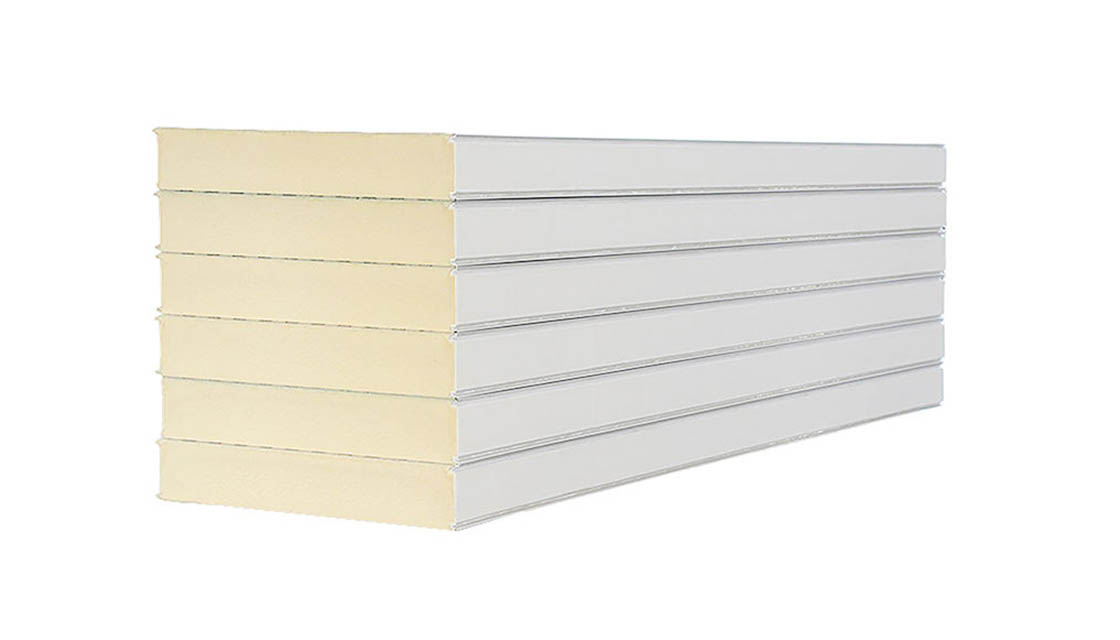
Aluminum sandwich panels are susceptible to surface abrasion and edge crushing during trans-oceanic freight. Ensuring packaging compliance is non-negotiable for protecting the investment. Export-grade packaging should always include a protective PE film on the aluminum skins to prevent scratches during handling and storage. For bulk shipments, panels must be secured on reinforced wooden pallets capable of withstanding forklift stress and container vibration.
Never accept packaging that lacks corner guards or adequate top/bop protection. If the pallet shifts inside a 40-foot container, the hydraulic pressure can easily delaminate standard foam cores or dent facing aluminum skins, rendering the high-performance composite materials useless upon arrival.
Monitor Performance and Warranties After Delivery
Conduct Peel Strength and Adhesion Testing
Once the materials arrive on-site, the physical verification of bond integrity is non-negotiable. While visual inspections can catch surface damage, they cannot detect the latent failure of the adhesive layer between the facing and the core. Delamination is the primary failure mode for composite panels, directly compromising structural rigidity and thermal insulation. B2B buyers must prioritize verifying the peel strength—the force required to separate the skin from the core—to ensure the adhesive has cured correctly and survived transit stresses.
For on-site verification, request a small sample or off-cut to perform a 90-degree or 180-degree peel test. If the core tears (cohesive failure) rather than the adhesive separating (adhesive failure), the bond quality is verified as high-performance.
At our facility, we conduct rigorous experimental testing to verify that materials meet strict performance data standards. We understand that for applications like RV side walls or refrigerated truck bodies, the adhesion between the GRP/FRP facings and the PET or PU foam cores must withstand constant vibration and thermal cycling. We test these bonds to ensure that the peel strength exceeds the project’s structural requirements, preventing “skin sagging” or air gaps that act as thermal bridges.
- Adhesive Compatibility: Ensure the adhesive used is chemically compatible with both the core material (e.g., XPS, PVC, PP Honeycomb) and the skin surface treatment (e.g., gelcoat or PVDF coating).
- Cohesive vs. Adhesive Failure: Insist on cohesive failure (core material breaks) during testing; adhesive failure (skin peels off cleanly) indicates poor bonding or surface contamination.
- Environmental Conditioning: Verify if the peel strength data provided accounts for humidity and temperature extremes relevant to your specific operational climate.
Inspect Panel Flatness and Dimensional Tolerances
Composite panels act as structural skins; if they are not flat or dimensionally accurate, the entire assembly suffers. In manufacturing environments where automated lines are used for vehicle production, even a deviation of a few millimeters can cause assembly line stoppages. Post-delivery inspection should focus on identifying any warping, bowing, or thickness inconsistencies that may have developed due to stress relief during ocean freight or improper palletization.
Dimensional stability is particularly critical for large-format applications such as exterior wall cladding or mobile home flooring. When panels with varying tolerances are forced together, it induces internal stress that eventually leads to fastener pull-out or cracking at the joints. Our professional design team anticipates these variables, providing customized tolerances that align with your specific mounting systems (e.g., adhesive bonding vs. mechanical fastening) to ensure a seamless fit on-site.
Do not assume “standard industry tolerances” are sufficient for high-speed assembly. Always verify the squareness of panels (diagonal measurements) and thickness consistency at multiple points across the sheet.
- Squareness Verification: Measure diagonal lengths of rectangular panels; mismatched diagonals indicate a trapezoidal shape that creates installation gaps.
- Thickness Consistency: Use a caliper to measure core thickness at the corners and center. Variations can compress insulation properties (R-value) and weaken flexural strength.
- Surface Flatness: Place a straightedge across the panel surface to check for bowing. This is vital for aluminum honeycomb panels used in aesthetic applications where visual waviness is unacceptable.
Review Warranty Terms for Delamination Defects
A warranty is only as valuable as the clarity of its exclusions. In the B2B sector, disputes often arise not from the defect itself, but from the definition of what constitutes a defect. Buyers must scrutinize the clauses regarding delamination and core failure. Specifically, identify whether the warranty covers adhesive degradation over time, or if it voids coverage the moment the panel is cut or modified on-site.
We believe in long-term performance accountability. Our engineering solutions team continuously analyzes market trends and R&D feedback to improve our material durability. When reviewing terms with our clients, we clarify the boundary between material defects and installation errors. For instance, we ensure that our CFRT Sandwich Panels and Fiberglass Foam Core Panels are warranted against manufacturing defects in the lamination process, provided the installation guidelines regarding thermal expansion gaps are followed.
- Delamination Coverage Period: Check if the warranty specifically covers skin-to-core separation for the full service life or a limited pro-rated period (e.g., 5-10 years).
- Modification Exclusions: Determine if cutting, drilling, or routing the panels on-site voids the warranty, which is a common clause in rigid panel contracts.
- Moisture Intrusion Clauses: Verify that water ingress leading to core rot or foam expansion is covered, especially for marine-grade applications like vessel solutions.
| Monitoring Phase | Service Mechanism | Rax Panel Commitment | Support Team |
|---|---|---|---|
| Transportation & Delivery | 24-Hour One-to-One Tracking | Eliminates transportation risks and ensures product integrity upon arrival | Multilingual International Sales Team |
| Quality Verification | Experimental Testing & Data Review | Verifies that materials meet strict performance data standards and project specs | Experienced Technicians & Engineers |
| Long-Term Performance | Market Trend Analysis & R&D Feedback | Continuously innovates materials to ensure durability under demanding conditions | Professional Design Team |
| Project Optimization | Customized Solution Adjustment | Provides cost-effective material optimizations based on long-term usage data | Engineering Solutions Team |
Conclusion
Sourcing aluminum sandwich panels is not just about finding the lowest price tag. You must define your core density and alloy specifications before you even request a quote. Skipping these technical baselines often leads to delamination failures or non-compliance with fire safety codes. It is better to pay for verified flatness and adhesion testing now than to replace entire facades later. Proper quality control on the front end saves your margin.
- Verify supplier peel strength reports against your specific load requirements.
- Confirm shipping Incoterms to avoid surprise landed costs at the dock.
- Check that corrosion resistance specs meet your marine or industrial environment needs.
- Consult our engineering team for technical validation on custom panel dimensions.
Frequently Asked Questions
Which surface coating ensures longevity?
PVDF (Polyvinylidene Fluoride) coatings are the industry standard for exterior applications due to their exceptional resistance to UV fading and chalking. This coating layer acts as a robust barrier against harsh weather and industrial pollutants, extending the panel’s service life. For less demanding interior environments, PE (Polyester) coatings offer a cost-effective alternative with decent durability.
How do cores handle moisture absorption?
Closed-cell foam cores and thermoplastic honeycombs inherently resist water ingress, preventing the insulation degradation common in porous materials. This hydrophobic nature ensures the panels maintain their thermal performance and structural integrity in humid or wet climates. Proper edge sealing during manufacturing further eliminates the risk of core swelling or delamination.
Do these panels withstand high impacts?
Specific configurations utilizing aluminum honeycomb or high-density foam cores provide superior impact resistance and structural rigidity. These materials absorb and distribute kinetic energy effectively, preventing dents or penetration during physical collisions. Such durability is critical for applications like refrigerated truck bodies or high-traffic external wall cladding.
What weight savings are expected?
Aluminum sandwich panels typically reduce structural weight by 30 to 50 percent compared to traditional steel alternatives. This significant weight reduction improves fuel efficiency in transportation applications and lowers the dead load on building frameworks. The lightweight nature also simplifies logistics and reduces installation time and labor costs.
Does thermal expansion affect joints?
Aluminum undergoes significant expansion and contraction with temperature changes, necessitating properly designed expansion joints in the installation. Structural calculations must account for this movement to avoid buckling, warping, or stress on fasteners. Using flexible sealants and correct fixing details accommodates this thermal cycling effectively.
Can panels be curved or bent?
Certain core types allow for cold bending to achieve curved architectural features without compromising panel strength. Flexible cores like thermoplastic honeycomb or specific foams accommodate rolling, while rigid mineral cores require groove-and-fold techniques for corners. This adaptability enables designers to create modern, dynamic building facades and vehicle shapes.
Are aluminum sandwich panels recyclable?
Yes, the aluminum skins and many core materials like honeycomb are fully recyclable at the end of their lifecycle. Aluminum can be melted down and reused indefinitely without losing its material properties, supporting circular economy goals. Using these panels helps projects meet strict environmental sustainability criteria and reduces construction waste.