
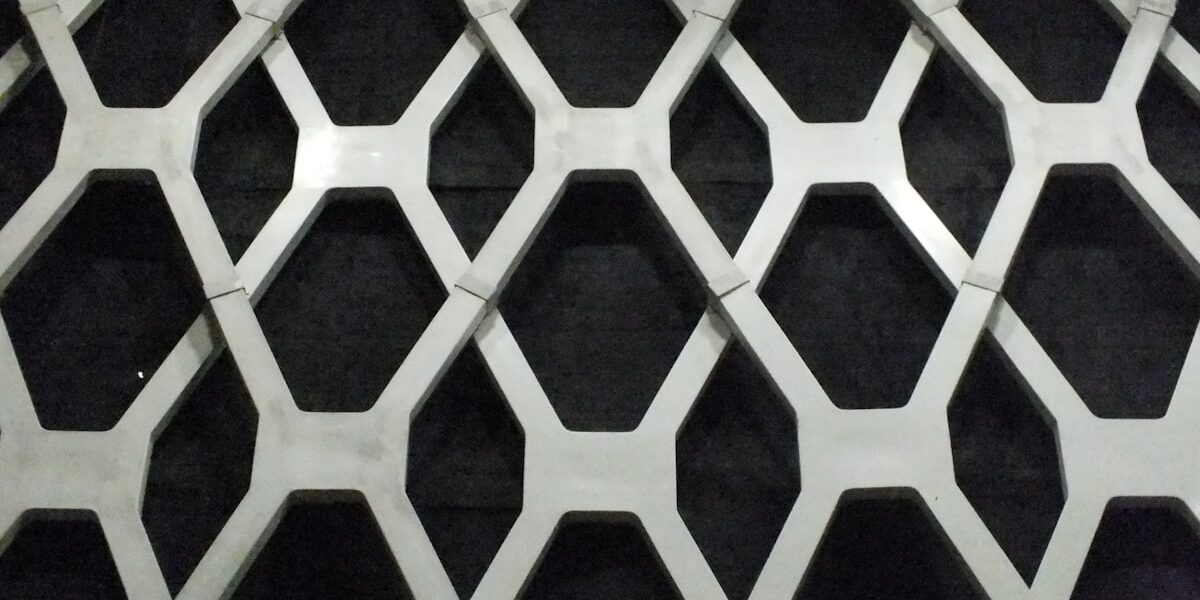
Structural efficiency is the primary constraint in commercial vehicle and marine design, where every kilogram of added structure directly reduces payload and fuel economy. The aluminum honeycomb panel solves this equation by using a hexagonal core to maintain rigidity without the mass of solid materials. At RaxPanel, we rely on these panels to deliver an exceptionally high strength-to-weight ratio that allows them to replace heavy plywood and OSB in demanding structural applications.
We will break down the relationship between cell size, foil thickness, and shear strength, then examine how these metrics compare directly to foam and balsa cores. This analysis will give you the data needed to select the correct density and facing specifications to prevent delamination and failure in your next RV flooring or marine project.

How Honeycomb Geometry Delivers Superior Strength-to-Weight
The hexagonal honeycomb core functions as a dense network of microscopic I-beams, separating the face sheets to maximize the panel’s moment of inertia without adding significant mass, delivering the highest possible stiffness-to-weight ratio in structural engineering.
The Structural Mechanics of the Hexagonal Cell
The exceptional performance of aluminum honeycomb panels begins with the geometric properties of the hexagon. This shape is not arbitrary; it represents the most efficient way to partition a plane into equal areas with the least total perimeter. In structural terms, the 120-degree angles of the hexagonal cells allow axial and shear loads to be distributed uniformly throughout the core. Unlike random foam structures that can collapse unpredictably under point loads, the hexagonal geometry creates predictable, linear stress paths. When a load is applied, the vertical walls of the hexagons primarily absorb compressive stress, while the angled walls handle shear deformation, ensuring that the material is utilized to its full theoretical capacity.
The Sandwich Principle: Shear Resistance and Buckling Prevention
The “sandwich” construction is the fundamental logic behind the panel’s rigidity, operating on the same principles as an I-beam but in two dimensions. The thin aluminum face sheets are analogous to the flanges of an I-beam; they are positioned far apart from the neutral axis to resist bending moments and tensile or compressive stresses. However, without the core, these thin sheets would buckle or wrinkle under minimal load due to their high slenderness ratio.
The honeycomb core acts as the web of the beam. Its primary mechanical role is to stabilize the face sheets, preventing local buckling by providing continuous support. Simultaneously, the core possesses high shear stiffness, resisting the opposing forces that try to slide the top and bottom face sheets past one another. This synergy allows the assembly to achieve rigidity levels comparable to solid thick plates, but at a fraction of the weight, making it a preferred structural substitute for plywood or solid metals where mass is critical.
Critical Geometry Variables: Foil Thickness and Cell Size
The strength-to-weight ratio is not a fixed constant; it is a tunable variable determined by two critical geometric specifications: cell size and foil thickness. Engineers manipulate these parameters to meet specific mechanical requirements without over-engineering the material.
- Cell Size: Smaller cell diameters result in a higher density of vertical walls per square inch, significantly increasing the compressive strength and shear modulus of the core. Smaller cells are typically specified for high-load applications such as flooring or heavy-duty industrial platforms.
- Foil Thickness: Refers to the gauge of the aluminum alloy strip used to expand the honeycomb. Increasing foil thickness directly proportional increases the core’s density and its ability to withstand crushing forces and impact damage.
- Optimization: For maximum efficiency, the goal is to use the thinnest possible foil and largest viable cell size that still meets the minimum shear and compressive safety factors for the intended application.
Exponential Stiffness Amplification
Perhaps the most distinct advantage of honeycomb geometry is the exponential relationship between core thickness and overall panel stiffness. In structural physics, the flexural rigidity of a sandwich panel is proportional to the square of the distance between the face sheets (the core thickness). This means that doubling the thickness of the honeycomb core can quadruple the panel’s stiffness, while the weight increase remains linear (and minimal, since the core is approximately 90% air).
This characteristic allows design engineers to achieve extreme rigidity in applications like aerospace floors or marine decks without suffering the weight penalties associated with solid timber or thick steel plate. By decoupling the bending stiffness (handled by geometry) from the material strength, aluminum honeycomb panels deliver a mechanical performance profile that traditional monolithic materials cannot match.

Key Strength, Density, and Stiffness Numbers
Density as a Structural Tuning Parameter
Core density serves as the primary tuning variable when engineers target a specific load profile for sandwich panel construction. While many manufacturers default to mid-range densities for general-purpose panels, our engineering team works with a broader spectrum — our aluminum honeycomb core density range spans 40–120 kg/m³, with 40 kg/m³ for lightweight interior applications and 120 kg/m³ for heavy-duty structural flooring. This 40–120 kg/m³ range delivers compressive strengths of 20–50 MPa, far exceeding foam core capabilities of 150–350 kPa.
The decision between a lower or higher density core is not arbitrary. Lower-density cores excel in applications where every kilogram counts — think RV interior walls and ceiling panels. Higher-density cores are reserved for flooring, truck beds, and marine decks where point loads from equipment, cargo, and foot traffic are significant. Our engineers evaluate the specific load map of each project before recommending a density target, because choosing the wrong core density is one of the most common causes of field failures in sandwich panel installations.
Core Thickness and Span Performance
Core thickness directly governs the panel’s bending rigidity and allowable span between support points. The available thickness range — from 6 mm for lightweight partition applications up to 100 mm for heavy structural flooring — gives designers significant flexibility. A 6 mm core might work for a cabinet door or a small interior panel, but the same thickness would deflect dangerously under a truck floor loaded with machinery.
In practice, the required core thickness depends on three factors: the span between structural supports, the expected static and dynamic loads, and the face sheet material selected. Our design team typically recommends a minimum core thickness of 20 mm for RV flooring applications with spans up to 600 mm, while marine deck structures often require 40 mm or greater depending on vessel size and wave-loading conditions. Panels with thicker cores also provide improved thermal and acoustic insulation, which is a secondary benefit that project managers frequently factor into their decisions.
Face Sheet Gauge Selection and Structural Role
The aluminum face sheet carries the tensile and compressive stresses in a sandwich panel, while the honeycomb core handles shear and prevents the faces from buckling. Face sheet thickness is therefore a critical structural parameter, not just a surface finish choice. Standard gauge options span from 0.05 mm for non-structural interior cladding up to 0.5 mm for high-impact industrial and marine environments.
Many procurement teams focus exclusively on face sheet thickness when evaluating quotes, but this is an incomplete assessment. A 0.1 mm face sheet bonded to a lower-density core will perform very differently than the same face sheet on a higher-density core. The interaction between face gauge, core density, and core thickness creates a three-dimensional specification space. Our engineers use finite element analysis to model these combinations, ensuring that the selected configuration meets the project’s safety factors without over-engineering and inflating costs unnecessarily.
Shear Strength Across Core Densities
Shear strength determines how effectively load transfers between the two face sheets. In a sandwich panel under bending, one face is in tension and the other in compression — the core must resist the shear forces trying to slide these faces past each other. If the core shear strength is insufficient, the faces will delaminate and the panel will lose its structural capacity abruptly.
Core shear strength scales with density, but not linearly. A core at the lower end of the density range will deliver adequate shear performance for light-duty applications, while structural flooring and marine deck applications require cores engineered for higher shear modulus values. Our standard 5052-H38 aluminum honeycomb cores are manufactured to maintain consistent shear performance across production batches, which is essential for large-format panels used in truck bodies and vessel construction where even minor strength variations can create weak points.
When evaluating suppliers, we recommend requesting shear strength data specifically for the core density you plan to use — not just a generic benchmark value. Different manufacturers may test under different conditions or use different adhesive systems, which can significantly affect the results. All our panels are tested per ASTM C393, and mill test certificates are provided with every shipment to verify that the delivered core meets the specified shear performance for the selected density.
| Property | Specification | Performance Range | Engineering Advantage |
|---|---|---|---|
| Core Material & Density | 5052-H38 Aluminum Alloy Honeycomb | 40 – 120 kg/m³ (Customizable) | Optimizes structural efficiency; achieves 60–70% weight reduction versus steel while maintaining superior load-bearing capacity. |
| Compressive Strength | Perpendicular to Core (Crush Resistance) | 20 – 50 MPa | Exceptional resistance to point-load denting and localized crushing; significantly outperforms standard foam cores in flooring and wall applications. |
| Shear Strength | Core Shear Modulus (Parallel to Facesheets) | ≥ 0.4 MPa (Benchmark) | Ensures robust load transfer between face sheets; prevents skin delamination and vibration-induced fastener loosening under dynamic stress. |
| Flexural Stiffness | Bending Rigidity (Deflection-Limited) | High Modulus (Span-Dependent) | Minimizes bending over long spans; eliminates oil-canning and warping in large-format RV and marine structures. |
| Compliance Standards | Test & Quality Certification | ASTM C393 / ISO 9001 | Provides procurement-ready technical specifications and verified reliability for rigorous industrial and marine projects. |
Aluminum Honeycomb vs. Foam, Balsa, and Polymer Cores
Compressive Strength and Stiffness Comparison
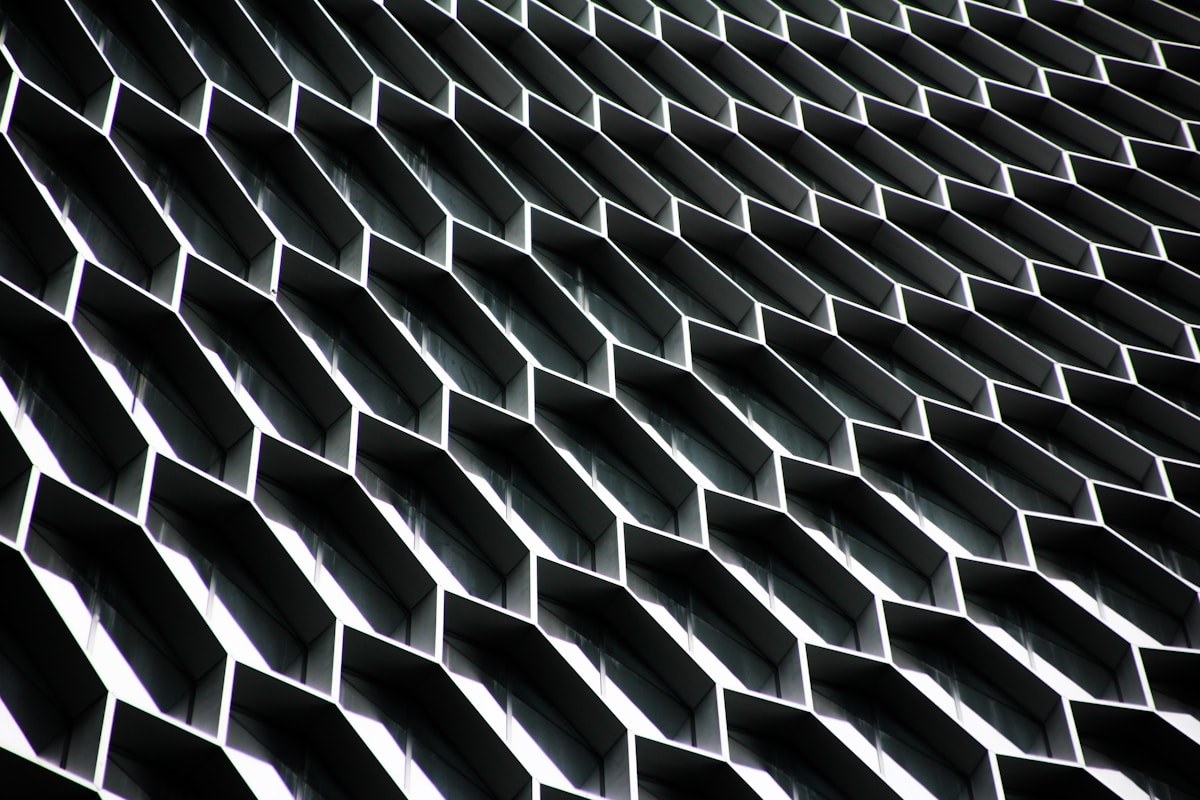
The shear modulus and compressive strength of an aluminum honeycomb core consistently outperform foam, balsa, and polymer alternatives at equivalent densities. Aluminum honeycomb cores typically deliver a shear modulus five to ten times greater than polymer foam cores of equal weight. This structural advantage stems directly from the hexagonal cell geometry, which distributes compressive loads efficiently across thin aluminum foils.
Balsa wood offers competitive compressive strength in the through-thickness direction but introduces natural variability. Grain orientation, moisture content, and manufacturing inconsistencies create unpredictable performance margins. Polymer foams such as PVC, PET, and polyurethane provide isotropic behavior, meaning properties remain uniform across all directions, but their absolute stiffness values remain substantially lower than aluminum honeycomb at matching densities.
For applications requiring high load-bearing capacity under compression and shear, aluminum honeycomb cores represent the superior choice. The strength-to-weight ratio directly translates into thinner, lighter panels without sacrificing structural integrity.
Durability and Lifecycle Performance
Long-term durability varies significantly across core materials. Aluminum honeycomb cores maintain structural stability across extreme temperature cycles without degradation. The metal core does not absorb moisture, does not creep under sustained load, and does not suffer from chemical breakdown over time.
Foam cores present different lifecycle considerations. PVC and PET foams demonstrate good resistance to environmental degradation but can experience plasticizer migration over extended periods. Polyurethane foams are more susceptible to moisture absorption and thermal degradation at elevated temperatures. Balsa cores require thorough sealing and protective coating systems, as moisture infiltration leads to rot, fungal growth, and progressive loss of mechanical properties.
In marine and transportation applications where cyclic loading and environmental exposure are constant, aluminum honeycomb cores deliver the longest service life. Panels with aluminum cores maintain their design performance for decades without the maintenance interventions required by organic core materials.
Fire Resistance and Non-Combustibility
Fire performance is a decisive factor in architectural and transportation applications. Aluminum honeycomb cores are non-combustible and do not contribute fuel to a fire. The aluminum material itself withstands temperatures well beyond the ignition points of organic core alternatives without structural collapse at typical service conditions.
Foam cores, whether PVC, PET, or polyurethane, are organic polymers that combust when exposed to sufficient heat. These materials release heat, smoke, and toxic gases during fire exposure. Fire retardant additives can improve flame resistance but do not eliminate the fundamental combustion risk. Balsa wood is also organic and combustible, though it char slowly and can provide limited fire resistance in thin sections.
For curtain walls, interior architectural panels, and aerospace interiors where fire codes mandate non-combustible materials, aluminum honeycomb cores meet the most stringent requirements without additional treatment. This compliance advantage eliminates the need for flame retardant coatings or fire barrier layers that add cost and weight to alternative constructions.
Moisture and Chemical Resistance Trade-offs
Moisture resistance is a critical differentiator. Aluminum honeycomb cores are inherently impervious to water absorption. The sealed hexagonal cells and metal construction prevent any moisture ingress, making these panels suitable for marine environments, outdoor facades, and high-humidity interiors without protective barrier systems.
Foam cores exhibit varying moisture resistance profiles. PET foam demonstrates excellent moisture resistance with near-zero water absorption, making it suitable for marine applications. PVC foam absorbs minimal moisture but can degrade under prolonged UV exposure if not properly coated. Polyurethane foam absorbs more moisture than PET or PVC, which can compromise adhesive bonds and reduce core strength over time.
Chemical resistance depends on the specific exposure environment. Aluminum cores resist most common solvents, oils, and cleaning agents but can suffer from galvanic corrosion when in direct contact with dissimilar metals in the presence of electrolytes. Foam cores generally resist a broad range of chemicals but can degrade when exposed to strong solvents such as ketones and aromatic hydrocarbons. Balsa cores require complete encapsulation to prevent chemical penetration along the grain structure.
Where Aluminum Honeycomb Panels Fit Best
Marine Vessel Decks and Hull Structures
In the marine industry, aluminum honeycomb panels are engineered to withstand the punishing combination of dynamic and lateral loads encountered at sea. Unlike single-skin plating, the sandwich structure provides exceptional flexural rigidity without the excessive weight that would compromise vessel stability or speed. This makes the material ideal for high-speed catamaran decks and hull superstructures where every kilogram impacts performance. The aluminum core acts as a continuous shear web, effectively distributing point loads and preventing the face sheets from buckling under the hydrostatic pressure of waves.
Engineers must verify the core’s compression strength relative to impact loads. While the panel resists deflection, point impacts from heavy equipment can cause local dimpling if the skin thickness is underspecified for the specific deck application.
Additionally, the closed-cell nature of the aluminum honeycomb prevents water absorption, mitigating the risk of rot or internal corrosion that plagues wood or foam cores in humid marine environments. This dimensional stability ensures that deck structures remain flat and true even after prolonged exposure to saltwater and varying temperatures.
Aerospace Cabin and Structural Components
Weight reduction is the primary driver in aerospace applications, where aluminum honeycomb panels serve as a critical solution for cabin interiors, bulkheads, and flooring. The material offers an incredibly high strength-to-weight ratio, allowing manufacturers to strip mass from the airframe without sacrificing structural integrity or passenger safety. By utilizing these panels for galley structures, lavatory modules, and overhead bins, airlines achieve significant fuel savings over the aircraft’s lifespan.
Beyond simple weight savings, these panels provide excellent vibration damping, a essential characteristic for reducing cabin noise and fatigue on airframe components. The rigidity of the honeycomb core allows for large, flat surface areas that resist deformation during pressurization cycles, maintaining the aesthetic and functional quality of the interior environment.
RV Flooring, Truck Bodies, and Refrigerated Transport
For ground transportation, aluminum honeycomb panels offer a reliable solution for RV sub-flooring and truck body sidewalls that demand high impact resistance and durability. The panels are capable of absorbing significant kinetic energy, making them resistant to the dents and damage typically caused by cargo shifting or road vibration. Unlike wood-based alternatives, these panels do not warp or swell when exposed to moisture, ensuring a consistent floor surface for vehicle interiors.
In refrigerated transport, the panel’s thermal properties are a distinct advantage. The honeycomb structure creates air pockets that impede thermal transfer, while the aluminum facings provide a vapor barrier. This intrinsic thermal insulation helps maintain stable internal temperatures, reducing the workload on reefer units. Additionally, the lightweight nature of the panels increases the payload capacity of the vehicle, as less structural weight is dedicated to the truck body itself.
When specifying for RV floors, ensure the edge treatment is sealed properly. While the core is corrosion-resistant, exposed raw edges can trap moisture if not closed off with edge bands or extrusions during installation.
Architectural Facades and Interior Panels
In modern architecture, aluminum honeycomb panels are frequently selected for curtain walls, canopies, and high-traffic interior cladding due to their flatness and fire safety compliance. The extreme stiffness of the panels allows for vast, seamless spans that do not oil-can or ripple under wind loads, maintaining the building’s aesthetic intent. Project managers often prefer this material because the aluminum core is inherently non-combustible, addressing stringent building codes that restrict the use of foam or polymer cores in high-rise structures.
These panels typically meet rigorous fire safety standards, such as the GB-8624-B1 classification, ensuring they do not contribute to flame spread in the event of a fire. The aluminum surfaces can be finished with durable coatings that resist UV fading and pollution, making them suitable for both external facades and interior applications like clean rooms or elevator cabs where hygiene and durability are paramount.
What Engineers Should Look For
Engineers must evaluate core density, skin configuration, fire compliance, customization flexibility, and verifiable quality certifications before specifying aluminum honeycomb panels for structural or architectural applications.
Core Density and Cell Size Selection for Load Requirements
Selecting the appropriate core density and cell size is one of the most critical decisions in panel specification, directly influencing how the panel responds to compressive and shear forces. Engineers must first define the load profile — whether the application involves static dead loads, dynamic vibration, or lateral pressure — before committing to a core configuration. Higher-density cores naturally deliver greater compressive strength, which is essential in environments where catastrophic buckling under extreme loads is a genuine concern, such as marine hull structures or heavy-duty flooring systems.
Cell size works in tandem with core density to determine the panel’s overall stiffness-to-weight ratio. Smaller cell geometries distribute point loads more evenly across the face sheets, reducing the risk of localized deformation. For structural applications where uniaxial compression and lateral pressure are primary failure modes, engineers should prioritize cores with tighter cell tolerances and validate the selection against the specific load vectors the panel will encounter during its service life.
Skin Material and Thickness for Impact and Corrosion Resistance
The face sheets carry the tensile and compressive stresses that develop when a panel bends under load, making skin material selection and gauge specification fundamental to structural integrity. For impact resistance, thicker aluminum skins provide greater resistance to puncture and denting, which is particularly relevant in transportation and flooring applications where heavy equipment or foot traffic imposes repeated mechanical stress. However, increasing skin thickness also adds weight, so engineers must balance impact performance against the weight-sensitive objectives that make honeycomb panels attractive in the first place.
Corrosion resistance is equally critical, especially in marine and coastal environments where salt exposure accelerates material degradation. The alloy composition of the face sheet directly affects corrosion performance — 5000-series aluminum alloys offer superior saltwater resistance compared to 3000-series alternatives, making them the preferred choice for hull decks and exterior architectural cladding. Engineers should also consider surface treatments and anodizing specifications when evaluating long-term corrosion resilience in aggressive environments.
- Impact-critical applications: Specify higher gauge face sheets with verified impact resistance data from manufacturer test reports.
- Marine and coastal environments: Prioritize 5000-series aluminum alloys and validate corrosion performance against relevant salt-spray exposure standards.
- Architectural facades: Coordinate skin thickness with aesthetic flatness requirements and thermal expansion compatibility with adjacent building materials.
Fire Rating and Compliance Requirements for Building Codes
Fire performance is a non-negotiable specification for architectural and interior applications, and compliance with local building codes must be verified before procurement. Aluminum itself is non-combustible, but the adhesive systems and core materials used in sandwich panel construction can introduce fire risk if not properly specified. Engineers must ensure that the complete panel assembly — including core, adhesives, and any surface coatings — meets the fire rating requirements mandated by the applicable building code jurisdiction.
For interior applications such as partition walls, ceiling panels, and RV flooring, fire ratings typically reference standards that evaluate flame spread, smoke development, and heat release rates. Exterior architectural cladding may require additional compliance with uplift resistance and structural fire endurance testing. Engineers should request full fire test reports from manufacturers and verify that the stated ratings cover the specific panel configuration being specified, not just a generic product family rating.
- Interior architectural panels: Verify flame spread and smoke developed indices against applicable code requirements for the occupancy type.
- Marine vessel interiors: Confirm compliance with maritime fire safety standards for compartmentalization and material flammability.
- Transportation flooring: Validate fire performance under dynamic conditions, as flooring panels face both thermal and mechanical stress simultaneously.
Customization Options Including Panel Dimensions and Edge Treatments
Off-the-shelf panel dimensions rarely align perfectly with project requirements, making customization capability a key differentiator when evaluating suppliers. Engineers should assess whether manufacturers can produce panels to exact dimensional tolerances, particularly for applications involving complex curvature, irregular panel layouts, or tight fit-up requirements in curtain wall and marine deck installations. Dimensional accuracy directly affects installation speed, sealant integrity, and the overall quality of the finished assembly.
Edge treatments are equally important from both a structural and durability perspective. Exposed honeycomb cores are vulnerable to moisture ingress, which can compromise the bond between the core and face sheets over time. Engineers should specify appropriate edge sealing methods — whether through aluminum edge strips, polymer sealants, or encapsulated edge designs — based on the environmental exposure conditions of the application. Proper edge treatment is one of the most effective measures for preventing long-term delamination in humid or marine environments.
Quality Verification: Mill Test Certificates and ASTM Testing Standards
Quality verification through documented testing and certification is essential for ensuring that specified panels meet the performance requirements of the design. Mill test certificates provide traceability for the raw aluminum materials used in face sheets and core, confirming that the alloy composition and temper meet the stated specifications. Engineers should require these certificates as part of the procurement documentation and verify that the certified properties align with the design assumptions used in structural calculations.
ASTM testing standards provide the framework for evaluating panel performance under controlled laboratory conditions. Key test methods include those for flatwise tensile strength, core shear strength, and compressive resistance — all of which directly relate to the panel’s ability to perform under the load conditions it will experience in service. Engineers should request test reports conducted according to recognized ASTM standards and verify that the reported values exceed the design requirements with an appropriate safety factor.
- Mill test certificates: Require for all aluminum materials, verifying alloy designation, temper, and mechanical properties against specification.
- ASTM core shear testing: Request test reports confirming shear strength values for the specified core density and cell geometry.
- Adhesion testing: Verify peel strength and bond durability through ASTM-compliant testing, particularly for marine and exterior applications.
- Factory quality systems: Confirm that manufacturing follows an ISO-certified quality management system to ensure consistent product performance across production batches.
| Evaluation Criteria | Technical Specification | Engineering Impact |
|---|---|---|
| Core Material & Density | 5052-H38 Aluminum Alloy; 40-120 kg/m³ density range | 60-70% weight reduction versus steel; compressive strength of 20–50 MPa exceeding foam cores. |
| Load Bearing Capacity | ASTM C393 Compliance; Custom Stiffness Ratings | Effectively manages static and dynamic loads (payload, vibration) by balancing face sheet tension with core shear resistance to prevent buckling. |
| Skin Configuration | Tailored Skin Gauges; Variable Thickness Profiles | Allows precise tuning of bending stiffness for specific applications, ensuring structural integrity without unnecessary weight penalty in vehicle or marine use. |
| Adhesion & Durability | ISO 9001 Certified Manufacturing; Edge Sealing Protocols | Ensures long-term bond integrity between skins and core; mitigates delamination risks from moisture ingress or thermal cycling in harsh environments. |
| Geometric Precision | Consistent Cell Geometry; Custom Dimensional Tolerances | Facilitates high-quality CNC machining and reduces installation friction; essential for complex architectural curtain walls and RV sub-flooring. |
Heat and Weather Resistance: Key Benchmarks
Aluminum honeycomb panels provide exceptional thermal stability from -50°C to over 150°C, with non-combustible cores that meet strict Class A fire standards, though adhesive selection dictates high-performance aerospace compliance.
Operating Temperature Range and Thermal Limits
The functional temperature range of aluminum honeycomb panels is primarily dictated by the properties of the aluminum alloy and the structural adhesive used in bonding. For the standard 5052-H38 aluminum alloy utilized in high-strength industrial applications, the material retains structural integrity effectively within a range of -50°C to +150°C (-58°F to +302°F). Below -50°C, while the aluminum itself becomes brittle, the greater risk lies in the hardening of the adhesive layers, which can lead to delamination under impact. Conversely, sustained exposure above 150°C risks softening standard thermoset bonding agents. In our experience manufacturing for specialized transport vehicles, we prioritize 5052-H38 because it maintains superior fatigue resistance in these variable temperature environments compared to standard 3003 series alloys.
Thermal Expansion vs. Solid Metals
A critical but often overlooked advantage of the sandwich structure is its dimensional stability relative to solid metal plates. The Coefficient of Thermal Expansion (CTE) for aluminum is approximately 23 × 10⁻⁶/K. While the honeycomb core inherits the in-plane expansion rate of the aluminum foil, the composite panel exhibits significantly reduced thermal bowing and distortion compared to a solid sheet of equivalent stiffness. This is due to the symmetric arrangement of the face sheets; as temperature fluctuates, both skins expand and contract uniformly, keeping the panel flat. In applications like precision aerospace tooling or large-scale curtain walls, this stability is vital. A solid aluminum plate would warp considerably under solar load, whereas the honeycomb structure minimizes this stress, protecting mounted equipment and maintaining structural tolerances.
Moisture Resistance and Corrosion Protection
While aluminum naturally forms a protective oxide layer, the specific vulnerability of honeycomb panels lies in the internal cell structure where moisture ingress can lead to trapped condensation, potentially leading to freeze-thaw damage or internal corrosion of the core over decades. To mitigate this, we employ advanced surface treatments including anodizing or PVDF coating on the face sheets to provide a primary moisture barrier. The most critical defense, however, is the perimeter sealing. Unsealed edges act as wicks, drawing water into the core. At Rax Panel, our rigorous protocols include edge sealing with specialized compounds during production to prevent capillary action. This step is non-negotiable for marine and refrigerated transport applications, where humidity differentials are extreme and constant.
Fire Rating Standards for Aerospace Applications
In aerospace contexts, fire safety is governed by stringent regulations such as FAR 25.853 (Federal Aviation Regulations) which dictates requirements for heat release, smoke density, and toxicity. Aluminum honeycomb cores are inherently non-combustible and classified as Class A according to ASTM E84, meaning they do not contribute fuel to a fire. However, achieving aerospace certification extends beyond the core material; the system relies heavily on the fire-retardant properties of the adhesive and the facing materials. Even with a non-combustible core, a standard adhesive can emit toxic smoke when exposed to extreme heat. Therefore, aerospace-grade panels utilize specialized fire-blocking adhesives that maintain bond integrity while minimizing smoke emission, ensuring the panel passes the stringent “burn-through” tests required for aircraft interior components and partitions.
Conclusion
Stick with aluminum honeycomb for marine decks and aerospace structures where fire safety and stiffness are non-negotiable. Foam cores might handle lighter static loads, but they cannot match the shear strength of a hexagonal structure under dynamic stress. You pay less upfront for polymer options, yet you risk compliance issues on high-traffic flooring or hull repairs. This material dominates when weight reduction directly translates to fuel savings or payload capacity.
Optimizing core density and foil thickness prevents over-engineering, which slashes material costs on large orders. Our engineers can verify specific cell sizes against your load requirements to ensure you meet ASTM standards without buying unnecessary rigidity. Send over your project dimensions and load specs. We will run a free feasibility review to confirm the exact configuration for your application.
Frequently Asked Questions
How do you cut honeycomb panels?
Precision cutting requires CNC routers or carbide-tipped saws to prevent burring and maintain the cell structure’s integrity. Standard cutters can crush the delicate core, so specialized tooling is necessary to ensure clean edges. Proper fabrication techniques prevent delamination and ensure the panel meets strict engineering tolerances.
Why is edge sealing critical?
Edge sealing is essential to prevent moisture ingress, which can corrode the internal core and degrade bond lines over time. Sealing the exposed edges with potting compounds or protective caps ensures long-term durability in humid or marine environments. This process safeguards the structural lifespan of the composite panel.
What surface finishes are available?
Panels can be finished with raw aluminum, anodized coatings, or powder coating to enhance corrosion resistance and aesthetics. These treatments protect the aluminum skins from oxidation while allowing for color customization to match specific design requirements. Rax Panel ensures these finishes maintain the lightweight integrity of the panel.
How are panels typically installed?
Installation typically involves structural adhesives, mechanical fasteners, or a combination of both depending on the load requirements of the application. Using adhesives distributes stress evenly across the panel surface, preserving the sandwich structure’s integrity. Mechanical fasteners require proper inserts or edge reinforcements to prevent core crushing.
Can panels be curved or formed?
While generally rigid, aluminum honeycomb panels can be curved using specialized bending techniques if the core density is appropriately selected. The radius of curvature depends heavily on the thickness of the face sheets and the cell size of the honeycomb core. Custom engineering is required to ensure structural performance is not compromised during the forming process.
Do panels provide sound insulation?
Aluminum honeycomb panels offer effective sound insulation due to the air trapped within the hexagonal cells, which dampens sound waves. The sandwich structure disrupts noise transmission effectively, making it suitable for transportation and industrial applications. This acoustic performance is achieved without significantly adding to the panel’s weight.
Are aluminum honeycomb panels recyclable?
Yes, these panels are highly recyclable as both the aluminum facings and the honeycomb core can be separated and processed. Aluminum is one of the most sustainable materials in construction, retaining its properties indefinitely through recycling. Using Rax Panel’s aluminum solutions contributes to eco-friendly project goals and reduces environmental impact.