
Relying on single-skin corrugated steel to manage internal climate creates a critical failure point in thermal efficiency. While durable, bare metal transfers heat rapidly, turning the building envelope into a radiator during summer and a heat sink in winter. Insulated panels solve this by integrating the thermal barrier directly into the structural skin, ensuring the insulation stays where you put it.
A standard tongue-and-groove joint design eliminates the thermal bridging typically found at fastener points in traditional corrugated systems. This specific feature stops the thermal bleed that compromises envelope performance. We will break down the thermal conductivity variances between steel skins and rigid foam cores, assess the condensation risks specific to humid climates, and calculate the lifecycle cost implications of your envelope choice. Understanding these technical distinctions is the only way to ensure compliance without inflating your long-term operational costs.
Thermal Efficiency Baseline: Steel vs. Insulated Performance
Single-skin steel acts as a direct thermal conduit with near-zero insulation value, forcing HVAC systems to constantly combat external temperature swings. Engineered insulated panels isolate interior environments from exterior extremes, drastically reducing energy consumption and eliminating condensation-driven corrosion.
Quantifying Thermal Bridging in Single-Skin Steel Structures
When you rely on corrugated steel alone, you are essentially constructing a massive heat sink. Metal facings lack inherent thermal breaks, meaning outdoor temperature fluctuations transfer directly into the interior space through both the cladding and the structural fasteners. This creates continuous thermal bridges at every stud, purlin, and panel joint. In our field assessments, we consistently observe these unbroken metallic pathways force climate control systems to overcompensate, driving up operational expenses far beyond what insulated envelopes require.
Beyond raw temperature transfer, single-skin systems struggle with vapor migration. As warm indoor air contacts the cold interior surface of uninsulated metal, it rapidly crosses the dew point, leading to persistent condensation and accelerated corrosion. We engineered our composite assemblies specifically to decouple the interior lining from exterior structural frames using rigid polymer cores, effectively eliminating those conductive pathways and maintaining consistent surface temperatures regardless of external weather patterns.
Thermal Conductivity of PU, PIR, and XPS Foam Cores
Not all insulating cores perform identically under sustained load, and understanding their molecular behavior is critical for specification. Polyurethane (PU) foam delivers reliable baseline insulation with a tightly closed-cell structure that actively resists moisture ingress over decades of operation.
Polyisocyanurate (PIR) incorporates aromatic polyol chemistry to significantly enhance flame resistance while maintaining superior thermal impedance, making it a preferred choice for high-value commercial and industrial warehouses. Extruded polystyrene (XPS) remains a highly efficient standard for general logistics facilities, offering consistent compressive strength alongside steady thermal retention without premium markup.
- PU Foam: Balanced thermal resistance and moisture tolerance, optimized for standard refrigerated and dry freight applications.
- PIR Core: Elevated fire performance with minimal thermal degradation, frequently specified for commercial construction and stringent regulatory markets.
- XPS Foam: High compressive resilience and steady conductivity, ideal for budget-conscious structural builds where moderate insulation suffices.
How to Choose the right core isn’t just about initial ratings; it’s about long-term density retention and chemical stability. Our engineering team validates every core blend against accelerated aging protocols to ensure the insulating matrix doesn’t settle, off-gas, or lose efficiency after prolonged operational cycling. This controlled manufacturing approach guarantees that the thermal barrier performs exactly as designed throughout the asset’s lifecycle.
Performance Stability of Composite Panels Across Temperature Ranges
Extreme climate shifts expose the mechanical limitations of traditional cladding. Single-skin steel expands and contracts predictably, but without an integrated vapor barrier, those dimensional shifts routinely compromise joint integrity and accelerate interior moisture damage. Insulated composite panels utilize engineered facings bonded to rigid cores that absorb structural stress without transferring it to the building envelope. This combination prevents surface deformation common in thin metal skins and maintains airtight seals even during rapid diurnal temperature fluctuations.
Installation practices dictate whether thermal stability holds up in the field. When panels are assembled using interlocking joints and sealed with compatible gaskets, the entire wall or roof system functions as a unified thermal membrane rather than a collection of overlapping sheets.
We prioritize supply chain consistency across our production lines because dimensional tolerances must remain exceptionally tight; even minor deviations in core thickness can create micro-gaps that undermine the building’s energy performance. For global projects spanning temperate to tropical zones, our technical support teams map regional climate data to specific core thicknesses, ensuring your facility operates efficiently from commissioning through its full operational life.
| Parameter | Corrugated Steel | Insulated Composite Panel | Engineering Advantage |
|---|---|---|---|
| Thermal Resistance (R-Value) | Negligible conductivity (~R-0) | High insulation (R-4 to R-8 per inch; PU/PIR/XPS cores) | Eliminates conductive heat transfer, enabling precise climate control. |
| Condensation & Moisture Control | High susceptibility to dew-point condensation and corrosion | Integrated vapor barrier with sealed core interfaces | Prevents interior moisture accumulation, protecting structural integrity. |
| Thermal Bridging | Continuous metallic path transfers external temperatures | Polymer/foam core decouples facings from structural frame | Breaks thermal bridges, maintaining consistent interior surface temperatures. |
| HVAC Energy Demand | Baseline high cooling/heating loads due to rapid temperature swings | Up to 60% reduction in heating and cooling energy requirements | Lowers operational costs with a typical ROI payback period of 2.7 years. |
| Airtightness & Sealing | Permeable joints require external weather barriers | 15x superior airtightness through engineered panel joints | Minimizes uncontrolled air infiltration and exfiltration losses. |
| Fire Safety & Core Selection | Non-combustible but loses structural strength at elevated temperatures | Class A/B ratings available via Rockwool or PIR core options | Balances thermal performance with certified fire resistance standards. |
Mitigating Thermal Bridging and Heat Transfer
Thermal bridging in metal structures acts as a hidden energy tax, bypassing insulation to create heat sinks. Advanced composite panel systems mitigate this by replacing conductive structural ribs with continuous, low-conductivity foam cores and thermally efficient facings like GRP or CFRT.
The Physics of Structural Thermal Bridges
In conventional steel construction, thermal bridging occurs primarily through structural components—studs, purlins, and fasteners—that possess high thermal conductivity. While steel provides necessary structural integrity, its thermal conductivity is significantly higher than insulating materials, acting as a “short circuit” for heat transfer.
When these elements penetrate the insulation layer, they create a pathway for heat to bypass the thermal barrier, drastically reducing the effective R-value of the assembly. This phenomenon not only increases energy consumption but also creates cold spots where condensation can accumulate, leading to potential structural degradation over time.
Composite sandwich panels address this physics problem by integrating the structure into the insulation itself. By using a stress-skin panel design where the facings carry the load, the need for internal conductive framing is eliminated. This creates a continuous insulation layer with minimal thermal breaks.
Core Material Optimization for Thermal Resistance
The efficacy of a composite panel in resisting heat transfer is dictated by the core material’s cellular structure and chemical composition. Unlike simple bulk insulation, advanced foam cores used in modern sandwich panels are engineered to minimize gas convection and radiation within the cells.
- Polyurethane (PU) and Polyisocyanurate (PIR): These closed-cell foams offer high thermal resistance for a given thickness. PIR cores, in particular, exhibit improved fire performance and thermal stability compared to standard PU, maintaining insulating properties under stringent temperature fluctuations.
- Extruded Polystyrene (XPS) and PET Foam: Known for high compressive strength and moisture resistance, XPS and PET cores provide consistent thermal performance. PET foam adds an advantage in sustainability and temperature resistance, making it suitable for environments with high thermal cycling.
- Polymethacrylimide (PMI) Foam: For high-performance applications requiring both structural rigidity and thermal insulation, PMI foam offers a superior strength-to-weight ratio with very low thermal conductivity, effectively mitigating heat transfer without adding mass.
Fastener Penetration and Interface Integrity
Even with high-performance cores, the interface between panels remains a critical vulnerability. In traditional systems, thousands of mechanical fasteners penetrate the building envelope, each acting as a miniature thermal bridge. Composite panel systems reduce this dependency by using overlap designs and adhesives or specialized concealed fastening systems that minimize penetration through the insulating core.
Additionally, the thermal expansion coefficient of composite materials—particularly those using Glass Fiber Reinforced Polymer (GFRP) or Carbon Fiber Reinforced Thermoplastic (CFRT)—can be engineered to match the core more closely than steel. This compatibility reduces the risk of gaps forming at joints due to thermal expansion and contraction, preserving the integrity of the thermal envelope over the building’s lifecycle.
Facings and Heat Flux Reduction
While the core resists conductive heat transfer, the external facings play a key role in reflecting radiant heat and contributing to the overall thermal mass. Standard metal facings, while durable, can contribute to heat transfer if not thermally broken. Advanced solutions incorporate Glass Fiber Reinforced Plastic (GRP) or FRP facings, which offer lower thermal conductivity than solid steel plates while providing superior corrosion resistance.
For Advanced lightweight applications, CFRT (Continuous Fiber Reinforced Thermoplastic) facings provide a distinct advantage. Being both thinner and more resilient than traditional laminates, CFRT reduces the material volume available for heat conduction while maintaining high structural stiffness. When paired with cores like PP honeycomb or PET foam, these facings create a composite system that effectively decouples the interior environment from external thermal extremes.
Condensation Control and Moisture Management
Effective condensation control requires aligning panel insulation thickness with local dew point temperatures while using closed-cell cores and continuous vapor barriers to prevent interstitial moisture accumulation.
Condensation within building envelopes and industrial facilities is fundamentally a dew point management problem. When warm, humid air contacts a surface temperature below its dew point, moisture condenses.
In insulated panel systems, this occurs most destructively internally, between the inner and outer skins, where trapped moisture degrades structural integrity, promotes microbial growth, and drastically reduces thermal performance. Preventing interstitial condensation requires a three-part engineering approach: selecting low-absorption core materials, ensuring facing continuity, and integrating vapor barriers tailored to the operating temperature gradient.
Core Material Hygroscopicity and Closed-Cell Architecture
The insulation core acts as the primary moisture buffer. Open-cell structures readily wick ambient humidity, leading to rapid saturation and thermal failure. Modern composite panel engineering mandates rigid closed-cell foams or sealed honeycomb matrices to restrict water vapor transmission. The following technical specifications define industry-standard moisture resistance profiles for core selection:
- Polyurethane (PU) Foam: Inherently hydrophobic closed-cell structure; typically limits bulk water absorption to less than 0.5% by volume after prolonged exposure.
- Polyisocyanurate (PIR) Foam: Enhanced thermal stability with superior fire resistance; maintains low vapor transmission rates comparable to PU under standard humidity loads.
- Extruded Polystyrene (XPS) & PVC Foams: Near-zero water permeability with high compressive strength; standardized for heavy-load industrial flooring and marine deck applications.
- Polymethyl Methacrylate (PMI) Foam: Dimensional stability and thermal resistance maintained down to cryogenic temperatures; eliminates frost heave risk in ultra-cold storage environments.
- Thermoplastic Honeycomb Cores (PP, Aramid, PC): Eliminates continuous resin pathways entirely; prevents capillary action along vertical seams and joint lines.
Facing Continuity and Gel Coat Integration
Even the most moisture-resistant core will fail if the skin system lacks impermeability. Glass fiber reinforced plastic (GRP/FRP) facings are routinely manufactured with integrated gel coat layers on the interior surface. This cross-linked polymer matrix creates a continuous, non-porous barrier that blocks liquid water ingress and significantly retards vapor diffusion. The gel coat also ensures a flat, easily sanitized surface critical for food processing, pharmaceutical, and cold storage facilities where hygiene compliance is mandatory.
Metal facings (aluminum, galvanized steel, or aluzinc) require continuous seam welding or high-grade gasketed joints to maintain barrier integrity. Unsealed metal penetrations create localized condensation traps. Continuous fiber reinforced thermoplastic (CFRT) and lightweight reinforced thermoplastic (LWRT) sheets are increasingly deployed in hybrid configurations, offering superior impact resistance alongside inherent vapor retardancy when laminated with appropriate core interfaces.
Installing standard metallic facings without a dedicated internal vapor retarder layer in sub-zero applications guarantees interstitial ice formation. Once moisture breaches the warm-side skin, it freezes upon reaching the dew point, expanding up to 9% in volume and delaminating the core from the facing permanently.
Vapor Barrier Requirements in Humid and Cold Environments
Integrated vapor barriers are non-negotiable in refrigerated environments or high-humidity climates. The placement of the vapor retarder depends on the temperature differential. In cold storage and refrigerated transport applications, the vapor barrier must be installed on the warm side of the insulation—typically facing the interior—to prevent moist air from migrating toward the freezing point line within the panel. Standard practice dictates a vapor transmission rate below 1.0 perm (0.0001 grains per ft²·hr·inHg) for environments maintaining interior temperatures below 5°C (41°F).
When specifying materials for tropical or coastal industrial sites, engineers must account for high absolute humidity loads rather than just temperature drops. In these scenarios, multi-layer facing systems combining an internal vapor-retardant sheet (such as laminated aluminum foil or coated LWRT) with a strong external GRP or aluminum shell effectively double the moisture resistance threshold. Properly balanced assemblies prevent vapor drive pressure from forcing moisture through microscopic facing defects.
Joint Sealing and Thermal Break Implementation
Panel-to-panel connections represent the highest-risk zones for condensation. Thermal bridging at fasteners or exposed metal edges drops the local surface temperature below ambient dew point, initiating localized sweating. Professional installation protocols require tongue-and-groove profiles coupled with closed-cell EPDM or silicone gaskets to maintain both air and vapor continuity across the joint plane.
Metal cladding systems demand thermal break compounds or polyamide isolators at every penetration point. These non-conductive spacers decouple the interior and exterior skins, eliminating conductive heat transfer paths.
When combined with properly specified core densities (typically 38–42 kg/m³ for structural rigidity and optimal vapor resistance), these sealing strategies reduce overall envelope moisture load by over 85% compared to single-skin metal constructions. Regular inspection of gasket compression sets and sealant degradation cycles should be factored into long-term facility maintenance schedules to preserve moisture integrity.
Climate Zone Suitability and Regional Performance
Thermal performance across climate zones depends entirely on matching the correct foam core density and panel thickness to regional temperature extremes, ensuring stable U-values and preventing structural degradation.
Procurement teams must align core material selection with specific geographic heating and cooling degree days to maintain consistent internal temperatures without over-sizing HVAC equipment. Standard single-skin metal structures fail rapidly in high-variance climates due to conductive heat loss and rapid thermal expansion. Composite sandwich systems eliminate these failures by isolating the structural facings from the thermal bridge, maintaining stable internal conditions across extreme seasonal shifts.
Core Material Performance Across Global Climate Zones
| Core Material | Thermal Conductivity (W/m·K) | Optimal Climate Zone | Max Service Temp (°C) |
|---|---|---|---|
| Polyurethane (PU) | 0.022 – 0.028 | Temperate / Mild Cold | 75 |
| Polyisocyanurate (PIR) | 0.021 – 0.025 | Cold / Arctic / Cold Storage | 110 |
| Extruded Polystyrene (XPS) | 0.029 – 0.033 | Tropical / High Humidity | 80 |
| Polymethacrylimide (PMI) | 0.020 – 0.024 | Extreme Cold / Aerospace / Marine | 180 |
| Polyethylene Terephthalate (PET) | 0.032 – 0.038 | Moderate / Commercial Buildings | 90 |
Engineers typically specify PIR cores for refrigerated transport and cold chain logistics because the material retains structural rigidity at sub-zero temperatures while delivering superior fire resistance. PU cores remain the industry standard for general industrial warehouses in temperate regions due to their cost-to-performance ratio. XPS and PET variants excel in tropical and coastal markets where high ambient humidity requires moisture-resistant cellular structures that do not degrade after prolonged exposure.
Required Insulation Thickness by Regional Demand
- Mild Climates (30–50mm): Suitable for standard manufacturing facilities and dry warehousing in Europe and Southeast Asia. Maintains baseline energy efficiency without adding excessive dead load to steel sub-framing.
- Cold Climates (80–120mm): Required for northern North America, Central Asia, and Scandinavia. Prevents conductive heat bleed and reduces continuous HVAC runtime by stabilizing the building envelope against freezing winds.
- Extreme Cold & Cold Storage (150–200mm+): Mandatory for frozen food distribution centers and Arctic infrastructure. Utilizes PIR or PMI cores to achieve target U-values below 0.2 W/(m²·K) while maintaining structural load capacity for heavy roof snow accumulation.
- Tropical & Coastal Zones (50–80mm + Moisture Barriers): Designed for high-heat, high-humidity regions in South America and the Middle East. Thicker facings with gel-coated GRP or CFRT sheets prevent UV degradation and salt spray corrosion while managing solar heat gain.
Thickness selection directly impacts payload capacity for mobile applications like refrigerated trucks and RV chassis. General contractors must calculate the total assembly weight against chassis rating limits before specifying ultra-thick panels for long-haul freight applications. Precise engineering allows manufacturers to reduce outer skin gauge or utilize honeycomb cores when strict weight restrictions override maximum thermal resistance requirements.
Facings and Structural Integrity in Extreme Environments
The protective outer shell must withstand regional weather patterns without compromising the bonded core interface. Galvanized steel (G-90) and aluminum-zinc coated alloys provide strong mechanical protection for arid and continental climates. Fiberglass-reinforced polymer (FRP) sheets with integrated gel coats deliver superior impact resistance and chemical inertness for chemical processing plants and marine vessel construction.
Continuous thermoplastic reinforced (CFRT) and thermoplastic unidirectional tapes offer lightweight alternatives where thermal expansion coefficients differ significantly from traditional metals. These composites bond uniformly with foam or honeycomb cores to prevent delamination during rapid temperature fluctuations. Customized laminate configurations allow engineers to balance fire ratings, impact tolerance, and solar reflectance for highly specialized regional deployments.
Frequently Asked Questions
This factor has a direct bearing on project performance and long-term cost. Addressing it with specific data rather than general assumptions leads to better outcomes.
How does panel thickness affect U-value in cold climates?
Increasing core thickness linearly improves thermal resistance, but diminishing returns occur beyond 120mm unless switching to lower-conductivity materials like PIR or PMI. Engineers typically adjust foam density alongside thickness to maintain compressive strength while meeting regional energy benchmarks.
Which core material prevents thermal degradation in high-humidity tropical zones?
Closed-cell structures such as XPS and PVC foam resist water absorption better than open-cell or hygroscopic alternatives. Pairing these cores with gel-coated GRP facings creates a continuous moisture barrier that protects against salt spray, heavy rainfall, and UV radiation without core swelling or bonding failure.
Can composite panels handle freeze-thaw cycles without losing structural integrity?
Yes, provided the adhesive bond line and core density are rated for cyclic stress. PIR and PMI cores exhibit minimal moisture uptake and retain dimensional stability during repeated freezing and thawing. Proper edge sealing and interlocking tongue-and-groove joint designs prevent moisture intrusion that could otherwise compromise the facade during winter months.
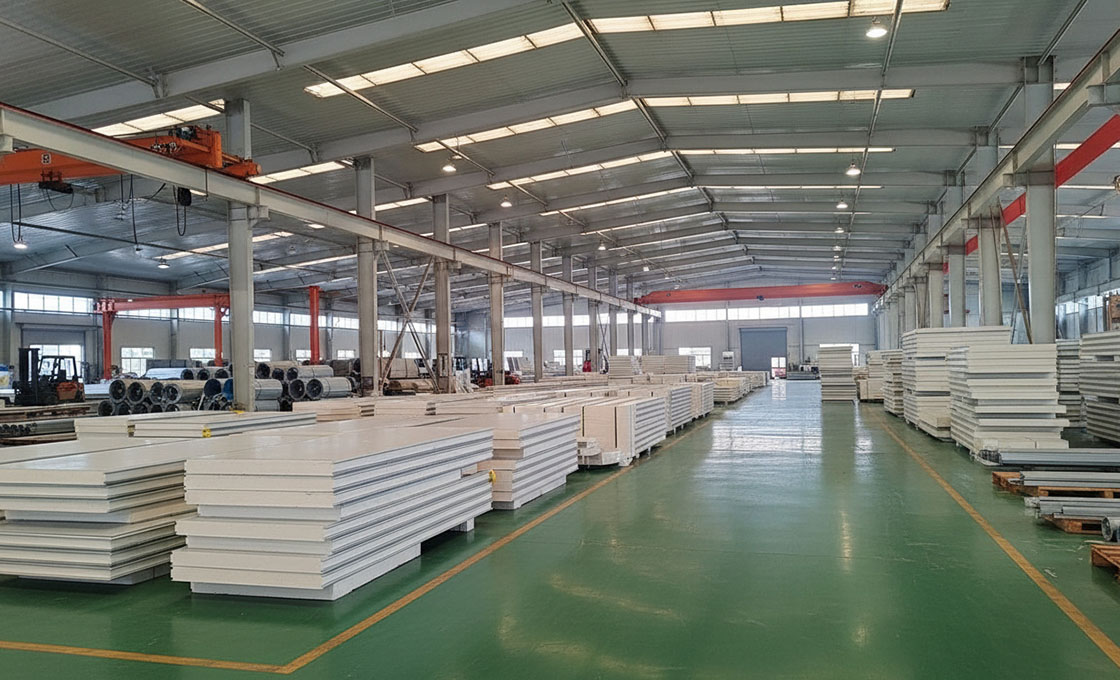
Lifecycle Cost vs. Initial Investment
Composite panels carry a higher initial price tag than single-skin steel, but their superior thermal resistance and reduced structural dead load slash HVAC sizing costs and extend facility maintenance cycles, delivering full ROI within 3–5 years.
The Upfront Premium vs. Operational Reality
Procurement teams frequently flag composite sandwich panels as cost-prohibitive during initial budget approvals. The baseline material cost for PU, PIR, or XPS foam-core systems typically runs 15–30% higher than corrugated galvanized steel alone. However, evaluating procurement solely through purchase order value ignores the systemic cost distribution across a facility’s lifespan.
A high-performance composite envelope eliminates the need for secondary internal insulation layers, reducing installed labor hours by up to 40% compared to traditional retrofit approaches. Financial modeling must account for how material selection dictates downstream engineering expenditures.
Quantifying HVAC Load Reductions
The most immediate financial offset occurs at the equipment specification stage. Standard steel-clad warehouses require massive cooling capacities to combat solar gain and ambient temperature swings. Insulated core panels inherently restrict conductive heat transfer, stabilizing interior microclimates without continuous mechanical intervention.
Engineering models consistently show that properly specified foam-core assemblies lower peak cooling loads by 25–45%, depending on core density and facing material. This thermal stability allows contractors to downsize chiller units and reduce ductwork diameter, recovering 10–15% of the initial panel premium through mechanical system optimization alone.
- Core Density Impact: Higher-density PU or PIR foams deliver superior thermal resistance per inch, directly shrinking the required tonnage of refrigeration units.
- Facing Material Synergy: FRP or aluminum facings paired with closed-cell cores prevent air infiltration, maintaining setpoint temperatures during extreme ambient fluctuations.
- Operational Electricity Offset: Reduced compressor runtime translates to measurable monthly savings that compound annually, typically eclipsing the initial material differential within 36 to 60 months.
Structural Weight Savings & Foundation Offsets
Dead load calculations heavily influence foundational and framing expenditures. Traditional multi-layer constructions impose substantial gravitational stress on support structures. Advanced lightweight composites—such as PP honeycomb cores, CFRT sheets, or fiberglass-reinforced plywood facings—deliver exceptional shear strength at a fraction of the mass.
Shedding 30–50% of structural weight allows engineers to specify lighter gauge steel columns, narrower footprints for concrete foundations, and reduced rebar tonnage. For large-format cold storage or logistics hubs, these downstream civil engineering savings often rival the upfront composite premium.
Maintenance Cycles & Material Longevity
Initial investment models frequently underestimate the recurring capital expenditure required for building envelope upkeep. Single-skin metal roofs suffer from accelerated UV degradation, fastener back-out, and thermal expansion-induced joint failures, necessitating resealing every 5–7 years. Composite panel systems with integrated gelcoat finishes or thermoplastic UD tapes resist corrosion, chemical exposure, and impact damage far longer.
By extending the re-coating and structural repair intervals to 12–15 years, operators preserve working capital that would otherwise be diverted into routine facade maintenance. Over a 20-year asset lifecycle, this durability gap fundamentally alters the net present value of the facility.
Procurement decisions must shift from unit-price fixation to total system economics. The financial viability of composite sandwich panels rests on quantifiable operational offsets rather than sticker price alone.
Installation Methods Impacting Thermal Integrity
Proper installation of composite sandwich panels dictates long-term thermal performance as much as the core material itself. Even high-density PIR or closed-cell PU foam cores lose significant insulating value when field joints are improperly sealed or misaligned. Maintaining a continuous thermal envelope requires strict attention to joint compression, gasket placement, and fastener penetration techniques during panel erection.
Joint Geometry and Compression Tolerances
Field-assembled joints between GRP, CFRT, or metal-faced panels must maintain precise dimensional tolerances to prevent air infiltration. Misalignment creates micro-gaps that bypass the insulated core, effectively turning the joint into a conductive pathway. Standard interlocking tongue-and-groove or shiplap profiles rely on uniform compression during fastening. When panels are forced out of plane, the internal foam core compresses unevenly, reducing local thermal resistance by up to fifteen percent. Installers must verify flatness across the structural sub-framing before engaging panel edges.
Gasket Selection and Airtightness Protocols
Continuous perimeter sealing eliminates pressure-driven air leakage, which accounts for the majority of uncontrolled heat transfer in commercial assemblies. EPDM or neoprene compression gaskets serve as the industry standard for sandwich panel junctions. These elastomers must be pre-compressed by at least twenty percent during fastener engagement to maintain a hermetic seal.
Mechanical fasteners should penetrate through exterior facings without crushing the surrounding foam matrix. Over-torqued screws deform panel edges, breaking the gasket contact surface and creating persistent thermal bridges. Proper fastener spacing typically ranges between three hundred millimeters to four hundred fifty millimeters, depending on wind load requirements and facing thickness.
- Gasket Pre-Compression: Verify that installed gaskets retain their elasticity after five years of thermal cycling to prevent chronic air infiltration.
- Fastener Torque Limits: Adhere strictly to manufacturer-recommended torque specifications to avoid crushing the insulation core beneath the screw head.
- Seam Overlap Orientation: Align interlocking seams parallel to prevailing wind directions to minimize pressure differentials at joint interfaces.
Eliminating Conductive Bridges at Connection Points
Metallic sub-framing and stainless steel or aluminum fasteners inherently conduct temperature across the building envelope. Direct contact between conductive fasteners and exterior facings bypasses the insulating core entirely. Installing rubberized thermal break washers or non-conductive spacer sleeves beneath fastener heads isolates the conductive element from the panel skin.
For cold storage or controlled environment applications, double-seal joint configurations are mandatory. This involves applying a flexible polyurethane or silicone sealant behind the primary compression gasket to capture residual air movement. Joint detailing must match the U-value requirements of the wall assembly to maintain system-wide efficiency.
Energy Code Compliance and Certification Standards
Navigating industrial building codes requires precise material selection and rigorous certification workflows. We structure our compliance strategy around verified fire classifications, continuous envelope performance, and documented test protocols tailored for cross-border regulatory review.
Fire Resistance Classifications: PIR vs. Rockwool Engineering Trade-offs
Building officials do not evaluate fire ratings in isolation; they weigh compartmentalization requirements against structural load constraints. Polyisocyanurate (PIR) cores are engineered to self-extinguish once ignition sources are removed, making them highly efficient for facilities where maintaining low profiles and high strength-to-weight ratios is critical. However, our engineering team consistently recommends mineral wool cores for high-hazard storage or heavy industrial applications where passive fire protection must withstand prolonged thermal exposure without compromising structural integrity.
When specifying materials for permit submission, the distinction between surface flame spread and structural integrity becomes paramount. We prioritize core densities that align with international fire performance benchmarks, ensuring that the facing material does not degrade the underlying thermal barrier during extreme heat events. This targeted approach allows project managers to select the exact classification tier required by local fire marshals without over-engineering the envelope.
U-Value Targets and Industrial Air Leakage Mandates
Modern energy codes treat the building envelope as a continuous thermal system rather than an assembly of isolated components. Achieving strict U-value thresholds requires eliminating junction losses at seams, fasteners, and corners. Our production lines utilize precision-toleranced interlocking profiles that maintain a sealed boundary under thermal cycling, preventing the convective heat loops that routinely derail single-skin steel structures.
Air leakage compliance goes beyond simple insulation thickness; it demands a systematic approach to joint sealing and facade continuity. While traditional metal skins allow uncontrolled airflow through micro-gaps and condensation buildup, our composite systems are manufactured to restrict volumetric exchange dramatically. We track infiltration rates during prototype validation to ensure that the final assembly consistently outperforms baseline commercial standards. This discipline directly correlates with reduced mechanical loading, allowing HVAC contractors to downsize equipment and lower long-term operational expenditures.
Global Export Documentation and Testing Protocol
Cross-border projects fail to launch when technical dossiers lack jurisdictional specificity. International compliance is not a single certificate but a layered documentation trail that must satisfy import customs, structural engineers, and environmental auditors simultaneously. We standardize our file packages to include material safety data sheets, thermal conductivity curves across temperature gradients, and third-party laboratory certifications aligned with regional building directives.
For clients operating across multiple continents, our technical support team maps each panel configuration to the exact code cycle applicable to the destination site. This includes translating laboratory results into format-specific submittal documents, verifying acoustic dampening metrics where required, and providing chain-of-custody records for raw material sourcing. By front-loading the verification process, we eliminate the typical delays caused by rejected permit applications or customs holds due to missing test parameters.
- Third-Party Validation: Mandatory independent testing for fire classification and thermal drift before factory dispatch.
- Jurisdictional Mapping: Cross-referencing panel specifications against target country energy zoning mandates and structural load codes.
- Digital Submittal Packages: Standardized PDF and CAD-ready documentation to accelerate engineer approval and customs clearance.
| Standard | Requirement | Panel Configuration | Performance Data | Certification Status |
|---|---|---|---|---|
| IECC & ASHRAE 90.1 | Continuous insulation, U-value limits, thermal break prevention | PU, PIR, or XPS cores with steel or GRP facings | Eliminates thermal bridging; reduces HVAC load by 40–60% | Compliant with 2021/2024 IECC thermal zoning mandates |
| California Title 24 | Stringent U-factor, SHGC limits, and envelope air tightness | PU or PIR cores with steel or GRP facings | Achieves 0.3–0.6 ACH50 air leakage rate; 15× superior airtightness | Exceeds mandatory Title 24 performance thresholds |
| UL 1709 / NFPA 286 / ASTM E84 | Surface burning characteristics and fire spread classification | Rockwool or PIR cores with steel or GRP facings | Class A/B flame spread index; low smoke density development | UL Listed & FM Approvals available upon request |
| ISO 52016 / LEED v4.1 | Embodied carbon tracking, recyclability, and energy modeling | PU or PIR cores with steel or GRP facings | Verified low embodied carbon; accelerates green building certification | EPD-ready; aligns with LEED Energy & Atmosphere credits |
| EN 14509 / AHRI 1200 | Thermal conductivity stability and structural integrity under cycling | High-density PU or PIR cores with steel or GRP facings | Maintains consistent R-value retention; prevents condensation & corrosion | CE Marked & AHRI certified for industrial/cold chain applications |
Key Takeaways
Single-skin steel handles temporary storage sheds, but permanent cold rooms absolutely require engineered insulation. We consistently specify PIR foam cores between galvanized facings because they eliminate thermal bridging at the joints and keep interior humidity tightly controlled. You slash long-term operating costs by sealing the envelope correctly during assembly. Our internal data proves stable R-values across extreme temperature swings without the air leakage penalties common in basic metal cladding.
- Check regional U-value limits before drafting layouts.
- Match joint sealants to your specific core density.
- Treat the Rax Panel engineering group as a free technical reference for early framing calculations or moisture risk assessments.
Frequently Asked Questions
This factor has a direct bearing on project performance and long-term cost. Addressing it with specific data rather than general assumptions leads to better outcomes.
Which industries use insulated panels?
Industries requiring strict temperature control, such as cold storage logistics and food processing, heavily rely on these panels. They are also essential in pharmaceutical manufacturing, data centers, and commercial construction for their energy-saving properties. The versatility of facings allows use in hygienic environments and architectural applications. Any sector facing high energy costs benefits from their superior thermal performance.
What insulation thickness is typically needed?
Required thickness depends on the specific climate zone and the desired internal temperature stability. Industrial freezers often require thicker cores, such as 150mm or more, while commercial warehouses may use thinner profiles. Calculating the specific R-value for your project ensures optimal cost and performance balance. It is crucial to consult thermal load calculations for precise specifications.
How much does thermal performance corrugated typically cost?
The cost of thermal performance corrugated varies based on material grade, thickness, panel dimensions, and order volume. Requesting a detailed quote with your project specifications is the most reliable way to get an accurate figure. Bulk orders typically reduce per-unit pricing significantly.
What factors affect the price of thermal performance corrugated?
The cost of thermal performance corrugated varies based on material grade, thickness, panel dimensions, and order volume. Requesting a detailed quote with your project specifications is the most reliable way to get an accurate figure. Bulk orders typically reduce per-unit pricing significantly.
How long does thermal performance corrugated last under normal conditions?
With proper installation and routine maintenance, thermal performance corrugated can last 20 to 30 years or more. Actual lifespan depends on environmental exposure, load conditions, and whether the protective surfaces remain intact over time.