
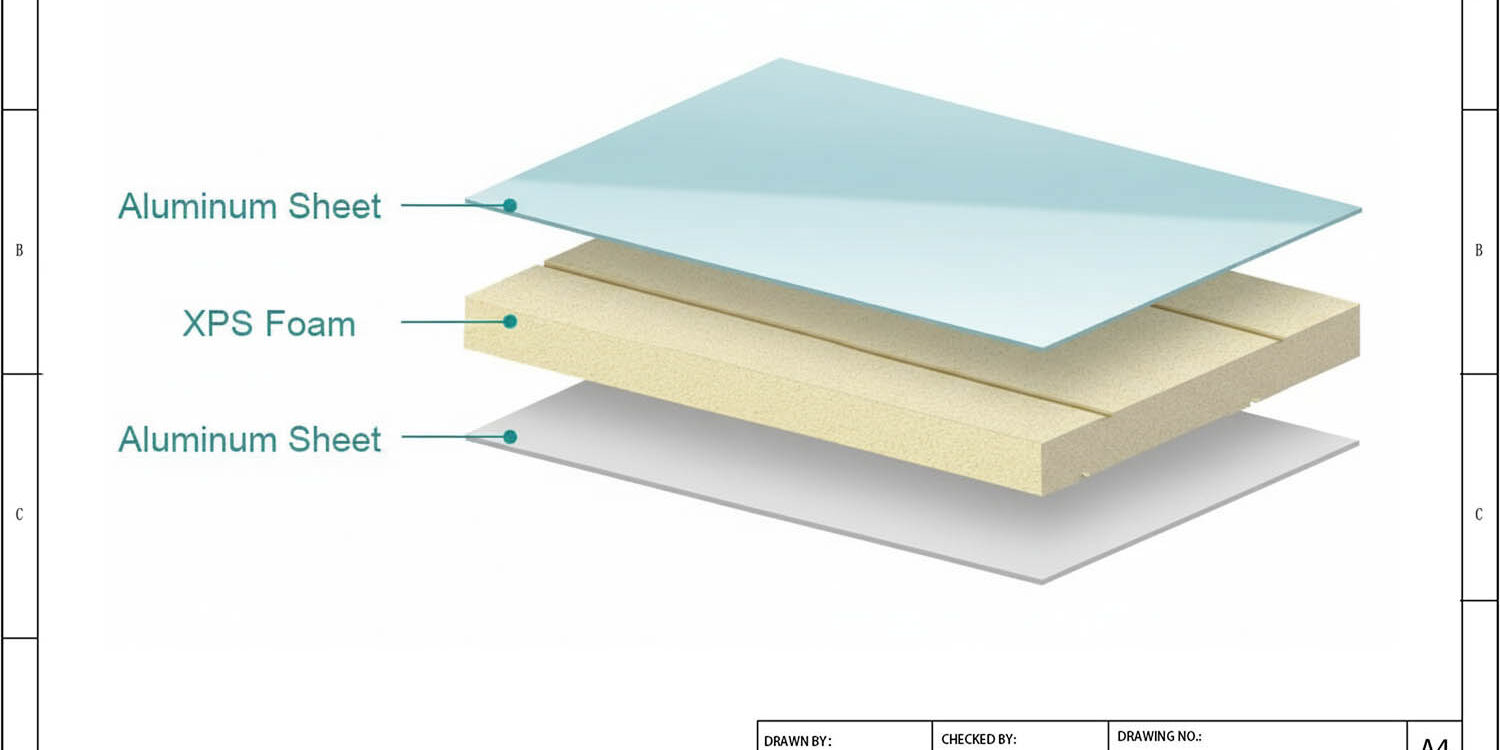
Most factory managers blame the foam when a panel fails a flexural strength test. They are usually wrong. The real culprit is almost always poor process control on the line. Producing a high strength PU sandwich panel requires far more than just pouring chemicals between two facing sheets.
Standard formulation parameters dictate an exact mix of roughly 66% isocyanate and 26% polyol to hit optimal structural density. But the formula is only the baseline. You must control the temperature across four distinct zones—raw materials, surface layer, track, and drying plate. If those temperatures drift during a shift, the foam cell structure weakens and delamination issues follow.
This guide breaks down the exact manufacturing variables that dictate panel integrity. We will compare a continuous vs discontinuous production line so you can evaluate which method actually fits your output targets and budget. You will also see how proper corona treatment for sandwich panels prevents edge separation by modifying surface energy before lamination. Use these specific metrics to audit your own line or your supplier’s factory floor to guarantee structural performance.
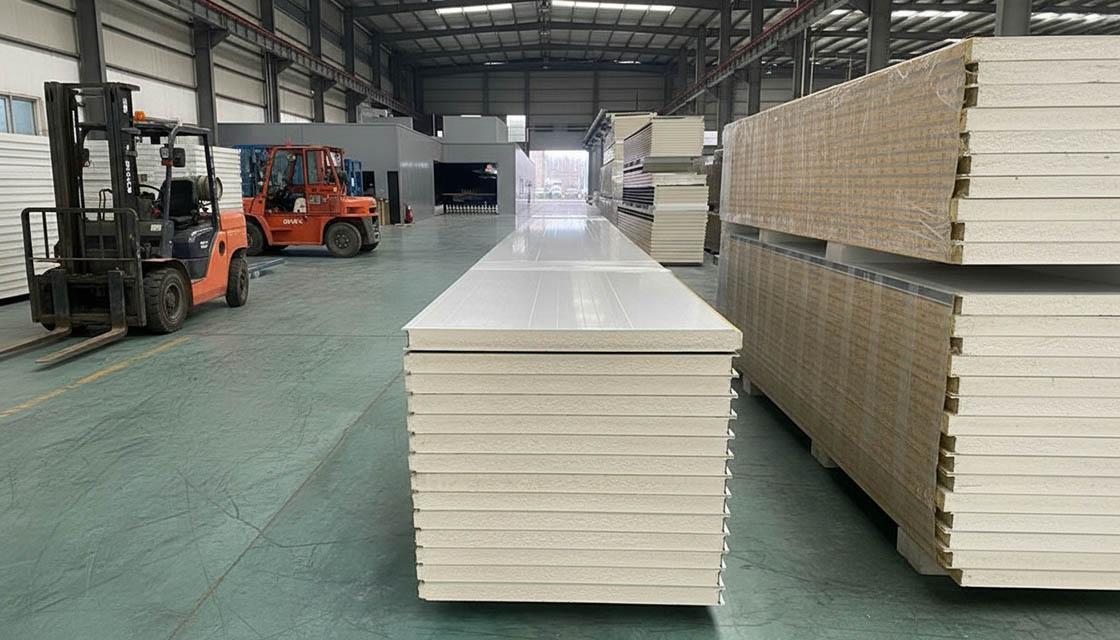
How to Produce High Strength Polyurethane Sandwich Panel
High-strength polyurethane sandwich panels are engineered composites designed to handle extreme structural loads without delamination. For global distributors, meeting international strength benchmarks is non-negotiable for passing building inspections and securing project approvals.
Defining High-Strength Polyurethane Sandwich Panels
In the wholesale market, simply injecting polyurethane foam between two generic metal sheets does not qualify a product as “high-strength.” True high-strength PU panels are highly engineered composites where the core and the facing materials act as a single, unified structural unit. The mechanical strength comes down to the shear transfer between the skins and the polyurethane core, preventing failure under heavy loads.
For applications demanding strict weight-to-strength ratios—such as refrigerated truck bodies, RV walls, or marine vessels—manufacturers must move away from standard thin-gauge metal skins. At Rax Panel, we achieve higher structural performance by bonding high-density PU foam with advanced structural facings like GRP (Fiberglass Reinforced Plastic) and CFRT (Continuous Fiber Reinforced Thermoplastic). This specific combination creates a panel that resists impact, bending, and environmental stress far better than conventional building materials.
Industry Benchmarks and Testing Standards
When importing composite panels for commercial or industrial applications, buyers cannot rely on visual inspections to verify structural integrity. You have to demand certified test reports based on recognized international standards. These benchmarks dictate whether a panel will survive the physical demands of heavy transport, modular construction, or public transit.
Three primary metrics define panel strength in the industry:
- Flexural Strength: Measured under standards like ASTM C393 or EN 14509, this tests the panel’s ability to resist bending. A high-strength panel must maintain structural integrity under load without the facings wrinkling or the core shearing.
- Compressive Strength: This measures the PU core’s resistance to being crushed, typically tested at a 10% deformation level. Higher density polyurethane foams naturally yield higher compressive values, which is critical for load-bearing walls and flooring.
- Bond Strength (Peel Adhesion): A panel is only as strong as its adhesive bond. Industry benchmarks require strict minimum peel strength to ensure the skins do not delaminate from the PU foam during thermal expansion or sudden impacts.
Meeting these standards is not a guessing game. Our engineers conduct rigorous experimental testing during the customization phase to ensure our GRP and CFRT faced PU panels meet the exact data standards required by your specific regional building codes. This strict quality control is what prevents costly structural failures in the field.
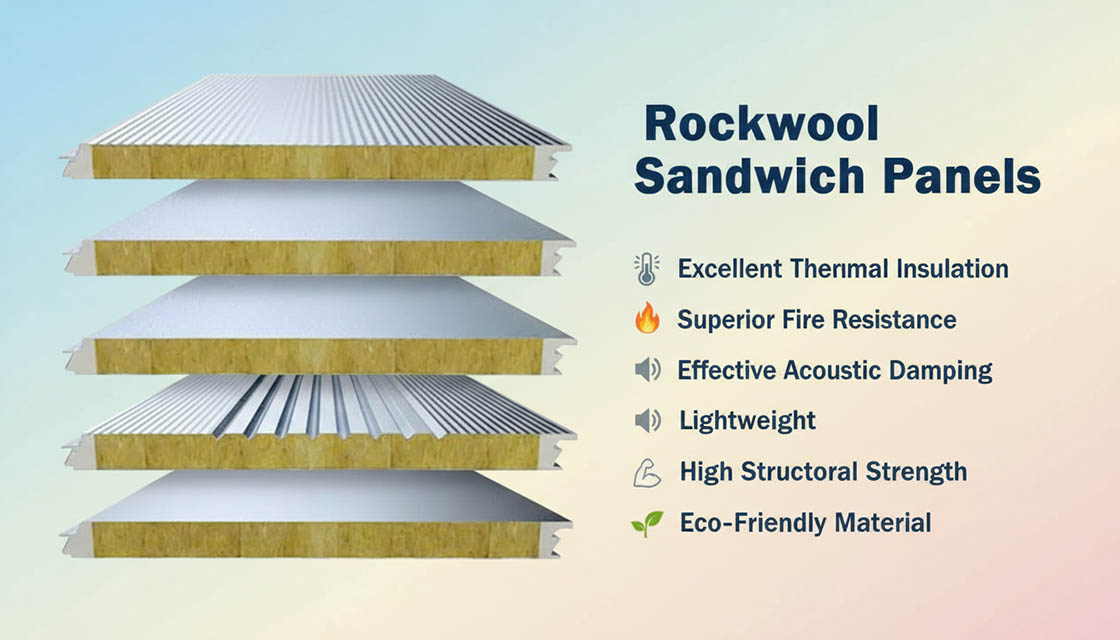
Core Material Formulation for High Strength
Achieving high compressive strength in polyurethane sandwich panels requires ruthless precision in chemical ratios and cellular density control during the initial formulation phase.
Optimizing Polyurethane Foam Density
Density is the fundamental driver of structural performance in foam core panels. When engineering lightweight solutions for demanding applications like refrigerated truck bodies or RV flooring, simply injecting more foam into the core does not automatically equate to higher load-bearing capacity. The real objective is achieving strict cellular uniformity.
If the polyurethane foam density is too low, the internal cell walls become thin, leading to premature collapse under heavy point loads or dynamic impacts. Conversely, pushing the density too high drastically increases the overall weight and material costs without a proportional return in flexural strength, effectively destroying the lightweight advantage of composite materials.
Our engineering team focuses on optimizing this density curve to ensure maximum rigidity. By precisely controlling the foam expansion, we maintain the structural integrity required for heavy-duty vehicle manufacturing while keeping the panel light enough to improve fuel efficiency.
Chemical Additives for Compressive Strength
The backbone of any high-strength polyurethane formulation relies on exact chemical proportions. While industry baselines typically consist of roughly 66% isocyanate and 26% polyol, the actual structural integrity is dictated by the remaining percentage and the specific additives used by the manufacturer.
Flame retardants, which generally make up about 3% of the mixture, are critical for fire safety compliance. However, these chemicals must be expertly balanced. If the ratio is off, they can disrupt the polymer matrix and weaken the foam’s internal structure.
Catalysts and blowing agents are what ultimately dictate the reaction speed and the resulting cell structure. By manipulating these specific chemical additives, manufacturers can force a tighter, more rigid closed-cell structure, which directly translates to higher compressive strength across the entire sandwich panel.
- Isocyanate (MDI): The primary driver that forms the rigid polymer backbone of the foam.
- Polyol: Reacts with isocyanate to determine the overall rigidity and density of the core.
- Flame Retardants: Essential for fire rating compliance, requiring precise dosing to prevent structural degradation.
- Catalysts: Control the chemical reaction velocity to ensure complete and uniform foam rise.
Generic chemical blends rarely survive demanding industrial environments. Through rigorous experimental testing, we customize these additive ratios specifically for our PUR and PIR sandwich panels, ensuring they meet the stringent data standards required for global industrial applications.
| Formulation Component | Content Ratio | Primary Function | High-Strength Benefit |
|---|---|---|---|
| Isocyanate | 66% | Primary reactive agent for foam formation and structural cross-linking | Increases foam density and overall panel rigidity |
| Polyol | 26% | Base resin forming the polyurethane polymer backbone | Enhances bending resistance and load-bearing capacity |
| Flame Retardant | 3% | Improves fire resistance of the PU foam core | Contributes to foam density while maintaining thermal insulation |
| Catalyst & Foaming Agent | 5% (balance) | Controls reaction speed and expansion rate during foaming | Optimizes cell structure for superior compressive strength |
| Temperature Control (4 Zones) | Multi-zone regulation | Stabilizes raw material, surface, track, and curing temperatures | Ensures complete post-curing for maximum structural integrity |
| Top-Touch Timing | Precision-calibrated | Minimizes gap between wire drawing and top-touch contact | Directly improves compressive strength under demanding loads |
| Corona + Glue Surface Treatment | Surface-level application | Removes dust and oil; applies adhesive bonding layer | Prevents delamination and extends panel service life under stress |
| Gel Coat (FRP Sheets) | Optional facing layer | Provides waterproof, flat, smooth exterior finish | Adds insulating protection and resilience to continuous fiberglass skins |
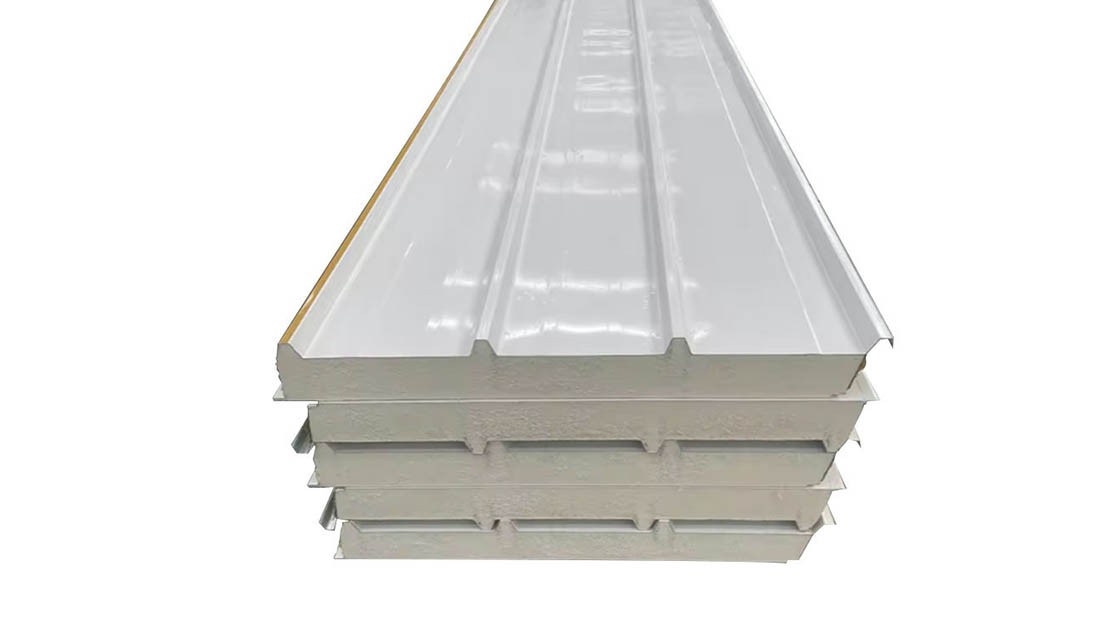
Temperature and Time Control in PU Panel Production
Temperature and time are the two levers that determine whether a PU foam core cures into a high-strength structural asset or a weak, inconsistent fill. Get either wrong, and you are looking at delamination and missed compressive targets.
Optimal Curing Temperatures
In polyurethane sandwich panel manufacturing, temperature control is not a single setting. It is a sequence of four distinct thermal zones that must be managed in unison. Raw material temperature, surface layer temperature, track temperature, and post-curing drying temperature each serve a specific mechanical purpose. If any one of these zones drifts outside its optimal range, the foam structure suffers — either through incomplete cross-linking or uneven cell formation.
Raw material temperature governs the initial chemical reaction kinetics. If the mixed polyol and isocyanate components are too cold, the reaction stalls and the foam fails to fully expand before gelation. Too hot, and the reaction accelerates uncontrollably, creating an open-cell structure with poor compressive strength. The objective is to maintain a narrow thermal window that ensures the reaction proceeds at a standardized, predictable rate every single run.
Surface layer temperature — whether you are working with GRP sheets, CFRT facings, or aluminum skins — directly affects bonding speed. The facing material must provide enough residual heat to support the exothermic foam reaction at the interface. A cold facing acts as a heat sink, robbing the foam of the energy it needs to properly adhere. This is a primary cause of delamination in panels that otherwise pass visual inspection but fail under flexural load testing.
Track temperature within the double-belt laminator ensures the foam achieves sufficient green strength before the panel is released. If the panel exits the laminator too early, the uncured core deforms under its own weight or under the pressure of the cutting saw. Downstream drying temperature then handles the post-cure phase.
The better the post-cure, the closer the foam gets to its ultimate compressive and shear strength ratings. At Rax Panel, our engineers run experimental testing cycles on new composite configurations — for example, GRP sheet over PU foam core — specifically to dial in these four thermal parameters before committing to volume production.
Panel Reaction Time Management
Beyond temperature, the timeline of the polyurethane reaction itself is a critical control variable. The key metric here is managing the gap between the foam’s wire-drawing time and the top-touch time. Wire-drawing refers to the point where the expanding foam begins to form stringy filaments — an indicator that the polymer network is transitioning from liquid to gel. Top-touch is the moment the rising foam makes full contact with the upper facing layer.
To maximize compressive strength, you want to minimize the time difference between these two events. When the foam hits the top skin while still in its active expansion phase, it bonds under pressure from its own upward force. This creates a denser, more unified interface.
If the delay is too long, the foam has already begun setting by the time it reaches the upper layer. The result is a weaker mechanical interlock and a bond line that relies entirely on secondary adhesion rather than structural integration.
On a continuous production line running over 1,700 square meters of panel area daily, even a few seconds of drift in this timing window translates to hundreds of square meters of substandard material. Line speed, dispensing rate, mixing head traverse speed, and laminator gap all interact to determine this window.
Operators must tune these variables as a system, not in isolation. It is the combination of precise thermal control and tight reaction timing that separates a structurally reliable PU sandwich panel from one that fails at the job site.
Continuous vs Discontinuous Production Lines
Choosing between continuous and discontinuous production lines dictates your structural ceiling. For high-strength PU sandwich panels at commercial scale, continuous lamination is the only viable path to guarantee uniform foam density and unbreakable skin-core adhesion.
Line Efficiency for High-Strength Panels
Discontinuous production lines rely on stationary molds. Operators load the facing skins, inject the polyurethane foam, and wait for a full curing cycle before demolding. While this allows for extreme customization in panel shapes, it introduces severe bottlenecks. When you are manufacturing high-strength structural panels for demanding sectors like commercial refrigeration or heavy transportation, batch processing simply cannot maintain the strict density tolerances required across thousands of units.
Continuous production lines eliminate this stop-and-go inefficiency. The system feeds raw materials—whether that is GRP, CFRT, or metal skins—into an automated chain where foam dispensing, pressing, and curing happen simultaneously. Because the line never stops, the foaming parameters remain perfectly locked in. This uninterrupted environment is what allows manufacturers to achieve the high tensile and flexural strength required by global OEMs, ensuring every single panel off the line matches the engineering specs.
Continuous Lamination Benefits
For high-volume B2B buyers, continuous lamination is fundamentally a risk-mitigation strategy. The automated, unbroken nature of the process removes human error from the critical bonding phase and delivers highly consistent mechanical properties. The core advantages of this method for high-strength panels include:
- Constant Compression: The double-belt laminator applies even pressure across the entire width of the panel as the PU core expands. This prevents localized weak spots or voids in the foam structure.
- Superior Adhesion: Uninterrupted heat and pressure ensure the liquid polyurethane chemically cross-links flawlessly with the top and bottom facing materials, eliminating the delamination risks common in batch processing.
- Unmatched Throughput: Continuous lines effortlessly handle bulk orders. Advanced setups routinely exceed a daily production area of 1,700 square meters, ensuring tight lead times for large-scale infrastructure projects.
- Tight Tolerances: Automated tracking and rollers maintain exact thickness dimensions across the entire run, ensuring panels interlock perfectly on the job site without costly rework.
Discontinuous lines certainly have their place for specialized, low-volume prototypes, but they fall short on the consistency needed for high-strength applications. By utilizing advanced continuous lamination, manufacturers can deliver the structural reliability, thermal efficiency, and cost-effectiveness that modern supply chains demand.

High Strength Panel Forming and Lamination Process
Achieving high structural integrity in composite panels comes down to precision high-pressure foam dispensing to eliminate core voids, and uncompromising surface bonding techniques to prevent catastrophic delamination under load.
High-Pressure Foam Dispensing
You cannot fake high structural strength in a sandwich panel. It starts directly at the mixing head. High-pressure foam dispensing is non-negotiable for manufacturing high-strength polyurethane panels because it forces the distinct chemical components through a chamber at extreme velocities. This aggressive combination ensures a homogeneous reaction before the material even hits the production line. If the mix is inconsistent, you end up with density variations and internal voids that severely compromise compressive strength.
To maintain high strength across large volumes, automated dispensing systems rely on continuous sweeping applicators. These nozzles lay down a perfectly even layer of reacting liquid foam across the bottom facing material. This precise application is what allows manufacturers like Rax Panel to maintain a daily production area exceeding 1,700 square meters without sacrificing the structural integrity of the PU core. Consistent dispensing ensures the foam rises uniformly, providing a solid, continuous foundation for the top skin.
Surface Layer Bonding Techniques
A high-strength core is completely useless if it separates from the skin under sheer or flexural stress. Delamination remains a primary mode of failure in poorly manufactured composite panels. Preventing this requires optimizing the surface energy of the facing materials—whether you are using GRP/FRP, CFRT, aluminum, or steel—so they chemically and mechanically lock with the polyurethane foam.
We rely on a strict sequence of bonding protocols during the lamination process to ensure the panel performs reliably in demanding RV, truck, and vessel applications:
- Surface Preparation: The facings undergo corona treatment to remove microscopic dust and oils, altering the surface tension to make it highly receptive to bonding.
- Adhesive Activation: Specialized bonding agents are applied to the treated skins, which dramatically increases the interfacial adhesion between the foam and the facing layer.
- Laminator Pressure: The assembly passes through a double-belt laminator that applies heavy, consistent pressure, forcing the expanding PU foam directly into the micro-contours of the skin to create a permanent mechanical lock.
Proper execution of these lamination techniques dictates the final load-bearing capacity of the panel. By strictly controlling the dispensing environment and the surface treatment protocols, engineers ensure the composite panel acts as a single, unified structural unit rather than just three layers glued together.
Testing High Strength Polyurethane Sandwich Panels
Flexural and compressive testing separates a certified high-strength PU panel from a costly liability. We subject every GRP/FRP and CFRT faced polyurethane sandwich panel to destructive load testing before it leaves our facility.
Flexural and Compressive Testing
Flexural testing measures a panel’s ability to resist bending under load. For polyurethane sandwich panels with GRP or aluminum facings, this directly correlates to field performance in RV roofing, refrigerated truck bodies, and structural wall applications. We use a three-point or four-point bend test depending on the facing material—GRP sheets with gelcoat require four-point loading to distribute stress evenly across the surface without premature cracking.
The test records two critical data points: the peak load at failure and the mid-span deflection at working load. For a standard PU foam core panel with 1.0mm GRP facings, we look for a flexural modulus that confirms the core and skins are acting as a unified composite section—not two separate layers sliding past each other. If the facing delaminates from the PU core before the foam itself fractures, the bond strength is the weak link, not the materials.
Compressive testing targets the polyurethane foam core directly. We cut samples from finished panels and load them perpendicular to the face. The key metric here is compressive strength at 10% deformation—the industry standard threshold. Foam density plays a direct role, but so does cell structure uniformity. Our engineers consistently test samples from different zones of the production run to catch density variations caused by uneven foam distribution during lamination.
- Flexural Test Focus: Peak bending load, mid-span deflection, and facing-to-core bond integrity
- Compressive Test Focus: Core strength at 10% deformation, cell uniformity across production width
- Shear Test Focus: Horizontal shear capacity through the PU foam core at mid-span
For panels destined for heavy-duty applications like dry freight truck bodies or vessel structures, we add a shear test to the protocol. This isolates the foam core’s resistance to horizontal sliding forces—exactly what happens when a truck body flexes on uneven roads. CFRT-faced panels with PU cores consistently outperform expectations here because the continuous fiber reinforced thermoplastic facing maintains bond adhesion under repeated stress cycling.
Quality Inspection Protocols
Mechanical testing means nothing without a consistent inspection framework behind it. Our quality protocol starts at raw material intake. We verify polyurethane raw material batch certifications—specifically the isocyanate-to-polyol ratio and flame retardant content—before any foam enters the production line. A 1% deviation in isocyanate content can shift foam density enough to drop compressive strength below spec.
During production, our technicians monitor four parameters continuously: raw material temperature, facing surface temperature, track temperature, and curing zone temperature. Each parameter has a defined tolerance window. If any reading drifts outside that window, the affected panel section is flagged for additional destructive sampling before it ships.
- Incoming Material Check: PU chemical batch certification, facing material thickness verification, surface cleanliness inspection
- In-Process Monitoring: Foam dispensing weight consistency, laminator pressure readings, curing temperature logs
- Post-Production Testing: Destructive mechanical testing per batch, dimensional tolerance checks, visual surface inspection for gelcoat or facing defects
Post-production inspection includes dimensional checks—panel thickness, width, and facing alignment must fall within specified tolerances. For GRP sheets with gelcoat, we inspect for surface flatness, pinholes, and air bubbles that compromise waterproofing. Any panel failing visual or dimensional checks is rejected regardless of its mechanical test results.
We maintain test records for every production batch, traceable to specific raw material lots and machine settings. This traceability is non-negotiable for our B2B customers distributing panels into regulated markets like the EU and North America. When a distributor receives a shipment of PUR or PIR sandwich panels, they need documentation that proves consistent mechanical performance—not a generic certificate of conformance.
Modern Construction Applications of High Strength PU Panels
High-strength PU panels act as primary structural elements in modern construction. This enables wider clear spans and drastically reduces heavy steel framework requirements.
Commercial Roofing Requirements
Commercial roofs take a brutal beating from the elements and heavy mechanical equipment. Building owners and contractors demand large spans that refuse to sag under HVAC units or accumulated snow loads. High-strength polyurethane sandwich panels solve this exact engineering problem by pairing a dense, rigid PU foam core with high-tensile exterior facings.
The core metric for roofing performance is the composite action between the panel’s skin and the polyurethane core. When you use facings like pre-painted steel, aluminum, or GRP sheets bonded to a high-density PU core, the panel distributes loads across a wider surface area. This structural efficiency drastically reduces the need for secondary steel framing, directly cutting both material costs and installation labor.
- Load-bearing capacity: High compressive and flexural strength prevents roof deformation under static equipment weight and dynamic weather loads.
- Thermal performance: The closed-cell structure of PU foam provides superior insulation, minimizing energy leakage in temperature-controlled commercial spaces.
- Joint integrity: Precision-formed overlapping joints prevent thermal bridging and water ingress, which are the primary causes of commercial roof failure.
Industrial Building Envelopes
In industrial construction, building envelopes must withstand harsh operational environments while keeping energy costs tightly controlled. Facilities like logistics hubs, heavy manufacturing plants, and cold storage warehouses rely on high-strength PU sandwich panels for their primary wall and roof cladding.
These panels face constant physical abuse from internal operations—such as forklift traffic and heavy machinery vibrations—alongside external environmental stresses. Using a durable skin, such as fiberglass reinforced plastic (FRP) or coated steel, over a high-strength polyurethane core ensures the envelope resists impact damage without compromising its thermal barrier. For projects requiring strict fire safety regulations, engineers often utilize specific PUR or PIR formulations to meet local building codes without losing structural rigidity.
By integrating these composite panels, developers can enclose massive square footage rapidly. The lightweight nature of the materials puts less dead load on the primary structural steel, allowing for cheaper foundation and framing specifications. Our engineering team configures these envelope solutions to precise data standards, ensuring that large-scale industrial buildings receive tailored, high-tolerance panels ready for immediate assembly.
Conclusion
Producing high-strength panels requires strict control over formula ratios, temperature, timing, and equipment calibration. Miss one variable, and you face immediate delamination claims.
- Skipping surface preparation. Facing materials arrive coated in mill oil and dust. If your supplier skips corona treatment, the foam delaminates under thermal stress.
- Mismatching the production line. Discontinuous lines suit custom, low-volume shapes. Continuous lines are the only profitable choice for high-volume commercial orders.
- Rushing the curing process. Pulling panels off the track too early ruins foam density. Strict temperature control during post-curing guarantees structural integrity.
Before you commit to an order, verify the manufacturer’s quality control metrics for compressive and flexural strength. Request the actual test data. Compare those lab results directly against our material specs at Rax Panel to ensure your next project stays profitable.
Frequently Asked Questions
This factor has a direct bearing on project performance and long-term cost. Addressing it with specific data rather than general assumptions leads to better outcomes.
What makes PU sandwich panels high strength?
High strength polyurethane sandwich panels derive their structural integrity from the combination of rigid PU foam core and durable facing materials like GRP/FRP, aluminum, or steel. The polyurethane core provides excellent shear resistance and thermal insulation, while the rigid facings handle tensile and compressive loads.
At , the manufacturing process ensures a strong molecular bond between the core and the skins through precise temperature and pressure control during continuous lamination. The specific gravity and cell structure of the PU foam are engineered to meet rigorous mechanical performance standards demanded in truck bodies and building construction. This composite structure results in a panel that is significantly stronger per unit weight than solid materials of equivalent thickness.
Are custom sizes available for PU panels?
Yes, specializes in providing fully customized polyurethane sandwich panels tailored to exact project specifications. Customers can specify dimensions, thicknesses, and choose from a wide variety of facing materials including fiberglass, aluminum, steel, and CFRT to meet their structural requirements.
Our professional design team and engineers work closely with clients to ensure the custom panels meet all necessary mechanical data standards and application needs. Whether the requirement is for curved RV roofing, refrigerated truck bodies, or specialized architectural cladding, custom solutions can be engineered. This customization extends to surface finishes, core densities, and connection details for seamless integration.
Do you offer global shipping?
serves a vast global market, having established long-term supply chain cooperation with over 50 countries and regions across Europe, North America, South America, Asia, and the Middle East. We export directly from our advanced manufacturing facility in China to manufacturers and distributors worldwide, managing both small custom orders and large-scale industrial shipments.
Our professional international sales team offers 24-hour one-to-one service in multiple languages, including English, French, Russian, Japanese, and Korean, to coordinate logistics seamlessly. We assist customers in optimizing shipping methods to reduce transportation costs and eliminate logistical risks associated with international freight. Our robust export experience ensures that all composite panels are packaged and shipped safely to arrive in pristine condition.
How much does produce high strength typically cost?
The cost of produce high strength varies based on material grade, thickness, panel dimensions, and order volume. Requesting a detailed quote with your project specifications is the most reliable way to get an accurate figure. Bulk orders typically reduce per-unit pricing significantly.
What factors affect the price of produce high strength?
The cost of produce high strength varies based on material grade, thickness, panel dimensions, and order volume. Requesting a detailed quote with your project specifications is the most reliable way to get an accurate figure. Bulk orders typically reduce per-unit pricing significantly.