
A distributor in Frankfurt ordered 3,000 square meters of aluminum honeycomb panels for a transit station project last year. Six months after installation, the core started delaminating. The lab report showed the supplier had used a generic adhesive rated for indoor use only — not the marine-grade bonding agent the spec required.
Total replacement cost hit €280,000, plus 14 months of litigation that went nowhere. That distributor now tests every shipment with acoustic tap equipment before accepting delivery, and his margin on panel sales dropped from 22% to 9% because of the extra inspection step he had to build into his workflow.
We examined the test data from our own production line — covering honeycomb, foam core, and composite variations — and cross-referenced it with warranty claims and failed inspections distributors brought to our factory floor over the past three years.
What follows is a straight comparison of each panel type’s strength limits, fire certification requirements across EU and North American markets, and the actual price range you should expect per square meter for each core configuration. Some of these numbers will contradict what your current supplier tells you. Good. You should have the real data before you commit to a 40-foot container order.
What Are Aluminum Sandwich Panels
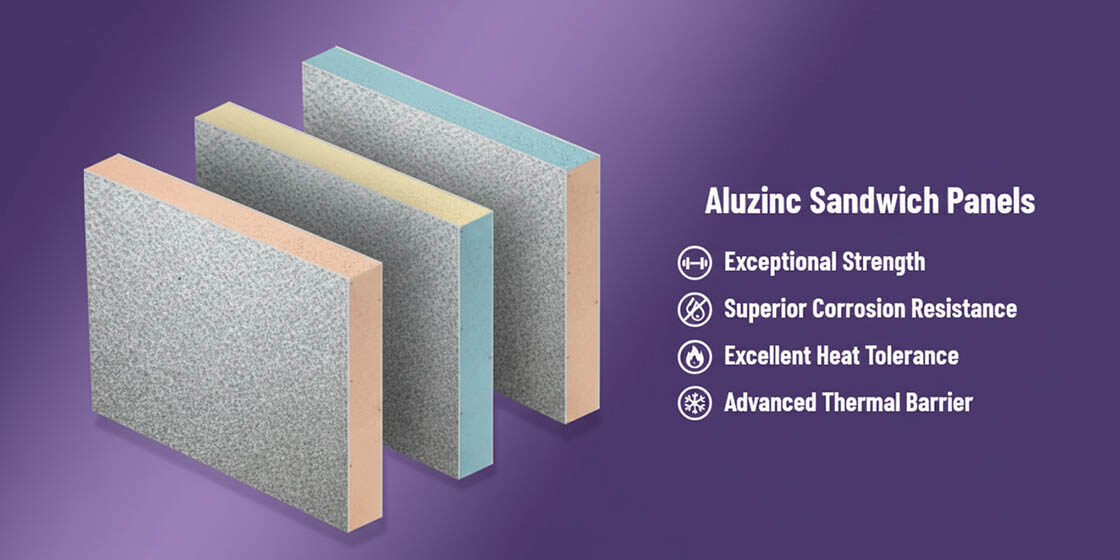
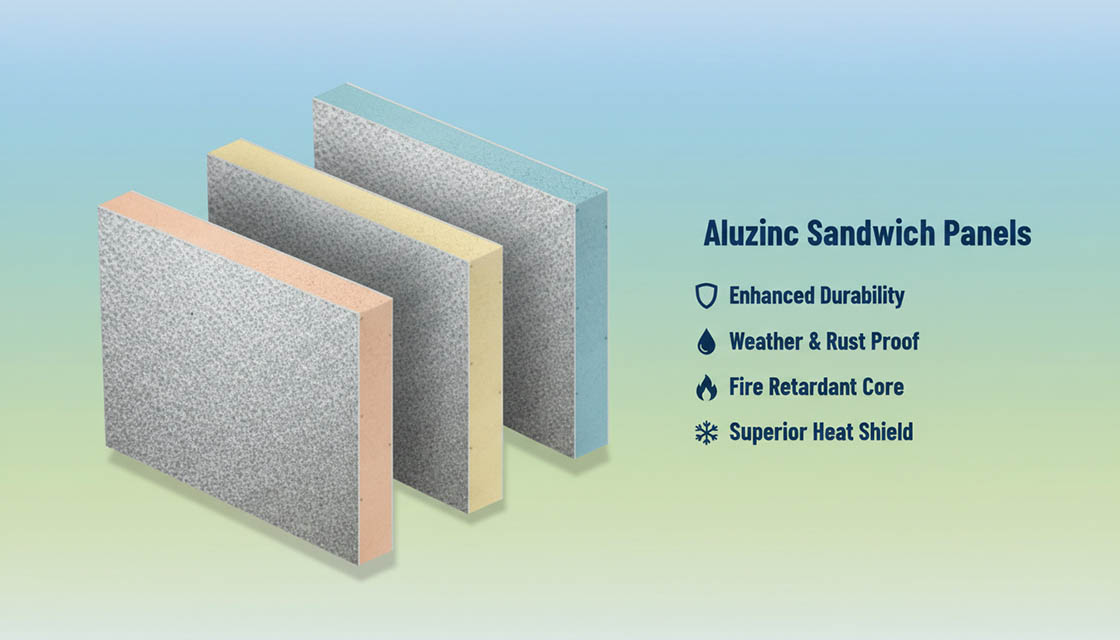
An aluminum sandwich panel is a three-layer composite structure: two thin aluminum face sheets bonded to a lightweight core material, engineered to deliver maximum stiffness at minimum weight.
Basic Structure Definition
The sandwich panel concept borrows directly from structural I-beam logic. Two rigid outer skins handle tensile and compressive loads, while a thicker, low-density core separates them to increase the moment of inertia. The result is a panel that resists bending and deflection far better than a single solid sheet of equivalent mass.
In an aluminum sandwich panel specifically, both face sheets are aluminum or aluminum-based composite materials. At Rax Panel, we produce several distinct variations under this category: aluminum foam core panels, aluminum composite panels (ACP), aluminum honeycomb panels, ACP honeycomb panels, and ACP foam core panels. Each variation serves different load-bearing, thermal, and cost requirements.
The critical engineering principle at play here is the skin-to-core adhesive bond. Delamination at this interface is the primary failure mode for sandwich panels under flexural loading. Our production line runs continuous quality checks on bond integrity because a panel is only as reliable as the adhesion between its layers.
Core vs. Skin Layers: What Each Layer Actually Does
Buyers often conflate the two layers or treat the core as an afterthought. That is a costly mistake. The skins and the core serve fundamentally different mechanical functions, and swapping one core material for another changes the entire performance profile of the panel.
The skin layers, or face sheets, carry the majority of the in-plane tensile and compressive stresses. In our aluminum sandwich panel range, these skins are typically solid aluminum sheet or ACP (aluminum composite panel) material. Thickness, alloy grade, and surface finish of the skin directly determine impact resistance, weatherability, and aesthetic lifespan. For marine or corrosive environments, we often recommend specific alloy grades and surface treatments to prevent pitting and oxidation.
The core layer determines three things: overall panel weight, shear stiffness, and thermal or acoustic insulation performance. At Rax Panel, we stock and process the following core materials for aluminum sandwich configurations:
- Aluminum Honeycomb: Highest shear stiffness-to-weight ratio. Preferred for aerospace, cleanroom partitions, and high-end architectural facades where flatness and structural rigidity are non-negotiable.
- PP Honeycomb: Thermoplastic option that is moisture-resistant and recyclable. Strong and light when composited with aluminum skins. Common in RV walls and truck body panels.
- PET Foam: Good mechanical properties with excellent chemical resistance. Widely used in marine and transportation applications where closed-cell structure prevents water ingress.
- XPS Foam: Cost-effective thermal insulation core. Common in building cladding and refrigerated truck bodies where R-value per dollar is the driving metric.
- PU Foam: Superior insulation values, often specified for refrigerated transport and cold chain applications.
- PVC Foam: Balanced mechanical performance and fire resistance. Frequently specified in marine vessel interiors.
- PMI Foam: Premium aerospace-grade core with exceptional temperature resistance and fatigue properties. Highest cost, but unmatched performance under cyclic loading.
The thickness ratio between core and skins is where real engineering happens. A thicker core increases bending stiffness exponentially without a proportional weight increase. However, thicker cores also raise shear stress demands on the adhesive bond line. Our engineers work directly with buyer specifications to determine the optimal core-to-skin ratio for each project’s load case, fire rating requirement, and budget envelope.
Main Types by Core Material
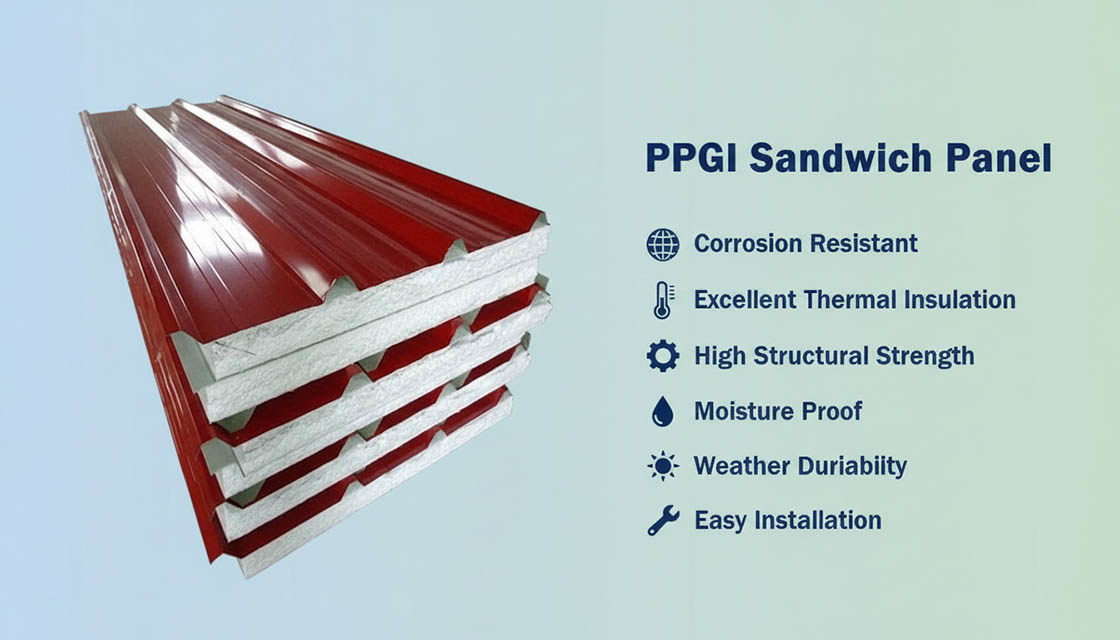
The core material dictates 70% of a sandwich panel’s performance. Selecting between PE, FR, and aluminum honeycomb cores is a calculation of fire compliance, structural load, and cost per square meter. To go from type names to purchasing decisions, the ACP sheets overview maps each core grade to the use it fits.
Polyethylene (PE) Core Panels
Polyethylene (PE) core aluminum composite panels remain the baseline material for non-load-bearing architectural cladding and signage. Two aluminum sheets sandwich a low-density polyethylene core, typically ranging from 2mm to 5mm in total panel thickness. The result is a flat, rigid panel at a fraction of the weight of solid aluminum sheet.
From a procurement standpoint, PE core panels offer the lowest entry cost. They are straightforward to fabricate, rout, and bend into shapes. However, this comes with a hard limitation: PE is a thermoplastic with limited fire resistance. Standard PE cores will melt and contribute flame spread under fire exposure. If your project requires fire-rated assemblies, PE cores simply will not pass certification.
Rax Panel manufactures standard aluminum composite panels (ACP) that fit this category, configured for applications where fire rating is not a project mandate—interior partitions, decorative facades, and temporary structures.
Fire-Retardant (FR) Core Panels
Fire-retardant core panels are essentially the structural sibling of PE panels, but with mineral-filled cores—typically containing aluminum hydroxide (ATH) or magnesium hydroxide. These additives release water vapor when exposed to high heat, suppressing flame spread and reducing smoke emission. For commercial construction procurement teams navigating building codes, FR core panels are non-negotiable for structures above certain heights.
- EN 13501-1 (Europe): FR cores typically achieve B-s1,d0 or A2 classifications required for high-rise facades.
- ASTM E84 (North America): Class A fire rating with a flame spread index of 25 or below.
- GB 8624 (China): Grade A or B1 compliance for public building applications.
The cost premium for FR cores over standard PE typically runs 20-40% per square meter, depending on the mineral loading percentage. In our experience at Rax Panel, specifying FR-grade mineral cores at 70% ATH content or higher is the threshold where panels reliably pass European fire certifications. Anything below that percentage introduces compliance risk that no procurement team should accept for occupied buildings.
Rax Panel supplies PUR sandwich panels, PIR sandwich panels, and rockwool sandwich panels as additional fire-rated alternatives, each offering different thermal insulation and fire performance profiles depending on your building’s R-value and fire-resistance requirements.
Aluminum Honeycomb Core Panels
Aluminum honeycomb core panels represent the top tier of structural performance in the sandwich panel category. A hexagonal aluminum foil core is bonded between two aluminum face sheets using high-strength adhesive or thermal bonding. The honeycomb geometry mimics natural bee comb structures, distributing compressive and shear loads across a massive surface area while maintaining an extremely low density.
For specialized vehicle manufacturers, this is where the material becomes relevant. Aluminum honeycomb panels deliver compressive strengths exceeding 2.0 MPa at densities as low as 40-80 kg/m³. That strength-to-weight ratio is why aerospace, marine vessel interiors, and high-end transportation applications rely on honeycomb cores instead of foam or solid materials.
- Cell size: Typically 3/16″ to 1″ (4.8mm–25.4mm), with smaller cells yielding higher compressive strength.
- Foil thickness: Ranges from 0.025mm to 0.08mm, calibrated to the required shear load.
- Total panel thickness: Customizable from 5mm to 100mm+ depending on structural requirements.
Cost is the primary constraint. Aluminum honeycomb panels command a significant premium over both PE and FR core panels—often 3x to 5x the price per square meter of standard ACP. But that comparison misses the point. You select honeycomb core when no other material meets the deflection, fatigue, and weight limits of your engineering specification.
Rax Panel manufactures aluminum honeycomb panels alongside ACP honeycomb panels and ACP foam core panels, configured to custom dimensions. Our engineering team conducts experimental testing to validate flexural strength and bonding integrity against project-specific load cases before production runs begin. This pre-production validation step is critical—delamination at the core-to-face sheet interface is the most common failure mode in honeycomb panels, and it stems from inadequate surface preparation or incorrect adhesive selection during manufacturing.
On environmental sustainability, aluminum honeycomb cores are fully recyclable. Both the face sheets and the core return to the aluminum recycling stream without material degradation. PET foam and PP honeycomb alternatives also offer recyclability, but aluminum maintains higher scrap value, which factors into lifecycle cost analysis for distributors managing material end-of-life.
| Core Material | Panel Category | Key Properties | Typical Facings | Best Applications |
|---|---|---|---|---|
| Aluminum Honeycomb | Honeycomb Sandwich Panel | Highest strength-to-weight ratio, flat surface, fire resistant | Aluminum, ACP, Stainless Steel | Curtain walls, aerospace, marine bulkheads |
| Aluminum Foam | Foam Core Sandwich Panel | Sound absorption, energy absorption, electromagnetic shielding | Aluminum, Steel | Industrial facilities, automotive, sound barriers |
| PP Honeycomb | Honeycomb Sandwich Panel | Lightweight, cost-effective, moisture resistant, recyclable | GRP/FRP, Fiberglass Sheet | RV walls, truck bodies, marine, mobile homes |
| PET Foam | Foam Core Sandwich Panel | Thermally insulated, waterproof, eco-friendly, recyclable | GRP/FRP, Aluminum, Steel, ACP | Refrigerated trucks, construction walls, wind energy |
| XPS Foam | Foam Core Sandwich Panel | Waterproof, high thermal insulation, lightweight, rigid | GRP/FRP, CFRT, Aluminum, Plywood | Cold storage, RV roofing, building insulation |
| PU (Polyurethane) Foam | Foam Core Sandwich Panel | Superior thermal insulation, moisture resistant, versatile | GRP/FRP, Aluminum, Steel, ACP | Refrigerated transport, mobile homes, vessel interiors |
| PVC Foam | Foam Core Sandwich Panel | Marine-grade, rot resistant, high strength-to-weight | GRP/FRP, Aluminum, CFRT | Marine hulls, vessel interiors, offshore structures |
| PMI Foam | Foam Core Sandwich Panel | High temperature resistance, ultra-lightweight, aerospace-grade | CFRT, Carbon Fiber, GRP | Aerospace, high-performance sports, medical devices |
| Rockwool (Mineral Wool) | Building Sandwich Panel | Fire-rated A1/A2, acoustic insulation, non-combustible | Steel, Aluminum, Stainless Steel | Exterior wall cladding, fire-rated partitions, industrial |
| Aramid Honeycomb | Honeycomb Sandwich Panel | Ultra-lightweight, impact resistant, high fatigue strength | Carbon Fiber, GRP, Aluminum | Aviation interiors, defense, high-speed rail |
Main Types by Application
Application dictates core selection. A high-rise facade demands different aluminum sandwich panel specs than an interior partition—mistaking one for the other burns margin and fails compliance.
Building Facade Cladding
Exterior wall cladding is the most demanding application for aluminum sandwich panels. The material sits outside 365 days a year, taking hits from UV radiation, wind loads, acid rain, and temperature swings that can span 60°C in a single day in regions like Central Asia or the Middle East. For this reason, facade panels require facing skins and core materials that hold up structurally while meeting strict fire safety standards.
Aluminum honeycomb panels are the default choice for high-end commercial facades. The honeycomb cell structure delivers an exceptional stiffness-to-weight ratio, meaning you get flat, large-format panels that resist wind pressure without bowing. For projects where thermal insulation is a higher priority than sheer rigidity, aluminum foam core panels and ACP foam core panels perform better. The closed-cell foam structure traps air, creating a thermal barrier that reduces HVAC energy costs for the building owner.
- Aluminum Honeycomb Panels: Best for large-format flatness, high wind-load resistance, and lightweight structural demands.
- Aluminum Composite Panels (ACP): Cost-effective facade solution with proven weather resistance and wide color availability.
- ACP Foam Core Panels: Combines the aesthetic flexibility of ACP with enhanced thermal insulation from PET, PU, or XPS foam cores.
- Aluminum Foam Core Panels: Solid alternative when fire rating compliance is the primary driver.
From a procurement standpoint, the critical decision is core material. PET foam cores are gaining market share in Europe due to their recyclability and stable pricing. Rockwool cores remain the standard when fire resistance ratings like EN 13501-1 A2 or ASTM E84 Class A are non-negotiable. Our production line runs daily at over 1,700 square meters, so lead times on large facade orders stay competitive even for custom core-skin combinations.
Interior Wall Partitions
Interior partitions change the calculus entirely. You are not fighting weather, so UV resistance and thermal expansion matter far less. What matters here is weight, ease of installation, and cost per square meter. Every kilogram you can shave off a partition panel reduces the structural load on the building frame, which translates directly into savings on steel and concrete for the general contractor.
Aluminum composite panels dominate this space because they hit the cost-to-performance sweet spot. The two thin aluminum sheets bonded to a core material (typically PE or mineral-filled) provide enough rigidity for partition walls at a fraction of the weight of solid aluminum sheet or traditional drywall systems.
For environments with stricter hygiene or fire requirements—hospitals, cleanrooms, industrial labs—aluminum honeycomb panels are worth the price premium. Their open-cell structure can be sealed completely, leaving no cavities for moisture or contaminants to accumulate.
- Standard ACP (PE Core): Lowest cost option, suitable for dry commercial interiors with no fire rating requirements.
- FR (Fire-Retardant) ACP: Mineral-filled core for office buildings, hotels, and public spaces requiring B1 or Class B fire ratings.
- Aluminum Honeycomb Panels: Premium option for cleanrooms, medical facilities, and high-traffic areas needing maximum durability and hygiene.
Distributors should note that interior partition panels are a high-volume, margin-friendly product category. The technical requirements are lower than facade applications, so manufacturing yields are consistently high. Our engineers work directly with project teams to dial in the exact skin thickness and core density needed, avoiding over-specification that kills your bid competitiveness.
Roofing and Ceiling Systems
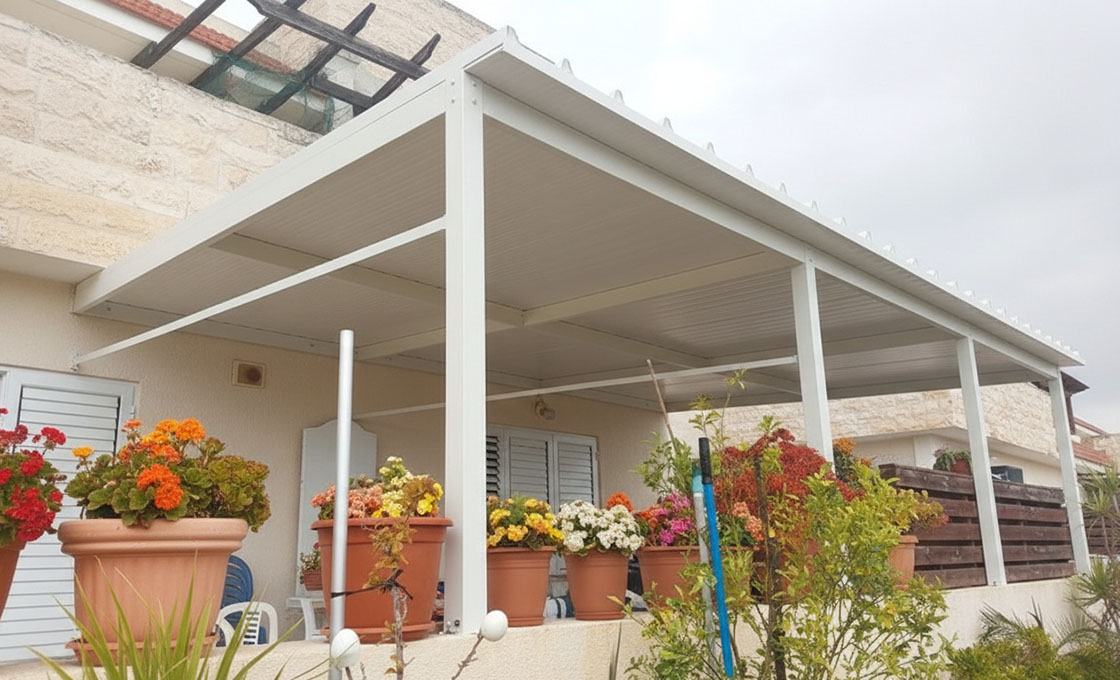
Roofing panels operate in a harsher environment than vertical facades. They take direct solar heat gain, standing water, and in colder climates, snow loads. The facing material must resist corrosion at the joints and fastener points where water collects. Aluminum sandwich panels for roofing typically specify thicker facing skins—0.5mm to 1.0mm depending on the span and load—compared to wall applications.
For flat or low-slope commercial roofs, aluminum foam core panels with PU or XPS cores are the workhorse. PU foam delivers the highest R-value per inch of thickness among the common core options, which is why it is the standard for cold storage facilities and energy-efficient building envelopes. XPS foam cores offer better moisture resistance, making them the better call for roofs in high-humidity tropical markets like Southeast Asia.
- PU Foam Core Panels: Highest thermal insulation value, ideal for cold storage roofing and energy-efficient building envelopes.
- XPS Foam Core Panels: Superior moisture resistance, preferred for tropical and high-humidity roofing applications.
- PET Foam Core Panels: Environmentally friendly option with good recyclability, increasingly specified in European green building projects.
- Aluminum Honeycomb Roof Panels: Used in architectural roofing where long unsupported spans and structural flatness are required.
Ceiling systems, whether interior or exterior soffit panels, prioritize aesthetics and weight. ACP honeycomb panels and lightweight aluminum foam core panels are both effective here.
The key for distributors is offering a range of surface finishes—powder-coated, PVDF, wood-grain, and solid colors—so contractors can match the ceiling to the overall design language without sourcing from multiple suppliers. Our 15+ years of production experience means we maintain consistent color matching across production runs, which eliminates the shade variation problems that delay project sign-offs.
| Panel Type | Primary Application | Key Features | Best For |
|---|---|---|---|
| Aluminum Honeycomb Panel | Marine Vessels, Aviation, Public Transit | Ultra-lightweight, high stiffness-to-weight ratio, fire resistant | Weight-critical structural applications |
| Aluminum Foam Core Panel | Industrial Facilities, Commercial Buildings | Excellent thermal insulation, sound dampening, corrosion resistant | Temperature-controlled and hygienic environments |
| Aluminum Composite Panel (ACP) | Exterior Wall Cladding, Architectural Facades | Aesthetic finish, weatherproof, easy to install | Decorative building exteriors and signage |
| ACP Honeycomb Panel | Mobile Homes, RV Walls and Roofing | High strength, flat surface, impact resistant | Lightweight mobile structure envelopes |
| ACP Foam Core Panel | Refrigerated Truck Bodies, Cold Chain Logistics | Superior R-value, waterproof, thermally insulated | Cold storage and temperature-sensitive transport |
| Aluminum XPS Foam Panel | RV Flooring, Truck Dry Freight Bodies | High compressive strength, moisture proof, economical | Heavy-load flooring and cargo platforms |
| Aluminum PET Foam Panel | Sports Equipment, Medical Facilities | Recyclable core, consistent density, fire rated | Sustainable and compliance-driven projects |
Main Types by Construction Method
Choosing the right construction method is a supply chain decision: Continuous lamination optimizes volume and flatness, while batch pressing is necessary for complex geometries and high-stress structural requirements.
Continuous Lamination Panels
Continuous lamination is a high-volume, roll-to-roll manufacturing process where raw materials are fed into a double-belt press. This method creates an uninterrupted sheet of composite material that is cured under heat and pressure and then cut to specific lengths. At our facility, this process is critical for producing large-scale flat panels, such as FRP/GRP sheets and Foam Core Sandwich Panels, where consistency across thousands of square meters is non-negotiable.
For B2B buyers, the primary advantage here is cost-efficiency at scale. Because the line runs continuously, the labor and energy costs per square meter drop significantly compared to discrete processing. This makes continuous lamination the standard choice for applications like refrigerated truck body walls and industrial cladding. Our production line, capable of exceeding 1,700 square meters daily, ensures tight control over thickness tolerances and skin-to-core adhesion, which is vital for thermal insulation performance.
- High Throughput: Best suited for large orders requiring uniform flat sheets, reducing lead times for bulk distribution.
- Material Consistency: Automated controls ensure stable density in foam cores (XPS, PET, PU) and uniform thickness in GRP facings.
- Surface Finish: Ideal for applying gel coats directly onto the GRP skin, providing a smooth, aesthetic finish ready for installation.
Batch-Pressed Composite Panels
Batch pressing is a discontinuous process where layers of skins and cores are stacked in a mold or platen press, cured, and then removed individually. Unlike continuous lines, this method allows for significant versatility in shape, thickness, and material combination. We utilize this method for custom orders that require complex curvatures, high-pressure consolidation, or the integration of specialized cores like Honeycomb or thicker Balsa wood that are difficult to process on a continuous line.
This method is essential for specialized vehicle manufacturers and industrial planners where “one size fits all” does not apply. If your project involves RV roofs with specific curvature contours or marine components requiring extreme impact resistance, batch pressing is the superior choice. It allows our engineers to place heavier fiberglass weaves or adjust core density in specific high-stress zones, offering a level of structural optimization that continuous lamination cannot achieve.
- Geometric Flexibility: Capable of producing curved, molded, or 3D-shaped panels essential for aerodynamic vehicle designs.
- High-Pressure Consolidation: Ensures exceptional bond strength for heavy-duty skins and dense core materials like PMI foam or Aramid Honeycomb.
- Custom Stacking: Allows for asymmetric sandwich structures, such as heavy FRP on one side and lightweight aluminum on the other, tailored to specific load cases.
| Panel Type | Core Material | Key Properties | Ideal Applications | Buyer Advantage |
|---|---|---|---|---|
| Aluminum Honeycomb Panels | Aluminum honeycomb core | Ultra-lightweight, exceptional strength-to-weight ratio, fire resistant, flat surface | Aerospace interiors, marine bulkheads, architectural facades, public transit | Highest structural rigidity per unit weight; ideal for weight-critical projects |
| Aluminum Foam Core Panels | Aluminum foam (closed or open cell) | Energy absorption, sound dampening, thermal insulation, corrosion resistant | Industrial enclosures, clean rooms, sound barriers, impact protection | Superior thermal and acoustic insulation; meets stringent fire safety standards |
| Aluminum Composite Panels (ACP) | Polyethylene (PE) or mineral-filled core | Smooth finish, weather resistant, easy to fabricate, decorative | Exterior wall cladding, signage, interior decoration, commercial buildings | Cost-effective with excellent aesthetic versatility; wide color range |
| ACP Honeycomb Panels | PP or aluminum honeycomb with ACP facings | Lightweight, impact resistant, dimensionally stable, moisture proof | RV walls, truck bodies, mobile homes, modular construction | Balanced performance and cost; excellent for vehicle and mobile structures |
| ACP Foam Core Panels | XPS, PET, PU, or PVC foam with ACP facings | Waterproof, thermally insulated, lightweight, easy to install | Refrigerated trucks, cold storage, insulated walls, roofing systems | Optimal thermal retention (high R-value); ideal for temperature-sensitive applications |

Key Advantages of Aluminum Sandwich Panels
Aluminum sandwich panels deliver structural rigidity at a fraction of solid plate weight, combining weatherproof surfaces with insulated cores to solve three engineering problems at once.
High Strength-to-Weight Ratio
The entire logic of a sandwich panel is mechanical efficiency. Two thin aluminum face sheets bonded to a lightweight core—whether aluminum honeycomb, PET foam, or XPS foam—create an I-beam effect. The result is a panel that resists bending and compression loads disproportionate to its mass. For specialized vehicle manufacturers building RV walls, refrigerated truck bodies, or dry freight trucks, this directly translates to higher payload capacity and lower fuel consumption over the vehicle’s service life.
At Rax Panel, we produce aluminum honeycomb panels and aluminum foam core panels on a daily production line exceeding 1,700 square meters. Our engineers customize the skin thickness, alloy grade, and core density to hit specific deflection and load-bearing targets rather than defaulting to a one-size-fits-all spec.
For example, an aluminum honeycomb core panel at 20mm total thickness can outperform a 2mm solid aluminum plate in flexural stiffness while weighing roughly 60% less. That weight delta is the margin that matters in transport applications.
Thermal and Acoustic Insulation
Aluminum alone is a thermal conductor—useless for temperature retention. The insulation value comes entirely from the core material sealed between the face sheets. Our foam core aluminum sandwich panels use XPS, PET, PU, or PVC foams, each with different thermal conductivity ratings and density profiles. For refrigerated truck bodies and cold chain logistics, we typically specify PET or PU foam cores because they deliver the consistent R-values needed to maintain internal temperature under sustained ambient fluctuation.
- PET Foam Core: Stable thermal performance, good fire behavior, widely used in European rail and vessel applications.
- PU Foam Core: Highest thermal resistance per unit thickness among common foams, standard for refrigerated transport.
- XPS Foam Core: Cost-effective, moisture-resistant, suitable for building cladding and mobile home panels.
- Aluminum Honeycomb Core: Lower insulation but superior structural rigidity, used where strength dominates over thermal requirements.
Acoustic performance follows a similar pattern. The constrained layer damping effect of foam cores absorbs sound transmission far better than single-skin metal panels. For commercial construction procurement teams specifying exterior wall cladding or interior partition systems, this dual thermal-acoustic function eliminates the need for separate insulation layers, reducing material count and installation labor.
Weather and Corrosion Resistance
Aluminum face sheets form a natural oxide layer that protects against atmospheric corrosion without additional coating. When paired with sealed, non-hygroscopic core materials like aluminum honeycomb or closed-cell PET foam, the full panel assembly resists water ingress, UV degradation, and thermal cycling over decades of service. This matters acutely for marine vessel solutions and exterior building applications where salt spray, humidity, and temperature extremes accelerate material breakdown.
Our aluminum composite panels and ACP foam core panels are manufactured with strict bonding processes to prevent delamination—the primary failure mode in poorly produced sandwich panels. Edge sealing, adhesive selection, and press temperature control are process variables we monitor continuously on our advanced production line. For international distributors supplying markets with aggressive coastal climates or wide temperature swings, this manufacturing consistency is the difference between a panel that lasts 5 years and one that performs for 20.
The weather resistance also simplifies the supply chain for building materials distributors. Aluminum sandwich panels ship without special corrosion protection, store without climate control requirements, and install without protective films that need removal within a narrow time window. That logistical simplicity protects your margin on large-scale projects.
How to Choose the Right Panel Type
Panel selection comes down to two non-negotiable filters: what fire code your project must pass, and what total cost of ownership your margin allows. Nail those first, then optimize for weight and aesthetics.
Fire Rating Requirements
Fire compliance is not a place to shop for bargains. The core material you select directly determines whether your installation passes regional building codes or gets rejected at inspection. In our experience supplying panels across Europe, the Middle East, and North America, the most frequently referenced standards are EN 13501-1 in Europe and ASTM E84 in the United States. Your target market dictates the threshold.
Not all aluminum sandwich panels perform equally in fire. The aluminum facings themselves are non-combustible, but the core tells the real story. Here is how the core options we manufacture at Rax Panel stack up in fire performance:
- Aluminum Honeycomb Cores: Non-combustible. Achieve the highest fire classifications (A1/A2 under EN 13501-1). First choice for public transit, aviation interiors, and high-rise facades where fire codes are strictest.
- Rockwool (Mineral Wool) Cores: Exceptional fire resistance with melting points above 1,000°C. Our Rockwool Sandwich Panels are engineered specifically for building applications requiring 1- to 2-hour fire resistance ratings.
- PIR Foam Cores: Polyisocyanurate foams char rather than melt, achieving B-s1,d0 classifications. Suitable for refrigerated truck bodies and cold storage where both insulation and fire compliance matter.
- PET and XPS Foam Cores: Thermoplastic foams that will melt and drip under direct flame. Acceptable for RV interiors, furniture panels, and non-fire-rated partition walls, but not for exit corridors or high-occupancy structures.
- PP Honeycomb Cores: Polypropylene cores offer good mechanical properties but limited fire performance unless treated with flame retardant additives. Common in marine furniture and cargo applications where fire codes are less stringent.
A practical rule we give our B2B clients: if your project involves public occupancy, enclosed egress paths, or insurance underwriter review, default to aluminum honeycomb or Rockwool cores. The incremental cost is minor compared to the liability of a failed fire test. For controlled environments like refrigerated truck bodies or private RV builds, PIR or PET foam cores deliver the thermal insulation you need without over-engineering the fire rating.
Budget and Lifespan Considerations
Price per square meter is the wrong metric to optimize in isolation. A cheaper panel that delaminates in 5 years or absorbs moisture and loses structural rigidity will cost more in warranty claims and replacement labor than investing in the right specification from day one. The total cost of ownership over the panel’s service life is what separates profitable projects from margin-killers.
Core material is the single biggest driver of both cost and longevity. Based on our 15+ years of production data at Rax Panel, here is a realistic framework for comparing your options:
- Aluminum Honeycomb Panels: Highest upfront cost among common sandwich panels, but 20- to 30-year service life in exterior applications with minimal degradation. Best ROI for architectural facades, public infrastructure, and marine superstructures where replacement access is limited.
- Aluminum Foam Core Panels: Mid-to-high price tier. Closed-cell aluminum foam provides energy absorption and sound damping that honeycomb cannot match. Preferred in rail and specialty vehicle applications where impact resistance matters.
- ACP (Aluminum Composite Panels): Competitive pricing for standard PE core configurations, widely available in 3mm to 6mm thicknesses. The workhorse for signage, interior wall cladding, and budget-conscious commercial builds. Lifespan of 10 to 15 years in exterior conditions with proper coating.
- GRP/FRP Foam Core Panels: Cost-effective for moisture-heavy environments. Fiberglass reinforced faces bonded to XPS, PET, PU, or PVC foams deliver excellent thermal insulation and waterproofing at a lower weight than solid steel or aluminum alternatives. Expect 15+ years in RV and truck body applications.
- Rockwool Sandwich Panels: Moderate pricing, superior fire and acoustic performance. Heavier than foam or honeycomb alternatives, so factor in handling and installation labor costs. Ideal for industrial facilities, clean rooms, and exterior wall systems.
Your application dictates where you can afford to save and where you cannot. A refrigerated truck operator prioritizes thermal conductivity and weight over a 30-year facade warranty. A commercial construction procurement manager needs documented fire certification and a panel that passes building inspection on the first attempt. We have seen distributors increase their margins by 12-18% simply by matching the correct panel specification to the end-use rather than defaulting to whichever SKU is cheapest on the production schedule.
If you are planning a bulk order, our engineering team at Rax Panel can run comparative cost analysis across multiple core and facing combinations for your specific project parameters. With a daily production capacity exceeding 1,700 square meters and customization options across dozens of core and skin materials, the constraint is rarely manufacturing lead time. It is getting the specification right before the order is placed.
| Panel Type | Best For | Key Properties | Ideal Buyer |
|---|---|---|---|
| Aluminum Honeycomb Panel | Aerospace, marine, public transit, high-load structural applications | Highest strength-to-weight ratio, excellent flatness, fire-resistant, rigid | Specialized Vehicle Manufacturer, Industrial Facility Planner |
| Aluminum Foam Core Panel | Industrial enclosures, sound insulation, vibration dampening applications | Superior thermal insulation, noise reduction, impact absorption, lightweight | Industrial Facility Planner, Commercial Construction Procurement |
| Aluminum Composite Panel (ACP) | Exterior wall cladding, architectural facades, signage, decorative applications | Cost-effective, aesthetic versatility, easy to fabricate, weather-resistant | Commercial Construction Procurement, Building Materials Distributor |
| ACP Honeycomb Panel | Ceiling systems, curtain walls, partitions requiring flatness and rigidity | Lightweight, high stiffness-to-weight, eco-friendly, recyclable core | Commercial Construction Procurement, Building Materials Distributor |
| ACP Foam Core Panel (XPS/PET/PU) | Refrigerated trucks, cold storage, RV walls, mobile homes, roofing | Waterproof, thermally insulated, lightweight, customizable thickness | Specialized Vehicle Manufacturer, Building Materials Distributor |
| Aluminum Rockwool Sandwich Panel | Fire-rated walls, industrial facilities, cleanrooms, hospital partitions | A1 fire rating, thermal insulation, soundproofing, compliance-ready | Industrial Facility Planner, Commercial Construction Procurement |
| Aluminum PUR/PIR Sandwich Panel | Cold chain logistics, food processing facilities, temperature-controlled environments | High R-value, moisture-resistant, energy-efficient, structural stability | Specialized Vehicle Manufacturer, Industrial Facility Planner |
Common Industry Applications in 2026
In 2026, lightweight composite sandwich panels have become non-negotiable in commercial construction and transportation—driven by energy regulations and payload optimization demands.
Commercial Real Estate Trends
The commercial construction sector in 2026 is defined by three converging pressures: stricter energy codes, demand for faster build cycles, and weight restrictions on modern façade systems. Aluminum composite panels and aluminum honeycomb panels have moved from premium spec to standard requirement across mid-rise office and retail projects. Architects and procurement teams we speak with are no longer asking whether to use sandwich panels—they are asking which core material delivers the best cost-to-performance ratio for their specific climate zone.
From our production floor, we see the clearest shift in exterior wall cladding panel specifications. Projects in Northern Europe and North America increasingly specify PET foam core and Rockwool core sandwich panels to meet thermal insulation targets without sacrificing fire resistance. In regions with milder climates, XPS foam core panels remain the margin-friendly choice for distributors seeking broad market appeal.
For procurement teams evaluating options, here is where each core type typically lands in 2026 commercial applications:
- Aluminum Honeycomb Panels: High-traffic façades, curtain walls, and ceiling systems where structural flatness and fire rating are critical.
- Aluminum Foam Core Panels: Mid-range cladding projects balancing weight reduction with acoustic dampening performance.
- PET Foam Core Panels: Projects targeting sustainability certifications—PET core is recyclable and offers consistent R-value across large surface areas.
- Rockwool Sandwich Panels: Applications requiring A2 fire classification, including industrial facilities and public buildings.
One detail many distributors overlook: panel facing material matters as much as core selection for compliance. Our Compact Laminate HPL Panels and Stainless Steel Sandwich Panels are gaining traction in hospital and laboratory construction where hygiene standards dictate facing material. These projects typically reject standard ACP facings in favor of non-porous, chemically resistant surfaces.
Transportation and Infrastructure
Transportation applications represent the most technically demanding use of sandwich panels. Every kilogram saved translates directly into fuel savings or extended range for electric fleets. In 2026, this math has become unavoidable for vehicle manufacturers, pushing adoption of GRP/FRP sandwich panels and CFRT panels far beyond niche applications.
Our refrigerated truck body solutions illustrate this shift clearly. Traditional truck bodies relied on heavy plywood-and-foam construction. Today, manufacturers demand GRP foam core panels with XPS or PU cores that provide thermal insulation values below 0.25 W/m²K while cutting body weight by 30 to 40 percent. We supply these as CKD kits, allowing assembly closer to the end market and reducing shipping costs for our distributor partners.
The key transportation segments driving composite panel demand in 2026 include:
- RV and Mobile Homes: Wall, roofing, and flooring panels where CFRT and GRP facings with PET or PVC foam cores provide waterproof performance at minimal weight.
- Dry Freight Trucks: PP honeycomb core panels with fiberglass sheet facings delivering high strength-to-weight for daily load cycling.
- Marine and Vessel: Fiberglass honeycomb panels and Aramid honeycomb core panels that resist saltwater corrosion while maintaining structural integrity under dynamic loads.
- Public Transit: Aluminum honeycomb panels for interior panels and flooring where fire safety certification is mandatory.
For international distributors evaluating which panel lines to stock, transportation applications offer higher margins but demand stricter consistency. A batch variation of even 0.2mm in core thickness can cause assembly failures on automated production lines. Our daily output exceeding 1,700 square meters is calibrated to deliver that consistency across large-volume orders—this is the detail that separates reliable suppliers from those who create costly downstream problems.
Conclusion
Aluminum honeycomb wins on structural jobs — facades, flooring, vehicle partitions. The math is straightforward: roughly 10x the compressive strength per kilogram versus foam core panels, which translates directly to lower freight costs and fewer field complaints. Reserve foam core aluminum panels for thermal applications like refrigerated trucks, where R-value matters more than sheer load-bearing capacity.
Before you place a container order, get sample panels in the exact spec you’re quoting — same alloy, same skin gauge, same core type. Pull the aluminum facing back at one edge and look for full adhesive coverage across the entire core surface. Five seconds of hands-on inspection tells you more about delamination risk than any test report PDF.
Frequently Asked Questions
This factor has a direct bearing on project performance and long-term cost. Addressing it with specific data rather than general assumptions leads to better outcomes.
Are PE core panels safe for exterior building cladding?
PE cores are vulnerable to fire and are generally recommended only for interior use or low-rise buildings. For exterior cladding, fire-retardant (FR) cores are strongly advised.
What is the difference between PE and PVDF coatings?
PE coatings are cost-effective and best suited for interior applications, whereas PVDF coatings offer superior durability and weather resistance for exterior projects.
Do aluminum sandwich panels provide sound and heat insulation?
Yes, these panels offer excellent heat and sound insulation properties, helping to improve the energy efficiency and comfort of a building.
Can I order custom corporate colors and patterns?
Yes, manufacturers offer a wide variety of finishes including solid colors, pre-fabricated patterns like wood or marble, and fully customized corporate colors.
How much does main types aluminum typically cost?
The cost of main types aluminum varies based on material grade, thickness, panel dimensions, and order volume. Requesting a detailed quote with your project specifications is the most reliable way to get an accurate figure. Bulk orders typically reduce per-unit pricing significantly.